It’s a few weeks since Bidelia was murdered and her tiny calf, Shriya became an orphan. Bidelia was found with her head and horns trapped under a cattle gate – her neck had been broken. Shriya, who was born blind, was traumatized and alone, trying to suckle from her dead mothers body.
This is Eilin ( Shriya), Bidelias beautiful calf. She is home with us now so we can care for her round the clock.
We housed the Irish cows in a rented barn close to the Sanctuary as we simply didn’t have enough housing here to accommodate everyone whom we were asked to save from slaughter last Winter. Nothing beats the security and comfort of being at Hugletts Wood. That we have learned, first -hand at the cost of sweet Bidelias life. Still reeling from the horror of it all, we have decided the safest move for us all is to improve the facilities we have here and bring everyone home, where they can be protected and cared for 24/7, as has been the case since 1995. We need to raise and renew an already massive roof, re-build and re-clad walls and utilize every inch we have available to ensure we have enough shelter for everyone, come Winter.
We urgently need to start work, to get everything finished and ready in time. We can do the work ourselves, as we usually do but after the most challenging of Winters, where our feed bills trebled and the haulage costs of bringing fodder from the North (as there was nothing available in East Sussex), have wiped us out financially, we simply cannot fund it.
Your help is needed to cover the cost of the basic materials, which will total £15,500, ( £15,506.90), with discounts applied.
Whatever you can donate will be much appreciated.
Together we can make this happen and ensure the memory of Bidelia lives on in the barn that will bear her name.
While we carry out the work, we plan to house the 20 cows in the other two barns so that they are no longer away from here whilst their usual residents are out grazing. This is only temporary, and we must be finished in time for Winter 2021.
Thank you for your support. It is never taken for granted and very much appreciated.
WAV Comment – If you are here in England and need a bit of Veggie / Vegan food; then check out this fantastic listing from Happy Cow. In addition, there is also a European lsting with over 58,000 listings – all European nations and a list of places to eat. We reproduce this from the data on the Happy Cow site – Vegan Restaurants in England (happycow.net)
Just for the record, Rochester in Kent is fairly near to me. ‘Food Glorious Food’ Vegan Restaurants in Rochester, England (happycow.net) is the restaurant there. Rochester was home to author Charles Dickens, hence the name; and Rochester is small but is also a city, complete with cathederal. It hasw a strking castle which we have enjoyed visiting many times. I show you a few pictures here.
Rochester has a ‘Dickens Festival’ each year, where folk dress up as Dickensian characters and walk through the high stret of the city – see lots of pictures at:
Report from Association against animal factories, VGT Austria
Slap in the face – Salzburg Fiakers prevent heat-free!
After our years of campaigns and dozens of actions and a great outcry in the population, the Salzburg municipal council passed a heat-free regulation for Salzburg from 30 degrees from summer 2021 in autumn 2020.
Background:
In December 2020, a heat-free rule from 30 degrees was unanimously passed in the Salzburg municipal council.
The value should be measured directly in the city center. The application was introduced by the Salzburg citizens’ list and will come into force in summer 2021.
😮 Now the decision turns out to be a zero number, the mayor refers to the small print: It was only decided to negotiate an amendment to the contract, “we could not force the horse cabs (“Fiaker”) to do anything” (!!!)
And despite the decision, they continue to extend at a sweaty 30 degrees plus. Anyone who forces his horses to do this pointless activity in such heat cannot claim to like horses.
This Fiaker horse died while driving at the Burgring in downtown Vienna- Image: Marcello Farabegoli
VGT campaigner Georg Prinz said: “It is no longer possible to work with these “fiakers”. We therefore expressly request the city of Salzburg not to extend the contract with the horse cabs from 2023 onwards. “
Next Tuesday, June 22nd, we will again hold a rally in Salzburg from 4:30 p.m. to 7:00 p.m. directly at the FiakerStand placeResidenzplatz, where signatures will also be collected for a new petition on the Fiaker ban in Salzburg.
✍ http://www.vgt.at/fiaker-salzburg
Please sign the petition and share it to many possible ones
And I mean…These animals are only able to endure the noise and traffic of the city through the use of blinkers and often also ear plugs.
The long standing at the Fiaker meeting places with horses – which are in the natural so constantly in motion – is a great torture for their tendons and joints, let alone pulling the load on asphalt ground.
Many of these workhorses suffer from hoof diseases and joint problems, which will become massive with increasing age.
And even in their free time – if we can still speak of ‘free time’ with carriage horses- the horses usually lead a lonely and completely unsuitable life.
They work 365 days a year, their official working hours in winter are from 10 a.m. to 4 p.m. (at the 6-week Christmas market you can often see them until 8 p.m.), and in summer from 10 a.m. to 9 p.m.
One thing is for sure: for carriage horses this traditional ‘customs’ means, and not only from the point of view of animal rights activists, a life-long torture!
At ‘Salzburg Info’ we read on the internet: “Today the “fiaker horses” are used exclusively for tourism and fun.”
Instead of fiaker horses it would be more realistic to say “slaves”.
Because only slaves serve.
And that with the “fun”, that’s probably always been the language of the rulers and the slave owners
The Jordanian government has made a groundbreaking decision: The regional authority for development and tourism for the Petra region has decided that 20 environmentally friendly electric vehicles should replace the horse-drawn carriages that previously used to drive tourist groups through the famous rock city.
We at PETA Germany and our international partner organizations welcome this animal-friendly step.
Electric vehicles are to replace tourist horse-drawn carriages
The decision of the Jordanian government is a groundbreaking step, which we hope will only be the first of many: In the future, electric vehicles will replace the tourist horse-drawn carriage rides through the archaeological park of the city of Petra.
In the past, tourists outraged by animal suffering had repeatedly turned to PETA.
Video recordings from PETA Asia show animal suffering and abuse: In addition to horses, donkeys and camels are also forced – often violently – to transport heavy loads and people over stony surfaces and slippery steps.
Due to public pressure, the electric vehicles will at least alleviate the suffering of the horses exploited in Petra.
“In the future, horses will no longer have to suffer from being forced to pull heavy people behind them – the new vehicles will take care of that and we hope that there will be further developments of this kind soon.” (Jason Baker, PETA Asia)
In October 2020, the Egyptian Ministry of Tourismannounced that it would ban tourist camel riding and horse-drawn carriages at the Giza pyramids.
We hope that these important decisions are only the first steps leading to exclusively animal-free transportation.
Donkeys and mules have to transport people up and down hundreds of steps
New study examines for the first time the seaworthiness of 78 EU-certified animal transport vessels.
European NGOs call for a ban on exports of live animals
The EU is exporting its surplus live animal production to third countries in livestock vessels.
Specifically, Spain is one of the main exporters of the EU and its shipments of live animals to third countries do not stop increasing.
In 2020, it exported 193,085 cattle; 9.2% more than the previous year and 906,517 sheep; 20% more than in 2019.
The recent study carried out by the organizations Robin des Bois(France), Animal Welfare Foundation (AWF, Germany) and Animal Welfare Association Zurich (TSB Zürich, Switzerland) examines for the first time the seaworthiness of the 78 certified livestock transport vessels operating in the EU and reaches devastating conclusions:
“Livestock ships are the most dangerous in the world. At an average age of 41, the ships are too old, contribute to the pollution of the seas, cause enormous animal suffering, drive mostly under black flags of convenience, and have been approved for navigation by companies doubtful »
(Conclusions of the authors of the report).
Only 6% of the approved vessels were built to transport animals.
Of the 78 ships certified by the EU, only five were built expressly for the transport of live animals.
73 ships were previously used as container ships, ferries or freighters (!!)
‘The global average age of shipbreaking ships is 30 years. However, the 78 vessels evaluated were already an average of 29 years old when they became EU approved livestock transport vessels. They already had a useful life behind them »
(Conclusions of the authors of the report).
Furthermore, these conversions do not take into account the behavior and needs of the animals during sea transport, or which species are to be transported.
Only 6% of EU approved vessels were originally built to transport animals, which means that 94% of vessels were built without taking into account the specific needs of each species.
The retrofitting of old ships involves greater safety risks as they were not originally designed for additional cargo.
Increasing additional cargo decks is a problem as they shift the ships’ center of gravity further up.
In heavy seas and with moving cargo, like animals, the ship loses stability more quickly.
In fact, this has been the cause of several accidents in recent years, the authors report.
Usual practice: Changes of ownership and flags of convenience to avoid responsibilities
Musician Annie Ko of LOVE X STEREO worked as a translator for Humane Society International in South Korea.
During that time she discovered horrors of the dog meat industry. On one visit to a dog meat farm, she met and rescued DeeJay and their lives changed forever.
We are working tirelessly to fight the dog meat trade across Asia but change only manifests when it comes from within the hearts and minds of locals like Annie.
The majority of South Koreans are AGAINST the dog meat industry and with their support and activism, the end to this trade is in sight.
Together, we can and are making a difference for animals in Asia!
HSI is working tirelessly to fight the dog meat trade but change only manifests when it comes from within, which Annie exemplifies. Together, we can and are making a difference for animals in Asia and beyond.
Ask China to end dog and cat meat trade horrors including the Yulin festival
Yulin Dog Meat Festival 2021 will take place between 21 – 30 June (06) 2021.
Yulin Dog Meat Festival (or Lychee and Dog Meat Eating Festival) as it is sometimes known, is a controversial festival held in Yulin, Guangxi, China, during the summer solstice – the longest day of the year, in June. Even though the festival started as recently as 2009, eating dog meat is believed to be an ancient Chinese tradition.
Chinese practitioners of folk medicine thought that dog meat is the best solution against the summer heat, although there is no physiological or medical evidence to support it. Some also believe dog meat can ward off diseases and heighten men’s sexual performance.
Cat meat, fresh lychees and liquor are also available at the 10-day event.
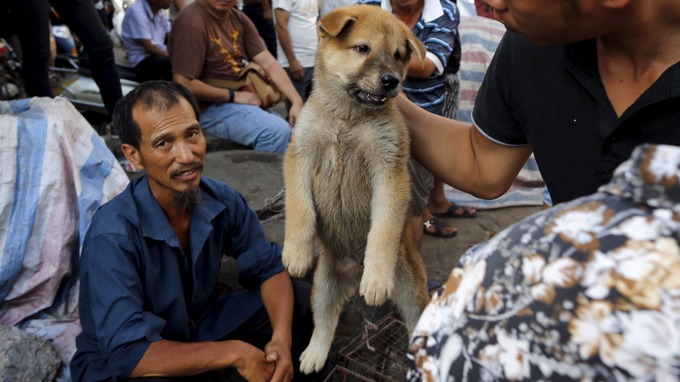
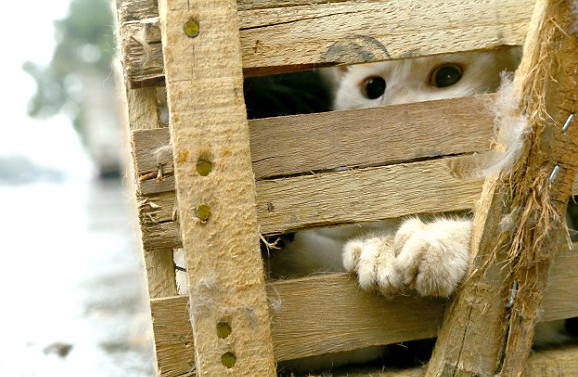
During the 10-day festival, dogs and cats are exhibited in metal cages and wooden crate before they are skinned, cooked, and eaten by visitors of the event.
It is a terribly disgusting event as you can see from the photos we are publishing here. As many as 15,000 dogs are tortured, killed and cooked to be sold every year.
On the eve of the festival, many activists are protesting in China or in front of Chinese embassies, while hundreds of volunteers make an effort to stop the trucks transporting the dogs to the festival and rescue the animals.
Activist groups in China can legally intercept dog meat trucks and confiscate dogs if the drivers don’t have the paperwork proving that they own them. The dogs which are found in these trucks often turn out to be stolen pets and are returned to owners, others are made available for adoption in China and other countries.
For example, a shelter from the state of New York took in 200 dogs, a San Diego rescue center took 18 dogs to Southern California, while the center in Massachusetts saved five animals.
Yulin is a major campaign issue across the world with animal rights people. Thanks to international pressure the number of dogs slaughtered during Yulin Dog Meat Festival has dropped considerably, and there is hope the festival will be banned completely.
From ‘Notodogmeat’;
End Yulin 2021 Notodogmeat is Sending Activists to Yulin This Weekend
Yulin Dog Meat ‘ Festival’ is likely to take place next week (21 – 30 June) 2021. Our hearts are broken. We have been campaigning for ten years to end this cruelty and saved hundreds of dogs and cats.
New animal welfare regulations and also concerns about the pandemic gave us hope Yulin City will see sense. People eat dog meat in this south China province all year round, and tourists love to come on Summer Solstice, get drunk and feast on dogs. They don’t care.
As soon as we got word that trucks were on the move, we knew we had to act. Our activists, led by Mr Zhao, who runs our big China shelter, will make the 3000 km trip to the region in the next few days.
They will attend and protest, documenting all health violations and produce a report that the Ministry of Agriculture cannot deny.
We will also rescue whatever pups we can (without paying high prices) and shame traders and revellers.
This action is powerful because our team is made up entirely of Chinese animal lovers and volunteers.
They know how hard you have all worked signing petitions and writing letters, and they are ready to make sacrifices in the boiling heat to do their bit.
Like us, they cannot bear the idea of dogs packed in cages, no food, water, or shelter. Blood, urine, faeces everywhere. It is a horror show. Terrified eyes, pleading for their lives.
We need your help to make this happen. As a small charity, we rely on your donations. Please chip in what you can to help pay for the activists trip and cover veterinary and associated expenses so we can save as many lives as we can.
There are some wonderful, brilliant animal activists in China trying to stop this, and we wish them every success with ALL thier work. Here below are some from ‘Notodogmeat’.
We are putting out this info now; and hope to publish more reading / action links later;
Regards Mark
UPDATE 1430GMT
Hi all; I have tracked down the following video clips for you to see if you want. They are disturbing for animal people, any normal person; here they are in case you want to know more – Mark
Dog Is Sheep Is Cow Is Pig Is Boy Is Girl Is Cat – None should be abused for the want of the human tastebud !
Other articles related to Yulin – the first below from the ‘New York Post’ is very interesting – I have reproduced courtesey of the NYP and outlined the main in RED. – Regards Mark
New York Post – New law could end China’s infamous dog meat festival, says advocacy group
Animal activists are celebrating a new law in China that regulates the mass trafficking of feral dogs into Yulin, in the Guangxi region, which has an annual dog meat festival.
Yulin’s agricultural officials confirmed the news on May 1, Jam Press reported. The new law would ensure that animals are raised and quarantined together before being transported and sold for slaughter — a move that will ultimately strengthen public health efforts, and potentially save thousands of dogs.
…. That and the country’s “wet markets” have long been regarded as sources of disease and, indeed, linked to the virus that causes COVID-19.
Last year, China cracked down on the nation’s wildlife trade, including a move to reclassify dogs as “companion animals” instead of their previous “livestock” designation, in response to what was then still an emerging pandemic that many experts believe originated in a Wuhan meat market.
The plan ensured that dogs would no longer be found on the legal meat trade, though the law does little to mitigate the animal black market.
Normally the whaling season in Icelandwould start now, but the whalers are leaving their harpoons ashore this year too, no whaling will take place.
The last active whaling company in Iceland, Hvalur hf of whaler Kristjan Loftsson, has not yet taken any action to get its ships afloat for the season and now it is too late.
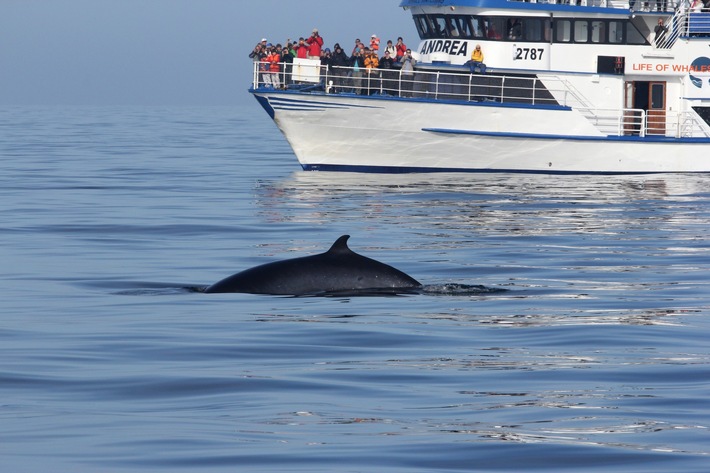
Tourists watch a minke whale in Iceland. Whale watching is one of the top tourist attractions in Iceland. (c) IFAW
“We are a hair’s breadth away from the permanent end of whaling in Iceland,” says Andreas Dinkelmeyer, campaign manager of the IFAW(International Fund for Animal Welfare) in Germany.
“In 2020 the minke whale hunters had realized that whaling was not worthwhile and gave up their business. Now only the fin whale hunter Kristjan Loftsson remains. Officially he still has a fishing permit for fin whales. Of course we are happy that he has not killed any whales since 2018. However, he could go hunting again next year to secure another five-year quota. “
Minke whale meat is sold in Iceland, but most of it is consumed by curious tourists. The last opinion poll commissioned by IFAW found that only about one percent of Icelanders eat whale meat on a regular basis.
Together with local whale watching companies, IFAW launched the “Meet Us Don’t Eat Us”campaign to make tourists aware that their whale meat consumption is keeping whaling alive. The campaign significantly reduced the consumption of whale meat by visitors to the Island.
In contrast to the limited local market for minke whale meat, fin whale meat has been sold exclusively to Japan since 2013 without being able to establish an export market.
Whaling hardly plays a role in the political arena of Iceland either. Whaling was an election campaign topic for decades, but has lost its importance since 2016. Young voters are more concerned about the climate crisis and the positive contribution whales are making to maintaining healthy marine ecosystems and sequestering carbon dioxide from the atmosphere.
“At the moment only the pause button for commercial whaling in Iceland is pressed,” adds Dinkelmeyer.
“As long as the harpoons have not been mothballed in Iceland, whales are still at risk.Ultimately, it will be the Icelanders who will advance the decision against whaling and hit the whaling stop button.We will continue to work to promote marine conservation and responsible whale watching in Iceland. “
Since 2003, the year Iceland resumed commercial whaling, 653 minke whales and 852 fin whales have been killed for a total of 1,505 whales.
IFAW has worked with Icelanders since 2003 to promote responsible whale watching and to promote alternatives to cruel whaling.
Whale watching is one of the top tourist attractions in Iceland.More than 350,000 customers each year generate around 20 million euros, proving that whales are worth far more alive than dead.
And I mean…Good news!
The only person in the world who commercially catches fin whales is Icelandic millionaire Kristjan Loftsson, majority shareholder of the whaling company Hvalur HF.
In 2018 the company shipped 1,700 tons of fin whale meat to Japan.
However, the company is shaking because of fines, a lack of fishing licenses, court-ordered additional wages, and of course unsuccessful deals with Japan.
Because the fin whale meat from Iceland does not meet Japan’s meat hygiene standards.
Due to the lack of sales opportunities, the Hvalur fishing fleet has remained in the port since 2019, and officially in 2020 also because of the Covid-19 requirements for the ship’s crew.
The hunting season is now set to be canceled again for the third time, and one company probably wants to withdraw from business entirely.
According to “Der Spiegel” german magazine, this is IP-Utgerd, a company specializing in minke whales. “The business is not worth it,” said managing director Gunnar Bergmann Jonsson.
From the point of view of the whale conservationists, the minke whales went even better.
The minke whale hunt in Iceland was suspended in 2019, and in 2020 the last minke whale hunter also threw in the towel.
With that, the subject of minke whale hunting in Iceland is probably done.
At a time when school children are demonstrating against climate change and the decimation of biodiversity, this barbarism is inhumane, a moral declaration of bankruptcy, no matter where it is still practiced anywhere in the world.
Homùn, Yucatàn, (May 20, 2021).- The people of the Maya town of Homún municipality of Yucatàn win another legal battle against the mega pig farm. This May 19, the First Chamber of the Supreme Court of Justice of the Nation (SCJN) confirmed the definitive suspension of a pig farm in favor of the children of this community of Yucatán.
According to a statement from “Kanan ts’ono’ot”, representatives of the groups known as “Childhood of Homún and Indignation”, the vote was unanimous, with which the ministers confirmed the definitive suspension of this farm, which must remain closed until the final verdict is issued by the Supreme Court.
The operations of this pork farm have been paralyzed since October 9, 2018, due to the suspension granted by Judge Miriam de Jesús Cámara Patrón from an injunction promoted by six girls and boys from Homún, a Maya town in Yucatán located in the Geohydrological Reserve of the Cenotes.
“The decision of the SCJN once again agrees with the Maya people of Homún, particularly the Maya boys and girls who, through the aforementioned injunction, managed to paralyze the farm of 49 thousand pigs since October 9, 2018, when the suspension was granted ”, indicated the groups.
The decision of the highest court, according to the organizations, allows the protection of the right to health, the environment, and dignified life for the children of the Maya town of Homún. At the same time, it lays the foundations for the final resolution, which is yet to be resolved in the Second District Court of the State of Yucatán.
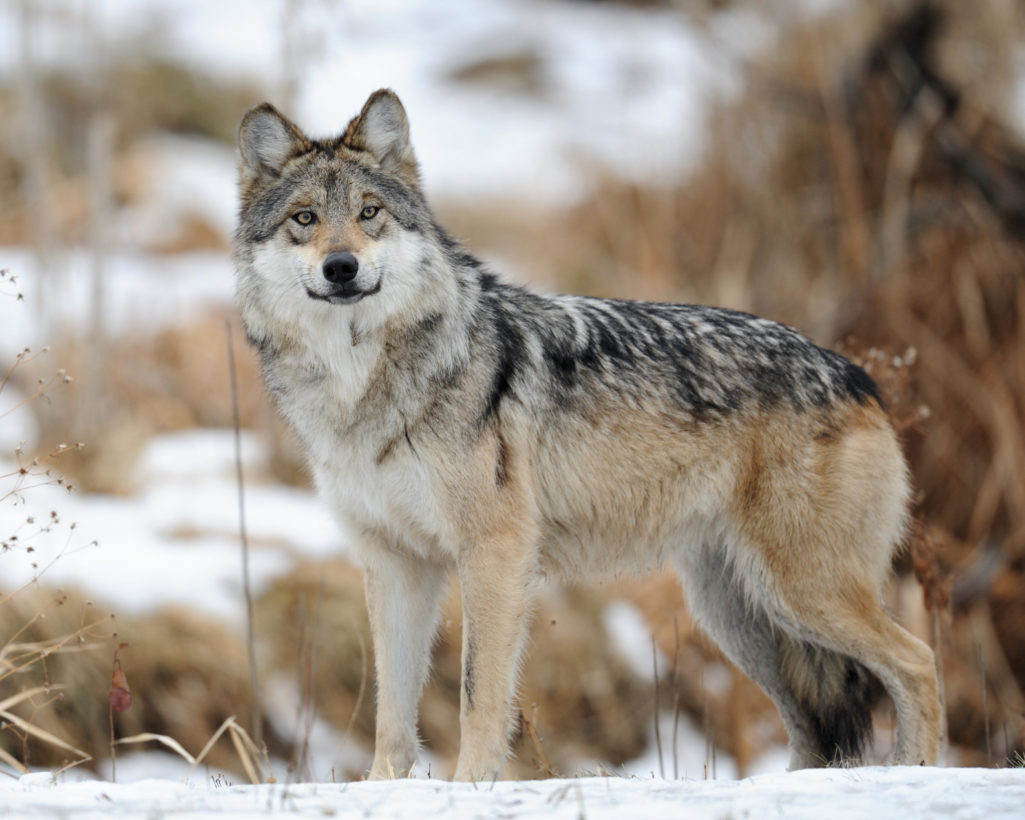
A new report indicates that poachers may have killed at least 100 more wolves since they lost endangered species protections than previously believed. Alamy Stock Photo
A whopping 2,380 wolf hunting permits—twice as many as are typically issued for hunts in the state—were made available for a quota of 119 wolves in what was supposed to be a week-long season. Less than three days later, more than 200 wolves had been killed, entire wolf families were decimated, and the hunting season had to be shut down early, having gone nearly 100 wolves over the quota.
Each wolf lost in this killing spree had represented hope for wolf conservation in America—and that hope was shattered. Little if any input was sought from Wisconsinites, tribal nations or the scientific community. We led a strong campaign to try to stop the February wolf hunt, sending a letter to the Wisconsin governor, state lawmakers and Department of Natural Resources officials, emphasizing that the hunt would have disastrous consequences for the wolves; unfortunately a court decision forced the hunt to continue. We still believe that the wrongs of this hunt deserve closer inspection, which is why we’ve just published “A call to end wolf trophy hunting in Wisconsin,” in an effort to prevent a repetition of this reckless hunt in November 2021.
One of the deadliest hunts in local memory
We now know that Wisconsin’s February hunt was the second deadliest wolf hunt in Wisconsin’s recorded history, with 218 wolves recorded dead. The best available science indicates that poachers may have killed at least an additional 100 more since wolves were delisted. We also know that nearly half the wolves killed were females. Because it was breeding season, many of them may have been pregnant. More than 85% of the wolves killed were hunted down by packs of dogs—an extremely cruel practice that no other Midwestern state allows for wolf hunting. Hunt participants also used unfair killing equipment such as night vision devices, snowmobiles, traps and snares.
Our report emphasizes that even more wolves died than the state calculated—largely because it failed to account for the tremendous numbers likely killed by poachers. Because of time constraints, hunters could self-report, or report to a local game warden (and not a biologist), the wolves they killed. The state did not require hunters to turn in the dead wolves for analysis, which would have allowed the state to verify the age of the wolf and whether a female was pregnant at the time of her death, among other information. Only 22 of the 218 were voluntarily turned in, and only because the tribal nations had requested to conduct their own research. As a result, the state failed to account for what was likely a substantial loss to the breeding population and for the for the offspring of pregnant wolves who were killed.
We believe that Wisconsin has lost about one-third of its wolf population since they were delisted from federal Endangered Species Act protections in November 2020. These wolves are largely counted using their tracks in snow, which will make it impossible to count the wolf population before the next proposed wolf trophy hunt in November. If that hunt occurs, the future survival of this population of wolves will be in jeopardy.
We conducted a poll of Wisconsin residents, cutting across demographics and including farmers, hunters, all party affiliations, genders and jurisdictions, and found that 68% of respondents think that the November wolf hunt is a bad idea. Some 62% opposed the trophy hunting and trapping of wolves. The majority of respondents believed the February 2021 hunt was “mismanaged” and “reckless” and that the methods to hunt wolves in Wisconsin are cruel and unfair, and 68% stated they are convinced that wolves are sentient, evolved, familial beings who drive ecological processes while keeping their prey herds healthier. And most respondents—even most Wisconsin farmers—did not feel that wolves pose a serious threat to livestock.
This is why we are calling upon Wisconsin officials to stop the proposed November wolf hunt and adopt a hunting quota of zero wolves. And we’re urging the federal government to relist Wisconsin’s wolves under the federal Endangered Species Act.
The fight to reinstate wolf protections
The struggle to save gray wolves spans decades. Nearly eradicated from their native U.S. habitats at the beginning of the 20th century, gray wolves are still absent from about 70% of currently suitable habitat in the lower 48 states. Yet in recent years legislators and wildlife agencies have systematically continued to roll back wolf protections. The carnage of the Wisconsin hunt showed what can happen when wolves are stripped of those protections.
But there are stories that bring hope to the fight for wolves. For the first time in 80 years, wolf pups were born in Colorado. The pups’ parents had immigrated into Colorado themselves, and unlike other immigrants before them, were not shot or poisoned before having the opportunity to breed. In 2020, Colorado residents showed support for wolves in their state by passing a ballot measure mandating the restoration of wolves on public lands in the western region of the state by 2023. The best way to protect the future of this wolf family would be to relist gray wolves under the Endangered Species Act.







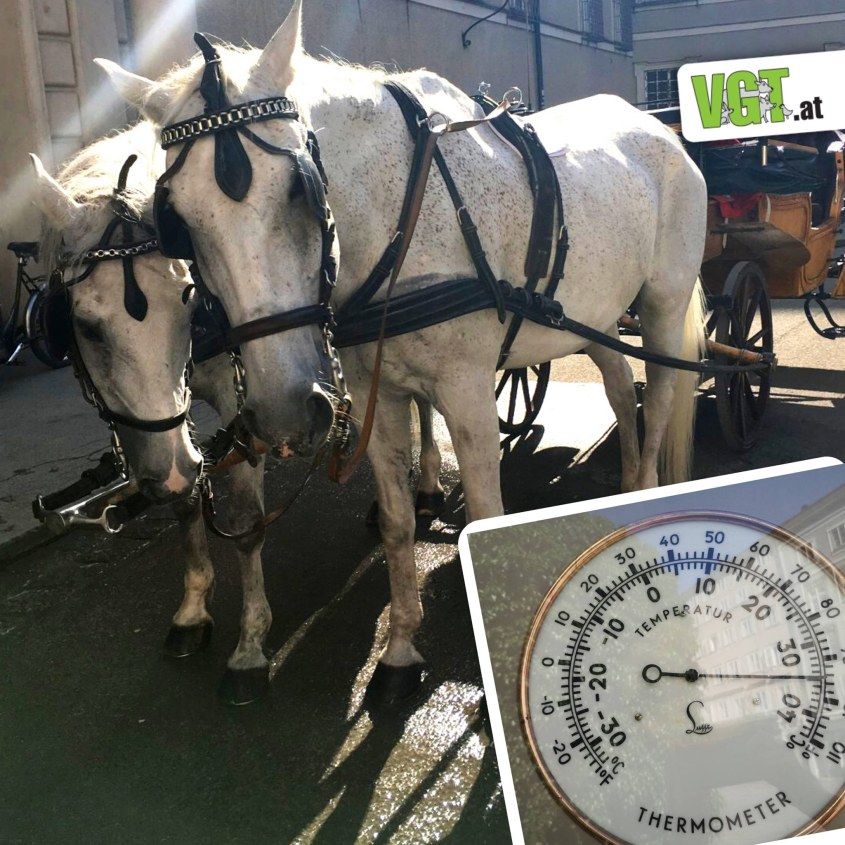
 This Fiaker horse died while driving at the Burgring in downtown Vienna- Image: Marcello Farabegoli

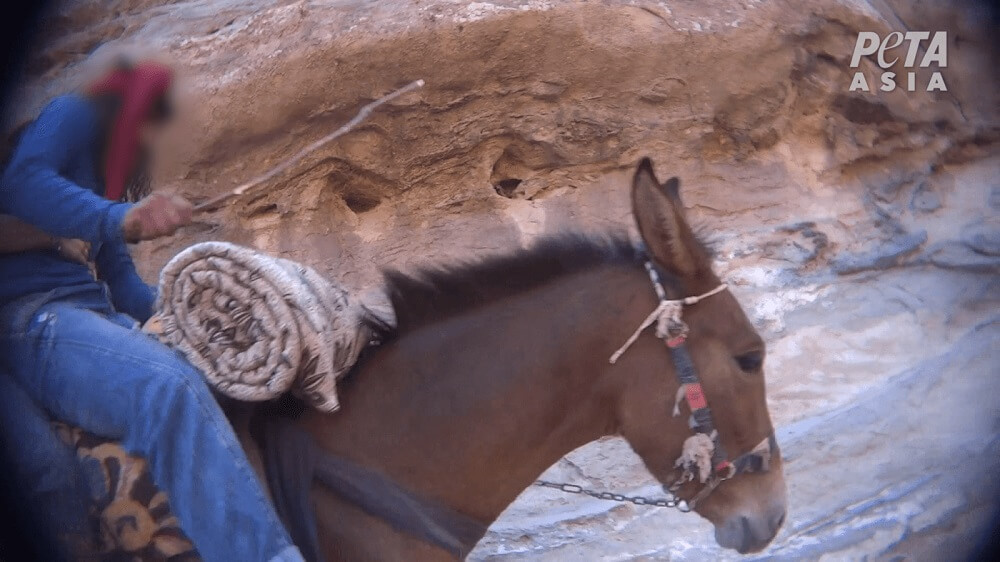
 Donkeys and mules have to transport people up and down hundreds of steps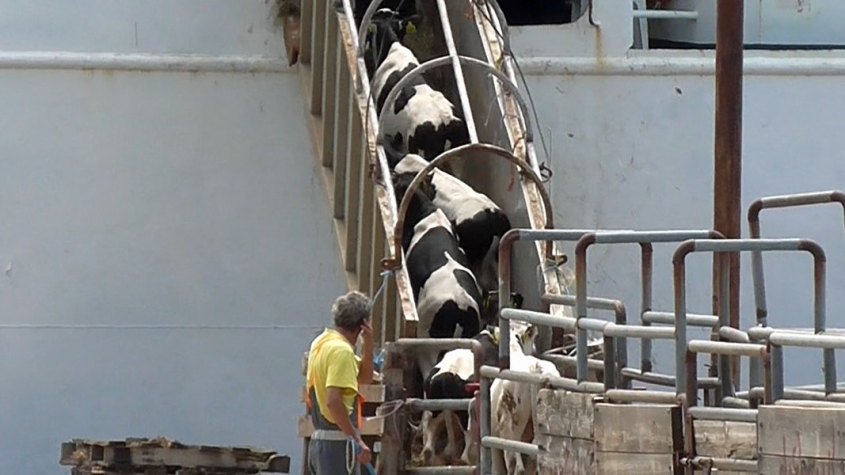








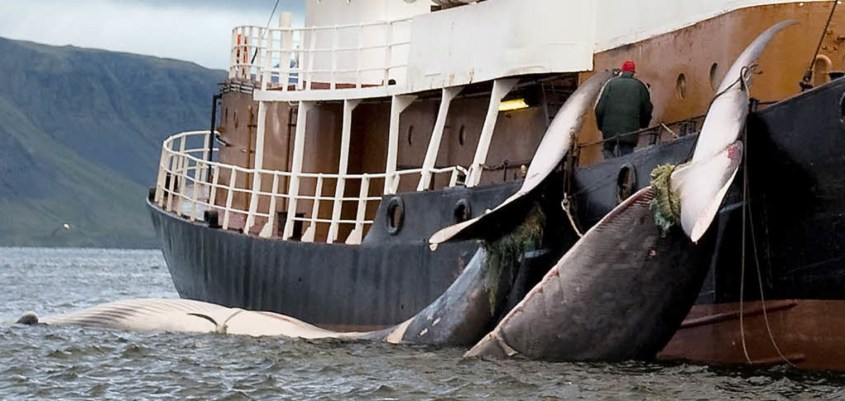
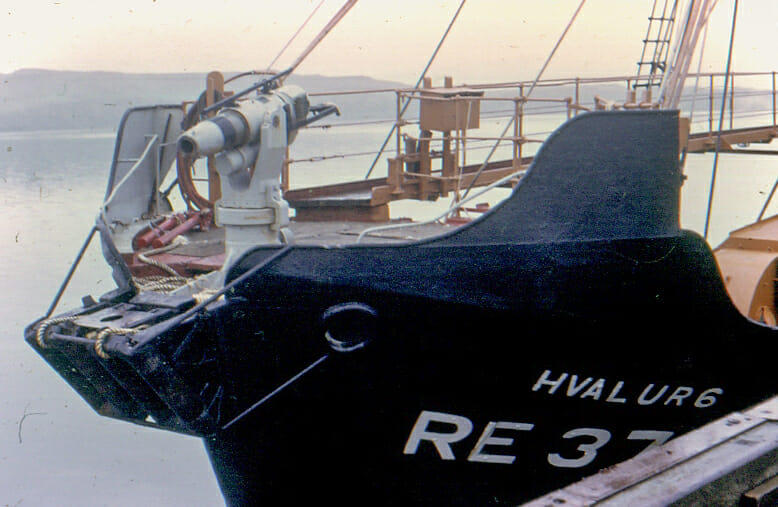 Whales are killed with explosive harpoons, here one of the company’s ships for fin whale hunting © Szilas