McDonald’s depots blockaded by animal activists demanding chain goes vegan
McDonald’s distribution centres which supply around 1,300 restaurants have been blockaded by animal rights protestors demanding the chain goes vegan.
Around 50,000 members of Animal Rebellion have descended on four of the fast food giant’s major sites in a bid to persuade it to introduce a fully plant-based menu by 2025.
As the world continued to battle the pandemic in the closing months of 2020,Animals’ Angels continued its mission to advocate for animals and expose abusers by conducting an extensive months-long undercover investigation into the Kalona Auction in Iowa.
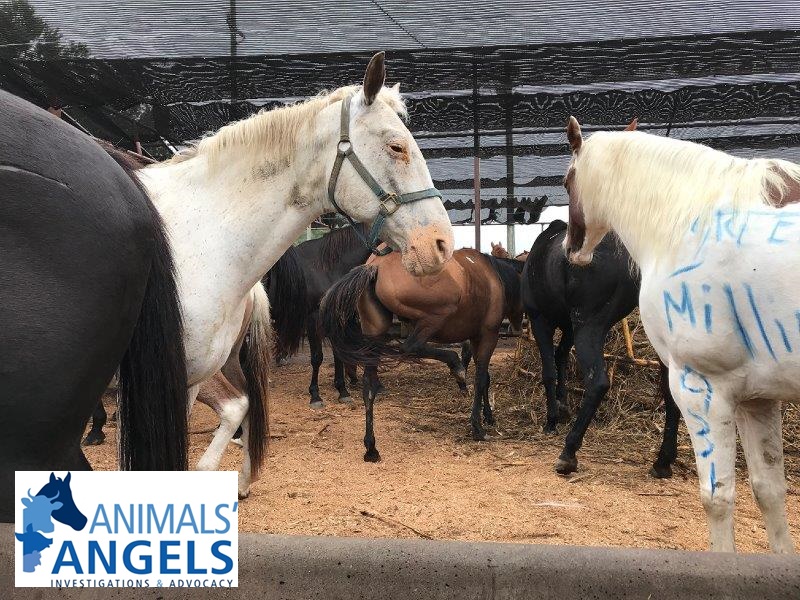
Widely considered a dumping ground where the local Amish and Mennonite communities dispose of their used-up horses in exchange for new ones, the monthly Kalona horse sale is one of the largest providers of slaughter horses in the US, usually selling more slaughter horses than riding or work horses.
The auction caters to many of North America’s most notorious kill-buyers, including Boots Stanley, Bouvry Exports, Scott Kurtenbach, George Baker and Keith Tongen. Each auction sells between 300 to 500 horses, with Stanley and Kurtenbach & Bouvry buying the bulk of the slaughter horses.
The Kalona sale is also the only auction that uses a hydraulic gate to separate horses moving to the auction ring. As our investigators recently witnessed again firsthand, this is a cruel and chaotic process that inflicts unnecessary suffering on the innocent animals at the sale.
Months of horror at the Kalona sale
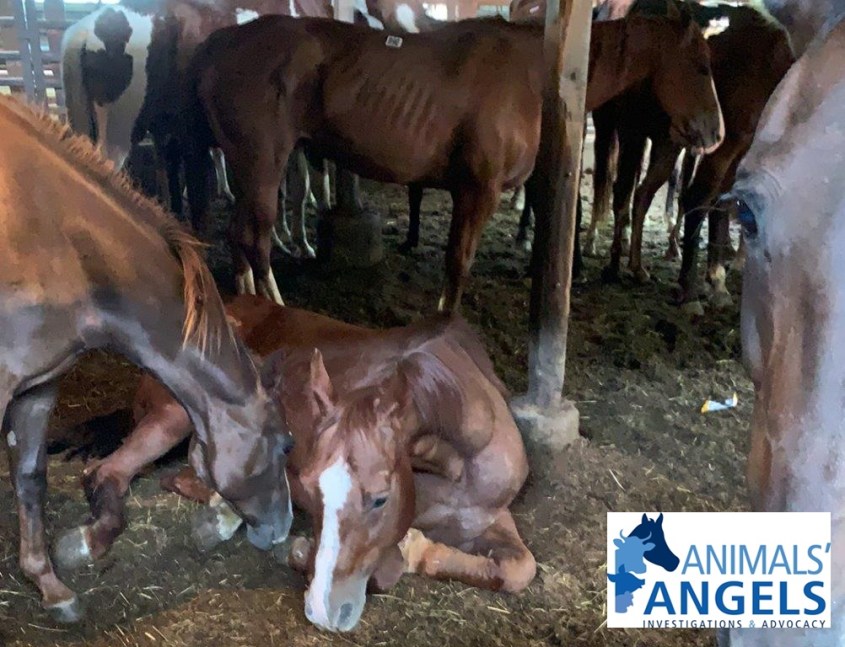
During Animals’ Angels recent investigation into the Kalona horse sale, our team observed auctions from August through November, and were horrified by the findings. A few of the heartbreaking observations are listed below:
In August, our team observed a draft mare go down multiple times in the pen, only to be forced back up again and again until she was sold, at which time the distressed animal went down yet again.
At the same auction, investigators saw a horse covered with dozens of whip marks, and witnessed a horse being kicked in the face by another horse with full force in an agitated pen.
In September, kill buyer Boots Stanley paid $50 for a horse (tag #695) with severe lacerations on his face which appeared to have been caused by an ingrown halter being ripped off prior to the sale.
In October, Boots Stanley purchased a dappled grey draft horse who struggled through the auction ring due to a left leg that had swollen to three times its normal size.
During the same sale, a Belgian draft horse died suddenly in the loose horse pen, indicating the horse had already been in dire condition when brought in, and a white donkey was mercilessly moved through the auction ring, even though the injured animal was unable to put any weight on his right foot.
In November, Stanley was once again buying blind, sick, and injured animals at the auction. Some of these horses later appear on his online broker program pages for hundreds of dollars, even though he paid as little as $50 for many of the animals.
During each monthly sale at Kalona, Animals’ Angels investigators documented consistently cruel and neglectful behavior:
The auction used a heavy hydraulic gate to block the entrance of the auction ring. Terrified horses were forced through a narrow chute while the auction workers hit the panicked animals relentlessly on the face and sides. One worker even went so far to strike a horse across the face with his wooden cane.
WAV Comment – you read it here first ! – please stay with us.
BREAKING NEWS 21/5/21.
EU Citizens’ Initiative: MEPs back calls to gradually end caged farming
Press Releases
The use of cages in animal farming could be phased out by 2027, after an impact assessment and a properly funded transition, the Agriculture Committee said on Friday.
In their response to the European Citizens’ Initiative (ECI) “End the Cage Age”, MEPs called on the European Commission to come up with a draft EU law on fair and sustainable farming and to propose a revision of existing EU rules on the protection of animals kept for farming purposes. These legal changes should pave the way to phasing out the use of cages in EU animal farming, after an appropriate transition period and a solid, scientific impact assessment, possibly by 2027, they say.
Alternatives to cage farming exist and are being successfully implemented in a number of member states, MEPs say. These alternative systems should be further improved and encouraged at national level, but to ensure a level-playing field for farmers across the European Union, EU legislation is needed, they add.
Species-by-species approach and properly funded transition
The gradual end of caged farming should be based on a species-by-species approach that would take into account the characteristics of different animals and ensure that they all have housing systems that suit their specific needs, MEPs say. They insist on ensuring sufficient time to make the transition and proper support, including adequate advisory and training services, incentives and financial programmes for farmers and livestock breeders before making any legislative changes. This would avoid farmers losing their competitive edge and EU production being consequently relocated abroad, where animal welfare standards are lower than in the EU.
MEPs also call for a more comprehensive food policy to support the shift towards a more sustainable food system that should focus not only on environmental, but also on economic and social dimensions. Such a policy should prevent small and medium-sized farms from abandoning livestock production and stop production being further concentrated in the hands of a few large farms, they say.
Same standards for all imported products
A fair trade policy that ensures a level playing field is a precondition for higher European standards, the Agriculture Committee says. The Commission and member states should therefore focus more on putting effective controls and customs checks in place to ensure that imported agri-food products meet EU animal welfare standards, it adds.
MEPs want all animal products imported into the EU to be produced in full compliance with the relevant EU legislation, including the use of cage-free farming systems and insist that existing trade deals should be re-evaluated to ensure that the same animal welfare and product quality standards are met. They also call on the Commission to promote animal welfare internationally.
Next steps
The draft resolution, approved in the Agriculture Committee by 39 votes in favour to four against, with three abstentions, will now have to be scrutinised by the Parliament as a whole, probably during the 7-10 June plenary session.
Background
The European Citizens’ Initiative allows one million citizens from at least a quarter of EU member states to ask the European Commission to propose legislation in areas that fall within its competence. The EU invites organisers of successful initiatives to present their initiative at a public hearing in the European Parliament, to the committee responsible for the subject matter.
During the public hearing on the European Citizens’ Initiative (ECI) “End the Cage Age” on 15 April, MEPs highlighted the importance of listening and acting on citizens’ concerns on animal welfare. However, many insisted that any potential phase-out of caged farming requires proper financial support, incentives and an adequate transition period. They called for strict and efficient measures to avoid imports of cheaper products with lower animal welfare standards from non-EU countries. Some also called for a proper impact assessment and insisted on EU legislative action.
The “End the Cage Age” ECI was registered with the EU Commission on 5 September 2018. By the time of submission, the initiative had gathered support from almost 1.4 million signatories from across the EU, with the required threshold for signatures met in 18 member states.
The initiative calls on the Commission to “end (…) inhumane treatment” of “hundreds of millions of EU farm animals (…) kept in cages for most of their lives”, and for an EU law to ban the use of: cages for laying hens, rabbits, pullets, broiler breeders, layer breeders, quail, ducks and geese; farrowing crates for sows; sow stalls, where not already prohibited; and individual calf pens, where not already prohibited.
Final vote on the ban of Estonian fur farms in June
20 May 2021
Loomus
WAV Comment – Estonia joined the EU as a member state on 9 December 2010.
The Environment Committee has agreed that the draft Act for Animal Protection and Nature Conservation, which would prohibit fur farms in Estonia, will be put to a final vote on June 2nd.
This announcement has brought joy and optimism to our Estonian member organisation Loomus. “Loomus has been working on the fur ban for years and the decision that the Environment Committee made today takes us very close to finally put an end to this cruel industry. We are glad that the politicians are taking animal-friendly steps and we are very optimistic that this time the farms will be banned,” said Annaliisa Post, Communications Manager and Board Member at the animal advocacy organization.
According to a Kantar Emor poll conducted in September, 75 percent of Estonians are opposed to the breeding of animals such as foxes and minks for their fur. In 2016, 69 percent of respondents agreed, indicating that support for a fur-free Estonia is growing.
European Commission introduces mandatory SARS-CoV-2 screening in all European mink fur farms
19 May 2021
LAV
On 12 May, the European Commission adopted the Implementing Decision 788 which sets standards for the surveillance and reporting of SARS-CoV-2 infections in mink (and raccoon dogs) bred for fur production.
This decision means that, for the first time, there is a mandatory and harmonised diagnostic screening and reporting system in place for all Member States, after more than 400 fur farms saw outbreaks of SARS-CoV-2 in 2020.
The Commission has deemed it necessary to initiate this monitoring in all Member States “without delay”, demonstrating the considerable risks to public health connected to fur farming.
The EU Commission has recognised the risk to public health connected to the presence of mink (and raccoon dog) farms for the production of fur and now, finally, it has adopted a system of control of these farms with active surveillance (diagnostic tests). In Italy we have already had outbreaks on 2 farms out of 8; the time has come for the Minister of Health to assume political responsibility to permanently ban fur farming.
Simone Pavesi, Campaigner, LAV
Diagnostic surveillance involves carrying out virological tests on a weekly basis, on live or dead animals, for a number equal to at least 5% of the population of any single farm. This sampling level can be adjusted from 5% to 20% in the case of positive results for SARS-CoV-2.
However, there are possible loopholes in Implementing Decision 788. Competent authorities can decide to switch from active surveillance to passive surveillance on farms that adopt risk reduction measures. Farms under passive surveillance will only be required to test animals if mortality is increased or farm workers test positive for SARS-CoV-2.
This creates the risk of reversing monitoring systems to those of 2020 where surveillance protocol was based on mere clinical observation, in clear contrast with scientific evidence which suggests mink are in most cases asymptomatic. This would increase the risk of creating SARS-CoV-2 reservoirs, with serious public health implications.
In Italy, a country which, while having suspended mink fur farming for 2021, still has operational farms, 77% of the adult population are in favour of the adoption of emergency measures to end fur farming and breeding. This illustrates that by allowing fur production to continue, the European Commission is more concerned with protecting the economic interests of a small group of stakeholders at the expense of the health of all European citizens.
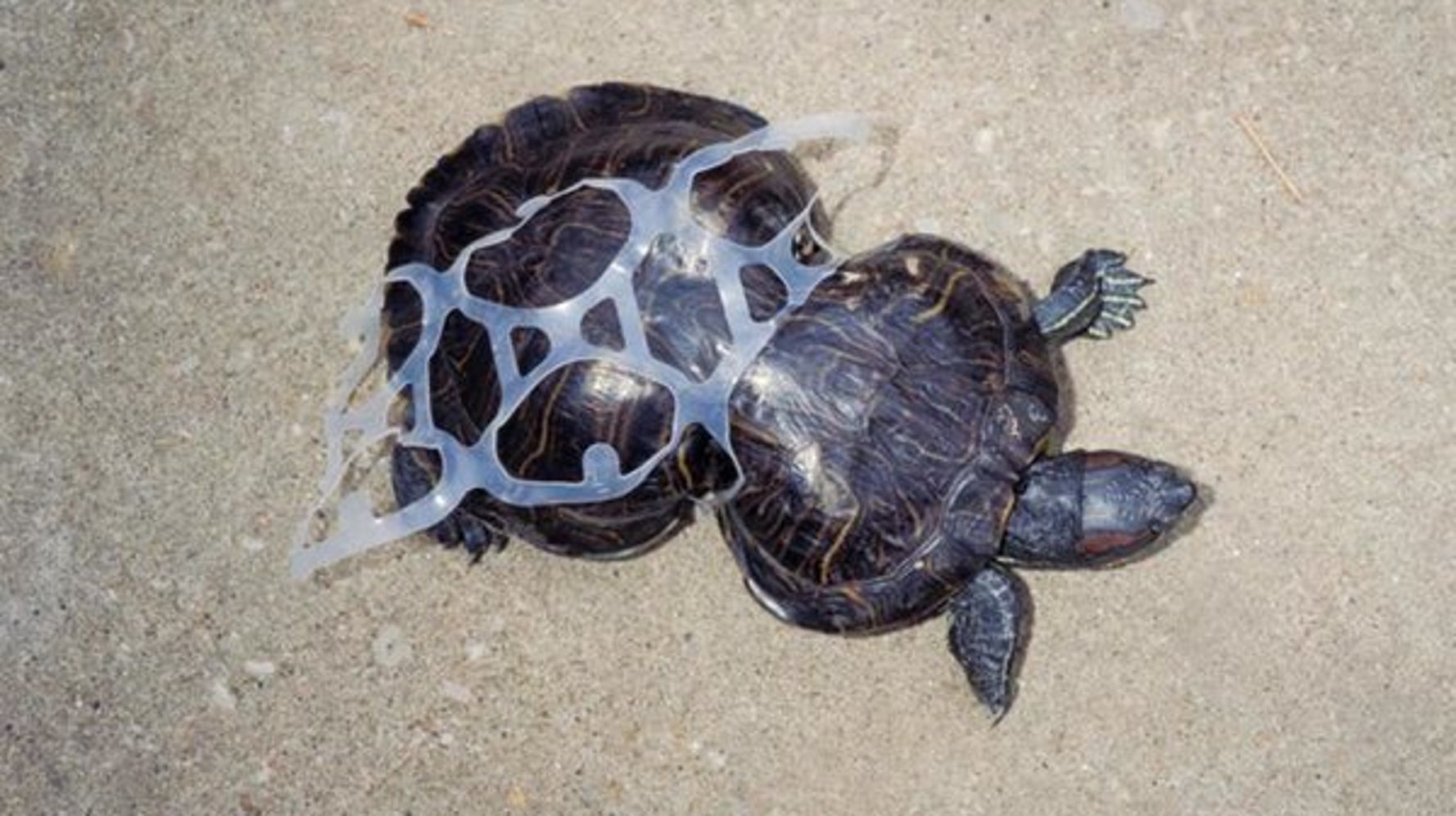
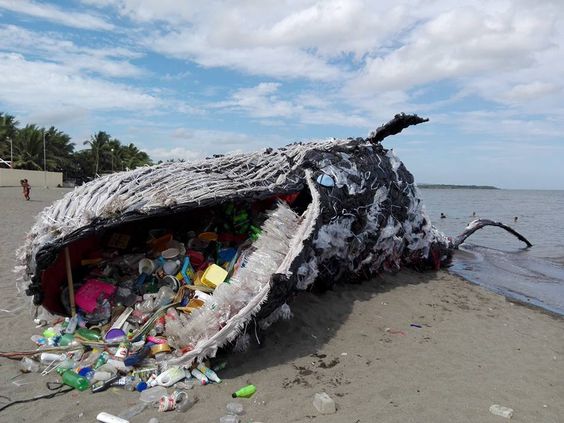
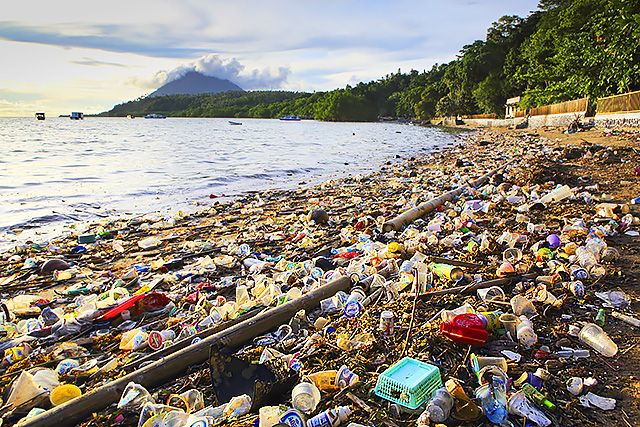
WAV Comment: The UK is working very hard against environmental pollution; credit where it is due. But this very excellent and completely effective animation shows just how much of a global environmental issue plastic has become. Below is also another video which shows the reality – this is not ‘fantasy land’; so get a grip and make every effort to speak out against the over use of plastics globally. These realistic videos show the reality of the global plastic crisis.
Regards Mark
Prime Minister Boris Johnson Drowns In Plastic In New Satirical Animation Highlighting Pollution Crisis
‘Wasteminster’ sheds light on the ‘shocking truth about what happens to plastic the government tells us is being recycled’…
Wasteminster is directed by Jorik Dozy and Sil van der Woerd for environmental organization Greenpeace. It is voiced by acclaimed impressionists Jon Culshaw and Matt Forde and produced by Studio Birthplace.
Boris Johnson satirical animation
The animation begins with Johnson at 10 Downing Street speaking to press about being a ‘global leader in tackling plastic pollution’.
Directors Sil and Jorik purposely used direct quotes from the politician and his government, as they didn’t want to ‘put words in the Prime Minister’s mouth’.
During Johnson’s speech, a barrage of plastic starts pouring down from above. Eventually, this causes a surge that floods Downing Street.
The film then cuts to real-life footage of plastic waste that has been discarded overseas.
Greenpeace says the piece aims ‘to put into stark contrast the bold promises the government has made about reducing the environmental impact of plastic, with the reality that plastic production has been rising while the government’.
‘The shocking truth’
Nina Schrank is a Senior Campaigner at Greenpeace. In a statement sent to PBN, she said: “This powerful film will show people the shocking truth about what happens to plastic the government tells us is being recycled.
“And, who better to enlist for the voiceovers than impressionists from the legendary Spitting Image… The impeccable voice talents of Culshaw and Forde.”“We need a complete ban on all plastic waste exports and legislation to make companies reduce the amount of plastic they produce…”
Sam Chetan-Welsh, Political Campaigner at Greenpeace UKMoreover, Sam Chetan-Welsh is a Political Campaigner from Greenpeace UK. He added: “The plastic we carefully wash and sort for recycling is being shipped off to other countries… It overwhelms their waste systems. And, much of it ends up illegally dumped or burnt, poisoning local people and polluting oceans and rivers.
“The government could put a stop to this but so far Boris Johnson is only offering half measures. “We need a complete ban on all plastic waste exports and legislation to make UK companies reduce the amount of plastic they produce in the first place.”
sea life trapped by plastic – Google Search
Plastic pollution
Studio Birthplace has also published an animated series and augmented reality app.
The animation aims to help ‘visualize the incredible data related to our abuse of the planet’.
Humanity’s Impact is also written and directed by Sil and Jorik. Sean Lin produces.
It illustrates how a staggering 100,000,000,000 plastic bags are used globally, every year. And, that 1,000,000 plastic bottles are produced every single minute – by showing a town that gets flooded with plastic.
WAV Comment – I have witnessed a lot of animal suffering in my time; but I found this video footage articularly disturbing. It is from Victoria, Australia. A farmer kills male goat kids with a metal pole in front of their mothers because they cannot produce milk; and they cannot produce mil because they are males, no other reason. It happens with milk producing animals the world over; the males are always considered a ‘by product’ of the business; because they do not supply milk and keep the herd numbers up. Thus, males are usually killed within hours of birth, exported live overseas to be killed for their meat, or sent to slaughterhouses serving more local ‘burger producing’ organisations. Whatever, the males never win. This footage is even more disturbing as it shows the male kid goats being yanked away from their mothers ; and then in full sight of their mothers, being hit in the head region by the farmer using a metal pole. Like useless vegetation, their bodies are simple thrown into a tractor bucket to be disposed of. If this does not stop everyone from consuming animal dairy, then I do not know what will. A complete and utter abuse and killing of baby animals who have done nothing wrong apart from being born male. This is common the world over; watch it and repent.
Regards Mark
Link, including disturbing video: WATCH THE VIDEO FOOTAGE HERE
Disturbing moment dairy farmer beats baby goats to death with a metal pole – before dragging their convulsing bodies away in front of their mothers
This is the disturbing moment a farmer killed male goat kids with a metal pole in front of their mothers because they cannot produce milk.
Secret footage was allegedly taken on a dairy farm in Bannockburn, Victoria
It shows a farmer drive up to a goat pen and pull the male kids from mothers
The farmer smashes them on head with metal pole and leaves them squirming
The confronting footage was put online by Animal Liberation Victoria on Friday
This is the disturbing moment a farmer killed male goat kids with a metal pole in front of their mothers because they cannot produce milk.
Secret footage said to be taken on a dairy farm in Bannockburn, Victoria shows a farmer drive up to a goat pen and pull out the male kids.
One by one he smashed them on the head with the pole, leaving them frantically squirming on the ground before they died from traumatic head injuries.
The video shows the farmer putting male goat kids into a blue container before he takes them out and kills them
After killing around a dozen, the farmer loaded the corpses on to his tractor and drove away.
The confronting two minutes of undercover footage is said to have been taken between mid-September and mid-October this year.
It was posted online by Animal Liberation Victoria on Friday.
The group told Daily Mail Australia they were supplied the footage by anonymous activists who planted cameras on the farm.
‘These newborns males are killed because they will never produce milk, and are therefore considered useless to the dairy industry,’ ALV president Noah Hannibal said in a statement.
‘This brutal slaughter takes place as part of an inherently cruel industry.’
The video captures the farmer hit the goats on the head for the squirm as a result of the trauma
The confronting two minutes of undercover footage (pictured) was taken between mid-September and mid-October
Nothing in the video was illegal because farm animals are not covered by the same animal cruelty laws as domestic pets.
Killing newborn goats is a normal practice across the industry.
Animal welfare guidelines, which are not legally binding, state that goats can be killed using a variety of methods including shooting and blunt force trauma.
‘A single blow should be delivered to the centre of the forehead and should only be used on kids that are less than 24 hours old,’ the guidelines state.
The Victorian Farmers Federation said the footage was confronting.
President David Jochinke told Daily Mail Australia: ‘As an industry, we do not condone the mistreatment of animals. Any producer who falls outside the Prevention of Cruelty to Animals Act, as well as the standards and guidelines of the industry should be investigated and managed appropriately’
He added: ‘It is difficult to comment on the specific details of this circumstance, but we would encourage farmers to stun animals with a captive bolt wherever possible.
‘Any person who has stewardship of an animal should take their responsibilities seriously. I am supportive of Agriculture Victoria undertaking an investigation into this matter should they feel it to be necessary.’
Report of the “Committee against Bird Murder”-19.05.
Right-wing populists in Lombardy kneel in front of the poacher lobby:
The right-wing “Lega”, which is in government in the northern Italian region of Lombardy, wants to soften the already hunting-friendly regulations for the protection of migratory birds with a draft law that has now been presented.
The main point of the amendment to the law is the abolition of controls on live decoys.
In migratory bird hunting – thrushes and skylarks can still be shot in Italy today – hunters are dependent on the use of live decoys.
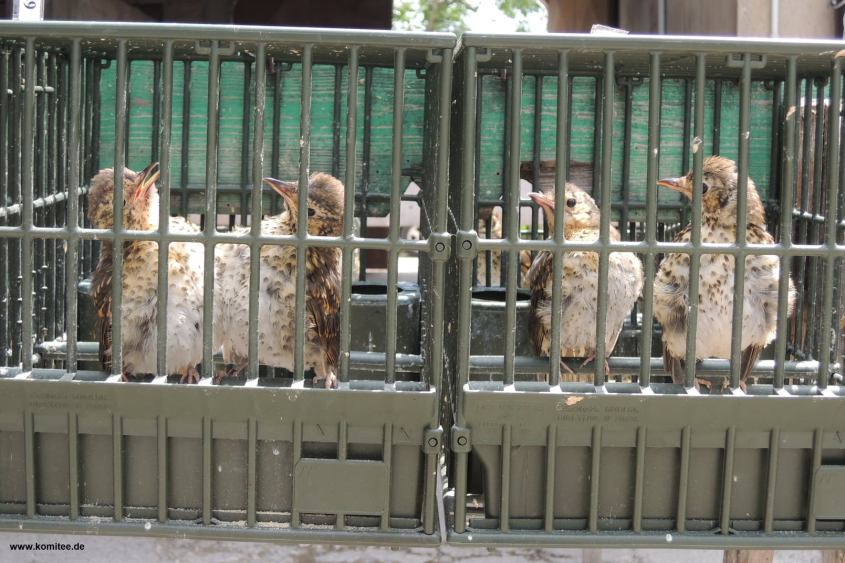
Since bird trapping has been banned, hunters have theoretically had to resort to bred birds.
But the decoy traders often do not breed the animals, but instead catch them with nets or rob them from nests as chicks.
Tens of thousands of these birds then end up on the market with forged “breeding rings” – a mafia-like, well-organized fraud.
So far, committee staff and police officers have spent a lot of time checking these rings.
According to the will of the “Lega”, these controls are now to be prohibited – a free ticket for bird trapping and poaching!
The Italian nature conservation associations – in addition to the Committee against Bird Murder, LAC, LAV and the WWF – announced yesterday 18.5.
Protest actions started calling on the Lombard MPs to reject the change in the law.
A few more things on this subject: In Italy, hunting is still a firmly rooted tradition, especially in the countryside.
A total of around 600,000 hunters are registered. Italy has a licensing system, which means that hunters can hunt almost anywhere in their region.
The hunters mainly hunt birds and primarily target migratory birds.
Brescia – a city in Lombardy – is the heart of the Italian hunting arms industry.
Here there is one arms and ammunition factory after the other.
The right-wing populist “Lega” – avowedly hunting-friendly – has provided the mayor in almost every municipality for decades. Making politics here means, above all, standing up for hunters and the arms industry.
According to the organization “caccia il cacciatore”, there are 10,000 of these permanent huts for bird hunting for every 30,000 hunters in Lombardy.
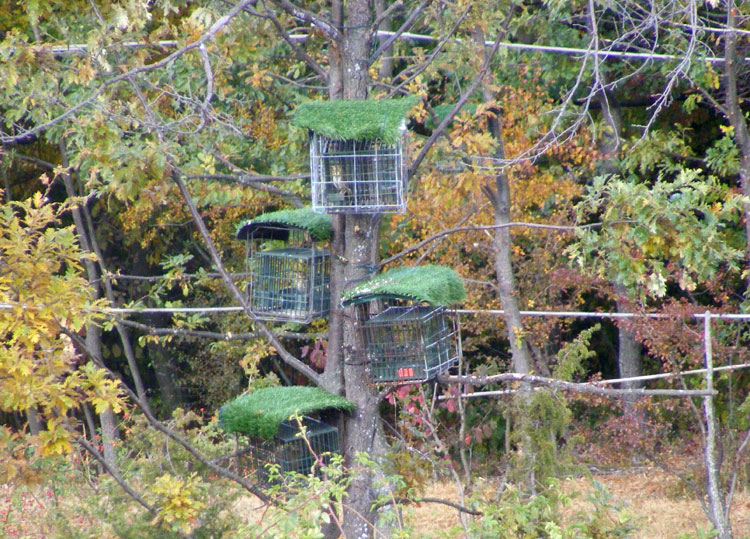
“The decoys are caught and kept permanently in tiny cages. Their feathers are torn out to start a spring change that is not appropriate for the season. When the feathers grow back, the bird, which is kept in a dark cellar during the summer, says it is spring and sends appropriate signals to its conspecifics. A caught chaffinch can cost up to 100 euros on the black market. “(Source: caccia il cacciatore).
Of course, it is legally stipulated which species may be shot, how many birds the hunter can kill per day of the hunt and how many decoys he may use. But who really wants to rigorously control that with the enormous number of hunters?
Poaching has an ancient tradition in Italy and, although officially forbidden, is tolerated especially if the prey is “only” birds.
In accordance with local customs, slings, nets, stone traps or bows are used. But the big problem in Italy is traditional silence.
Everyone knows that neighbor A is laying traps with live decoys, but nobody would report him for it, because if you let him poach in peace today, he will let you “dispose” of the old refrigerator in the creek on the edge of the field tomorrow.
One hand washes the other is the motto, and the authorities – and above all the police – have to fight against this mentality.
The last Valentino collection to incorporate fur into its garments will be for the 2021-2022 autumn-winter season, and with this change in the firm’s policy, the Milan-based company Valentino Polar will close.
The Italian firm synonymous with luxury and the best “made in Italy” has just announced in a statement that it will eliminate the use of fur from 2022, which is also preparing to reorganize and concentrate all its collections on a single label in 2024.
“We are working on finding different materials to achieve greater attention to the environment,” the firm has announced, according to Ara
“The concept of not using leather is perfectly aligned with the values of our company,” said the firm in a statement released by the Italian media.
The decision is unanimous and surgical, since the information note specifies that his fur company, called Valentino Polar, based in Milan, owned by the Roman brand since 2018, will cease all production at the end of 2021.
It also specifies that the latest leather garments and accessories of the Italian house will be those that appear in the autumn / winter 2021-22 work.
The Italian firm, one of the few in the fashion world based in Rome, was founded in 1959 by designer Valentino Garavani with capital from his father and an investor.
After 45 years, Garavani left the company, which was creatively headed by Maria Grazia Chiuri and Pierpaolo Picciolo. Currently, only Picciolo continues to work for the group, which has focused very directly on connecting with Gen Z.
Valentino Chief Executive Jacopo Venturini, who joined the Italian group last year when the luxury goods industry was hard hit by the pandemic, decided also to stop collections for its younger label RED Valentino.
“The concentration on one, and only one brand, will better support a more organic growth of the Maison”, the former Gucci executive said in a statement. –
Valentino is already working with the syndicates to address the organizational changes within the company caused by these decisions.
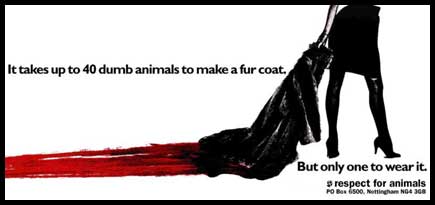
And I mean...Martina Pluda, Director of Humane Society International, added: “Valentino dropping fur is a major nail in the coffin for the cruel fur trade. Like so many other designers, Valentino knows that using fur makes brands look outdated and out of touch, and fur industry certification schemes are little more that the hollow PR spin of an industry that kills 100 million animals for fur a year.
Compassion and sustainability are the new luxury in a world where dressing in the fur of factory farmed foxes or gassed mink is tasteless and cruel.”
We agree with HSI’s comment.
If the fashion world continues to decide against fur at this pace, soon NO designer will buy fur anymore.
And what the buyer does not find on the shelves, does not buy.


















 The main point of the amendment to the law is the abolition of controls on live decoys.
 Since bird trapping has been banned, hunters have theoretically had to resort to bred birds.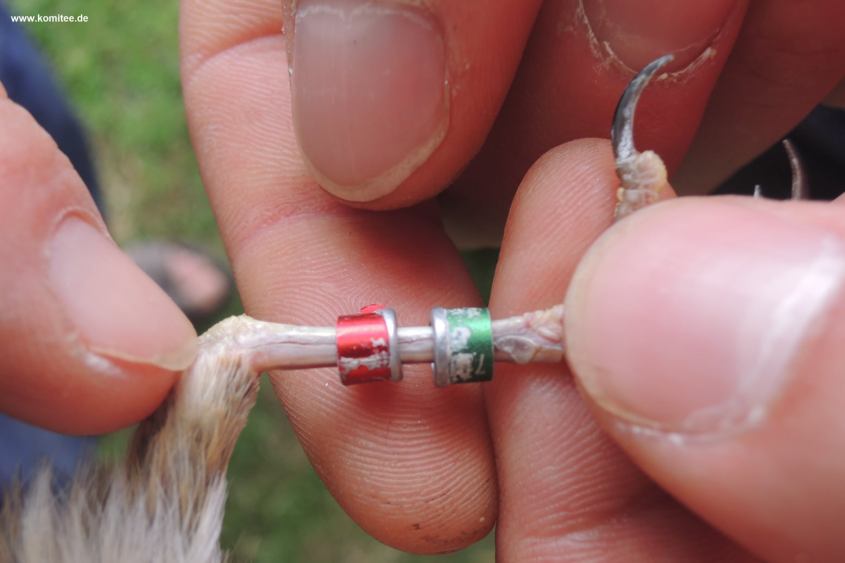
 “The decoys are caught and kept permanently in tiny cages. Their feathers are torn out to start a spring change that is not appropriate for the season. When the feathers grow back, the bird, which is kept in a dark cellar during the summer, says it is spring and sends appropriate signals to its conspecifics.


