Burkina Faso: Animal rights activists murdered

Report by Martin Bussmann- MEP

Irish animal rights activist Rory Young was murdered last week in Burkina Faso.

Irish citizen killed in Burkina Faso was working in anti-poaching operations

Rory was leading a wildlife protection patrol in Arly National Park, Burkina Faso on 26th April 2021 when they were attacked by terrorists which resulted in his death and that of two Spanish journalists, the 44-year-old David Beriáin, a reporter, and 47-year-old Roberto Fraile, a photographer, who were capturing his efforts to protect precious wildlife.

He was there with the two journalists, to make a documentary about the protection of the national parks.

5-2021 — Hot Topics: Sustainable Fashion, Elephants, Climate

Poaching is a big problem in this country.
The convoy was ambushed, Rory Young kidnapped and then executed.
The perpetrators belong to a local terrorist group that makes a lot of money from poaching
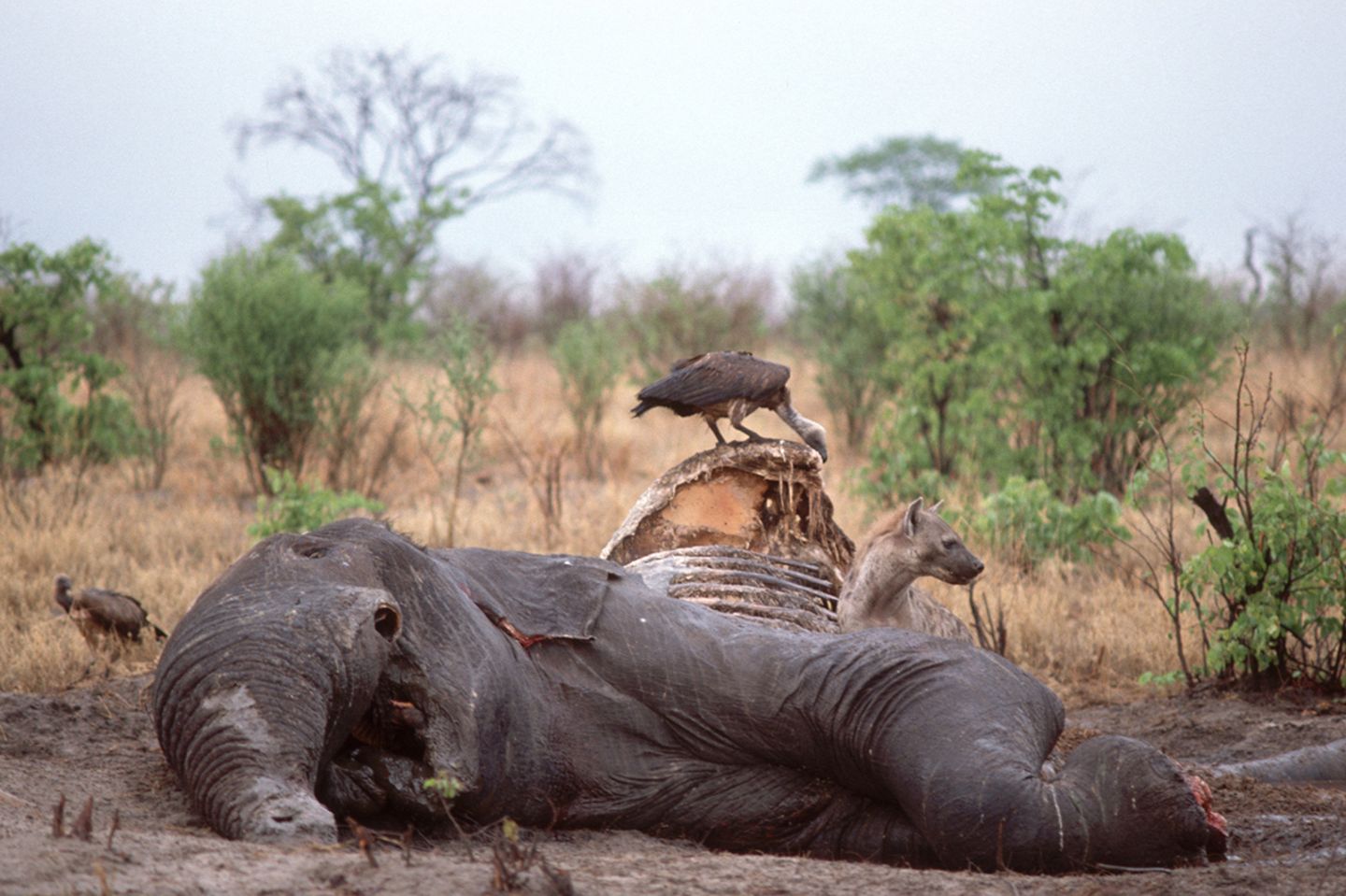
Botswana: Gewilderter Afrikanischer Elefant

Again and again you read about the death of people who stand up for the climate, the environment, nature and animals.
Hundreds are killed every year, and more are killed every year.

In 2019, 212 official activists were killed, compared to at least 331 in 2020.
In 2018 there were 164 people who had to pay with their lives for their work.
So the murders have doubled in just two years. The increasing violence comes from those who make good money from destroying our planet.

Some murders are downright commissioned by corporations or even governments, which of course don’t want to get their hands dirty.

In Germany, too, the tone is getting rougher and the repression of progressive forces is increasing. Anyone who stands up for nature and animals in this country is constantly being attacked by the lobby organizations from industry and agriculture.

Animal rights activists who uncover crimes and thus prevent a lot of suffering are sometimes criminalized.
It is said that the activists are militant.
Those who themselves continuously use violence when it comes to animals accuse people who give animals a voice of being violent.

What nonsense! those who are actually prepared to use violence are on the other side.
Fortunately, there has not yet been a murder in Germany. Because when it comes to willingness to use violence, the international death statistics speak a clear language.
Let’s be on guard.

https://www.facebook.com/Tierschutzabgeordneter/

https://www.theguardian.com/world/2021/apr/27/spanish-journalists-irish-citizen-killed-by-jihadists-burkina-faso

And I mean…“No one has claimed responsibility for the attack on a road leading to the vast forested reserve of Pama. The government said it had not identified the assailants, whom it described as “terrorists”, it says in the IrishCentral newspaper

Some media suspect that the al-Qaeda organization is behind it, but what benefit would such an organization get from the kidnapping and murder of an animal rights activist and two journalists, who do a documentary about wildlife?

Of course, one could suspect that extremist groups are partially financed by kidnapping foreign nationals.
But in this case there was no ransom
There was kidnapping and murder.
And so acts only the mafia.
Or highly paid poachers who acted under the order to destroy the documentation.

By the way: Terrorists also include members of the government of a country who work closely with the poaching mafia out of private interests.
A common business model in Africa.

On the Chengeta Wildlife website, Young was described as...”Rory is an expert tracker with amazing knowledge, skills, and highly developed intuition to become one of the best in his field. He has dedicated his life to wildlife protection and he co-authored, “A Field Manual For Anti-Poaching Activities”, a guide that provides workable solutions to poaching”.

We are infinitely sad and angry about the death of the three men and especially of Rory.

My best regards to all, Venus
Sweden: Djurskyddet Sverige publishes their guide to help consumers to make animal welfare conscious choices.


Djurskyddet Sverige LOGO

Djurskyddet Sverige publishes their guide to help consumers to make animal welfare conscious choices

Djurskyddet Sverige, published their own consumer guide, Handla Djurschysst. It is intended for Swedish citizens who want to make animal welfare-conscious food purchasing decisions.

The majority of Sweden’s adult population consumes animal-derived products. However, animal welfare remains an important consideration for Swedish consumers when purchasing meat, eggs, or milk. Yet, it is not always clear what distinguishes the rules of one label from another when it comes to how the animals were treated. 

The goal of Handla Djurschysst is to help Swedish consumers make more animal welfare-conscious decisions, so Djurskyddet Sverige investigated labeling regulations to understand which animal welfare criteria each one covers. The guide also explains which standards are important for farm animals in terms of welfare, from the growing environment to the slaughter.

Read more at source

Djurskyddet Sverige : Consumer guide Handla Djurschysst

Sounds really positive for animal welfare

Regards Mark


EU: Fish welfare a high priority in EU’s new Aquaculture Strategy to 2030.

Fish welfare a high priority in EU’s new Aquaculture Strategy to 2030

Today, the European Commission published the Strategic Guidelines on Sustainable and Competitive Aquaculture, a document outlining the major priorities, work areas and initiatives on aquaculture for the next 7 years and setting the stage for a promising future for the welfare of farmed fish in the EU.

After continued advocacy by NGO stakeholders for better fish welfare in aquaculture, the European Commission finally took a major leap towards the better protection of fish welfare with the publication of the long awaited Strategic Guidelines on Sustainable and Competitive Aquaculture. These guidelines will steer policy initiatives  and the use of subsidies in the EU aquaculture sector for the period 2021 to 2030 and will be a reference point in global initiatives on sustainable aquaculture. They provide a common vision for the Commission, EU Member States and stakeholders for the further development of aquaculture in the EU as a sector which is both sustainable and competitive, and contributes to broader policy objectives, notably in the context of the European Green Deal.

While the previous guidelines from 2013 did not even contain the word ‘welfare’, the new guidelines have for the first time a dedicated section on animal welfare:

Fish Welfare
The stand-alone section on fish welfare includes the following objectives:

  • Support authorities, experts and stakeholders to develop together a code of good practice on fish welfare including farming, transport and slaughter.
  • Set common, validated, species-specific, and auditable fish-welfare indicators including farming, transport and slaughter.
  • Research and innovation especially into species-specific welfare parameters and nutritional needs.
  • Provide training to aquaculture producers and other operators.

Fish Welfare as an Enabler
Our calls for fish welfare improvements have also been taken up in other sections of the guidelines.

The role that welfare plays in improving fish health has been put at the heart of the fish health section, including the following objectives:

  • Map good husbandry practices, in particular environmental enrichment, and organise training on this.
  • Prevent the emergence of disease and parasites.
  • Focus research on supporting the natural defense mechanisms of the fish, especially the microbiome and the impact of stress on immune function.

The following objectives in the environment section are also focussed on and aligned with welfare improvements, in particular:

  • Encouraging diversification into new species especially non-fed and low-trophic species.
  • Encouraging diversification away from monoculture systems.
  • Encouraging new feeding systems to be respectful of ecosystems and biodiversity, while being appropriate for the health and welfare of the fish, and specifically limiting reliance on the use of fishmeal and fish oil.
  • Good husbandry practices are highlighted as the route to reducing the use of veterinary products and other polluting chemicals.

Promoting EU Aquaculture
The guidelines also set out the approach for the EU’s promotion of the EU’s aquaculture sector. There are promising priorities established for promotional and communication campaigns, as well as targeting technical support, including:

  • Promoting organic aquaculture
  • Development and promotion of new products especially from traditional systems.
  • Communication objectives are focussed on lower footprint products especially low-trophic species.
  • A separate strategy specifically to support the growth of algae production in the EU will follow.

Following the publication of these guidelines it is up to the EU Member States to update their national aquaculture plans to match the new ambition of the guidelines. It is now on the Commission, and on Member States and stakeholders to work towards these objectives and implement these initiatives in concrete and meaningful ways in the next years.

Regards Mark

EU: The unregulated exotic pet trade in the EU: a threat to health and biodiversity.


The unregulated exotic pet trade in the EU: a threat to health and biodiversity

https://www.eurogroupforanimals.org/news/unregulated-exotic-pet-trade-eu-threat-health-and-biodiversity

The unregulated exotic pet trade in the EU: a threat to health and biodiversity – 3rd June, 12:30-3:00pm CET – online event

Register to attend the event

The risks from wildlife exploitation and trade have become painfully clear this past year with the worldwide outbreak of the SARS-COV-2, the virus that causes COVID-19. While much of the public discussion around COVID-19 has focused on the potential role of illegal wildlife trade in spreading pathogens, the threats issuing from legal trade have largely been overlooked, when in fact they are at least three orders of magnitude larger than those of illegal trade. 

The unregulated exotic pet trade poses health risks to EU citizens that cannot be ignored. In recent years, the growing trend for exotic pet keeping has significantly increased the likelihood of spillover events in the EU, which may have a significant impact under the One Health approach.

Furthermore, the exotic pet trade has a devastating impact on biodiversity, both globally and within the EU. Wildlife populations decline by an average of 62% in areas where species are traded, pushing some closer to extinction. Exotic animal diseases can also be transmitted to native wild animals, with potentially dire consequences for their conservation. Exotic species can threaten native biodiversity if they escape or are released into the wild. The exotic pet trade has been identified as one of the main pathways for the introduction of invasive alien species in the EU by the Bern Convention and the Convention on Biological Diversity (CBD). 

Finally, the lack of appropriate legislation on exotic pets may result also in severe animal welfare problems. 

Bold action is needed across the EU to reduce the risks from the exotic pet trade, thereby fulfilling the commitments taken under the EU Green Deal and the 2030 Biodiversity Strategy, and showing global leadership to reverse the devastating impacts of human activities on nature and biodiversity.

This event, hosted by the Portuguese Presidency of the Council, and co organised by Eurogroup of Animals and AAP Animal Advocacy and Protection, seeks to raise awareness among European policy makers and to explore the opportunities for better regulation of the exotic pet trade in the EU. 

Draft agenda

Opening speech from Maria do Céu Antunes, Portuguese Minister of Agriculture

Video message from Ms Stella KYRIAKIDES, EU Commissioner for Health and Food Safety.

Presentations

  • How the harvesting of animals to supply the EU exotic pet trade threatens biodiversity  – (speaker to be confirmed)
  • Zoonotic risks associated with the trade and keeping of exotic pets in the EU  (including a virtual visit to AAP’s quarantine facility) – David van Gennep, Executive Director, AAP Animal Advocacy and Protection 
  • How the exotic pet trade leads to the introduction of invasive alien species into the EU –  Julie Lockwood, Chair and Professor in the Department of Ecology, Evolution, and Natural Resources, Rutgers University

Debate with Panelists moderated by Reineke Hameleers (CEO, Eurogroup for Animals)

  • Dr François Diaz, Chargé de mission Preparedness and Resilience Department,  OIE
  • Portuguese National Authority for Nature Conservation (ICNF), speaker tbi 
  • European Commission, Direction General for Health and Food Safety  (tbc) 
  • Elaine Toland,  Director, Animal Protection Agency
  • Marina Michaelidou-Kadi,  Senior Officer of Agriculture, Natural Resources and the Environment, Cyprus  

Closing remarks

Register to attend the event


Regards Mark

Ukraine must deliver on animal welfare before getting more access to EU market.


Ukraine must deliver on animal welfare before getting more access to EU market

As trade negotiations will soon start to review the market access provisions included in the EU-Ukraine Deep and Comprehensive Free Trade Agreement (DCFTA), Eurogroup for Animals calls on the EU to oppose granting further market access to Ukrainian animal food products until the country implements EU-equivalent standards.

Read our position paper here.

The EU-Ukraine DCFTA granted significant trade preferences to Ukrainian animal-derived products when it entered into force in 2016, leading to the tripling of Ukraine’s exports of eggs and chicken meat and making the country the first source of EU imports for these products. The increase of Ukrainian chicken meat exports to the EU market largely profited Ukrainian giant poultry producer MHP, which is known for producing in intensive megafarms. The giant also forced the EU into extending trade preferences available for poultry under the DCFTA back in 2019, as a compromise to solve a dispute related to the agreement’s implementation. As the EU does not impose most of its animal welfare standards on imported food, the DCFTA has thus so far stimulated a very unsustainable trade, and thus production.

Ukraine is bound by the agreement to align its animal welfare standards with the EU’s. But the country only adopted a legislation aiming at approximating such standards in February 2021, five years after the DCFTA’s entry into force, and the implementation of this legislation is only foreseen as of 2026. The EU must therefore condition the DCFTA’s market access review to an effective alignment between Ukrainian and EU animal welfare standards. Such an approach would respond to citizens’ concerns regarding the surge in lower welfare imported food. This would also help avoiding that the DCFTA fosters further unsustainable farming in Ukraine and, as an additional positive side effect, it would contribute to improve the level playing field for EU producers. 

On a more positive note, Ukraine being a key player in the agrifood sector worldwide, achieving progress over there could have a positive impact on a huge number of animals. When Ukraine fulfils its DCFTA commitments, the country will be the first EU trade partner to apply EU-equivalent animal welfare standards. In addition, the wording of the DCFTA implies this alignment is dynamic, and once the EU will have revised its animal welfare standards, as expected with the Farm to Fork Strategy (F2F), Ukraine will have to move ahead too.  

At the time when the EU approach to animal welfare is subject to renewed debate, and in light of the objectives contained in the F2F strategy, it is important for the EU to demonstrate it can deliver progress for animals through trade policy. In the case of Ukraine, the review of the DCFTA  can be used to speed up the implementation of higher animal welfare in the country, and this is what Eurogroup for Animals is calling for. 

Read our position paper here.

Regards Mark


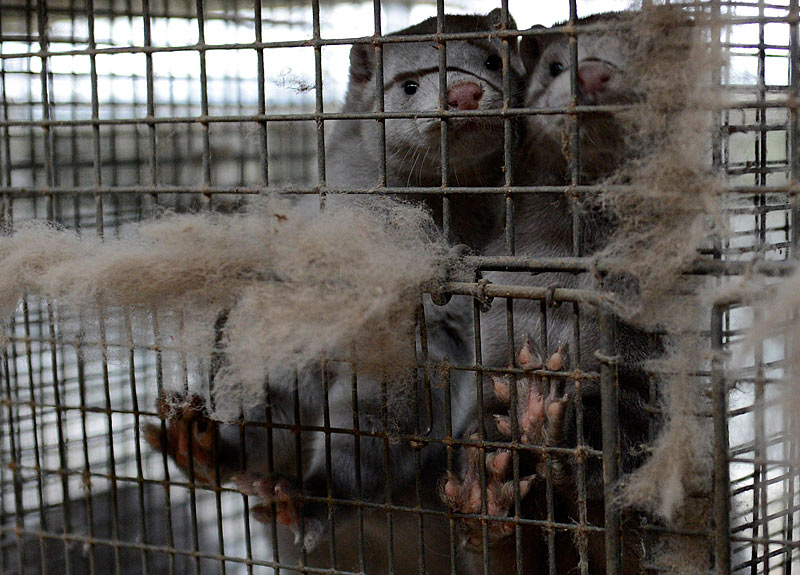
Estonia buns fur farms- another coffin nail in the fur industry

Report by Martin Balluch (Chairman of the Association against Animal Factories-VGT) – Austria

Yesterday the Estonian Parliament voted in the responsible committee to ban fur farms.

The final vote in the parliamentary plenary will take place on June 2, 2021.

Another coffin nail in the fur industry!

Martin Balluch was in Estonia in 2004 and 2005 to film fur farms.
There were still some very large farms from the communist era. These farms are now closed.

But the fur farming ban sends an important political signal.
Great Britain plans to ban the import of fur for clothing in the near future. If all EU countries have fur farming bans – and that day is not far away – then an import ban for fur can follow here too.

So whoever looks at the development of the abolition of the fur industry cannot help but see an animal welfare revolution.

At the beginning of the 20th century, Vienna was the central fur trading center, with 1500 pure fur shops.

In the 1990s, every woman on pedestrian zone in Vienna wore a fur coat in winter.

In 1998 the Association against Animal Factories achieved the world’s first fur farming ban, in Austria.
Violent campaigns against fur shops and fur in clothing chains followed.

In 2004 the fur ban came in Great Britain, and then in numerous other states.
Fur import bans for cat, dog and seal fur into the EU have been enacted.

Now there will soon be an import ban on all fur in the UK.

Within 25 years, the fur trade was essentially ended.

https://www.facebook.com/tierrechtedemokratie

And I mean… We’re glad! we are very glad.
Every murder and torture site that closes is free from suffering and that is a good thing.

My best regards to all, Venus

Brazil: no forest destruction for leather

Our demands on the automotive and fashion industry:

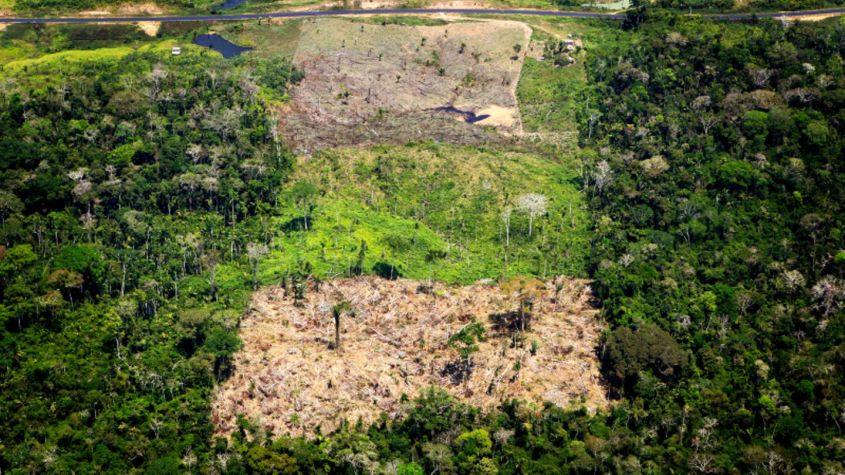
Deforestation in the Amazon reached a 12-year high last year: over 1 million hectares were destroyed! Livestock breeding causes by far the most deforestation in Brazil.

The use of Brazilian leather in the automotive and fashion industries is also contributing to the destruction of the Amazon rainforest.

A new study that we published together with the Rainforest Foundation Norway, Aidenvironment and Ecologistas en Accion shows that companies that supply leather to the automotive industry are partly responsible for the destruction of forests.

Some of these companies also supply the fashion industry, most of which is used for sneakers. The industry’s supply chain is tainted with deforestation and there are currently no adequate control systems in place to ensure this does not happen.

By buying leather products from companies involved in deforestation, your brand is promoting the destruction of the Amazon rainforest, one of the world’s most valuable ecosystems and vital in the fight against catastrophic climate change.

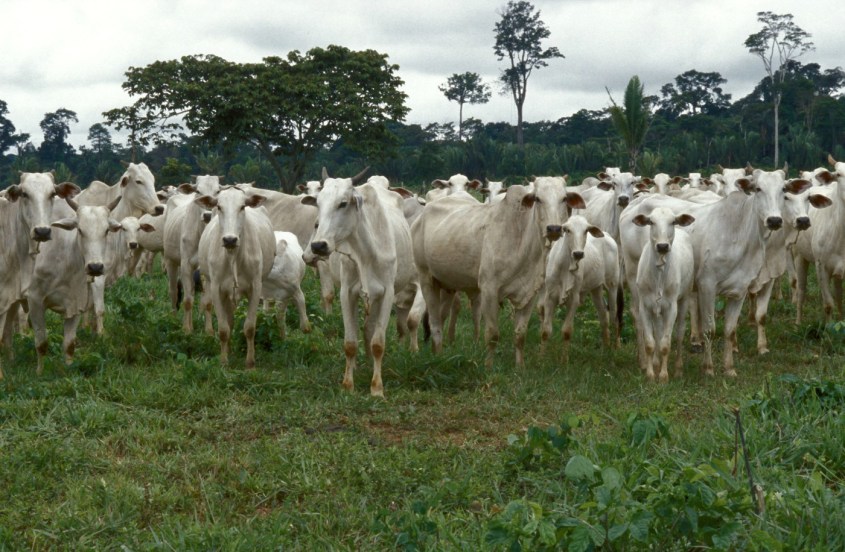
Vale do Jamari settlement, Candeias do Jamari, Rondônia, Brazil; Cattle, there are more cattle than people in the state of Rondônia.

As a successful multinational brand, it is your responsibility to ensure that forest degradation, ecosystem transformation and human rights abuses are eliminated from your supply chains.

You have the opportunity to help Brazil decouple forest destruction from beef and leather production, and we urge you to take advantage of it.

Eliminate deforestation from your supply chain!

Our demands:

We sincerely hope that you and your company want to be a part of the solution. Take measures to avoid the use of leather, which is driving deforestation in Brazil!

We address our demands to:

Volkswagen Group, with brands such as Volkswagen, Audi, Skoda
BMW Group, with brands like BMW, Rolls Royce and Mini
Stellantis, with brands like Peugeot, Citroen, Opel
Groupe Renault, with brands such as Renault, Dacia and Alpine
Daimler, with brands like Mercedes-Benz and Smart
Nike
VF Corporation, with brands such as Timberland, Vans, and The North Face
New Balance
Adidas, with brands like Reebook

The full report for all the details, including a comprehensive list of recommendations that apply to both auto and sneaker manufacturers, can be found here.

https://www.duh.de/amazonas-leder-stoppen/ (Petition)

And I mean…What do leather and meat have in common? Both often come from cattle.
And both are related to the illegal clearing of the rainforest, but also to immense animal suffering in the slaughterhouses of India and China.

The skin from which leather is made comes from animals that were mostly bred for their meat.
But leather is not a by-product of the meat industry in every country.

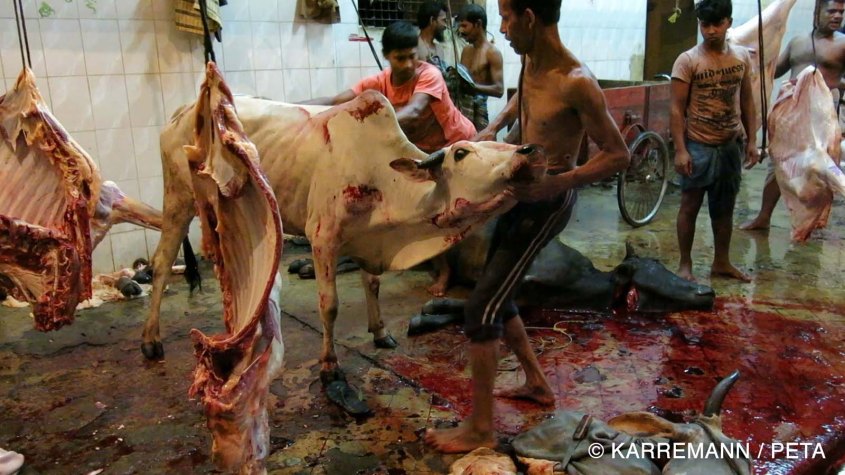
Leather production in Bangladesh. Cows are killed without any stunning.

Regardless of whether animals are bred especially for their leather or for their meat, according to reports, all animals will be exploited and have to experience the horror in the slaughterhouse.

The leather industry generates annual sales of US $ 80 billion in animal hides and leather products.

As the third manufacturing country, Brazil is only behind China and India. In 2017, Brazil ranked fourth in shoe consumption.
30 percent of the leather for car seats comes from Brazil, so it is very likely that a significant proportion of the animals must have grazed on illegally cleared areas.

In Asia, is India the largest producer of cheap leather.

Leder – Was jeder über die Lederindustrie wissen sollte
From here a large amount of finished leather and leather goods is exported to Japan, Germany, Italy, Spain and France.
India exports leather worth billions of euros
Cows are simply caught on the street, but so are dogs.
Often their legs are chopped off so that they can no longer run away.
Then the skin is torn off their bodies while they are alive.

Only if no animal products are used can animal cruelty and environmental crime be prevented
And if leather production in India were even worse for animals, the destruction of forests for leather in Brazil does not make that any better.
It’s about animal individuals, about the exploitation of people who work for this destructive industry, it’s about the poisoning of our planet by the tanneries.

We would say that every animal exploited is one too many.

My best regards to all, Venus
USA: Petition – Cancel Lottery for Hunters to Slaughter Grand Canyon Bison.


Cancel Lottery for Hunters to Slaughter Grand Canyon Bison


Petition Link – Cancel Lottery for Hunters to Slaughter Grand Canyon Bison – ForceChange


Target: Shawn Benge, US National Parks Service Deputy Director

Goal: Stop lottery to hunt Grand Canyon bison.

The National Parks Service (NPS) recently held a lottery that allowed anyone to enter for the chance to hunt bison in the Grand Canyon. More than 45,000 people entered the lottery, which is part of an initiative to limit the population of bison, whose growing numbers are negatively impacting resources in the Grand Canyon area. The NPS will ultimately only select twelve skilled shooters.

While the NPS has defended their decision for the cull, stating that a fast growing bison population has been ravaging water, vegetation, soils, and archaeological sites within the national park, the excitement around the opportunity to hunt this majestic animal is concerning. Hunting at national parks is forbidden, but the NPS does have the jurisdiction to allow park staff or volunteers to kill animals that are damaging the natural spaces. This normalization and “viral” attention that the search for bison-hunting volunteers has drawn could potentially lead to unauthorized hunting or attack on wild animals.

Sign this petition to urge the NPS to stop the public lottery to hunt Grand Canyon bison.

PETITION LETTER:

To Mr. Benge,

The publication of the culling of bison in the Grand Canyon and the ability for anyone to simply enter a lottery to hunt these animals sends the wrong message to the public. The NPS should be focused on conservation and respect for nature. This lottery has, instead, created “viral” excitement around the possibility of shooting a majestic animal that is native to the United States. The fact that 45,000 people registered for a lottery reveals a strange and gruesome desire of many individuals to kill wild animals.

I urge you to stop the lottery to hunt Grand Canyon bison and leave conservation efforts of all kinds to NPS staff.

Sincerely,

[Your Name Here]

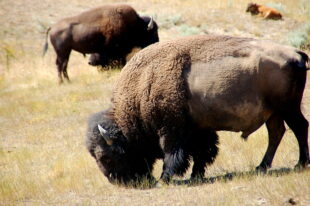
Photo Credit: Kewing


UK: 12/5/21 – Live Animal Exports To Be Banned – and Other Things.

WAV Comment (Mark) – After more than 30 years of personally campaigning against this disgusting, barbaric trade; the news today (12/5/21) is finally looking good.  “MINISTERS have published an action plan on animal welfare, looking at how to use Britain’s freedom outside the EU to increase standards”.  Freedom outside of the EU; this legislation shows what can be done by individual nations when they do not have to bow to do nothing fools in Brussels.

I am checking and re checking everywhere to get confirmation; but as you can see below it looks positive.

I will write more on this as more detail is obtained.

Regards Mark

George Eustice, the environment secretary, said: “We are a nation of animal lovers and were the first country in the world to pass animal welfare laws.

Our action plan for animal welfare will deliver on our manifesto commitment to ban the export of live animal exports for slaughter and fattening, prohibit keeping primates as pets, and bring in new laws to tackle puppy smuggling.

As an independent nation, we are now able to go further than ever to build on our excellent track record.”

UK to ban live animal exports for slaughter as part of welfare plan | Reuters

https://www.theguardian.com/world/2021/may/12/animals-to-be-formally-recognised-as-sentient-beings-in-uk-law

https://www.totallyveganbuzz.com/news/uk-ban-live-export/

https://www.moneycontrol.com/news/world/uk-to-ban-live-animal-exports-for-slaughter-as-part-of-welfare-plan-6882771.html

Brexit Britain leads the way! UK shames EU as plans announced to end ‘barbaric’ practice

MINISTERS have published an action plan on animal welfare, looking at how to use Britain’s freedom outside the EU to increase standards

Read in full – https://www.express.co.uk/news/politics/1434968/brexit-news-uk-live-animal-export-ban-update-george-eustice

https://www.rspca.org.uk/-/blog-uk-to-ban-live-animal-exports

UK: 11/5/21 – Update On ‘Quality Assured’ Pig Farm By ‘Animal Equality’.

WAV Comment – Our recent post – P&G Sleigh Pig Unit in Scotland- Pigs ‘hammered to death’! – World Animals Voice

By now, you probably will have seen our latest investigation into an intensive pig farm called P&G Sleigh pig unit. A lot has happened since we conducted the investigation. Here’s an overview of what unfolded.

  • Philip Sleigh, the owner of the farm, resigned as the Chairman of the Pigs Standard Setting Committee of Quality Meat Scotland (QMS), a public body to which he had been appointed as a Board Member by the Scottish Government.
  • The farm was dropped by the QMS assurance scheme.
  • Our investigation was published in an article in The Times, alongside a leader article titled ‘The Times view on animal welfare failings: Cruel Country’.
  • Tesco and Lidl both dropped the farm.
  • The Independent, the Scottish Daily Mail, and many more newspapers published articles covering the story, including the front page of Scotland’s most widely-read paper.

What we have achieved so far is huge. After our investigators captured footage of pigs being abused, we made sure people everywhere saw it by securing coverage in some of the UK’s leading newspapers. Scottish actress, Karen Gillan, also shared our investigation on Instagram to her 7.3m followers.

Not only has this led to people all over the country learning about the cruelty behind meat production in the UK, but it has been seen by government officials and company executives: decision-makers who are in a position to create change.

By uncovering ties between the farm and major UK supermarkets, Tesco and Lidl, we have sent another strong and clear message to retailers: if you do business with farms that abuse and exploit animals, you will be found out.

And we have also sent a powerful message to the meat industry itself. Philip Sleigh, who resigned as the Chairman of the Pigs Standard Setting Committee of QMS, is a well-known and influential figure in the UK meat industry. 

Rubbing shoulders with Government officials and accreditation reps, he was entrusted with a position of power, and yet his own farm breached the very standards that he helped set.

With this investigation, we have shown that it doesn’t matter how high up in the industry you are: we will hold you to account. 


While Philip Sleigh (pictured above) has left his position at QMS, the publicly-funded body still has a lot to answer for. It boasts of being proud of its standards, yet it took Animal Equality to uncover these serious breaches on its board member’s farm. How can QMS claim to take animal welfare seriously when its own poster-boy didn’t?

QMS is just one part of an industry which routinely misleads the public and profits from the abuse and exploitation of animals. We need the Government to take action.

ACTION

Please sign the petition at  Investigation: Suffering on Scottish Pig Farm | Animal Equality UK

Regards Mark