Inhumane Treatment of Bua Noi & Primates in Pata Zoo
Pata Zoo license comes up for renewal this month June 2020 It must not be renewed ! For years animal activists have been raising issues on the inhumane treatment of Bua Noi in Pata Zoo a privately owned zoo located on top of a department store Pata Pinklao in Thailand.
An offer from The Aspinall Foundation of moving Bua Noi to a Sanctuary facility. They have the experience and capacity to facilitate it and can fund the transfer at no cost to the owner Mr. Kanit Sermsirimongkol.
They’ve been running gorilla rescue and release programmes in the neighbouring Republics of Congo and Gabon for over 35 years, and have released over 70 gorillas during this time.
Such a transfer would have significant welfare benefits for Bua Noi, and sends a powerful message about protecting wildlife and habitats in the countries of origin.
Bua Noi has been held in a department store since 1987 that’s 33 years of suffering in captivity, how she was brought into Thailand is questionable the paperwork doesn’t add up she could have possibly been a fallen victim of wildlife trafficking.
• In March 2015, it was reported that Thai authorities charged Pata Zoo for breaking several laws and ordered the removal of all large animals (sadly NOTHING HAS HAPPENDED!!!! )
Then the DNP responded by declaring it could not withdraw the licence of Pata Zoo as the zoo had not done anything against the law. The DNP director-general argued that the Wildlife Conservation and Protection Act did not forbid animals from being caged in high-rise buildings and, therefore, Pata Zoo did not violate the law by maintaining a zoo on top of a building
The conditions Bua and other primates are forced to live in • Small Spaces • Barren Concrete and steel cells (outdated) • No natural environment (no sun, no grass , no plants, no soil ) • Suffering mentally • Isolation
Just this year in April 2020 a fire broke out in the zoo , to think of the mental state of the animals during this horrifying time! This should have prompted the government to shut the zoo down it’s unsafe the zoo and the building is old and dilapidated
The zoo is currently on lock down with the rest of the world due to the pandemic and the effects are taking it’s toll to humans, imagine Bua Noi the last gorilla in Thailand living in complete isolation .
This is the time the government must look at this issue with compassion and recognize that there is no conservation in allowing Bua Noi continued suffering !
Please Sign her petition Pata Zoo license must not be renewed to learn more about her story and other primates watch Stolen Apes .
How can we allow this type of suffering to continue ?
‘Teeming with biodiversity’: green groups buy Belize forest to protect it ‘in perpetuity’
Conservation organisations purchase 950 sq km biodiversity hotspot, helping to secure a vital wildlife corrido
“These logs are historic,” says Elma Kay, standing in Belize Maya Forest, where she has been doing an inventory of felled trees. “These are the last logs that were cut here, for mahogany and other hardwoods, left behind by the previous logging company.”
The last felled trees in Belize Maya Forest. Photograph: Handout
“These logs are historic,” says Elma Kay, standing in Belize Maya Forest, where she has been doing an inventory of felled trees. “These are the last logs that were cut here, for mahogany and other hardwoods, left behind by the previous logging company.”
Trees will no longer be cut down in this 950 sq km (236,000-acre) area, after the land was bought by a coalition of conservation organisations to save one of the world’s last pristine rainforests from deforestation. “The forest will now be protected in perpetuity,” says Kay.
The news is timed to coincide with Earth Day, the annual event established in 1970 to mobilise action on environmental issues.
The newly named Belize Maya Forest is part of 150,000 sq km (38m acres) of tropical forest across Mexico, Belize and Guatemala known as the Selva Maya, a biodiversity hotspot and home to five species of wild cat (jaguars, margay, ocelot, jaguarundi and puma), spider monkeys, howler monkeys and hundreds of bird species.
This means we get to safeguard our biodiversity, from iconic jaguars to endangered tapirs
Elma Kay, Belize Maya Forest Trust
“The minute you start driving through the forest, it’s teeming with biodiversity,” says Kay, one of the directors of the locally run Belize Maya Forest Trust. “I can’t tell you how many ocellated turkeys we saw on the drive in – more than 50. For Belizeans, this forest means we get to safeguard our biodiversity – from iconic jaguars to critically endangered Central American river turtles to endangered tapirs – which is the lifeblood of our economy and our cultural heritage.”
Combined with the adjacent Rio Bravo Reserve, Belize Maya Forest creates a protected area that covers 9% of Belize’s landmass, a critical “puzzle piece” in the Selva Maya forest region, helping secure a vital wildlife corridor across northern Guatemala, southern Mexico and Belize.
Protecting large areas of pristine rainforests will help mitigate the impacts of the climate crisis. “Forests like these hold vast amounts of carbon,” says Julie Robinson, Belize programme director for the Nature Conservancy, one of the partners behind the acquisition. “We’re at a tipping point, so it’s really important to try to reverse the trend we’re on.”
The area was owned by the Forestland Group, a US company that had permits for sustainable logging. When it came up for sale, the Nature Conservancy and others, including Rainforest Trust, World Land Trust, University of Belize Environmental Research Institute and Wildlife Conservation Society, saw an opportunity to buy the land.
“If it wasn’t bought for conservation, the most likely buyers would be for large-scale, industrial, mechanised, monocrop agriculture,” Kay says. “That’s the threat to forests in Belize, especially central Belize, the country’s agricultural belt. What we saved this land from is full-scale deforestation and conversion.”
Since 2011, the Maya Forest corridor, which connects Belize’s Maya mountains and the northern Maya lowland forests shared by Belize, Mexico and Guatemala, has faced high rates of deforestation, driven by land clearances for industrial-scale agriculture. “For decades, the Belize government, Belizeans and conservation organisations wanted to see this area protected,” says Robinson.
Despite the name, Mayans, whose civilisation once stretched across Belize, Guatemala and parts of Mexico, have not lived in the area for many years. Today, their descendants in Belize mainly live in the south. According to Robinson, indigenous peoples were not displaced to make way for industry, as has happened elsewhere in Latin America, but the private land was closed off. “At the time of the Forestland Group’s purchase, there were no people living on the property,” says Robinson. “However, there are local communities all around the property. They didn’t have access to the land.”
Belizeans have an incredible connection to nature. We refer to our country as the ‘jewel’
Julie Robinson, the Nature Conservancy
“There are archaeological sites on the property that date back to AD800,” Robinson adds. “There are also more than 25 cenotes [fresh water sinkholes], the sacred pools of Cara Blanca, which hold incredible Mayan treasures. Very few Belizeans have ever been to these areas. Those cenotes were also being threatened by agriculture. Culturally, it’s important to preserve those elements to reconnect Mayan communities to sacred sites, and also find ways of generating income through them for the communities and the country.”
Now the land has been acquired, Kay is leading the Belize Maya Forest Trust’s consultation process with local communities. Collaborative plans are likely to include low-impact eco-tourism. There may also be some sustainable agriculture, as well as scientific research. The only thing not on the table is the extraction of natural resources, such as timber.
“What surrounds Belize Maya Forest is a multi-ethnic society, including people like me, of mixed Mayan and European descent, and people from neighbouring Central American countries, German Mennonites,” says Kay. “We’re engaging all the different communities to participate in a conservation action plan. Most livelihoods are based on agriculture. One objective will be making agricultural livelihoods more sustainable, so there will be more climate-smart agriculture, agroforestry systems, systems that are restorative for soils.
“We recognise people need to make a livelihood, but it’s about doing that with values that protect the Maya Forest and safeguard it for all Belizeans.”
The Belize Maya Forest is home to five species of wild cat, including endangered ocelots. Photograph: Sergi Reboredo/Sipa USA/PA
As the world’s climate and biodiversity crises worsen, philanthropic buying of land for protection could become more common. “It’s absolutely the way forward,” argues Robinson. “But it’s important to do it in collaboration with communities. It can’t be that we just buy a property, lock it up and say ‘this is now protected’. That’s not going to work.”
Belize has launched several initiatives in recent years to protect its natural resources. In 2018, oil drilling off its coast was banned to safeguard marine environments and the lucrative diving industry. Nearly 40% of the country’s land mass is also under some form of protection. “Belizeans have an incredible connection to nature,” says Robinson. “We refer to our country as the ‘jewel’.”
But the government’s environmental policies are also pragmatic, based on the value nature brings, from food and water supplies to tourism, one of the country’s largest generators of income. “People realise we need to have biodiversity and nature, but we need to use it in a sustainable way,” says Robinson. “Development is absolutely important. Belizeans support development and agriculture, but in a way that is in balance with nature”.
The organization SOKO animal protection and the magazine “DER SPIEGEL” reveal:
The German Nature Conservation Association# NABU # supplied the University of Tübingen with crows for experiments in which electrodes were operated on in the brain.
Their heads were drilled open, they were locked up, tied up, and all to find out how intelligent the birds are and what goes on in the crows’ brains as they learn.
Carrion crows in the laboratory of the University of Tübingen
SOKO Tierschutz prepares legal steps against the experiments and the improper use of the animals.
According to a statement from NABU on its homepage, NABU was asked for animals by Prof. Nieder from the University of Tübingen, and these were given to him.
In the meantime, NABU has published a statement on this – nothing was known about these attempts, so the argument goes.
“If the Nature Conservation Federation had been aware of such animal experiments, no carrion crows would have been handed in,” says NABU.
That sounds like washing your hands and trying to cover up.
That cannot be true either, because NABU, which learned the facts months ago, will only come to the public after the report by the magazine “Der Spiegel”.
The Nature Conservation Federation (NABU) claims that they assumed that the carrion crows that were sold would only be used for breeding or for non-invasive behavioral research.
This is a pure farce.
Because at the University of Tübingen horrific animal experiments are carried out.
And NABU must have known that.
And one more thing: Shouldn’t NABU already have a contract from the university back then, in which the protection of animals is specified and guaranteed?
In the meantime, every clear-thinking person should be aware that the German nature conservation association does not practice animal protection, but is playing a dangerous game with the razor blade.
Many people support NABU, financially and voluntarily, in good faith in animal welfare.
Animals lost their lives and with it, the trust of supporters was abused.
P.S: the head of the NABU, the president is a hunter.
Such a union cannot represent the animals!
💔That’s how this poor dog was rescued from a hatchery
Such was the condition of this rescued dog who for years had been forced to “produce” puppies for sale in stores and through individuals.
She was blind, very weak, and her breasts were shattered from breastfeeding all the children that her tormentor later took away
This is what is behind selling puppies. Behind cruel commercial pet breeding.
Don’t be part of it. Adopt, not buy.
On April 20, 1985, courageous animal rights activists from “Animal Liberation Front”,ALF broke into the laboratories of the “University of California, Riverside” / USA in a large-scale operation and freed 468 pitiful laboratory animals from this horror cabinet.
For the mainstream press, only the US $ 700,000 allegedly incurred as the damage was worth mentioning; nobody saw the ethical feat of animal liberation in this empathic commando action, or better yet, nobody wanted to see it.
One of these poor creatures was “Britches”, a 1-month-old stubby macaque.
The little monkey was painfully separated from its mother when it was born.
A terrible human fate was destined for him.
Experiments on the baby were carried out in the cold, blood-stained laboratories of the University of California.
The attempts were barbaric and diabolical.
The innocent creature’s eyelids were sewn shut and an electronic sonar sensor was planted in its tiny, fragile skull, as part of a 3-year experiment in which many other animals were also horribly tortured.
These useless experiments were intended to explore the behavior and neural development of monkeys under manipulated circumstances. ALF freed the little guy and 467 of his fellow sufferers.
They brought “Britches” to a veterinarian who opened the animal’s eyelids again and gave him back his eyesight.
He was also able to remove the devil’s apparatus from his brain without a trace.
“Britches” recovered from his ordeal and was given a life on a grace ward.
There the bright and cheerful monkey was 20 years old despite his trauma until he finally died.
This video shows the monumental liberation of Britches:
Millions of other living beings, unfortunately, do not have the luck of the little “Britch” to be freed and saved by the “Animal Liberation Front” every year.
In the name of a pseudo-science that only serves the career or the sadism of the experimenters, they have to endure unimaginable torments in order to mostly endure a cruel death in the end.
The handling of “laboratory animals” is criminal: they are drowned or suffocated in the name of science,
they are starved to death,
they are amputated,
their organs are crushed, burned,
they are irradiated in experimental surgery they are consumed,
put under shock,
isolated from their conspecifics, exposed to weapons of mass destruction,
blinded,
contracted with cancer, or paralyzed,
they have to inhale nicotine, drink alcohol, or use drugs such as heroin and cocaine.
We also want to commemorate all the victims who found, find, and unfortunately will find the tragic and senseless death for.
The fact that this violence is legally protected and, in the case of animal experiments, even socially accepted, makes the criminal researchers even more uninhibited and the laboratory into a law-free zone
And then it is said that animal rights activists are violent!!
Unless serious steps are taken to put an end to all of this, there will always be animal rights activists who will resort to violence against the exploiters somewhere and at some point in order to defend animal rights.
Thanks to ALF and all active animal rights activists for every animal rescued
Their selfless work is important and right because no creature on earth deserves to be abused and exploited by megalomaniac scientists in “Frankenstein’s laboratory” as a test object.
We thank them, and we fight with those in our way, everyone as he can, against the fascist system of exploitation of animals on every level.
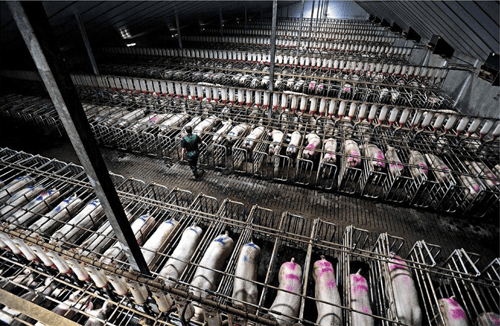
This investigation was carried out at the breeding facility and the pig slaughterhouse at Kibbutz Lahav ** New Covert Investigation 2020 **
This investigation was carried out at the breeding facility and the pig slaughterhouse at Kibbutz Lahav
Operating for about 60 years!
This historical record tells the reality in which the pigs live
And the variety of practices and experiences they go through to the last day of their lives.
Feel free to watch and learn about this industry
And of course anyone interested in making a change
And stop eating animals
The 10 best countries for vegans and vegetarians India Israel Taiwan Australia Greece Italy Indonesia Jamaica Poland Canada
we read on …”When it comes to pure vegan food, Israel could also be at the top. There is the highest per capita rate of vegans in the world and there are more and more. Accordingly, the selection of vegan food and vegan restaurants is huge. As in other countries in the Middle East, falafel, hummus, couscous, and tabouli are part of everyday life and are vegan anyway”
On Facebook, we also read from Yair Netanyahu, son of the country’s president:
“Have mercy on animals!Please don’t eat meat!🐄🐐🐓גלו רחמים כלפי בעלי החיים!בבקשה אל תאכלו בשר!”
Most of the people in the country don’t know about such crimes or they just don’t care.
There are about 200,000 pigs on the land of the State of Israelkilled for the pork industry in the same or a similar way.
Of course, German investments also show similar situations at German slaughterhouses.
But Germany is not even in eleventh place among the vegan countries.
And apart from that!The fact that the same animal torture happens elsewhere does not make the bad conditions in this country any better.
India, too, the first country on the list, is not on the right track and is becoming more and more capitalist and therefore worse and worse.
But Israel has received much praise from many media and animal welfare websites for the allegedly increased vegan awareness of the Israelis and is very often reported on the latest developments in animal welfare in the country
Apparently, it is purely media and travel- industry propaganda. This is how media propaganda works.
P.S: Following this investigation, a criminal complaint has been filed into the location.
As you read this, Cam is desperately waiting to get out of his tiny cage. He is trapped in a bile bear farm in Hai Phong province in Vietnam.
When we visited him at the farm, he was pacing around in the cage, climbing up and down and biting the bars, trying everything to escape this sad and barren environment.
We don’t know anything about his past but can see he is pretty young. He still has his whole life ahead of him.
Without help, his life would consist of nothing but the bars of this cage.
Never getting the chance to feel the grass under his feet. Never climbing up a tree. Never playing with another bear.
Nothing would make us happier, than bringing him to our beautiful BEAR SANCTUARY Ninh Binh. How excited would he be, when he discovers the huge outdoor enclosure for the first time? Experiencing all the lush vegetation, trees, climbing platforms and pools to swim in. Experiencing what a bear life can look like.
Mark, we can’t leave Cam behind, right? Will you help to free the young bear from his tiny cage?
C’est Assez! supports the European Citizens’ Initiative #StopFinningEU to end the European Union’s shark fin trade
22 April 2021
C’est Assez
The EU exports approximately 3,500 tonnes of fins per year, with a total value of around 52 million euros. 73 million sharks are slaughtered each year for this purpose
While shark finning is prohibited on EU vessels and in EU waters, and sharks must be caught with fins attached to their bodies, the EU is one of the world’s largest exporters of fins and a significant transit area for the global fin trade.
More than forty European NGOs, including our member C’est assez!, have pledged their support to compel the European institutions to ban all forms of finning and their transportation in EU countries. The European Citizens Initiative (ECI) has now received over 200,000 signatures in opposition to shark finning.
It is past time to stop this barbaric traffic and take action to protect sharks, which are critical to the health and balance of the oceans.
How they should be – Dolphins swim free in the Oceans.
The rapid closing of dolphinariums poses a threat to dolphins
22 April 2021
Sea First Foundation
Public opinion around dolphins in dolphinariums is clearly changing.
But what happens to dolphins when the parks get closed? Talks with policymakers are underway and several dolphin rehabilitation programs are getting implemented in Europe, but none are yet operational. The very complex nature of such a pilot project may be to blame.
As long as no appropriate alternative is found, the dolphins are relocated to other marine parks. Unfortunately, this causes a great deal of animal distress, and is often fatal. For example, in 2016, three dolphins were moved from Finland’s Särkänniemi Zoo to Attica Zoo in Athens, where one of the animals died after a short period of time.
Dolphin attractions were also closed with immediate effect in France, Spain, and Switzerland as a result of government decisions made in response to pressure from protestors who probably just meant well.
Dolphins become ill from time to time and may not survive such abrupt changes or transportation. The animals’ extreme stress and anxiety can be fatal.
Many who survive the transport are relocated to other parks in countries where public pressure is less severe. This results in ever-increasing dolphin numbers in Europe’s remaining dolphinariums, causing overpopulation and additional stress for the animals.
The marine parks in China are still developing, and it is likely that the next step will be to export European animals to China.
In conclusion, before we start putting more pressure on governments to close sea parks in Europe, it is important that we get our rehabilitation projects fully operational as soon as possible.
Beef production drives deforestation five times more than any other sector
22 April 2021
A research published in the World Resources Institute in March 2020 found that two of the main products responsible for deforestation are beef and soy, the latter being used for animal feed. The EU, as net importer of these products, should address the impact of such imports on the environment and on animals to ensure coherence between EU trade policy and the EU Green Deal.
According to a research by Global Forest Watch, the total loss of tropical forest increased by 12% overall between 2019 and 2020. Agriculture is the top source of worldwide deforestation (40%), and among the top commodity-drivers of deforestation, beef holds the first place.
Overall, beef is responsible for 36% of all agriculture-linked forest-replacement. The huge responsibility borne by the beef industry is due to the conversion of forests into cattle pasture, which amounted to 45.1 Millions hectares of lands deforested between 2001 and 2015 – a rate that is five times higher than for any other analysed products.
Soy also ranks seventh in the study, as it is responsible for the destruction of 8.2 million hectares of forests between 2001 and 2015. Soy is widely produced to serve as animal feed, notably in the poultry (37%) and pigs sectors (20%). Therefore, the role played by the meat industry in global deforestation largely exceeds the role played by the beef sector itself.
The findings by Global Forest Watch are deeply alarming, as rampant deforestation has clear impacts on wildlife and their habitats and can lead to the extinction of species that only exist in one specific region. 80% of terrestrial species live in forests, and the world is currently undergoing the sixth great mass extinction of species, which is mainly due to agriculture, according to Global Forest Watch’s report. Deforestation is also a source of many welfare-related concerns. With the increase in wildfires, animals -wildlife, but also pets – are suffering and many do not manage to escape. For the surviving wild animals, many are displaced and will generally suffer from starvation and social disruption.
Whilst hot spots of deforestation vary by sector, the beef industry related deforestation is highly concentrated in the Amazon, which is home to millions of species.In Brazil alone, which hosts the largest part of the Amazon, over half of the deforestation came from pasture in the last twenty years. The responsibility borne by agriculture (including the beef sector) on the Amazon’s deforestation is much higher than in other parts of the world, reaching 56% in 2020 whereas agriculture is generally responsible for 40% of deforestation.
Considering that agriculture-driven deforestation is permanent (whereas lands that suffer from deforestation caused by fires may regenerate), this adds a sense of urgency for the EU to uphold its sustainable agenda. Mercosur is already the largest supplier of beef to the EU, accounting for 73% of total EU beef imports. If the EU-Mercosur trade deal was implemented as it stands, imports of beef would increase between 30% and 64%. The Ambec report – the impact study commissioned by the French government – concluded that, as it stands, the EU-Mercosur agreement would generate an extra 25% of deforestation in the Amazon in the six years following its entry into force.
As Eurogroup for Animals has been continuously advocating, the unconditional liberalisation of animal products foreseen in the EU-Mercosur trade deal would fuel intensification of animal farming, which not only is extremely detrimental to animal welfare, but would also highly contribute to fuel deforestation. We thus call on the EU to uphold the objectives of the Farm to Fork Strategy, which are to use trade policy “to obtain ambitious commitments” from partners in key areas such as animal welfare.
The EU must take the opportunity of the EU-Mercosur agreement to negotiate the adoption by Mercosur countries of EU-equivalent legal standards in key sectors (beef, but also broiler chicken and laying hens), as well as in terms of transport, or to agree on conditions to access tariff-rate quotas or liberalisation in animal products, including the respect of EU-equivalent animal welfare standards.