
even if I see them every day, every day I find them beautiful
and their singing too
regards and good night, Venus
even if I see them every day, every day I find them beautiful
and their singing too
regards and good night, Venus
Hunting dogs are trained and tested on live foxes for construction hunts in training facilities.
For the foxes who are abused for this, this means a sad life in the oppressive confines of a barren enclosure on the edge of the minimum legal requirements.

And it means a life in constant fear of the next use as an exercise object.
Because the fox cannot know that physical contact between him and the aggressive hunting dog is forbidden in training facilities and should be prevented by sliders in the artificial tunnel system. He suffers from stress and fear of death again and again.

The dogs should learn to be able to chase after the foxes through the corridors of the fox den.
For this purpose, an artificial structure with several corridors made of concrete tubes or slabs is built, which meet and converge again and again in different places.
The hunter decides how far the fox can flee and whether the dog should reach him or not using the slider, lid, and grille.
A fox is driven into the tube.
Follow the dog.
In contrast to the real own foxhole, the fox does not know its way around these corridors.
If the dog has caught the fox safely, the hunter watches with amusement as the dog tears the fox to pieces.
If the fox succeeds in repelling the dog or if there is even a risk of injury to the dog, the hunter will of course help his dog to kill the fox.
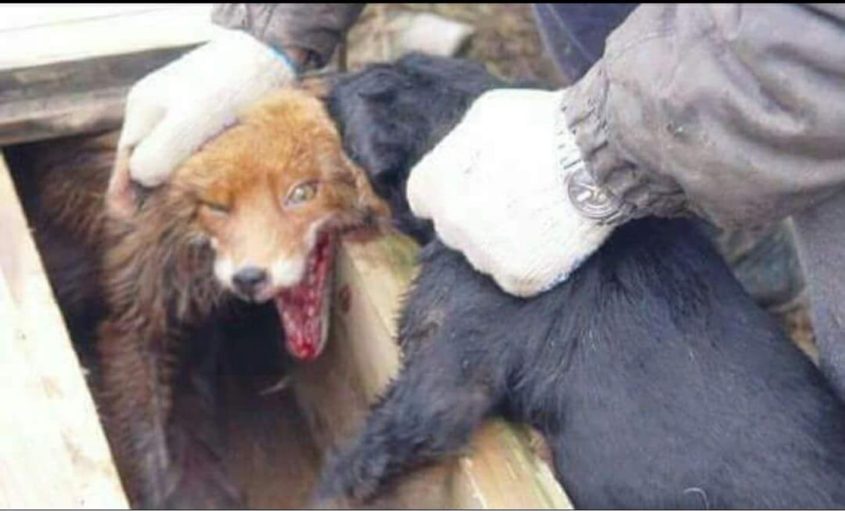 This is the training facility with living objects, with foxes
This cruel type of exploitation is being practiced particularly frequently again these days.
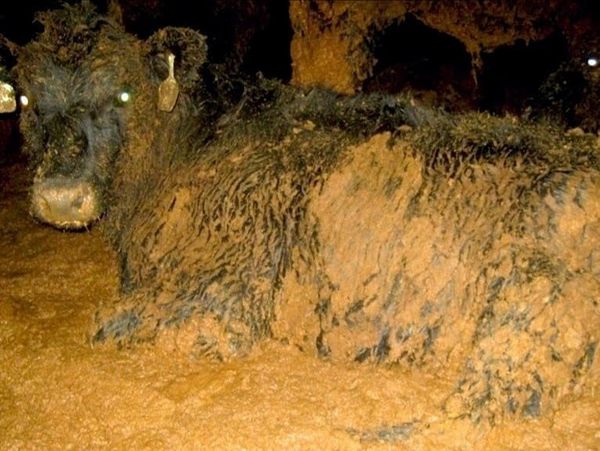
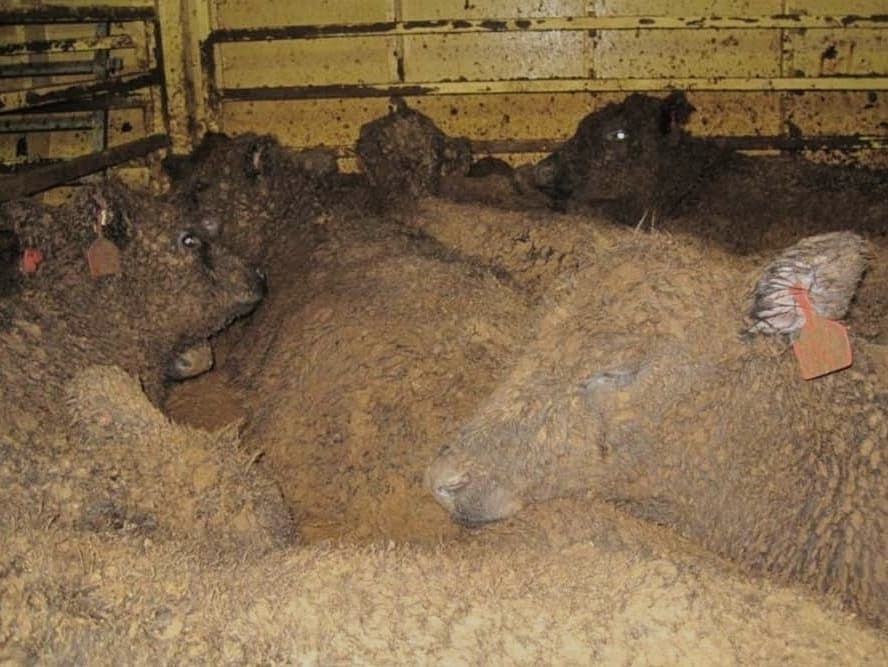
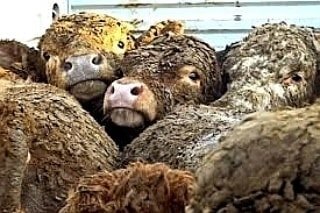
Live animals being shipped by sea.
These photos have nothing to do with the Karim Allah, or the current problems in the Suez Canal.
We now do understand that they are from the ‘Elbeik’; which was going round the Med for over 3 months.
They have everything to with the conditions faced by some animals when they have suffered at sea for longer terms.
Unlike some others, we will not hesitate to show the reality of this business.
Please remember this photo when we ask for your help and support with regard issues trying to stop this disgusting trade.
Thanks; Regards
IT IS WHY WE FIGHT FOR THEM !!
Mark
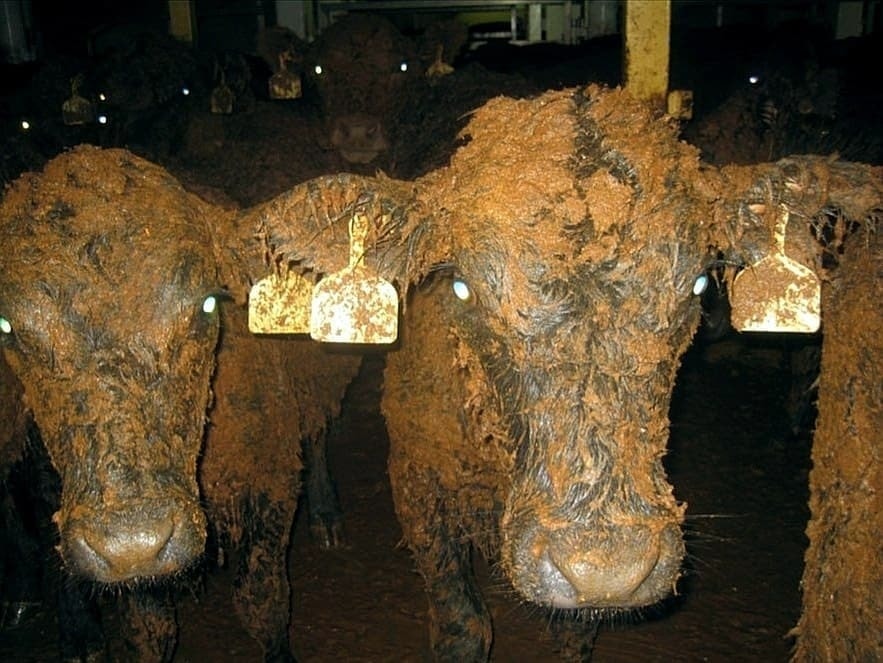
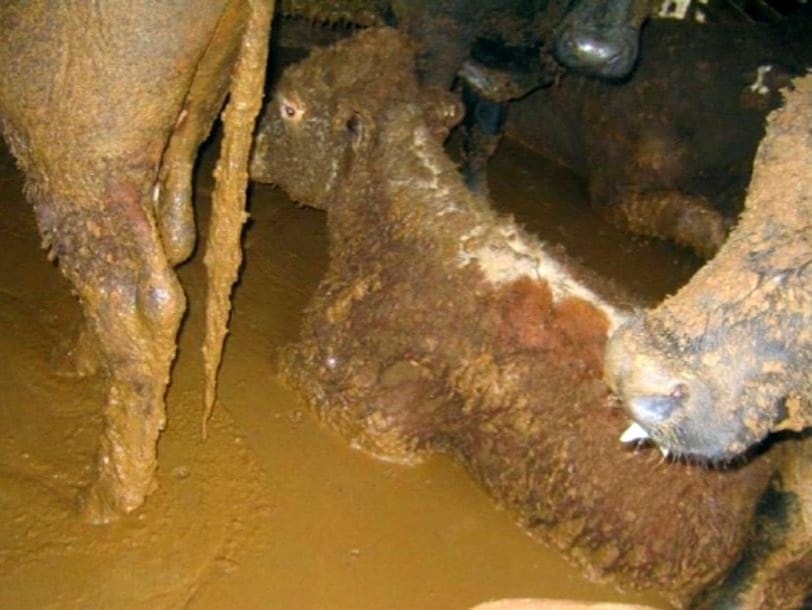

WAV Comment: We hope that we have given you extra fodder over recent weeks on the issue of live animal exports. The Karim Allah, the Elbeik; and now the issue of over 20 livestock vessels stopped because of the problems in the Suez Canal.
It is vital that NZ gets the message that it must stop live animal exports; so please send your message (link below) as soon as possible – there is not time to delay.
Regards Mark and Venus.
The NZ government will soon decide whether to ban live export.
The fate of hundreds of thousands of animals in New Zealand hangs in the balance. We’ve heard from our friends at the NZ group SAFE For Animals that their Prime Minister could be making a decision on a long-awaited review of the live export industry any day now.
Please urge Prime Minister Jacinda Ardern now to end live animal export for good.

Take Action by clicking on the following:
The review into live export, which started nearly two years ago, considered a range of options from improving systems to a total ban on this cruel practice. The papers are now with the government and they’ll decide soon which of these options to implement. So animals need your voice urgently today.
New Zealand hasn’t exported live animals for slaughter for many years, which is a testament to caring people speaking out against this cruelty. But a loophole has allowed the ongoing export of ‘breeder’ animals from New Zealand — meaning pregnant dairy cows are being shipped all the way to China and other countries around the world. There these vulnerable animals face repeated forced pregnancies, with their calves taken soon after birth, and eventual slaughter that doesn’t need to meet New Zealand standards.
One tragic outcome of this loophole trade was the Gulf Livestock 1 disaster last year. On 2 September 2020, the live export ship capsized in heavy seas and sank off the coast of Japan on the way to China. Forty-one of forty-three crew members and all 5,867 New Zealand cows onboard died at sea. Sadly, this was the latest in a long list of disasters at sea in the global live export industry.
Prime Minister Ardern and her Cabinet meet on Mondays: let’s make sure that emails from compassionate people have placed animals front of mind as they start their next meeting.
The decision that New Zealand makes on this will also set a hugely important precedent for animals in Australia and other countries,

Please join other caring people in speaking out for cows and their calves now.
Together, we can take this important opportunity to call for a kinder future for animals in New Zealand and around the world.
For the animals
Lyn White AM
Animals Australia

WAV Comment: Well done ‘The Guardian’ (London) national press for keeping us so well informed on this issue. As usual and have we have seen with issues such as the capsize of the ‘Queen Hind’ in Midia (Ro); the jack arse Romanian government have nothing to say – just like their masters at the EU. Everyone in power keeping tight lipped about animal suffering as always. Today, 28/3; it would appear that there are now 20 livestock vessels having problems in relation to the Suez incident.
If this is not time to stop all live animal exports, then when is ?
Do politicians listen ? – Do they hell !
Regards Mark
View all our posts regarding live transport by visiting: Live Transport – World Animals Voice
At least 20 vessels carrying live animals, according to industry tracking data, which could pose problems if Ever Given rescue effort proves prolonged and feed supplies run low
With the MV Ever Given mega-ship still stranded in the Suez Canal and blocking traffic in both directions, it emerges that at least 20 of the cargo vessels forced to queue in the Mediterranean, Red Sea and along the historic waterway are carrying livestock, raising concerns about the animals’ welfare.
Data from freight tracking website Marine Traffic indicates that 11 of the delayed container ships are carrying cattle, sheep and other livestock, while the Australia-based NGO Animals International has identified a further nine, according to The Guardian.
Marine Traffic spokesperson Georgios Hatzimanolis said three of the carriers, the Omega Star, the Unimar and the Sea Star, “appear to be stuck at various points in the canal” rather than queuing for entry.
Gerit Weidinger, EU coordinator for Animals International, said the Unimar and Omega Star appear to have left Spain on 15 March and 16 March respectively while a further nine of the boats were loaded in Romania earlier this month.
While the animals aboard are not in immediate danger, the prospect of the rescue effort to free the Ever Given taking several weeks to accomplish poses serious questions about their welfare.
“I wouldn’t expect just after a two-day delay for a problem to have built up,” Peter Stevenson, chief policy officer at Compassion in World Farming, told Bloomberg. “It’s as time goes by that the problems get worse. Occasionally, there are real scandals when things go wrong, but it’s a day-to-day horror.”
“My greatest fear is that animals run out of food and water and they get stuck on the ships because they cannot be unloaded somewhere else for paperwork reasons,” Ms Weidinger said.
“Getting stuck on board means there is a risk of starvation, dehydration, injuries, waste buildup so they can’t lie down, and nor can the crew get rid of dead animal bodies in the canal. It’s basically a ticking biohazard timebomb for animals and the crew and any person involved.”
Companies transporting livestock by sea reportedly set sail with at least two or three days’ worth of extra hay or feed on board and could potentially have more delivered by barge if they cannot reach port in time, a process known as “midstream loading”.
The chaos in the canal began on Tuesday when the Ever Given, a 220,000-tonne container ship operated by Taiwanese shipping giant Evergreen was apparently blown off course by 30mph winds and became wedged in the bank, bringing traffic to a standstill in a trade route that accounts for approximately one-tenth of the world’s seaborne freight.
Efforts to free it using a team of tugboats, diggers and cranes have yet to see the ship refloated, with the ongoing delays to the delivery of container cargo expected to have widespread knock-on effects for the global supply chain.
“Even the slightest delay in traffic can result in congestion and disturb the delivery of goods and commodities on both sides,” analysts at S&P Global Platts warned earlier this week.
Earlier report from The Guardian:
At least 20 livestock ships caught in Suez canal logjam | Animals | The Guardian
Concerns for animals’ welfare if Ever Given blockage crisis is protracted
At least 20 of the boats delayed due to a stricken container ship in the Suez canal are carrying livestock, according to marine tracking data, raising concerns about the welfare of the animals if the logjam becomes protracted.
The 220,000-ton Ever Given is causing the longest closure of the Suez canal in decades with more than 200 ships estimated to be unable to pass, and incoming vessels diverting around southern Africa’s Cape of Good Hope.
Georgios Hatzimanolis, a spokesperson for the tracking website Marine Traffic, said while some livestock ships were waiting to enter the canal, three – the Omega Star, the Unimar and the Sea Star – “all appear to be stuck at various points in the canal”. Marine Traffic data showed 11 delayed livestock ships, while an NGO has identified others, bringing the total identified so far to 20.
Five of the ships identified had loaded animals in Spain, and nine had loaded in Romania earlier this month, according to the NGO Animals International.
Gerit Weidinger, EU coordinator for Animals International, said data from marine tracking websites indicated the Unimar left Spain on 15 March bound for Jeddah. The Omega Star left Spain, she said, on 16 March bound for Port Said.
There were no immediate welfare concerns for the animals, but if the Ever Given has to be lightened to make it easier to dislodge, using cranes to remove enough containers could take weeks and the surrounding ships would need to leave and find longer alternative routes.
The nearby ports of Said and Suez could be used to reload fodder if supplies run low, though the process may not be straightforward with so many ships in the queue.
Thousands of cattle have already been slaughtered this year because of delays at sea.
Two ships, the Karim Allah and the Elbeik, were forced to spend months away from port because their original destination refused to accept the animals due to a health paperwork dispute that raised fears the cattle could be carrying the bovine disease bluetongue. The dispute ignited a chain of events that saw both vessels eventually return to Spain.
The animals on board the ships returned in such a poor condition Spanish authorities ordered them to be slaughtered in the port of Cartagena. More than 850 cattle on the Karim Allah were slaughtered earlier in March, while the Elbeik slaughter is ongoing with an estimated 360 of the almost 1,800 who commenced the journey culled as of Thursday.
Weidinger said she was concerned if the crisis became protracted the animals’ welfare could become an issue.
“My greatest fear is that animals run out of food and water and they get stuck on the ships because they cannot be unloaded somewhere else for paperwork reasons,” she said.
“Getting stuck on board means there is a risk [for the animals] of starvation, dehydration, injuries, waste buildup so they can’t lie down, and nor can the crew get rid of dead animal bodies in the [Suez] canal. It’s basically a ticking biohazard timebomb for animals and the crew and any person involved,” she said.
Asked about the ships with Spanish-origin livestock on board, the Spanish agriculture ministry said on Thursday: “We cannot tell you anything about these ships, but due to the blockage of the Suez canal as a result of the grounding of the cargo ship, the Spanish administration has given orders that no animal transport ships bound for Saudi Arabia and Jordan should be loaded until the canal can be navigated normally.”
Romanian agriculture and veterinary authorities have yet to comment.
…and gives it the name … “The Perfect Moment”
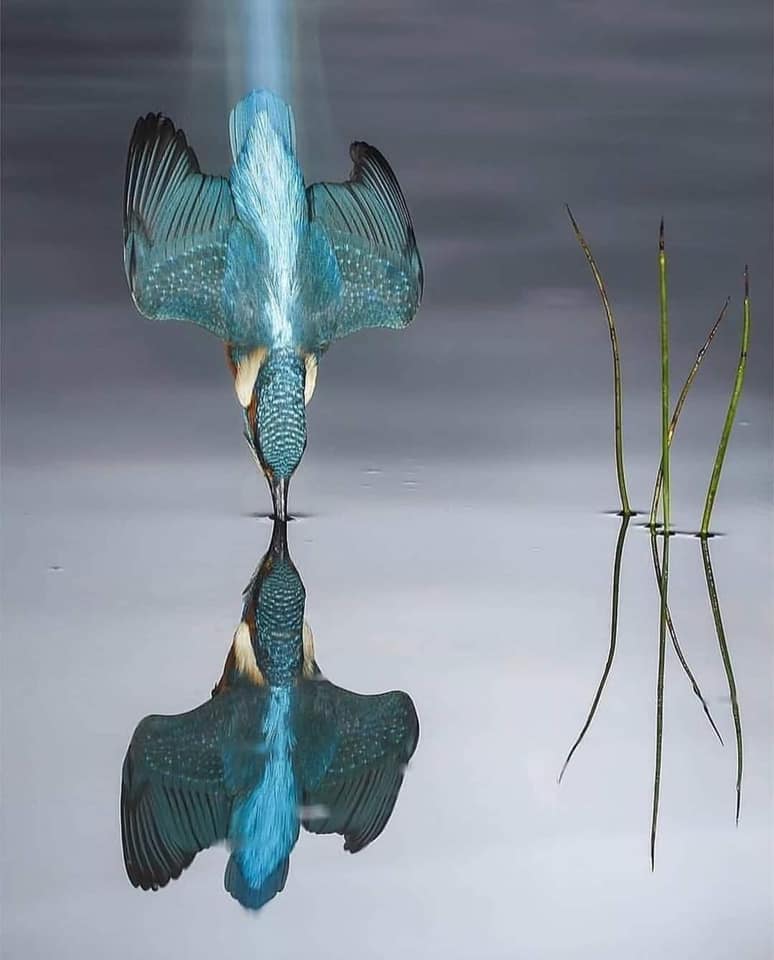
With this amazing photo of an ice diver, photographer Mario Cea won the “Wildlife Photographer of the Year” competition (2016)
We also think the photo is fantastic! really he deserves the award!
regards and good night, Venus
The economic interests of the poultry mafia have so far been one of these “reasonable reasons” for the brutal massacre of 45 million male chicks in hatcheries in Germany every year.
Germany produced 20 billion eggs in 2020.
A horror crowd!
To do this, over 45 million hens in Germany have to live a miserable existence in cramped, dark stables.
The ban on shredding from 2022 is an overdue step and does not change anything in the basic exploitation and suffering of chickens.
In 2019, 45.3 million male chicks were massacred in Germany.
They do not lay eggs and put on little meat.
Under this logic, it is legal male chicks brutally gas or shredded a few hours after they saw the light of day.
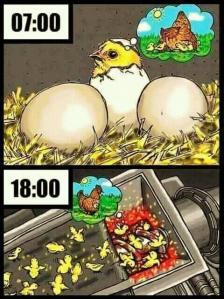
Producing living beings in order to kill them is the worst form of fascism.
My best regards to all, Venus
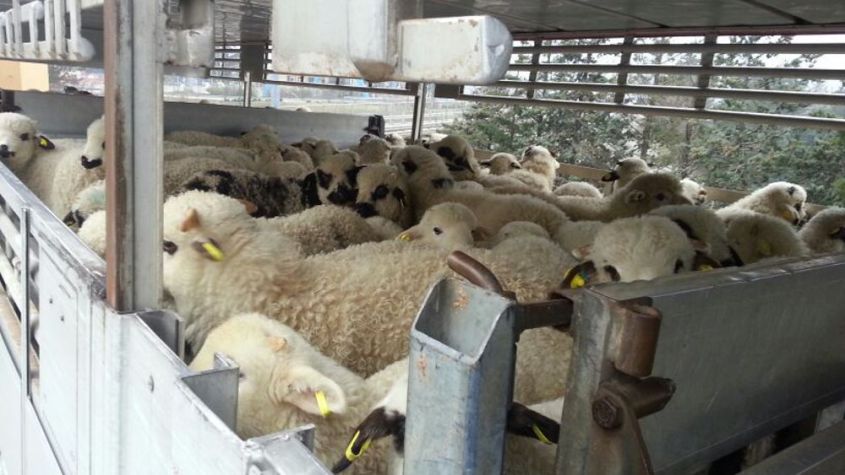
The Traffic Police, as part of the usual checks prepared by the Department of Public Safety on the occasion of the Easter holidays, ordered a halt to an articulated vehicle used for transporting animals that were carrying a large load of lambs bound for Apulia (Italy)
In the truck, lambs piled up and without water!
 Italy
Italy
It happened along with the A13 Bologna – Padua motorway, on the morning of 23 March around 11.00, when the agents pulled the heavy vehicle to the side outside the Altedo (Bologna) toll booth and found that the animals transported inside the semi-trailer were piled up. and without water.
When asked for clarification by the Agents, the two transporters showed signs of nervousness and impatience, so much so as to induce the Polstrada to investigate further with the help of the veterinarians of the Health Authority of Bologna USL.
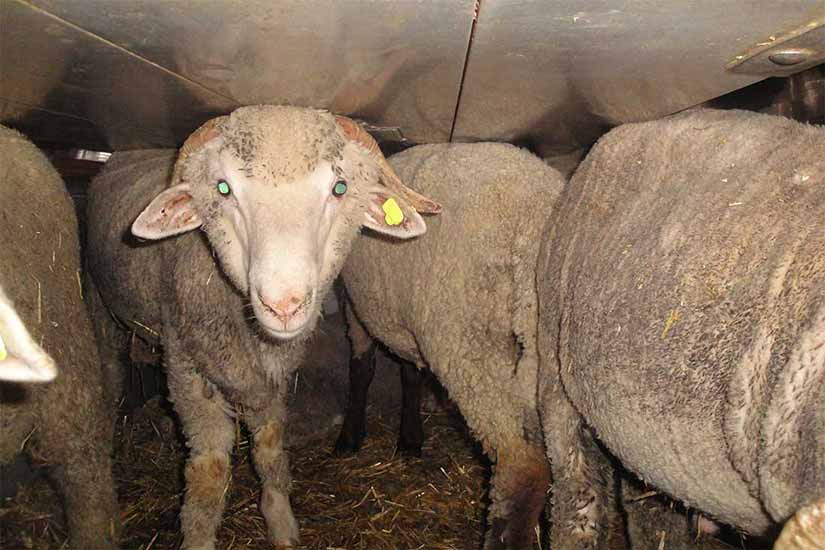
After a thorough inspection, they ascertained that the animals were dehydrated because the watering system had not been previously supplied before departure. It was also ascertained that the lambs were too crowded together so as not to have enough space to move due to the high density, as well as due to the too low height of the roof between one loading floor and the other of the semi-trailer.
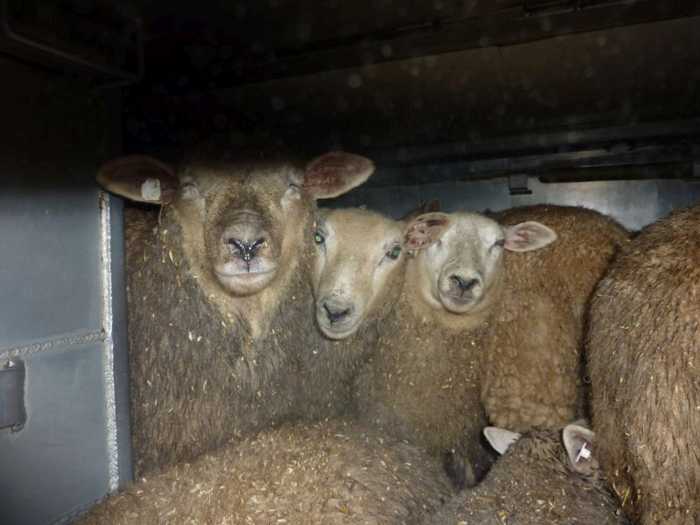
After supplying the lambs with water, connecting the water system of the barracks in the Altedo Subsection to that of the vehicle complex, policemen and veterinarians put pen to paper a long series of administrative penalties for the two drivers for a total of 15,000 euros.
In the coming weeks, the Traffic Police will further intensify checks on the transport of live animals.
https://www.bolognatoday.it/cronaca/altedo-polstrada-agnelli-multa.html
This video is from Animals’ Angels and it accompanies the campaign of German Animal Welfare Office: “Animal transports don’t taste good”
Translated text: “According to the law, transports up to 12 hours do not need a ventilation and drinking system (!!!)
Not a drop of water at 35 degrees in the shade
Sheep are transported on three levels.
Lambs even on four.
Lambs are entitled to less than 0.2 m² of space for transport.
Sheep need 10 times the transport time to recover – should they survive the transport.
The animals suffer from hunger and are often cured before dying of thirst
You can stop animal transport
Choose plant-based alternatives to meat, milk, and eggs”.
And I mean…The reason why animals are still transported alive is simple: a refrigerated truck for meat costs more.
Significantly more sheep and lambs are transported at Easter than usual, especially in southern Europe. The conditions for the animals on the relevant routes are mostly miserable.
Most trucks load up to 800 animals, which is not uncommon. The more “goods” the more money.
In this way, the transporters increase their profit – at the expense and suffering of the animals.
Because they are usually loaded on four floors, the lambs hit the ceiling with their heads.
That is not allowed, but who controls it?
In addition, they cannot lie and rest at the same time, run the risk of being trampled on by the other animals or have difficulty or no access to the water troughs.
If there is.
If this is not the case, as, in our present one, there are penalties.
A big THANK YOU to the Italian police.
They did nothing but their duty, namely to control the transport of animals and if there are sinners, punish them.
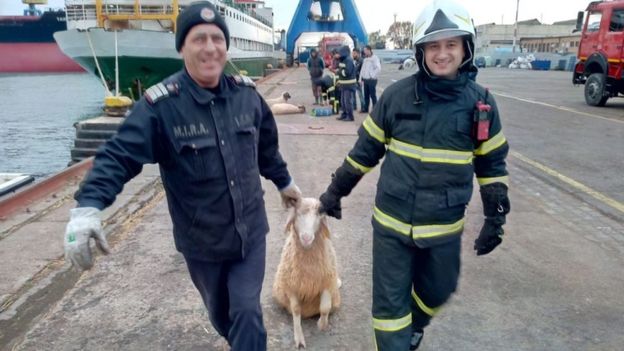 Sheep rescued from the capsized “Queen Hind”
This world would really have been a bit more bearable for the animals if everyone had done their job right and conscientious.
My best regards to all, Venus

27/3/21 – I was hoping that I would not need to write this; especially after the farce involving the EU and animals in transport recently, but there is now another problem yet regarding live animals in maritime shipment, as before. I will try to summarise from the information we currently have.
We all know about the very recent issues regarding the Karim Allah and the Elbeik which carried livestock for over 3 months; unable to find a port that would accept them – scroll here to see all the posts – Live Transport – World Animals Voice
Livestock vessels currently use the Suez Canal (Egypt) https://en.wikipedia.org/wiki/Suez_Canal to get from the Mediterranean Sea into the Red Sea when going to the Middle East. The Suez is a small, narrow waterway.
In the past week, a huge 220,000 tonne container carrying ship called the ‘Ever Given’ managed to get jammed in the Canal; thereby blocking off access all other ships following behind. https://en.wikipedia.org/wiki/2021_Suez_Canal_obstruction
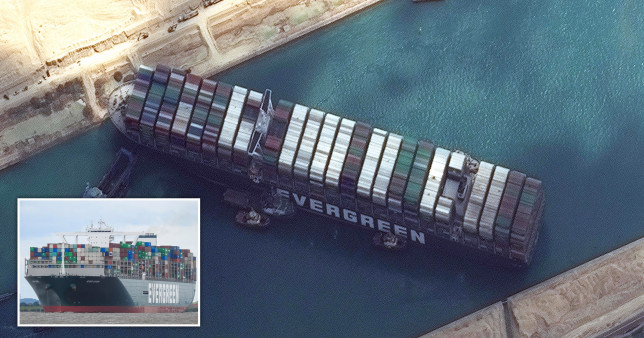

Amongst these ships were several livestock carrying vessels; probably 8; Vessels Jersey, Unimar Livestock, Omega Star, Harmony Livestock, Dragon, Lady Maria, Sea Star Livestock, and Gemma star.
Some of these can be seen on one of our recent posts: England: A Snapshot of the Maritime Livestock Trade – Vessels Currently Shipping Live Animals Around the World. A Disgusting Animal Abuse Issue. – World Animals Voice
All of them left from either Midia (Romania) or Cartagena (Spain). We have no confirmation at this time, but suspect that the vessels from Romania were carrying sheep (Romania is a big sheep producing nation); and probably cattle being transported from from Spain. Because of the number of livestock carrying ships involved, and the numbers of animals each are carrying; it is currently impossible to give an overall total for the numbers of animals involved in this crisis. But it will be in the ‘many thousands’.
By Friday 26/3, the maritime traffic jam had grown to more than 200 ships outside the Suez Canal, all affected by this one ship blockade. With massive international pressure growing to resolve the issue, as well as the huge financial involvement of cargoes carried, the megaship’s owners, Japanese firm Shoei Kisen KK, said 10 tugboats had been deployed to attempt free it.
So, the current situation is that many livestock ships with animals on board are literally stranded in the Suez Canal. Word from London today (27/3) is that a possible ‘free up and re float’ of the ‘Ever Given’ may take place very soon. Knowing the situation on the Karim Allah and the Elbeik regarding lack of food and water; we naturally have concerns for the welfare of all animals carried on all the ships.
27/3 – I have checked all ship positions today, it has taken some research time, but I can confirm the following:
Vessel ‘Jersey’ – – registered Togo – en route to Jordan – stuck in Suez Canal.

Vessel ‘Unimar Livestock’ – registered Togo – en route to Jeddah – stuck in Suez Canal.
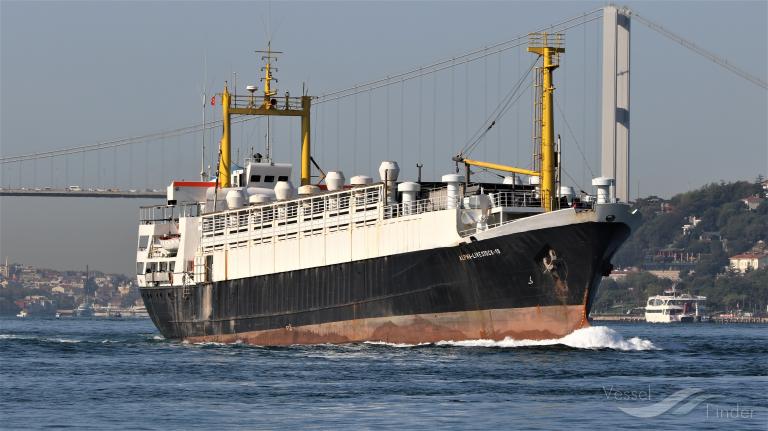
Vessel ‘Omega Star’ – no details
Vessel ‘Harmony Star’ – sailing under flag of Tanzania – en route to As Suways / Suez Port, Egypt.

Vessel ‘Dragon’ – sailing under the flag of Togolese Rep. – en route to Jordan – stuck in Suez Canal.

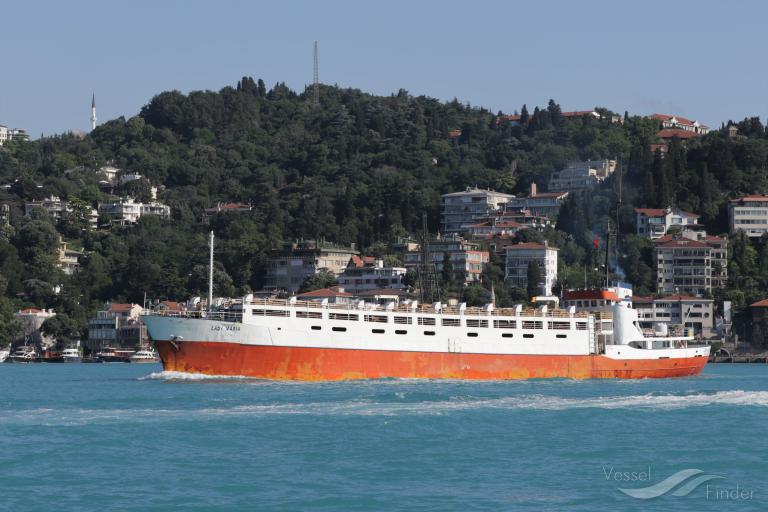
Vessel ‘Lady Maria’ – en route to the port of Jeddah – Waiting in Med Sea at entrance to Suez Canal.
Vessel ‘Sea Star Livestock’ – en route to As Suways / Suez Port, Egypt – stuck in Suez Canal.

Vessel ‘Gemma Star’ – no details.
So as you can see with so many large livestock carriers; problems to say the least !
Some of these vessels have been stuck for around 4-5 days now at least.
I hope this gives a small insight into livestock transportation by sea; and the mega problems (feed and watering etc) that just one incident such as this can bring. Many of these vessels are heading to the Middle East where animals will be ritually slaughtered without any prior stunning.
This is all fuel to our fire in our work to get live animal exports stopped.
Regards Mark
NGO investigations and EU audits carried out since 2010 have shown non-compliance with relevant EU requirements relating to animal welfare and traceability of horses in Argentina, Australia, Canada and Uruguay. Horses are systematically neglected and mistreated along the production chain of horsemeat.
They are beaten, kicked and receive electric shocks. They are malnourished and exposed to extreme weather conditions in slaughterhouse pens and at assembly centres. Injured, sick and weak horses receive no veterinary care and are left to die unassisted.
Currently, EU animal welfare requirements only apply to slaughterhouses.
The assembly centres and transport are not covered by EU rules. Horses are transported over long distances without water, crammed together in unsuitable cattle trailers, and many do not survive the journey to the slaughterhouse.
For several years, NGOs have been providing evidence that the audits of the EU Commission and European importers are manipulated by horse dealers and slaughterhouse operators.
 Australia, Meramist Slaughterhouse
For example, pregnant, injured, sick and emaciated horses are replaced or removed.
The reports of the latest EU audits in Uruguay and Argentina state that the assembly centres were either empty or the horses had been exchanged shortly before the visit.
In the above-mentioned countries, horses are not considered to be food-producing animals and are commonly given drugs that are prohibited in the EU for use in horses destined for human consumption.
The traceability systems in place are unreliable, as they rely on the honesty of horse owners and dealers, who give sworn declarations on the medical treatments in the six months prior to slaughter.
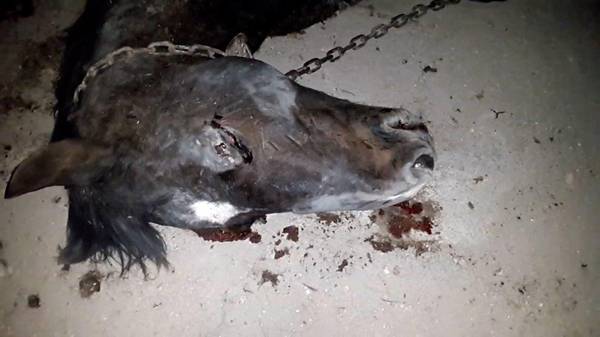 Argentina, a slaughterhouse in Land L: Injured horses are pulled from the transporters with chains and left to die.
In the EU, horses are microchipped and have a passport showing their medical history.
In the export countries, they are tagged shortly before being sent to slaughter. Due to the lack of traceability, horses of unknown origin and with unclear drug history as well as stolen horses enter the food chain, which poses a high food safety risk for European consumers.
We call upon the European Commissioners Stella Kyriakides (DG SANTE) and Valdis Dombrovskis (DG Trade):

