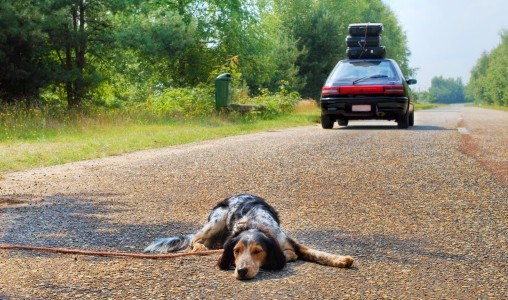
Yes, we agree.
And we are convinced that nobody should be disadvantaged or preferred because of their species.
That is our creed and we will defend it
Regards and good night, Venus

Yes, we agree.
And we are convinced that nobody should be disadvantaged or preferred because of their species.
That is our creed and we will defend it
Regards and good night, Venus
A butcher who has been branded a murderer by animal rights protesters has thanked customers and the rest of the community who have rallied round to support him.
Graham Fiddy, 62, found “murderer” and other vile graffiti daubed across the front of his butcher’s shop on Aylsham Road, Norwich which also had two large plate-glass windows smashed by protestors.
Mr. Fiddy, who set up Fiddy’s Butchers in 1986, reported the damage to police.
He said he is well aware there are different points of view but could not understand why those responsible could not come and talk to him rather than attacking his shop.
Mr. Fiddy said: “It’s some animal rights group – they don’t agree with what I’m doing”.
Graham Fiddy, 62, found damage by animal rights protesters at his butcher’s shop, Fiddy’s Butchers, on Aylsham Road, Norwich. Picture: Tom Fiddy“I’ve got friends who are vegetarian but I don’t say you’re wrong or you’re right.
“If they want to do something come in and have a debate with me rather than calling me a murderer and writing it all over the building.
“They wanted to have their say and that’s it, but it doesn’t seem right to me.”

Following the attack, which is understood to have happened in the early hours of Thursday, October 8, Mr. Fiddy lost a morning’s trade as he and his son Tom worked with others at the store to clean up the mess that had been left behind by the vandals.
He said: “I turned up for work and unfortunately saw all this mess and thought ‘Oh no’.
“I can get it repaired on the insurance but it’s the hassle and aggravation.
“We had to shut all Thursday morning because there was glass everywhere. It took four to five hours to clear it up.”
But Mr. Fiddy said he has been heartened by the response of customers and the community since the attack.

He said: “It’s nice to see people have been rallying round.
“We seem to have seen everyone this week so it’s been nice they’ve been showing a bit of support from customers. It’s been lovely.” (!!!)
As well as Fiddy’s Butcher it is understood Hazel’s Butchers in Corbet Avenue, Sprowston, has also been targeted by vandals who daubed slogans on the property and glued locks in a separate incident which is believed to have happened overnight on Friday, October 9 and was discovered on Saturday, October 10.
And I mean..Of course, the carnivorous customers of Mr. Fiddy have to show solidarity, because only then will they calm their guilty conscience so that the murdered animals taste good again.
This is a tried and tested strategy used by perpetrators and professional animal abusers
The animals cannot go out on the street and demand their rights
We have to do that.
And some do it well.
Thanks to the activists
My best regards to all, Venus
Copenhagen, Denmark – In order to make more space for modernization, the Copenhagen Zoo has now decided to kill three wolves and a bear.

In a press release, the technical director of the zoo stated that “the wolves’ facility is too old and has long since ceased to meet the requirements of today’s animal welfare”.
The zoo wanted to create a newer area and closed the facility without further ado.
Only there was a problem:
As “Focus” reported, the modernization did not seem to be about renewing the wolf enclosure, but rather a planned expansion of the elephant enclosure.
That means the previous facility for wolves is to become part of the elephant park (!!!)
Due to renovation work, there was no more space for the excess animals, so the zoo had no choice but to have them killed.
And the polar bears also need more space, that is why the brown bear had to go.
The brown bear had to make room for a pregnant bear and her future cubs because he was “so old that the zoo couldn’t pass him on”.
However, it is still unclear what will become of the bear mum and her little ones – actually the polar bears also need more space.

Unfortunately, this is not the first time that Denmark’s oldest zoo has made negative headlines.
In 2014 the almost two-year-old giraffe Marius was killed because of the risk of inbreeding, butchered and fed to lions – right in front of the zoo visitors.
Unfortunately, these four lions were later also killed due to a lack of space, as “Focus” mentions online.

In Copenhagen, however, the killing received approval from other zoos, as this was important “to maintain the health of the giraffe population in Europe’s zoos,” as Focus reports online.
And I mean…Close the zoo and put those responsible in jail.
The most effective would be: Deliver this “zoo director” himself to the lions, bears, and wolves.
We decided that we no longer need him.
And we don’t discuss it.
My best regards to all, Venus


The implementation of a new law that would have reduced the number of cattle permitted on live export ships sailing from Australia has been put on hold.
Days before new animal welfare laws were expected to come into effect, Agriculture Minister David Littleproud has changed the rules to allow exporters to continue to load cattle at existing stocking densities.
In a statement on Tuesday evening, the Department of Agriculture, Water and Environment said Mr Littleproud had decided to make last-minute amendments that would be in place until April 30 next year.
The decision comes after changes to the Australian Standards for the Export of Livestock (ASEL) were announced in April following a Federal review sparked by footage of the Awassi Express carrying dead and distressed Australian sheep to the Middle East in April, 2018.
The new ASEL stocking density rule was expected to come into effect on November 1 and would have required more space to be provided for each head of cattle exported.
The ABC understands the changes announced today only relate to cattle and do not include sheep.
The Australian Livestock Exporters Council said the changes amounted to a 17 per cent increase in the space allocated for cattle.
In the case of exports to Indonesia, for example, a vessel that would typically carry 5,000 cattle would be reduced to carrying 4,300.
The Northern Territory Livestock Exporters Association (NTLEA) told ABC Rural the reduced stocking density rules had been “tweaked” and would not apply during a trial period.

NTLEA chief executive Will Evans said the reprieve would allow exporters to prove that current stocking densities were delivering good animal welfare outcomes.
Mr Evans said the industry had been told by the Government that the new stocking rate would not be imposed for at least six months, and exporters that maintained low mortality rates would be allowed to continue to export at a higher stocking density.
“It’s essentially an audition period,” Mr Evans said.
“Those exporters who have a rolling average of 0.1 per cent mortality rate or lower will be able to maintain the [current] stocking density.
“But those who don’t will need to go to the new ASEL 3.0 stocking densities.
“So for the next six months, you’ll be able to maintain access to current stocking densities.”It gives us a period to prove what we’re saying is true.”
ASEL 3.0 changes coming to live export industryDownload 4 MB
Despite the last-minute change to stocking densities, Mr Evans said other significant changes to the way live animals were shipped under ASEL would commence as planned on November 1.
“Out of the 49 recommendations, one of those was about stocking densities,” he said.”The other 48 recommendations are coming into effect next week. “So there will be changes to how many stockmen are on vessels, changes to bedding, changes to the time we have cattle in registered premises.
“It’s an enormous regulatory change that’s coming in next week, it’s the biggest regulatory change to the industry since [the Exporter Supply Chain Assurance System] in 2011.”
Cattle exporters had previously suggested introducing the changes would cost the industry as much as $40 million a year.
At a Senate Estimates hearing last week, former Agriculture Minister Bridget McKenzie said the new ASEL stocking density was based on “loose science”.
Speaking to officials from the Department of Agriculture Water and Environment, Ms McKenzie said the change would mean as many as 130,000 fewer Australian cattle were sold into South East Asia.
“There isn’t a robust body of science available to us right now to be making these decisions,” she said.”[The standards are] not fit for purpose, for our industry, our place in the world, our markets.” The Royal Society for the Prevention of Cruelty to Animals, which has lobbied for an end to the live export trade, described Ms McKenzie’s appearance at Estimates as disappointing and feared a potential policy shift.
“The science is clear around stocking density reduction for cattle on these voyages,” RSPCA spokesman Jed Goodfellow said.
“This is simply about giving animals a little bit more space so they can lie down during the voyages, which sometimes take over two weeks, to give them further space to access food and water troughs.
“I hope Minister Littleproud will stand strong on these reforms that he himself has overseen and introduced.”
Mr Littleproud’s office has been contacted for comment.

EC study find outs the livestock sector is responsible for 81-86% of the agricultural greenhouse gas emission
22 October 2020
On 14 October 2020, the European Commission published a report examining the environmental, economic and social consequences of EU livestock production and how this sector can contribute to sustainable agriculture.
While recognising the important economic role played by livestock production in the EU economy, the report stresses the significant environmental impacts associated with industrial animal production. Such impacts can affect biodiversity, human health, and the functioning of ecosystems.
In particular, by including in calculations the environmental impacts of the production, processing, and transport of feed, the report concludes that the livestock sector is responsible for 86-88% of the EU’s agricultural GHG emissions.
Additionally, more than 80% of nitrogen of agricultural origin present in all EU aquatic environments is linked to livestock farming, and livestock farms are the main sources of ammonia.
On animal welfare, the report recalls the results of the last special Eurobarometer on animal welfare (add link) showing that 94% of European citizens attach importance to animal welfare, with 82% agreeing that farm animals should be better protected. Three key areas need to be addressed to respond to citizens expectations, and namely the intensification of farming, transportation of animals and slaughter.
The report notes that the specialisation and intensification of livestock farming systems has had negative implications for animal welfare, leading to stress and pain due to artificial living conditions in industrial type buildings, damage to animal integrity (e.g., painful husbandry procedures), separation from familiar conspecifics and unnatural levels of mixing. Citizens expect animals to be spared fear and anxiety and to be offered the possibility to experience positive emotions. Such an approach can also have positive knock-on effects on the reduction in the use of antimicrobials in farmed animals, which should be halved by 2030 compared to current levels according to the Farm to Fork strategy.
Read more at source


“Animals in Europe” – EP#2: Interview with Anja Hazekamp MEP
28 October 2020
News
“Animals in Europe” is a bi-weekly podcast to meet animal advocates, decision-makers and experts building together a Europe that cares for animals. Listen to Episode #2!
What were the main highlights for animals last week at the European Parliament?
Is change for animals on the horizon?
What are the biggest political opportunities for animals during this political mandate?
These are some of the questions our host and CEO Reineke Hameleers asks Anja Hazekamp MEP in our podcast.
Biologist and animal advocate, Anja Hazekamp MEP started her political career with the Dutch Party for the Animals and last year she was appointed as President of the Intergroup on the Welfare and Conservation of Animals. She is one of the forces behind the newly constituted Committee of Inquiry on Live Transport of the European Parliament.
https://w.soundcloud.com/player/?url=https%3A//api.soundcloud.com/tracks/918918883&visual=&auto_play=false&hide_related=false&show_comments=false&show_user=false&show_reposts=false “Animals in Europe” is available on iTunes, Apple Podcasts, Google Podcasts, Spotify and Soundcloud.


New investigation reveals the systematic disguise of routes for live transport of German calves to the Middle East
28 October 2020
Animals International
An investigation carried out by Animals International and Animal Welfare Foundation (AWF) and broadcasted by SWR reveals that despite the current ban in place, German animals end up in Third Countries’ abattoirs. Eurogroup for Animals urges the EU to stop the export of animals to non-EU countries and to prepare a strategy to shift to meat/ carcasses only trade.
New footage from Eurogroup for Animals’ member Animals International filmed the brutal slaughter of German cattle in a Lebanese slaughterhouse. The two cattles identified in the footage were just three weeks old when they left their farms of origin in Rhineland-Palatinate and Baden-Württemberg.
The export of cattle to third countries has been largely debated in Germany for many years and the majority of federal countries suspended the long-distance transport to a number of nineteen third countries. However, the transport of live animals from Germany to third countries continue taking place: Indeed, to overcome the restrictions mentioned above the transport routes are very often disguised: the new footage by AWF shows calves being transported on short journeys from Germany to Belgium via a collection point in North Rhine-Westphalia, and then transported via France to Spain, where they were fattened and later shipped to Beirut.
This new investigation also shows that, despite the fact Germany claims of not exporting animals for slaughter to third countries, its animals do end up in third countries abattoirs. In 2019 Animal International entered a slaughterhouse in Lebanon, showing how animals coming from the EU were brutally handled and killed.
Eurogroup for Animals and its members urge the EU to stop the export of animals to non-EU countries, and to prepare a strategy to shift to a meat and carcasses and genetic material only trade.
Read more at source

Human rights arise solely from belonging to the type of human being.
Human rights are de facto only a privilege of the ruling species, of the humans, which enables us to discriminate against all other animal species.
We are not on the side of the stronger, we fight for the rights of the “other” animals, for those without rights.
Every step that leads to the abolition of animal slavery is a step towards more justice.
Regards and good night, Venus
From Germanwatch.org: Ranking of EU chicken meat companies after contamination with antimicrobial-resistant pathogens

The testing of 165 chicken meat samples from the three largest EU poultry meat companies showed that one in two chicken meat samples is contaminated with antimicrobial-resistant pathogens.
The samples were purchased in five EU countries (DE, ES, FR, NL, PL) from the low-cost range of Lidl, Aldi, and directly from the companies’ factory outlets.
Chickens from the German PHW group are the most contaminated, with a total of 59 percent of contaminated samples, followed by the French LDC group with 57 percent of contaminated samples.
At the Dutch Plukon Food Group, one in three chickens is contaminated with resistant pathogens.
Antibiotic-resistant pathogens are a growing health threat.
If people pick up resistant pathogens during the preparation or consumption of meat, this can lead to serious infections where antibiotics have little or no effect.

On average, one-third of chicken meat samples contain pathogens that are resistant to quinolones.
This group of critically important antimicrobials (CIA HP) is considered by the WHO to be of particular importance with the highest priority for humans.
Uniform EU rules against their routine use in industrial animal husbandry are still lacking.
In the US, quinolones were already banned for chickens for fattening in 2005, and resistance rates in animals have decreased significantly.
The EU Commission is considering reserving the most important groups of antibiotics for humans until the end of 2020 to combat resistance from animal holdings.
The available test results demonstrate the need for an EU-wide ban on CIA HP antibiotics in industrial livestock production.

At the same time, a change in the system of breeding and keeping food-producing animals is necessary, as more animal-friendly procedures can avoid the routine use of antibiotics.
Germanwatch recommends to consumers to avoid cheap chicken and to switch to organic products from smaller, farm-based livestock farms where – if at all – significantly lower resistance rates are found.

Transmission of antibiotic resistance from animals to humans
First picture: Antibiotics are given to factory-farmed chickens
Second picture: Multi-resistant germs develop in the animal body
Third picture: Antibiotic-resistant germs enter the environment.
Fourth picture: … and into the food
Fifth picture: the germs can cause serious infections that antibiotics can hardly help against
Click to access English%20Summary%20%27Chicken%20meat%20tested%27%202020_0.pdf
And I mean… The vegans were always on the carnivore’s line of fire:
“Take care of your food and leave me alone” …
“It is my free choice to eat what I like …”
“It is not healthy to only feed on plants …”
Right from the start, we drew attention to the dangers that come from slaughterhouses and factory farming.
The carnivores were just annoyed.
Now I rub my hands and officially say that it is my free choice to feel divine joy just at the thought that the carnivores may have already eaten these highly dangerous new germs and even with pleasure!!
We expected it.
These are the free citizens, the corpse eaters, the second-hand murderers, those who commissioned the daily massacres in slaughterhouses …
I wish them a lot of fun and a lot of courage for further free elections in our pathogenic democracy.
My best regards to all, Venus

By Nicole Pallotta, Senior Policy Program Manager
Summary: The Islamabad High Court has held that animals have natural rights and are entitled to protection under the Pakistani constitution. The case before the court was threefold, involving an elephant held in solitary confinement at a zoo, a rescued bear who had been forced to “dance” and perform tricks, and the killing of stray dogs. Despite at times anthropocentric framing, the ruling unequivocally recognizes that animals have legal rights and is highly critical of humanity’s treatment of wild animals in particular.
“Do the animals have legal rights?
The answer to this question, without any hesitation, is in the affirmative…. Like humans, animals also have natural rights which ought to be recognized.
It is a right of each animal…to live in an environment that meets the latter’s behavioral, social and physiological needs.”
– Justice Athar Minallah, Chief Justice of the Islamabad High Court (p. 59)
In a groundbreaking decision, the Islamabad High Court in Pakistan1has recognized that animals have legal rights and are entitled to protection under the nation’s constitution. In a 67-page ruling — dealing mainly with the treatment of an elephant at a zoo — Justice Athar Minallah asked whether animals have legal rights and found, “the answer to this question, without any hesitation, is in the affirmative.”
The ruling contains striking language about the rights of animals. In addition to their physiological needs, Justice Minallah repeatedly references animals’ social and behavioral needs and their right to an environment in which these needs can be met. He is highly critical of zoos that keep wild animals (whom he refers to as “inmates”) in captive conditions that are nothing like their natural habitats, and thus prevent them from engaging in normal behaviors.2
Although the decision — which draws on religious doctrine and quotes extensively from the Quran3 — repeatedly refers to humans as “superior beings,”4 and at times frames animals’ rights in the context of human survival,5 it unequivocally recognizes that animals have natural and legal rights.
In addition, despite its at times anthropocentric framing, the ruling is highly critical of humanity’s treatment of wild animals — e.g., destroying their natural habitat and consigning them to zoos — and refers to humans as an “invasive species.”6
The case before the court combined three separate petitions. The first involved an elephant named Kaavan,7 who was being kept in deplorable conditions at the Marghazar Zoo, and whom petitioners sought to relocate to a sanctuary. The second petition involved a rescued black bear who had been abused and forced to perform tricks.8
The third petition, discussed in least detail, regarded “the killing of stray dogs allegedly in a cruel manner.“