From the USA: Ethical Vegans Must Reject Donald Trump. Period.

With thanks to Stacey at ‘Our Compass’ for sending the following over.  Mark.

Ethical Vegans Must Reject Donald Trump. Period.

‘Our Compass’ Link as follows:

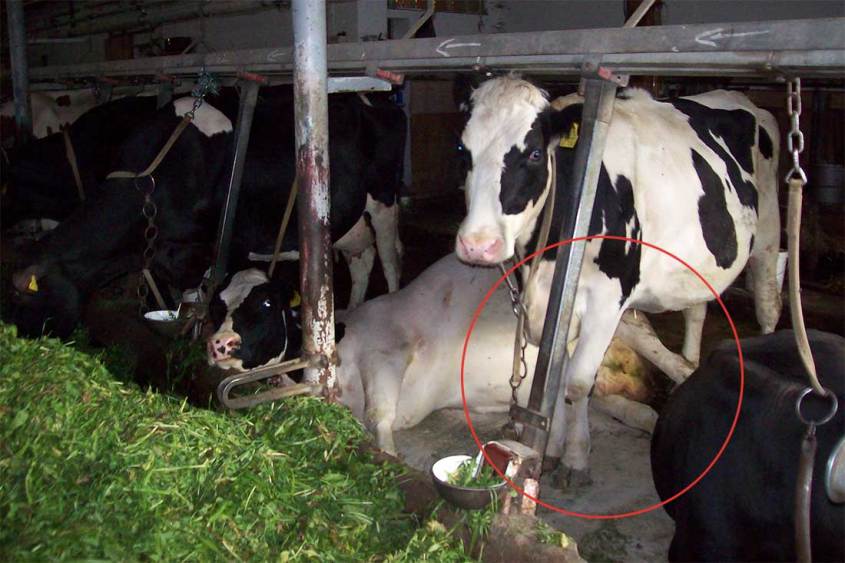
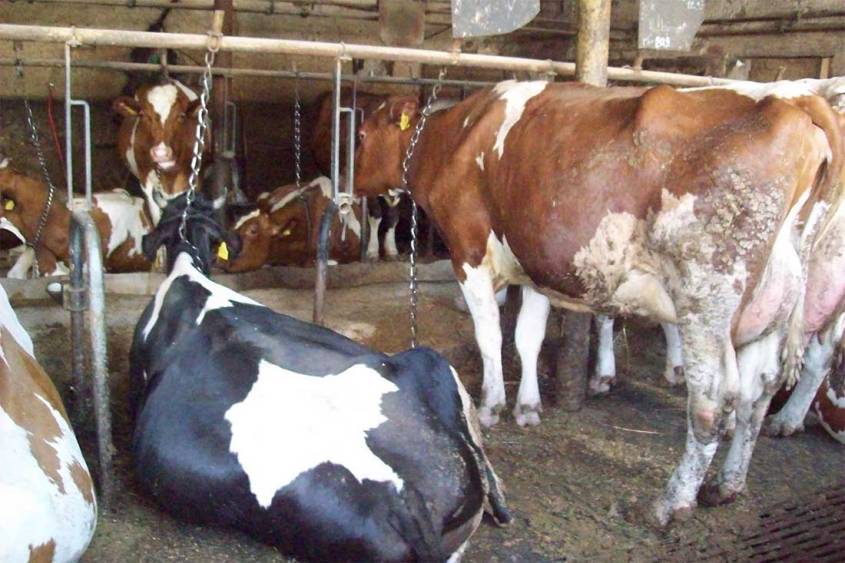
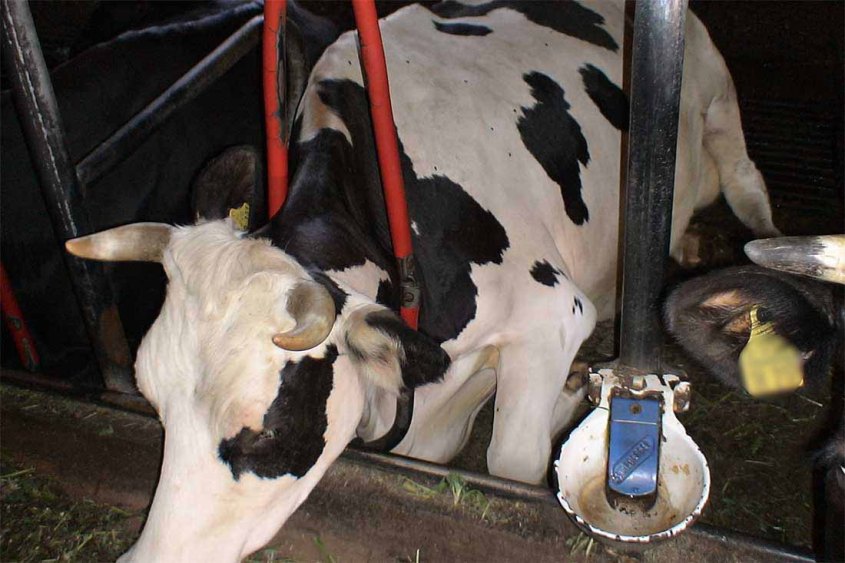
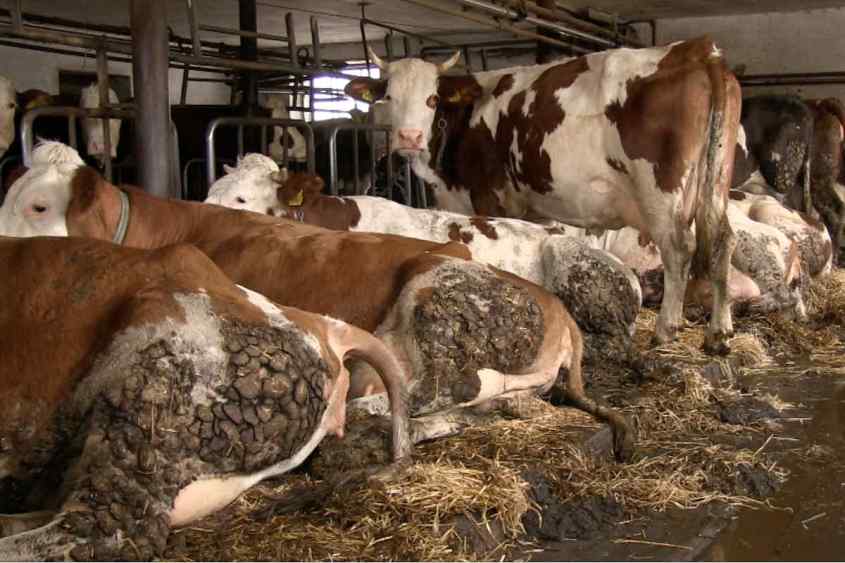
Note: Regarding Protect the Harvest’s ludicrous and deceptive claim of the nonexistence of factory farms, “family” has zero legal distinction regarding farm size; indeed, a “family” can refer to Kraft, Ford, Trump, Smithfield, and Walmart. The government defines size, and anyone with even a rudimentary understanding of Google can easily find this data. To suggest that the greater than 10 billion land animals killed annually in the US alone come from Uncle Ted’s backyard hinges on desperation to continue the animal holocaust unseen and socially accepted. SL

EPA:

USDA:

The U.S. Environmental Protection Agency (EPA) defines AFOs as agricultural enterprises where animals are kept and raised in confined situations. AFOs congregate animals, feed, manure and urine, dead animals, and production operations on a small land area. Feed is brought to the animals rather than the animals grazing or otherwise seeking feed in pastures, fields, or on rangeland. There are approximately 450,000 AFOs in the United States.

A CAFO is another EPA term for a large concentrated AFO.  A CAFO is an AFO with more than 1000 animal units (an animal unit is defined as an animal equivalent of 1000 pounds live weight and equates to 1000 head of beef cattle, 700 dairy cows, 2500 swine weighing more than 55 lbs, 125 thousand broiler chickens, or 82 thousand laying hens or pullets) confined on site for more than 45 days during the year.  Any size AFO that discharges manure or wastewater into a natural or man-made ditch, stream or other waterway is defined as a CAFO, regardless of size.  CAFOs are regulated by EPA under the Clean Water Act in both the 2003 and 2008 versions of the “CAFO” rule.

Additional resources:

Large animal feeding operations on the rise

99% of U.S. Farmed Animals Live on Factory Farms

Ethical Vegans Must Reject Donald Trump. Period.

Source Free From Harm

By Rosemary Thompson

Veganism, at its essence, is the recognition that all animals have the right to bodily integrity. Humans do not own the bodies, families or lives of other animals – we can be guardians to animals in need of rescue, but animals are never our property or commodities.

Donald Trump has demonstrated, over and over again, that he sees animals only as obstacles to be cleared or resources to be used to serve corporate interests and generate maximum profits.

But his actions don’t reveal a detached view of other species as objects or commodities so much as a seething contempt – for the natural world, for animals and for anyone trying to protect them.

Putting animal haters in charge

At every turn, Trump has placed people who actively oppose animal welfare, wildlife and environmental protection in leadership roles at the agencies responsible for carrying out those protections. Not surprisingly, this fox-guarding-the-hen-house strategy has resulted in dire consequences for animals and their habitat.

In 2016 he selected Brian Klippenstein, executive director of a particularly vile organization called Protect the Harvest, to serve as senior advisor to the USDA – the agency charged with safeguarding animals used in commerce.

Protect the Harvest exists to “save the agricultural industry from the growing threat of the radical animal rights movement” by lobbying against animal welfare legislation, supporting ag-gag bills and promoting animal commoditization in all forms – including circuses, rodeos, dog and horse racing, horse carriages, puppy mills and horse slaughter.

One of the group’s campaigns aims to soothe consumers’ growing concern regarding confined animal feeding operations by assuring the public that factory farming is just a “fictional concept created by activists.”

Next, Trump chose to appease animal agriculture and fossil fuel industry elites by putting climate change denier Scott Pruitt in charge of the Environmental Protection Agency – a move that led to the rollback of several critical climate and pollution regulations, along with the U.S. decision to withdraw from the Paris Agreement.

Pruitt, once honored with an award for his contribution to the success of the beef cattle industry, has described himself as a “leading advocate against the EPA’s activist agenda” and “a big fan of beef.”

Though he resigned in 2018 under the weight of numerous legal and ethics investigations, EPA leadership continues to prioritize industry demands over keeping the country’s air and water clean. In March the agency used the COVID-19 chaos as a cover to release polluting industries from monitoring and reporting requirements.

Perhaps the most stunning hire Trump made was William Perry Pendley, a former oil and gas attorney he installed to wreak havoc on the Bureau of Land Management. That’s the agency charged with conserving public lands – such as national parks – in 11 Western states and Alaska.

Pendley, who spent the bulk of his career lobbying for oil companies’ rights to drill in pristine wilderness, does not believe public lands should exist at all.

He has joked on video about illegally killing and burying endangered animals, and tweeted that climate change is like a unicorn because “neither exists.” He also has a grotesque obsession with eradicating wild horses and burros – insisting that they (rather than cattle grazing or resource extraction) represent an “existential threat” to public lands.

A judge recently ruled that Pendley’s service violates the Constitution because he was never confirmed by the Senate, but so far he has refused to leave his post.

Please click on the above link to continue reading the full article.

Hunters aren’t just professional killers. They’re professional liars too

Our topic today: traps and hunters

Below are some of the hollow, de facto false arguments hunters make about traps when the public asks about it

1. Hunter’s statement: Traps are no longer allowed or used in Germany!
That’s not true!

Trapping is a completely common and widespread hunting method in Germany. However, it is hidden from the public by the hunters.

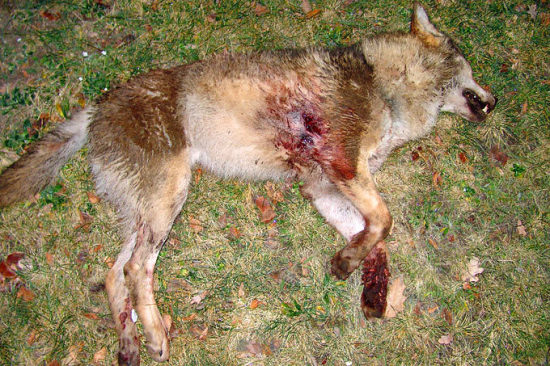
The trap is used in particular to track foxes, marten, and domestic cats. Many dogs also suffer cruel deaths in traps year after year.

2. Hunters’ statement: Only live traps are allowed in Germany.
That’s not true!

In Germany, manslaughter traps, which are supposed to kill immediately, and live traps in which the animal is caught, are allowed.

Homicide traps are supposed to kill immediately, but often don’t. Many animals die a slow and agonizing death in these traps.

Live traps: Live traps are mostly boxes made of wood or wire, into which an animal is lured using bait or fragrances, lures made by industry. According to studies, the animal panics when the trap closes – and is often seriously injured from desperate attempts to escape. Due to the panic fear of death, the animals are under high stress and often die of heart failure.

Others, severely injured, often lie hungry and thirsty for hours or days, tormented by cruel pain, and wait for death.

Although the law requires the traps to be checked once a day, it is reasonable to assume that this will not happen. If the traps e.g. are only checked every 2 – 3 days, this means that the animals caught in the so-called live traps slowly and painfully perish from injuries or stress.

3. Hunter’s statement: After being caught with a live trap, the animals are released back into the wild.
That’s not true!

Most of the animals are killed. The old wives’ tale of the release into the wild is told to the unsuspecting citizen in order to conceal the harsh reality in our forests. Animals caught in live traps by hunters are mostly killed. E.g. Foxes and cats.

“A powerful blow with the narrow side in the neck or over the muzzle does no less than a small-bore pistol – and works silently.” (quoted from K. Hutter, A loud word against the silent hunt)

4. Hunter statement: Traps are only somewhere in the deep, deep forest.
That’s not true!

Traps can be anywhere. They are often set up near high seats or even completely normal paths, from where they can be more easily controlled.
Gardens, allotment gardens, log piles, field trees, concrete pipes in the forest (e.g. under paths), field barns, piles of straw, piles of brushwood, and fences are popular trapping sites.

The trap is covered with brushwood, litter, etc. and thus hidden from the view of the walker.
From the magazine “Hunter” (quoted from Dag Frommhold): “The pulpit (raised stand) is ideal as a distraction. The hikers’ eyes are sure to wander up to her. The nest box that hangs on the tree nearby makes the visitor friendly. So we are happy when the eyes wander upwards – because our traps are below. “

5. Hunter’s statement: Traps only selectively catch a certain species of a wild animal.
That’s not true

Katze Totschlagfalle

Animals are lured into traps with attractants! Fox attractants often work on dogs as well. Of course, animals that are similar in size to e.g. have a fox go into the trap. Foxes have no closed season in Germany. It is just not allowed to shoot suckling birds (which is all too often disregarded). Exception: adult foxes have a closed season in Berlin (but not young foxes).

6. Hunters’ statement: Traps are only set by poachers!
That’s not true!

Trapping is a common hunting method used by hunters in Germany. Any hunter who has completed an approx. 15-hour trapping course and can then present a certificate of trapping qualifications is allowed to hunt with the trap.

Continue reading “Hunters aren’t just professional killers. They’re professional liars too”

EU: No, No, It Cannot Be True – EU Struggles to Hold Member States to Account Over Animal Transport Breaches. We Say, Close Down the EU – Simple.

EU plans to strip UK of bank regulation powers

EU struggles to hold Member States to account over animal transport breaches

WAV Comment: 

Wow! – that’s breaking news – the wonderful EU struggles to hold member states to account for animal transport breaches.  What with all the evidence we have presented to them; the very them; regarding breaches of transport rules over the last 25+ years; what is changing ?

As we have always said, they are utterly useless’ and as Claire Bury says; they (EU) are not able to ban the trade.  Why not we ask ? – could it be the big money made from live exports into EU coffers ? – ie putting finance before animal welfare ? – certainly seems that way.

And now we hear MEPs ‘voice concern’ about the injury and suffering caused to animals during transport across Europe.

We say; put them all into one livestock transporter and haul them from Scotland to Southern Italy.  We bet the rules would be changed pretty quickly after that.  As the EU can do nothing; probably better to shut it (the EU) all down and go back to individual member states and regulations. 

Anything would be better than this ‘we can do nothing’ yukspeak put out by EU ‘importants’ (or so they think they are !).

EU struggles to hold Member States to account over animal transport breaches

30 October 2020

MEPs voice concern about the injury and suffering caused to animals during transport across Europe.

A senior commission official has admitted it is currently “impossible” to ban the controversial trade in live animals.

Speaking to parliament’s newly created special animal welfare committee, Claire Bury, Deputy Director-General of Health and Food Safety at the Commission, sympathised with MEPs who voiced concern about the injury and suffering caused to animals during transport across Europe.

She said everything was being done to ensure hauliers comply with current regulations but conceded, “We are not able to ban this at present.”

But, in response to growing calls for a ban on exports of live animals, she revealed that the Commission plans to revise existing legislation on animal transportation.

Read more at source

The Parliament Magazine

South Korea: Dog Meat Actions – October 2020.

Important Note – we have a ‘Translator box on the left side of the page.

If you wish to translate all the text of this site to another / your language, then please use it.

Simply go to ‘TRANSLATE’ and then select the language you need from the drop down.

All the site text should then immediately convert to the selected language – Simple as that !

South Korea –  Dog Meat Farms

LATEST – Please click on the following link in order to take many (October) actions against the dog meat business in South Korea.  There are many regional petitions and letters to authorities which you can sign or send.

Here are just a few of our most recent posts relating to the South Korean issue:

Presidential election promises that mean nothing – read more at 

https://worldanimalsvoice.com/2020/10/26/south-korea-pre-election-promises-that-once-elected-become-non-reality/

https://worldanimalsvoice.com/2020/10/19/south-korea-a-call-to-action-to-ask-you-to-join-forces-with-korean-activists-to-close-the-dog-meat-farms-and-businesses/

https://worldanimalsvoice.com/2020/07/29/south-korea-korean-dogs-latest-actions/

https://worldanimalsvoice.com/2020/07/23/south-korea-korean-dogs-july-newsletter-please-click-on-link-for-actions/

Regards WAV

USA: Nearly every wolf in the lower 48 just lost its Endangered Species Act protection. And Eco Destroyer Trump Wants Re Election ?

CBD Web Link – https://www.biologicaldiversity.org/

Hi Mark,

Nearly every wolf in the lower 48 just lost its Endangered Species Act protection.

Gray wolves, once nearly extinct, could be coming back to Colorado | US  news | The Guardian

Photo – The Guardian (London)

Their survival is now at stake.

We’ll be in court as soon as possible to fight this disastrous move. Please make an emergency gift now to the Saving Life on Earth Fund. All gifts will be matched.

It’s now up to states to decide what happens to these beautiful, family-oriented animals.

That’s why we’ll be leveraging the full power of our grassroots activists to shut down plans to hunt, trap or poison wolves state after state.

In the few places where wolves exist today — like the northern Rocky Mountains, Great Lakes states and West Coast — they face persecution.

Washington state has wiped out entire packs for conflicts with livestock, mostly by gunning wolves down one by one from a helicopter.

In Wisconsin a law is already on the books requiring trophy hunts of wolves.

What to know about the gray wolf, whose fate in Colorado could be decided  by voters - ABC News

Photo – ABC News

Idaho has for years expanded its hunting and trapping seasons on wolves — it even contributes to bounties to kill them.

In Montana it costs $19 to kill a wolf. And anti-wolf forces there have tried to make it cheaper.

That’s the way some states view wolves: as cheap, expendable targets for trophy hunting and barbaric trapping.

Wolves are irreplaceable — and we will fight like hell to protect them against this horrible move.

More than four decades of work to save these magnificent creatures just came to a screeching, bloody halt.

We knew this day was coming, which is why we’re ready to challenge this in court as quickly as possible.

We can’t let anti-wildlife forces doom this keystone species to being shot, trapped or poisoned, state by state, wolf by wolf.

Our team is ready for this fight. But we need you, too.

Please give now to our Saving Life on Earth Fund.

For the wild, Kierán Suckling
Executive Director
Center for Biological Diversity

WAV Comment:

America – Live real – dont vote for this clown.

Continue reading “USA: Nearly every wolf in the lower 48 just lost its Endangered Species Act protection. And Eco Destroyer Trump Wants Re Election ?”

Australia: new coral reef, new marine life

Australian scientists find a huge new healthy coral reef off the northern coast!

SYDNEY (Reuters) – Australian scientists found a detached coral reef on the Great Barrier Reef that exceeds the height of the Empire State Building and the Eiffel Tower, the Schmidt Ocean Institute said this week, the first such discovery in over 100 years.

The “blade-like” reef is nearly 500 meters tall and 1.5 kilometers wide, said the institute founded by ex-Google boss Eric Schmidt and his wife Wendy.

Australia: Great Barrier Reef.


It lies 40 meters below the ocean surface and about six kilometers from the edge of the Great Barrier Reef.

A team of scientists from James Cook University, led by Dr. Robin Beaman, were mapping the northern seafloor of the Great Barrier Reef onboard the institute’s research vessel Falkor, when they found the reef on Oct. 20.

“We are surprised and elated by what we have found,” said Beaman.

He said it was the first detached reef of that size to be discovered in over 120 years and that it was thriving with a “blizzard of fish” in a healthy ecosystem.

The discovery comes after a study earlier this month found the Great Barrier Reef had lost more than half its coral in the last three decades.

Continue reading “Australia: new coral reef, new marine life”

SAFE New Zealand: New analysis of live export ships shows there is still a high risk to animals – SAFE

New analysis of live export ships shows there is still a high risk to animals – SAFE

29 October 2020

New analysis from The Guardian has found that live export ships are twice as likely to be lost at sea as cargo vessels.

SAFE Campaigns Manager Bianka Atlas said the growing evidence supports what SAFE has been saying for years.

“It is clear that the live export trade places the lives of animals and humans at an unacceptable risk,” said Atlas

Livestock carrier Yangtze Fortune is expected to arrive at Napier Port on Wednesday 4 November. This is will be the first export of live animals since the sinking of Gulf Livestock 1 in September.

The Yangtze Fortune’s arrival next week is estimated and subject to change, but the animal rights organisation SAFE will be protesting regardless.

“It’s only been two months since we lost 5,867 cows and 2 of our own people in the Gulf Livestock 1 tragedy and now we have another ship leaving from that same Port,” said Atlas.

“The reality is, all of these animals, who are exported for breeding purposes, will eventually be slaughtered in their destination country, potentially by methods outlawed in New Zealand.”

“Ending live export should be at the top of Jacinda Ardern’s agenda when she forms her new cabinet.”

Click on this link for the Guardian article:

https://worldanimalsvoice.com/2020/10/29/live-animal-exports-exclusive-livestock-ships-twice-as-likely-to-be-lost-as-cargo-vessels/

Live Animal Exports: Exclusive: Livestock Ships Twice as Likely to be Lost as Cargo Vessels

Carcasses line a beach after a livestock carrier loaded with 5,000 cows, capsized at Vila do Conde port in northern Brazil in 2015.

Above – Carcasses line a beach after a livestock carrier loaded with 5,000 cows capsized at Vila do Conde port in northern Brazil in 2015. Photograph: Reuters

https://www.theguardian.com/environment/2020/oct/28/exclusive-livestock-ships-twice-as-likely-to-be-lost-as-cargo-vessels

Exclusive: livestock ships twice as likely to be lost as cargo vessels

Billion-dollar export trade puts lives of animals and crew at greater risk of ‘total loss’ through faulty design and inexperience

Ships carrying live animals are at least twice as likely to suffer a “total loss” from sinking or grounding as standard cargo vessels, the Guardian has found.

In the past year alone there have been two disasters involving animals in transit. Last November, at least 14,000 sheep drowned after the Queen Hind capsized en route to Saudi Arabia from Romania. And last month, Gulf Livestock 1, a carrier transporting almost 6,000 cattle, sank off the Japanese coast en route to China from New Zealand. Forty crew members remain missing and are presumed dead.

“With the Guardian’s shocking findings … [it’s] time for an open and honest assessment of an industry that has caused one crisis after another,” said Prof Kristen Stilt, director of Harvard’s animal law & policy program, currently writing a book about the transport of live animals. “That assessment should recognise that the transport of chilled and frozen meat is the way that nearly all meat travels in commerce today. The idea of sending live animals is a holdover from a bygone era.”

The global live export trade is worth nearly £16bn. For decades, campaigners have been calling on the EU to provide better protections for animals in transit, and an inquiry into the regulatory system is under way.

According to Guardian analysis, between January 2010 and December 2019 five livestock vessels were recorded as lost to sinking or irrevocable grounding, killing crew and animals. The total equates to just over 3% of the estimated 150 livestock carriers above 100 gross tonnes (GT) known to operate worldwide. The 100 GT measurement is used by the shipping industry to separate smaller vessels, often owned for pleasure, from larger, more probably commercial, ones.

The same loss calculation for the global cargo fleet of about 61,000 ships over 100 GT, shows that 471 vessels within that tonnage (excluding tugs, dredgers, fishing and passenger vessels), were lost to sinking or grounding in the same period – or less than 1%.

The Guardian’s risk calculations are based on historical data from insurer Allianz Global Corporate and Specialty’s Safety and Shipping Review 2020, analyst IHS Markit and the International Maritime Organization.

If the loss figure for livestock vessels expands to include two more vessels, sunk in December 2009 and September 2020, just outside the 10 years covered by the Allianz shipping safety report, used as a basis for the calculation, then the figure rises to 4.7%.

Select Page 2 below to continue reading more.

Veneto (Italy): hunter’s car gets new tires

Tutorial: How to change the tires of a hunter’s car!!

https://animalliberationpressoffice.org/


And if the cell phone has no reception up there… bad luck for the animal lover!!

By the way: the tires on my car were also slit in one night.
But that wasn’t the ALF!
I live among farmers, hunters, farm owners … it couldn’t have turned out otherwise, I disturb all professional groups that have to do with animal cruelty, animal exploitation, and animal murder.

Thanks to the brave activists!

My best regards to all, Venus