who treats animals as a piece of shit
is itself one shit
Regards and good night, Venus

who treats animals as a piece of shit
is itself one shit
Regards and good night, Venus
The Nuremberg zoo is considering killing the male lion Subali.

The animal is apparently sterile. In the zoo, they speak of a “species protection dilemma”(!!)
Rescue for the lion is still possible.
The male lion Subali with his dark mane is one of the biggest attractions in the Nuremberg zoo. Since the lion came to the zoo in August 2018, the zookeepers have been waiting for offspring.
So far in vain.
Because the lioness Aarany is much younger, the zoo assumes that it is Subali and that the 14-year-old lion is sterile.
Subali the lion is threatened with death
The Nuremberg zoo may therefore be forced to kill Subali.
Zoo boss Dag Encke brought this up in an interview himself.
He justifies this with the lack of space in the zoo and a “dilemma of species protection”.
It is a statutory mandate of zoos and zoos to “manage populations in order to be able to preserve species in the long term,” said Encke.
If an animal is sterile and you can’t breed, that’s a problem (!!!)

A decision has not yet been made.
It has not yet been decided whether the Lion Subali will be killed. Zoo boss Dag Encke speaks of a “highly emotional topic”.
Before a decision is made, it must be checked whether the lion is actually sterile. If necessary, they will try to move the animal somewhere else, says Encke.
If this does not succeed, killing is a “realistic scenario”.
Sharp criticism from PETA
The animal welfare organization PETA criticizes the deliberations of the Nuremberg Zoo in the strongest possible terms.
To justify the killing of the Subali lion with the protection of species is “pulled by the hair,” said Nadja Michler from PETA.
Such infertility measures are not justified.
In fact, animals are repeatedly killed in zoos and zoos because they are “not profitable”.

The fault lies in the system, according to the animal rights activist.
If the Nuremberg zoo actually kills the Subali lion, PETA wants to file a criminal complaint.
And I mean: Since when has murder been publicly discussed?
Since when have zoos been responsible for species protection?
Since when have the zoos been breeders?
By the way: the zoo in Nuremberg is extremely outdated, for this reason, the zoo director has no right to talk about species protection.
The animals cannot be kept in a species-appropriate manner.
The griffin cannot fly, the cheetah lies in the sand all day, surrounded by walls, the giraffe has only 30 meters to run. Really tragic.
So far, no other zoo wants to take Subali.
It is possible to transfer the animal to another zoo.
But which zoo makes room for an old and sterile lion that is no longer making money?
Now the Circus Krone has intervened!!
Which still makes money in wildlife shows and has a very bad reputation as a business.
“I wrote an e-mail to the zoo director. I’ll try to save the lion,” said Martin Lacey, the circus lion trainer.
We can imagine what the trainer understands by rescue.
Some from the zoo business want to kill Subali, others from the circus business want him with whips hit, train, and cart through the country.
And so we give the animal only two alternatives, euthanize or trained and tortured for the rest of his life.
Both are just shit!
My best regards to all, Venus


WAV Comment – Mulesing is one of the most hideous and barbaric practices undertaken on living sheep today, In Mulesing, farm workers force live sheep onto their backs, restrain their legs between metal bars, and cut chunks of flesh from their backsides. This is alleged to prevent ‘flystrike’; something which can be done with medication nowdays, but which the industry refuses to use because of costs involved for better animal welfare.
Not only does Australia still undertake chopping chunks of flesh off of living animals; it is still very involved in transporting live animals across the globe re live exports. One has to question the Australian approach to animal welfare when they are still heavily involved in practices from the dark ages.
The Peta proposed mulesed lamb statue sounds like a great idea – as they say; surely the industry would welcome a statue designed to inform people about this element of wool production, given how hard it has fought for decades to continue mulesing, even in the face of public outcry and worldwide designer boycotts?
What has the industry got to hide ? – it either stops mulesing or it has a statue to inform the world that it still undertakes carving up live animals. They have a choice.
In the following you can see pictures of mulesed sheep.
Regards Mark


Mulesed Lamb Statue Proposed for Goulburn
Posted on 27 October 2020 at 8:16PM by PETA Australia
Following news that a parliamentary inquiry in New South Wales has failed to recommend ceasing the practice of mulesing sheep in the state, PETA has written to the Mayor of Goulburn, home of the “Big Merino”, and asked permission to erect a new statue for the area – a giant mulesed lamb.
More than 70% of Australia’s wool comes from sheep who are mulesed, a barbaric practice in which workers force live sheep onto their backs, restrain their legs between metal bars, and cut chunks of flesh from their backsides. This is terrifying for prey animals like sheep, who cry out in fear and pain. It also leaves them with open wounds – which, ironically, are prone to flystrike, which mulesing ostensibly aims to prevent.
When PETA US first exposed mulesing to the world back in the early 2000s, the Australian wool industry promised to phase it out by 2010. Since then, numerous celebrities, consumers, fabric buyers, and fashion houses worldwide have called for an end to mulesing.
In 2018, New Zealand has made mulesing illegal, and yet it remains prevalent in Australia.
Surely the industry would welcome a statue designed to inform people about this element of wool production, given how hard it has fought for decades to continue mulesing, even in the face of public outcry and worldwide designer boycotts?
Not only does the Australian wool industry mules lambs, it also cuts off their tails and castrates males without any pain relief. Shearers, who are paid per fleece, work roughly and violently, pinning petrified sheep down, punching them in the face with metal clippers, cutting them open, and shoving them down chutes. Over the past six years, PETA’s affiliates have visited 43 farms across New South Wales, South Australia, and Victoria and have found cruel treatment of animals at every single one.
With so many animal-free, environmentally friendly fabrics now available, there is simply no need to continue inflicting so much pain on sheep.
The wool industry and the government have both failed sheep, so it’s up to each of us to act. Now, more than ever, we must vote with our wallets and leave wool out of our wardrobes.
Help sheep now:
https://secure.peta.org.au/page/33840/action/1


Have a great World Vegan Day
https://worldanimalsvoice.com/2020/10/25/world-vegan-day-is-on-1-11-20/
Viva ! Vegan recipes for you to prepare and enjoy:
https://mailchi.mp/viva.org.uk/oct2020-360700?e=26c03356b8
Happy World Vegan Day! We’ve put together some of our favourite recipes from around the world to celebrate this amazing international cuisine.
We’ve just launched our incredible new programme V7 where users can try vegan for a week! You’ll receive a complete shopping list for seven days of delicious recipes, plus handy tips and advice.
Our guest chef this month is the incredible TJ Waterfall (Meat Free Fitness) – specialising in vegan sports nutrition, he has provided us with some healthy and incredibly delicious recipes: win, win!
We’d like to whet your appetite for when international travel is back on the agenda – take a vicarious journey to Paris with our guide to this plant-based city of delights!
Sending you lots of love during this challenging time.
Happy cooking, eating and reading ♥
The Vegan Recipe Club Team
Check out all the Viva ! Podcasts on a whole range of animal / vegan issues by clicking on the following link:
https://www.viva.org.uk/vivapodcast/october-2020
Regards Mark
There are more and more: Wild wolves on the advance in Germany!
Bonn, Germany – Wolves continue to spread in Germany, as recent figures from the authorities show.
Wolves kill sheep and spread fear (!!!)

According to the latest official census, there are 128 wolf packs, 35 pairs, and 10 sedentary individual wolves in Germany – significantly more than a year earlier.
In the monitoring year 2019/20, wolves were detected in 15 of 16 federal states, as the Federal Agency for Nature Conservation announced on Friday.
Wolves live mainly in Brandenburg, Saxony, Mecklenburg-Western Pomerania, Saxony-Anhalt, and Lower Saxony.
But there are also territories in Baden-Württemberg, Bavaria, Hesse, North Rhine-Westphalia, Rhineland-Palatinate, Schleswig-Holstein and Thuringia.
According to updated data, 105 packs, 41 pairs, and 12 individual wolves were detected in the 2018/19 monitoring year, the nature conservation authority announced.

“The wolf population in Germany is increasing,” said Beate Jessel, President of the Federal Office.
The wolf population has continued to increase, particularly in the north and northwest. For the first time in ten years, a sedentary wolf was confirmed in the Bavarian Alps.
126 wolves found dead
A fence delimits a sheep pasture on Burgdorfer Holz. Wildlife cameras have recorded at least eight wolf pups in the area northwest of Hanover.
47 wolf packs lived in Brandenburg in the monitoring year from May 1, 2019, to April 30, 2020, more than in any other German state.

In second place is Saxony with 28 packs and Lower Saxony with 23.
According to experts, it is difficult to say how many individual animals there are – a pack consists of a pair of parents and their offspring, and mortality is relatively high.
The number of wolves in a pack can therefore fluctuate widely, according to experts it is usually between five and ten animals.
The number of wolves found dead has also increased sharply – from 100 in 2018/19 to 126 in the most recent monitoring.
“After traffic accidents, illegal killing is the second leading cause of death,” said Jessel.

Of 126 animals found dead, 98 died in traffic, and 11 were killed illegally, and another 7 of the wolves that were involved in an accident were also shot illegally.
Wolves are strictly protected (!!!). They may be shot down if they kill sheep, for example, but each individual shot must first be approved.
Wolves have been back in Germany since the turn of the millennium. What makes conservationists happy, worries animal owners – the number of wolf cracks has also risen sharply in recent years (!!!).

In contrast, there is no confirmed wolf attack on humans.
And I mean…They all agree on lies, harm, and propaganda.
Hunter, farmer, politician, press…
The German press has become a hideous servant of German politics.
Hunters and farmers decide the life and death of the wolf, the politicians only approve.
The farmers complain when once a year the wolf takes its food from their herds.
The farmers will slaughter their animals anyway – more cruel and senseless than the wolf does.
And with every loss, the farmers get compensation.
The hunters, on the other hand, run to the aid of the farmers, animal killers always keep looking together.
And then we also have the press, which feeds and strengthens the hatred against these animals with dirty arguments.
Editor-in-chief of the New York Times, John Swinton, in 1880 stated:
“The business of us journalists is to destroy the truth, to lie freely, to falsify, to crawl at the feet of Mammon and our country and his Selling people for their daily bread … We are the tools and vassals of rich people behind the scene.
We are the puppets, they pull the strings and we dance.
There is not one of you who dares to express an honest opinion”.
This article proves Swinton’s opinion down to the last detail.

My best regards to all, Venus
Denmark will prohibit the tethering of cattle from 2027 and is thus taking a forward-looking step towards the more animal-friendly keeping of cattle.
PROVIEH calls on the German government to take a role model from our neighboring country and also to ban as soon as possible the form of husbandry that is not compatible with the Animal Welfare Act.
Cows in chains, GermanyOctober 13, 2020: The Danish government has decided to phase out the tethering of cattle.
By 2027, the fixation of social and curious animals in Denmark will be a thing of the past.
Organic farms will have to get out of tethering as early as 2024, and the ban will even apply to new buildings in 2022.
PROVIEH welcomes this decision in favor of animals.
Denmark’s Agriculture Minister Mogens Jensen described the decision as a compromise solution through which animal welfare is actively promoted, but which also gives farmers sufficient time to adapt to the new rules thanks to the transition periods.
PROVIEH would like an equally energetic government that credibly implements the state goal of animal protection anchored in the Basic Law and also in Germany puts an end to the permanent restraint of animals.
Cows in chains, Germany“Denmark is showing courage with the long-overdue abolition of tethering – I would like our government to show similar courage.
Tethering deprives the social, curious cattle of any opportunity to express their own behavior and is not compatible with the Animal Welfare Act. That is why Germany should urgently follow suit. “ (Anne Hamester, specialist for cattle at PROVIEH)
Background
In Germany, every fourth dairy cow is still fixed in a tethered post. This type of husbandry is still very present in southern Germany in particular.
First and foremost, tethering completely contradicts the species-specific needs of cattle and is therefore prohibited: The animals can neither move, clean, scrub nor interact with each other of their own species, for example by licking each other as a proof of friendship.
In addition, curious animals cannot explore their surroundings, cannot follow their natural reproductive behavior, and do not have any social behavior.
Thus, the scientific debate comes to the consensus that tethering is not an animal-friendly procedure, as it severely restricts the species-specific behavior of the animals.
PROVIEH has therefore been calling for an end to tethering for years. Even the Federal Council rated tethering as a violation of animal welfare in 2016, but the legislature is writhing around a ban on tethering all year round.
Dänemark beschließt Ausstieg aus der Anbindehaltung von Milchkühen – Deutschland sollte nachziehen
And I mean…The “tethering”: it is one of the most painful practices of the milk mafia!
That means for each of these cattle: to spend 275 days a year on a 2 m2 area, tied at the neck with a chain or between two metal rods. So getting up and lying down remains the only movement that is still possible.
They can’t walk around, turn around, or even lick areas of itchy skin.
Often the cows are tied so closely together that they cannot lie down at the same time.

It is a crime that is done to cattle when they have to eke out their lives in one place in small, dark stables with a chain around their necks.
Not even straw is required by law and so the animals lie on the hard concrete floor.
Their entire life the cows live in a dark barn that is dirty with feces. Lying in one’s own excrement causes protracted and painful udder diseases and skin wounds.

Although many sides are calling for a ban on this cruelty to animals, the lobbyist of the meat industry and German Agriculture Minister Julia Klöckner speaks out against a ban on this attitude. It is a shame for Germany that this person is still in this post.
Denmark is so far the only EU country that expressly prohibits the incorporation of laws from 2022.
In the rest of the EU, the milk and meat mafia successfully prevented an explicit ban, because for them the cows are one thing above all else: milk machines and meat.
We will continue to oppose this painful bondage, no animal is born to live in chains.
We are sure that tethering will soon be a thing of the past.
We are working hard on it!
My best regards to all, Venus
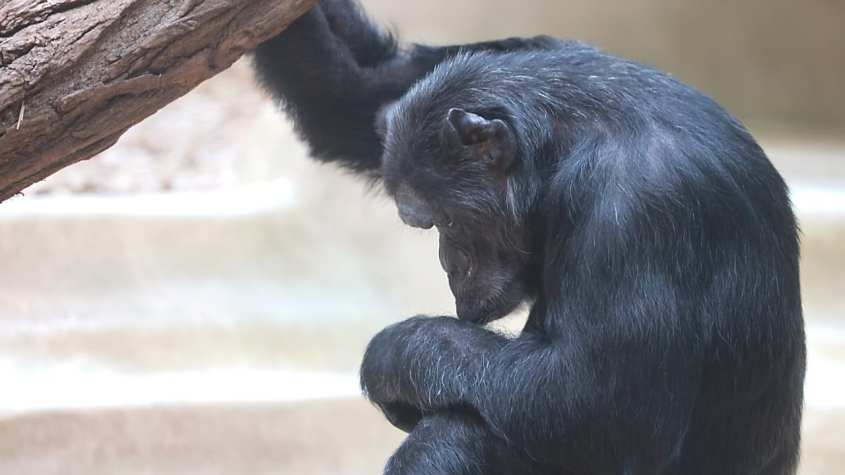
You can see one lemur spin his head in psychological distress while trapped in a cramped cage 😔
Zoos deprive lemurs of their freedom and sometimes even their families.
Never visit them!!
And I mean…It is collective nonsense to believe that zoos help protect species.
It is only prisons with live animals that parents visit with their children so that they learn that innocent and completely defenseless animals have to live in loneliness, suffering, and deprivation of liberty for a lifetime.

Zoos are commercially operated entertainment establishments that breed for their own display needs.
The zoos bring the argument about conservation, research, and education for children only to justify their existence
But as soon as children see that orangutans and monkeys live in the tropical rainforest at all and that almost exclusively high up in the trees where they build their nests, then they understand it has nothing to do with the animal that is apathetic in the zoo crouching behind a pane of glass on a bare concrete floor and bored to death.

A zoo is and remains an amusement for the visiting people. Nothing else.
Never visit a zoo! Never take your kids to the zoo!

Every documentary film conveys more knowledge and arouses more empathy than a visit to the zoo could ever do.
My best regards to all, Venus

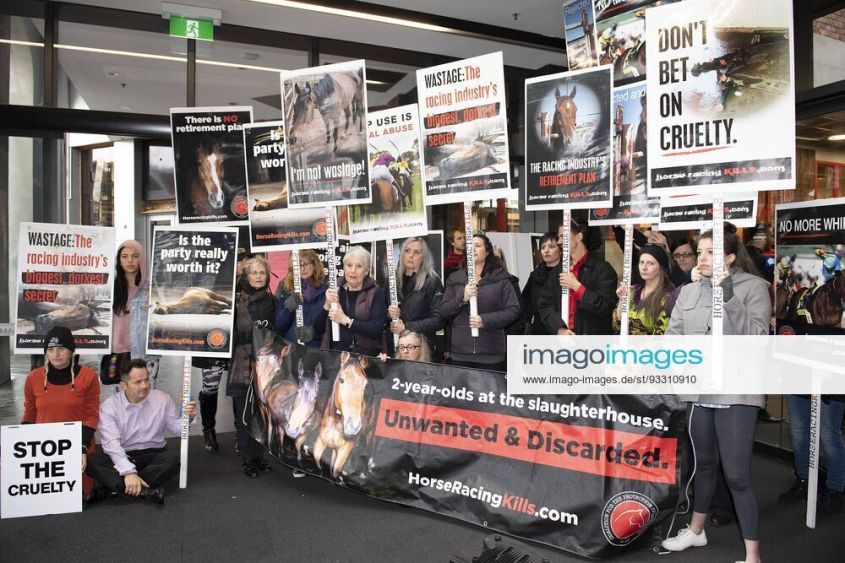
Allegations in Victorian parliament suggest slaughter of racehorses continues in NSW despite rules introduced in 2017
Billionaire Gerry Harvey has apologised after one of his studs sent ex-racehorses to a pet food factory for slaughter, a practice banned in New South Wales, vowing “it will never happen again”.
Allegations aired in Victorian parliament just days before the Melbourne Cup suggest the slaughter of unwanted thoroughbreds is continuing in New South Wales, despite public revelations last year and the NSW racing industry introducing rules in 2017 to stop retired horses being sent to knackeries or abattoirs.
Parliament heard allegations that thoroughbreds from a range of studs had been sent to two pet food factories for slaughter: Kankool Pet Foods and Highland Petfood, both in New South Wales.
Victorian Animal Justice party MP Andy Meddick said that included “a number of racehorses” from the Broombee Stud, owned by Harvey, which had been sent to Highland.
Meddick said the allegations had been brought to his attention by activists with the Farm Transparency Project.
“If you support horse racing this spring carnival, you are also supporting the wholesale slaughter of these majestic animals, who deserve so much better,” Meddick said.
Harvey told the Guardian he had been in contact with his stud and confirmed that horses were sent to pet food factories.
He said the horses were to be euthanised and had vet certificates stating they needed euthanasia. Harvey said he has now seen those certificates.
But he said the stud was not aware that NSW rules – unlike in other states – forbid sending horses to knackeries even if they were about to be euthanised. Harvey said there was no malice or intent behind the stud’s actions and it was a mistake.
“You end up unwittingly in a situation like this, not of your own making,” he said.
Go to Page 2 to read more.
Continue reading “Australia: NSW stud owned by Gerry Harvey among those accused in parliament of sending racehorses to slaughter.”
31/10/20 WAV Comment:
Well this is the best news ever to start the weekend. As many of you will know, we have been very critical of the South Korean government for not taking action on this issue several years ago – it was one electoral issue that the government campaign was won on – read more:
Regardless, now people power is getting the changes; with or without the help of governments. They should take note; especially with the issue in the USA on 3/11/20.

We at WAV have also tried to play our part and support our wonderful friends at ‘Korean Animal Rights’ (KARA) https://m.facebook.com/karakoreaanimalrights/ – ‘Korean Dogs’ and the ‘Humane Society International’ (HIS) https://www.hsi.org/ in getting these hell holes closed down. It now looks as if, with your support and actions; a much changing (pro animal welfare) stance by younger Koreans, and the fate of the suffering dogs being given world attention; South Korea is now on the way to closing down all of its dog meat farms – and that is the word from a dog farmer himself (Mr Kim), who declares that “There is no future in dog meat at all, it’s already dying and will fall apart completely,”.
You can see many of our actions; with links to the above campaign groups, by visiting: https://worldanimalsvoice.com/?s=south+korea
So; people sometimes ask us the big question if signing a petition or sending the odd e mail; to authorities does really make a difference. Here is your proof it does, that with constant tenacity by animal welfare organisations to continue the fight; un questionable evidence showing the cruelty involved; supported by realistic video footage; be in no doubt; your actions do make a huge difference, so keep it up.
The closure of Yuliin is the next big target on the dog meat issue.
Check out some of our campaign work on Yulin by clicking on the following:
https://worldanimalsvoice.com/?s=yulin
Before we go; please spare a thought for all the dogs of the meat trade who are not with us any more. They were cold, they were fed the worst scraps ever; and their end was the most despicable ever. All for the want of some human beings. Now we move on and will turn corners to stop this obscene abuse.
Regards Mark
WAV.

From ‘The Independent’ (UK national newspaper) – London;
‘There is no future in dog meat at all, it’s already dying and will fall apart completely,’ says former dog meat farmer
A charity has closed its 17th dog meat farm in South Korea as more people in the country support a ban on dog meat consumption.
Washington-based animal rights group, Humane Society International, announced it closed a farm that had nearly 200 dogs, which were bred and raised for slaughter in the dog meat trade.
The dogs, mainly Korean jinxes and mastiffs, were rescued and taken to the US to be adopted.

The farm was operated by a farmer named Kim Il-hwan, who had been in the industry for around 40 years. In exchange for closing the farm, he was given financial compensation and career assistance from HSI.
Mr Kim said the industry was shrinking and business had been difficult for the past decade.
“There is no future in dog meat at all, it’s already dying and will fall apart completely,” he said of the industry. “And dog farming is physically hard and I’m getting old, so I want to get out. 40 years ago it was different, but now it’s over for dog farming.”
An opinion poll commissioned by HSI suggests that Mr Kim is right – 84 per cent of those polled said they do not or will not eat dog and almost 60 per cent supported a legislative ban on the trade.

The poll, conducted by Neilsen, also found 57 per cent of South Koreans believe dog meat consumption reflects poorly on the country, an increase from 37 per cent in 2017.
Nara Kim, HSI’s dog meat campaigner in South Korea, said: “More people in South Korea are interested in animal welfare and the environment, and so when they see footage of our dog farm closures on the news showing the animals suffering and filthy conditions, or read about dog meat exposés by other Korean groups, they are really shocked and upset.
“The inevitable drop in sales is leading more dog farmers to help them start a new life. But we hope in time the Korean government will adopt this type of approach to phase out the dog meat industry for good.”
The dogs rescued from this farm will arrive in the US on Friday and will be housed in temporary shelters in Washington DC and Montreal, Canada.
According to Kitty Block, CEO of HSI, the dogs will then go to animal shelter partners in Maryland, Ohio and Pennsylvania after several weeks to be adopted out to the public.
“This is the 17th dog meat farm that HSI has helped close, part of a campaign to show dog meat farmers, the South Korean government and the South Korean people that there is a better path forward for us all, humans and animals, a path that celebrates the human-animal bond in the most special of ways,” she added.

Dog meat has long been a part of South Korean cuisine and around one million dogs are believed to be eaten every year. However, the popularity of the meat has declined and consuming dog meat has become taboo among the younger generation.
In 2018, a city court in Bucheon ruled the killing of dogs for meat is illegal. The ruling was hailed by activists who said it could pave the way for outlawing dog meat consumption entirely.
KEEP UP THE FIGHT

Mafia methods: After we had one success after another in Italy this autumn, our opponents are now reaching into the bottom drawer of the bag of tricks: One of our employees received a threatening letter to his private address yesterday:
“Now we know where you live. It’s just a matter of time. You better bring your daughter to the grandparents ”.

Not that we’re particularly scared – it just shows once more what poachers are made of.
And I mean…Whoever massacres defenseless animals uninhibitedly loses all sensitivity to his fellow human beings too.
The hunt leads to dehumanization.
Max Planck and Einstein thought hunters were psychopaths. When I read what methods they use to murder and intimidate, this opinion is confirmed.
Hunters have no task in nature, they do not belong to nature at all.
Hunters are pathetic monsters, who are allowed to continue to exist as such because our society tolerates them, covers them, or is indifferent to their crimes against the weaker.

Regards and good night, Venus