Germany: report about farm and transport misery


First report:


flagge.jdeutschlandpg


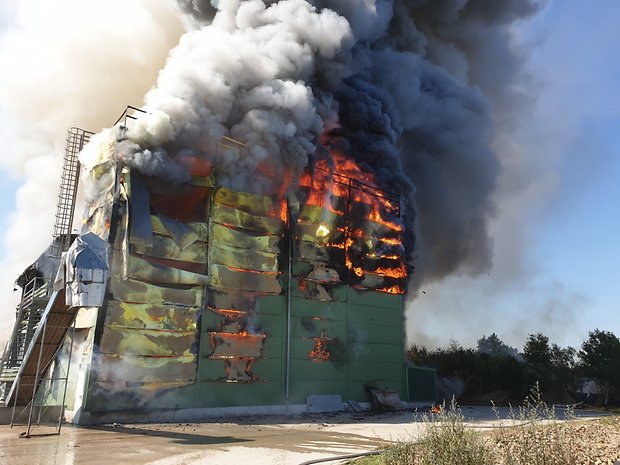
Oon the 24th of July 86,500 chickens died after fire in a stable in Lower Saxony, (Germany) – 2.8 million euros damage (!!!)
 

hühne -scheunenbrand-voerden
Police said the building was completely ablaze. The fire developed in the building, and although 150 firefighters were in charge, the animals could no longer be rescued.
“Even from a distance, a black cloud of smoke could be seen”, described the fire brigade master  the first minutes after the alarm. On site, the firefighters then found “a stable in full blaze”.

The 86,500 chickens housed on five “floors” in the 100-meter-long building were beyond salvation.

https://www.noz.de/lokales/neuenkirchen-voerden/artikel/1818648/86-500-huehner-nach-brand-in-voerdener-stall-tot-2-8-millionen-euro-schaden

The truth: In the present case, there is murder, because of clear over-number of inmates and not existing fire protection measures in the stable!

Second report:

Hesse, Germany (dpa / lhe) – About 500 chickens died on the 25th of July during an animal transport. They were not supplied with water at 34 degrees, reported the police on Thursday in Giessen (Germany).
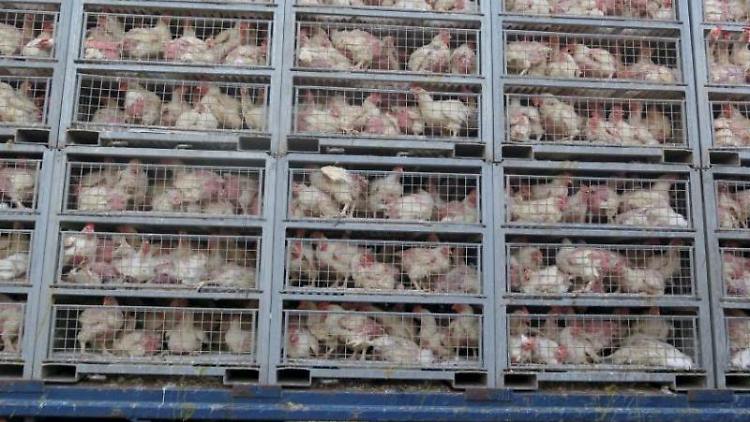
Kafige-mit-Huhnern-sind-auf-einem-Transporter-gestapelt(Photo: Police Headquarters Central Hessen / dpa)


According to the officials, the livestock had neither a cooling system nor drinking water for the animals, which had already been traveling from France to a slaughterhouse in Poland for about 16 hours. The drive there would have taken another twelve hours. The officials spoke of “incredible pictures”. In addition to around 500 dead chickens, numerous other animals would have been “in miserable condition” in the cages.

According to their assessment, not a single chicken would have survived until Poland.

About 500 animals have already died, with another 400 to 500 animals there is the danger, according to the police, that they will die as a result of the transport. The further journey was prohibited, the rescued animals were brought to a poultry farm.

Investigations were initiated against shippers, dispatchers and a veterinarian; the two truck drivers had to deposit security of € 1,000 each (!!!)

Due to the heat, international animal transport throughout Europe had been banned on that day.

https://www.pnp.de/nachrichten/panorama/3398724_Hunderte-Huehner-sterben-Hitze-Tod-auf-der-A5-in-Hessen.html

The truth: In this case we are dealing with negligent murder.
The transport should not have started at all. This means the truck was traveling illegally.
The start of transport was approved by the Authority and the Veterinary Office.
In most cases, corruption and disregard of the law continue to go unpunished, hence the daily mass murder in transports and farms.

Third report:

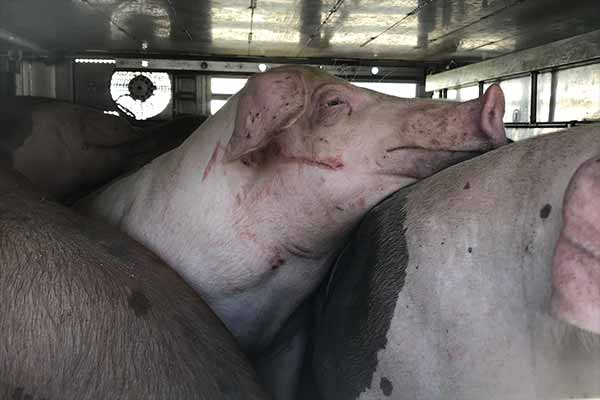
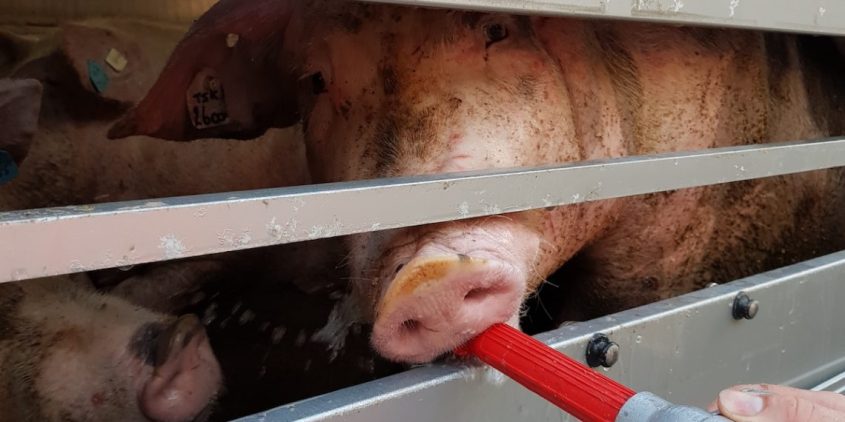
143 pigs transported on Tuesday, July 23 at 41 degrees without water
20190723_Tiertransport-1140x570Photo: Police Dortmund, Germany


They were completely dehydrated, hyperventilated and could barely stand: On the highway the Dortmund police rescued with the fire brigade more than 100 pigs from the heat death. At least three of the animals had already died when the police controlled the van.

The police had been alerted by a car driver on Tuesday, July 23 at 17:50. He did not think the animal transport was correct – and he was right. Thanks to the good description of the witness, the highway police caught the transporter on the highway and checked it in the nearby parking lot.

In it they found 143 pigs: completely dehydrated and in poor health.

In the transport officials measured 41 degrees despite ventilation – and the built in water tank was empty. No wonder that the pigs hyperventilate and could no longer stand on their feet.

A member of the veterinary office confirmed the overheating and dehydration of the pigs and found that the driver (47) from the Netherlands had no animal welfare documents.

He was reported on suspicion of violating the animal welfare law and had to pay a security deposit of 700 euros (!!!)

After cooling, the transporter finally brought the pigs to their destination: they were from France on their way to to the well-known slaughterhouse Tönnies, in North Rhine-Westphalia, in Germany.

A Tönnies spokesman said, “That’s not okay, that the tank was not filled with water.” (!!!).

https://www.nw.de/nachrichten/regionale_politik/22516539_41-Grad-kein-Wasser-Polizei-stoppt-Schweine-Transporter.html

The truth: The animal transport that was stopped on this motorway came from France. There, the Minister of Agriculture Didier Guillaume had banned animal transport in France at the end of June because of the ongoing heat.
Animal transports from France should therefore be illegal and should not be approved under these temperatures.

But if the driver of an illegal transport is “punished” with 700 euros, then he will do it again.
The 700 euros are a ridiculous sum and therefore makes it easy for anyone to risk an illegal transport again and again.

The license withdrawal would be a just and effective punishment.
But which court weighs to condemn an empire like Tönnies …

Conclusion: I see only one solution to this misery of the animal transport, created by the sub-system of the transport mafia.
That means: the 8-hour animal transport limit for EU countries.
Animal transports automatically become an unprofitable business for all!

For agricultural lobby, slaughterhouse operators and transporters.

Best regards to all, Venus



USA: New York City is set to ban foie gras.

UNST0001

New York City is set to ban foie gras

https://newfoodeconomy.org/new-york-city-foie-gras-ban-gavage/


New York City wants to ban foie gras, and duck farmers aren’t happy about it. A bill sponsored by Carlina Rivera, a city councilwoman who represents Manhattan neighborhoods, would prohibit the sale of the delicacy, and levy fines of up to $1,000 to businesses that violate the ban.

“What I am trying to do is put forward a bill that would end this practice and create a more humane New York City to live in,” said Rivera, during a City Council committee hearing in June, Crain’s New York reports. The animal welfare bill, which specifically targets “force-fed products,” is co-sponsored by the majority of the council.


Ducks in cages at a Hudson Valley farm.

There are only three farms that raise foie gras in the United States, and two of them are in Ferndale, New York, a rural community in the Catskills, 90 miles outside of New York City

As you likely know, foie gras (fatty liver in French) is made by force-feeding grain to ducks and geese, several times a day, for up to three weeks. Their livers then expand up to ten times their normal size, with large deposits of fat—which is why it’s so rich.

Animal rights activists, as well as many armchair observers, say that’s inhumane, and that the process of force-feeding the ducks with a funnel-like device—called gavage—traumatizes the animals. The process also diseases their livers, and can cause health complications. All that, they say, for a luxury product, available to a select few. Less than 1 percent of New York City restaurants serve foie gras, Rivera told the New York Post.

There are alternatives—like, for example, free-range geese in Spain that naturally gorge themselves on acorns, olives, figs and seeds, before flying south for the winter, that are favored by Dan Barber. Critics say that isn’t a commercially viable option for many reasons, including the variation in liver sizes. When ducks aren’t force-fed, their livers may expand by only two or three times, and may not be fatty or heavy enough for purists.

The proposed ban in New York City would follow a similar statewide prohibition in California, and one that existed briefly in Chicago. A statewide ban in New York has been introduced several times in recent years in the state legislature, the Wall Street Journal reports, while Philadelphia has also considered it. England, Germany, Israel, and several other countries have banned foie gras production.

The bill’s opponents say claims that foie gras production is inhumane are dated and flawed. In an op-ed in Crain’s, Ariane Daguin, the co-founder of D’Artagnan, a gourmet foods distributor which does a brisk foie business, pointed out that a detailed scientific study concluded that the product is “non-pathological and non-harmful,” and stress indicators were “hardly affected” during force-feeding.

During a contentious City Council hearing in June, Andy Wertheim, the president of D’Artagnan, said his company and its 280 employees would “not be able to recover” from the ban. He said the company sells about $15 million worth of foie gras in New York City, The Wall Street Journal reported, making his company the state’s largest distributor of the product.

There are only three farms that raise foie gras in the United States (most of our foie supply still comes from France and Canada). Two of these farms are in Ferndale, New York, a rural community in the Catskills, 90 miles outside of New York City. Between them, they employ 400 people.

Gavage in a Hudson Valley Foie Gras farm.

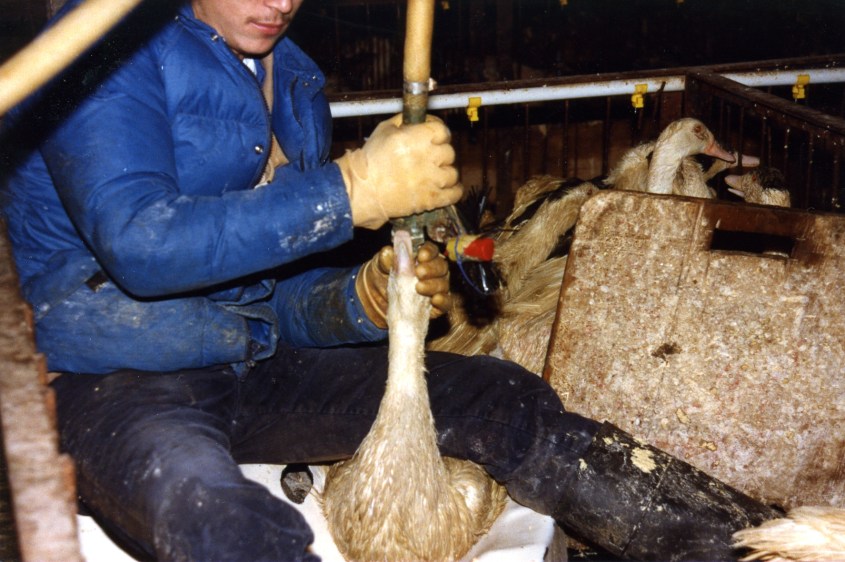
A feeder, seated on stools inside the pens, holds and steadies a duck between his knees, as if giving medicine to a pet. Then, he guides a rubber tube down the throat, releasing the feed until a part of the esophagus, known as the crop, swells up.

Izzy Yanay, the vice president of Hudson Valley Foie Gras, urged city council members to visit his farm before passing legislation that would cause him to lose one-third of his annual sales—around $12 million, according to figures reported by Crain’s. Representatives from the local county legislature were there to bolster their opposition to the ban, the effects of which, they contend, would put several hundred local residents out of work.

So far, none of the NYC council members have taken up his offer, but that didn’t stop Yanay from opening up his 200-acre property, where he processes more than a half-million Moulard ducks every year, to interested media and Sullivan County legislators earlier this month.

During the tour, Marcus Henley, a farm manager, explained that about 10,000 day-old ducklings arrive weekly from Canada, and are raised indoors for 12 weeks. After that, ducks are sent to pens, where they’re force-fed a grain mix three times a day, during a 20-day feeding cycle.

Gavage can be brief and jarring to the average human observer. Here’s how it works. A feeder, seated on a stool inside the pens, holds and steadies a duck between his knees, as if giving medicine to a pet. Then, he guides a rubber tube down the throat, releasing the feed until a part of the esophagus, known as the crop, swells up. During demonstrations on the tour, the process took about two seconds. Henley insisted that force-feeding a duck is different than feeding a human, because their esophagi are strong, and meant to temporarily hold large amounts of food. (The issue is certainly a source of robust debate.)

A spokesman for Rivera told Crain’s she has no plans to visit Hudson Valley Foie Gras because she has “concerns regarding the validity of the tours.” Though it’s not clear when the council will vote on her bill, when it does, it’s sure to pass, as it’s already endorsed by 28 of 51 members.


WAV Comment:

The majority of people now don’t accept animal cruelty.  Foie Gras production is gross animal cruelty.  Like many other issues; elephant rides, dolphin and Orca shows, animal using circuses – the world is now saying ‘no’ to animal abuse.  Yes, people may lose their jobs at being abusers, but they can change to something else – it is not impossible to do.  We suggest they set up a Vegan restaurant, or grow vegetables !


Further foie gras production photos from our archive (in Europe):


foie 5

foie gras abuse.jpg

foie gras human.png

liver-foie-gras-bigger

26/7/19: Romanian Sheep Carrier Vessel – Latest Position.

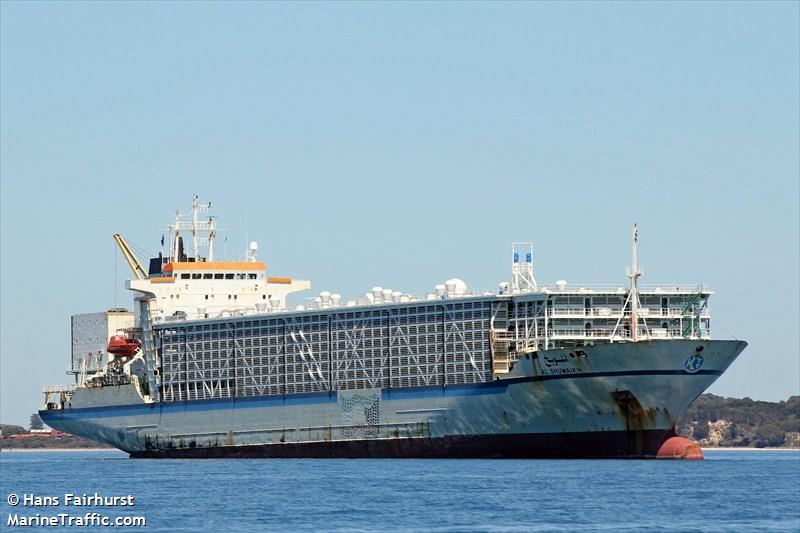
AL_SHUWAIKH another 2

Update: 26/7/19 0925hrs GMT.


The Al Shuwaikh has finally managed to leave the Red Sea,

It is currently in the Gulf of Aden, East of Khor Angar (Djibouti) sailing at 16.5 knots..


We are not sure this morning if the vessel is trying to stop us from tracking it by declaring itself as a ‘Cargo vessel’ rather than a ‘Livestock carrier’ – but we can and will track it regardless.

‘We have all the time in the world’.

‘You can run but you cannot hide’ !


“Its no good” – Depeche Mode.

Enjoy the music – some words are kind of appropriate – that’s why I publish.


As we said in the post fairly recently when the vessel was docked in Jeddah, Saudi Arabia, all of the sheep (70,000 if that many had survived the heat) may have been offloaded and the ship may be returning to Kuwait empty now.

But we are using this vessel and the consignment as a ‘test piece’ example basically to check our tracking capability; and to let the exporters know that we can, and will continually publish data on their locations in the world.  In other words, we are watching them at all times.  See the above in Red.


We use only legal ways of tracking which is available to everyone if they know how to do it – there is nothing illegal about the system we use.


Regards Mark


We will not give up.

These days we realized that the carriers fear us more than the authorities.

We do not see this as a success for us, but as further evidence that the system and the implementation of animal welfare rules are not working.

EU: It`s time to evolve


Poultry Farm And A Veterinary

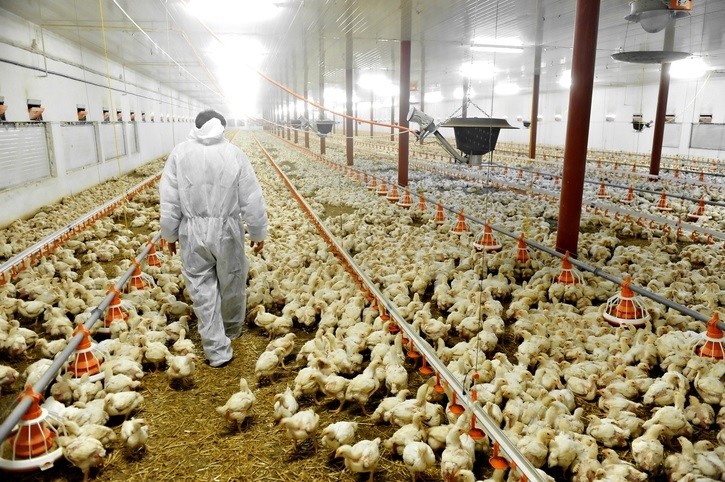
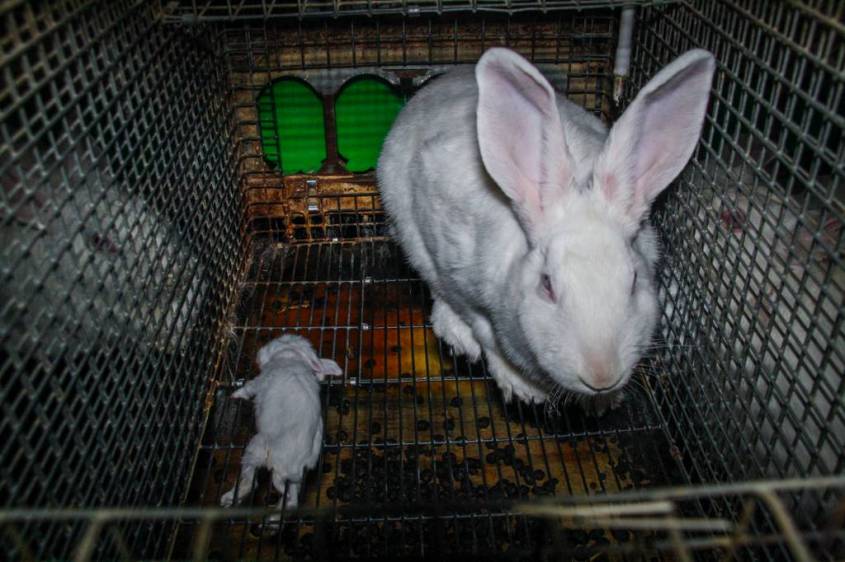
Pigs, hens, meat rabbits, ducks and quail are imprisoned in factory farm cages all over the EU. End the Cage Age will work on eliminating all of these cages. We need your help to bring about these changes.

They won’t happen overnight, but, with your backing, they will happen.

Every generation must make its mind up which injustice and cruelty to animals it is going to stop. The time has come for this generation to stand up and End the Cage Age.

Schweinezucht

A global problem

Across the world, billions of animals are farmed in cages.

In Europe alone, hundreds of millions of animals spend their entire life, from birth to death, in a cage.

schwein in Kasten und slogan dazun

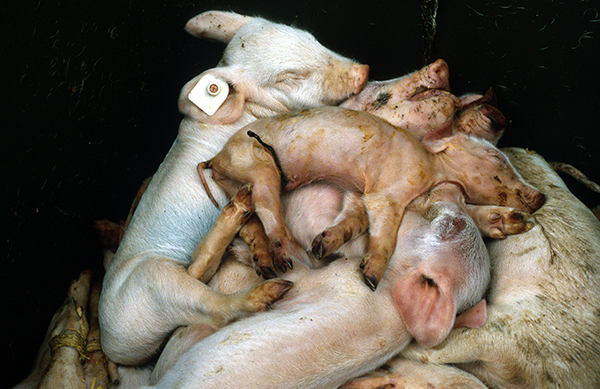
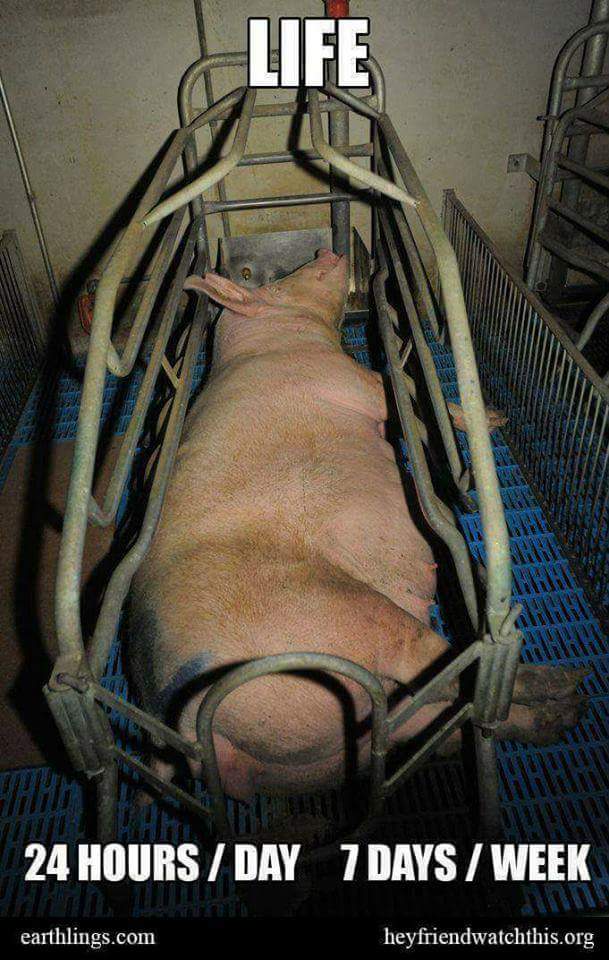
Cages keep animals isolated, or tightly packed in confined areas. In the worst cases they are barren, provide minimal space and prevent even moderate exercise. Being kept in these conditions, even with excellent stockmanship, can have severe health and welfare implications for the animals involved.

kuhleiden

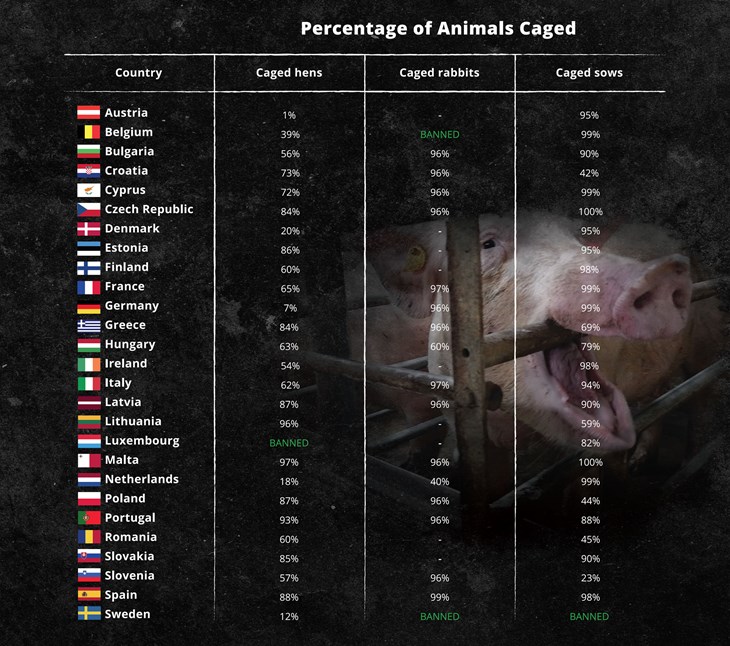
The range of animals that are farmed in a form of cage in the EU is wider than many might think. Not only hens (in ‘enriched cages’), but pigs (in sow stalls and farrowing crates), ducks and quail and even rabbits are all farmed in cages.

Kaninchenmast-Jodran--Lukas


So where are all the cages?


caged-animals-by-country-graph-2000x1771


Much of the EU pig industry is completely ignoring basic welfare laws — leading to the suffering of millions of pigs. Compassion in World Farming has pulled together evidence from across Europe — join us in standing up for pig welfare by signing the petition:

http://www.ciwf.org/EUpigvideo


And we mean…The biggest crime of humanity is factory farming.
Every year we kill over 50 billion animals. There are more breeding animals than wild animals. Animals today live in tormenting farms, we have degraded them from the living being to mass-produced.

Profit can only be achieved through mass.
There are countless videos of slaughterhouses showing how millions of animals live, what we, the human species, call “life.”

For a lifetime behind bars of a tight cage, born and raised in excrement, unable to move, without contact with conspecifics, without medical care when injured, in dirty cages, never breathe fresh air, never drink fresh water, never feel fresh grass under their legs, reach the farm “goods” through painful transports, the last stop of their “life”: the slaughterhouse.

This is the factory farming that we want to end.
We have to do it, we owe it to the animals.

Factory farming and farms are a crime of humanity against animals and offend against the ethics of modern civilized countries and societies.

My best regards to all, Venus
USA: Take Action for the Dolphin Brutally Impaled and Left for Dead.

UNST0001

SIGN: Justice for Dolphin Brutally Impaled and Left for Dead

Petition – Take Action for the Dolphin Brutally Impaled and Left for Dead.


petition keyboard

Petition Link:

https://ladyfreethinker.org/sign-justice-for-dolphin-brutally-impaled-and-left-for-dead/?utm_source=Newsletter&utm_medium=Emailhttps://ladyfreethinker.org/sign-justice-for-dolphin-brutally-impaled-and-left-for-dead/?utm_source=Newsletter&utm_medium=Email    


PETITION TARGET: Director of NOAA’s Office of Law Enforcement Jim Landon

Florida wildlife officials discovered a fatally wounded bottlenose dolphin along the coast of Upper Captiva Island in Lee County, reports the National Oceanic and Atmospheric Administration (NOAA).

“There was a wound penetrating from above and in front of the right eye, extending almost 6 inches toward the top and back of the head. The wound ended inside the head at the top of the skull and had evidence of hemorrhaging, indicating wounds consistent with being impaled prior to death,” the NOAA stated. 

The necropsy revealed the dolphin was likely “begging” for food when gruesomely stabbed by a “spear-like object.”

“People can help prevent future harm to wild dolphins by not feeding or attempting to feed them. Not only is it illegal, dolphins fed by people learn to associate people, boats, and fishing gear with food, which puts dolphins and people in harmful situations,” the NOAA informed.

“Harassing, harming and killing wild dolphins is also illegal,” the Miami Herald warned.

Sign this petition to urge NOAA Director Jim Landon to use all available resources to investigate this horrific crime against protected wildlife, so the perpetrator can be identified and prosecuted to the fullest extent of the law.

Anyone with information about this case is urged to call the NOAA Enforcement Hotline as soon as possible at 1-800-853-1964. 

There is a $38,000 reward for information leading to an arrest.


25/7/19 – UK – Good News for Animal Welfare.

UNKG0001

25/7/19 – UK – Good News for Animal Welfare.


As some of you are aware, yesterday saw the appointment of Mr Boris Johnson as the new Prime Minister of the UK. Mr Johnson has the intention of getting the UK out of the EU by the end of October 2019.

Given all the failings of the EU which we continuously present in posts on this site; especially those regarding intensive farming and live animal transport; for which basically EU Commissioners do not have a clue about taking action on; we were more than please to see within just a few hours of his new position of PM, Mr Johnson has appointed Theresa Villiers as his new Minster at DEFRA; who are responsible for both farm animal welfare issues, as well as that of live animal transport.

It was a welcome to have an e mail this morning; informing that the issue of intensive animal keeping in cages – pigs, chickens etc – is now to be debated by the UK parliament in the House on 9/9/2019.

Schweinezucht-Guenthersdorf-Ferkel-Gitter


A petition supported by the British public; only for people who reside in the UK, has resulted in 105,572 signatures to date, which means that the House will debate this issue with a possible view to legislation changes.

Image result for end the cage

The wording of the petition is:


Across the UK, millions of farmed animals are kept in cages, unable to express their natural behaviours. This causes huge suffering.

We call on the UK government to end this inhumane practice by banning all cages for farmed animals. Cages are cruel.

This cannot be the future of British farming.

We, the undersigned, call on the Secretary of State for the Environment Food and Rural Affairs to bring forward legislation that amends the Welfare of Farmed Animals (England) Regulations 2007 to prohibit the use of:

  1. a) barren and enriched cages for farmed animals including cages for laying hens, rabbits, pullets, broiler breeders, layer breeders, quail, pheasants, partridges, guinea fowl;
    b) farrowing crates for sows;
    c) individual calf pens


So, the British public, who naturally have concerns about animals and their welfare, are now getting the issue of ‘caged’ animals discussed in Parliament, with a view to legislation change.

This is something that the EU is incapable of; despite so many MEP’s allegedly representing ‘us’ – the common EU citizen ! thus is it any wonder that the UK wants to take back control and get away from the do nothing society of the EU ? – the UK can, and probably will, get out of the EU very soon and make its own new legislation for farm animals which will greatly benefit them. At the moment, as a member state of the EU, the UK has to bow to its Brussels masters and do what they require, despite detrimental effects on animal welfare, which basically the UK citizens detest !

Image result for end the cage


UK citizens regard animals a ‘sentient beings’, who do have rights for their welfare and who must be respected in this. Sadly, the EU talks big on the issue, but as we have shown at the moment with the Romania sheep exported to the Middle East, and a temporary halt on live animal transport in some parts of the EU because of the heat; the EU seems completely incapable of putting 1 and 1 together to make 2.

Why stop animal transport in some parts of the EU, yet allow Romanian sheep (70,000) to be exported live to the Middle east in temperatures some 10 degrees ABOVE the EU, which has a partial ban ? !!

Nothing EU makes any sense as we have recently shown; and because of this, the UK will be glad to walk away from the ‘Yukspeak’ politicians of the EU, who talk big and in reality, do nothing.


Further, we are delighted to see that Teresa Villiers MP is ow the Minister at DAFRA, and we send our congratulations to her on her position.

Image result for theresa villiers

Out of around 650 MP’s who represent the people in the House of Commons; Theresa has always been known both for her vocal hatred, and her actions on the issue of live animal transport. She is 110% ANTI live animal exports.

Image result for theresa villiers live animal exports

When the UK leaves the EU in the coming months, again the UK can take back control from its EU masters and enforce a ban on the export of live animals from the UK. Under Theresa, we think and hope this will be a priority in her new position at DEFRA.

By getting out of the EU, the UK will be doing the right thing for many; including animals and their welfare. The EU is currently incapable of enforcing any of its own legislation regarding animal welfare – the ‘masters’ are the whipping boys of the meat mafia lobbyists, and EU ‘animal welfare’ fails big time as a result of what the industry wants, and gets, via gutless politicians at the EU.

stop live transport

gestresste schweinejpg

Tiertransporte-Hohe-Temperaturen-BIGA-TTEU

UK welfare organisations; and it has some good ones; will continue the fight for animals from outside of the EU. But the UK will be establishing its own controls for animal welfare, not relying on the dead bats at the EU who basically, do nothing.


Regards Mark


AL_SHUWAIKH another 3

zerissene EU-Flagge am Stock

Lobbyist 1

25/7: Romanian Sheep Exports Update – Vessel now n the Gulf of Aden.

AL_SHUWAIKH another 4

Update: 25/7/19   0925hrs GMT.


The Al Shuwaikh has finally managed to leave the Red Sea,

It is currently in the Gulf of Aden sailing at 16.5 knots.

Current Temperature is around 30 degrees.


Regards Mark


We will not give up.

These days we realized that the carriers fear us more than the authorities.

We do not see this as a success for us, but as further evidence that the system and the implementation of animal welfare rules are not working.


Read the full story of the suffering pigs which the EU ignores at:

https://worldanimalsvoice.com/2019/07/24/animal-transports-hypocrisy-and-business/

Pathetic Romania: Your Troubles Have Not Really Started Yet. Lots (for us) to Do In the Coming Weeks.

-flag-of-romania-pg

AL_SHUWAIKH another 3

Update: 24/7/19 2000hrs GMT.

The ‘Al Shuwaikh’ has still not manged to leave the Red Sea,

It is currently off Perim Island, near to Fagal which is a city in Djibouti.

Why is this vessel chug, chug, chugging along ? it is doing just 16 knots.
Current Temperature is 32 degrees.
Regards Mark


Tiertransporte-Hohe-Temperaturen-BIGA-TTEU

We will not give up.

These days we realized that the carriers fear us more than the authorities.

We do something – the EU does not.

We do not see this as a success for us, but as further evidence that the system and the implementation of animal welfare rules are not working.


Read the full story of the suffering pigs which the EU ignores at:

https://worldanimalsvoice.com/2019/07/24/animal-transports-hypocrisy-and-business/

schweine im Transportjpg


Animal transports: hypocrisy and business


Report of the organization Animals Angels, Germany


The temperatures on the route from Spain to Italy reached the 35 ° C mark last Friday as well.

Tiertransporte-Hohe-Temperaturen-BIGA-TTEU

We accompany a transport with Spanish pigs, which are transported to a slaughterhouse in southern Italy. The animals on the second deck of the vehicle can not drink because the potions are blocked. We therefore decide to alert the police.

OLYMPUS DIGITAL CAMERA

But we have to wait until evening gets cooler. In this heat, we can not risk stopping the transport for a long time because the controls can take hours.

Meanwhile, the transport reaches southeastern France.
But the police are not coming. All attempts to turn on French officials fail.
As soon as the transport crosses the border, we try it in Italy, but here too tourism has priority, there are no officials available (!!!)

The transport continues unhindered to the south. Near Rome, the animals are finally dumped.

gestresste schweinejpg

On the one hand good, because at least they can all be supplied with water.
On the other hand, the haulier does not stick to the rules here either: Instead of the prescribed 24 hours, pigs are given just 10 hours break.
This transit stable is known to bypass the law by means of a trick.
We’re trying to get the police involved again, but there are no officials available from Rome to the south of Naples.

The pigs are not feeling well. They are panting heavily and many have foam around their mouths. The older driver is aggressive, he threatens us with a wooden beating (!!!) tries several times to hang us off and even takes detours to get rid of us. Finally, the transport arrives at a slaughterhouse on the heel of the Italian boot tip.

Tiertransport_Schweine_Hitze_2019_07_

At the EU Agriculture Ministers Conference a few days ago, the subject of animal transport had been discussed extensively. EU Commissioner Andriukaitis made clear remarks to the EU states to respect the statutory temperature specifications and not to handle transports at temperatures above 30 ° C.

mehrere Schweine large-4-3

Various ministries, including Spain, Italy and France, had published communications announcing specific measures. But again we have to realize that theory and practice diverge widely.

While all news channels in Italy speak of ‘African heat’, animal transport continues. They are handled despite the heat. All the tricks are used to circumvent the rules – and it is not even guaranteed that the animals can drink on the go.

The police have other priorities and often do not have the opportunity to intervene. We have to let ‘our’ pigs into the slaughterhouse and with a heavy heart we bid farewell to Pedro, Ernest, Ivan, Ruben, Hector and their fellow sufferers.

schweine im Transportjpg

We are exhausted, sad and angry. Now all we have to do is send complaints to all the parties and authorities involved and get the media involved.

We will not give up. These days we realized that the carriers fear us more than the authorities.

We do not see this as a success for us, but as further evidence that the system and the implementation of animal welfare rules are not working.

teilweise-blockierten-traenken-bringt-schweine-von-spanien-nach-i.html


My comment: A big problem with animal transport is that, first and foremost, there is no time limit for animal transport. The animals can in principle be transported endlessly.
The second problem is that the provisions about transport space, break, supply are formulated so inaccurately that at the end of each transport mafia acts according to its own rules.

The third and biggest problem is transports to third countries, that is, with clear words to countries where the word “animal welfare” is a foreign word. Countries that do not have animal welfare, and treat the animals like potato sacks and kill them like that ..
There is also a fourth problem with animal transport: that corrupt EU commissioners and agricultural ministers from many EU countries have common interests in animal transport, and thus one hand washes the other when it comes to animal transport abuses.
We hear a few warnings, some mails are sent, and the next 20,000 animals are transported back to hell with 42 degrees (illegal) temperature accompaniment.

We are exhausted, sad and angry too.

And we realize that animal transport has become a dirty, political business at the expense of animals, which disgusts and repudiates any democratic and ethical-minded people.

My best regards, Venus