‘Notorious’ South Korea Dog Meat Market Shut Down — and More Than 80 Dogs Have Been Saved. Victory !!

South Kores

Image result for Gupo dog meat market shut down

‘Notorious’ South Korea Dog Meat Market Shut Down — and More Than 80 Dogs Have Been Saved


Related image

Humane Society International first announced in June that the dog meat market, one of the country’s largest, would be shuttered

By Maria Pasquini

July 01, 2019


The Gupo dog meat market in Busan, South Korea, has officially been shut down.

Humane Society International announced on Monday that Gupo — known to animal rights organizations as a “notorious” market, infamous for selling chilled dog meat as well as “live dogs killed to order” — had been shut down by South Korean authorities.

Image result for Gupo dog meat market shut down

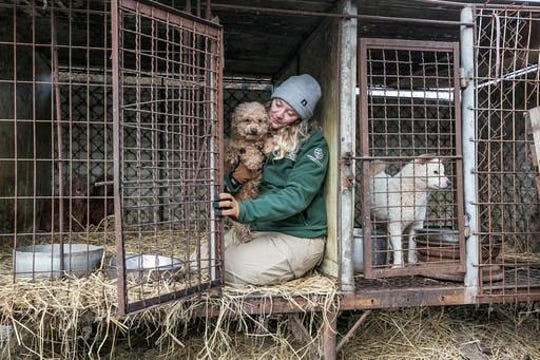
As a result of the closure, over 80 dogs have been saved and are currently being cared for by numerous animal charities, including Humane Society International/Korea, Korean Animal Welfare Association, Korea Animal Rights Advocates and Busan Korean Alliance for Prevention of Cruelty to Animals.

The news comes less than one month after HSI first announced the market would be shut down as the result of an agreement reached by the local Busan authorities and the 19 dog meat sellers operating out of the market.

Related image

Once the dog meat market is closed, the government plans to turn the area into a public park as part of an urban planning project, which led to the negotiations for the market’s shutdown.

This latest closure represents another victory in the ongoing fight against the dog meat trade.

South Korea’s Seongnam city demolished the country’s largest dog slaughterhouse in November 2018, and also “closed down most of the related dog meat vendors,” according to HSI.

Image result for Gupo dog meat market shut down

The organization went on to note that the latest closure is the first-ever “where complete agreement has been reached between the vendors and local authorities.”

“I cannot express enough my joy at helping to close down the dog meat shops and slaughterhouse at Gupo market,” Nara Kim, a dog meat campaigner for HSI and Humane Society Korea, said in a statement.

“The closure of Gupo’s dog meat market means the end of a gruesome era in South Korea’s dog meat history, and a sign of the times that law enforcement and local authorities are cracking down on this increasingly unpopular industry that most Koreans want nothing to do with,” Kim continued. “I know we have a long way to go to end the dog meat trade here, but even two years ago I would never have believed we would see such progress. It has been a pleasure to work with the Busan authorities, and especially in being able to save the last remaining dogs we found alive.”


Click on the following link to see many photos of the dogs being rescued:

https://people.com/pets/south-korea-gupo-dog-meat-market-officially-shut-down/


…….  Conditions Before the shut down:

Image result for Gupo dog meat market shut down

Image result for Gupo dog meat market shut down


Pass Resolution for Worldwide Dog Meat Ban. – What About the Rest ?

mansheep1.jpg


WAV Comment –

We are including this petition as it is well justified; we are fully aware of the horrendous suffering and slaughter at places such as Yulin; but we also say:

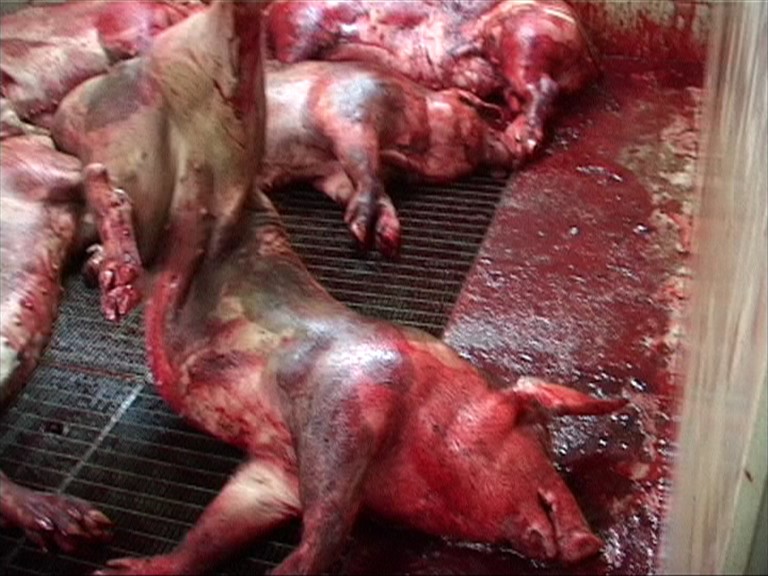
Are not millions of farm animals in the West not tortured and killed for food as well ? – pigs going alive into scalding tanks; ritual slaughter of sheep and chickens without stunning ?

Do we not submit live farm animals to horrendous live transport regimes in the West ? – are live pigs, sheep, chickens and calves not transported for many a long hour across Europe and the USA only to be slaughtered inhumanely at the end of their journey of hell – extreme heat, overcrowding etc ?

‘Hungry, thirsty, and suffering disease and broken bones’ – sounds like what goes on in many Western intensive farming practices to us !

Dog is sheep is cow is pig is chicken is calf. The suffering of all sentient beings need to be addressed – only when we in the West change animal production and slaughter methods should it really start tell others. Going Vegan and putting a stop to dead animals on your plate is the start – do it.

Animals are ALL sentient beings – no matter where they exists on this planet !

yulin 16 3

Yulin


Kanninchen im Korb und Schlachthofo

EU Rabbit Slaughter


Below – Stray Dog Cruelty – Romania EU

Streuner Hund in Rumänien

Below – Watering Pigs during Transport – USA / Canada

Image result for pigs in transport


Below – Yulin Do Meat Slaughter

Image result for yulin


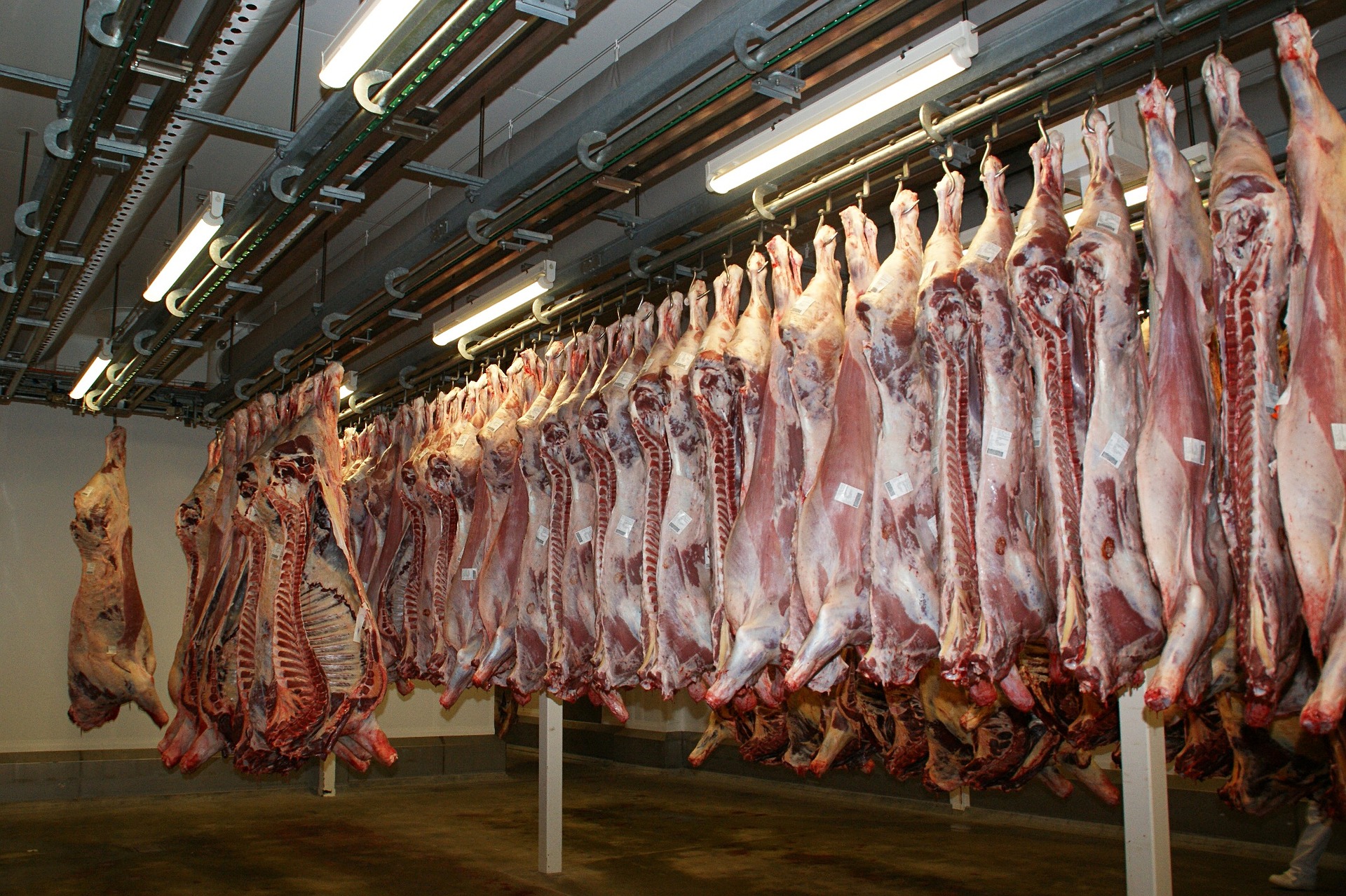
Below – EU Slaughterhouse Meat

Related image


Below – Croatian Slaughterhouse – EU

Image result for slaughterhouse


Below – Slaughterhouse In Israel

Image result for slaughterhouse


Below – Live Animal Transport EU

Image result for live animal transport


Below – Yulin Live Animal Transport

Image result for live animal transport yulin

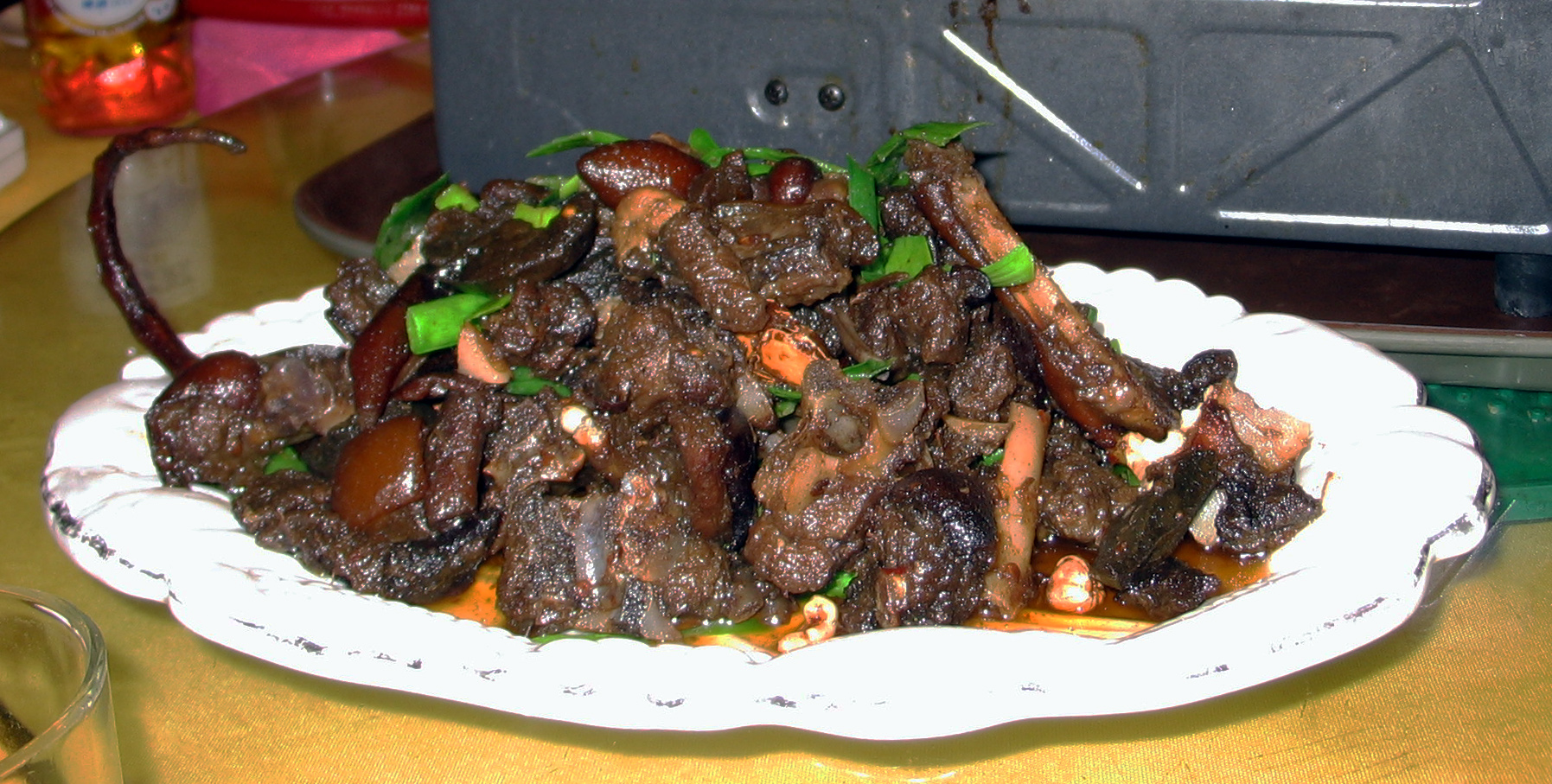
Below – Lychees and Dog Meat Plate – Yulin

Image result for live animal transport yulin


Below – Sirloin Steak on Plate – USA

Image result for steak on plate


Petition link: https://ladyfreethinker.org/sign-pass-resolution-for-worldwide-dog-meat-ban/?utm_source=Newsletter&utm_medium=Email


Pass Resolution for Worldwide Dog Meat Ban


PETITION TARGET: Los Angeles Mayor Eric Garcetti

A new resolution introduced in Los Angeles City Council aims to pressure governments throughout Southeast Asia to end the brutally cruel dog meat industry, in which tens of millions of dogs are tortured and killed for food in Vietnam, South Korea, Indonesia, Cambodia, China and other nations.

For a dog, this gruesome industry is Hell on Earth. The animals are bound, crammed into tiny, rusty cages with dozens of other dogs, and transported to meat markets or slaughterhouses.

Hungry, thirsty, and suffering disease and broken bones, these terrified animals must then watch their cage mates tortured and killed in front of them as they wait for their turn.

Because many people believe dog meat is more tender and provides more health benefits if the animal suffers during death, dogs are often hung, beaten, or electrocuted by the butchers.

While some countries have laws barring killing dogs and selling them for food, many of these regulations are unenforced.

Councilmember Bob Blumenfield’s resolution (CF 19-0002-S101) urges the governments listed above to ban the sale of dog meat and enforce animal cruelty laws.

While these atrocities may be happening far away from home, animals worldwide deserve our protection and respect; we have the power to influence decision-makers overseas and save the lives of millions of dogs every year.

Sign this petition asking LA Mayor Eric Garcetti to fully support — and work to pass — this important resolution.


Russia is Freeing Orcas from Cruel ‘Whale Prison’ – Proof Petitions Work !

Russian federation


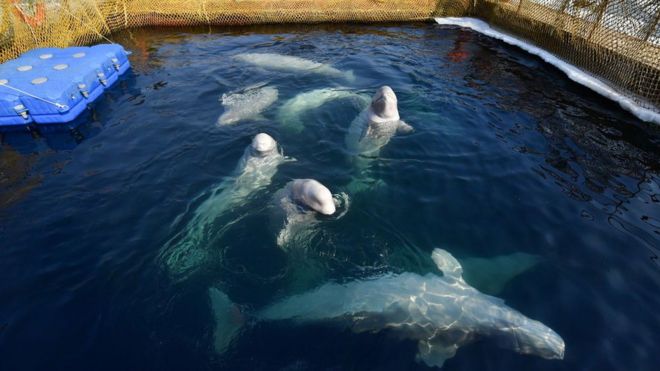
Whales kept in enclosures in the far east of Russia

We first posted info about the ‘Whale Jail’ in March; long with petition links.

https://worldanimalsvoice.com/2019/06/09/russia-good-news-russia-fines-whale-jail-company-white-whale/

https://worldanimalsvoice.com/2019/03/10/update-100-animals-to-be-released-from-russias-whale-prison/


Well now we have an update – and proof that signing petitions does work; even though you may not think so at the time.

PETITION UPDATE: Russia is Freeing Orcas from Cruel ‘Whale Prison’

Posted by Katie Valentine | June 23, 2019

Last Thursday, Russian President Vladimir Putin announced plans to start releasing orcas and beluga whales currently being held in the country’s Far East in crowded pens, nicknamed the “whale jail.”

For the past several months, around 100 whales have been confined in the cramped enclosures off Russia’s Pacific Coast. Disturbing images and videos of the animals were first made public in November of last year, prompting international outrage from animal rights activists and an investigation by Russian authorities.

Those who imprisoned the whales are suspected of planning to sell them to China’s growing amusement park industry, which pays millions of dollars per whale. Following the investigation, four companies were charged for violating a worldwide ban on commercial whale hunting that went into effect in 1982.

In March, Russian authorities announced their intentions to eventually free the whales, citing a need to first figure out how to safely return them to their natural environment. The news was hopeful, but not promising — despite being native to the Arctic, without the ability to keep warm by swimming long distances, the whales’ lives were at risk.

Thanks to global activists’ continued outcry, including the more than 20,000 people who signed LFT’s petition to free the whales, these captive animals are finally getting a chance to live a normal life.


‘Precipitous’ fall in Antarctic sea ice since 2014 revealed.

‘Precipitous’ fall in Antarctic sea ice since 2014 revealed

Plunge is far faster than in Arctic and may lead to more global heating, say scientists

The vast expanse of sea ice around Antarctica has suffered a “precipitous” fall since 2014, satellite data shows, and fell at a faster rate than seen in the Arctic.

The plunge in the average annual extent means Antarctica lost as much sea ice in four years as the Arctic lost in 34 years. The cause of the sharp Antarctic losses is as yet unknown and only time will tell whether the ice recovers or continues to decline.

But researchers said it showed ice could disappear much more rapidly than previously thought. Unlike the melting of ice sheets on land, sea ice melting does not raise sea level. But losing bright white sea ice means the sun’s heat is instead absorbed by dark ocean waters, leading to a vicious circle of heating.

Sea ice spreads over enormous areas and has major impacts on the global climate system, with losses in the Arctic strongly linked to extreme weather at lower latitudes, such as heatwaves in Europe.

The loss of sea ice in the Arctic clearly tracks the rise in global air temperatures resulting from human-caused global heating, but the two poles are very different. The Arctic is an ocean surrounded by continents and is exposed to warming air, while Antarctica is a freezing continent surrounded by oceans and is protected from warming air by a circle of strong winds.

Antarctic sea ice had been slowly increasing during the 40 years of measurements and reached a record maximum in 2014. But since then sea ice extent has nosedived, reaching a record low in 2017.

“There has been a huge decrease,” said Claire Parkinson, at Nasa’s Goddard Space Flight Center in the US. In her study, published in the journal Proceedings of the National Academy of Sciences, she called the decline precipitous and a dramatic reversal.

“We don’t know if that decrease is going to continue,” she said. “But it raises the question of why [has it happened], and are we going to see some huge acceleration in the rate of decrease in the Arctic? Only the continued record will let us know.”

“The Arctic has become a poster child for global warming,” Parkinson said, but the recent sea ice falls in Antarctica have been far worse. She has tracked Antarctic sea ice for more than 40 years. “All of us scientists were thinking eventually global warming is going to catch up in the Antarctic,” she said.

Kaitlin Naughten, a sea ice expert at the British Antarctic Survey, said: “Westerly winds which surround the continent mean that Antarctic sea ice doesn’t respond directly to global warming averaged over the whole planet.”

“Climate change is affecting the winds, but so is the ozone hole and short-term cycles like El Niño. The sea ice is also affected by meltwater running off from the Antarctic ice sheet,” she said. “Until 2014, the total effect of all these factors was for Antarctic sea ice to expand. But in 2014, something flipped, and the sea ice has since declined dramatically. Now scientists are trying to figure out exactly why this happened.”

Prof Andrew Shepherd at Leeds University in the UK said: “The rapid decline has caught us by surprise and changes the picture completely. Now sea ice is retreating in both hemispheres and that presents a challenge because it could mean further warming.” He said it would also be important to find if the ice’s thickness has changed, as well as its extent.

The new research collated microwave satellite data from 1979 to 2018, providing excellent measurements of sea ice as the different signals from ice and ocean are very distinct and microwaves can be detected day or night and usually through clouds.

Sea ice expands in winter and retreats in summer every year, so Parkinson used annual averages to assess the long term trends. The biggest single year fall was in 2016, when an El Niño boosted human-caused warming to result in record global temperatures.

She said rates of decline after 2014 were three times faster than the most rapid melting ever recorded in the Arctic. Sea ice extent had a small uptick in 2018, but in 2019 so far there had been a further reduction, she said.

Parkinson said the dramatic plunge was a strong piece of evidence that scientists could use to narrow down the causes of the change. “As a Nasa scientist, my key responsibility is to get the satellite data out and I hope others will take this 40-year record and try to figure out how these dramatically rapid decreases since 2014 can be explained,” she said.

From: https://www.theguardian.com/world/2019/jul/01/precipitous-fall-in-antarctic-sea-ice-revealed


Miniature exhibition with great effect


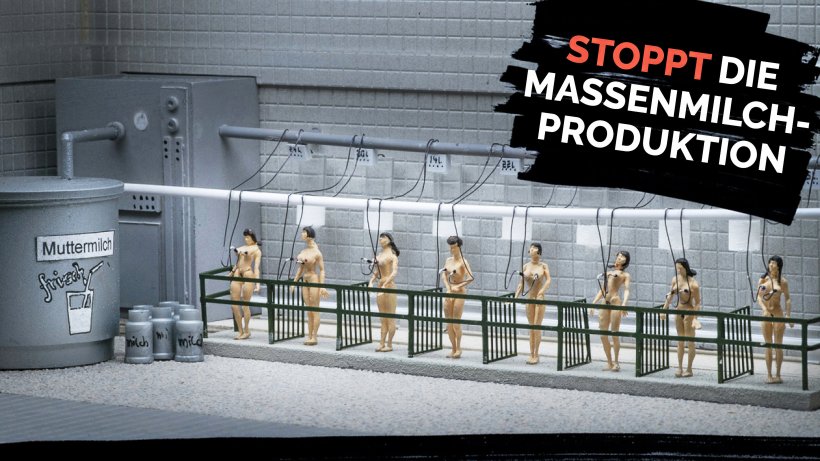
Naked women on milking machines, conveyor belts that transport newly born babies to a shredder: Such difficult to bear motifs can be seen in the exhibition!


deutsche flagge


The Miniature Museum “Miniatur Wunderland” in Hamburg makes various exhibitions on almost 1,500 square meters model area.
The rooms are home to the largest model railway system in the world but it also keeps attracting attention with political messages. This happened last week with animal welfare scenes that were built into the mini-landscape and deliberately provoke. The model makers had posted photos of the individual scenes on Thursday on their Facebook page..

miniatur wunderland 2jpg

This poster campaign  against mass animal husbandry raises criticism. In the model railway exhibition mini-posters hang on which, for example, women are connected to milking machines, babies are driven directly after birth in the shredder or people sitting in mast stands. 

miniatur wunderlandpg

On the most dramatic subject, childbearing women are seen as chickens in laying batteries whose babies are automatically sorted on a hoop. “Stop the boy shredding!” is the slogan to it.

mini-plakate-mit-grosser-wirkung-das-miniatur-wunderland-wirbt

One of the founders of Miniatur Wunderland, Frederik Braun, explains  that the visitors and the Facebook fans are actually responding positively.

“Good idea, very creative,” comments one user.
Another praises: “Great! It’s great that you show so much backbone, even if you certainly snub some of your customers / visitors.”

“I’d say 95 percent say it’s nice to look at the mirror and shocking when you look at this role reversal. Many say that you have to change things and also say that the hardest part is to start with yourself” so Braun.

But the Farmers Association Schleswig-Holstein called the action on Facebook “abnormal” (!!!) A dispute between farmers and the Miniatur Wunderland had set in, which has been going on for days!

The massive protests of the farmers against the animal welfare posters in the Miniatur Wunderland continue and put the managing directors Frederik and Gerrit Braun under considerable pressure. “Never before have we stung so badly in a wasp’s nest that we suddenly feel the concentrated rage of a powerful farmer’s association”, so Braun.

On criticism and angry protests, the makers are set. Con-Founder Frederik Braun had previously said in a “Spiegel” interview: “I’d rather lose a few guests than my soul.”

What he does with his twin brother theme, they really care about. “Of course the miniature wonderland gets so much attention, but that’s not why I do it.”


https://www.t-online.de/nachrichten/panorama/id_86002230/hamburg-miniatur-wunderland-wirbt-mit-schock-plakaten-fuer-tierschutz.html


My comment: Hate, anger, shitstorm, war … we all know that from the farmer.
The farmers’ association in Germany is one of the most powerful authorities. Now that the peasants have the boundless support of the incompetent and unscrupulous Agriculture Minister Julia Klöckner becomes even more outrageous and impudence.

But the peasants have to mobilize. It does not look good with them und theri Minister. Undercover investigations, lawsuits for violation of the animal protection law, bad image in the media …It’s getting serious.
And now this “abnormal” exhibition in Hamburg …Oh God!
That’s why they write long posts in Facebook against the exhibition day and night.

Let them work a bit..
Except torment animals, beat animals, tie animals in chains, slaughter animals, the  farmers are doing nothing else and that is not job.
This is live out of criminal energy, which is subsidized by our tax money.

My best regards to all, Venus


Animal transports in summer: hell for animals


Tiertransporte_Sommer_Hitze_

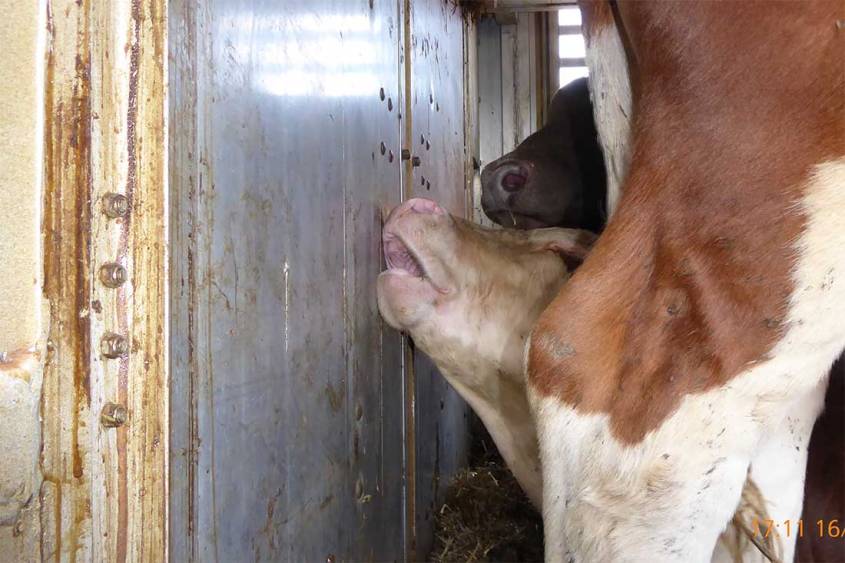
While we humans can cool off in the summer heat, the animals suffer all the more on the long transports. There is no cool summer evening waiting for them, no cold shower and all too often not even fresh water. The EU, as always, only discusses about it extensively, and during this time the transport continues unhindered in this weather.
Some countries want to expose certain routes, but that’s not enough!

Again this summer millions of animals will have to suffer miserably under the heat on the transports.

Tiertransporte-Hitze-hecheln-jpg

Is it even allowed to transport animals in the summer over long distances?

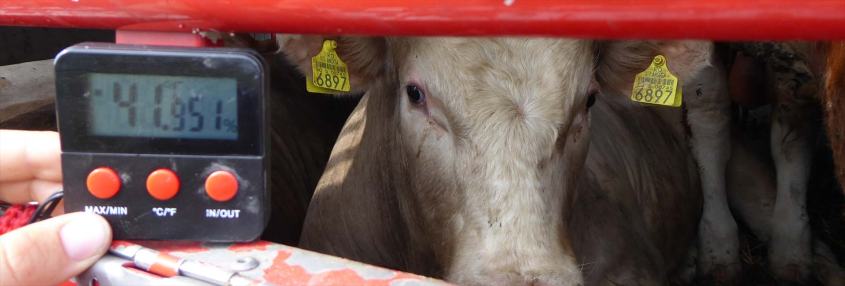
Yes, as long as the temperature in the vehicles does not exceed 30 ° C (with 5 ° C tolerance upwards). This is stipulated by EU Regulation EC 01/2005 for animal transports over 8 hours. The vehicles must also be equipped with fans that – regardless of whether the vehicle is driving or standing – can ensure these limits.

Is the provision implemented in practice?

Usually not. For more than 20 years, Animals’ Angels has documented that the competent veterinary offices also release animal transports in the summer months when temperatures above the limit values ​​are to be expected on the way. Especially in the south of Europe and on the long export routes to Asia and Africa, we regularly document transports at temperatures above 35 ° C.

700-ferkel-an-bord-1da7

But even the prescribed limits are already problematic for the animals: Thus, pigs have significant problems at the allowed 30 ° C to regulate their body temperature. In addition, the animals produce heat in the vehicles. The temperature inside is therefore almost always higher than in the environment.
If an animal transport comes to a halt, for example due to traffic jams, a breakdown or waiting times at borders and harbors, the temperatures in the vehicle may increase by several degrees in the near future. This aspect is totally overlooked when planning and releasing the transports. As well as the fact that the installed fans in the truck at best only exchange the air, but can not effectively lower the temperature.

In short Video: animal transports at high temperatures (with English subtitles)

Do the animals get enough water on the way?

The EU regulation provides that animals on long transports – depending on the species – must be supplied with water at different intervals. However, Animals’ Angels regularly documents that the animals often do not get enough or too little water. The causes are numerous:

-The drinkers are defective or switched off.
-The water tanks are empty.
-The animals can not reach the potions, for example because other animals block their way.
-The potions are installed and therefore not accessible.
-The animals are not used to the potions and do not recognize them as a source of water.
-There are not enough drinkers in the vehicle.
-The potions are polluted with excrement.

Short explained in video: Water supply for animal transport:

What are the consequences for the animals?

Transports at high temperatures inevitably mean stress and suffering for the animals. Thirst and dehydration often come along. In the worst case, the animals suffer serious health damage or even die during transport.

What needs to change?

Animal transports – whether over long or short distances – must be prohibited in the EU in hot summer months. This includes exports to countries outside the EU.
Where transports over short distances are unavoidable, they should only be done at night when it is cooler.
The temperature limits of the EU regulation on the protection of animals during transport must be significantly reduced, depending on the animal species.

schwein am Trankpg

Numerous countries have already announced various restrictions or requirements for the handling of animal transports in the summer months for 2019, including, for example: Czech Republic, Austria, Estonia, Ireland, Hungary and Luxembourg. However, these restrictions usually only affect certain species and routes, such as transports to Turkey. This is certainly an improvement over the last few years, but not enough!

https://www.animals-angels.de/neuigkeiten/titel/tiertransporte-im-sommer-millionen-tiere-leiden-auf-den-strassen-europas.html


My comment: The Gandhi quote is often mentioned: “The size and moral progress of a nation can be measured by how it treats the animals”.
How big can a nation be that declares living beings to be “commodities”? What is the size of a nation that identifies sentient beings as goods, such as grain, wood, chemicals, or machines just because they belong to another species?

The inscription “attention, live animals” on the containers replaces the words “attention, fragile” on boxes.
The welfare of the animal (Article 13 of the Lisbon Contact) is not taken into account in a transport where the animal functions as a “commodity”.

And the export of living beings from the EU is flourishing, with our tax money, do not forget. Each year, EU countries deliver millions of live animals (breeding and slaughter animals) to Turkey, the Middle East or North Africa, where they are brutally slaughtered according to religious rules.

All are sentient, intelligent and thinking beings with their own interests, physical, mental and social needs. All have the right to freedom and physical integrity.

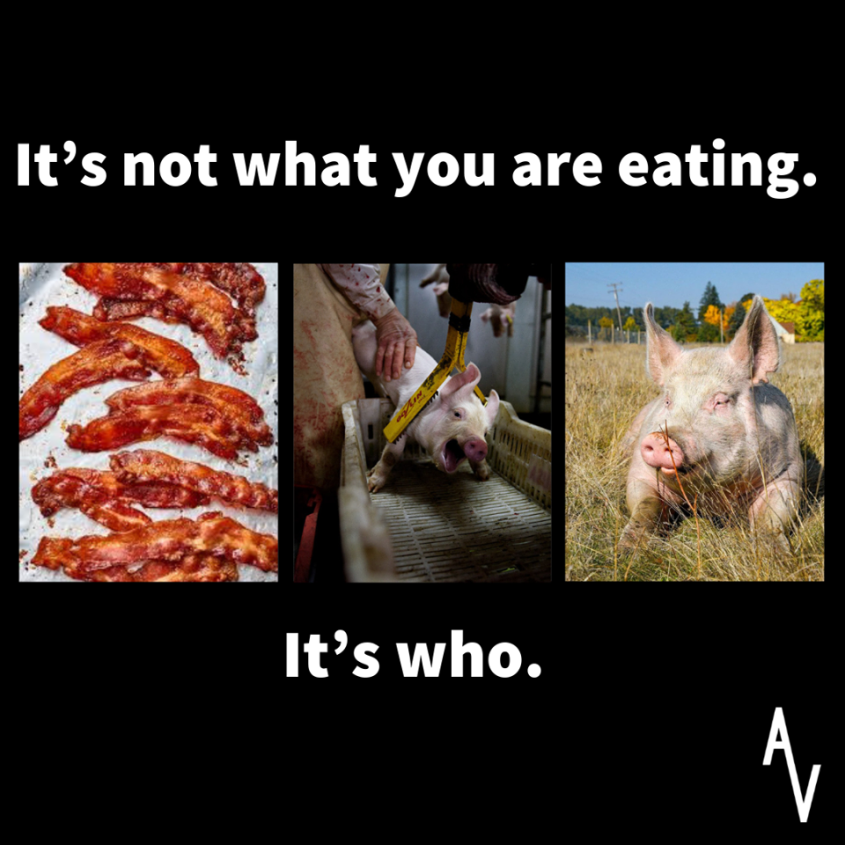
slogan über wen wir essen, nicht was

There was a black era imprisoned by the millions of slaves from Africa who were squeezed together as human cargo in the lower decks of the ships to carry them off to North America and other parts of the world. They, too, were beaten if they did not cooperate and were thrown overboard if they became ill or died. The survivors were exploited, “bred” and resold. Their traders earned a fortune with it.
Fortunately, this type of exploitation is abolished.

But a similar one, the exploitation of non-human animals, remained and is even intensified.

We will fight with all our might to stop animal suffering, to stop live animal transports and, in the long term, the abolition of mass animal husbandry.

My best regards to all, Venus


Canada: “What happens in the barn, stays in the barn” – That Is, Until Activists Get To The Pig Farm !

kanada flagge 2


With thanks to Stacey for keeping us informed about activities in Canada and the USA.

https://our-compass.org/2019/07/01/watch-unprecedented-animal-rights-protest-at-pig-farm/


Source Sentient Media
By Matthew Zampa

A sign posted inside the farm read, “What happens in the barn, stays in the barn,” an explicit reminder of the industry’s aversion to transparency.

At 6 a.m. on Sunday, April 28, a group of 50 Meat the Victims animal rights activists entered Excelsior Hog Farm, owned and operated by a board member of the British Columbia Pork Producers Association in Canada. Once activists were inside, Meat the Victims organizers reported that the facility promptly went on lockdown. The activists didn’t budge. They stayed to bear witness, pleading with farmers to help the distressed animals, many of which were found pregnant and dehydrated.

Meat the Victims protests are part of the animal rights movement’s effort to create more transparency and accountability in the animal agriculture industry, not just in Canada, but the United States, Australia, Britain, and anywhere there are farm animals suffering. Check out footage of the unprecedented demonstration at Excelsior Hog Farm here.

Nearly 200 animal rights activists gathered outside of an industry-leading pig farm in an industry-leading country: to bring awareness to the crimes of animal agriculture. On the back of the shirts worn by the demonstrators, Meat the Victims adorned this simple truth, “One has a moral responsibility to disobey unjust laws.”


In a sweeping act of defiance, activists can be seen sprinting past the “No Trespassing” signs and attempting to gain access to the pig farm. In doing so, they put themselves at certain risk of facing criminal trespassing and breaking and entering charges. “That’s okay,” said Amy Soranno, a spokesperson for the group of activists who made it inside the facility. “We’re challenging the law. That’s what we came here to do.”

Soranno was later taken into custody. The rest of the activists walked peacefully off the property, many with tears streaming down their faces, holding peace signs and white flowers in their hands.

Excelsior Hog Farm is located in Abbotsford, British Columbia, a community that earns a higher dollar per acre of agricultural land than any other city in Canada. More than 1,000 pigs are currently being held at the facility.


The following excerpt is from a statement released by Meat the Victims activists (May 4, 2019):

“Once we arrived at the farm and began filing out of buses, we could hear dogs barking and sirens blazing in the distance,” stated a Meat The Victims participant. The group jogged down a long path, heading for the back of the farm, stating what they saw when they arrived was just the beginning of a “horrific nightmare.” “The first thing we saw was dumpsters full of dead rotting pig carcasses, my heart was racing, and hands were shaking, I didn’t have any fear of being caught, but was so terrified of what we were about to witness inside.” Due to the secrecy of animal agriculture, many people have never seen inside an industrial animal farm. The group’s goal was to bring the truth to light.

Soon after the group arrived, around 140 activists formed a protest outside of the facility, and 65 activists (fully dressed in biosecurity suits, masks, and booties) attempted to go inside. Of the 65 activists, 50 successfully gained access into the farm. “As I stepped inside, at first all I saw was darkness, but as my eyes adjusted, I began to see hundreds of eyes curiously looking at me, my stomach sunk.”

The activists inside occupied a room full of gestation crates. “Gestation crates are used to immobilize pregnant pigs for weeks on end,” stated an activist, continuing “we occupied an entire row of crates and documented the animals’ heartbreaking existence. The air was nauseating, the concrete slatted floors were cold and filthy, many of the pigs could barely fit into the crates–with their legs, tails, and noses hanging out, pushed against the metal bars. All of these pigs had various cuts and sores, and were conducting unnatural repetitive behaviors, showing signs of insanity.” At least one pig appeared to be lying in a pool of her own blood, with a severely bruised face, and the group witnessed a pig having a miscarriage. “The hundreds of pregnant mothers had a variety of different markings spray painted on their bodies, one row of females in particular really struck me–the pigs were all facing the concrete wall, unable to turn around,” stated an activist.

“This just goes to show that there is no right way to do the wrong thing. This farm is as good as it gets.”

The activists refused to leave the facility until the owner of the farm agreed to allow accredited media inside, to which the farm eventually agreed. Based on information passed between the outside and inside groups, the media tour was delayed by three hours while the farm cleaned-up specific areas and decided who would be allowed in. Eventually, five out of the 11 news outlets were approved. The investigative outlet The Intercept and CTV News were of the group who were removed from the tour. We had full bio suits available for anyone entering the barn, but the farmers were not concerned about this. Therefore media, farmers, police, and even the vet went in without any protection.

Throughout this delay, activists begged the farm to help the most distressed animals. “In exchange for immediate veterinary care, we agreed to leave the gestation room, but the vets who arrived only took a brief look at any animals,” stated an activist who was inside. The activists also pleaded with the farmers to give the pigs water, of which their trough was empty upon the activist’s arrival. “These pregnant pigs were so dehydrated, desperately nudging their trough and frothing at the mouth.” The farmers eventually agreed to give the pigs water.

The media tour went roughly as the Pork Producers Association wanted it to go, but nothing could hide the cruel reality of animal agriculture. Excelsior hog farm is owned and operated by a board member of the BC Pork Producers Association, and Excelsior is considered an industry leader. “This just goes to show that there is no right way to do the wrong thing,” stated an activist. “This farm is as good as it gets.”

A sign posted inside read, “What happens in the barn, stays in the barn,” an explicit reminder of the industry’s aversion to transparency.

Since the negotiations had been met, the group of activists inside agreed to leave. The police informed them that they were all under arrest for trespassing and breaking and entering and that they could possibly be charged eventually, but would otherwise be free to go.

“We celebrated our accomplishments,” stated one of the activists. “But none of us will forget those we left behind.”

Read Sentient Media’s breaking news coverage from Excelsior Hog Farm.


A different friendship and love


Animal have friends, just like us..

So what are their favorite ways to pass the time together? Walking side-by-side through their tiny, 25-person town of Strout, Minnesota, and sitting alongside the highway in their favorite patch of grass.
“…they eat together, they drink together, they go for walks together down the road,”  “Everything is together.”

And I would say… that’s a form of love
threatened with extinction among humans!

love emoticonjpg

Best regards, Venus

Japan: 5 Whaling Vessels Have Now Set Off For A Hunt.

Japan

We first covered the issue of the Japanese return to whaling a few days ago – see our post:

https://worldanimalsvoice.com/2019/06/30/japan-is-about-to-resume-catching-whales-for-profit-in-defiance-of-international-criticism/


Well now the whaling fleet has set sail:

https://www.bbc.co.uk/news/world-asia-48821797


Japanese whalers set sail for commercial hunting


whale 1

Five Japanese whaling vessels have set sail for the country’s first commercial hunt in decades, in defiance of international criticism.

The whaling ships have a permit to catch 227 minke, Bryde’s and sei whales this year in Japanese waters.

Japan’s last commercial hunt was in 1986 but it has continued whaling for what it says was research purposes.

It has now withdrawn from the International Whaling Commission (IWC) so is no longer subject to its rules.

IWC members had agreed to an effective ban on whale hunting, but Japan has long argued it is possible to hunt whales in a sustainable way.


Enthusiasm among whalers

The fisheries ministry has set a kill cap for the season of 52 minke, 150 Bryde’s and 25 sei whales.

“The resumption of commercial whaling has been an ardent wish for whalers across the country,” the head of the agency, Shigeto Hase, said at a departure ceremony in northern Kushiro for the small fleet.

He said the resumption of whaling would ensure “the culture and way of life will be passed on to the next generation.”

“My heart is overflowing with happiness, and I’m deeply moved,” Yoshifumi Kai, head of the Japan Small-Type Whaling Association, said. “People have hunted whales for more than 400 years in my home town.”

“I’m a bit nervous but happy that we can start whaling,” one whaler told news agency AFP before setting sail.

“I don’t think young people know how to cook and eat whale meat any more. I want more people try to taste it at least once.”

Criticism by conservationists

According to the IUCN Red List of Threatened Species, minke and Bryde’s whale are not endangered. Sei whale are classified as endangered but their numbers are increasing.

Conservationist groups like Greenpeace and Sea Shepherd remain critical of Japan’s resumption of whaling but say there are no concrete plans for action against the country.

Japan “is out of step with the international community”, Sam Annesley, executive director at Greenpeace Japan, said in a statement when Tokyo announced its whaling plans last year.

Like other whaling nations, Japan argues hunting and eating whales are part of its culture.

A number of coastal communities in Japan have hunted whales for centuries but consumption only became widespread after World War Two when other food was scarce.

Didn’t Japan kill whales all along?

Whales were brought to the brink of extinction by hunting in the 19th and early 20th Century. In 1986, all IWC members agreed to a hunting moratorium to allow whale numbers to recover.

Whaling countries – like Japan, Norway and Iceland – assumed the moratorium would be temporary until everyone could agree on sustainable quotas. Instead it became a quasi-permanent ban.

Since 1987, Japan has killed between 200 and 1,200 whales each year under an exemption to the ban allowing scientific research.

Critics say this was just a cover so Japan could hunt whales for food, as the meat from the whales killed for research usually did end up for sale.

In 2018 Japan tried one last time to convince the IWC to allow whaling under sustainable quotas, but failed. So it left the body, effective July 2019.

whale 4


The pharma mafia: a dangerous network!


Do you have time and like reading thrillers? We have one and it is even real!

The Pharma mafia!


Big Farma

We are on the trail of a new drug scandal, but it will come tomorrow, so long as you read this thriller.

And you should not be surprised that many websites that specialize in natural remedies, are no longer displayed by Google.

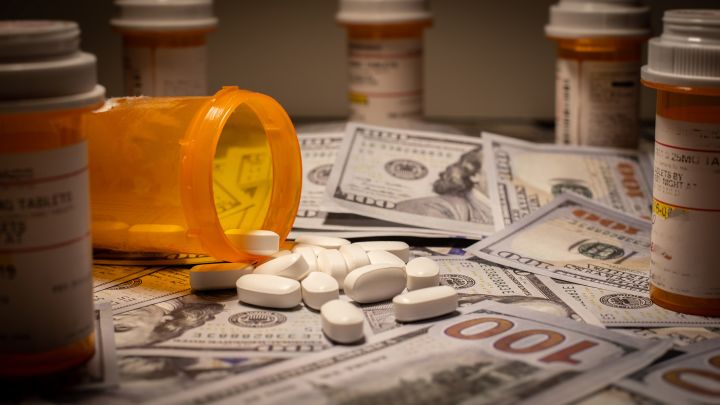
You know the mafia, organized crime accounts for about $ 2 trillion a year. Almost as much do the pharmaceutical companies. The 30 largest pharmaceutical companies in the world alone make a turnover of 600 billion dollars.

As the “Godfather” Don Vito Corleone said: “I make him an offer that he can not refuse.” The best thing that could happen to the big phamaceutical companies is the collaboration with the WHO: a dangerous network!
 

WHOjpg
Now you should also know that the WHO is privately sponsored. That means: one buys the shares of the largest pharmaceutical companies and then the WHO recommends exactly the drugs and so the shares rise. So these companies make billions of euros profit and profit again the sponsors.

You still think it’s about your health? No, it’s about your illnesses and you can not get well either.
farma korruptionjpg

You would never have thought that healthy people are simply told they have cancer to make money on chemotherapy, right?

By the way, the biggest beneficiary of breast cancer is Pfizer.

images.pfitzerpg

And Pfizer is the daughter of Monsanto. Oops, did not you know?

Yes! Bayer has bought Monsanto, but also has a pharma itself and is also with many scandals on the pillory. Including the contraceptive pill!
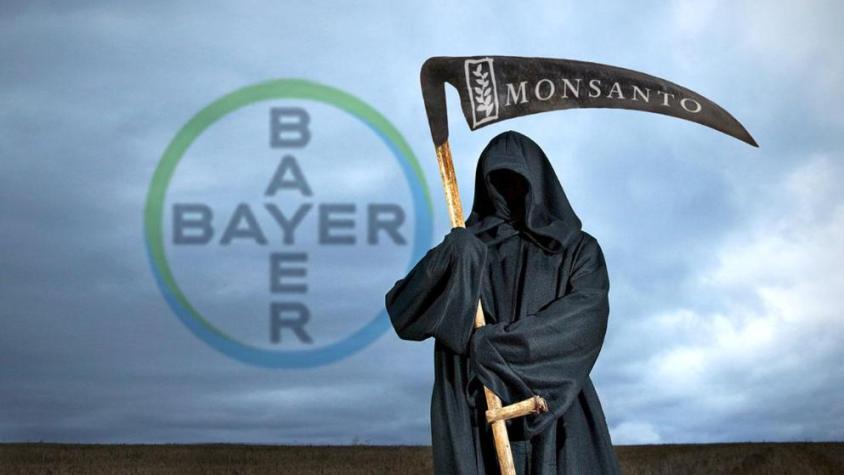
bayer monsantopg

Until the 1970s, the pharmaceutical industry made drugs to cure diseases. Since then, she has been suspected – at least in part – that she is also creating illnesses to sell medicines.

But you certainly did not know that Nestlé is also active in the pharmaceutical sector, because in 2012, Nestlé took over the baby food division of Pfizer for $ 12 billion. Emmanuel Macron has partnered with Nestlé to buy Pfizer Nutrition and this deal made him a millionaire.

Now he is president of France, where Sanofi is also at home, the largest pharmaceutical company in Europe and with about 34 billion sales worldwide No. 5. Alone with human vaccines makes the group 13.5% of its turnover, also thanks to the WHO.

The pharmaceutical industry should give us a healthy life. But the pharmaceutical industry is even supposed to kill more people than the mafia.

Each tablet is less about health than business.

A proven cancer drug is re-launched under its new name as a remedy for multiple sclerosis – for forty times the price! Here is tricked to the detriment of all patients!

82-pharma-kriminalitaet

You will be amazed when you look at the giants of the pharmaceutical industry and their interconnections:

As written, Nestlé bought its baby foods division from Pfizer. The number 2 in the world, Novartis, had a baby food division, namely Gerber.
In April 2007, Gerber went to Nestlé for $ 5.5 billion. As early as December 2006, the “Medical Nutrition” division was donated to Nestlé for around CHF 3 billion.

According to statistics, Pfizer, Novartis and Roche are the three largest pharmaceutical companies worldwide by sales in 2016

Often it helps if you also have good friends, but they are not in vain, and so is also like lubricated with dollars.
In the US, the pharmaceutical industry is number one, spending millions of euros on lobbying. The top donors in 2014 were in the industry: Pfizer Inc. (over $ 1.5 million) in the EU too, and  Pfizer is happy to pay for lobbying.

One of the pharmaceutical industry’s policy objectives is a faster approval process for drugs and products.

pharmaindustrie-pg

The Brussels-based EFPIA represents the pharmaceutical companies in the EU.
The EFPIA is the representative body of the European pharmaceutical industry. With direct membership of 33 national associations and 39 leading pharmaceutical companies, EFPIA represents 1,900 companies dedicated to the research and development of new medicines.

Together with three other organizations, EFPIA has founded the European Stakeholder Model (ESM) Partners Group, which represents a total of 2,800 European pharmaceutical companies. – That means – all under one roof – a huge lobby octopus. There can be no talk of trust here!

WHO -civilization“A cured patient is a lost customer”


President of the pharmaceutical lobby group EFPIA is Joe Jimenez of Novartis, number 2 in the world’s largest pharma. The Bill Gates Foundation, which finances WHO (!!!), is headed by Andrin Oswal – Director of Life Science Partnerships, formerly with Novartis, but also other directors come from Novartis.

On the EU’s official transparency list, the number of pharmaceutical companies donating has risen sharply over the past three years from 23 to 40 companies.
At the front stands Bayer, who spent around 2.46 million euros on lobbying in 2014.
Behind them are Glaxosmithkline, Novartis and AstraZeneca, each with around two million euros.
The increased lobbying work of the pharmaceutical industry has a tangible background: many patents expire in the coming years. By 2019, losses of up to 55 billion euros are threatening.

To this end, Novartis launched a collaboration with Sanofi Pasteur and the Bill & Melinda Gates Foundation for vaccines in South Africa in 2013. There are new companies in Brazil.

“It’s not personal, it’s all about business.” Don Vito Corleone in “The Godfather”

https://netzfrauen.org/2018/11/18/pharma-2-2/


My comment: In 2017, even the World Health Organization (WHO) raised the alarm: worldwide, ten percent of drugs are counterfeits with too little active ingredient or toxic contaminants. Today, only about 20 percent of people have confidence in the pharmaceutical industry.

But it is not just the counterfeit drugs that swim undetected in international wholesaling that are the problem: Practically for all major international pharmaceutical monopolies, one can prove that they have falsified studies, obscured side effects, have freely invented new “diseases” and applications. With a view: that’s how the market prices push up.

90 percent of research funding is concentrated in only 10 percent of the world’s diseases, because only these “profitable markets” exist. Millions of people are dying from malaria, tuberculosis or sleeping sickness.

Today, 90 percent of world pharmaceutical production is concentrated in the newly imperialist countries of India and China. With the result that there were also large pharmaceutical companies. In the meantime, they are pushing themselves for a global market position and are investing globally in pharmaceutical and agribusiness companies. But 65 percent of Indians have no access to essential medicines.

The powerful cartel of the pharmaceutical industry has drug production in its claws.

My best regards to all, Venus