The Bayer annual shareholder meeting is very soon taking place – Friday 26th April. Demand that its CEO, Werner Baumann, step down.
Bayer is dragging suffering cancer patients through court. It’s churning out one toxic pesticide after another while lobbying hard to keep them on the market. And it’s gained unprecedented control over our food supply by merging with Monsanto.
One man is responsible for all this: Werner Baumann, CEO of Bayer-Monsanto. And the time is overdue for him to resign.
You can help make it happen. Friday, April 26, is Bayer’s big annual shareholder meeting. To make the case that Baumann’s greedy business model is hurting people, the planet — and Bayer’s reputation.
WAV Comment – Is this footage not showing the abuse and torment that circus ‘performing’ animals are being forced to endure the world over every day ? – and the fact that thickhead humans are paying money to see a terrified bear cub riding a motorbike just exceeds how stupid some people can be. Fortunately for these cubs, AA is now coming to their rescue. We call for a worldwide ban on the use of all animals in pathetic circus shows.
BREAKING: Rescue operation to free two endangered bear cubs from Vietnamese circus begins following Animals Asia exposé
24 April 2019
Rescue team arrives at Central Circus in Hanoi, Vietnam to rescue two juvenile moon bears – a protected species – filmed openly performing on stage during investigation.
Today (Wednesday 24 April) an Animals Asia rescue team has arrived at Hanoi’s Central Circus to rescue two juvenile moon bear cubs who were spotted performing on stage at the facility.
Moon bears are an endangered species protected under Vietnamese law with their poaching, trade and commercial exploitation a criminal offense.
The rescue team will bring the bears, whom the team has named Sugar and Spice, to Animals Asia’s Vietnam Bear Rescue Centre where they will receive immediate care and attention.
Animals Asia Vietnam Director Tuan Bendixsen said:
“It’s quite clear that these cubs have found themselves in Hanoi’s Central Circus through illegal means. Thankfully, the authorities have acted swiftly and firmly, sending a clear message to those who exploit wild species that they are not above the law.
“For Sugar and Spice the nightmare of poaching, training, performing and a completely unsuitable living environment ends today. From now on their needs come first and we can begin to heal the physical and psychological suffering they have endured.”
The bears were first discovered by an Animals Asia investigative team which visited the circus in March to monitor the treatment of animals in performances.
The team was shocked to discover the two moon bear cubs – who are estimated to weigh around 50 kilogrammes each and be less than a year old – openly performing dangerous tricks on stage in a clear breach of Vietnamese law.
Following Animals Asia’s exposé, the government intervened and swiftly determined the bears be rescued and sent to the safety of Animals Asia’s nearby sanctuary in Tam Dao National Park, Vinh Phuc province.
Animals Asia’s 2017 report into animal performance revealed six protected species – moon bears, orangutans, macaques, elephants, pythons and crocodiles – were being exploited at circuses across Vietnam.
To date, no facility has been able to explain the origin of their protected species, yet today’s rescue marks the first time the authorities have taken punitive action against a circus or tourist facility in possession of a protected species.
With facilities unable to breed bears and their poaching and sale illegal, serious questions remain as to how the animals are being obtained.
In a letter to Animals Asia, Hanoi Central Circus claimed the bear cubs were brought to the circus completely at random by two men who were seeking medical help for the cubs.
Having nursed the bears back to health, trainers then taught the animals some tricks leading to a stage show in front of audiences.
Implausibly, the circus also claims they did not inform the authorities about the bears because they believed the original owners would return to collect them.
Animals Asia Animal Welfare Director Dave Neale said:
“This could be a real breakthrough in efforts to curb wildlife crime in Vietnam’s animal entertainment industry. Circuses appear to have flouted Vietnam’s laws and exploited protected species with relative impunity until now.
“The rescue of Sugar and Spice will change their lives forever sparing them years of abuse, but it is also a spark of hope that the authorities may be willing to take a closer look at other facilities exploiting endangered and protected species in the country.”
Animals Asia is currently petitioning the Vietnam government to ban wild animal performance and send the animals to recognised rescue centres and sanctuaries.
The petition currently has more than 120,000 signatures and will be presented to the Ministry of Culture, Sport and Tourism during a meeting with the charity in May.
Hanoi Central Circus is also believed to be holding eight adult moon bears and a 30-year-old elephant, as well as a number of pythons, crocodiles and macaques – all species protected from exploitation by Vietnamese law.
Sugar and Spice are two traumatised bear cubs, just months old. They have been poached from the wild and their mother very likely killed in front of their eyes because she would never let them go without a fight.
With no survival skills, Animals Asia will care for them for the rest of their lives. It’s a huge commitment – potentially up to 30 years – but one we unflinchingly make because without us these bears have nobody.
Now we need YOU to help mend the psychological trauma meted out to these two poor babies; to teach them how to be bears and to give them a safe environment which will challenge, stimulate and delight them for the rest of their lives. Please, give what you can today to save Sugar and Spice and give them new lives worth living.
The following article comes from the internet german magazine “Wild and Dog”. It is an exemplary demonstration of cold-blooded cynicism and repulsive hypocrisy, with which a psychopath describes how the cruel hunting form, constuction`s hunt, works.
Hunters are not only professional killers, they are also professional liars, which is also clear in this article.
First, some about these two hunting (murder) forms
1. Hunting in the nature buildings of the foxes. These buildings raise the foxes themselves to overthrow their family. The dogs are trained with constant pressure to force the animals to jump out, and then they are massacred from thr hunters.
2. The second is hunting in artificial structures for foxes (constructed by hunters). There is the same murderous game of driving the animals out, so they are shot. But there are provided also the fox traps.
Both are methods that want to satisfy a sick sadism and are used only by psychopaths.
The article: Introduction
“Who wants to reduce foxes effectively, has no choice: he must hunt young foxes. We show how it works”.
“No, it certainly does not make fun – not a bit. Because the shooting or catching of young foxes in the construction is one of the most unpleasant acts in hunting life”
But on an other article in year 2017 we find an other oppinion and a video. And there it says:“fox hunting is fun, it’s a nice thing to hunt the fox, it’s an exciting hunt. Hunting in construction is infinitely more exciting than other forms of hunting”.
The article cintinues: “If you want to kill the puppies in the building, it rarely succeeds in getting all the young foxes. The mother will bring the rest of the family to safety, and you’ll have to search again. However, it is very difficult to find the puppies in the increasingly dense vegetation in May. “
Fox puppy traps
With ice cold murderous professionalism is described how to get the foxes in the traps.
“However, if you use special traps, this risk is much lower.Often it is possible to capture the whole thing in just one night.
Meanwhile, several types of puppy traps have been developed and improved.
In practice, the quadrilateral models have proved their worth. The traps have a mesh size of 19 × 19 or 25 × 50 millimeters. However, they can also be produced from 12 millimeter thick screen printing plates!
Around March, the puppies are born and at about four weeks, the puppies explore the tube system of the building, and appear about the fifth week of life before the construction, usually in the last April to the first week of May.
At least, now that the Fox Mum is foraging, it’s time to populate the main tubes with puppy traps. The sooner the intercept, the safer the entire tail gets caught, because in a puppy age of about five to six weeks still a very strong bond of the puppies to each other and to the parent building exists.
And then…
“The trapped puppies are killed by headshot with an approved caliber weapon (22 lb is allowed), either in the trap or outside. And that is anything but a refreshing hunt.
Only understandable if therefore many hunters reject the puppy for emotional reasons. But one must not forget that so that foxes can be taken from the animal welfare in the wild and we get only so the outrunning fox population really under control”.
The truth is: The Animal Welfare Act, § 1 states: “… No one shall inflict pain, suffering or harm on an animal for any reasonable reason.” Only these psychopaths, the hunters have made sure that this law is not widely used by their peers.
Quote biologist Professor Reichholf says: “Our forests are abused as wild breeding grounds for a privileged recreational sport.”
About 10 million animals killed every year from hunters hand, more than half a million of them are foxes. The hunt is nothing but a bloody open air slaughterhouse. And in the end, the remains of the victims hang as trophies on the walls.
How run down can missing morality still look like? Turning a vulnerable life into a bleeding, lifeless bundle of suffering is a crime! What else should be a crime? ”
The number of Australians leaving meat off their plate continues to climb, according to a new report by independent research company Roy Morgan.
The report found that 2.5 million Australians, or 12.1 percent of the population, now eat food that is all “or almost all” vegetarian, up from 2.2 million in 2014.
Why are Australians ditching meat?
A previous study from Roy Morgan released found nearly half of Australians are eating less red meat, which has been linked to an increased risk for health conditions such as heart disease and certain forms of cancer.
Findings for the recent study highlight how despite the rise of meat-free diets, body mass index (BMI)has reached an all-time high in Australia. Experts, including the creator of BMI, have said that it cannot be used to determine an individual’s health, according to NPR.
Despite the study’s focus on health, Roy Morgan CEO Michele Levine believes that the recent animal rights-focused protests have played a role in inspiring more Australians to eat more vegan food.
“For many protesters a key part of securing better treatment of animals is to practice and promote embracing vegetarianism – and the message is getting through to an increasing number of Australians,”Levine said in a statement.
Earlier this month, a demonstration in Melbourne involving more than 100 individuals taking to the streets to urge others to watch the 2018 documentary“Dominion” made headlines worldwide.
According to Roy Morgan’s consumer profiling, “Metrotechs,” or young singles in Australia’s inner cities represent the biggest group of vegetarians with nearly a fifth (18.2 percent) saying they don’t eat meat. In the US and the UK, Millennials are more likely to buy plant-based food.
January 2018 research from Euromonitor International found that Australia is the third fastest-growing vegan food market in the world.
More restaurant chains are adapting to this. Hungry Jack’s, Australia’s Burger King, now serves vegan breakfast sandwiches and cheeseburgers. Domino’s Australia launched a fourth vegan pizza last March due to the success of its other options.
McDonald’s also teased that it’s working on new meat-free options Down Under. Australia-born vegan fast food chain, Lord of the Fries, continues to expand across the country and soon, internationally.
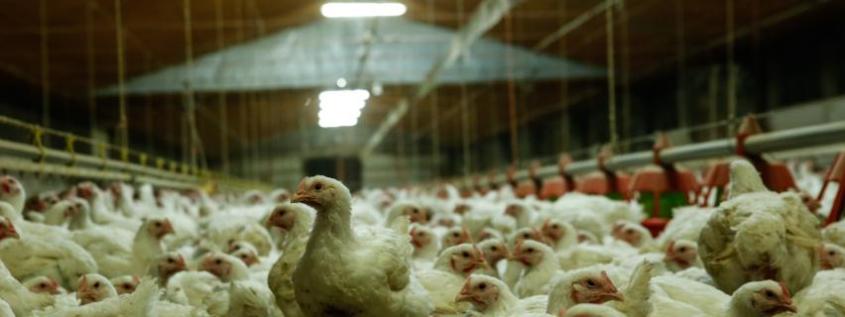
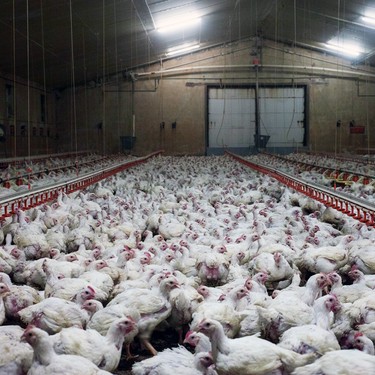
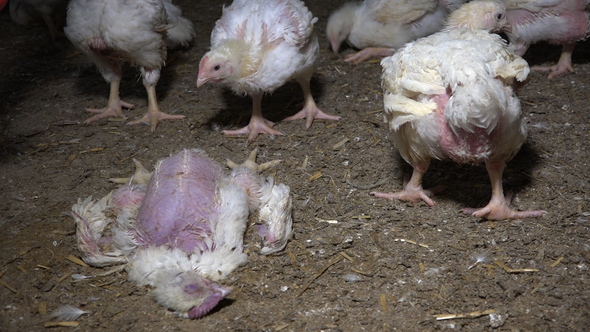
Scientists at the University of Osnabrück (Germany) are currently working on the question of what influence artificial light sources have on the well-being of chickens in so-called livestock farming.They are sure: the wrong lighting has a strong impact on the health of the animals, who perceive the light quite differently than we humans. The unnatural bulbs they have been exposed to their entire lives are disrupting their natural rhythm and leading to stress, disease and behavioral problems.
Light plays a significant role in the natural rhythm of a chicken’s life. It naturally influences regulated processes, such as eating behavior, laying activity, moulting and the dynamics between active awake and passive rest periods. In the stables, however, completely different lighting conditions prevail, as those to which a chicken is naturally adapted. What we humans experience as white, flicker-free light, for example, is similar to chickens, like the effects of a wild disco lighting that flickers in different frequencies and shines in bright colors.
Light plays a significant role in the natural rhythm of a chicken’s life. It naturally influences regulated processes, such as eating behavior, laying activity, moulting and the dynamics between active awake and passive rest periods. In the stables, however, completely different lighting conditions prevail, as those to which a chicken is naturally adapted. What we humans experience as white, flicker-free light, for example, is similar to chickens, like the effects of a wild disco lighting that flickers in different frequencies and shines in bright colors.
Visual perception: chickens look different than humans
Due to the different structure of the organs of vision, chickens have a different visual perception than humans. Their environment is therefore very different for them than it is for the human eye of the norm. After all, chickens actually see better than we do: instead of three, they have five so-called cone types and thus perceive a broader color spectrum. Her eyes are also designed for the ultraviolet range of light. For example, objects that simply look like black to humans can appear to them in many bright colors.
Also, the number of different images that can process the eye of the chicken in a second, significantly affects his perception: While there are only 20 to 60 images per second in humans, the chickens’ vision becomes about 160 images per second registered. This has the consequence that the animals, for example, in an AC powered light bulb can detect the annealing of the wire, although this simply shines evenly for people.
In terms of brightness, the eyes of a chicken are up to ten times more sensitive than ours. As the light sources in the stables seem brighter for them, the chickens are blinded by them.On the other hand, the insulated lighting there does not correspond to the darkness that chickens need during their rest periods.
This photosensitivity may also provide an explanation for the hitherto unanswered question of why many free-range laying hens often prefer to stay in the barn instead of spending time in supposed freedom.
Disturbing environment as a cause of unnatural behavior
Since the artificial lighting in the stables does not emit UV light and shine brighter than is necessary for the chick’s eyesight, the animals perceive a visual distortion of the reality of their surroundings.
The unpleasant lighting conditions, according to the scientists, are likely to affect the negative moods of the animals and can lead to aggressive behavior such as feather pecking or self-mutilation.
In addition to other factors such as high population density, stinking stable climate or lack of employment opportunities, false light can be responsible for many behavioral problems, illnesses and deaths. Worse is the fact that in most laying hens the beaks are cut to prevent cannibalism. This is done in a very painful way.
Necessary change of perspective
In order to reduce the suffering of chickens in industrial livestock, research, companies and livestock owners must work together to adapt the standards in the stables to the biological conditions and the natural habitat of the chickens. The example of false lighting in the chicken breeding and fattening systems raises the question to what extent other animals in “livestock husbandry” – in addition to the obviously tormenting conditions – suffer from stress factors that are imperceptible to humans. Because all stables and livestock farms are constructed from a human perspective, mostly without knowing the individual perception and the specific needs of each animal species.
Every animal deserves to live in freedom and in a species-appropriate environment. By choosing herbal alternatives, we can eliminate the exploitation and suffering of animals. Day after day!
My comment: In the video we can see how live the so-called “organic” chickensin Germany. The video was shot undercover by the organization “animal friends” in 2012. For those who think: yes, but it is old … since then, nothing has changed.
The Farm Mafia is not at all interested in the welfare of the animals, the corrupt politicians who earn from the suffering of the animals, even less so.
The meat eaters who are cheated by both- the meat mafia and the politicians- because they pay dearly for organic meat, although it is not- are not interested too. Not for the suffering of the animals, not for the fraud of a corrupt system. And so, all those involved in this daily murder and deception can continue to work together because they share a common goal: to live on animals!
In Germany, 51.9 million chickens are currently kept for the purpose of egg production. In dirty and full stables.
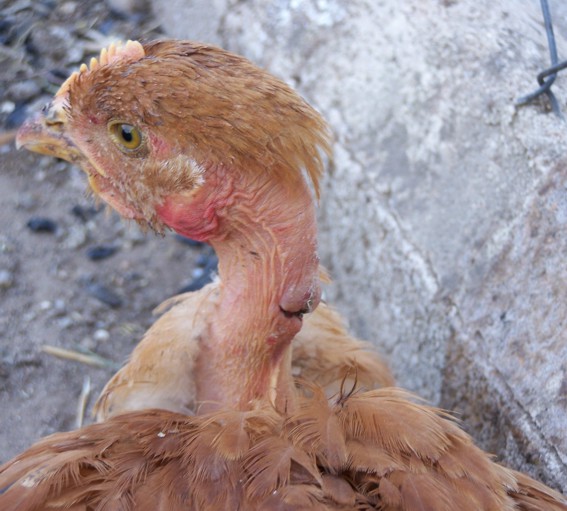
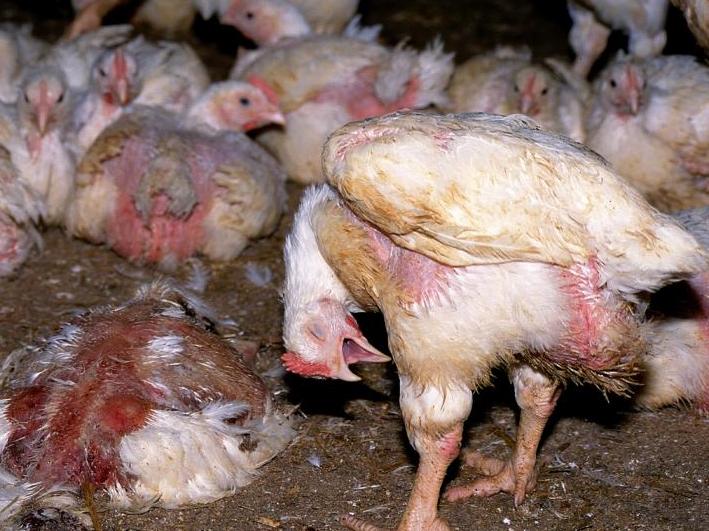
Ovarian infections, peritonitis, parasitic infestation, sternum curvatures and breastbone fractures, consequences of cannibalism, viruses, bacteria – a painful, silent and often slow death is the result also in the so-called organic husbandry systems. There is never any medical help for injured and sick animals – the animals suffer and die mostly in the middle of the stable area. Man has decided that animals are a matter, and under this fascist conviction, the daily murder of animals takes place with such sadistic coldness and cynical indifference that only a human animal can possess.
The stakes have never been higher – a radical movement such as Extinction Rebellion can act as a catalyst for political debate and change
For decades, we have faced an incontrovertible truth: that human lifestyles are risking the future habitability of our planet. For decades, political leaders have invoked rousing rhetoric in the face of this challenge while failing to act to avert catastrophe. Climate change is an existential risk to the future and the window available to prevent disastrous overheating is closing rapidly.
Only now, almost 30 years after the International Panel on Climate Change published its first report setting out the scientific evidence, is there any sense that something may be shifting in popular and political perceptions. Extinction Rebellion protesters have brought parts of central London to a standstill, their action coming in the wake of the school climate strikes, when more than 1.4 million young people took part globally. For his part, the governor of the Bank of England, Mark Carney, warned the financial sector last week that it must take the threat seriously, framing the argument in terms that it understands best: that in a heated world there is a real risk to profit margins.
The EPA records show that 250,000 gallons per day were dumped into waterways from January 2016 through June 2018 and that 74 of the 98 slaughterhouses had exceeded their permit limits for nitrogen, fecal bacteria, and other pollutants.
Additionally, more than half the slaughterhouses had five violations, and a third had at least 10 violations. Some of these slaughterhouses are dumping as much nitrogen pollution as small cities!
Eric Schaeffer, executive director of the Environmental Integrity Project, said in a statement:
State environmental agencies need to start cracking down on and penalizing these flagrant violations of the federal Clean Water Act. And EPA needs to step in and set stronger national water pollution standards for meat processing plants.
The records also rank the worst polluters in the U.S. by total nitrogen released and name the JBS pork processing plant in Beardstown, Illinois, as the most polluting slaughterhouse in the U.S. last year. The slaughterhouse released an average 1,849 pounds of nitrogen a day into a nearby stream leading to the Illinois River. According to the EPA, that’s equivalent to the nitrogen in raw sewage from a city of 79,000 people.
In addition to destroying waterways, toxins from factory farms contaminate our drinking water.A report from Environmental Working Group found that systems supplying drinking water to millions of Americans contain dangerously high levels of nitrates, which have been linked to increased risk of certain cancers.
But factory farms don’t just devastate the environment and compromise our health—they cause immense suffering for billions of animals.
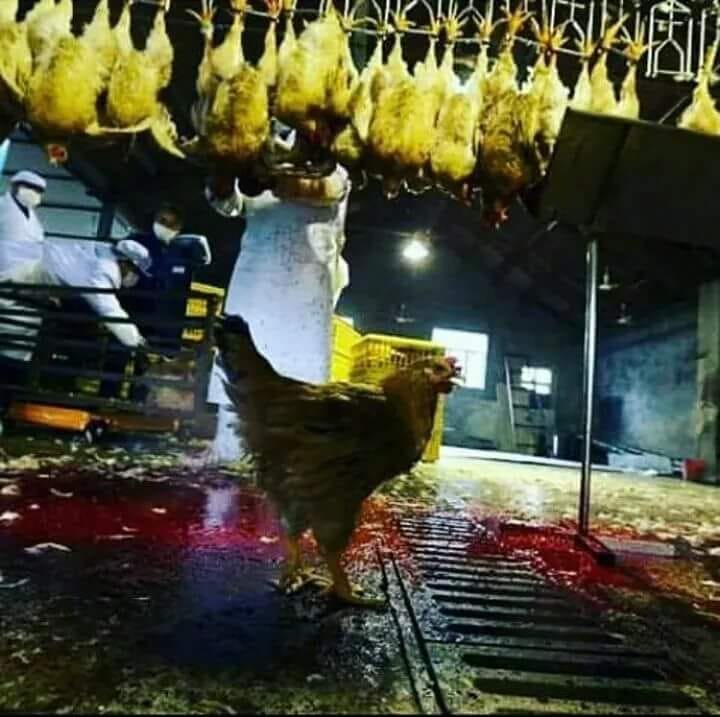
Pigs, cows, chickens, and other farmed animals face unthinkable horrors: cruel caged confinement; brutal mutilations; and bloody, merciless deaths.
Don’t believe us? Just watch this recent Mercy For Animals undercover investigation at a JBS pig factory farm that exposed workers kicking and punching animals in their faces, ripping out the testicles of baby pigs without any pain relief, and violently smashing baby pigs headfirst against the ground to kill them.
The single best thing we can do to protect animals, ourselves, and the planet from the cruel and destructive factory farming industry is to eliminate our consumption of meat and other animal products altogether.
Cancer victims are suing over glyphosate and the company’s lost about 30 billion euros in market value. Shareholders are furious.
Bayer and its CEO Werner Baumann are shaking in their boots: they need this week’s annual shareholder meeting to go down without hiccups..
Over a decade ago, Paul Francois was poisoned by Monsanto’s toxic pesticides. And he’s been demanding justice in French courts ever since. His story is powerful — a PR disaster for Bayer and a reminder to shareholders of the true cost of Bayer’s relentless quest for profit.
Monsanto’s toxic pesticides have made life a living hell for Paul Francois, a farmer and father of two.
After using a now-banned Monsanto pesticide, Paul Francois was hospitalised for 200 days and has since suffered from amnesia, vertigo, seizures and recurring comas.
For over a decade, Pau’s tried to get justice in French courts. He’s won several lawsuits, but so far Monsanto has refused to pay up and kept appealing in what is now a long, costly and exhausting process for Paul.
Bayer-Monsanto has an army of expensive lawyers — it can afford lengthy lawsuits while its victims either give up or die. To Bayer’s top brass, the thousands of people it’s poisoned, like Paul, are just numbers in a spreadsheet. You can help change that.
And this is how: with your donation we’ll pay for Paul to be at the shareholder meeting this week to speak to journalists, shareholders and directly to Bayer’s CEO. It will be a huge embarrassment for Bayer and its execs — and might be the beginning of a new course for Bayer.
Will you chip in to crash the Bayer party this week?
Many protesters were saddened by the fire at the cathedral, but they were also angry that some £770m had been raised so easily for the monument’s reconstruction while their demands remained largely unmet.
“I think what happened at Notre Dame is a great tragedy but humans should be more important than stones. And if humans had a little bit more money, they too could help finance the reconstruction work at Notre Dame. I find this disgusting,” said protester Jose Fraile.
Cardinal Archbishop of Colombo, Malcolm Ranjith made a statement that he hoped the people that did this would be caught and severely punished – he stated that ‘they are animals’.
Sir, if I can remind you; it is very often the religious upheaval and differences across this planet that lead to things such as experienced in Sri Lanka today.
I have nothing more to say than animals do not plant bombs; that is something only practised by humankind – your kind; often in the name of what you practice – Religion.
Animals hunt for their food – they do not hunt for pleasure, unlike your kind; They do not smoke, they do not drink alcohol; they do not experiment on each other or sadistically abuse each other as per man does to his fellow man.
I suggest with respect that in future you do not refer to destructive members of your own race as ‘animals’ – instead, you study them more for your preaching’s. You may find that you have a lot to learn as a human from the animal species.



 At least, now that the Fox Mum is foraging, it’s time to populate the main tubes with puppy traps. The sooner the intercept, the safer the entire tail gets caught, because in a puppy age of about five to six weeks still a very strong bond of the puppies to each other and to the parent building exists.