Month: February 2021

Swiss: Together for the protection of raccoons

At the end of January 2021, a raccoon was shot in Appenzell Innerhodischen Wasserauen.

He stayed “illegally” on Swiss soil and looked for food in a house. The raccoon was healthy.

He was peaceful and did not attack or put anyone in danger.

Auch-Waschbaeren-haben-ein-Recht-auf-Leben

The federal law on hunting and the protection of wild mammals and birds allows raccoons to be shot all year round.

They are not at home in Switzerland and could unbalance the ecological balance that has been devised and prescribed by humans.

In “specialist circles” they are listed as neo-zones, that is to say, “introduced and alien animal species” or clearly expressed as “animal non grata”.

Speciesism versus the raccoon

All over the world people are still discriminated against, humiliated, and often persecuted because of their origin and skin color.
In Switzerland, the racist criminal norm rightly prohibits discrimination against people on the basis of their ethnicity, skin color, and religion.
Because no one is better than the other. We all have the right to life and to be treated with respect and decency, no matter where we come from and what skin color or religion we have.

With animals, however, it looks different.

No protection is granted to non-resident animals: they are undesirable and “worthless”, although they too are no longer considered a thing.
Their right to life is denied to them by law because of their origin and in the name of the ecological balance dictated by humans.
This is lived “speciesism”, which means: the human being shows with his attitude towards alien animals once again that he is convinced that he is superior to all other species due to his nature and can therefore treat them as he wants. This attitude is more than reprehensible and can no longer be accepted.
Together for the protection of raccoons on Swiss soil

The PETITION aims to protect raccoons in Switzerland.

Raccoons should no longer be hunted and killed because of their origin. The right to life should apply to them too.
In order to prevent an overpopulation of raccoons and to protect the local biodiversity, the possibility of an oral contraceptive for the female raccoons should be examined.

https://wildbeimwild.com/medienmitteilungen/auch-waschbaeren-haben-ein-recht-auf-leben/

Petition: https://www.openpetition.eu/ch/petition/unterzeichner/schluss-mit-dem-abschuss-von-waschbaeren-in-der-schweiz

And I mean...” On the basis of being human” everyone has the right to life, to freedom, to integrity, to protection from discrimination, torture, and much more.

When it comes to animal rights, things get more difficult.
Humans are brought up with the principle of Suprematism, which says that humans are a very special animal that must by no means be mentioned in the same breath as the others.
Therefore the favored species is always the human.
Humans have rights, all other animal species have no rights.

The best thing that could happen to the raccoon would be a grace, which however would not belong to his rights, but is subject to the goodwill of the perpetrator.

We are a society of perpetrators who decide about the life and death of the weaker and also show solidarity with the perpetrator.

Those who belong to the privileged class do not know how it feels to be constantly under the power and violence of the ruler.

Therefore: we fight for the rights of those who have none, the rights of animals.
We stay on the right side

My best regards to all, Venus

New report finds that all mink farms should be considered “at risk” of COVID-19 infection.

Photo – Otwarte Klatki

New report finds that all mink farms should be considered “at risk” of COVID-19 infection | Eurogroup for Animals

New report finds that all mink farms should be considered “at risk” of COVID-19 infection

18 February 2021 NewsOn the cusp of the mink breeding season, which is set to resume at the end of this month, the European Food Safety Agency has released a report finding that all mink farms should be considered at risk for COVID-19 outbreaks and must be strictly monitored. Following the release of this report, animal protection groups FOUR PAWS, Humane Society International/Europe, Eurogroup for Animals and Fur Free Alliance – and their member organisations – have issued a strong call urging the European Commission to instruct Member States to immediately suspend mink production.

This call reflects a recently published scientific statement on public health risks associated with SARS-CoV-2 and intensive mink production. 

“The only way to keep EU citizens safe is to immediately suspend mink production in the Member States where this cruel practice is still legal before the breeding season starts,” said Joh Vinding, Chair of the Fur Free Alliance. “If this does not happen, the current mink population will increase five-fold by May. Even though only the breeding animals are present right now, there have still been COVID-19 outbreaks on mink farms in Spain and Poland. If the mink population is allowed to grow and all the cages on the fur farms are filled, the risk of disease transmission will likely also increase. The past year has shown that, irrespective of all monitoring and biosecurity protocols taken, the SARS-CoV-2 virus can spread uncontrollably amongst mink populations. At the time of this global health crisis, such risks need to be eliminated entirely.”

The EFSA report notes that in regions with a high density of fur farms, the SARS-CoV-2 virus is likely to spread from one mink farm to the next. EFSA recommends that Member States not only implement passive, but also active monitoring systems. They advise that measures should include frequently testing all people who come into contact with mink, testing samples from dead or sick animals, testing of wild mustelids captured near fur farms and genetic sequencing analysis for tracing the origins of outbreaks and identifying possible viral mutations.  

“Implementing such measures is extremely costly and will largely be financed by taxpayers’ money, despite the fact that the majority of EU citizens oppose the practice of fur farming” said Pierre Sultana, Director of Four Paws European Policy Office. “We know, for example, that just for one single farm, the Italian authorities spent a total of €50,000 between August and November 2020 to implement biosecurity measures. Regardless of the expense,one thing is patently clear: biosecurity and monitoring measures have their limitations and are not as effective as were originally believed. While they can help to detect outbreaks early on, they cannot entirely prevent mink from becoming infected. This is why we, as animal protection NGOs, have united in our call to immediately suspend all mink production in the EU.” 

“The necessity of halting mink production has become even more urgent following the recent discovery of the  so-called ‘Cluster 5’ mutation of SARS-CoV-2 in German patients,” said Dr Joanna Swabe, Senior Director of Public Affairs for Humane Society International/Europe. “This dangerous mutation of the virus that originated in Danish mink was believed to have been eradicated after the mass culling of Denmark’s entire mink herd last year. However, these recent cases suggest that the authorities were not entirely successful in eradicating this dangerous viral mutation, which could potentially undermine the efficacy of COVID-19 vaccines in humans. We applaud Sweden for already taking action to ban mink breeding in 2021. Reportedly Belgian fur farmers have also voluntarily taken a decision to suspend breeding due to the risks associated with COVID-19. It is vital that the remaining Member States that still permit fur production follow their example.”

“The demand to suspend mink production is supported by a statement signed by numerous scientists from the fields of virology, infectious diseases, clinical microbiology, veterinary medicine and environmental health, which confirms the serious threat that fur farming poses to human health,” said Reineke Hameleers, CEO of Eurogroup for Animals. “It calls for the immediate suspension of mink farming as an appropriate, precautionary and proportionate measure based on public health concerns. The experts behind this statement, as well as EFSA, point out that due to the confined living conditions of animals in fur farms, once the virus has been introduced, it is almost impossible to stop transmission. The high number of individuals living in close proximity also provide ideal conditions for virus mutations to occur, as seen in Denmark. New variants may not respond to the vaccines that are currently available and could cause significant setbacks in Europe’s efforts to battle the virus.”  

Notwithstanding our unwavering position that fur farming should be permanently banned across the EU due to unacceptable animal welfare outcomes and future potential public health risks, in the interim, we are calling on the European Commission to act immediately to suspend mink farming, the breeding of mink, and the import and export of live mink and their raw pelts, across the European Union.

ENDS

Read the Scientific statement on public health risks from SARS-CoV-2 and the intensive rearing of mink

Read the EFSA Report 

EU: 21 NGOs call for rejection of “dairy ban” that would directly contradict EU Farm to Fork Strategy.

21 NGOs call for rejection of “dairy ban” that would directly contradict EU Farm to Fork Strategy

19 February 2021

Today, Eurogroup for Animals joins forces with 20 animal welfare, environmental and consumer NGOs to call on the European Commission and EU member states to reject proposed restrictions on plant-based dairy. These plans could ban essential allergen information, milk cartons and product images and directly contradict the Farm to Fork Strategy and undermine the Paris agreement targets.

In a joint letter coordinated by the Good Food Institute Europe and ProVeg International, the NGOs argue that the plans, in a proposed amendment to the reformed Common Agricultural Policy (CAP), would directly contradict an EU pledge to promote more plant-based diets as part of its Farm to Fork food sustainability strategy. The proposals could also deprive consumers of essential allergen information and cause confusion by forcing companies to use “unnatural linguistic contortions” to describe their products.

Among the 21 signatories are also Eurogroup for Animals’ members Compassion in World Farming, Essere Animali and World Animal Protection

Far from reinstating existing laws, by banning any “direct or indirect use” or “evocation” of dairy products, Amendment 171 would introduce new restrictions preventing plant-based dairy products from:

  • Providing essential health and allergen information such as “lactose-free alternative to dairy milk”.
  • Using packaging that is similar to those used for dairy products, such as cartons.
  • Using images of the product being poured at a breakfast table, or white foam swirling in a cappuccino.
  • Informing consumers about the climate impact of foods, such as by comparing the carbon footprint of plant-based and conventional dairy.
  • Using helpful descriptors such as “creamy” or “buttery”.

Last October, a majority of Members of the European Parliament voted in favour of the proposed restrictions – but they remain subject to negotiations with the European Commission and EU member states at trilogues expected in March.

The letter also calls on the European Commission and member states to oppose Amendment 72 – a vaguely-worded proposal that would introduce significant legal uncertainty that could jeopardise the labelling of plant-based foods in the future. 

The signatories warn that these new restrictions go significantly further than existing EU law, which already bans plant-based dairy products from using terms like “milk” and “cheese”.

They argue that encouraging the broader uptake of plant-based diets is key to achieving the EU’s emissions targetsreducing land and water use, and preventing further destruction of global biodiversity

Agriculture is responsible for 10.3% of the EU’s greenhouse gas emissions and nearly 70% of those come from the animal sector. A recent study by the University of Oxford found that, without reducing the world’s reliance on animal agriculture, it will be impossible to meet the Paris climate agreement.

life without rights

“When all the animals that have suffered in vain
would scream at the same moment
an incredible catastrophe would devastate the world
and the few surviving people would become deaf
and wander around in madness. “
(unknown)

regards and good night, Venus

An undercover woman reports …

From the Facebook page “Animals want life”

(Text under the Foto) : “We pay tribute to the brave and selfless women and men who take it upon themselves to make the films and pictures in animal factories and slaughterhouses that we can then use to educate the world about these terrible conditions”

“Being an animal rights activist is a tough job
We should show respect to these people
for their commitment, instead of complaining:
Why do you just film instead of helping?

The fact is: animal rights activists help the animals,
by documenting and forwarding them to the responsible authorities or media.
Often animal rights activists on site can do nothing more than a document, as they often put themselves in danger.

Received charges of assault and theft, in addition to the offense: trespassing
I myself document the animal suffering in stables in order to report violations to the responsible veterinary office, with luck the animals will be confiscated
And yes, it breaks my heart every time I can’t save the animals.
Try to save e.g. 10,000 turkeys from the next fattening facility yourself, right?

200 piglets, or 36 cattle, in which the latter – among other things – I have already succeeded
So please, don’t blame animal rights activists who put themselves in danger to help animals

Please help us by sharing the posts and drawing the attention of as many people as possible to animal cruelty.

Thank you very much”
💓
“Animals want life”

The undercover investigators have our full respect.
And our heartfelt thanks
Weeks, or even months in animal farms or animal research laboratories, are confronted with incredible suffering and live permanently under the risk of being discovered.
They should be an example for all of us

My best regards to all, Venus

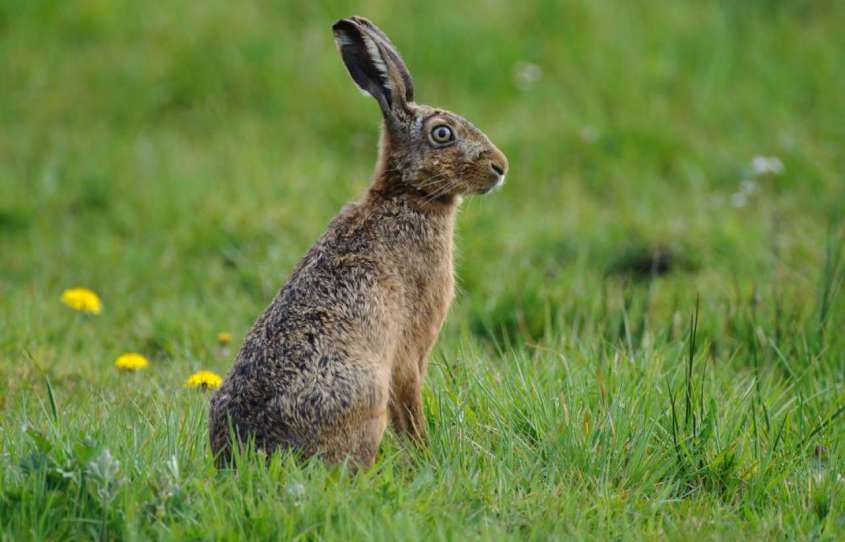
Netherlands bans hare and rabbit hunting

Last week the Dutch House of Representatives approved a motion to remove both the brown hare and the rabbit from the “Wildlife List”.
This means that it would no longer be possible to hunt these species in the Netherlands in the future.

The Dutch Hunters Association criticizes the application as “unnecessary and legally unfeasible”.They say: Rabbits and brown hares would still be common and widespread in the Netherlands.

The “Partij voor de Dieren” (Party for Animal Welfare) recently tried to change the National Wildlife List in a parliamentary debate.

At the time, the party demanded that game species that are on the “Red List” be automatically removed from the list of huntable species.
Since a majority was not foreseeable at the time, the party withdrew its proposal.

Even then it was unclear whether a change in the “Wildlife List” could be legally enforced at all since the “Red List” has no legal status.
The hunters’ association claims that the animal welfare party had already tried in the past to abuse the corona crisis or the outbreak of bird flu for hunting bans.

In a renewed attempt to change the huntable species, the party was now successful.
With the support of the “Democrats 66”, the required majority for the “Partij voor de Dieren” proposal was now available.
The “Hunters` Association” accuses the “Democrats 66” of having cheated voters with the 180-degree turn shortly before the elections.
In December, the “D66” was still critical of the change to the “game list”.

As a result of the re-evaluation of the brown hare and rabbit on the basis of the updated “Red List” in 2020, both wild species were classified as “endangered”.

The hunters’ association does not want to accept the change in the game list without a fight and, if necessary, take it to the European Court of Justice (!!!)

https://www.jagderleben.de/news/hasen-kaninchenjagd-niederlanden-bald-verboten-712502

And I mean... one thing in advance: The European Court of Justice will not work, they have other worries
They are particularly busy with the naughtiness of the Germans, as we reported yesterday.
And in this case, it’s about bigger “rabbits”!

We welcome the correct decision of the Dutch Parliament!
The great pleasure of the Dutch hunters (like all hunters), to shoot defenseless animals cowardly from ambush while looking for food, – although no one needs their flesh and skin to survive- is now over.
As murderous as they are, they will try to fight this morally very progressive decision of the Dutch parliament by all means.

But the days of hunter dominance in media, politics, and society are finally over.

There is no such thing as a hunter ideology, and the majority of society regards hunters as militant, harmful weirdos.

My best regards to all, Venus

USA: Pets Dying In Texas Freeze As Owners Dump Them In Sub Zero Temperatures.

WAV Comment – Why ? – are so called ‘pet owners’ not capable of giving protection to ‘their’ animals when the need arises such as this ?

Pets are dying in Texas freeze as owners dump them outdoors in sub-zero temperatures

Below-freezing temperatures have brought on extraordinary misery for millions


Pets dying in Texas freeze as owners dump them in sub-zero temperatures | The Independent

Animals have been hit hard as winter storms continued to wreak havoc across the US and care groups scrambled to respond to calls of abandoned pets in brutal below-freezing temperatures.

Authorities across Houston, Texas, along with investigators, have been responding to a number of calls from residents regarding pet dogs and cats struggling on the streets for days without food and frozen water bowls after they were believed to have been left there by owners.

A Texas dog owner is facing charges after eight dogs were found abandoned outside in freezing temperatures. The Houston Humane Society said the dogs were “severely malnourished” and one of the dogs had a broken jaw.

In another incident, six dogs were found abandoned by a local auto body shop in Texas, including one that had died.

Millions of people in the state are reeling under severe winter storms that has led to frigid temperatures, power outages, water shortage and pipe burst at homes. Officials have issued warnings against leaving dogs outside unattended.

Harris County Sheriff, Ed Gonzalez, warned that it is illegal to leave a pet outside and unattended by use of a restraint that unreasonably limits the dog’s movement.

“Texas law requires pets to be brought inside during severe weather. It is illegal to restrain your dog under these conditions. Members of a countywide Animal Cruelty Task Force stand ready to respond,” Mr Gonzalez said.

Extraordinary scenes have been witnessed across the state, with birds found frozen to death on trees, frozen fish tanks and thousands of stranded sea turtles as temperature dipped below -18C on Monday and a second winter blast hammered cities on Wednesday.

The death toll climbed to 24 across the nation in winter storm-related incidents, including a grandmother and three children who died in Sugar Land, Texas, after they accidentally set their home on fire in an effort to stay warm.

A dozen animals, including chimpanzees and monkeys, froze to death at a Texas animal sanctuary after it lost power and staff scrabbled to use generators to keep animals warm.

Authorities in the US faced criticism for poor management as the situation continues to worsen with experts demanding an investigation to identify problems for future.

Regards Mark

Russia Confirms First-Ever Case Of H5N8 Bird Flu Strain Being Passed To Humans.

Russia Confirms First-Ever Case Of H5N8 Bird Flu Strain Being Passed To Humans

Russia Confirms First-Ever Case Of H5N8 Bird Flu Strain Being Passed To Humans
Officials say seven workers at a poultry plant have contracted the virus Credit: Adobe. Do not use without permission.

According to reports, seven workers at a poultry plant have contracted the H5N8 bird flu strain in Russia

Russia Confirms First-Ever Case Of H5N8 Bird Flu Strain Being Passed To Humans | Plant Based News

Russia has confirmed the first case of a bird flu strain being passed to humans.

Officials say seven workers at a poultry plant have contracted the H5N8 variant of the virus. 

‘Possible mutations’

According to the BBC, head of Russia’s consumer health watchdog Anna Popova said all the workers are now ‘feeling well’. She also said that ‘adequate measures had been quickly taken’ to stop the disease from spreading. 

Popova added: “The discovery of these mutations when the virus has not still acquired an ability to transmit from human to human gives us all, the entire world, time to prepare for possible mutations and react in an adequate and timely fashion.”

Bird flu strain

Last year, the UK government ordered all birds to be kept inside ‘to eradicate’ avian flu.

The measures came into force on December 14, following multiple outbreaks of bird flu on UK farms.  One outbreak was discovered on a farm in North Yorkshire, where a confirmed case of the H5N8 virus saw 10,000 turkeys be killed. 

A joint statement from Great Britain’s three Chief Veterinary Officers said: “We have taken swift action to limit the spread of the disease and are now planning to introduce a legal requirement for all poultry and captive bird keepers to keep their birds housed or otherwise separate from wild birds.

“Whether you keep just a few birds or thousands, from 14 December onwards you will be legally required to keep your birds indoors, or take appropriate steps to keep them separate from wild birds. We have not taken this decision lightly, but it is the best way to protect your birds from this highly infectious disease.”

Regards Mark

Calls for vets to be sent to cattle ships stranded at sea since December.

From ‘The Guardian’, London – brilliant as always.

Our (WAV) recent posts on this:

EU sends sick cattle to Libya – World Animals Voice

Togo: ‘Elbeik’ Livestock Carrier – 2 Months at Sea. Currently Moored Off Cyprus – Why ? – World Animals Voice

Thanks to Jane for the latest.

Regards Mark

ELBEIK photo

Calls for vets to be sent to cattle ships stranded at sea since December

Concern mounts for welfare of more than 2,500 livestock on two vessels off Italy and Cyprus after bluetongue outbreak

Calls for vets to be sent to cattle ships stranded at sea since December | Animal welfare | The Guardian

Thousands of cattle remain stranded at sea on two livestock ships that left Spain in mid-December, as campaigners desperately seek veterinary support for the animals.

The two vessels were bound for Libya but owing to an onboard outbreak of the bovine disease bluetongue were refused entry at multiple ports, said Maria Boada Saña, a vet with Animal Welfare Foundation (AWF), which has been tracking the ships via maritime websites.

On 19 February the website myshiptracking.com showed one of the ships, the Elbeik, anchored off the coast of Cyprus, and the other, Karim Allah, off the coast of Sardinia. The vessels left the Spanish ports of Tarragona and Cartagena on 18 December respectively.

A spokesperson for Spain’s Ministry of Agriculture, Fisheries and Food said the ships’ situation had “nothing to do with the actions of the Spanish administration” and had left the country with health certificates and had come from areas free of bluetongue.

They added that officials were monitoring the vessels’ movements and were in contact with the World Organisation for Animal Health (OIE) and the European commission “to find a solution to the situation”. A spokesperson for the commission said the Spanish authorities were willing to receive both ships back.

Boada Saña said marine traffic websites indicated that the Elbeik had about 1,700 cattle on board and the Karim Allah almost 900. The Spanish authorities did not respond to questions about animal numbers.

Given the Karim Allah’s proximity to Italy, Manuela Giacomini, a Genoa-based lawyer who works with AWF, said she filed a request with the Italian health ministry asking it to perform an urgent veterinary inspection of the ship in collaboration with Sardinia’s port state authority in Cagliari.

Olga Kikou, the head of Compassion in World Farming EU, lodged a similar request that asked the Cypriot authorities to arrange an urgent inspection of the Elbeik.

Cyprus’s chief veterinary officer said the Elbeik was being monitored, adding that when the vessel approached Cypriot waters, the country’s authorities would “proceed accordingly with checking this case”.

Kikou, who is in Greece, said the most immediate priority was that veterinary services boarded the ships to “check the animals and euthanatise any that are suffering. The conditions inside the ship cannot be good after two months. And then a solution needs to be found between the different authorities to determine next steps for any animals that can be saved.”

An email from the the International Maritime Organization said its seafarer crisis action team was aware of the situation and that it was concerned for the “wellbeing of seafarers and the safety of navigation [and] in this case also the livestock”.

Asked for comment on the two ships, the OIE said in an email that it was “in contact with the concerned member countries and also with our regional offices” to “minimise negative impact on animal welfare during transport operations and emphasise the joint responsibility of all people involved in the different stages of the transport”.

Tilly Metz, the Luxembourg MEP who chairs the European parliament’s animal transport inquiry committee, said this was “yet another live animal transport scandal involving ships. After the 2019 tragedy of the [Queen Hind] ship, which capsized with 14,000 sheep on board, now allegedly over 2,600 bovines [are] stuck on two vessels wandering from port to port in search of help. How can it be that there is no contingency plan in case of diseases or other unforeseen events?”

Metz said a key animal transport problem was that time spent on the ship was considered “resting time” and not “transport time”.

“This means there is no limit as to how many hours animals can be on these ships: days, weeks, even months. Many consider this to be a legal anomaly and a loophole in the rules on the protection of animals during transport,” she added.

This case, she said, “proves again a ship is not a floating stable. It is an unnatural, often stressful, overloaded and understaffed environment, with inherent risks such as disease outbreaks, feed shortages and refusals to unload”.

Attempts to contact the ships owners and operators by phone were unsuccessful.