Speaking on how he prepares the dog meat, he said, “After killing the dogs, I roast and slice them into pieces. Then I put the meat in a pot with scent leaves and I use gin to cook it with other ingredients. We cook it with scent leaves or gin to make the meat solid and the scent leaves makes the water good.’’
He further said that finance was hampering his business because he wanted to buy alcoholic drinks which youths enjoyed taking when taking dog meat.
“If I have a joint and stock a fridge with beer, youths will flock to the place regularly but I am hampered by finance,’’ he noted.
A dog seller, Emma Ekpenyong, who runs a joint, Hot Spot at 204, Calabar-Itu Road, Akwa Ibom State, said that the dog meat business was booming.
He told Saturday PUNCH that since he started the business 19 years ago, he had not regretted venturing into the business.
Ekpenyong said, “The business is growing and the patronage is good. I kill five dogs daily and I sell the meat once. I have been in the business for 19 years.
“I sell palm wine, beer, and other alcoholic drinks to customers who take them to wash down the meat. Dogs are wild animals, so we use kaikai (local drink) and Ntong (scent leaves) to bring out the meat’s flavour and it makes it nice.”
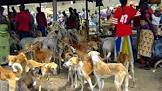
Petition against Nigeria’s dog meat trade
A worldwide petition website, change.org has created a petition to stop Nigeria’s dog and cat meat trade.
The petition, started by United Kingdom-based international animal rights activist, Natasha Choolun, urged members of the African Union , Union of Chiefs, African Union Commission, African Union and House of Chiefs to ban what it described as barbaric animal cruelty trades and implement enforceable animal protection laws within their tribes.
It urged them to join the global millions of people calling on governments of all nations to protect the animals from harm.
The petition noted, “Animal cruelty does not appease the gods, its not culture or tourism and like many outdated and harmful practices. From the past, these barbaric animal cruelty trades must be abolished. Nigeria’s barbaric dog and cat meat trade involves terrified dogs that are stolen from surrounding countries such as Niger and transported into Nigeria.
“While Nigeria has a growing number of pet owners who have dogs and cats as companions and not for consumption, these owners live in constant fear of having their companions stolen by local dog or cat thieves, knowing their pet would be sold to a dog trader or butcher, for quick cash.
“Arriving at dog markets, exhausted dogs are unloaded for sale, then crammed back into different cages and reloaded onto different trucks for more gruelling journeys toward dog slaughterhouses, where they face a brutally violent death. Nigeria’s slogan “Good people great nation” should also include its animals, and consequently engage police and magistrates to be in sympathy with Nigeria’s animal cruelty laws, to implement and enforce them.’’
As of April 8, 2022, 17, 837 people have signed the petition out of 25, 000 target.
In a study titled, “Dog-friendly country index updated on The Swiftest on March 25, 2022, by Mathew Nash, Nigeria was ranked the third country with the highest dog consumption. Several countries were rated in this research with Nigeria being the 7th worst country for dog ownership at 44.41 points and the 9th country with the fewest veterinarians per capita.
Eight ranking factors were used to grade the 51 most and least dog friendly countries which included Animal Protection Index, API companion animals grade, pet-friendly hotels per million population, number of vets per million population, country’s law on animal rights, formal recognition of animal sentience, low risk rabies country and significant dog meat consumption. In the factors used, Nigeria was listed among countries with laws on animal rights while ranking close to least in every other ranking factor utilised. In addition, Nigeria was ranked to have one pet-friendly hotel per million populations.
Continued on next page
 World Animals Voice