Month: November 2022

Non Animal, But A Wonderful Story.

Above – Veteran reunited with girl he helped during WWII

Veteran reunited with girl he helped during WWII

A 99-year-old veteran who fed a French girl during the Second World War has been reunited with her 78 years on.

During the Battle of Normandy, Reg Pye served with the Royal Engineers as a driver carrying sappers, mines and ammunitions.

While moving through Normandy, 14 days after D-Day in June 1944, Mr Pye spotted a 14-year-old girl staring at him while he ate his evening meal – a slice of bread with jam and a tin of pilchards.

Aged 21 at the time, Mr Pye handed his bread and jam over to the girl who ran away to eat it.

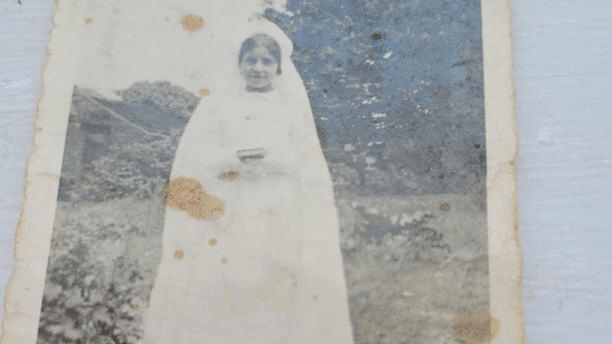
The following morning he found the girl had half-filled his mess tin with milk and left a handwritten note on the back of a picture of herself, which Mr Pye then kept in his wallet ever since.

Above – The picture Huguette left in Mr Pye’s mess tin

Some 78 years after their initial meeting, Mr Pye reunited with the girl who has been identified as Huguette, now 92.

The pair met in France where Mr Pye showed her the picture he kept, and gave her another jam sandwich.

“Nice to see you again after such a long time. We got older but we’re still the same,” Mr Pye said when meeting Huguette.

With the help of a translator, the pair drank champagne with their extended families.

“The memory of my very brief encounter with this young girl will stay with me forever,” Mr Pye added.

“In the bleakest of times this bit of human interaction made a huge mark on my life, I have carried her picture in my wallet for 78 years always hoping we might meet again.”

The reunion was made possible after Paul Cook, a volunteer from Taxi Charity for Military Veterans, started a social media campaign after hearing the story.

“There are no words to describe how elated I am that Reg has found Huguette, this is like a Hollywood blockbuster and I wouldn’t be surprised if this beautiful story was made into a film,” Mr Cook said.

Sweden: Djurens Ratt Reports Factory Farm To Police Re Animal Cruelty. We Wish Them Success !

Photo – Djurens Rätt

Djurens Rätt reports factory farm to police for animal cruelty

18 November 2022

Djurens Rätt

Our member, Djurens Rätt, has recently taken police action against a Swedish factory farm for animal cruelty.

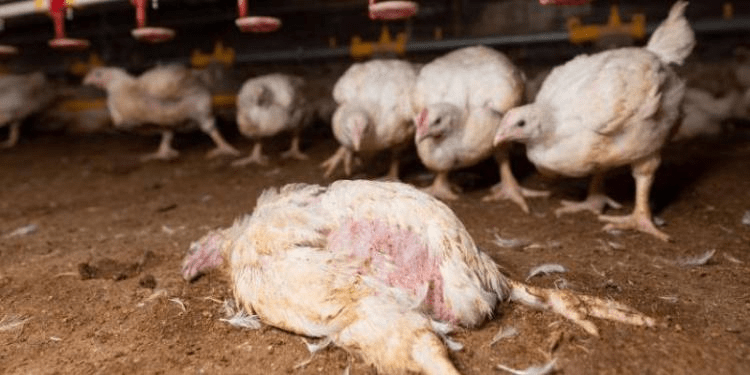
Djurens Rätt received some harrowing images and footage anonymously, that displays chickens living in atrocious conditions on a factory farm in Sweden.

A supplier of the brand Kronfågel, the material shows:

Chickens in overcrowded quarters

Struggling poultry looking dirty and uncared for

Chickens being trampled over, both dead and alive

While Kronfågel claims to care about animals, the reality of life on their farms shows quite the opposite… and as Djurens Rätt has explored previously, this isn’t the first time they’ve been caught abusing chickens either.

‘The judicial system must act against animal factory farms like these’, says President of Djurens Rätt

After receiving the content, Djurens Rätt promptly filed a police report against the farm for aggravated animal cruelty: which they were able to do so with help from an amendment made in July. The amendment states that those who cause animals to suffer copiously can be prosecuted.

‘The judicial system must act against animal factory farms like these’, says Camilla Bergvall, President of Djurens Rätt. ‘We will continue to remind legislators, law enforcement and consumers that animals suffer in animal factories. It is beyond all criticism that sentient individuals are treated in this way in a country that claims to have the world’s best animal welfare.’ 

No more animal cruelty – we need stronger animal welfare legislation

After Lidl’s chicken scandal and the recent investigations exposing awful conditions on Italian quail farms (to name just two examples), it’s clear that the poultry industry – and farm animals in general – need our help.

‘Promises’ made by corporations and suppliers to care for animals are not enough. We need tangible action, including robust legislation and more pledges made to the European Chicken Commitment, to see real change in the sector. We must stop suffering from slipping through the cracks.

Learn about the work we are doing to secure better lives for farm animals.

Regards Mark

USA: Animal Rights Activists Will Hand Out ‘Turkey-Free Roasts’ In Newark.

Advocates from Newark Animal Save and PETA said they’ll be handing out free Field Roast Celebration Roasts at 11 a.m. on Saturday, Nov. 19 outside the Whole Foods store in Newark, 633 Broad Street.© Shutterstock

NEWARK, NJ — Vegan turkey roasts are coming home to roost in the Brick City this Thanksgiving season.

Advocates from Newark Animal Save and PETA said they’ll be handing out free Field Roast Celebration Roasts at 11 a.m. on Saturday, Nov. 19 outside the Whole Foods store in Newark, 633 Broad Street.

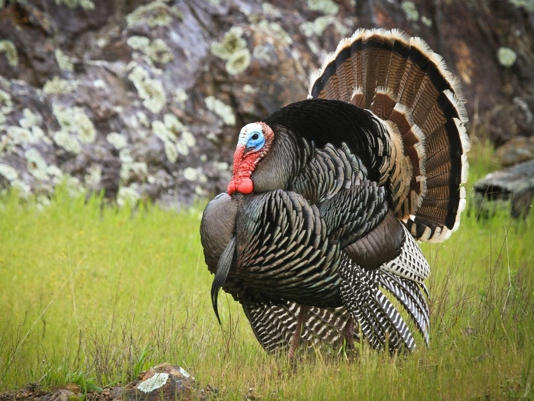
According to a news release, the giveaway event is being held to encourage people to “keep intelligent, inquisitive and sensitive birds off the table” and celebrate “ThanksVegan” instead.

“Turkeys are gentle individuals who love their families, feel pain and fear, and want to live as much as humans do,” PETA Executive Vice President Tracy Reiman said.

“PETA is encouraging everyone to see the similarities among all sentient beings, eat vegan and spare turkeys – more than 45 million of whom who are slaughtered every year for Thanksgiving alone,” Reiman said.

Regards Mark

Animal Rights Activists Will Hand Out ‘Turkey-Free Roasts’ In Newark (msn.com)

Enjoy – Shelties play day

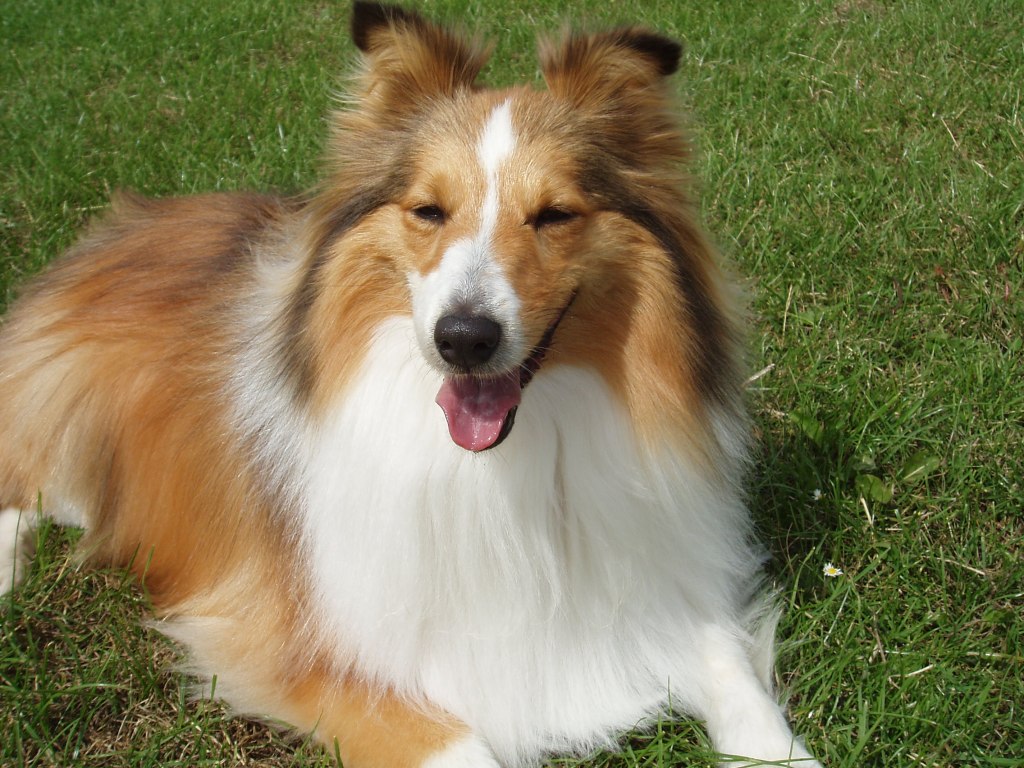
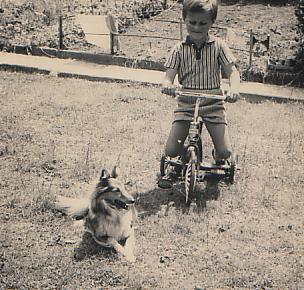
I have always had the pleasure of Shelties as my pet dog friends – beautiful, super intellignet, amazing and loyal, devoted animals.

Below are a few pictures of my dog Golda

Mark

My wonderful ‘Golda’:

Above – Shelties and I go back a long way !

The amazing and oh so beautiful Sheltie.

Food Systems Transformation is Brewing at UNFCCC COP27.

Food systems transformation is brewing at UNFCCC COP27

17 November 2022

While food systems does not yet have the place it deserves on this year’s COP27 agenda in Sharm el-Sheikh, it was addressed in important side-sessions.

The United Nations Framework Convention on Climate Change (UNFCCC) held an event on ‘Climate Resilience in Food Systems – why act now?’ where it was recognised that food systems, despite their significant impact on emissions, have been lacking at the climate meetings. The panel projected that food systems would get a stronger place on the COP agenda next year. 

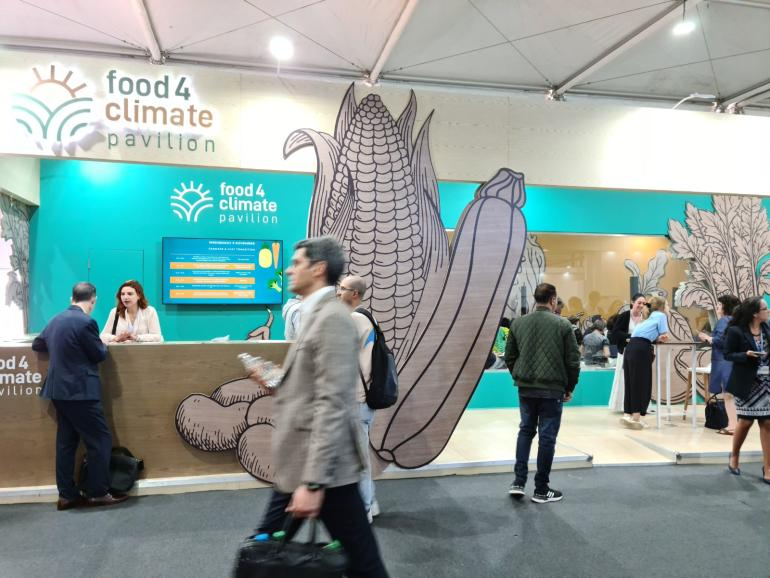
In fact, COP27 was the first time that the UNFCCC has endorsed food systems pavilions to be set up in the ‘Blue Zone’ and that 12 November was a thematic day dedicated to agriculture. The extensive programme in the Food4Climate pavilion, sponsored by a number of organisations including Eurogroup for Animals’ members’ Compassion in World Farming, FOUR PAWS and World Animal Protection, addressed a series of important topics related to animal agriculture and plant-based diets. 

Compassion in World Farming launched the new global petition ‘End of the Line for Factory farming’, calling on the UN and global leaders for a UN global agreement to end factory farming and reduce the consumption of meat and animal products.

Without ending factory farming, we simply cannot tackle the growing climate emergency” – Ben Williamson, U.S Executive Director of Compassion in World Farming

Above – CIWF Campaign Launch

Compassion in World Farming together with FOUR PAWS arranged the event ‘Tackling Climate Change through better Livestock Management Systems’. Martina Stephany, International Director Farm Animals and Nutrition at FOUR PAWS, gave examples of how the meat and dairy industry seeks to reduce methane emissions through techno-fixes such as feed additives.

It shows that the industry wants to further adapt the animals to a sick system rather than let the animals live the way they normally would live”, she said

Martina Stephany also called on governments to stop financing factory farms and to use public money to help farmers transition to better animal welfare systems or to produce more plant-based food.

World Animal Protection presented the new report ‘Climate change and cruelty – the true impact of factory farming’ in a session that showcased the impact of intensive animal agriculture on climate change in Africa as well as U.S farmers applying the principles of a just transition and showing that there are alternative ways of producing food.

Below – Food 4 Climate Pavillion 

World Animal Protection, together with Eurogroup for Animals, also hosted a side-event on ‘Transitioning agriculture systems for sustainability and climate resistance’ bringing together experts in food, climate and animal welfare to discuss why a Just Protein Transition to plant-based proteins and agroecological farming is critical. James Yeates, CEO of World Federation for Animals, spoke about how improved animal welfare and more plant-based diets have climate change mitigation benefits, stressing also the role of marine animal welfare.

Sophika Kostyniuk, Managing Director of Aquatic Life Institute, spoke at the Food Systems Pavilion event ‘Innovation and Technology in Water and Aquatic Food Systems’, emphasising that 2-3 trillion aquatic animals are killed for human consumption every year and that their welfare must be part of the food system transition.

Above – World Animals Protection and Eurogroup for Animals

Other signs that food systems are gaining traction at the climate talks could be seen in the Nordic Pavilion, hosted by the Nordic Council of Ministers, which had a ‘food systems take-over’ on agriculture day to bring food production, agriculture and diets to the front and centre of climate action. 

On the same day, the Singapore pavilion had an event on ‘Alternative Proteins: Boosting Sustainable Food Security Resilience through Science’ addressing both plant-based food and cellular agriculture. Singapore is the first country to have started serving cultivated meat and Low Teng Yong, Branch Head for Risk Assessment and Communications from Singapore Food Agency, spoke about Singapore’s innovation programme and the regulatory process for bringing cultivated meat to market.

In short, food systems transformation is brewing at COP27 but it still has to make its way up on the agenda to get the attention it deserves in order for the world to limit global warming.

Regards Mark

England: Robin Photos From Pauline.

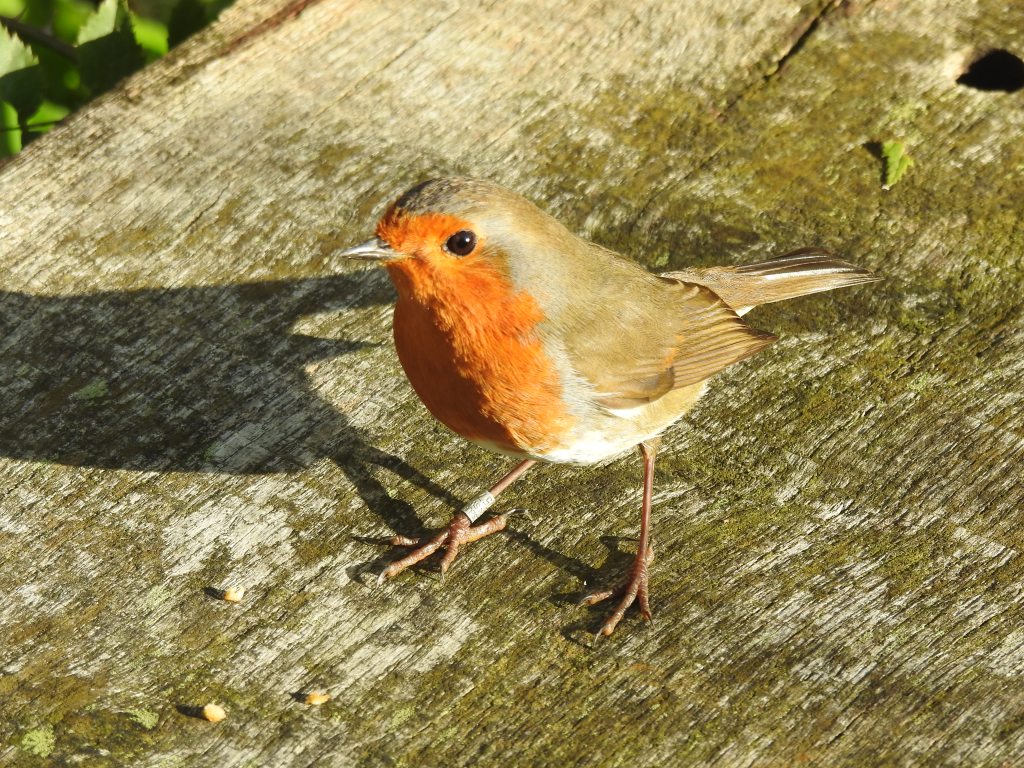
We were just talking about these – I asked if Pauline had noticed that in one photo the bird has a leg ring fitted.

Pauline did notice and said that these pictures were taken at the Sevenoaks (Kent) wildlife trust nature reserve.

Guessing they may have ringed him for monitoring purposes.

Regards Mark and Pauline.

Some past robin photo links:

Germany: Primates Exposed to Severe Suffering In Brain Research Experiments in Germany.

Primates exposed to severe suffering in brain research experiments in Germany

15 November 2022

DAAE

News

Doctors Against Animal Experiments have revealed the severe suffering of non-human primates used for brain research experimentation in Germany, and reveal that eight institutions are currently carrying out similar tests that should be banned under EU law.

In 2009, six dead primates used for scientific experimentation at the Max Planck Institute for Biological Cybernetics in Tübingen were sent to a governmental pathological institution to investigate their cause of death. The examination revealed severe injuries on the skull, cerebral membranes and the brain which must have caused excruciating pain for months. 

New photo and video evidence obtained by Doctors Against Animal Experiments has exposed the extreme cruelty of the experiments to the public. The footage garnered significant interest and was broadcast on a major German television programme.

Monkeys in brain research are subjected to unimaginable suffering. This is revealed by a dissection report documenting head injuries such as drill holes in the skull bone and stab wounds in the brain of such animals. Official veterinary pathologists found that the monkeys used by the Max Planck Institute for Biological Cybernetics (MPI Tübingen) in Tübingen were suffering not only severely, but extremely severely, which was fully known to the competent authorities.

Doctors Against Animal Experiments

This shocking case is not an isolated incident. The MPI Tübingen stopped its primate experiments in 2017 due to public pressure after years of campaigning and an undercover investigation in 2014. However, similar tests are still being carried out in Bremen, Göttingen, Magdeburg, Marburg, Frankfurt, and at three other institutes in Tübingen.

Directive 2010/63/EU sets an upper limit for pain and suffering above which animal testing should no longer be carried out. Recital 23 states that “from an ethical standpoint, there should be an upper limit of pain, suffering and distress above which animals should not be subjected in scientific procedures”, and article 15 states that “Member States shall ensure that a procedure is not performed if it involves severe pain, suffering or distress that is likely to be long-lasting and cannot be ameliorated.”

However, if for exceptional and scientifically justifiable reasons, a Member State deems it necessary to carry out a procedure involving severe pain, suffering or distress that is likely to be long-lasting and cannot be ameliorated, Member States may adopt a provisional measure to allow such a procedure. In that case, the Member State shall immediately inform the Commission and the other Member States, and provide reasons and evidence for its decision to allow a provisional measure. Then, the Commission may either authorise the provisional measure or require the Member State to revoke the provisional measure.

When applying for project authorisation, researchers classify the severity of this type of procedure usually as “moderate” (i.e. short-term moderate pain, suffering or distress, or long-lasting mild pain, suffering or distress). The unveiling of Doctors Against Animal Experiments have shown that primate brain research procedures often involve pain, suffering or distress that is “likely to be long-lasting and cannot be ameliorated”. Therefore, such procedures should only be authorised if they have been the subject of a request for a provisional measure, in accordance with the Directive. 

Call for action in Germany

Doctors Against Animal Experiments are calling for decision-makers to no longer approve such procedures in Germany, and to stop the use of non-human primates in brain research immediately.

Sign their petition to support this demand.

Regards Mark

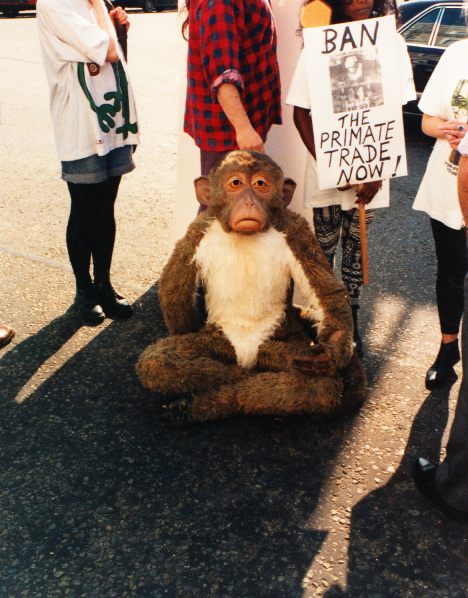
It was like over 35 years ago that Joanne and I, plus a few other members of our (then) group, went up to the Mauritanian embassy in London to protest against the primate trade. Read more and see photos of that day in the first link below.

I am unsure if the primates associated with the German issue detailed above were originallly supplied from Mauritius; all I can do is try to publicise what is still happening in Europe right now.

Mark

Photos – WAV Archive.

England: Touching Tributes to Animal Heroes at Coventry (City) Purple Poppy Service.

Touching tributes to animal heroes at Coventry purple poppy service

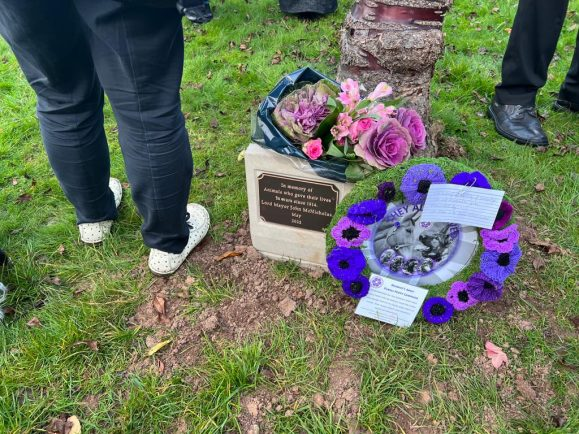
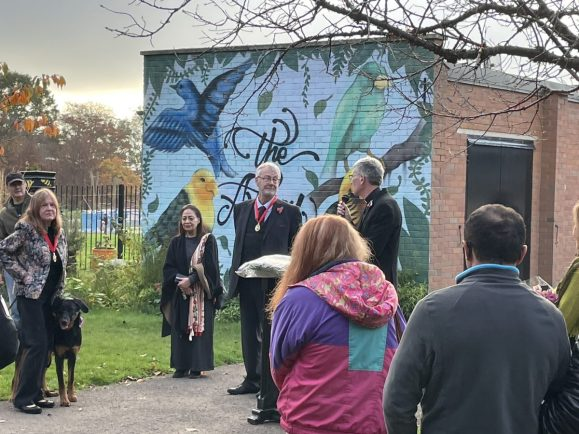
PETS and their owners gathered in the War Memorial Park peace garden on Remembrance Sunday to honour the animals that served during all conflicts.

Pet owners and animal rights and welfare groups gathered in the peace garden for the short service, which was led by Coun John McNicholas alongside his wife June.

During his address, Coun McNicholas spoke about the need to honour the ‘faithful animals who served side-by-side with the Armed Forces’, something he feels isn’t done enough.

He also stressed the positive impact animals can have on people’s mental health.

“I have always been a huge advocate of animal rights, and whether it be dogs, horses or other kinds I think they should be remembered for their service, animals are loyal, loving and brave.”

Coventry Central Hall Rev Stephen Willey then gave a brief speech before leading the service in prayer.

He spoke of humans and animals being a part of the ‘marvellous creation of god’ and of the value of the ‘unconditional love’ animals give to owners.

Dr June McNicholas read a poem looking at war from a serving dog’s perspective, accompanied by her new pet dog Stella.

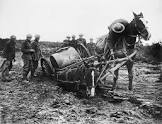
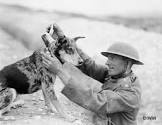
And the service ended with the laying of a purple poppy wreath alongside a plaque in memory of all animals who gave their lives in wars since 1914.

The purple poppy was introduced in 2006 by the charity Animal Aid, which felt animals who died in wars, mostly horses and dogs, should not be forgotten.

The appeal has since been adopted by the Murphy’s Army charity, which has since raised thousands of pounds for causes including K9 Heroes, The Horse Trust and Fireside K9.

Coun McNicholas laid the city’s first purple poppies as Lord Mayor last year and said he will be making this an annual service.

He said: “My wife and I have always been keen to promote the beneficial roles animals can play whether as therapy, assistance animals or those that support our armed services.

“Few Remembrance services recognise the bravery of those animals who endanger or sacrifice their own lives to protect their human colleagues.

“I’m looking forward to next year when we will continue our support for the ceremony”.

Regards Mark

Associated animals in war links:

Search Results for “animals in war” – World Animals Voice

Coventry (England) has a very proud tradition of animal rights – and it was during live export protests that our wonderful Jill was murdered by the savage calf export trade:

Spain: Protestors Take To The Streets As ‘Hunting Dogs’ Excluded From Spain’s Animal Welfare Laws.

Dogs used in hunts are often subjected to horrific conditions

Animal rights campaigners in Spain held demonstrations across multiple cities on October 16 to shine a light on hunting dogs being exempt from new animal welfare laws.

The Spanish government recently lodged a further amendment to its Animal Protection Law, which sought to keep hunting dog breeds exempt from abuse protection.

Barcelona-based animal rights group Paw Portal called the move “a shame,” considering this is the same government that made so many positive steps to help animals previously.

“Do dogs feel less if they are in the hands of hunters than in the hands of people who do not have killing animals as a hobby?” the group asked in a Facebook post. “Indeed: they feel less affection, less attention and less respect.”

Protests were organized in Almeria, Cadiz, and Valencia, amongst others, to encourage people to sign a petition launched by Spanish political party the Animalist Party Against Mistreatment of Animals.

Paw Portal supported efforts and informed its followers about the underlying issues of speciesism and cruelty. “[This is] a reminder that the Spanish government wants to exclude hunting dog breeds from the new animal rights laws,” it wrote. 

“This will allow the biggest perpetrators of the worst animal abuse to continue without facing any consequences!”

Abuse faced by working dogs

Paw Portal claims that dogs used to hunt are kept in abhorrent conditions. Many are reported to be kept on short chains for the majority of their lives, while housed in unsanitary feces-filled kennels, and denied access to clean drinking water.

At the end of hunting season, due to the undomesticated nature of the animals, thousands face abandonment or death at the hands of their owners. Hanging, burning, and being discarded into wells to drown are listed as some common “disposal” techniques.

Under the Animal Protection Law, all of these activities would be deemed illegal and punishable by a prison sentence. However, the government is looking to remove all protection from hunting breeds, apparently on the grounds of “cultural interest.” 

In its petition, the Animalist Party states that: “This was [also] denounced by the Intergroup of the European Parliament on the Welfare and Conservation of Animals in a letter sent to the Government, in which it indicated that the treatment given in our country to animals used as hunting tools is in contradiction with European values.”

The party demands that no species is exempt from protection by the law. It also asks that none be used as “tools” for human profit, as it equates to exploitation, a term it also connects to another Spanish tradition, bull fighting.

Spain cracks down on animal abuse 

On August 1, the Spanish government updated its Animal Protection Law to reduce cruelty, abandonment, and the unnecessary killing of animals. The amendment was brought in by the minister of social rights, Ione Belarra.

“Animal abuse going unpunished and aberrant practices such as cockfighting or shooting pigeons are over,” she said at the time. “Gone are the days when hundreds of thousands of animals were abandoned every year in our country.”

Murcia Today reported that key changes included a zero sacrifice policy, with no animal being euthanized except for in extreme medical circumstances, and a tougher stance on perpetrators of animal abuse. The Penal Code was changed to increase custodial sentences from a minimum of 24 to 36 months for first offenses. 

Zoos and marine parks are also required to transform into wildlife rehabilitation centers.

Following on from the amendments, more animal rights progress was made in December when animals became classified as sentient beings in Spain. Only the far-right political party Vox opposed the move, which saw domestic companions and wild species alike no longer considered as “objects” by law.

Regards Mark

Pakistan: A First Look at Animal Rights Course Content for Schools in Islamabad.

The Head of the Prime Minister’s Strategic Reforms Unit, Salman Sufi, announced that the development of the Animal Rights curriculum, which will be taught in schools in the federal capital, is almost complete.

His tweet read: “As part of PM Shehbaz [Sharif’s] Animal welfare reforms, Chapters on Animal rights in curriculum are in final stages of composition”.

He added that he had also had detailed consultations with over 40 academics, the Ministry of Education, the curriculum board, and animal rights volunteers in this regard.

He had stated in September that the course will be introduced in the syllabi of Grades 5 and above at both private and government schools in the federal capital by the end of October.

Sufi also mentioned that the government is working with international organizations and local activists for this project that will educate students about pets, stray animals, and exotic pets.

Detailing the layout of the course, Sufi had said,

Animal rights activists will visit schools and teach children about keeping pets. They will tell kids that pets cannot just be kept for fun, and make them realize that animals are a responsibility.

He added,

They need to understand that you can’t throw stones at stray dogs. That it is better to neuter these animals. That even Islam teaches us to respect every living being and emphasizes how animals should be protected.

Furthermore, the course content will also include the dangers of keeping exotic animals at home.

“We will tell children that if they can afford these wild animals, it is absolutely unfair to keep them at home and that importing exotic animals is a big no,” Sufi said.

The premier’s aide had also previously explained that the course on Animal Welfare will have co-curricular sessions, and after it is launched in Islamabad, the authorities will push for the provincial governments to follow suit.

Regards Mark
A First Look at Animal Rights Course Content for Schools in Islamabad (propakistani.pk)