Day: April 4, 2023

The time is always right to do what is right: why the cage-free transition cannot happen soon enough.

All photos from WAV archive.

30 March 2023

Written by Reineke Hameleers

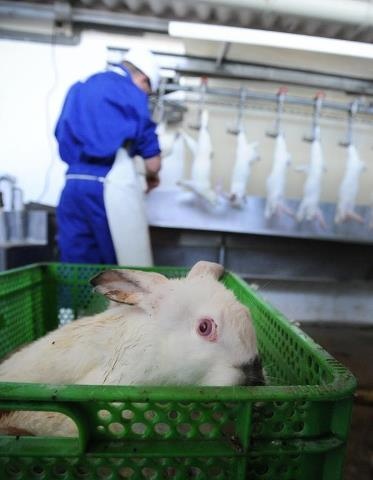
Featherless, panicking laying hens shoved into crates and sent to slaughter; lame mother sows, a spray mark on their backs to indicate that their time is up; and then millions of rabbits, ducks, geese, quails confined for part or all of their short lives in wire cages, in dimly lit warehouse-like barns, inhaling dust and ammonia from their own waste.

I think that by now we are all familiar with the images, the investigations, the scandals, and the misery they inexorably document. What was once considered normal, and even necessary to produce cheap animal products, has become so controversial that European citizens have asked the European Commission to stop it.

End the Cage Age, led by our member Compassion in World Farming, collected the third highest number of signatures in the history of European Citizens’ Initiatives. The request to stop caged farming was not whispered, it was shouted loud and clear.

The message did not fall on deaf ears: with a historical decision, the European Commission, in its official response to the ECI, committed to put forward a legislative proposal by the end of 2023 to phase out cages from animal farming. The proposal was included within the scope of the ongoing revision of the animal welfare legislation, a necessary step to create a level-playing field for farmers throughout and beyond Europe. The transition will require substantial public financial support to enable farmers to invest in cage-free, higher welfare systems: let us not forget that almost half of the EU egg production still derives from caged hens. As for other animals, such as sows, quails and rabbits, over 90% of the production relies on the use of cages. 

Change is scary, especially for an industry that is used to getting its own way, holding political institutions hostage with the rhetoric of ensuring food security and bringing home hefty profits from exports. But we know all too well that this is only one side of the story, specifically the one that omits the externalised costs of cheap animal products, including the looming public health threats posed by global pandemics and antimicrobial resistance. The animal farming industry’s lobbying machine is currently focused on dismantling many of the most ambitious objectives of the EU Farm to Fork strategy under the assumption that not only improving animal welfare, but also investing in sustainable food systems, will spell disaster for consumers, farmers, and the EU economic outlook at large. 

This is also one of the reasons why, according to some, the cage-free transition should be postponed as much as possible. However, while the time will probably never be right for the industry, for European citizens the time is now. I am saying this as a rebuttal to some parties who are throwing spanners in the wheels of a speedy transition: true, the current economic outlook is not rosy, but farmers can and should be vocal in demanding that, starting from now, Member States allocate as many resources as possible under CAP and national payment schemes to anticipate the legislative change ahead. Stockmanship, human-animal relationships, breeding objectives, feeding strategies, animal health programs, will all need to adapt to the new species-specific cage-free environments; many of these aspects are already eligible for financial support under various EU and/or national payment schemes. 

If sufficient financial support is provided, there is agreement among industry stakeholders that most sectors can switch to cage-free farming within 3-5 years. As shown by our recent report investigating industry stakeholders’ views on the practical and economic aspects of the cage-free transition, a staggered approach with different deadlines per sector is possibly the best way forward as it would allow for a gradual adaptation to cage-free farming.

The industry recognises that the impetus is there, and the answers to the most pressing questions – as well as technical solutions – can be found by studying the business models of many European producers who voluntarily and successfully switched to higher welfare, cage-free systems. We do not need to reinvent the wheel: our report illustrates in detail many examples of good and best practices that can be adopted to make the cage-free transition as smooth as possible, while also leaving room for continuous improvement.

For me, these are all reasons to accelerate, rather than delay, the cage-free revolution. Granting a reasonably swift transition period in the legislation can actually even mitigate the risk of creating disparity amongst Member States.

For instance, according to the latest report on the fitness check of the current animal welfare legislation, the long transition period to enriched cages led some producers to wait until the last possible moment before changing their infrastructure, which unnecessarily increased prices and created a situation of unfair competition amongst Member States.

For all these reasons, I hope that the phase-out period to shift to cage-free farming will be as short as reasonably possible and that it will be used wisely, making the most of all the forms of financial support currently available. The animal protection movement will play its part, of course, communicating to citizens and policymakers about the importance of supporting this transition in any way possible.

In my view, however, it will be equally important to promote a shift in mentality, from treating animals as commodities to seeing them for what they are, sentient beings worthy of good lives, however short we decide that these lives should be. 

Phasing out cages in the EU: the road to a smooth transition

 DOWNLOAD PDF 22.13 MB

Regards Mark

EU: No Animal Left Behind: why do farmed rabbits need specific laws to protect their welfare?

3 April 2023

Across Europe, millions of caged rabbits are living in a real-life horror story. Crammed into tiny prisons with their peers – with no access to things to interact with and nowhere to exercise, play, and rest – their daily lives are filled with boredom, frustration and physical and mental suffering. The European Commission has the power to change that when revising the animal welfare legislation this year, by including specific laws for rabbits that address their needs.

Rabbits are fascinating, complex animals. Curious and social by nature, they love living in groups and socialising with others – but like any sentient being, it’s also important to them to be able to rest and spend time alone. What’s more, their teeth are always growing, so it’s important for rabbits to always have something to chew on.

Unfortunately, these essential needs are far from met in Europe’s current farming systems. Rather than having the space and opportunities to truly be themselves, rabbits are forced into tiny cages – many of which are no bigger than an A4 piece of paper – and, as our recent exposé revealed, forced to spend their days in the most miserable conditions.

Rabbits in cages experience a wealth of problems – some of which are deadly

These poor beings:

Are frequently stressed and frustrated, which can lead to injuries and health issues. In turn, a higher number of antibiotics are often used on factory farmed rabbits, driving the antimicrobial crisis

Are unable to move their bodies properly – many can’t even stand up or stretch out. This is mentally and physically distressing, and can cause painful problems such as frail bones

Struggle psychologically – high cortisol and low dopamine/serotonin levels are commonly seen in factory farmed rabbits, which are major indicators of poor mental health

Often suffer from digestive disorders due to poor hygiene – which can cause high mortality rates with kittens (baby rabbits) in particular

Can’t look after themselves or follow their instincts – with no materials to chew on, rabbits in cages can’t do anything about their ever-growing teeth, resulting in even more pain and difficulty eating.

Learn more about these issues on pages 17 – 19 of our new exposé report.

Europe’s farmed rabbits don’t have to live this way

Many of the problems farmed rabbits face are enabled by existing loopholes and oversights in the European Commission’s animal welfare legislation. What’s more, there are no existing laws that address the welfare of farmed rabbits specifically – which they desperately need. 

The European Commission has the power to change all of this when they revise the animal welfare legislation later this year, by including strong, precise, and  targeted rules for rabbit welfare that take into account their unique natures. 

Farmed rabbits have not been domesticated for as long as other farmed species, and still exhibit the same behaviours and instincts as seen in their wild counterparts. Life in a cage is an unimaginable struggle for them, and having already promised to End The Cage Age following a successful ECI, the European Commission must now consider how to phase out cages for these dynamic beings in a swift and effective manner. We’ve already done a lot of the groundwork by compiling case studies, scientific evidence, and data from across the EU that explores this transition in our new report.

Rabbits deserve better. They need their freedom and space, along with access to good nutrition, clean water, and enrichment materials with which they can play and look after themselves properly. There is no substitute for these basic needs.

We’re trying to change history for farm animals this year through phase two of the No Animal Left Behind campaign. Find out more.

Regards Mark

England: Good Hugs; Bad Hugs.

Please, no more bad hug nights like this; the right night hug is wonderful and sexy, but only when you get it from someone special; and it is not done by un unseen ‘thing’; then it becomes a bastard.

Fortunately, there are brilliant bands like the Cure; so they bring some solace when things are down.

Sorry folks for not posting recently, but have been having REAL BAD fights with my MS over the last few weeks – we all enjoy a hug, but not this kind.

As the guy says here, it is NOT a nice hug:

Regardless, have been doing a little with a friend still about live animal transport.

Anyway, things a little better today so will try and catch up with a few things; here we go.

Joint letter urges EU Chief Veterinarians to put animal welfare issues on the agenda

3 April 2023

Djurens Rätt

Together with Djurens Rätt, Eurogroup for Animals and eleven other organisations have sent a letter to the EU’s Chief Veterinary Officers (CVOs) asking to put important animal welfare issues on the agenda at the upcoming CVO meeting in April.

Ahead of the EU Chief Veterinary Officers’ (CVOs) planned meeting in Varberg, Sweden, on 25-28 April this year, Djurens Rätt has sent a joint letter along with twelve other animal protection organisations to the chief veterinarians.

The meeting’s theme is sustainability and will address current issues in the fields of animal health, welfare and food safety. 

The letter outlines key animal welfare issues to be addressed at the meeting and urges the group to actively participate in the ongoing legislative process at EU level. They are also invited to participate in a meeting with signatory organisations to further discuss the content of the letter.

The letter addresses the following issues:

Reduced meat consumption and improved welfare for safe and sustainable food production

 A Fur Free Europe

An end to caged animals (End the Cage Age)

Strengthened animal welfare for fish

An end to the distressing and cruel transport of animals

Enhanced animal welfare at slaughter

The full text of the letter is available here.

File

Joint letter to the CVO group for the April 2023 meeting_20230331.pdf261.03 KB

With this letter, a significant part of the international animal rights and welfare movement is sending clear messages to the EU Chief Veterinary Officers ahead of their meeting on sustainability in Varberg in April. Animal welfare is an important part of sustainability and I do hope that the entire CVO group is inspired by the content of the letter, to put the best interests of animals on the agenda and to use the opportunities they as a CVO group have, to contribute to strengthened animal welfare at EU level. 

Camilla Bergvall, President of Djurens Rätt

Hope to be posting more today, but please just accept things have been and are difficult at the moment.

Regards Mark