Swedish Public Procurement Agency sets criteria for healthier chicken breeds
11 May 2023
Djurens Rätt
As a first in Europe, new criteria developed by the Swedish National Agency for Public Procurement includes standards for higher welfare chicken breeds, in line with European Chicken Commitment. Djurens Rätt welcomes the development and its potential to reduce the suffering in chicken factory farms.
Public sector food procurement represents a significant lever to drive improvements for animal welfare standards, sustainability and support for local food producers. Since 2022, Sweden’s Public Procurement Agency has been working to update the criteria for chicken and turkey meat with input from an advisory group, which included Djurens Rätt.
Several of Djurens Rätt’s suggestions were included in the final criteria, such as the opportunity to procure meat from higher welfare chicken breeds, thereby excluding meat from fast-growing chickens. This is in line with the European Chicken Commitment (ECC) or Better Chicken Commitment, a policy that outlines the minimum standards required for chickens to live healthier, happier lives. It includes maximum stocking densities, improved environmental standards and more.
Djurens Rätt is of course very happy that our participation in the advisory group has led to positive outcomes for chickens. Facilitating municipalities and regions to reject the use of fast growing chickens will reduce suffering at large. It is important to simultaneously reduce consumption of chicken meat in order to strengthen the protection of animals in the long term.
No Animal Left Behind: why do farmed pigs need specific laws to protect their welfare?
15 May 2023
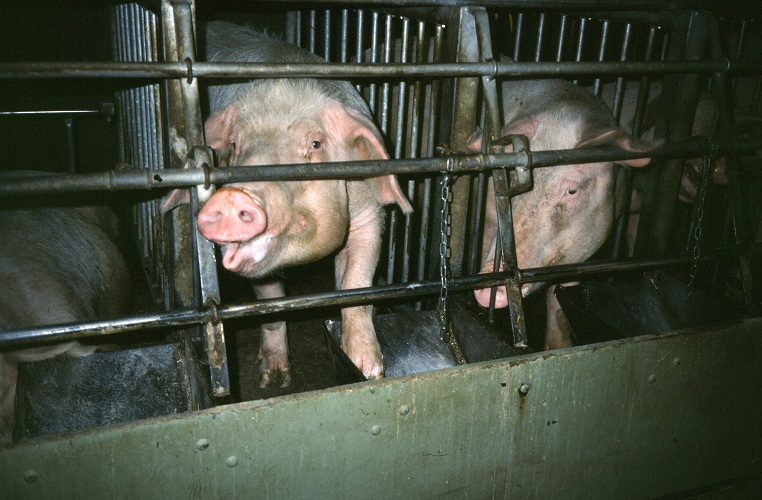
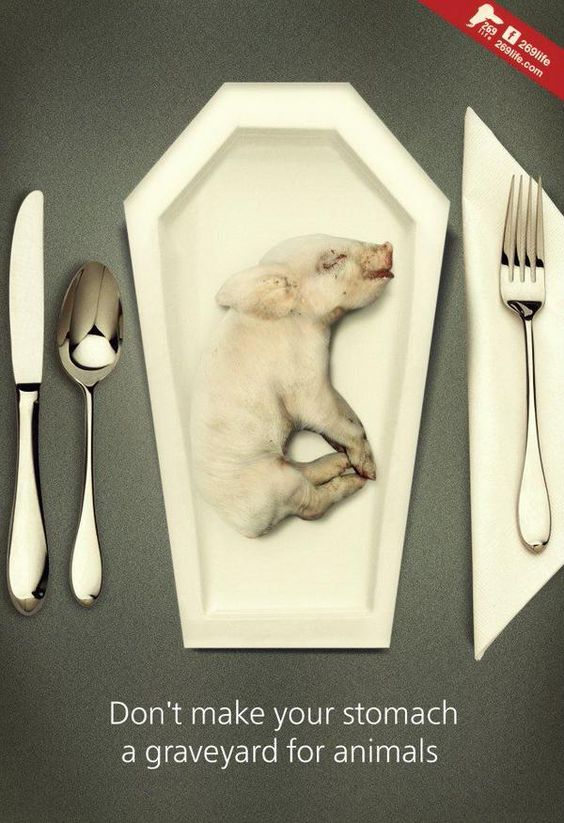
Did you know over 240 million pigs are farmed in Europe? Trapped in bleak and unhygienic factory farms, they are forced to face a number of awful scenarios. Where sows often spend a large portion of their lives in a tiny cage with not even enough room to turn around, piglets are mutilated, and pigs bred for meat are lowered into gas chambers before being slaughtered. The European Commission has the power to help pigs immensely by creating specific rules for their welfare in the ongoing revision to the animal welfare legislation.
Learn about the issues piglets, sows and grower pigs face on pages 31 – 54 of our No Animal Left Behind report. All sources cited below have come from this report.
Able to understand words, solve problems and play games, pigs are incredibly clever – in fact, they rank within the seven most intelligent animals worldwide. Mother pigs are especially nurturing, and go to great lengths to take care of their young piglets, from building nests to ‘singing’ to them when it’s time for their dinner. These expressive and caring creatures love to be touched, too, and will often cuddle and sleep nose to nose.
Yet pigs are living horrible lives in the EU’s factory farms – even when they are only piglets
From the moment they are born, factory farmed pigs are in line to suffer. Male piglets are castrated to avoid developing ‘boar taint’, a largely cosmetic issue that only affects 0 – 3% of piglets on factory farms – yet despite these small numbers, a 2016 survey found that 18 out of 24 countries castrated over 80% of their pigs. This is completely needless, and causes acute pain to these babies – as does ‘tail docking’, another procedure to which they are subjected, in which their tails are cut off. Though legislation banning the routine use of this procedure has been in force since 1994, audits between 2016 – 2019 found that 95 – 100% of pigs had docked tails in Germany, Hungary, the Netherlands, Italy, Spain and Denmark, proving that the legislation is vastly ignored and unenforced.
Their bodies mutilated, these poor piglets can’t even turn to their mothers for comfort.
Millions of sows are wasting away in tiny crates
Sows on factory farms are confined for many weeks at a time to miniscule crates, where even doing the most simple movements, like standing up and sitting down, can result in injuries sustained from banging into the bars they are trapped behind.
Forced to produce up to two litters of 10 – 12 piglets a year, these poor mother pigs do nothing but suffer, with their bodies used as machines – they are not even fed properly, as pregnant sows are given a reduced portion of food to ensure high productivity. The stress together with being starved and confined leads to frustration and aggression. Being kept in such a state causes numerous health issues like mouth sores, reduced muscle and bone strength, and urinary tract infections.
Where a mother pig in the wild would create a comfortable space for her babies and travel far to find nest materials, caged sows on factory farms can do little more than lie on their side. It’s a boring and painful existence.
After struggling their whole lives, grower pigs face a terrifying slaughter
Most of the EU’s grower pigs are raised indoors in dirty, barren pens. Fighting is common as they are crammed so closely together, as well as illnesses – especially respiratory disorders, as a result of the poor air quality and high stress in these unnatural habitats. Fed poor and unhealthy diets aimed to maximize production and not welfare, they frequently suffer from gastrointestinal problems like gastric ulcers, which can affect up to 60% of pigs in intensive farming systems.
These poor sentient beings are not even slaughtered humanely, with many of them stunned using CO2, a gas that’s extremely painful for pigs. From the moment they are exposed to it – while being lowered into a gas-filled chamber in a crate or gondola – they hurt. High concentrations of CO2 can severely irritate their eyes, noses, throat, and lungs. It can also directly stimulate their brain’s ‘fear response’, meaning in the moments before their death, these pigs are often terrified. Tragically, CO2 stunning is not even always effective in rendering these pigs unconscious, so they are slaughtered awake. It’s an unendurable end.
Learn more about the problems with CO2 stunning and raising sows in cages in our new exposé report.
Europe’s farmed pigs don’t have to live this way
The horrors pigs are exposed to across the EU are completely needless and must be stopped. Higher welfare conditions for farmed animals are what European citizens have come to expect, and it’s what the animals themselves deserve.
In their ongoing revision to the animal welfare legislation, the European Commission must include specific rules for pigs that protect them from unnecessary suffering, ensure they can go outside, support them in creating strong and healthy relationships with their piglets and each other, and allow them to exercise their natural behaviours.
Ending the confinement of sows would be a powerful place for policymakers to start – and we’ve already put together a new report to help make it happen, filled with case studies, scientific evidence, and data from all over Europe.
It’s time to ensure farmed pigs can lead lives worth living, full of enjoyment, satisfaction and comfort – it’s their right as sentient beings. Who’s with us?
1600 mink culled due to COVID outbreak on Italian fur farm, despite ban
13 May 2023
LAV
Following a delay in implementing the Italian ban on fur farms, 1600 mink have been culled due a new SARS-CoV-2 outbreak. The farming of animals for the production of fur has been prohibited since 1 January 2022 in Italy, however there are still thousands of mink housed on five farms.
In April, after confirming the presence of the SARS-CoV-2 virus on a mink farm in Calvagese della Riviera, the culling of all 1600 minks began. This was the fourth COVID-19 outbreak in an Italian farm.
The mink housed on this farm had been awaiting transfer to shelter facilities since the implementation of the fur farming ban.
LAV launched a new appeal to Minister Lollobrigida denouncing the enormous delay in defining the procedures for the transfer.
Continuing to keep thousands of mink housed in intensive systems poses serious risk to the health not only of the animals, but also of humans, given that they can transmit, mutate and serve as intermediate hosts of SARS-CoV-2.
At the same time as the WHO announced that COVID-19 is no longer a global health emergency, the outbreak in Calvagese della Riviera was detected, acting as a reminder that swift action should be taken in order to avoid future pandemics.
In addition to the animal welfare problems inherent to fur farming, several questions regarding the public health risks have been tabled to the European Commission, whose answer has been that a EU-wide ban on fur farming would be a disproportionate and unjustifiable measure.
The European Citizens’ Initiative Fur Free Europe gathered 1,701,892 signatures from across the European Union, and continues to call on the European Commission to ban fur farming on ethical, public health and environmental grounds.
Recently, the MEPs Working Group for the European Citizens’ Initiative tabled another question on the threat to public health posed by fur farms. In its reply, the Commission stated that “in terms of both SARS-CoV-2 and HPAI in mink farms, Member States assess local health risks and take measures according to the epidemiological circumstances and in line with the SARS CoV-2 risk assessments carried out by the European Centre for Disease Prevention and Control (ECDC) and the European Food Safety Authority (EFSA) as well as the EFSA/ECDC/EU Reference Laboratories joint assessment on the HPAI situation that is regularly published”.
I am starting off with a different gripe tonight. Wednesday, I think it was, I sat through the second round of Eurovision song contest qualifiers. After 4 songs, I went out to take some painkillers for my back; only then did I realise that actually they also helped me get through the rest of the qualifying songs:
My cat could probably write, and sing, something better. The whole second qualifier was, well, rather bad in my opinion. I had to throw the telly out of the window before the end.
But something I really cannot get a grip with is why Australia is taking part in the Eurovision song contest ? – Australia IS NOT part of Europe: so why are they in it ?
The TV star leads a host of celebrities and animal welfare campaigners calling on the Government to deliver on its pledges about protecting animals and cracking down on abuse
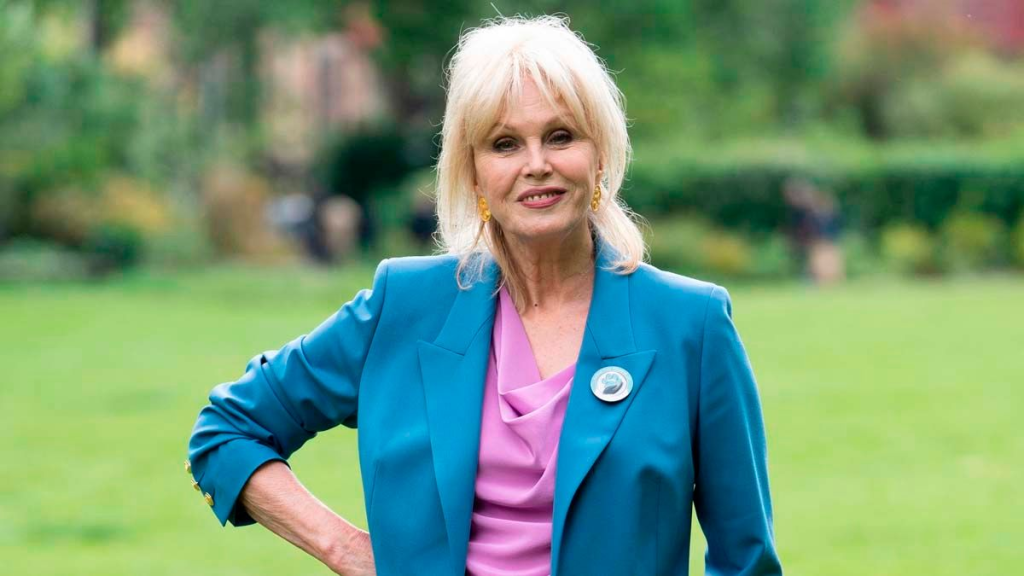
Actress Dame Joanna Lumley today urges Rishi Sunak to keep Tory pledges on boosting animal welfare.
The Absolutely Fabulous star is among celebrities to sign a letter calling on the Prime Minister to deliver on Conservative promises made in 2021 – including to drive through new legislation to tackle abuse of animals and bolster protections.
Dame Joanna, 77, told the Mirror: “Animals are being utterly let down by the Government’s dismaying failure to deliver the plans it promised two years ago.
“I urge the Prime Minister to progress vital animal protection measures, including the Kept Animals Bill and a ban on the import of cruel fur, as a matter of the utmost importance.”
The letter, which was also signed by Pop Idol singer Will Young, TV presenter Kirsty Gallacher and Countdown’s Susie Dent, tells the Tory leader: “Britain prides itself on being a nation of animal lovers and in May 2021 the Government pledged to reinforce our country’s position ‘as a global champion of animal rights’ with the publication of its Action Plan for Animal Welfare.
“The plan promised the animal-loving British public it would deliver improvements in the lives and wellbeing of millions of animals.
“But two years on, we and the animals we care so deeply about have been badly let down.”
The current version of the legislation, the Animal Welfare (Kept Animals) Bill, is stuck in the Commons.
If passed, it aims to tackle cruel puppy smuggling, live exports, banning keeping monkeys as pets and improving zoo regulations.
But a separate letter from 25 animal charities and campaign groups tells the PM the legislation has “been left languishing as the Government’s Kept Animals Bill has not been given parliamentary time for over 17 months”.
It adds: “Our patience, and our trust, has now been exhausted.
“The Kept Animals Bill, and the majority of the Action Plan, now appears to be little more than an inconvenience to a government that believes it can quietly abandon its promises.
“Animal issues matter to voters.”
Humane Society International’s senior campaigns director Claire Bass said: “The Government’s apparent disinterest and unwillingness to deliver its own Action Plan for animals is frankly baffling.
“MPs tell us they receive more constituent correspondence calling for better animal protection than any other issue, so passing legislation like the Kept Animals Bill and a ban on fur imports should be an easy and obvious choice in terms of popular policy.
“But instead, we and animals are enduring endless delays, seemingly deprioritised by this Government despite huge public concern.
“We urge Mr Sunak to remember his party’s promises and start delivering the action that animals deserve and voters expect.”
People for the Ethical Treatment of Animals vice-president Elisa Allen said: “Animals are in peril and the Government has seemingly abandoned them as time is running out for it to make good on its word.”
RSPCA chief executive Chris Sherwood claimed that “animals have been left in limbo by continued inaction on key animal welfare issues”.
Regards Mark
UK General Election in about 12 months – oh, and animal welfare people vote – so lets get moving !
Update 12/5/23 – I have been contacted directly by Steve at Cruelty Free International regarding the issue of UK animal testing for cosmetics. I show his full response below which covers how the UK government “Home Office disclosed that it had been secretly granting licences to test for cosmetics since February 2019”.
I have also included additional info from the CFI site and also a link to the site. They have actions which you can take, so I suggest that a visit there is a good starter. Obviously, people can write to their own MP’s about this all based on the info provided.
Cruelty Free International issued the following statement yesterday:
“Unfortunately, the Prime Minister is misinformed about the Government’s position on animal testing for cosmetics. A policy banning such tests was first introduced in 1998. However, in a letter to Cruelty Free International in August 2021, the Home Office admitted that the policy had ‘changed’ (i.e. been abandoned), to bring the UK into line with an EU ruling in a case called Symrise.
“When Cruelty Free International challenged the new approach in a recent judicial review, the Home Office disclosed that it had been secretly granting licences to test for cosmetics since February 2019. A High Court judge ruled that legally it was entitled to, based on his interpretation of EU general chemicals legislation known as REACH and its relationship with the EU Cosmetics Regulation.
“Importantly, however, the judge also said that there was nothing to prevent the Government from reinstating the policy ban. This is what the Government said in 2015 in the context of another judicial review:
‘… For the avoidance of any doubt, we are advising you that the current UK ban on testing cosmetics in animals is an absolute ban… No licence authorising the testing of cosmetics (finished products or ingredients) has been issued since 1998 … The UK’s policy ban remains in place even where EU legislation would appear to require or permit such testing’.
“The Government also said separately that the policy applied to worker safety testing. The Prime Minister’s statement refers to tests ‘for the consumer’. Whether labelled as consumer or worker safety, the animal tests are identical. The Government is now unquestionably once more allowing cosmetics testing on animals for the benefit of consumers.
“The 2015 statements constitute the policy the Government abandoned in 2019, paving the way for cosmetics testing on animals once again.
All the PM needs to do is to reinstate the policy. The Government does not have to slavishly follow legislation coming from the EU. It should do what the overwhelming majority of British people want.”
Please let me know if you need any further information.
The UK government has admitted that it secretly abandoned the UK’s ban on animal testing for cosmetics in 2019 – but as part of the ruling in our Judicial Review of the policy, a High Court judge has told the Home Office that it can reinstate the ban.
Click on the above link to continue reading more from CFI.
With the general election maybe a year or so away; the government needs to listen and act to the wishes of the people. ? The live animal export ban – will this also become law in the very near future ? – animals have friends, and those friends have votes !
Rishi Sunak on Thursday categorically ruled out watering down Britain’s ban on animal testing for cosmetic products for consumers.
The Prime Minister’s official spokesman said: “It’s important that the public are reassured here.
“The ban on using animals to test cosmetic products or ingredients for the consumer remains completely in force.
“There are absolutely no plans to change that.
“It also remains the case that it is unlawful for any business to sell cosmetic products or their ingredients that have been tested for the consumer on animals. “So to be crystal clear this is never going to happen.
“Any changes in EU law on this will not impact our position.
Related video: Animal Testing For Makeup In The UK Continues After 25-Year Ban (unbranded – Newsworthy)
“We will take the necessary steps to ensure this is the case.
“There will be no weakening on our position on animal testing and indeed we have some of the highest animal welfare standards and are exploring ways to enhance our position as a leader on animal welfare.”
It came after the High Court last week ruled ministers were acting lawfully when they changed a policy on animal testing to align with EU chemical rules.
In 2020 the European Chemicals Agency (ECHA), an EU agency which oversees chemical regulation, ruled that companies needed to test some ingredients used in cosmetics on animals to ensure they were safe for workers manufacturing the ingredients.
Manufacturers still cannot undertake any animal testing to check the safety of the makeup for consumers. This should be done using other methods.
The move led to criticism from campaigners “dismayed”at the government’ apparently allowing animal testing for makeup ingredients.
Animal rights groups feared this would lead to the resumption of testing in the UK.
But today a spokesperson for Mr Sunak said this was not the case.
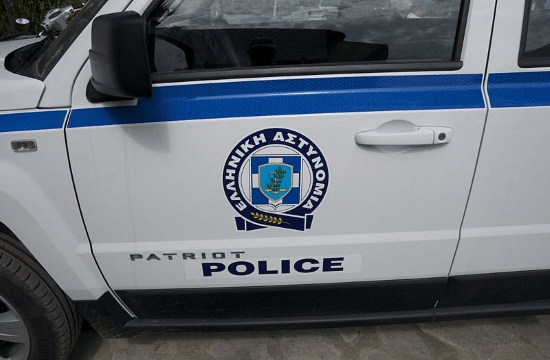
Mandatory training of police officers in animal rights begins in Greece on Wednesday
Hellenic Police officers across the country will begin mandatory training in animal rights issues as of Wednesday, it was announced on Tuesday, ANA reports.
At least one police officer per police station will acquire the knowledge and skills to deal with cases related to animal abuse, be they strays, home pets, working or game animals, exotic species, and others, noted the police.
The task of training the officers has been undertaken by the instructors of Zero Stray Academy and the Zero Stray Pawject organization at no cost to the Greek state, in collaboration with the Hellenic Police’s education and continuing education directorates.
Regarding the number of violations of animal protection legislation in the first four months of 2023, 705 cases were drawn up, 138 people were arrested, and 659 fines totaling 3,317,800 euros were imposed.
The EFTA Surveillance Authority (ESA) has ruled on the complaint logged in by Eurogroup for Animals and other animal protection organisations regarding blood farming in Iceland, and it is crystal clear: Iceland is in breach of EU rules on the protection of animals used for scientific purposes.
It is important to note that, as a member of the European Free Trade Association (EFTA) Iceland has to comply with the rules of the European Economic Area (EEA), most of which are aligned with those of the EU.
Following the findings of an investigation into Icelandic blood farms led by Animal Welfare Foundation and Tierschutzbund Zürich (AWF|TSB), Eurogroup for Animals, together with 16 animal protection organisations, decided to file an official complaint with the EFTA Surveillance Authority (ESA), arguing that Iceland did not properly apply its legislation on the protection of animals used for scientific purposes, which is derived from the EU Directive on the same topic.
On Icelandic blood farms the blood of mares is collected to extract a hormone called Equine Chorionic Gonadotropin (eCG), or Pregnant Mare Serum Gonadotropin (PMSG), which is used in industrial animal breeding to increase the reproductive performance of farmed animals. The semi-wild horses are subjected to violence, risk numerous injuries and repeated trauma. The amount of blood collected – five litres per week – exceeds any international guidelines existing on the topic. A more recent investigation by AWF|TSB demonstrated that nothing has changed since 2019.
The argument brought up in the complaint was that blood collection for the production of eCG should not be approved by the Icelandic authorities as it does not respect the 3 Rs principle (Replacement, Reduction and Refinement) on which the relevant EU Directive is based, and thus the Icelandic law on the protection of animals used for scientific purposes.
Indeed, according to this principle, animal experiments must, whenever possible, be replaced by alternative methods that do not involve live animals. In the case of PMSG, these alternatives exist: producers can rely on a number of hormone-free methods, authorised synthetic medicinal products, as well as on informed management techniques. The decision paves the way to further contest this cruel practice in the EU, where the relevant EU Directive is not properly enforced by all Member States.
ESA’s decision clarifies that we don’t need to discuss further what to do about blood farming, it is illegal under EU rules.
Blood farming is a double pain: mares suffer through violent and excessive blood collection so that animal farming can further intensify, with all the animal suffering that goes with it. We hope that after this, Iceland will put an end to this cruel practice. The upcoming revision of the EU animal welfare legislation also provides an opportunity for the EU to act: we call on the European Commission to use this opportunity to propose a ban on the production, the import and the use of PMSG in the EU.”
170+ civil society organisations demand just alternative to toxic EU-Mercosur deal
10 May 2023
Press Release
A broad coalition of civil society organisations both from South America and Europe reiterates its call to stop the EU-Mercosur deal and rejects efforts to “greenwash” it. They call on the EU and Mercosur to engage in a new relationship based on cooperation, solidarity, equality, democracy and sustainability.
The EU-Mercosur agreement is an outdated trade agreement that exemplifies the shortcomings of the EU’s trade policy agenda, say the signing organisations: t will increase deforestation, greenhouse gas emissions, human rights violations, job losses, and animal suffering.
We need a strong and reliable relationship with Mercosur. Cooperation instead of competition and solidarity instead of exploitation should be the guiding principle for EU-Mercosur relations. Instead of our relationships being shaped by the interests of transnational corporations, we need to have a model of economic and political cooperation that builds around the needs of people, public services, care work, food sovereignty and sustainability.
Theresa Kofler, Anders Handeln Austria
The EU-Mercosur agreement is unbalanced: people of Mercosur countries will foot the bill, to the sole benefit of the transnational companies that will profit in particular from the opening of public markets. Our common future should not be based on importing more natural resources from Mercosur and to export thermic cars and pesticides, including pesticides banned in the EU, but on guaranteeing a “good life for all” as the call stands for.
A proposed additional protocol to the deal, circulated between EU and Mercosur governments and leaked earlier this year, only offers cosmetic, aspirational and unenforceable adjustments.
And the risks presented by the EU-Mercosur agreement cannot be restrained by the recent EU legislation on imported deforestation, explained Stephanie Ghislain, Political Affairs Manager at Eurogroup for Animals. “This is because the unconditional trade liberalisation foreseen in the EU-Mercosur agreement will further fuel intensification of animal farming, and the legislation ignores many products that contribute to deforestation, as well as other biomes that, just like the Amazon rainforest, are also destroyed by intensive agriculture”.
For these reasons, over 170 civil society organisations from South America and Europe reject this deal and consider the attempts to save it as mere greenwashing.
The EU-Mercosur deal is in direct opposition to climate action, food sovereignty and upholding human rights and animal well-being. Therefore, we need a u-turn for EU trade policy: leaving climate destruction, human and animal rights violations behind and moving towards a sustainable and social relationship based on solidarity for all.
Leah Sullivan, European Trade Justice Coalition
ENDS
Seattle to Brussels Network is a network of development, environment, human rights, women’s and farmers’ organisations, trade unions, social movements and research institutes. The network was formed in the aftermath of the World Trade Organisation’s (WTO) 1999 Seattle Ministerial to challenge the corporate-driven trade agenda of the European Union and European governments. It has also developed as a response to the increasing need for European co-ordination among civil society organisations.
Regards Mark
‘Planty’ (ex Led Zepp) does his bit at the Freddie tribute concert, London.
European Parliament report misses opportunity to offer plant-based milk alternatives to EU school children
9 May 2023
Today, the European Parliament adopted its own initiative report on the school scheme for fruit, vegetables, milk and dairy products (2021/2205(INI)), but missed the opportunity to explicitly include plant-based alternatives to dairy milk.
Together with more than 30 NGO and industry representatives, Eurogroup for Animals and its members called on the Parliament to include plant-based milk alternatives. Authorising Member States to procure plant-based dairy alternatives in EU schools would align the scheme with the Farm to Fork strategy’s ambitions and recognise the needs of children who cannot, or do not want to, consume dairy milk due to allergies or for ethical or environmental reasons.
The EU School Scheme supports the distribution of fruit, vegetables, milk and milk products and benefits around 20 million children throughout Europe. Given that 70% of the EU’s agricultural emissions are attributed to livestock farming, the School Scheme can be a low-hanging fruit for the EU to reduce methane emissions from the food system without compromising with the health aspect of the scheme.
It’s a disappointing outcome for what should have been a logical step to make plant-based, sustainable options more accessible in schools across the EU. Now we look to the European Commission to align their policies meaningfully to ensure a smooth transition to sustainable food systems.
Reineke Hameleers, CEO, Eurogroup for Animals
In spite of the missed opportunity to include plant-based drinks, the European Parliament’s report does support higher animal welfare as it encourages the uptake of organic products within the scheme, mentioning that at least 25% of the products should be organic. The report also calls on the Commission to ensure that the products comply with objective criteria for animal welfare.
The EU’s Farm to Fork Strategy has stressed the need for a transition towards sustainable consumption patterns and the fact that a shift to a more plant-based diet will benefit public health and the environment. In addition to the environmental and health credentials of plant-based dairy alternatives, the crops used for most EU plant-based drinks are grown in the EU and their inclusion will support European farmers. The European Commission will review the School Scheme as part of the Farm to Fork Strategy and put forward a proposal towards the second half of the year.
Eurogroup for Animals and its member organisations therefore call on the European Commission to:
Include unsweetened, fortified plant-based dairy alternatives in its proposal and;
Ensure that all dairy milk that is distributed should follow higher animal welfare standards, i.e be organic, and contribute towards the Organic Action Plan. Dairy products from intensive, non-organic farming systems should not be subject to public funding through the school scheme.










 World Animals Voice