The Bayer annual shareholder meeting is very soon taking place – Friday 26th April. Demand that its CEO, Werner Baumann, step down.
Bayer is dragging suffering cancer patients through court. It’s churning out one toxic pesticide after another while lobbying hard to keep them on the market. And it’s gained unprecedented control over our food supply by merging with Monsanto.
One man is responsible for all this: Werner Baumann, CEO of Bayer-Monsanto. And the time is overdue for him to resign.
You can help make it happen. Friday, April 26, is Bayer’s big annual shareholder meeting. To make the case that Baumann’s greedy business model is hurting people, the planet — and Bayer’s reputation.
The stakes have never been higher – a radical movement such as Extinction Rebellion can act as a catalyst for political debate and change
For decades, we have faced an incontrovertible truth: that human lifestyles are risking the future habitability of our planet. For decades, political leaders have invoked rousing rhetoric in the face of this challenge while failing to act to avert catastrophe. Climate change is an existential risk to the future and the window available to prevent disastrous overheating is closing rapidly.
Only now, almost 30 years after the International Panel on Climate Change published its first report setting out the scientific evidence, is there any sense that something may be shifting in popular and political perceptions. Extinction Rebellion protesters have brought parts of central London to a standstill, their action coming in the wake of the school climate strikes, when more than 1.4 million young people took part globally. For his part, the governor of the Bank of England, Mark Carney, warned the financial sector last week that it must take the threat seriously, framing the argument in terms that it understands best: that in a heated world there is a real risk to profit margins.
The EPA records show that 250,000 gallons per day were dumped into waterways from January 2016 through June 2018 and that 74 of the 98 slaughterhouses had exceeded their permit limits for nitrogen, fecal bacteria, and other pollutants.
Additionally, more than half the slaughterhouses had five violations, and a third had at least 10 violations. Some of these slaughterhouses are dumping as much nitrogen pollution as small cities!
Eric Schaeffer, executive director of the Environmental Integrity Project, said in a statement:
State environmental agencies need to start cracking down on and penalizing these flagrant violations of the federal Clean Water Act. And EPA needs to step in and set stronger national water pollution standards for meat processing plants.
The records also rank the worst polluters in the U.S. by total nitrogen released and name the JBS pork processing plant in Beardstown, Illinois, as the most polluting slaughterhouse in the U.S. last year. The slaughterhouse released an average 1,849 pounds of nitrogen a day into a nearby stream leading to the Illinois River. According to the EPA, that’s equivalent to the nitrogen in raw sewage from a city of 79,000 people.
In addition to destroying waterways, toxins from factory farms contaminate our drinking water.A report from Environmental Working Group found that systems supplying drinking water to millions of Americans contain dangerously high levels of nitrates, which have been linked to increased risk of certain cancers.
But factory farms don’t just devastate the environment and compromise our health—they cause immense suffering for billions of animals.
Pigs, cows, chickens, and other farmed animals face unthinkable horrors: cruel caged confinement; brutal mutilations; and bloody, merciless deaths.
Don’t believe us? Just watch this recent Mercy For Animals undercover investigation at a JBS pig factory farm that exposed workers kicking and punching animals in their faces, ripping out the testicles of baby pigs without any pain relief, and violently smashing baby pigs headfirst against the ground to kill them.
The single best thing we can do to protect animals, ourselves, and the planet from the cruel and destructive factory farming industry is to eliminate our consumption of meat and other animal products altogether.
Cancer victims are suing over glyphosate and the company’s lost about 30 billion euros in market value. Shareholders are furious.
Bayer and its CEO Werner Baumann are shaking in their boots: they need this week’s annual shareholder meeting to go down without hiccups..
Over a decade ago, Paul Francois was poisoned by Monsanto’s toxic pesticides. And he’s been demanding justice in French courts ever since. His story is powerful — a PR disaster for Bayer and a reminder to shareholders of the true cost of Bayer’s relentless quest for profit.
Monsanto’s toxic pesticides have made life a living hell for Paul Francois, a farmer and father of two.
After using a now-banned Monsanto pesticide, Paul Francois was hospitalised for 200 days and has since suffered from amnesia, vertigo, seizures and recurring comas.
For over a decade, Pau’s tried to get justice in French courts. He’s won several lawsuits, but so far Monsanto has refused to pay up and kept appealing in what is now a long, costly and exhausting process for Paul.
Bayer-Monsanto has an army of expensive lawyers — it can afford lengthy lawsuits while its victims either give up or die. To Bayer’s top brass, the thousands of people it’s poisoned, like Paul, are just numbers in a spreadsheet. You can help change that.
And this is how: with your donation we’ll pay for Paul to be at the shareholder meeting this week to speak to journalists, shareholders and directly to Bayer’s CEO. It will be a huge embarrassment for Bayer and its execs — and might be the beginning of a new course for Bayer.
Will you chip in to crash the Bayer party this week?
In what is being called the largest seizure of its kind in a shipment worldwide, 14,000 tons of scales from an estimated 36,000pangolins were discovered in Singapore last week.
Custom officials stated they inspected a 40-foot container on its way from Singapore to Nigeria. They not only found an estimated 37.8 million dollars worth of pangolin scales but also 180 kilograms (around 400 pounds) of cut-up and carved elephant ivory.
“If we don’t stop the illegal wildlife trade, pangolins face the risk of going extinct,” said Paul Thomson, an official with the Pangolin Specialist Group, an organization belonging to the International Union for Conservation of Nature, in a statement to the New York Times.
The pangolin is considered to be one of the most trafficked animals in the world. Their bodies are boiled to remove their scales. Their meat, falsely believed to contain healing properties, is used in traditional Chinese medicine.
In 2016, 186 countries party to the Convention on International Trade in Endangered Species of Wildlife Fauna and Flora agreed to ban the trade of all eight species of pangolin. At the time, the largest seizure of these animals ever discovered was just five tons.
In 2018, shocking footage from World Animal Protection and Oxford University’s Wildlife Conservation Research Unit went viral, revealing the barbaric nature of the pangolin trade. In the video, a poor animal is smoked out of their hiding place, viciously beaten in the head with a machete, and thrown, possibly still alive, into boiling water to remove the scales.
Pangolin trafficking is horrifying and devastating. It’s reported this poor animal will likely go extinct before people on a large scale realize they exist.
We must raise awareness for this magnificent creature of nature, pass stronger protections, and enforce them to the fullest extent of the law if we hope to bring pangolins back from the brink of extinction.
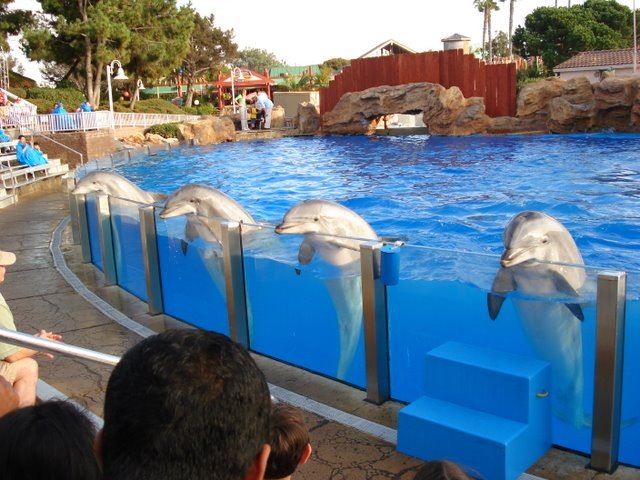
The next time you witness the footage of Dolphin slaughter by the Japanese at Taiji; or you are told by a friend of someone’s experiences and ‘enjoyment’ watching dolphins perform in some little crappy tank at a ‘Sea life’ facility; here are a few chunks of in info that you can throw back at them in defence for these wonderful marine creatures.
Dolphins are ‘extra-terrestrials with fins’. Their brains are more complex than those of humans; their ‘language’ is more sophisticated and they belong to a society which practices the freedom of love and peace. Unlike humans; they don’t seek pleasure out of killing others; and yet despite imprisoning them for the pleasures of performing for some of our more uneducated kind, they have been recorded throughout Greek and Roman myth as saviours of humankind in distress. Do they still do it today ? – or is this past a reflection on the fact that at one such time, man allowed them freedom to range the oceans; did not hunt them, and did not expect them to provide so called ‘entertainment’ for us. Maybe they paid us back better in past times.
They have big, smiling faces. In some locations around the world, they work with man to herd shoals of fish into locations where local fishermen can easily catch them – in return for few treats thrown back to them of course !
They navigate in the wild by an echo location system; so precise that if one was to dribble just one teaspoon of water into a pool, they will be able to locate the source with pinpoint accuracy. They have the ability to discriminate between objects made of plastic, rubber or wax; and they can even tell the difference between identical -looking copper and brass discs !
Dolphins are known by us humans to ‘talk’ a great deal; but actually, they have no vocal chords. They communicate with each other by way of clicks, squeals, whistles, grunts and barks; which all originate from sacs located in their nasal passages at a rate of up to 1,200 per second. Each animal has a unique signal whistle which it uses constantly to inform others in the pod of who they are and where they are located at any specific time. They are also known to do exaggerated impressions of other dolphins both for fun or to get attention form the one they are imitating.
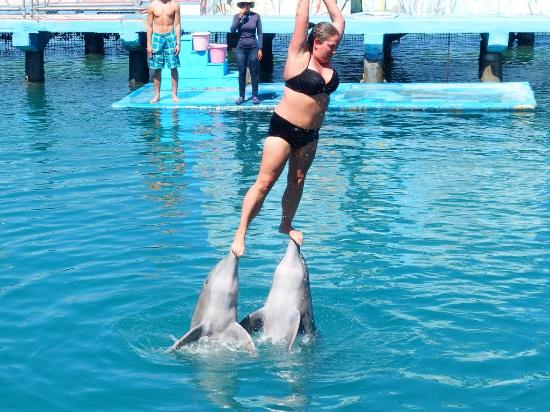
Their play is highly complex and they are very fats learners; as we see in the performance tanks at our pathetic sea life facilities, and sadly, they have the ability to follow complicated human demands. They can recognise themselves in a mirror; and are even known to use simple tools, such as a sponge, which they attach to their snouts when out hunting amongst sharp coral – a kind of dolphins ‘safety mask’ you could call it.
Dolphin therapy, such as swimming with same, may have some reported therapeutic benefits according to some reports; but we should also remember that these are beings of the oceans; and as such, more health benefits can also be gained by watching them in their natural environment via a pair of binoculars held on the deck of a ‘wildlife tourism’ boat.
As creatures of the wild, given the natural options, what right do we as less intelligent beings have to drive them in for mass killing and selection at places such as Taiji. Man the killer; one of his less favourable specialities; but undertaken for too much in all aspects of animal abuse.
Taiji; it will die and go down in the records as another example of mans immense suffering of intelligent animal species. I personally have ‘man watched’ in the past when holding welfare stalls in towns across the land. Oh to be with the dolphin given what can be seen regularly on the streets of modern towns and cities.
They are special and deserve our protection; not our abuses in the cove or performing for those who have a ‘money god’.
Fight for them – be their voice; but above all, fight – they deserve it.
The Cerrado; one of the most wildlife-rich, yet largely undiscovered places left on Earth. A vast forested savanna about the size of England, France, Germany, Italy and Spain combined.
Located beside its more famous neighbour, the Amazon, it’s home to 5% of all world species but is victim to mass deforestation and clearance of natural habitat, to make way for enormous soy plantations. An area the size of Greater London is disappearing every two months and unless we act now, it could be gone in less than a decade.
Time is running out, but together we can fight to stop the devastation
In what could have been a tragedy, Thap Lan National Park rangers in Thailand came across six baby elephants stranded in a pit of mud.
Unable to scramble up the slippery sides, the elephants struggled and fell while trying to escape. The babies’ families and herd members circled the area, unwilling to leave the little ones.
Rescuers spent five hours digging a path large and stable enough for the babies to climb. Finally, the elephants were able to emerge from the pond and disappear into the jungle to reunite with their herd. As the last of the rescued babes retreated into the forest, they stopped and turned around to gaze on the rescuers. Whether she was simply acknowledging their presence or offering a silent thank you, we can only guess.
Elephants live close, social lives. Losing a member of the herd is not taken lightly and elephants are known to grieve. We can only imagine how devastating losing multiple calves would be. Though it is unknown how many hours the elephants spent in the pit before the rangers arrived, the concerned herd never abandoned the babies.
Wild elephants were once abundant in Thailand and surrounding areas of Southeast Asia. But populations have plummeted due to their use in the logging and tourism industries. Once numbering in the hundreds of thousands, it is estimated that only a few thousand wild elephants remain. Around 4,000 more are held captive.
Habitat loss also plays a huge role in the stress these animals face. Once mostly jungle, Thailand now supports cities, large swaths of agricultural land, and the roads and rail lines that connect these places. Wild elephants no longer have access to the land and food sources they once roamed. Interactions and altercations with humans are more and more common.
Progress has been made in the efforts to curtail the illegal trade in ivory, affecting elephants in Africa as well as Asia. The suffering of animals forced into servitude in Thailand is not as well known. You can help these animals by spreading the word not to take elephant rides. And you can share stories like this one to increase awareness of just how smart and sensitive these animals are.
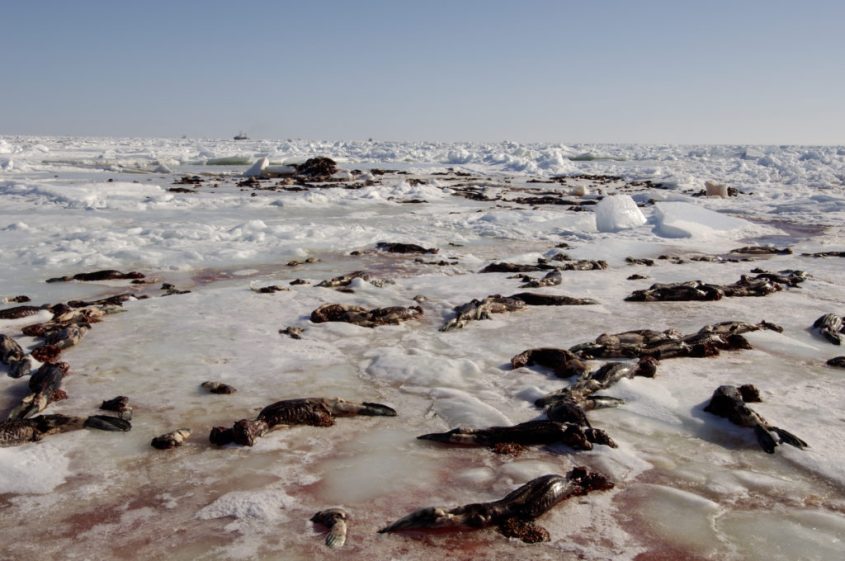
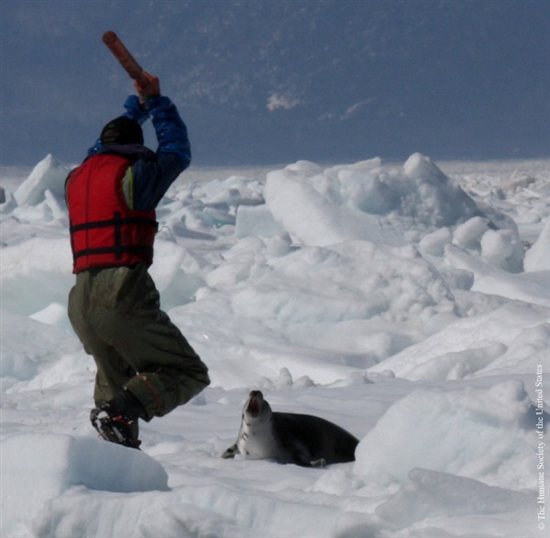
Sealers will be killing tens of thousands of helpless young seals before they’re through, shooting them or slamming spiked clubs into their soft skulls, then tearing their skin off—often in full view of family members helpless to stop the killing. It’s up to kind people like you and me to make sure that this year’s massacre is the last.
The commercial slaughter of seals in Canada is on its last leg, yet despite the growing outcry against it both in Canada and around the world, the Canadian government is allowing it to take place again, leaving countless bloodied bodies in its wake. Many seal pups are so young they haven’t even learned how to swim before they’re violently killed.
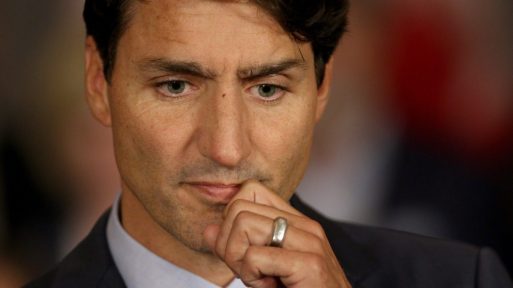
Thanks to the activism of PETA members, there are few countries left that are willing to buy seals’ skins, their flesh, or seal oil—and it’s clear that this grisly trade is on life support. Without the millions of dollars in government subsidies it receives, it would have collapsed long ago—and with your help, we’re urging Canadian Prime Minister Justin Trudeau (below) to stop propping up the sealing industry with taxpayers’ dollars.
If you wish to make a donation to help this campaign and to try and make Canada stop the cull, then go to the following: