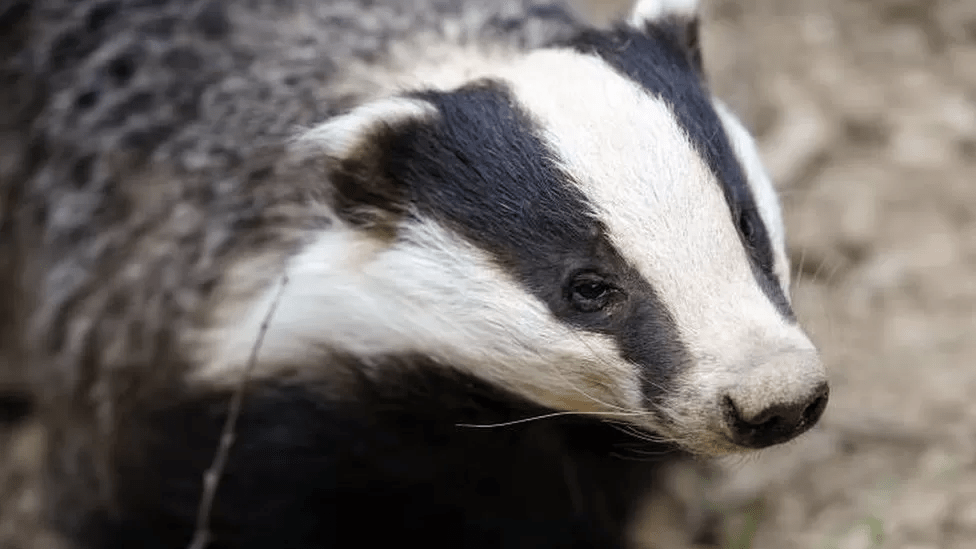
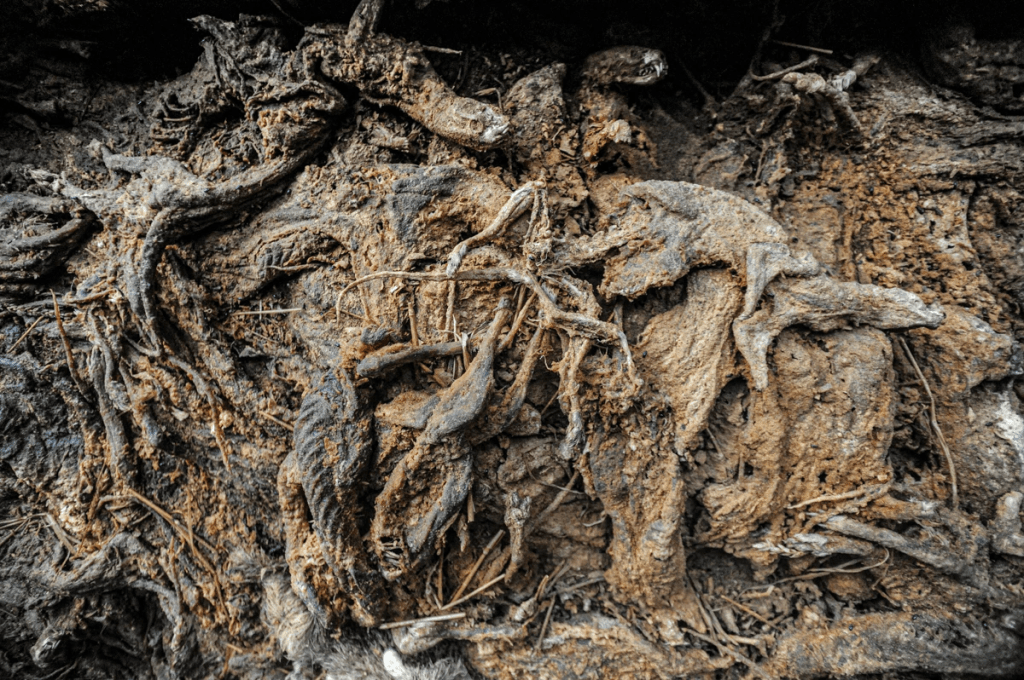
Over 176,000 badgers have been killed since the current badger cull began in England in 2013. Badgers are killed in their thousands from Cornwall to Cumbria under misguided and fundamentally flawed attempts to control bovine Tuberculosis (bTB), an infectious respiratory disease which affects cattle.
Badgers are not the problem – Politicians Are !
Bovine TB is always present in the environment and can affect or be carried harmlessly by many species – livestock and wildlife alike. Yet the government has focused on badgers, even though 94% of cattle infections are from cow to cow. Many in the farming community wrongly believe that badgers are a significant vector in the spread of the disease. For many years, independent scientists, vets, researchers, as well as Badger Trust, have rightly challenged this claim.
Continue reading and watch several videos at the Badger Trust:
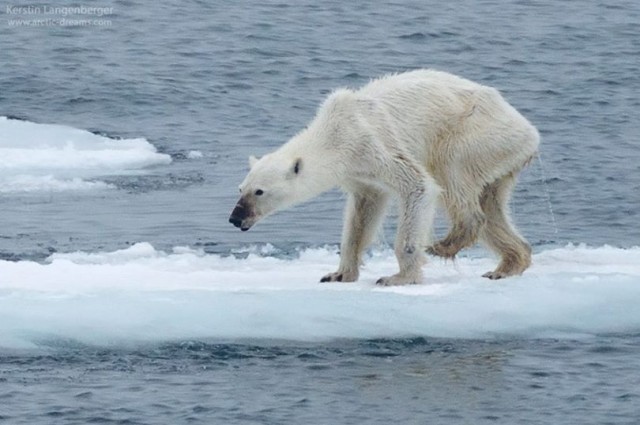
We’ve all seen the pictures of starving polar bears, struggling to survive climate change. But as global temperatures continue to rise, experts say bears today are spending up to a month longer than their parents waiting for the ice to return after summer.
Every year, starting in late June when the bay ice disappears, polar bears in the northern Canadian province of Manitoba move onto shore to begin a period of forced fasting.
Without the sea ice they are unable to hunt for seals, their main source of food.
“While these bears sit on shore, they’re losing a kilo or two every day. That can go on for about 180 days before they really start to have a problem,” says Geoff York, senior director of conservation at Polar Bears International (PBI).
WAV Archive
Polar bears could starve to extinction due to global warming
York spends several weeks each year in Churchill, a small town on the edge of the Arctic in Manitoba. There he follows the fortunes of the endangered polar bears.
Since the 1980s, the ice pack in Hudson bay has decreased by nearly 50 per cent in summer, according to the US National Snow and Ice Data Centre.
If a bear is lucky enough to find a beluga whale carcass or if a seal dares to swim too close to shore, the large carnivore may be able to eat during the summer. But for most of those months they are fasting, or eating very small snacks of any fish they’re able to catch.
WAV Archive
A report published two years ago in the journal Nature Climate Change suggested that this trend could lead to the near-extinction of these majestic animals: 1,200 of them were counted on the western shores of Hudson Bay in the 1980s. Today the best estimate is 800.
The polar bear, technically known as the Ursus maritimus, is a meticulous carnivore that feeds principally on the white fat that envelops and insulates a seal’s body.
But these days this superpredator of the Arctic sometimes has to feed on seaweed, as a mother and her baby were seen doing not far from the port of Churchill, the self-declared ‘Polar Bear Capital’.
If female bears go more than 117 days without adequate food, they struggle to nurse their young, says Steve Amstrup, PBI’s lead scientist.
As a result, births have declined, and it has become much rarer for a female to give birth to three cubs, once a common occurrence.
As a polar bear’s physical condition declines, York says, their tolerance for risk rises, and “that might bring them into interaction with people, which can lead to conflict instead of co-existence.”
Hunger draws polar bears into dangerous proximity of towns
In desperation, bears began frequenting the local dump in Churchill, Manitoba – a source of easy, but potentially harmful, food for them. They could be seen ripping open rubbish bags, eating plastic or getting their snouts trapped in food tins amid piles of burning waste.
Since then, the town has taken precautions: The dump is now guarded by cameras, fences and patrols.
A conservation officer, Ian Van Nest, patrols the town’s limits to keep its 800 inhabitants safe. Every morning he checks the areas around schools to ensure the children will be safe upon arrival.
All across the town, people leave cars and houses unlocked in case someone needs to find urgent shelter during an unpleasant encounter with this large land-based carnivore.
Posted on walls around town are the emergency phone numbers to reach Van Nest or his colleagues.
When they get an urgent call, they hop in their pickup truck armed with a rifle and a spray can of repellent, wearing protective flak jackets. He emphasises that they do not shoot at the bears, but fire warning shots to scare them off.
Sometimes the animals have to be sedated, then winched up by a helicopter to be transported to the north, or kept in a cage until winter, when they can again feed on the bay.
Churchill’s only ‘prison’ is inhabited entirely by bears, a hangar whose 28 cells can fill up in the autumn as the creatures maraud in mass around town while waiting for the ice to re-form in November.
Animal baiting: 150 people involved in Northern Ireland, says USPCA
The USPCA has told BBC Spotlight its intelligence indicates there are 150 people actively involved in animal baiting in Northern Ireland.
Baiting involves deliberately setting up fights between hunting dogs and wild animals like foxes and badgers.
Baiting badgers is illegal because badgers are a protected species while foxes have no legal protection.
The USPCA said the law should be better enforced to protect badgers – USPCA
The charity believes there could be up to 14,000 cases of badger baiting in Northern Ireland each year.
For Exposed: Hunting With Dogs, BBC Spotlight joined USPCA (Ulster Society for the Prevention of Cruelty to Animals) investigators in September as they monitored alleged animal baiters.
The programme also revealed a shadowy online world where people involved in baiting share photos and videos of both brutally-injured dogs and their savaged prey.
USPCA chief executive Brendan Mullan said he believed 99% of the people involved in baiting in Northern Ireland were targeting both foxes and badgers.
“While fox hunting is legal the chances of a badger baiting conviction are undermined, because there is the defence, the cloak of ‘well, I was just out hunting foxes’, whereas in fact it was badgers that they were hunting,” he added.
But the bill was defeated and with Stormont absent, there is no prospect of a change in the law at the moment.
‘Special task force’
The USPCA said it would like to see greater enforcement of the existing law protecting, specifically, badgers.
Mr Mullan said: “We would like to see, even on a time-limited basis, a special task force set up by the police to proactively investigate this network of over 150 badger baiters in Northern Ireland and to hold them to account in the criminal court.”
The Police Service of Northern Ireland (PSNI) said it took reports of animal-related crime seriously and it was an important part of policing.
It said it had a wildlife and rural crime team ensuring all police officers and staff could receive the expert support and guidance necessary to respond to reports of wildlife crime.
Today, the European Parliament took a stand on the future of aquaculture in Europe by adopting MEP Clara Aguilera’s report on “Striving for a sustainable and competitive EU aquaculture: the way forward”. The Parliament has for the first time given animal welfare a prominent place in its position on European aquaculture, calling for important steps to improve the situation for fish, but missed the opportunity to take action against some of the worst welfare conditions and unsustainable systems.
Eurogroup for Animals supports the report that was voted on in the Plenary. We highly welcome the MEPs’ call for an EU Animal Welfare Reference Centre for fish, which is critical for the implementation of legislation on fish welfare to be proposed next year. Eurogroup further acknowledges other important progress as the report recognises the importance of applying evidence-based standards and interventions to improve fish welfare during keeping, transport and slaughter, and the fact that good animal welfare is the best preventive step to ensure health and welfare and reduce use of medication.
The Parliament also positively called for animal welfare to be improved in aquaculture and be included in the Common Fisheries Policy, as well as for more efforts on the sustainability of feed, including using a low trophic index to identify sustainable alternatives. However, despite these positive aspects, the report still contains some serious shortcomings. Indeed, the statement that “various recommendations on animal welfare do not apply to the fisheries and aquaculture sectors because of their nature”, being included without referring to any particular recommendations is in contradiction with a number of other European Parliament positions and the work done by the European Food Safety Authority and the European Commission, since consensus was reached that fish are sentient beings.
Just like in mega-stalls on land, animals in fish farms are cooped up in too small a space. (…) animals in fish farms are kept in such a way that they cannot exhibit their natural behaviour and their lives are one big suffering. As in land-based mega-stalls, cramming large numbers of animals together in fish farms leads to environmental pollution, disease and excessive antibiotic use.
MEP Anja Hazekamp
MEP Caroline Roose confirmed that “Aquaculture is not sustainable (…) when animals are crammed in by the hundreds, without any density limit, and are forced to behave in ways that are contrary to their nature”.
This vote was an opportunity to call for the transition to low-trophic species to be a priority, including the prohibition of introducing new carnivorous species, such as octopus, into industrial farming systems.
Octopus are unanimously described as sentient, sensitive and intelligent animals by science and current EU law only protects their welfare in laboratory settings. The opening of the “first-ever octopus farm” constitutes a “disaster for animal welfare and an environmental disaster, scientists warn”, said Anja Hazekamp.
With this report the European Parliament has demonstrated much needed progress on fish welfare in aquaculture – which is to be applauded – however the Parliament clearly fell short on addressing some fundamental problems with welfare and sustainability in aquaculture.
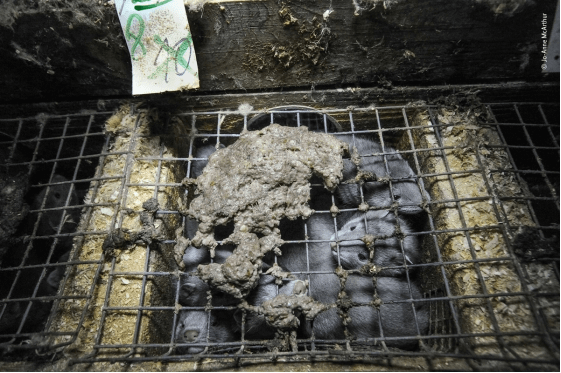
Life and Death in Fur Farming. Ten, now eight, mink kits in a nest box on a Swedish fur farm. These American mink kits fight for space and to reach their food. A sign indicates two have died. Though the legal cage size is now larger and a two-storey box a requirement for adult mink, with no more than two adults per cage, injuries still occur. Sweden, 2010. Jo-Anne McArthur / Djurrattsalliansen / We Animals Media
I think it’s striking that these images factually demonstrating abject animal suffering in the “fur industry” look exactly like the reality of abject suffering of animals in the “animal agriculture food industry” while, in the USA, the fur industry council degenerates like to boast that their victims on fur farms are executed onsite …
(via anal electrocution, for example, where humans physically restrain terrified creatures and insert rods into their anuses to electrocute them – while, interestingly, when humans get colonoscopies, for example, requiring anal insertion of instruments to capture colon images by people who must be educated, trained and certified to do so, which, by the way, is to prevent death versus causing it, humans actually get sedation)
… and therefore don’t require the horrors inherent in slaughter transportation. Imagine bragging that your death industry is marginally “better” than another death industry while ignoring the entire violent D-E-A-T-H requirement of innocent victims in both. If horrific transport is bad, actual violent killing is WORSE.
I wouldn’t expect anything other than deception and manipulation and abuse from the FAM folks in either, though. SL
This week we’ve got big news on our progress with getting animal stories in the media. Jo-Anne McArthur has been awarded Highly Commended in Wildlife Photographer of the Year for her image Life and Death in Fur Farming.
The image is one of 14 Highly Commended images announced on September 1 as a preview of this year’s competition, which attracted entries from photographers of all ages and experience levels from 93 countries. Jo-Anne is awarded in the category of Photojournalism.
Jo-Anne shares some words about the story behind this image and her hopes for its impact:
The first time I visited fur farms was in 2009. It was a shock to see the decrepit, putrid, mass incarceration of so many animals in so many sheds and tiny cages, offering me yet another of the many moments of disbelief that I experience in my career. I have since photographed fur farming extensively, especially in my home country of Canada, and it is with urgency that I wish for this unnecessary industry to end. I am so happy that we are seeing bans on fur farming in many countries, including those who have traditionally supported a large fur industry.
To say that I’m thrilled that WPY has awarded this mink farming image in their competition is an understatement, because the reason I do this investigative work is so that people can look, consider, discuss, critique, care, change. WPY offers this image of ten, now eight, mink kits and their mother in a cramped nesting box for the world to view. Many people do not know that animals are industrially farmed for their fur. They are unaware of the conditions. They are unaware that these animals are killed by gassing and anal electrocution, or that they are kept in tiny cages by the millions, globally, each year, so that we can wear fur trim, have fur pompoms on our hats, or a poof of fur on a child’s trinket.
I feel passionately about taking photos of fur farming so that the images can help campaigners and policy makers end this industry, and continue to raise awareness amongst the unknowing public. Images are a strong and crucial part of the puzzle when it comes to creating a kinder world for animals.
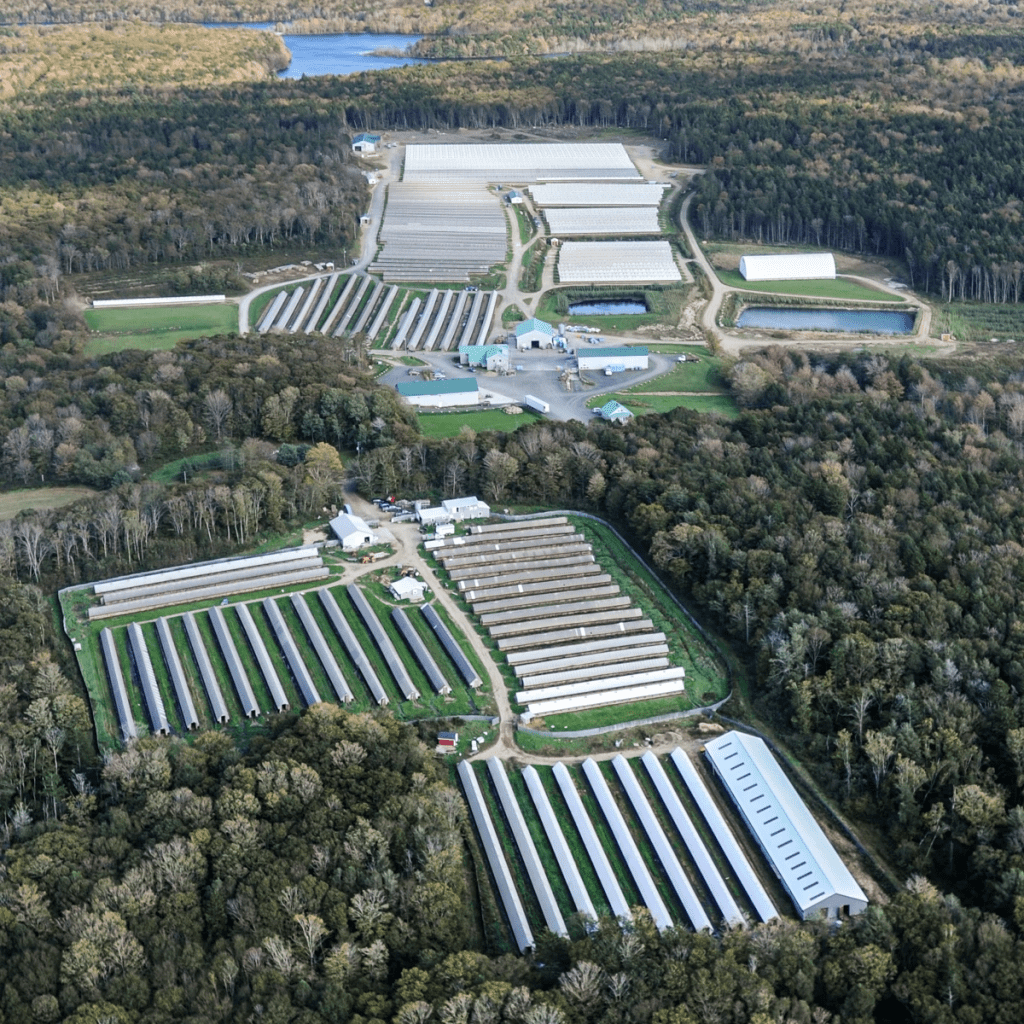
Mink farming is an industry where, traditionally, the welfare of these semi‑aquatic, naturally solitary mammals has not been a priority unless it affects the fur. But in 2020, mink farming came under the spotlight when it became clear that not only could mink catch the Covid-19 virus, but that the virus could mutate in mink and be transmitted back to humans. In response, Denmark – then the largest mink-fur producer after China – shut down its industry, killing all 17 million animals, and in the Netherlands and Spain, hundreds of thousands were killed. But in Sweden, after a temporary ban on breeding, the government allowed its 20 or so farms to reopen in 2022.
Djurrattsalliansen, the non-profit organization Jo-Anne was working with when she took this photograph, has played a significant role in fur farm investigations in Sweden, which have helped to bring the number of farms down significantly.
Take PETA’s Cruelty-Free Shopping Guide along with you next time you head to the store! The handy guide will help you find humane products at a glance. Order a FREE copyHERE
Searching for Cruelty-Free Cosmetics, Personal-Care Products, Vegan Products, or more?
Want to do more than go vegan? Help others to do so! Click below for nominal, or no, fees to vegan literature that you can use to convince others that veganism is the only compassionate route to being an animal friend:
“The greatness of a nation and its moral progress can be judged by the way its animals are treated.” – Mahatma Gandhi
“Animals don’t hate, and we’re supposed to be better than them.” – Elvis Presley
“Let us remember that animals are not mere resources for human consumption. They are splendid beings in their own right, who have evolved alongside us as co-inheritors of all the beauty and abundance of life on this planet.” – Marc Bekoff
“Animals are more than ever a test of our character, of mankind’s capacity for empathy and for decent, honorable conduct and faithful stewardship. We are called to treat them with kindness, not because they have rights or power or some claim to equality, but in a sense because they don’t; because they all stand unequal and powerless before us.” – Matthew Scully
“Lots of people talk to animals…Not very many listen though…that’s the problem.” – A.A. Milne
“If having a soul means being able to feel love and loyalty and gratitude, then animals are better off than a lot of humans.” – James Herriot
“Because we have viewed other animals through the myopic lens of our self-importance, we have misperceived who and what they are. Because we have repeated our ignorance, one to the other, we have mistaken it for knowledge.” – Tom Regan
“True human goodness, in all its purity and freedom, can come to the fore only when its recipient has no power. Mankind’s true moral test, its fundamental test (which is deeply buried from view), consists of its attitude towards those who are at its mercy: animals.” – Milan Kundera
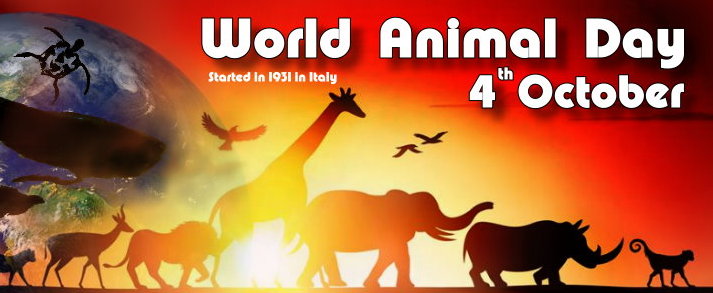
Today, October 4th, is World Animals Day.
World Animal Day is an international day of action for animal rights and welfare celebrated annually on October 4, the feast day of Francis of Assisi, the patron saint of animals.
The mission of World Animal Day is “to raise the status of animals in order to improve welfare standards around the globe.
WAD is an annual event.
The MISSION OF WORLD ANIMAL DAY To raise the status of animals in order to improve welfare standards around the globe. Building the celebration of World Animal Day unites the animal welfare movement, mobilising it into a global force to make the world a better place for all animals. It’s celebrated in different ways in every country, irrespective of nationality, religion, faith or political ideology. Through increased awareness and education we can create a world where animals are always recognised as sentient beings and full regard is always paid to their welfare.
Alternative materials that can keep us cosy abound these days. In general, faux fur can offer at least as good thermal insulation as the real stuff. And no chills of shame. The fur industry is of course as smart as the animals it exploits and it has hit on promoting real fur as a natural and sustainable product as opposed to “plastic fur”.
Fake news about faux fur
Hang on. If you take into account the whole life cycle of a fur product, from the breeding of the animals to the finishing of garments, fur production can be seen to be an intensely toxic and resource-consuming business. Again contrary to fur industry claims, the main reason real fur coats are thought to last longer is they haven’t been seen outside a wardrobe that often in recent decades. And even if they did stand up that well to daily use, this would be nowhere near long enough to compensate for the environmental impact.
As well as constantly reminding consumers that faux fur is derived from fossil fuels, the industry has also focused on biodegradation. In fact, according to a study commissioned by the International Fur Federation and Fur Europe, the biodegradation of fur samples indicated that fur products were only partially biodegradable under test conditions.
Moreover, evidence shows that fur farming has a devastating effect on biodiversity, being to blame for threats to some European native species. American mink and raccoon dogs – the main species reared for fur in Europe – are considered invasive alien species.
Filthy business
Finally, major fashion houses are wising up to the fact that, far from the glamorous image of a model wearing nothing but a dash of exotic perfume under her furs, the reality of fur farming involves a far less attractive odour for local residents – to say nothing of the flies – and fur coats are becoming as likely to disgust their customers as turn them on.
As we reported last month, many collections and entire fashion weeks are going fur-free.
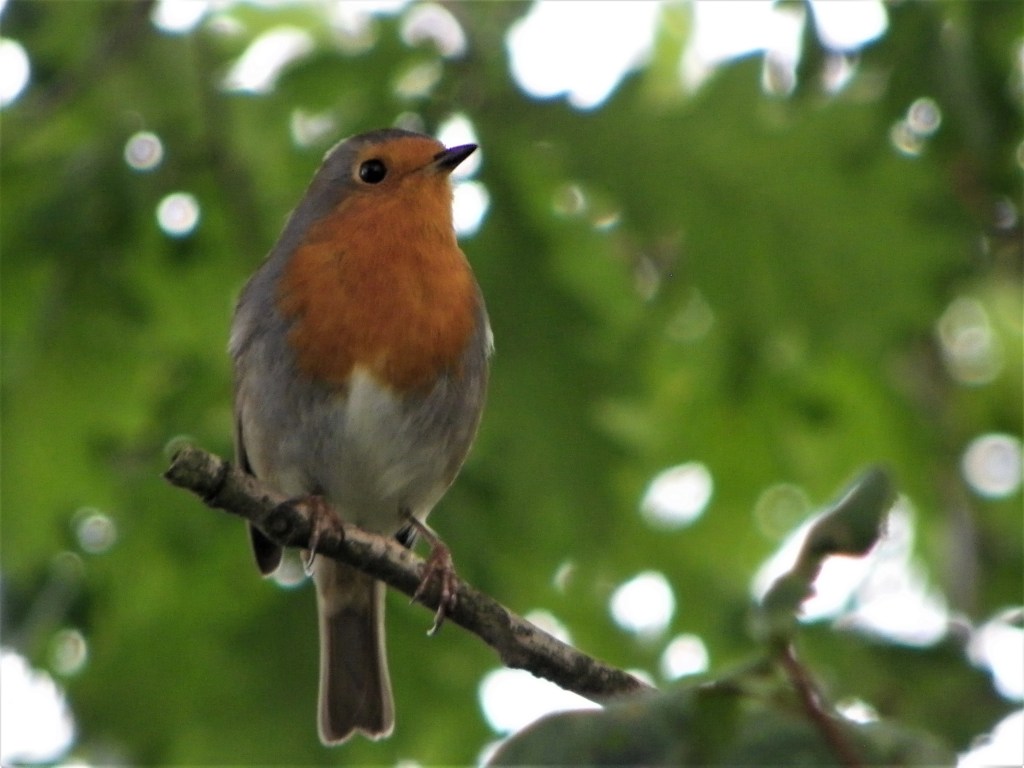
I call him every morning when I go out to feed all the other birds. He arrives immediately, knowing that I have a little special starter of the day for him – ground up biscuits; a mass of different little birds seeds, Museli, bread and some little crushed other style biscuits.
We are mates and he usually comes to within about 20cm from me. He knows I will never hurt him; quite the opposite, and he can rely on me to get his belly filled up for a busy day. When I went out to put down some badger food tonight, he was having a final wash and scrub up in one of the trays we have filled with water.
No doubt I will see him again tomorrow and I hope to get more photos in the coming days, which I will publish.
This is NOT my video; but you can see little Robin here.
Here in the UK we are approaching Winter; and his bright red breast is a sure sign of this.
Here is the photo I took today – 3/10/22.
My breakfast club buddy taken in my garden this morning – Mark.
Video – everything you need to know about the Robin.
We get some great wildlife in the garden – but we do encourage them always with plenty of food.
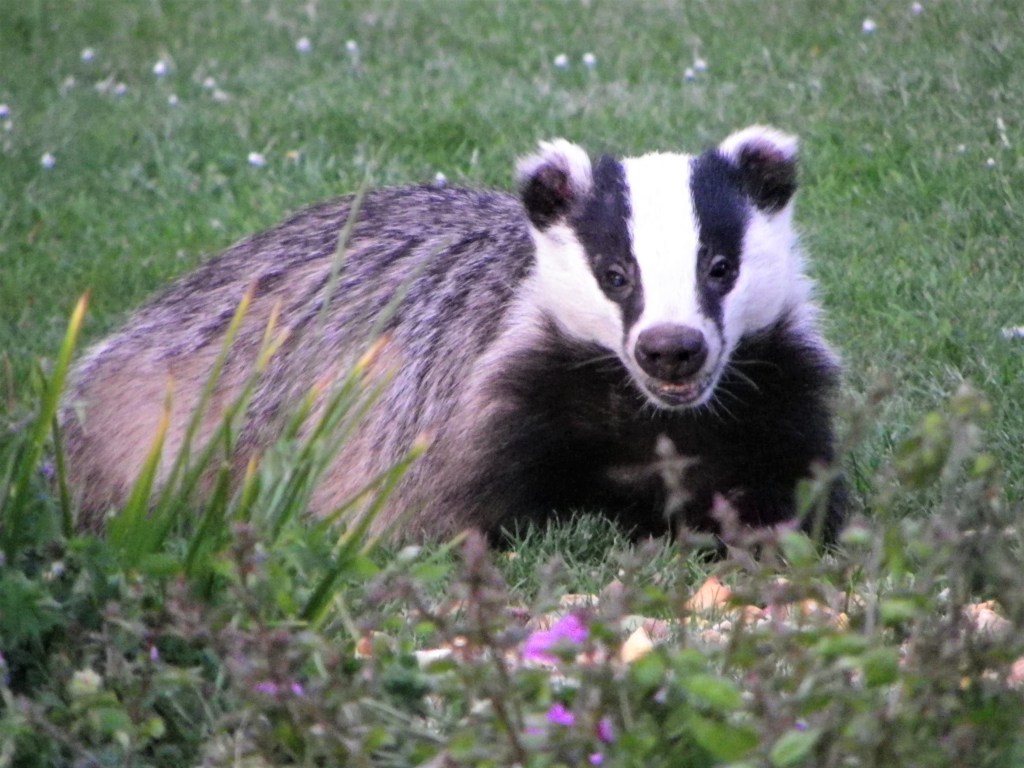
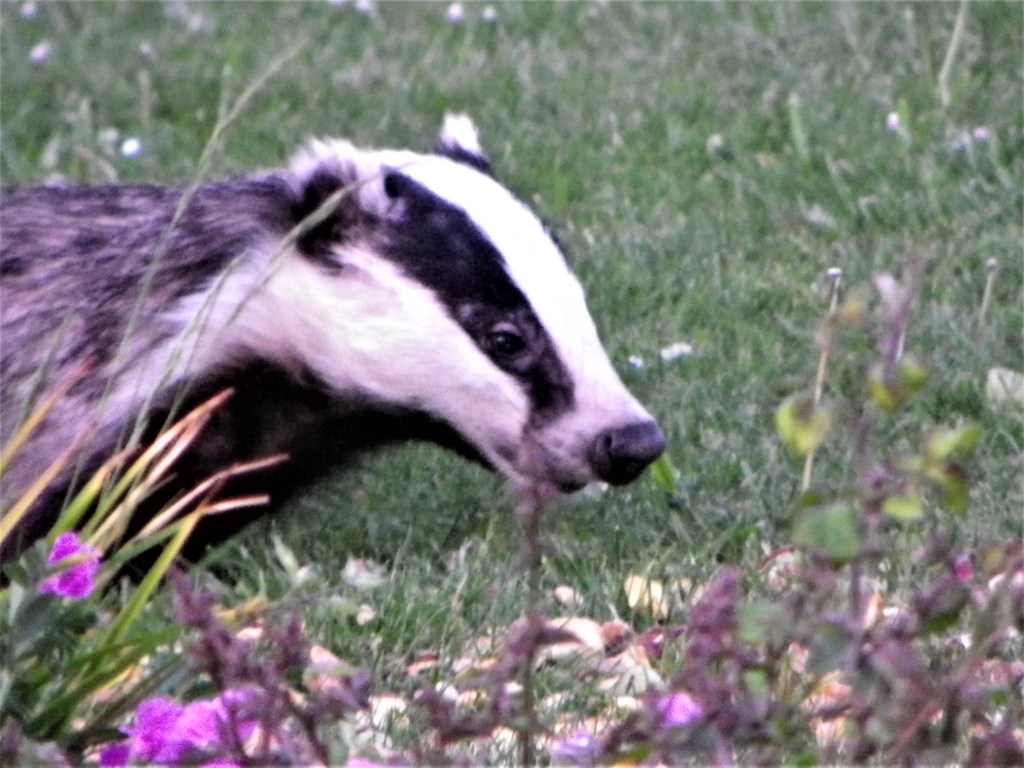
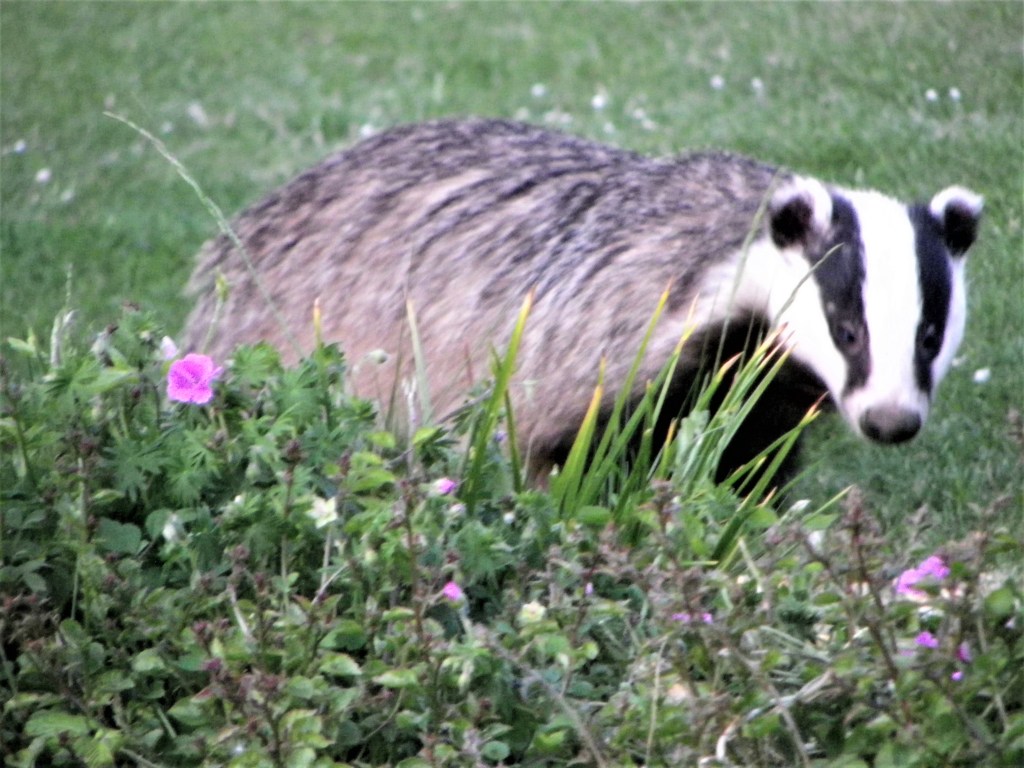
Here is a badger which I photographed in the Summer, smiling as he knew I was takig his photo !
Sunday smile – photo Mark.
photo – Mark
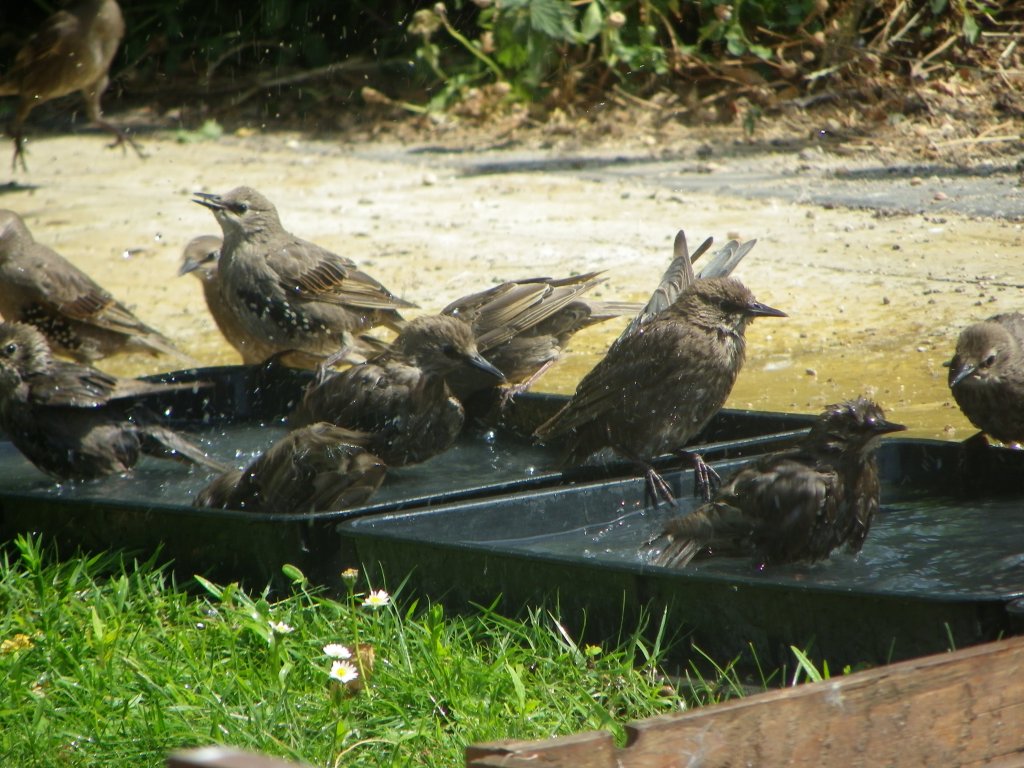
Starlings enjoy a morning bath in one of our water trays – Mark
Foxes (Vulpines) are one of my best subjects – I love photographing them.
WAV Comment – you have to remember here that here we are talking about ANTI Foie Gras ban and anti fur ban Rees Mogg; who now has one of his chums, and a major Conservative Party donor; appointed as a senior minister by Liz Truss at the Department for International Trade (DIT).
Despite all our years of work and evidence gathering by dozens of welfare groups; I predict that I will get a response from the DIT telling that, in accordance with the Truss wishes, animal welfare will not be considered in future trade deals; or if it is (?), I will be fed yukspeak on ‘they do care about it’, but not enough to actually include the issue in future deals.
As promised recently, as soon as I get a reply from the DIT, I will be publishing and adding comment.
Who knows, the reply may be from the new Truss appointed Dominic Johnson. Lets hope so – but as he probably does not give a toss about animal welfare, just like his mate Rees Mogg, I am not holding my breath.
With all this, no wonder the Tories have reached rock bottom in opinion polls and fingers crossed, Truss will soon be ousted and we the people of the UK will get what they need, a General Election.
The City business partner of Jacob Rees-Mogg has been handed a peerage and job as a senior minister by Liz Truss’s government in a move likely to trigger accusations of cronyism.
Dominic Johnson, a financier who co-founded Somerset Capital Management with Rees-Mogg, was appointed as a minister in the Cabinet Office and the Department for International Trade.
The announcement was slipped out on the government’s website, which said he had been appointed as of Sunday.
“Dominic Johnson CBE was appointed a minister of state jointly in the Department for International Trade and the Cabinet Office on 2 October 2022,” the statement said.
The appointment is likely to be controversial at a time when Truss, her chancellor, Kwasi Kwarteng, and Rees-Mogg face questions about being too close to the City, after the mini-budget handed substantial tax cuts to financiers and the wealthy.
Johnson is a substantial party donor who has given more than £250,000 and was vice-chairman of the Conservative party between 2016 and 2019. He replaces Gerry Grimstone, the former chairman of Barclays and Standard Life, in his role as trade minister, encouraging inward investment.
Somerset Capital Management is reported to be up for sale, with two of its founding partners now in senior government roles. Johnson recently said he was stepping down as chief executive of Somerset Capital Management.
Rees-Mogg still holds a substantial stake in the investment firm, despite the potential conflict of interest with his role as business secretary.
Above – no, cannot be true, wow !!
Regards Mark
Further reading on this:
Jacob Rees-Mogg is caught up in a cronyism row after the partner in his investment firm was suddenly handed a peerage and made a government minister.
MP’s look of disbelief as Jacob Rees-Mogg claims ‘Putin funds anti-fracking campaigns’
Jacob Rees-Mogg has been defending the Government’s decision to allow fracking for shale gas to go ahead in England.
Shocked Labour MP Cat Smith appeared stunned as Jacob Rees-Mogg told her some anti-fracking campaigns may have been funded by Vladimir Putin. The exchange came as Mr Rees-Mogg, who was recently appointed as Liz Truss’ Business Secretary, defended the decision to allow fracking to go ahead on the grounds of energy security.
WAV Comment – it is political chaos here; Liz Truss the new (but probably not for long) Prime Minster has taken many actions to oppose both the Conservative manifesto – which should outline the Party aims; with regards animal welfare and environmental issues. We have reported on a lot of this over the past few weeks, and you can see our posts by scrolling back down through the site.
I say political chaos as the Conservatives are currently in government. Labour are n opposition. Due to the actions of Truss since she took the helm of the Conservatives just a few weeks ago; the Conservatives are being led (by Labour) by a massive 33%+ in opinion polls. Everything currently looks as if Labour will form the government at the next election.
We (WAV) are not associated with any UK political party; but we are a voice for improvements in animal welfare and the environment. These are just 2 issues where Truss has kicked us, long time and evidence providing campaigners, with a good boot in the teeth. So now she is starting to witness pay back time.
Here are a couple of articles which outline the current differences between the parties:
Liz Truss (Conservative) ‘to scrap proposed bans on fur and foie gras imports’
Liz Truss is set to scrap proposed bans on importing fur and foie gras to the UK, according to a Tory insider, sparking outrage from animal lovers.
Foie Gras production Banned in the UK, but still imported !!
The new prime minister will also reportedly ditch a ban on live animal exports in her first weeks in office.
The decisions will be a massive blow to campaigners who have spent decades lobbying for the reforms to spare animals from suffering.
Production of both fur and foie gras is considered so cruel that they are already banned in the UK.
All four measures were promised in the party’s animal-welfare action plan, announced last year to wide acclaim.
And curbs on live exports were promised in the Conservatives’ election manifesto, together with an end to hunting trophy imports.
But a senior Conservative told Politico: “Banning things seems very socialist. Informing people is the way to go.”
In February this year, right-wing cabinet members including Jacob Rees-Mogg intervened to block the Animals Abroad Bill, which contained the curbs on fur, foie gras, hunting trophies, and adverts for foreign theme parks that cause animal suffering.
The Kept Animals Bill, which banned live exports and keeping primates as pets and tackled puppy smuggling, could also be dropped. It had been due to be debated on Monday, which became the day of the Queen’s funeral, and no new date has been given.
A ban on cruel exports of live animals for slaughter and fattening had been hailed as a benefit of Brexit.
It would be a huge let-down, not only for those who work for these campaigns daily but also for millions of animals
Lorraine Platt
The government says it is still looking at the fur and foie gras bans, but the source said the measures would not go ahead under Ms Truss, who appointed Mr Rees-Mogg as business secretary and promoted Mark Spencer, understood to have been another of those blocking the Animals Abroad Bill.
However, MP Scott Mann, who has spoken out in favour of a ban on live exports, has been promoted to environment minister.
Last week, Ms Truss sacked Zac Goldsmith as animal-welfare minister after he introduced reforms including an ivory sales ban and higher jail terms for cruelty. He also wanted to crack down on religious slaughter without stunning.
“A lot of his causes were very worthy, but you can be worthy when you’re the son of a billionaire,” the MP said in a bizarre comment. Lord Goldsmith’s father was financier James Goldsmith.
Lorraine Platt, co-founder of the Conservative Animal Welfare Foundation, told The Independent she was bitterly disappointed by news the bans would be dropped.
“It would be a huge let-down, not only for those who work for these campaigns daily but also for the millions of animals involved,” she said.
“Banning live exports and hunting trophies were manifesto commitments, and some people vote on manifesto commitments at elections.”
She said the foundation had often heard reports the measures could be scrapped or watered down.
Sir Roger Gale, patron of the foundation, condemned the “let them choose” argument as “a little spurious” and perverse when the UK has bans on producing fur and foie gras.
He told Times Radio he was concerned about the direction of travel of animal welfare under the new government, and millions of votes including in red-wall seats would be lost to the Tories if they reneged on animal welfare.
Foie gras production involves force-feeding ducks and geese with pipes pushed into their throats to fatten their livers.
Fur farms have been exposed as leaving animals suffering infected, bloody wounds, spreading disease and literally driving animals mad from confinement.
Claire Bass, executive director of Humane Society International/UK, said it was surprising and perplexing that senior Conservatives wanted to row back on the popular measures in last year’s animal welfare action plan.
“Animals matter to voters, and people will not be content with oft-recycled rhetoric about being a ‘world leader in animal welfare’ if it’s not accompanied by meaningful action,” she said.
“Banning fur imports is not un-Conservative, it’s simply the right thing to do in line with the British public’s moral compass.”
Under Boris Johnson, the government said it wanted to consider compulsory animal-welfare labelling on food and promised to consult on proposals next year.
The Department for Environment, Food and Rural Affairs (Defra) ran a 12-week consultation last year on new labelling standards for produce now that EU regulations no longer apply.
Ministers had at one stage said they would press ahead with the hunting trophy imports ban, but that pledge appears also to have been dropped.
Instead, they are backing a private members’ bill by backbencher Henry Smith that bans hunting trophy imports – body parts of wild animals killed by paying hunters. Mr Smith has called such hunting barbaric.
On foie gras, Defra said it was considering any further steps that could be taken, “building on the opportunities presented” by Brexit, and was still gathering information.
“The government has made clear that the production of force-fed foie gras raises serious welfare concerns,” a spokesman added.
On fur, the department said: “We are continuing to build our evidence base on the fur sector, which will be used to inform any future action on the fur trade.”
It also said the Kept Animals Bill would continue its passage through Parliament.
The Independent has also asked the office of the new Defra secretary, Ranil Jayawardena, to confirm whether the proposals will go ahead.
… and then on the other hand we have this from Labour; currently 33%+ leading in the opinion polls.
Labour will ban foie gras and hunting trophies imports if it takes power, environment boss Jim McMahon pledges
Labour would ban imports of foie gras and hunting trophies “very early” after winning power, Shadow Environment Secretary Jim McMahon has said.
Animal welfare campaigners were outraged earlier this month when Liz Truss junked a Conservative commitment to outlaw the controversial pâté.
Nature and farming groups are also dismayed that the new administration has paused post-Brexit subsidies that incentivised agriculture without saying what will replace them.
Speaking to i at the Labour Party conference in Liverpool, Mr McMahon could hardly contain his glee at the furious backlash to a threatened rolling-back of environmental protections. He says the Tories are taking their rural heartlands for granted – and will suffer the electoral consequences.
But he acknowledged that he will come under immediate pressure to make good on a host of long-standing promises cherished by Labour supporters to improve animal welfare, of which import bans on foie gras and hunting trophies are the most high-profile.
i revealed last year that Jacob Rees-Mogg, now the Business Secretary, was leading efforts to shelve the proposed ban on foie gras and last week it emerged that it had been scrapped entirely.
To produce foie gras – which translates as “fatty liver” – male ducks and geese are force fed grain and fat three or four times a day in a process known as “gavage.” The forced feeding causes the birds’ livers to swell to up to 10 times their normal size.
Asked when a Labour government would bring in the bans, Mr McMahon said: “There will be a lot to do in that first Queen’s Speech but there will be an expectation on Labour to set our stall on animal welfare very early that I am working hard to achieve.”
He added that he was exploring whether the bans could be implemented without passing new laws to free up Commons time for other high-priority legislation, saying: “It’s about the art of the possible.”
Mr McMahon said the bans are the “easier stuff” and added: “The question for us and the current Government is how do you marry higher animal welfare standards with new international trade deals.”
Ms Truss, when she was International Trade Secretary, won a Cabinet battle to force through a new trade deal with Australia despite worries it exposed British farmers to competition from producers with lower standards. Mr McMahon said the party was considering banning any future such deals and would double down on efforts to make the UK a world leader in ethical and green food.
He said he was astonished that the new Environment Secretary, Ranil Jayawardena, paused plans for post-Brexit farm subsidies, the Environment Land Management Scheme, without saying what comes next – leaving the National Farmers Union and green groups united in fury.
“I know Ranil reasonably well,” Mr McMahon said. “I’m staggered that he’s been missing in action. He should have been on the phone to the big groups like the NFU and Wildlife Trust. It’s just a matter of respect. Even if the intention isn’t to throw it all out but to pause, reflect and rebuild there’s going to be a breakdown in trust.”
The former Oldham council leader admitted his current job was not necessarily an obvious fit: “The only greenery I saw as a kid were the weeds growing through the cracks in the pavement.”
Unsurprisingly for a politician he showered praise on farmers and fishermen as “grafters” who are the best of British – but also said he wants to make townies care more about the county by bringing it into urban areas.
“Of course I am going to fight for the shires and coastal communities who have some of the most beautiful parts of the country on their doorstep,” Mr McMahon said. “But you can’t just pitch up in somewhere like Oldham and say, ‘It’s your responsibility to tackle the climate change emergency,’ when what’s their own environment like? It’s grey and it’s depressing and there’s no access to safe green spaces. There’s a huge opportunity there for Labour to fill in the gap.”
Everyone makes promises if it means them getting elected. We read of what will be done in party manifesto’s; only then to be treated as we are now by the Conservatives – how things change !
Whatever happens and regardless of all the promises and manifesto statements, we will continue to hold ALL those in politics to account for both the animals and the environment. Recent events have shown us that in reality, you never believe a bloody word; as they all come up with excuses (after they have been elected) for not doing this and not doing that.
British politics is currently having one of its biggest changes for decades – and for the animals who have been betrayed by the Tories, we say ‘bring it on’. We want and demand progressive change after all these years of campaigning and evidence providing; often at great risk to some individuals.
We fought hard to get the foie gras and fur ban issues to the top of the pile; the government is attempting to wipe the issues off the board overnight. That is why we have a wry smirk on our faces as we now see truss and the Conservatives who betrayed us attempting, but failing, to clamber out of the deep filth pit that she and they have put themselves into.
An interesting time; but we will fight for the animals whatever;



















 World Animals Voice