Category: Environmental

Beef Industry ‘Nervous’ At Growth Of Plant-Based Proteins, Claims Think Tank.

How The Beef Industry Is Fighting The Plant-Based Protein Boom (plantbasednews.org)

Beef Industry ‘Nervous’ At Growth Of Plant-Based Proteins, Claims Think Tank

Across four key areas, beef companies are working to battle the growing plant-based market to protect their pockets…

The beef industry is becoming increasingly desperate to clutch onto its market position amid the plant-based protein boom. But Faunalytics, a research company specializing in animal advocacy, has examined the industry’s marketing tactics and claims it’s ‘nervous’ of the growth of alternative proteins.

Beef industry

The think tank examined a 2021 report funded by the Beef Checkoff, a US marketing firm that works to promote animal agriculture. In the Impacts of New Plant-Based Protein Alternatives on US Beef Demand report, extensive strategies are outlined to maintain popularity amid increasing concerns about animal rights and the environment.

The report includes a survey on 3,000 US citizens with varying diets and a restaurant and grocery store experiment to assess consumer habits.

Faunalytics looked at the report with a view to ‘gain an advantage’ on what the plant-based industry can do in response. 

What they found is that consumer demand for beef decreases more when prices go up, over when plant-based protein prices decrease.

Furthermore, in a grocery store experiment, consistent beef eaters were more willing to switch to other options if the beef was more expensive.

However, the average customer is more willing to pay a higher price for beef than its actual price. And, a lower price for plant-based proteins than their retail price.

Study takeaways 

“The really fascinating thing about this report,” Faunalytics says, “is what it can tell us about the industry’s strategy.”

The four main tactics it identifies are:

1. Consumers believe beef tastes better and is more ‘natural’

As ever, the beef industry plans to focus on the ‘naturalness’ of beef over plant-based alternatives.

This is carried out by claiming plant-based meat can’t mimic the taste of the real thing, and highlighting long ingredient lists.

Faunalytics also claims that it will continue to focus on how the industry is good for farmers and rural communities.

2. Price is vital

The price parity of plant-based alternatives has long been a hot topic. It is subsidies that make cow meat particularly easy to produce at low costs.

And, according to the report, the beef industry will continue to drive down prices where it can.

‘We should work to amplify the voices of workers and communities harmed by the beef industry’ to fight against this, according to Faunalytics.

3. Beef market share remains high despite growing alt protein

Despite the staggering predictions for the ongoing boom of plant-based protein alternatives, the think tank says the beef industry isn’t worrying ‘too much’ about it denting the market share.

While beef contains more protein than many plant-based alternatives, advocates can respond by painting a better picture of health. This can be done by educating about consumer ‘obsession’ with protein.

4. Partnerships with retailers are important

Beef companies aim to establish relationships with retailers. This means stores and restaurants will have vested interests in the future of animal agriculture, Faunalytics says.

However, it’s a tactic vegan companies can easily follow suit on. And, something the likes of Beyond Meat is already doing with chains like Burger King, McDonald’s, and KFC.

Faunalytics’ concluding statement on the study is: “Even as the beef industry continues to enjoy a large market share, it can see the writing on the wall.

“The industry knows it doesn’t measure up on health, environmental friendliness, or animal welfare. All of which are values important to the younger generation.”

Regards Mark

USA: Eating Others Is NOT Humane !

With thanks to Stacey at ‘Our Compass’ as always;

Eating others is not humane … | Our Compass (our-compass.org)

Regards Mark

Honestly, folks, literally TRILLIONS of animals are butchered yearly, why do people actually believe that such a incredibly large number of animals can be killed in a peaceful, ethical manner? ALL killing is unethical, but people love to pretend that the animals they consume were “produced” in caring and nurturing environments. Come on, this is what “intellectually superior” humans believe? The industry is based on DEATH, thus NOBODY cares about animals who are controlled, mutilated, violated, and violently killed. Wake up, people, you’re being taken advantage of by slick PR and deceptive advertising.

NOT harming is better than HARMING. If you harm animals, you don’t care for them, regardless of the labels on dismembered, violently killed animal body parts. SL

WAV Comment – well said Stacey !

Source SURGE

Go into a supermarket and you’ll see labels like these plastered all over the meat, dairy and egg products that we buy.

Company names like the Happy Egg Co. A company that advertises their products with images of chickens in lush green fields, even though an investigation in 2021 into three farms that supply them eggs revealed that the hens were packed in industrial sheds, their beaks had been cut off and there were dead birds rotting on the floor. 

So just a little different to the imagery the company uses to sell their products.

In fact, even when we look at free-range as an industry-wide standard, free-range farmers can legally house 16,000 birds in a barn, which means they can house 9 birds per square metre of space, which gives each hen 11 square centimetres of space each inside the barns. Not exactly the image of being ‘free’ that you would expect.The Happy Egg Co and the term free-range are both examples of humane washing. But wait, what is humane washing? Well to understand what humane washing is, let’s first look at greenwashing.

In recent years, some of the biggest food corporations in the world, such as Starbucks and McDonald’s, have ditched plastic straws in response to growing public concern about their impact on the environment. Great news, right?

Well, not exactly. This is an example of greenwashing, a term that describes a form of marketing and PR which aims to persuade the public that an organisation is environmentally friendly, even when their wider actions show the opposite. 

In the case of the plastic straw, the strawless lid that Starbucks introduced to replace the straw actually contains more plastic than the original lid and straw combo did. And McDonald’s, well where do we even begin? Selling food that is linked to rainforest deforestation is probably a good place, not to mention the fact that they don’t recycle their new straws and the drinks still come in the same plastic-lined cups as their old plastic straws did. 

The meat, dairy and egg industries also regularly greenwash their products as well. For example, Danish Crown, the largest meat producer in Europe, have created their own sustainability certification which the farmers who are suppliers for them have then signed up to, and as a result the pork products they sell now come with a sticker that says they are ‘climate controlled’.

Continued on next page.

UK: Prince Charles Talks Reducing Meat Intake, Ending Factory Farming, And Greta Thunberg.

Prince Charles talks Greta Thunberg and activism, ending industrial farming, and reducing his meat intake
‘The more we disrupt it the more impossible it is’ Credit: Dan Marsh

Prince Charles Reduces Meat Intake, Talks Ending Factory Farming (plantbasednews.org)

Prince Charles Talks Reducing Meat Intake, Ending Factory Farming, And Greta Thunberg

The Prince of Wales highlights what we must do to help mitigate the climate crisis and create more ‘harmony’ in nature…

Prince Charles has revealed he’s stopped eating meat and fish for two days a week, and has so ‘for years’. He made the remarks in a major interview with the BBC, where he discussed environmentalism and deplored intensive animal agriculture, industrial fishing, and deforestation.

Princes Charles interview

When asked about how he felt about his grandchildren inheriting the world in its current state, HRH replied that he was ‘deeply worried’.

Speaking on The Big Interviews, which aired today, he said: “I’ve always felt that we are overexploiting and damaging nature by not understanding how much we depend on everything that nature provides and somehow not understanding or being trained to believe that nature is a separate thing from us.

“And, that we can just exploit and control and suppress everything about it without suffering the consequences.”

Humans’ disruption on the planet is ‘mammoth’, he adds.

And it’s because of this that he has changed his diet. ‘For years’ he has limited his meat and fish intake, taking two days off. And one day a week, he doesn’t eat dairy.

Moreover, if more people did the same, pressure on the environment would be greatly reduced, he said.

“…The business of what we eat of course is important.” 

Climate activism

And when asked about his views on Greta Thunberg, he said he’s always been thinking about the next generation. 

Across history, ‘nobody would address the issues’, he said. But upon meeting her, he says he shared her anger: “They see their future being totally destroyed… People should notice how despairing young people are.”

Further, when pressed on Extinction Rebellion, despite commending their efforts, he noted that activism isn’t ‘helpful’ when ‘done in a way that alienates people’.

“The difficulty is how do you direct that frustration in a way that is more constructive rather than destructive.”

Carbon footprint

On personal impacts on the environment, Prince Charles was reminded of his own carbon footprint: the heating of the royal family’s palaces cited as an example.

“The more we disrupt it the more impossible it is.”

Prince Charles

And, on whether people should reduce the amount they fly and their meat intake, Prince Charles responds: “Flying, hopefully, will become easier and more sustainable.”

Collective pressures are being made to help boost sustainable actions in the private sector, he notes. Here, there are trillions of dollars available, he says.

Charles also spoke about where animal products are sourced, advocating for grass-fed ‘quality’ meat over industrial farming.

He also brought the conversation round to ‘endless perverse’ subsidies in industrial fishing and intensive animal agriculture industries. This is ‘crazy’, he says and has led to scaling emissions.

On COP26 in particular, he hopes to ‘unlock’ vast investment and opportunities in the wake of COP26, to approach a more sustainable economy. “It’s a last chance saloon,” he says. 

The alternative? “It will be catastrophic, it’s already starting to be catastrophic because nothing in nature can survive the stress that is created by these extremes of weather…The more we disrupt it the more impossible it is.”

Regards Mark

UK: Urge ABTA to Include Dolphin and Whale Captivity Among Its Unacceptable Practices.

Urge ABTA to Include Dolphin and Whale Captivity Among Its Unacceptable Practices | People for the Ethical Treatment of Animals (peta.org.uk)

WAV Comment – ABTA is the Association of British Travel Agents – the overseeing body to which travel agents belong.


Urge ABTA to Include Dolphin and Whale Captivity Among Its Unacceptable Practices

ABTA, a travel trade association, is letting dolphins and whales down! Remind it that marine animals need protection, too.

The company advises against the promotion of tourist activities such as bullfighting and elephant rides. Urge it to update its Animal Welfare Guidelines to add facilities that exploit dolphins and whales to its “unacceptable practices” list.

Why Marine Parks Suck

All animals deserve respect. They aren’t selfie props or circus attractions.

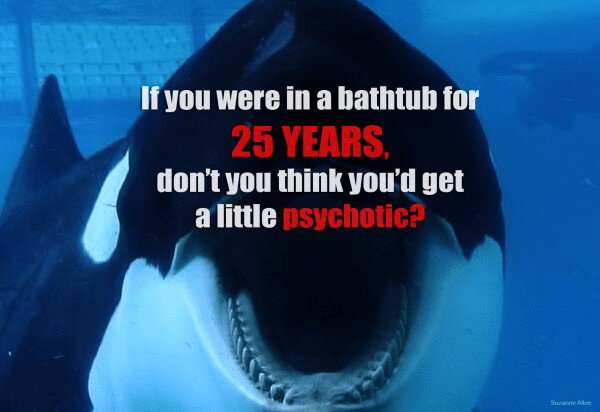
Whales and dolphins are complex, highly intelligent animals who have their own language and culture. In the ocean, orcas can swim up to 140 miles a day. Imagine how they feel being imprisoned in cramped tanks.

Orcas are left to languish in concrete tanks about 10,000 times smaller than their natural home range. They may also be drugged with diazepam and other tranquilisers. At SeaWorld, 140 dolphins are packed into just seven tanks. Their water is chemically treated, and they’re forced to perform confusing tricks. Life in a marine park is no life at all.

ABTA Needs to Do Better!

ABTA’s Animal Welfare Guidelines lists wild-animal performances  among its unacceptable practices. But why is it OK with letting marine mammals endure a life of misery in watery prisons?

The UK hasn’t had these cruel attractions since the 1990s, and Belgium, Canada, France, and India have banned cetacean captivity. Airbnb, British Airways Holidays, Your Co-op Travel , and Virgin Holidays refuse to promote marine parks. ABTA is now lagging behind, allowing members like TUI to continue to support these barbaric spectacles.

Take Action

PETA has highlighted the cruelty behind marine parks to ABTA, but the organisation is dragging its feet. Join us and urge it to live up to its “responsible tourism at home and abroad” claim by doing the right thing for whales and dolphins. 

Ask ABTA to revise its animal welfare guidelines and add promoting captive cetacean tourist destinations to its list of unacceptable practices:

Action – Urge ABTA to Include Dolphin and Whale Captivity Among Its Unacceptable Practices | People for the Ethical Treatment of Animals (peta.org.uk)

Regards Mark

Hawaii: Swimming with dolphins is over

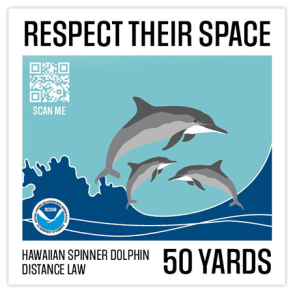
A final rule prohibits swimming with, approaching, or remaining within 50 yards of spinner dolphins. A proposed rule may establish time-area closures of select nearshore resting areas.

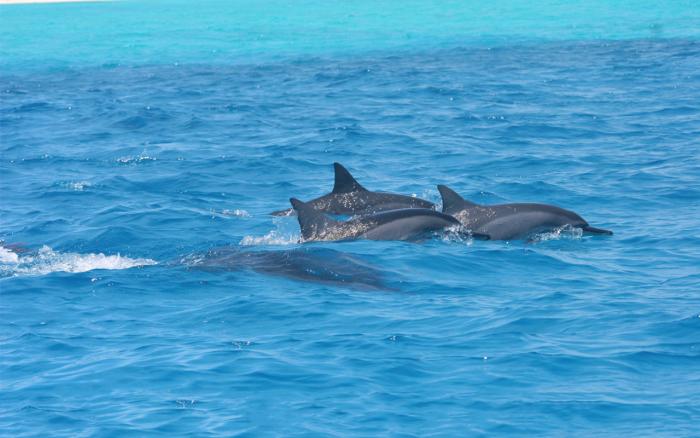
Like all animals, Hawaiian spinner dolphins need rest. Spinner dolphins are nocturnal feeders that perform critical resting behaviors during the day while in safe, nearshore areas. But for decades, spinner dolphins in Hawaiʻi have experienced intense viewing pressure from commercial and recreational wildlife viewers seeking close encounters with the charismatic marine mammals.

The natural behavior patterns of the animals are massively disrupted, which most people are not even aware of.
But that is over now: The USA has decided that from October 28, 2021, people will not be allowed to approach the spinner dolphins that are resident there less than 50 meters near the coast.

This new regulation will now require the public to respect spinner dolphins’ space so they can shelter undisturbed in their resting habitat close to shore.

The US government is thereby legally implementing the ban on contact between the marine mammals and us.

No swimming with, approaching, or remaining within 50 yards of spinner dolphins
This has been confirmed by the National Marine Fisheries Service, NOAA. The new law applies to swimmers, divers, boats, and also to drones that are within two nautical miles of the coast of Hawaii’s main islands and designated waters between the islands of Lāna‘i, Maui and Kahoʻolawe.

Continue reading “Hawaii: Swimming with dolphins is over”

UK (England): Secret Filming Shows (Hunting) Hounds Being Shot Dead At Hunt Kennels.

WAV Comment:  The killing of hunt hounds is not new; it has happened for ages.

In the UK there was a thing known as the ‘cub hunting season’; where new hunt hounds were ‘tested’ out the innocent cubs of a fox pack to see if they had the ‘blood lust’ that was required of them.

Often, if they were found to be too docile and lack that killer instinct, then those hounds were ‘dispatched’ by the hunts – by that, we mean shot through the head and disposed of.  It has been captured on video in the past.

Regards Mark


Photo – Mark / East Kent Hunt Sabs.

Latest:

Secret filming shows hounds being shot dead at hunt kennels

ITV is a major British television station.

Secret filming shows hounds being shot dead at hunt kennels | ITV News

An anti-hunting activist told ITV News Correspondent Rupert Evelyn the dogs are killed and “thrown away like garbage” when they are no longer “fit for purpose”


Secret cameras have recorded huntsmen shooting and killing hounds that had been used for hunting.

The pictures, filmed by anti-hunting groups the Hunt Investigation Team and Keep the Ban and shared exclusively with ITV News, is the first time footage of a hunt shooting its hounds has been shown publicly.

Hounds can be killed for several reasons including being too old to hunt, or if they get ill or injured. The practice is not illegal.

The pictures were taken at the kennels of the Duke of Beaufort’s Hunt in Badminton, Gloucestershire. The Duke of Beaufort’s Hunt told ITV News that its hounds are “humanely euthanised” if they cannot be rehomed. It added that the majority of hounds are “unsuitable for rehoming” because “they are not house-trained and have only ever been used to living in a pack environment”.

The secret footage, recorded over several periods between April and September, shows four separate examples of hounds being shot:

  • In two cases, a huntsman is seen putting a gun to the head of the hound and killing it.
  • In another, the hound appears to be unwell and is carried onto the grass by the hunt staff before being shot.
  • Another shows the hound being shot twice, three minutes apart.

Watch the secret footage at a hunt’s kennels where hounds were filmed being shot dead – click on the above link.

Rob Pownall, Keep The Ban founder, said: “It’s some pretty upsetting footage but this is commonplace for hunts across the country. This is not an acceptable way to end an animal’s life. These hounds suffered immense pain.”The activities shown in the video aren’t actually illegal, but there’s no moral defence for what’s shown.”

The footage comes ahead of a vote later this month by National Trust members to decide whether trail hunts on its land should be banned during the next hunting season.

The National Trust suspended all trail hunting licences last year, alongside a host of other large landowners including Forestry England, following a report by ITV News about the content of webinars hosted by the Hunting Office.

Conservative MP Tracey Crouch, who is co-chair of the All-Party Parliamentary Group for Animal Welfare, said the footage of the hounds being shot dead is “absolutely heartbreaking” and “distressing”.

“I don’t understand why a dog…needs to be euthanised in this way and I am sure there are much more compassionate ways of putting a dog to sleep”, Ms Crouch told ITV News.

“We have many working dogs across this country in different sectors, such as, for example, the police or army, and I doubt very much that those kinds of dogs are put to sleep with a bolt to the head, so I don’t quite understand why it is appropriate for hunting hounds to be euthanised this way.”

After watching the secret filming, Mike Jessop, a fellow of the Royal College of Veterinary Surgeons, said that from what he saw, he did not believe the huntsmen were professionally trained in putting animals down.”There was no evidence of [the huntsperson] being veterinary trained or veterinary surgeons. The lack of use of any veterinary equipment that one would expect such as stethoscopes to ascertain the dogs were dead was just lacking”, he said.”The evidence from the video doesn’t show any illegal activity. My concern is whether there is any suffering after the shot, because nobody is being careful enough in checking the dogs are truly dead.”In one of the videos, the [hound’s] tail was still waggling very vigorously for quite some time, even when the dog was being loaded in the wheelbarrow.

Continued on next page.

Wolves in Berlin – and the media hysteria

In Berlin, wolves are sighted for the first time inside the motorway ring. The debate about the wolf has reached the capital of Germany!!

The headlines from the German press:
“a wolf pack at the gates of Berlin”
“wolves only 30 kilometers from the city center”
“wolves within the Berlin ring” …
“the wolf in Berlin: when will the first child be torn, people ask”Conservationists are happy, farmers are less enthusiastic. The hunting association is now reproaching the Federal Agency for Nature Conservation.
The most important question arises: do these strictly protected predators pose a threat?
How much wolf can Berlin take?

A wolf pack has settled west of Berlin in the nature reserve around Berlin.

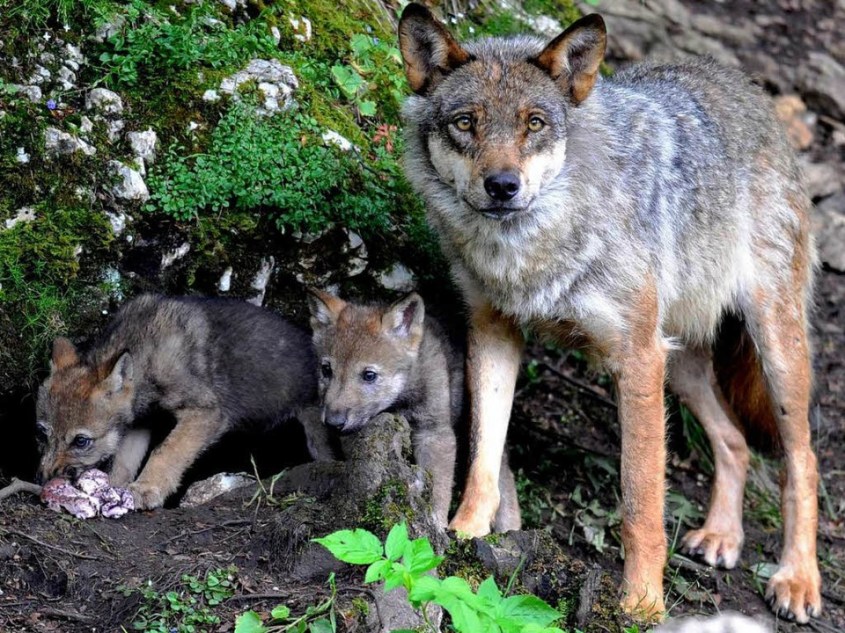
About two weeks ago, two parents and four puppies ran in front of the lens of a photographer who was out and about in the 4,500 hectare nature reserve at the gates of Berlin and Potsdam for the “Heinz Sielmann Foundation”.

According to the foundation, the six animals have settled in a fenced area of around 1,800 hectares in the middle of the area – there they are largely undisturbed by humans.

The area is only around 30 kilometers from Alexanderplatz (in the center of Berlin). On Tuesday, the State Environment Agency (LfU) confirmed to the German Press Agency that the animals were wolves. Other wolf packs had not yet settled within the Berlin Ring.

It is very clear why the pack chose the protected area of ​​all places: Here they will find everything they need. Space, water, enough food and above all: peace and quiet.
The area is actually too small for a pack, but the animals would have a lot of food there due to the high number of game.

Deer and wild boars were not enough for the animals: In August and September cracks were reported from goats and sheep grazing there.

The population is increasing, the animals go where they can find game. According to the hunting association, the game population has already been drastically reduced in this area.
“I wonder what happens when the wolf runs out of wild animals” so a hunter

“Not only do wolves deserve protection, grazing animals also deserve protection. The pastures should not be “set tables” for wolves. “ says Federal Agriculture Minister Julia Klöckner.

The Ministry of the Environment says: … “And if a wolf repeatedly ventures too close to human settlements, then it is classified as a problem wolf and can be shot.”


https://www.berliner-zeitung.de/mensch-metropole/sind-die-woelfe-an-der-berliner-stadtgrenze-eine-gefahr-li.187708

https://www.tagesspiegel.de/berlin/brandenburg-erstmals-wolf-fotografiert-am-berliner-ring/12675608.html

And I mean…“And if a wolf repeatedly ventures too close to human settlements, then it is classified as a problem wolf and can be shot.”
Apparently man is now an endangered species, badly decimated in its existence by the predators around him.
Worse still, the other species keep humans industrialized and slaughter them by the millions every day.
The useless copies are shredded by the millions….
Or how was that?

The normal ‘collateral damage’ in “beneficial” animal husbandry is 100 times greater than all wolves combined could ever cause for their survival.

By the year 2000 the wolf had been exterminated from humans in Germany.
Purely informative: The wolf is not settled but turns back by itself.

The wolf is (still) protected by European (Fauna-Flora-Habitat Directive FFH-RL, Appendix IV) law, and as an endangered animal species it has a high protection status in Germany (Section 44 of the Federal Nature Conservation Act BNatSchG).

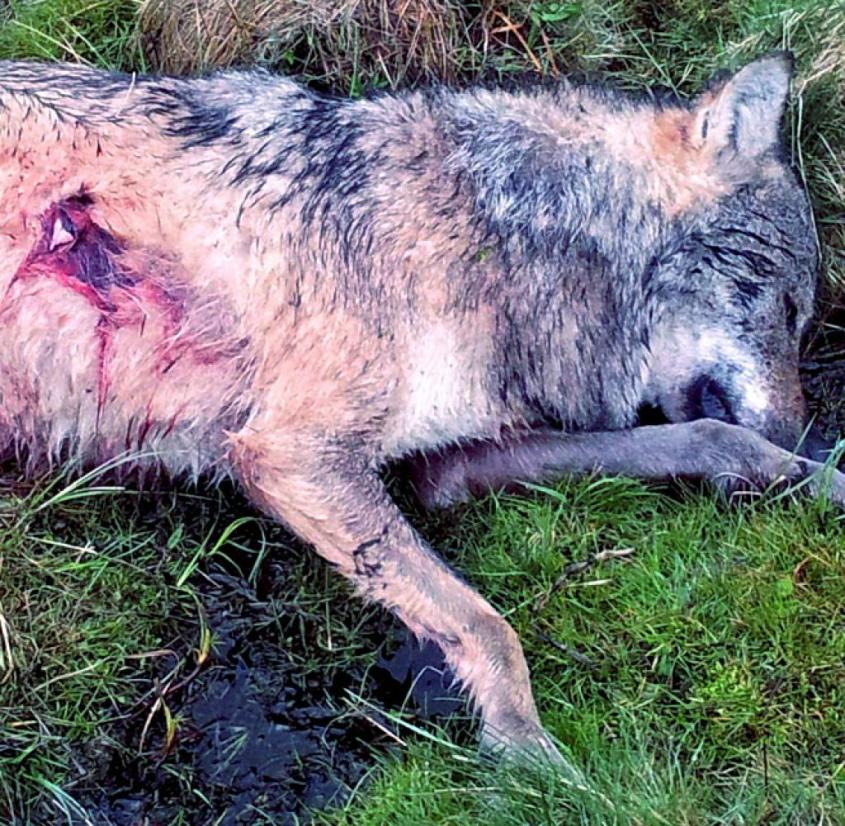
Well… a few psychopaths with hunting license are of the opinion that they don’t have to comply with “nonsensical” laws – since 2000 there have been 64 deliberately and therefore illegally shot wolves in Germany.
The number of unreported cases is higher, because even entire packs just disappear from the scene.

No case has been resolved so far, let alone brought to court

Wolves do not practice mass animal husbandry, they either eat what is there or starve to death.
In contrast to us humans, who not only shoot animals for fun, although we do not need their flesh and skin for life at all, but enslave them, torture and brutally kill them in order to eat them.

May the family live long and in peace

My best regards to all, Venus

UK: UK Public Now Eating Significantly Less Meat – Down 17%.

Red meat
Getty Images

UK public now eating significantly less meat – BBC News

UK public now eating significantly less meat

Daily meat consumption in the UK has fallen by 17% in the last decade, a study has shown.

That reduction though is not happening quickly enough to meet a key national target, according to scientists.

The aim is to reduce the environmental impact of our diets.

This goal, set by the National Food Strategy, is based on a review of the whole UK food system – from farming and production to hunger and sustainability.

It recommends meat consumption in the UK fall by 30% over the next 10 years.

“We now know we need a more substantial reduction,” said lead researcher Cristina Stewart from the University of Oxford.

The new study, published in the journal the Lancet Planetary Health, revealed that while most people are eating less red and processed meat compared to a decade ago, they are eating more white meat.

High consumption of red and processed meat can increase the risk of health problems including cardiovascular disease, type 2 diabetes, and even certain cancers.

Meat production also has a higher environmental impact – producing more planet-warming greenhouse gas emissions – than other types of agriculture and food production.

Not all meat is equal

This Oxford-based research team used data from the National Diet and Nutrition Survey – a detailed survey of the dietary habits of more than 15,000 people across the country.

This showed that daily meat consumption had reduced by about 17g per person per day.

What it did not reveal was the reason people were changing their diets. But market research in 2019 suggested that almost 40% of meat-eaters were actively trying to reduce their consumption, with many citing either health or environmental reasons.

Dr Stewart stresses that, for those who want to reduce the environmental impact of what they eat, “any reduction in meat will have an impact”.

“You don’t have to be vegetarian,” she said. “Although, in general, meat-free dishes will have a lower impact.

“But if you’re someone that eats meat every day, reducing your meat consumption by 30% just looks like having two meat-free days per week.”

There is huge variation in the environmental impact of meat; it depends on what livestock are fed and where and how the meat is produced.

This Oxford-based research team used data from the National Diet and Nutrition Survey – a detailed survey of the dietary habits of more than 15,000 people across the country.

This showed that daily meat consumption had reduced by about 17g per person per day.

What it did not reveal was the reason people were changing their diets. But market research in 2019 suggested that almost 40% of meat-eaters were actively trying to reduce their consumption, with many citing either health or environmental reasons.

Dr Stewart stresses that, for those who want to reduce the environmental impact of what they eat, “any reduction in meat will have an impact”.

“You don’t have to be vegetarian,” she said. “Although, in general, meat-free dishes will have a lower impact.

“But if you’re someone that eats meat every day, reducing your meat consumption by 30% just looks like having two meat-free days per week.”

There is huge variation in the environmental impact of meat; it depends on what livestock are fed and where and how the meat is produced.

The COP26 global climate summit in Glasgow in November is seen as crucial if climate change is to be brought under control. Almost 200 countries are being asked for their plans to cut emissions, and it could lead to major changes to our everyday lives.

“Locally produced meat has a much lower impact than meat that has been imported,” Dr Stewart pointed out.

She and her colleagues have also been studying the effect of “environmental impact labelling” on consumer choices. They have designed experimental labels that score a product based on its greenhouse gas emissions, biodiversity loss, water-use and water pollution.

“When you don’t have the information about environmental impact of food, it’s really hard to shop with that in mind,” she pointed out.

Having the support of those we eat our meals with, the Oxford researchers say, makes it easier for us to change our diets. And the availability and prominence of meat-free food options has an effect on people’s food choices, too.

“So, for example, if you’re at a restaurant, you often see a vegetarian options ‘box of shame’ at the bottom of the menu rather than at the top with chef’s specials,” Dr Stewart explained.

The team’s ongoing study of what drives people to reduce their meat consumption has revealed some simple strategies that participants have found helpful, including:

  • Trying one new vegetarian recipe;
  • Making one meal in a day vegetarian, rather than going a whole day without meat;
  • Reducing portion size: In a recipe that includes meat, like a bolognese, reduce the amount of meat and supplement that with lentils and vegetables.

“Hopefully this paper will help us understand the patterns and trends so we can tailor public health policies and behavioural nudges to help people choose more sustainable options,” said Dr Stewart.

WAV COP26 Links:

Search Results for “COp26” – World Animals Voice

Regards Mark

Denmark: Stop The Grind – New London Based Action Site Against The Killing Of Dolphins and Pilot Whales In The Faroe Islands.

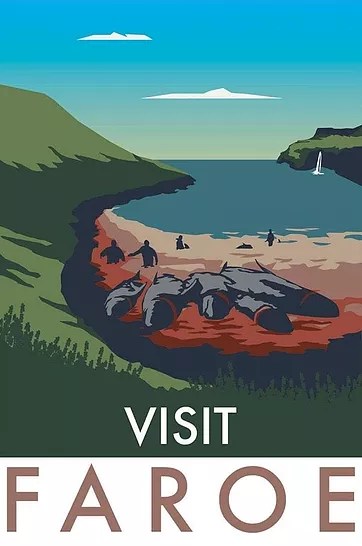
FAROE TOURISM.jpeg

Stop the Grind | End Killing of Dolphins and Pilot Whales in the Faroe Islands

Gallery – Gallery | Stop the Grind

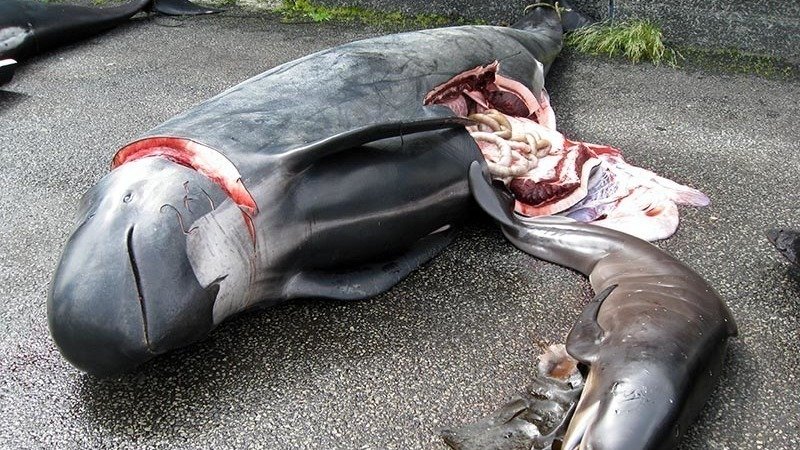
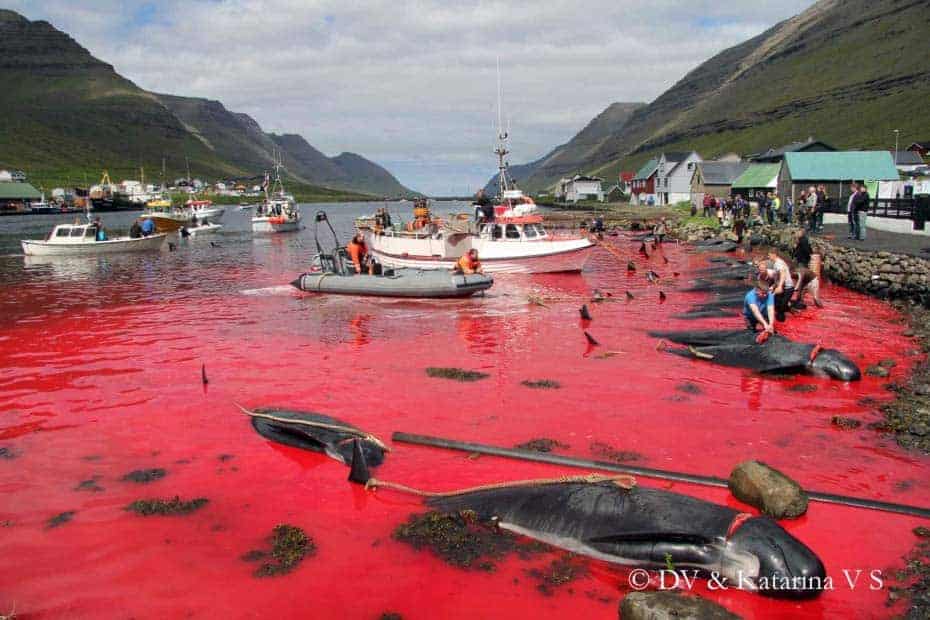
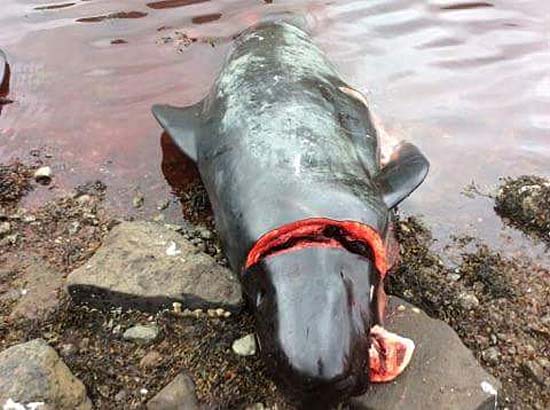
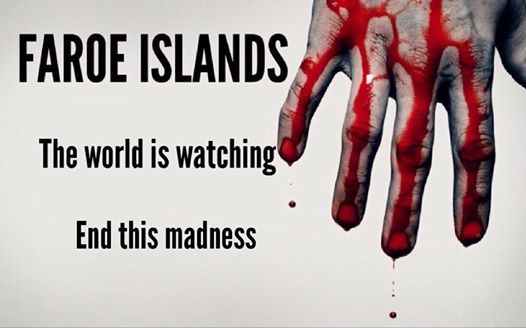
The world has watched in horror as the Faroe Islands government continues to allow thousands of pilot whales and dolphins to be massacred brutally and senselessly in the Grindadráp hunts.  Now is the time for change. We are calling on the Faroe Islands’ government to do the right thing and ban this outdated and cruel practice. Stand with us and be part of the global movement.

Stop the Grind | End Killing of Dolphins and Pilot Whales in the Faroe Islands

The Stop the Grind movement is based in London with members all over the world. The campaign is a partnership between Sea Shepherd and Shared Planet, an impact-focused consultancy. We bring together a global coalition of stakeholder organisations and individuals with the common interest of ending the Grind. Our aim is to show that the world no longer accepts the senseless killing and to demonstrate that the global community will not standby and watch the Faroe Islands’ government act irresponsibly in silence. We must act together to ensure that our voices are heard.

Continue reading and see all the supporters at:  About Us | Stop the Grind 

Our past posts on this issue:

Search Results for “faroe islands” – World Animals Voice

Regards Mark