Category: Environmental

Australia: PETA Sends Meat-Themed Crossword to Scott Morrison and Barnaby Joyce – But, Do They Understand ???

WAV Comment – we have taken liberty and snatched a few images from our archives (from Animals Australia etc) just to add what this is about. We still dont think that they have the capacity to understand what this whole issue is about.

We will leave it to our Patron, Philip Woolen to make it clear:

14/6/21 – Mr Philip Wollen Becomes The First WAV Patron; We Are (More Than) Delighted, and Welcome Him To The Group. – World Animals Voice

Home – Winsome Constance Kindness (kindnesstrust.com)

PETA Sends Meat-Themed Crossword to Scott Morrison and Barnaby Joyce

Amid increased discussion about ways to mitigate farmed animal-generated methane – a greenhouse gas that’s up to 30 times more potent than carbon – PETA has sent a unique meat-themed crossword puzzle to Prime Minister Scott Morrison and Deputy Prime Minister Barnaby Joyce, among others, urging them to “get a clue” when it comes to the problems with meat.

The puzzle’s clues include, “A small, native marsupial facing extinction, largely because of land clearing for meat production” (koala) and “A slab of muscle, cut from the corpse of an animal who wanted to live” (steak).

In an accompanying letter, we warn leaders of placing all their focus on changing cows’ diets and digestive systems, saying, “No matter what ‘solution’ is latched onto next, be it tinkering with cows’ feed or their microbiomes, it’s always only going to be part of the puzzle.”

As scientists warn that carbon dioxide and other greenhouse gases must fall by between 25% and 50% to limit global warming to below 2°C, it’s little wonder that animal agriculture and governments are scrambling to try anything – from seaweed to vaccines – to limit the sector’s methane output.

However, we can’t help but notice that by zeroing in on this one problem with meat – when there are so many others – Australia is overlooking the simplest solution: making the transition to a kinder, greener vegan future.

Click the link below for the solutions to the crossword.

Can Morrison and Joyce work it out, or do they need to be given the answers ?

Solution_Final.pdf (peta.org.au)

Regards Mark

BREAKING: Argentina Becomes The First Country In The World To Ban Salmon Farming.

BREAKING: Argentina Becomes The First Country In The World To Ban Salmon Farming

New legislation has outlawed salmon farming in Argentina following concerns about sustainability

The Argentine province of Tierra del Fuego approved a bill this week that bans salmon farming. The practice has come under fire due to concerns about sustainability.

The decision follows a proposal to begin farming in the Beagle Channel in Tierra del Fuego. According to MercoPress, it’s the only area that Argentina could feasibly farm salmon in.

Lawmakers unanimously approved the bill to ban salmon farming. The decision is the first of its kind globally.

Estefanía González of Greenpeace told the publication that ‘Argentina is making history’.

“This is very important because once this industry is installed it is very difficult to combat it, even when they commit illegalities and environmental disasters. The impacts they leave can be irreversible.

“In the eyes of the world, it manages to take a tremendous step towards protecting the ecosystem and also its culture,” she said.

Is salmon farming sustainable?

Salmon farming has attracted criticism for its impact on the planet and animal welfare. Fish farms spread parasites like sea lice to each other but also wild fish.

To combat this, farmers use antibiotics. However, these then enter the surrounding waters, contributing to antibiotic resistance in both marine life and the people consuming them.“There is no right way to do the wrong thing,” González commented. “Salmons are an exotic species in the seas of Argentina and Chile, they are not a species that is present naturally.”

“Therefore the amount of chemicals and antibiotics that are needed for their production and the impact they generate on the ecosystem makes it is practically impossible for this activity to be carried out without environmental consequences.”

Argentina Becomes The First Country In The World To Ban Salmon Farming | Plant Based News

Regards Mark

One of my favourite bands – ‘The Cure’ (England) – Enjoy

UK: First Ever Vegan BBQ Week ! – 2-11/7/21

Vegan BBQ Week logo

Get ready to fire up the barbecue, because it’s the UK’s first-ever Vegan BBQ Week!

Running from 2 to 11 July, it’s the perfect time to host a long-awaited gathering of friends in the garden or just rustle up a small weekday feast outdoors. Whatever your plans, we’ve got the ultimate vegan BBQ guide for you.

For the ultimate vegan BBQ guide, click here:

UK’s First Vegan BBQ Week: Everything You Need to Know | PETA UK

f you’re joining in the excitement with a delicious summer feast, share your pics with us by posting on social media and using the hashtag #VeganBBQWeek.

The best bit about an all-vegan BBQ is that you get all the flavour without harming animals or burning up the planet. If you’re more of an indoor cook, why not order a copy of our free vegan starter kit for delicious recipes you can prepare in the kitchen and top tips on vegan living?

Order your free vegan starter kit here:

Order Your Free Vegan Starter Kit | People for the Ethical Treatment of Animals (peta.org.uk)

Thanks for helping to make the world a better place!

Sincerely,

Carys B
PETA

Grilling Without Killing
Rudy’s Vegan Butcher

Regards Mark

India: Covid escalates elephant killings in eastern India to ‘crisis proportions.

Covid escalates elephant killings in eastern India to ‘crisis proportions’

Corruption and apathy lead to mounting death toll of wild animals, say conservationists

https://www.independent.co.uk/asia/south-asia/elephant-deaths-covid-india-poaching-b1876632.html

The killing of elephants in eastern India has reached crisis proportions, magnified by the Covid lockdown, conservationists say.

In the past two years, 160 of the endangered wild animals have been wiped out in the state of Odisha, at least 40 of them in the past five months alone.

Many are deliberately electrocuted or poisoned by people who have taken forest land for farming, according to the Voice for Asian Elephants Society (VfAES).

Covid escalates elephant killings in eastern India to ‘crisis proportions’ | The Independent

The felling of forests for mining and other human activity also shrinks their natural habitats.

And poachers wanting tusks for ivory have been emboldened by an absence of forest patrols, which have been cut back during the coronavirus pandemic.

The VfAES accused authorities of using Covid “as a shield to avoid their responsibilities” in carrying out patrols and cracking down on corruption.

Sangita Iyer, a biologist and the organisation’s founder, said: “There is a silent catastrophe unfolding across India.

“The situation in Odisha is dire. Apathy, complacency, dereliction of duty and a significant lack of accountability by certain forest officials are some of the core issues on the ground.”

Ms Iyer accused ministers of failing to investigate the problems behind the “senseless and preventable” deaths.

She said elephant tusks have been seized from the homes of corrupt officers who know where elephants can be found and tip off poachers.

“What chance do these animals have if the very people entrusted to care for them actually end up betraying these voiceless animals?” she said.

Records show at least 82 Odisha forest officials have been accused of corruption in five years, according to the Hindustan Times.

There are 40,000 Asian elephants in the world, officially classed as endangered, 60 per cent of them in India.

But activists say a burgeoning human population, causing “reckless” land use, such as mining and agriculture expansion, and railways and roads cutting through habitats is killing the creatures.

According to a report by Traffic, a wildlife trade monitoring charity, during the pandemic the poaching of large mammals in India has increased by 44 per cent, and that of other small mammals by 25 per cent.

It’s feared the official elephant death tally is an underestimate because villagers who normally find carcasses have been out less.

In 2012, the Odisha government announced that every unnatural death would be investigated, but Ms Iyer claimed ministers have not questioned or reprimanded any officials for failing to prevent deaths.

And she called on the government to launch a thorough investigation into the deaths.

In the longer term, underpasses and overpasses should be built for railway tracks and roads to prevent elephant deaths, she said, and drivers flouting the traffic laws should be suspended.

“The consequences of the disappearance of Asian elephants would be colossal to the forest ecosystems, not only in India, but around the world, as elephants play a vital role in climate mitigation. Their decimation simply cannot be underestimated,” she added.

Maria Mossman, founder of Action for Elephants UK, said: “This kind of mistreatment of elephants in a state that houses India’s fifth-largest population will tarnish Odisha’s reputation around the world.”

Odisha government has not responded to requests from The Independent for comment by the time of publication.

Regards Mark

EU: Leading animal protection NGOs call for EU ban on hunting trophy imports.

Leading animal protection NGOs call for EU ban on hunting trophy imports

30 June 2021

Press Release

Marking the sixth anniversary of the killing of Cecil the lion by an American trophy hunter, animal and nature protection NGOs, members of the European Parliament, and conservation experts from South Africa, Zimbabwe and Kenya are calling on the EU to ban the import of hunting trophies.

In a webinar, Humane Society International/Europe discussed a new analysis of trade data revealing that the European Union is the world’s second biggest hunting trophy importer after the United States, importing nearly 15,000 hunting trophies of 73 internationally protected species between 2014 and 2018. 

The issue of trophy hunting has become increasingly controversial over the past decade not simply for the animal cruelty, but also due to concerns about the biodiversity crisis

Momentum is growing to take action to curb hunting trophy imports. France banned the import of lion trophies in 2015 and the Netherlands banned trophy imports of over 200 species in 2016. In Germany two political parties (Greens and Left) have included a trophy import ban in their party manifestos.

The webinar, held in collaboration with the European Parliament’s interest group MEPs for Wildlife, Humane Society International/Europe, Born Free Foundation, Eurogroup for Animals and Pro Wildlife, explored how trophy hunting places unsustainable pressure on endangered and other imperiled species, and whether this practice really does make a significant contribution to wildlife conservation as claimed by its proponents. 

German MEP Manuela Ripa (Greens/EFA), who hosted the event, said:

“It is crucial that Members of the European Parliament address the issue of the killing of wild animals, endangered or otherwise, purely for the purpose of procuring trophies to hang on their walls. Especially in the wake of the EU Biodiversity Strategy it is important to consider the impact that European citizens travelling to far-flung destinations solely to shoot and bring home animal body parts may be having on wild animal populations elsewhere around the world. Instead of having tightly regulated trophy hunting, I pledge for tightly regulated photo hunting, which would have a bigger benefit for species, support ecosystems and the communities involved. I strongly urge the European Commission to address the issue of trophy hunting in its upcoming evaluation of the EU Action Plan against Wildlife Trafficking.” 

Dr Joanna Swabe, Humane Society International/Europe’s senior director of public affairs, noted:

“The shocking role of European citizens in global trophy hunting should not be underestimated. Humane Society International’s new EU Trophy Hunting by the Numbers report reveals that shockingly the EU imported nearly 15,000 hunting trophies from 73 species between 2014 and 2018, despite them being protected under the Convention on International Trade in Endangered Species (CITES). It is shameful that the EU is the world’s second largest importer of hunting trophies, bringing in almost 3,000 trophies every year, including African lions and elephants, black rhinos, leopards, zebras, cheetahs, lynx and polar bears. Germany, Spain and Denmark account for 52% of all imported trophies, and the trade data shows that trophy import numbers have actually steadily increased by almost 40% during the period studied despite opinion polls showing that the vast majority of EU citizens oppose the gratuitous practice of killing wild animals for pleasure, display and bragging rights.  The only way we should be shooting wild and endangered animals is with cameras, not guns or arrows.”

Dr Mark Jones, head of policy for the Born Free Foundation, added:

“Born Free is ethically opposed to the hunting or killing of any animal for sport or pleasure. We also challenge the claims made by proponents of trophy hunting that it delivers significant conservation and community benefits, or that it positively contributes to the sustainable use of wildlife. Studies have consistently shown that trophy hunting does not provide a significant source of income to rural people, and certainly pales in comparison to other wildlife-related activities such as ecotourism. The killing of animals by trophy hunters also causes immeasurable animal suffering, and negatively impacts wildlife conservation by removing individual animals that are key to their populations. The trophy hunting industry is wracked by corruption, with excessive quotas being set that are often exceeded. We urge European nations to take action to stop their citizens jetting off to exotic locations to kill and imperil wild animals elsewhere in the world.”

Reineke Hameleers, CEO at Eurogroup for Animals, said:

“The trophy hunting practice of primarily removing the largest and most physically impressive animal specimens, puts species conservation in jeopardy, disrupts social herd structures and weakens gene pools of species that are already threatened. In a time of global biodiversity crisis, it is urgent for the EU and Member States to acknowledge that it is irresponsible to allow rich elites to shoot endangered species for pure pleasure, and finally ban the import of hunting trophies. We need to move away from the unethical consumption of wildlife and look at how the EU can instead encourage and reward investment in wildlife so that concrete and significant benefits can be achieved by local communities through its non-consumptive and ecologically sustainable use. Wild animals should be worth more to these communities alive than dead.”

Daniela Freyer, co-founder of Pro Wildlife, added: 

“Germany has the dubious honour of being the top importing nation for hunting trophies in the European Union. It is sickening that a very small minority of my fellow German citizens still enjoy travelling to faraway places to kill animals for fun, pose with their dead bodies for tasteless selfies and hang their body parts on the walls back home. Trophy hunting is not only cruel and unnecessary, but it also poses a significant risk to wildlife conservation and biodiversity. The majority of EU citizens, including Germans, are opposed to the unethical practice of killing wild animals for trophies. It is time for Germany and other EU Member States to act and prohibit the import of hunting trophies.”

Notes

Trophy Hunting: Conservation Tool, or a Threat to Wildlife? was organised by MEPs for Wildlife in collaboration with Humane Society International/Europe, Pro Wildlife, Born Free Foundation and Eurogroup for Animals on 30th June 2021 with the participation of the following speakers and panelists: 

  • Dr Audrey Delsink, wildlife director, Humane Society International/Africa
  • Dr. Paula Kahumbu, wildlife conservationist and CEO, WildlifeDirect; Rolex National Geographic Explorer of the Year 
  • Lenin Tinashe Chisaira, environment lawyer and director, Advocates4Earth, Zimbabwe
  • Miet van Looy, International Relations Officer – CITES and EU Wildlife Trade Regulations,DG Environment, European Commission
  • Dr David Scallan – secretary general, European Federation for Hunting and Conservation (FACE)

Opinion poll results demonstrate that the vast majority of EU citizens (over 80%) oppose trophy hunting and want to end trophy imports.

HSI/Europe’s Trophy Hunting by the Numbers report reveals that Germany, Spain, Denmark, Austria, Sweden, France, Poland, Hungary, the Czech Republic and Slovakia are the top trophy importing EU Member States, with Namibia, South Africa, Canada, Russia, Argentina, Kyrgyzstan and the US representing the top exporting countries to the EU. Spain, Poland, Hungary, Germany and the Czech Republic are the top importers of captive lion trophies. EU trophy import statistics for individual animals (2014-2018), include:

  • 3,119 Hartmann’s mountain zebras 
  • 1,751 Chacma baboons 
  • 1,415 American black bears
  • 1,056 brown bears
  • 952 African elephants
  • 889 African lions (of which 660 were captive-bred lions in South Africa) 
  • 839 African leopards
  • 794 hippopotamuses
  • 480 caracals
  • 415 red lechwes
  • 297 cheetahs – the EU is the largest importer of cheetah trophies in the world 
  • 65 polar bears
  • Six critically endangered black rhinos 

Regards Mark

Mexico: Dulce Ramírez, “I DEEPLY ADMIRE WOMEN WHO HAVE DONE INVESTIGATIONS”.

Dulce Ramírez. All photos by Jo-Anne McArthur.

WAV Comment – Full respect and love to our wonderful, Mexican campaigner frieds.

Dulce Ramírez,

“I DEEPLY ADMIRE WOMEN WHO HAVE DONE INVESTIGATIONS”

Dulce Ramírez – Unbound Project

The first time that I meet Dulce Ramírez, I compliment her on her name – Dulce means ‘sweet’ in Spanish. “I am the opposite,” she says resolutely.

Those who know her agree. A colleague described her as “Persistent and tenaciously persuasive.” She’s also undeniably brave and focused. All valuable qualities when you are leading an animal rights organization in Mexico, a country where culture and national identity are so firmly rooted in food. In Mexico, food is about family, history and culture – and it is dominated by meat and cheese.

For Ramírez, it all started 13 years ago when she found a kitten on the patio behind her house. By caring for this kitten, “I began to understand the emotional world of animals, their needs, and their intelligence,” she explains. “I began to search for information and question more and more the relationship of subjugation we impose on other animals.” The more she learnt, the more it became clear to her that she wanted to advocate for animals.

Fast forward to June 2011, when the Spanish government arrested 12 animal rights activists linked to Igualdad Animal (Animal Equality) in Spain, labeling them ‘eco-terrorists’. Hearing this news, Ramírez contacted the founder and president of Igualdad Animal, Sharon Núñez, to express solidarity with the activists. The following year, the Mexico chapter of Igualdad Animal was founded, with Ramírez at the helm.

“The first thing we did was to show how Mexican industrial farming works.”

In the six years since, Igualdad Animal Mexico has achieved big things. Their first campaign brought animal groups in the state of Jalisco together to successfully end the use of animals in circuses. The organization has developed educational programs, petitioned for legislative changes, and conducted corporate outreach, encouraging companies to adopt policies that benefit animals, such as offering more plant-based options.

For the last two years, the organization has focused on improving the lives of farmed animals. As is the case in most countries, Mexico has virtually no legal protections for farmed animals. But while in some other regions the conversation about farm animal welfare is already well-established in the public discourse, that isn’t the case in Mexico. Given the victories coming for farm animals worldwide and the number of farmed raised and killed in Mexico each year, Ramírez believes this makes Mexico a prime target for bold campaigns and big changes. “For that reason, the first thing we did was to show how Mexican industrial farming works.”

At the foundation of this is investigative work, which Ramírez says is without doubt the most powerful ingredient for creating change. It is these investigations that, by documenting the lives of animals in factory farms, bring focus and strategy to the animal rights movement, she says. Without this footage, animal groups would struggle to develop hard-hitting public campaigns and educational resources telling the true stories of animals in animal use industries.

“I deeply admire women who have done investigations.” 

Ramírez is one of only a few female investigators in the country. The work carries huge risks to personal safety, as well as the emotional toll of witnessing the intense suffering of animals.

“The challenge is always when, at the end of the day, you arrive home and the images come back into your head, you have the smell impregnated on your clothes and body, and it all takes you back.”

What inspires her to do this difficult work? “I deeply admire women who have done investigations, who take pictures of the most terrible situations and who transform it into struggle and activism to change the lives of the animals,” she says.

Igualdad Animal Mexico isn’t done setting precedents for the country.

New investigations are planned and the group’s corporate campaigns continue. Their current legislative push — ending the use of cages for laying hens — is in full swing. They also plan to launch LoveVeg, a public education platform focused on changing consumer habits, in Mexico.

Leading the way, and with so many hearts and minds to change, Ramírez knows she is exactly where she needs to be.

Brilliant !

Regards Mark

England: New Post On Vegan Trainers; But Then Their Past Animal Abuses Got Me Running !

Kangaroo Joey High Res Stock Images | Shutterstock

I was going to do a post on the launch of a new Vegan sneaker range by one of the manufacturers listed below which is made from harvested pineapple leaves.  After all, are we not here to promote veganism and animal rights ?

Then I thought back to issues relating to these same sportswear manufacturers, and their past production processes, which have been in the AR ‘inbox’ for many years.  As a result of my own involvement in AR and past knowledge on this subject, I decided not to promote the product after all; as I am completely against all animal slaughter; but regardless of my personal views, I shall give you more information which you can then use to decide on the way forward. To buy or not to buy ?, that is the question.

The issue that concerns me is:

Nike and Adidas Among Brands Blasted For Selling Kangaroo Leather Shoes — Species Unite

Around 2 million kangaroos are hunted every year to help produce shoes made from kangaroo skin,

The world’s biggest sport brands including Nike, Puma, and Adidas, have been condemned for selling kangaroo leather shoes, as U.S. lawmakers introduce a bill to outlaw their sale.

Kangaroo skin is currently used by the companies to produce soccer shoes known as “cleats”.

The slaughter of 2 million kangaroos every year, and their Joeys !!

But campaigners warn that the kangaroo leather trade is helping to fuel the slaughter of around 2 million kangaroos every year.

Consumers are likely to be outraged to hear that kangaroos – including their joeys – are shot or bludgeoned to death, especially after the global community came together to show their support for Australia’s wildlife during last year’s devastating wildfires. 

“[We] worked with so many teams on the ground in Australia in 2020 rescuing and rehabilitating kangaroos injured by the devastating bushfires,” said SPCA International Executive Director Meredith Ayan. “Kangaroos do not deserve to go through that trauma, be nursed back to health and released to the wild only to be killed in a brutal commercial hunt.”

Nike, Puma, Adidas, Mizuno, and New Balance are among the companies said to be supporting – and profiting – from the cruel kangaroo slaughter which campaigners say is “the world’s largest commercial slaughter of terrestrial wildlife”. 

The hunt results in entire families of kangaroos being shot in the dead of night with night-vision rifle scopes. And according to Australia’s kangaroo killing guidelines, slaughtered female kangaroos should be checked for joeys in their pouches – who should be bludgeoned to death if found. 

Amid the outrage, U.S. lawmakers have now introduced a new bill that will outlaw the sale of kangaroo body parts in the U.S. 

February 2021 – The Kangaroo Protection Act, introduced last week by Representatives Salud Carbajal, D-Calif., and Brian Fitzpatrick, R-Penn, would ban kangaroo leather products, and encourage brands to construct ‘cleats’ from the many alternative fabrics available. 

“Commercial shooters kill roughly two million wild kangaroos a year to profit from the trade in their skins, despite the availability of alternative fabrics that are of similar or better quality. While California has banned the sale of kangaroo products, enforcement of this inhumane practice is lacking,” said Rep. Salud Carbajal, D-Calif. “I’m proud to stand against kangaroo trafficking and have introduced the Kangaroo Protection Act to make it illegal to exploit kangaroos in the United States and impose penalties for violations.”

Nike and Adidas Among Brands Blasted For Selling Kangaroo Leather Shoes — Species Unite

So, decision made – I cannot promote a manufacturer, or any other manufacturer, which has such past animal abuse ghosts hidden in their coffin, regardless of their changes now.  Some of us are old enough to remember what these organisations did in the past as shown above – we remember, we don’t forget !

As I have said, if ‘top trainers’ are your thing, then you will probably be aware of what is now on the market anyway.

For me personally, it is simple, I remember what animal abuses have been undertaken in the past relating to these ‘top brand’ products; and I remember the millions of innocent, sentient animals that were slaughtered to make the top, past products. 

And as a result, I cannot support their ‘new, vegan products’, regardless of the better intentions of these manufacturers to get on the vegan gravy train now by going vegan. Animal abuse used to be undertaken by them same people in the name of fashion; and so for me, they have been no better in their sordid past than still those involved now in the fur trade. We are all individuals and it is our right to make our choice.

I leave it to you to read, learn and decide.

Regards Mark

EU: End the Cage. It Started As A Dream; But Now the Dream Has Become Official Reality.

WAV Comment:  The only thing that is missing from this headline below is ‘… and a lot of bloody hard work by the people, for the people’

A major, major win for animals in the future.

People Power | ACLU of Indiana

‘Cruel’ Cages In Europe’s Animal Agriculture System To Be Banned

It took a 1.4 million strong petition and 170 NGOs to press politicians over three years, in what’s being described as the biggest push for animal welfare in European history

The European Commission has announced it will introduce legislation to ban the use of cages in the animal agriculture system by 2027.

Thanks to the calls of more than 1.4 million people, animals will no longer be confined to ‘cruel’ cages in the 27 member states within Europe.

Animal cages banned

The landmark decision comes after a collection of individuals pressed MEPs to increase welfare standards in collaboration with charity, Compassion in World Farming. This involved over 170 NGOs joining forces to make a stand. 

They formed a proposal and took it to the EU Commission, which is the executive governing body responsible for legislation.The End the Cage Age European Citizens Initiative has spent three years working on a proposal to prohibit the cages. 

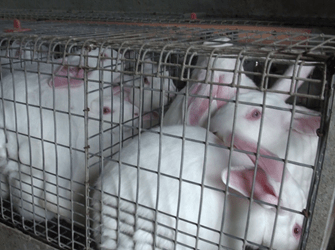
It applies to chickens, pigs, cows, ducks, geese, among other farmed animals. Additionally, it will apply to all imported animal products too. Moreover, it’s thought to be the biggest push for animal welfare in European history: affecting over 300 million farmed animals.

The organization said: “Farmed animals have never had so many people standing up for them. From caged hens who long to stretch their wings to sows who want to mother their piglets unconfined, and rabbits who deserve the space to hop – each one of them now has a better chance in life, thanks to you.”

European Commission

The commission announced the news on Wednesday, June 30. From the end of this year, it will begin the legislative process.The Initiative confirmed it will ‘monitor’ this process to make sure the EC ‘sticks to its word’, however.

Moreover, the group said it will press each individual member state to embed the ban into each national law.

‘Cages are a desolate reflection on our society’, it added.

Animal agriculture in Europe

The European Parliament voted in favor of the ban earlier this month. 558 MEPs backed it whilst just 37 voted against, and 85 abstaining.

Whilst it banned battery cages for hens in 2012, the controversial practice of ‘furnishing’ cages were still legal.

Further victories for the EU this year included the landmark rejection of Amendment 171, also known as the dairy ban.

The ban sought to reject descriptive words for plant-based dairy products that were too similar to those used for dairy products: such as ‘vegan cheese’ or ‘yogurt-style’.

You can find out more about End The Cage Age here

‘Cruel’ Cages In Europe’s Farming System To Be Banned By 2027 (plantbasednews.org)

Now Confirmed by the EU;

Regards Mark



England: People Power For The Animals.

People Power | ACLU of Indiana

The UK government announced back in 2017 that it did not intend to transfer the hard won EU animal sentience regulation into (UK) national law as a result of leaving the EU (Brexit).

British animal welfare campaigners were outraged with this – so it was time to turn up the heat with the British government, who always talk loudly about animal welfare issues.  Why suddenly, on leaving the EU, would UK animals NOT still be covered by laws that gave them some protection as an EU member state ?

Battle lines were drawn between the campaigners and the government.  The campaigners won, and by the end of the year the UK government was forced into a major U turn.

Despite words from the government, legislation did not materialise.  In 2019, a coalition of more than 40 animal welfare organisations joined together, along with over 100,000+ signatures from British activists on a Parliamentary petition, asking Ministers to:

(Note – it has to be remembered that under UK law, if a petition exceeds 100K signatures, then the issue concerned (whatever it is about) has to be debated in the British Parliament, London).

Demands from the people included;

  • Impose a legal duty on governments to pay all due regard to the welfare needs of animals as ‘sentient beings’.
  • Recognise animal sentience when formulating and implementing policies.
  • Ensure clear, consistent processes for for all Ministers to deliver against their animal sentience duties.
  • Create an Animal Welfare Commission  to monitor the government performance against animal sentience law.

As stated, with over 100k signatures on the petition, the petition was debated in Parliament as it had to be.  The result being that Victoria Prentis MP (Defra) stated that the government would introduce the necessary legislation on animal sentience as soon as they could.

The people had won with their campaigning ! – efforts had resulted in victory.

But they still had to keep up the pressure for over a year longer to get the legislation.  In the Queens Speech on 11th May 2021, defining the schedule for government legislation in the next parliamentary session, the government finally announced legislation would exist under UK law to recognise animals as thinking, feeling (sentient) beings.

The ‘Animal Welfare Sentience Act’ was introduced to parliament 2 days later, and will:

  • Formally recognise animals as sentient beings under UK law.
  • Establish and ‘Animals Sentience Committee’, or ASC, to ensure that across all government departments, policy making and implementation considers animal sentience.
  • Requires Ministers to respond to reports from the ASC, to ensure that they remain politically accountable.

This new law ensures that all farm animals are treated with respect and kindness, and that their experiences and feelings DO matter.  This new law is a critical step towards the final goal of ending factory farming and replacing it with sustainable, compassionate alternatives, such as organic and free range farming.

The new legislation is currently working its way through parliament at this very time to become law.

What do we learn ?

Victory is never delivered on a plate. 

As with the sentience Bill; the Brits had to work and fight hard to get it; but they did, and they achieved result.  Brits are generally good animal welfare people; (II am one of them) – tell them that sentience does not matter and they will probably manhandle you out to the nearest airport, and put you on a one way ticket flight to a distant land.

But importantly, as we always ay in the UK, ‘politicians work FOR YOU’; they are not gods; as they can be put out to pasture whenever the electorate feels the need.  So activists everywhere; keep on with your fights, whatever issue it is for, and in the end you will achieve.  Personally, I have fought live exports in the UK for over 32 years; but only now, this year, 2021, have we seen the government listen to us and make first moves to get a ban on.  Never give up; unite and fight the fight; good (us) always overcomes evil (them) in the end.

I take inspiration from wonderful Jill at Animals Asia (video above), and the multitude of other excellent campaigners dotted all over the globe; unsung heroes who fight endlessly for better welfare and the rights of animals – you all have my greatest admiration and respect.  Look at the fur industry – it is on its knees and desperately hanging on in there attempting to survive much because the good, normal people have said ‘No’ to the disgusting abuses that are placed before them by the fur rabble humans.

It is a victory of the people, by the people, for the people but very much for the animals also.

Fight the fight and never give up – YOU WILL WIN.

Regards Mark.

England: Farm Animals In Asia – Funding The Future. A Grant Scheme For Japan, Indonesia and South Korea.

Compassion In World Farming (CIWF) London, has launched a new programme designed to help build the grassroots movement for farm animal welfare in Japan, Indonesia and South Korea.

The programme offers grants to individuals and organisations already working within farm animal welfare advocacy, climate change or environmental protection; or looking to take their first steps into improving farm animal welfare in their region.

Check out more information at:

ciwf_farm-animals-in-asia-information-pack.pdf

Regards Mark