Fish welfare a high priority in EU’s new Aquaculture Strategy to 2030
Today, the European Commission published the Strategic Guidelines on Sustainable and Competitive Aquaculture, a document outlining the major priorities, work areas and initiatives on aquaculture for the next 7 years and setting the stage for a promising future for the welfare of farmed fish in the EU.
After continued advocacy by NGO stakeholders for better fish welfare in aquaculture, the European Commission finally took a major leap towards the better protection of fish welfare with the publication of the long awaited Strategic Guidelines on Sustainable and Competitive Aquaculture. These guidelines will steer policy initiatives and the use of subsidies in the EU aquaculture sector for the period 2021 to 2030 and will be a reference point in global initiatives on sustainable aquaculture. They provide a common vision for the Commission, EU Member States and stakeholders for the further development of aquaculture in the EU as a sector which is both sustainable and competitive, and contributes to broader policy objectives, notably in the context of the European Green Deal.
While the previous guidelines from 2013 did not even contain the word ‘welfare’, the new guidelines have for the first time a dedicated section on animal welfare:
Fish Welfare The stand-alone section on fish welfare includes the following objectives:
Support authorities, experts and stakeholders to develop together a code of good practice on fish welfare including farming, transport and slaughter.
Set common, validated, species-specific, and auditable fish-welfare indicators including farming, transport and slaughter.
Research and innovation especially into species-specific welfare parameters and nutritional needs.
Provide training to aquaculture producers and other operators.
Fish Welfare as an Enabler Our calls for fish welfare improvements have also been taken up in other sections of the guidelines.
The role that welfare plays in improving fish health has been put at the heart of the fish health section, including the following objectives:
Map good husbandry practices, in particular environmental enrichment, and organise training on this.
Prevent the emergence of disease and parasites.
Focus research on supporting the natural defense mechanisms of the fish, especially the microbiome and the impact of stress on immune function.
The following objectives in the environment section are also focussed on and aligned with welfare improvements, in particular:
Encouraging diversification into new species especially non-fed and low-trophic species.
Encouraging diversification away from monoculture systems.
Encouraging new feeding systems to be respectful of ecosystems and biodiversity, while being appropriate for the health and welfare of the fish, and specifically limiting reliance on the use of fishmeal and fish oil.
Good husbandry practices are highlighted as the route to reducing the use of veterinary products and other polluting chemicals.
Promoting EU Aquaculture The guidelines also set out the approach for the EU’s promotion of the EU’s aquaculture sector. There are promising priorities established for promotional and communication campaigns, as well as targeting technical support, including:
Promoting organic aquaculture
Development and promotion of new products especially from traditional systems.
Communication objectives are focussed on lower footprint products especially low-trophic species.
A separate strategy specifically to support the growth of algae production in the EU will follow.
Following the publication of these guidelines it is up to the EU Member States to update their national aquaculture plans to match the new ambition of the guidelines. It is now on the Commission, and on Member States and stakeholders to work towards these objectives and implement these initiatives in concrete and meaningful ways in the next years.
The risks from wildlife exploitation and trade have become painfully clear this past year with the worldwide outbreak of the SARS-COV-2, the virus that causes COVID-19. While much of the public discussion around COVID-19 has focused on the potential role of illegal wildlife trade in spreading pathogens, the threats issuing from legal trade have largely been overlooked, when in fact they are at least three orders of magnitude larger than those of illegal trade.
The unregulated exotic pet trade poses health risks to EU citizens that cannot be ignored. In recent years, the growing trend for exotic pet keeping has significantly increased the likelihood of spillover events in the EU, which may have a significant impact under the One Health approach.
Furthermore, the exotic pet trade has a devastating impact on biodiversity, both globally and within the EU. Wildlife populations decline by an average of 62% in areas where species are traded, pushing some closer to extinction. Exotic animal diseases can also be transmitted to native wild animals, with potentially dire consequences for their conservation. Exotic species can threaten native biodiversity if they escape or are released into the wild. The exotic pet trade has been identified as one of the main pathways for the introduction of invasive alien species in the EU by the Bern Convention and the Convention on Biological Diversity (CBD).
Finally, the lack of appropriate legislation on exotic pets may result also in severe animal welfare problems.
Bold action is needed across the EU to reduce the risks from the exotic pet trade, thereby fulfilling the commitments taken under the EU Green Deal and the 2030 Biodiversity Strategy, and showing global leadership to reverse the devastating impacts of human activities on nature and biodiversity.
This event, hosted by the Portuguese Presidency of the Council, and co organised by Eurogroup of Animals and AAP Animal Advocacy and Protection, seeks to raise awareness among European policy makers and to explore the opportunities for better regulation of the exotic pet trade in the EU.
Draft agenda
Opening speech from Maria do Céu Antunes, Portuguese Minister of Agriculture
Video message from Ms Stella KYRIAKIDES, EU Commissioner for Health and Food Safety.
Presentations
How the harvesting of animals to supply the EU exotic pet trade threatens biodiversity – (speaker to be confirmed)
Zoonotic risks associated with the trade and keeping of exotic pets in the EU (including a virtual visit to AAP’s quarantine facility) – David van Gennep, Executive Director, AAP Animal Advocacy and Protection
How the exotic pet trade leads to the introduction of invasive alien species into the EU – Julie Lockwood, Chair and Professor in the Department of Ecology, Evolution, and Natural Resources, Rutgers University
Debate with Panelists moderated by Reineke Hameleers (CEO, Eurogroup for Animals)
Dr François Diaz, Chargé de mission Preparedness and Resilience Department, OIE
Portuguese National Authority for Nature Conservation (ICNF), speaker tbi
European Commission, Direction General for Health and Food Safety (tbc)
Elaine Toland, Director, Animal Protection Agency
Marina Michaelidou-Kadi, Senior Officer of Agriculture, Natural Resources and the Environment, Cyprus
Our demands on the automotive and fashion industry:
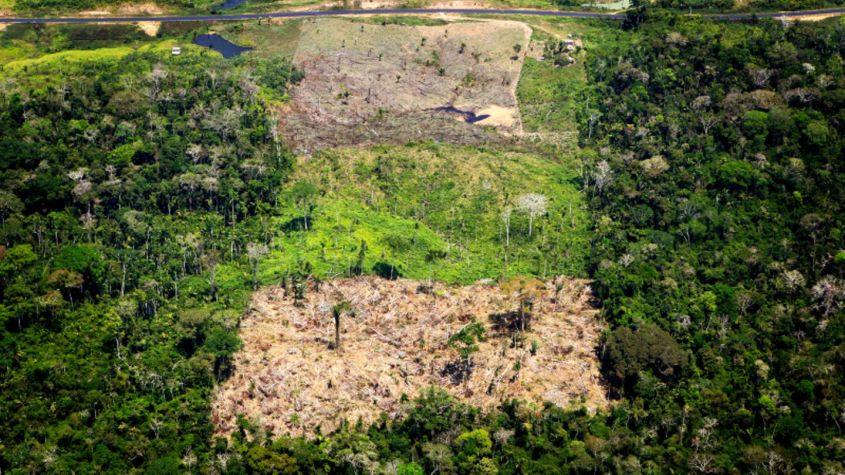
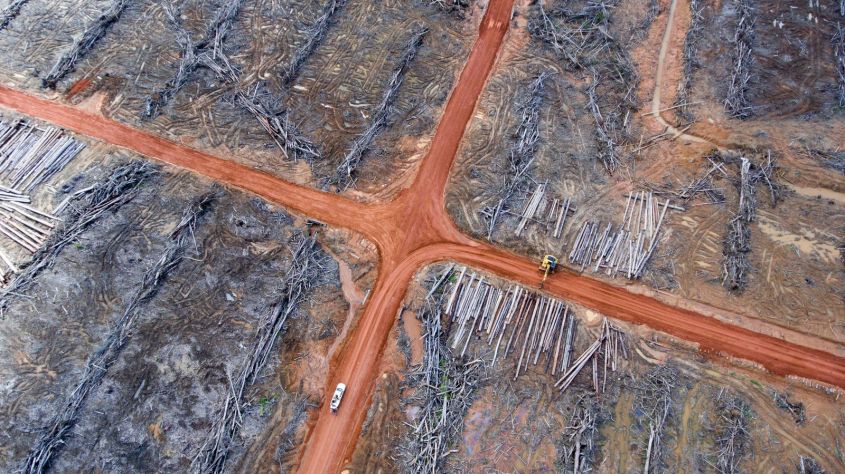
Deforestation in the Amazon reached a 12-year high last year: over 1 million hectares were destroyed! Livestock breeding causes by far the most deforestation in Brazil.
The use of Brazilian leather in the automotive and fashion industries is also contributing to the destruction of the Amazon rainforest.
A new study that we published together with the Rainforest Foundation Norway, Aidenvironment and Ecologistas en Accion shows that companies that supply leather to the automotive industry are partly responsible for the destruction of forests.
Some of these companies also supply the fashion industry, most of which is used for sneakers. The industry’s supply chain is tainted with deforestation and there are currently no adequate control systems in place to ensure this does not happen.
By buying leather products from companies involved in deforestation, your brand is promoting the destruction of the Amazon rainforest, one of the world’s most valuable ecosystems and vital in the fight against catastrophic climate change.
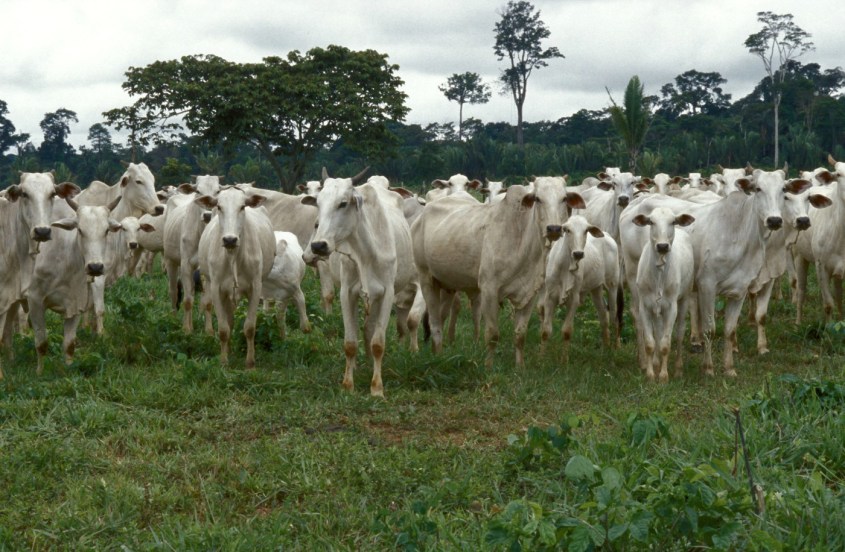
Vale do Jamari settlement, Candeias do Jamari, Rondônia, Brazil; Cattle, there are more cattle than people in the state of Rondônia.
As a successful multinational brand, it is your responsibility to ensure that forest degradation, ecosystem transformation and human rights abuses are eliminated from your supply chains.
You have the opportunity to help Brazil decouple forest destruction from beef and leather production, and we urge you to take advantage of it.
Eliminate deforestation from your supply chain!
Our demands:
We sincerely hope that you and your company want to be a part of the solution. Take measures to avoid the use of leather, which is driving deforestation in Brazil!
We address our demands to:
Volkswagen Group, with brands such as Volkswagen, Audi, Skoda
BMW Group, with brands like BMW, Rolls Royce and Mini
Stellantis, with brands like Peugeot, Citroen, Opel
Groupe Renault, with brands such as Renault, Dacia and Alpine
Daimler, with brands like Mercedes-Benz and Smart
Nike
VF Corporation, with brands such as Timberland, Vans, and The North Face
New Balance
Adidas, with brands like Reebook
The full report for all the details, including a comprehensive list of recommendations that apply to both auto and sneaker manufacturers, can be found here.
And I mean…What do leather and meat have in common? Both often come from cattle.
And both are related to the illegal clearing of the rainforest, but also to immense animal suffering in the slaughterhouses of India and China.
The skin from which leather is made comes from animals that were mostly bred for their meat.
But leather is not a by-product of the meat industry in every country.
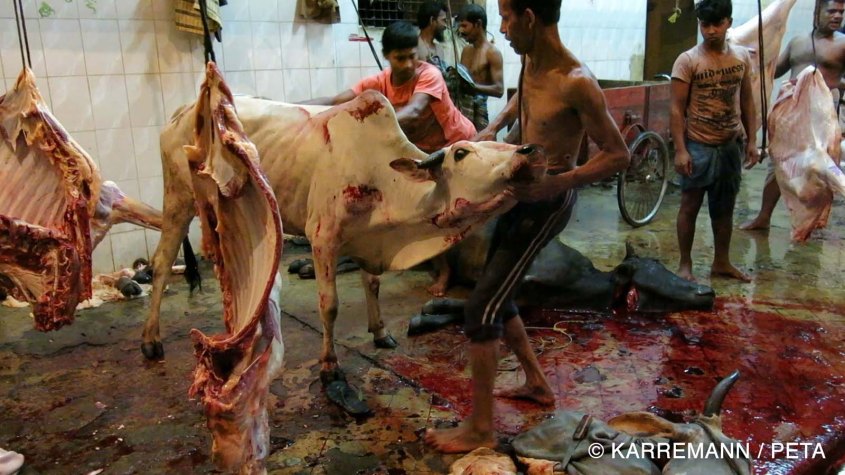
Leather production in Bangladesh. Cows are killed without any stunning.
Regardless of whether animals are bred especially for their leather or for their meat, according to reports, all animals will be exploited and have to experience the horror in the slaughterhouse.
The leather industry generates annual sales of US $ 80 billion in animal hides and leather products.
As the third manufacturing country, Brazil is only behind China and India. In 2017, Brazil ranked fourth in shoe consumption.
30 percent of the leather for car seats comes from Brazil, so it is very likely that a significant proportion of the animals must have grazed on illegally cleared areas.
In Asia, is India the largest producer of cheap leather.
From here a large amount of finished leather and leather goods is exported to Japan, Germany, Italy, Spain and France.
India exports leather worth billions of euros
Cows are simply caught on the street, but so are dogs.
Often their legs are chopped off so that they can no longer run away.
Then the skin is torn off their bodies while they are alive.
Only if no animal products are used can animal cruelty and environmental crime be prevented
And if leather production in India were even worse for animals, the destruction of forests for leather in Brazil does not make that any better.
It’s about animal individuals, about the exploitation of people who work for this destructive industry, it’s about the poisoning of our planet by the tanneries.
We would say that every animal exploited is one too many.
Target: Shawn Benge, US National Parks Service Deputy Director
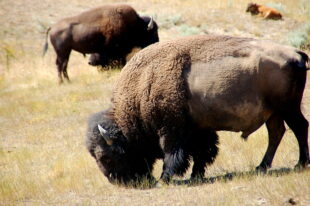
Goal: Stop lottery to hunt Grand Canyon bison.
The National Parks Service (NPS) recently held a lottery that allowed anyone to enter for the chance to hunt bison in the Grand Canyon. More than 45,000 people entered the lottery, which is part of an initiative to limit the population of bison, whose growing numbers are negatively impacting resources in the Grand Canyon area. The NPS will ultimately only select twelve skilled shooters.
While the NPS has defended their decision for the cull, stating that a fast growing bison population has been ravaging water, vegetation, soils, and archaeological sites within the national park, the excitement around the opportunity to hunt this majestic animal is concerning. Hunting at national parks is forbidden, but the NPS does have the jurisdiction to allow park staff or volunteers to kill animals that are damaging the natural spaces. This normalization and “viral” attention that the search for bison-hunting volunteers has drawn could potentially lead to unauthorized hunting or attack on wild animals.
Sign this petition to urge the NPS to stop the public lottery to hunt Grand Canyon bison.
PETITION LETTER:
To Mr. Benge,
The publication of the culling of bison in the Grand Canyon and the ability for anyone to simply enter a lottery to hunt these animals sends the wrong message to the public. The NPS should be focused on conservation and respect for nature. This lottery has, instead, created “viral” excitement around the possibility of shooting a majestic animal that is native to the United States. The fact that 45,000 people registered for a lottery reveals a strange and gruesome desire of many individuals to kill wild animals.
I urge you to stop the lottery to hunt Grand Canyon bison and leave conservation efforts of all kinds to NPS staff.
WAV Comment (Mark) – After more than 30 years of personally campaigning against this disgusting, barbaric trade; the news today (12/5/21) is finally looking good. “MINISTERS have published an action plan on animal welfare, looking at how to use Britain’s freedom outside the EU to increase standards”. Freedom outside of the EU; this legislation shows what can be done by individual nations when they do not have to bow to do nothing fools in Brussels.
I am checking and re checking everywhere to get confirmation; but as you can see below it looks positive.
I will write more on this as more detail is obtained.
Regards Mark
George Eustice, the environment secretary, said: “We are a nation of animal lovers and were the first country in the world to pass animal welfare laws.
Our action plan for animal welfare will deliver on our manifesto commitment to ban the export of live animal exports for slaughter and fattening, prohibit keeping primates as pets, and bring in new laws to tackle puppy smuggling.
As an independent nation, we are now able to go further than ever to build on our excellent track record.”
It can be a little confusing to non Brits, but the United Kingdom is literally what it says, ‘United Kingdoms’; formed by the (kingdom) nations of England, Wales, Scotland and Northern Ireland. Each has its own government; Read more at https://en.wikipedia.org/wiki/Government_of_the_United_Kingdom
United Kingdon.
WAV Comment – there is a lot of talk going around that the UK Ministry Defra will aim to get legislation for a ban on live animal exports intorduced by the end of this year. They are currently going through all the submissions submitted to them; including a large proposal by ourselves. The UK government promised that once the UK had left the EU, it would be able to introduce legislation to ban all live animal exports, which it was unable to do as an EU member state. The consultation (now being reviewed by government) is part of that objective; and we are hopeful for good news in the coming months.
The State Opening Of Parliament – Good news for the environment and animals.
The StateOpening of Parliament is an event which formally marks the beginning of a session of the Parliament of the United Kingdom. It includes a speech from the throne known as the Queen’s Speech (or the King’s Speech if the UK has a male monrch).
It takes place in the House of Lords chamber on the first day of a new session, which is usually in May or June, and traditionally in November, but can occur at any time of year depending on the timing of General Elections and parliamentary session start dates.
It takes place in front of both Houses of Parliament. The monarch, wearing the Imperial State Crown, reads a speech that has been prepared by his or her government outlining its plans for that parliamentary year.
Basically, it outlines the major legislation that the government intends to introduce into UK law in the coming Parliamentary session.
This next session is going to see some positive legislation for both animals and the environment being passed into law, including:
Environment Bill
Another confirmed commitment is to new, legally binding environmental targets in the form of the much-delayed Environment Bill, which was was first launched in July 2018. The Government said it will pass the legislation in the run-up to the international Cop26 climate change summit in Glasgow at the end of year.
Animal Sentience Bill
The Queen’s Speech will also ensure animals with a backbone will have a legal right to feel happiness and suffering. According to the Sunday Telegraph, an Animal Sentience Bill will enshrine in law that animals are aware of their feelings and emotions in order to make the UK a world leader in animal welfare.
Animals Abroad Bill
A new Animals Abroad bill is also expected to ban imports of hunting trophies, while a Kept Animals bill will ban families from keeping primates as pets.
Here is a further review of some other issues not related to animals or the environment:
Thanks as always to Stacey at ‘Our Compass’ for sending this info to us.
WAV Comment – (Mark): As and English activist that has campaigned against the calf trade and dairy industry for the last 30+ years; I find this video very disturbing. It is a complete and utter insult to all of us who have worked so very hard over the years to get this kind of thing stopped. Cruelty goes on, no matter where you are on the planet; and what you do to effectively try to stop it.
Please watch the video – the UK prides itself (quite rightly) on being a nation that prides itself on the way it treats and cares for animals. This video shows the dark side, the other side of the UK pride for animal welfare. It gets to me hard; as it will get to you hard; mere babies cruelly separated from their mothers just hours after birth; the despearate calls from both sides for the want to be together.
There is one simple way to avoid the situations you see in the video; and that is to completely ditch all dairy products and instead go plant based; it is so very easy nowdays.
We have fought over the years in the past; we fight now, and we will forever fight in the future until abuses like those shown here are confined to history books, and we have to explain to youngsters in future why we allowed such abuses to take place in the ‘recent past’.
Regards Mark
Source Expired: Dairy Still KillsWhy do some promote cow’s milk and cheese as “humane”? Consuming animals as well as their “products” is never a victimless activity regardless of how humans define it, those anthropomorphized tv demonstrations of happy cows and cows going to school are delusional deflections from the reality of hell they experience: all exploited animals die, most after brief lives of pain, torment, bodily control, and mutilation.
If you agree that such incalculable suffering and violent death of infants “from other countries” is horrific, you should read about how many infants are violently, fearfully butchered in the US yearly, page 6, and also note that the US, just as one example, exports animals and animal “products” globally.
USDA: 2019 Commercial calf slaughter totaled 587,000 head
Mind you, that number includes calves and not the mothers or the chickens or the lambs or the pigs or the fish: globally and yearly, trillions of unwilling animals are butchered.
If you consume animals or the secretions of animals and refuse to watch the violence and cruelty required for you because you find it “too distressing”, can you imagine having to actually experience it? Would you promote “humane euthanasia” of your cats or dogs in a slaughterhouse?
This really isn’t difficult: next time you make a choice, choose the one that doesn’t require such violence and misery, reaching for plant-based milks or plant-based cheeses or plant-based foods in general takes no additional effort. Nobody selects cows’ milk because it’s “naturally healthy”, that’s just the spin to validate your money subsidizing suffering. Cow’s milk is fortified with those “naturally healthy” benefits – ie, those vitamins are artificially added to it after it is stolen from the infants who it is “naturally” intended for – and the USDA includes soy milk as a healthy dairy food.
It’s bizarre that people pretend that drinking another species’ breastmilk, beyond infancy, and with teeth, causing preventable death to infants and mothers, is “healthy” or “natural”. SL
A staggering 65,000 male calves under a month old were killed in slaughterhouses in 2020 in the UK, more than the number shot on farms.
Latest figures show that 60,000 male dairy calves were killed on British farms – a part of the industry which often faces public criticism. With assurance schemes, supermarkets and dairy companies prohibiting the “routine euthanasia of healthy calves” – the shooting of calves on farms – what will be the fate of these previously killed waste products? Is this another ‘kinder option’ that the industry has created following on from the mass integration of the dairy and beef industries?
Red Tractor, Arla and Müller, plus many supermarkets including Tesco, Waitrose and Morrisons all have varying policies attempting to prevent this killing. But there are loopholes and calves will not always be protected. Some of these policies only protect calves for up to eight weeks old and others do not prevent calves being sold on at markets. Therefore, the fate of many of these calves is to enter the integrated calf rearing and fattening system, where they will be killed from 12 months old for their flesh. But thousands will still be unsuitable and unprofitable.
Oaklands Livestock Centre
‘Slaughter calves’ are bought by dealers from dairies and markets. Dealers are accountable for over half of all calves entering slaughterhouses.
We filmed calves being picked up from dairy farms, supplying Sainsbury’s via milk processor, Müller, by Oaklands Livestock Centre, owned by renowned calf dealer Derek Whittall.
Whittall buys and sells calves at Halls Shrewsbury Auction, as well as buying calves at Barbers Market in Market Drayton.
Whittall’s facility, Oaklands Livestock Centre, is in Shropshire. It is a busy hub for calves passing through. Centres like these are an integral part of the UK calf trade and aid the exploitation of calves. This site is also home to one of Blade Farming’s collection centres. Arla and Sainsbury’s have partnered with beef processor ABP through its Blade Farming operation. This aids the integration of the dairy and beef industries through rearing calves. Son of Oaklands’ Director, Josh Whittall, has been in charge of transport for some Blade Farming calves.
Some of the calves who arrive at Oaklands are destined to enter the integrated rearing system, and eventually be killed for their flesh. Many others will head straight to the slaughterhouse.
Arriving at the centre, calves were mercilessly unloaded. They were kicked and pushed down trailer ramps. Others were dragged up by their tails and ears.
We caught on camera the physical and verbal abuse of these vulnerable babies.
Gates were slammed on the calves, trapping their delicate legs. Plastic bags were waved around to scare the already distressed babies.
The violent culture of abuse amongst workers towards calves at Oaklands was normalised, condoned and seemed to be expected.
These incidents are highly distressing to watch, and not only do they breach transport and welfare legislation, they demonstrate a total lack of compassion and cause unnecessary pain, fear and suffering to the individual animals.
Molly Vasanthakumar Bachelor of Veterinary Medicine and Surgery MRCVS
Naturally, calves drink from their mothers throughout the day and under legislation, those who are less than four weeks old must be fed two or more times in 24 hours. We filmed multiple groups of calves going without feeds for as long as 21 hours and others were fed only once in 29 hours. This was a regular occurrence during our filming.
Unweaned calves had no access to water.
Young calves paced and cried out. Being separated from their mothers and having milk restricted is highly distressing and dangerous for calves. When they were finally fed, they were often shown no patience. Some were thrown and hit and one was kicked in the face for not taking to the drinkers fast enough.
Some calves were loaded up and were left on a trailer for almost three hours. This is another clear breach of guidelines.
Oaklands takes many calves directly to slaughter. This is the heartbreaking, lesser-known part of the calf trade. Oaklands workers took calves to G. & G.B. Hewitt slaughterhouse in Chester, which they used to kill calves. Other agents including Livestock Supplies Ltd were caught on camera also taking calves there, taking almost 30 calves in February alone.
Calves are sent to the same slaughterhouses that kill larger animals such as sheep and adult cows. Their small frames are reflected in how tiny they look inside the walkways and holding pens.
We saw calves who were mercilessly stunned with a bolt gun before being strung up by their back legs and having their throats slit open to be ‘bled out’. The workers, desensitised to this horrific violence, took no hesitation in taking the lives of the calves. Curious and vulnerable babies were reduced to a mere profit-making product, hanging upside down and bleeding onto the slaughterhouse floor.
Their flesh will be sold for human consumption and their skin for leather.
Their captive bolt gun failed to stun a calf FOUR TIMES
There is no legislation covering the time between stunning and bleeding out but the Humane Slaughter Association (HSA) states that “if it is possible to stick [cut the throat] within 15 seconds, then this should be the case”. We caught calves being left for over 40 seconds after stunning.
Could this cruel fate inside the slaughterhouse increase now that policies have been introduced to prohibit the killing of male calves on farms? Will we see slaughter figures increase? Ending the shooting of calves on farm will not end the killing inside slaughterhouses.
Whether they are killed at 10 days old or enter the “integrated rearing and fattening system” …
Take PETA’s Cruelty-Free Shopping Guide along with you next time you head to the store! The handy guide will help you find humane products at a glance. Order a FREE copyHERE
Searching for Cruelty-Free Cosmetics, Personal-Care Products, Vegan Products, or more? Click HERE to search.
Free PDF of Vegan & Cruelty-Free Products/Companies HERE
Want to do more than go vegan? Help others to do so! Click below for nominal, or no, fees to vegan literature that you can use to convince others that veganism is the only compassionate route to being an animal friend:
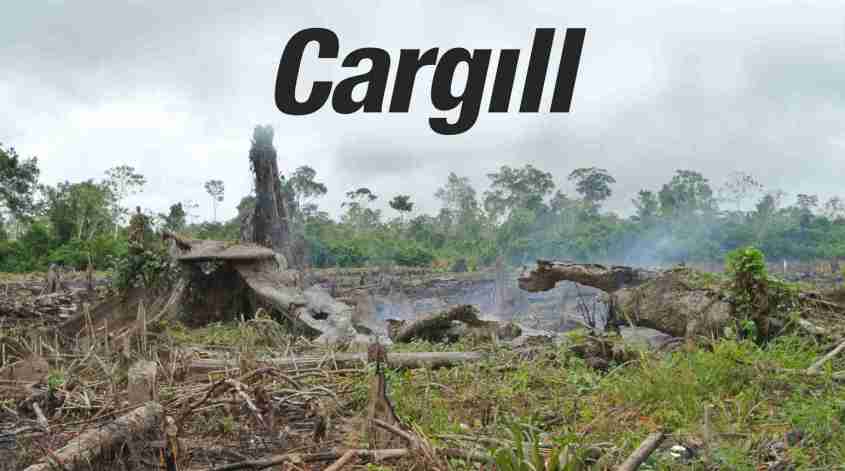
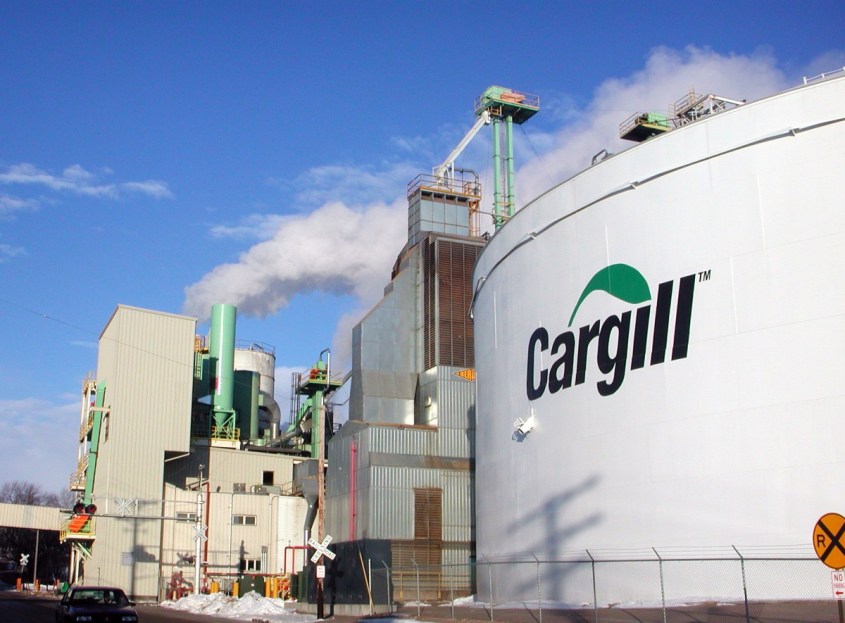
Corporate arsonists are torching forests in Brazil — and the “worst company in the world” is likely to profit from the disaster: Cargill, an agribusiness giant responsible for environmental destruction and human rights violations on a massive scale, makes billions producing soy and meat in South America.
To: the management of McDonald’s, Burger King, Walmart, Unilever, the Dutch company Ahold Delhaize and others
“Cargill is responsible for massive environmental degradation and human rights violations. We call on you to drop Cargill from your suppliers. “
Numerous corporations are guilty of trashing nature. Major chocolate manufacturers, countless palm oil producers and global fast-food chains are all driving the decline of the world’s forests, savannas and other ecosystems.
Yet when it comes to environmental destruction, Cargill dwarfs all the rest: If other corporations are piranhas, Cargill is a great white shark.
The US-based multinational has a long and sordid history of duplicity, deception and destruction that earned it the title “worst company in the world” in a report by the NGO Mighty Earth. The report describes in detail how Cargill profits from the destruction of the environment and the exploitation of people and how it blocks urgently needed changes.
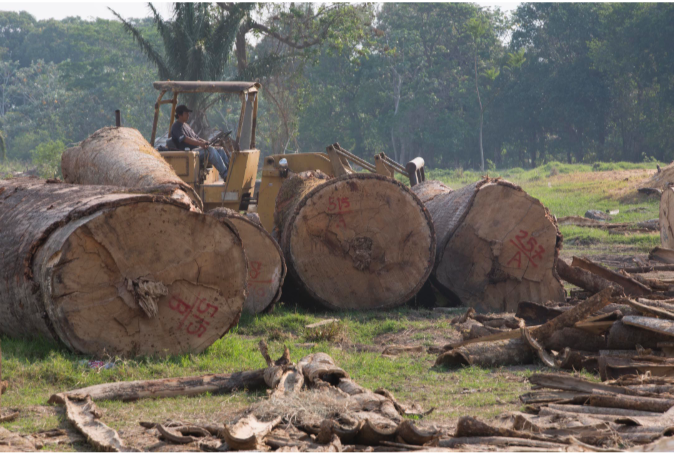
– In Brazil, Argentina, Paraguay and Bolivia, Cargill is involved in the wholesale destruction of the Amazon, Grand Chaco and Cerrado ecosystems for the production of soy and beef.
– In Côte d’Ivoire and Ghana, Cargill buys cocoa that has been illegally grown in protected areas and national parks. The company also does not seem to have a problem with buying cocoa that was produced using child labor.
– In Indonesia and Malaysia, Cargill buys palm oil from companies that illegally clear rainforests and are involved in child and forced labor.
Cargill ignores those issues: profits come before ethics.
For years, Cargill has been pledging to eliminate deforestation, environmental degradation and human rights violations in his supply chain. That promise is a massive lie.
While consumers can hardly avoid Cargill, Cargill’s corporate customers – restaurant chains, supermarkets and consumer-goods companies such as McDonald’s, Burger King, Walmart, Unilever and hundreds more – can!
We call on those companies to cut their ties with Cargill and to stop foisting Cargill products on consumers!
Some additional information on Cargill: Cargill is the largest privately held company in the United States, bigger than the notorious Koch Industries. Its presence extends across the globe.
And the worst company in the world
There is ample and compelling evidence to support this claim.
The people who became sick or died after consuming the contaminated Cargill meat, the child laborers who plant the cocoa that Cargill sells for chocolate consumption worldwide, the people of the American Midwest who drink the Cargill contaminated water, the indigenous peoples who are being displaced to Cargill’s fodder production due to massive deforestation, and last but not least, the common consumers who have to pay more for their food because of Cargill’s financial crimes – they are all feeling the effects of this agricultural giant. Contact with Cargill has affected their life.
If you don’t want to support such a company with your money, you can try to boycott Cargill – but that’s not that easy.
The agricultural group produces and trades in grain, oilseeds, cocoa, animal feed, sweeteners, starches and other ingredients for processed foods, among other things.
“Cargill raw materials” can be found in an extremely large number of brands and products – but the name Cargill cannot be found on the packaging.
It is not possible to compile a complete list of corporations and brands that work with Cargill: there are simply too many companies, and it is often even possible to find out which of them are processing Cargill raw materials.
Therefore, the petition appeals to some of Cargil’s powerful partners.
The more people participate, the greater the pressure on companies – and on Cargill itself.
This call to Gargill’s customers can help a lot Please sign the petition!
These companies must stop buying from Cargill until Cargill stops destroying native ecosystems, exploiting people and communities, and polluting public waters.
The 2021 London mayoral election will be held on 6 May 2021 to elect the mayor of London
Being Mayor of London city is a very important position. The mayor of London has responsibilities covering policing, transport, housing, planning, economic development, arts, culture and the environment.
They control a budget of around £17 billion per year.
Vanessa Hudson (Animal Welfare Party)
The Animal Welfare Party’s leader of 11 years wants to make London a ‘world-leading city for people, animals and the environment’.
Ms Hudson would promote vegan diets across the capital, partly to help prevent future pandemics.
She also backs improving the NHS and a number of green policies. But her key campaign issue is speciesism – which rejects the idea that animals and humans should be treated differently.
She would like to see London stop selling foie gras and fur products, end the restaurant practice of boiling lobsters alive, and exhibiting captive animals in London’s zoos and aquariums. The media producer and founder of Vegan Runners UK would also champion the phasing out of animal testing at London’s universities.


 Only if no animal products are used can animal cruelty and environmental crime be prevented










 World Animals Voice