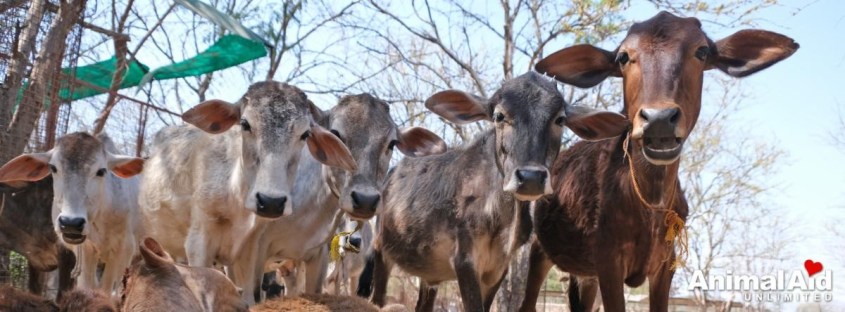
Category: Farm Animals

Making Vegan Easy. Excellent Food Without the Cruelty.

Vegan.com – making Vegan easy.
https://www.vegan.com/cuisines/


If you want to eat a greater variety of vegan foods, make an effort to explore various cuisines from around the world. You will thereby discover countless delicious vegan meals relying on all manner of ingredients, cooking techniques, and seasonings.

There’s certainly no single best cuisine for vegans. But some parts of the world are far more vegan-friendly than others. If you’re vegan or moving in that direction, it’s helpful to know the cuisines that offer the most satisfying plant-based meals.

To help you on your way, check out our guides below. They’ll enable you to discover the best vegan options when dining out. They also offer exciting ideas for regionally-inspired dishes you can cook at home.


Vegan-Friendly Cuisines

• Ethiopian Food
• Indian Food
• Italian Food
• Japanese Food
• Mexican Food
• Middle Eastern Food
• Soul Food
• Thai Food


Top Cuisines for Cooking Plant-Based Meals at Home

If you want to learn how to cook a particular cuisine, consider starting out with Mexican food. There are just so many delicious and healthy vegan options. What’s more, many Mexican dishes are remarkably easy to prepare.

When you’re ready to progress to other cuisines, you’ll have no shortage of enticing possibilities. See the “Cuisines from Around the World” section of our recommended cookbooks page for more than a dozen fantastic titles. If you want to explore a variety of cuisines from dozens of countries, get a hold of Vegan Eats World by Terry Hope Romano.


Finding Vegan-Friendly Restaurant Food

When dining out, Middle Eastern food is the most consistently vegan-friendly major cuisine. Nearly everything that isn’t meat is commonly vegan, especially falafel, hummus, tahini dressing, and lavash bread or pita. Many Middle Eastern restaurants also accompany your dish with an assortment of fresh vegetables, plus Kalamata olives and pickled turnips.


Our How to Go Vegan guide offers detailed guidance on the most vegan-friendly restaurant cuisines. Time spent exploring these menu offerings pays off in all sorts of ways, and enables you to eat better than ever before. Each new meal you try increases your exposure to delicious foods embraced by cultures around the world.


For further reading please see our introduction to vegan cooking and our guide to the best vegan foods.


Vegan.com – making Vegan easy.

https://www.vegan.com/cuisines/


sexy vegan 1


England: 3 In 4. Intensive Animal Farming Is Killing Us.

gemalt-england-flagge-5d


All pictures – Viva !


Hi all;

First; I have not really been able to post much over the last few days because of a big drop down on the system here – so apologies and I hope to get it fixed on 13/5. Fingers crossed !

UPDATE 13/5 – All seems to be fixed this morning – maybe some posts now ! – Mark


Viva kill us 3


Here are a few things just sent to me by Juliet – Founder and CEO of ‘Viva !’ here in England. I am writing this tonight (12/5) with the hope that if the system is back on tomorrow, then I can copy and post. Until then it has to wait.

The new Viva ! campaign is called ‘Three in Four’. As new and deadly diseases infect humans, and are appearing all the time; 3 in 4 of them come from animals. It is not the fault of the animal, simply the systems used by humans to keep them and slaughter them – intensive farming and slaughterhouse systems.

Is this not verified by the big infection rates for Covid 19 that we have seen in US slaughterhouse workers over the last few weeks ? – and as always, the ‘just animals’ from intensive systems; that are put through wood chippers and their mushed bodies spread all over the land.

In the mid 19th century, 1855 to be exact; a German pathologist; one Rudolf Virchow, was the first to discover that infectious diseases could be transmitted between animals and humans – a method that became known as ‘zoonoses’. In August 1958, more than a century later, the ‘World Health Organisation’ (WHO) expert committee on Zoonoses met in Stockholm, Sweden. The outcome of the meeting was a stark warning; the prevention, control, and eradication of these diseases were ‘responsibilities of considerable magnitude in every country’.

Move to 2020; now; and we are experiencing globally the disease called ‘Covid 19’.

Animal farming is killing us. 3 of 4 of the worlds new or emerging diseases are what is called ‘Zoonotic’. These diseases are responsible for 2,7 million human deaths per year and are largely transmitted through the wildlife trade and factory farming. In other words, most pandemics are due to people eating animals. So despite knowing the reasons of disease spread for over 150 years; now more than ever before, we are subjecting animals in terrible confinement in factory farms – the very cause of the problems, simply because some of us still wish a burger or sausage for their meal. It is a dangerous game; and cramming animals together in markets; and subjecting them to factory farming, only increases the risk of in house disease infection, as well as the mutations to the human species which results in infectious diseases.

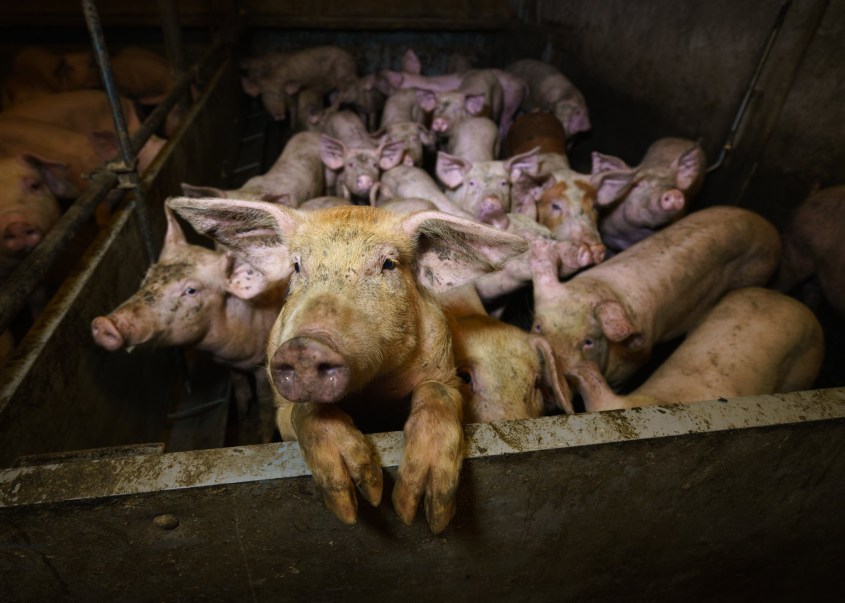
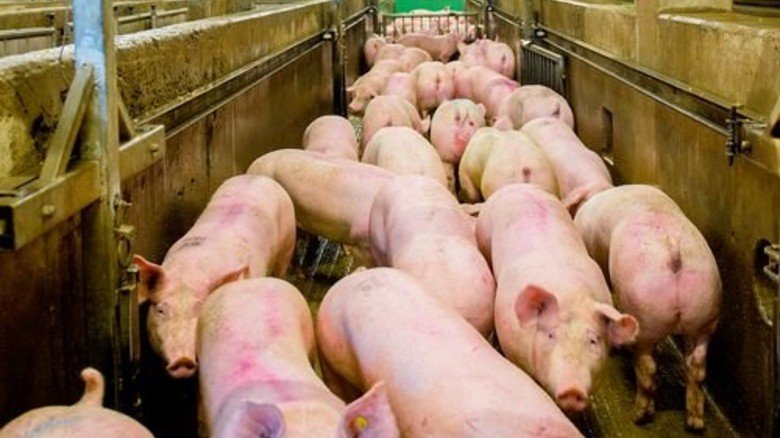
Today, around 90% of all animals farmed for food and dairy across the world are kept in factory farms; where infections can easily spread, mutate and become infectious to humans. Because of the massive numbers of farmed animals involved; such as your typical chicken or pig production system, where huge numbers of animals are crammed together, jammed into farrowing crates, covered in their own waste; and forced to lie on hard slatted floors; pumped full of antibiotics, and surviving in a close environment which easily transmits disease and sickness from one animal to another; is it any wonder that intensive animal farming is killing us ? The huge complexes which imprison these intelligent animals and who at the end of the day only want financial profit, talk the talk when it comes to ‘animal welfare’. But the reality is rather different. The Viva ! 3 in 4 campaign is hitting the streets in the UK; and it calls for an end to intensive farming and for people also to go Vegan; to stop the suffering.

Covid 9 is showing us the bad side of intensive animal farming; we need to learn from it, and quickly, before intensive animal farming kills us all.


Regards Mark


Viva kill us 1

Viva kill us 2


More:

https://www.plantbasednews.org/lifestyle/deadly-bird-flu-could-emerge-from-factory-farming

‘Bird Flu 90 Times Deadlier Than COVID-19 Could Emerge From Factory Farming’ Warns Report

‘The majority of these diseases are the result of human activit

Author:

Plant Based NewsPublish date:

23 hours ago


A mutant bird flu 90 times deadlier than Covid-19* is ‘poised to emerge in humans’ from factory farming, a new report has warned.

The report, titled Zoonoses: a ticking time bomb, was published by animal advocacy organization Viva! and led by senior health researcher Dr. Justine Butler.

It cites scientists who believe the new mutant strain of the H5N1 bird flu virus could prove 90 times more deadly than Covid-19, and would be capable of killing six-in-ten of those infected.


Zoonotic diseases

According to Viva!, zoonotic diseases – those which spread from animals to humans – are ‘developing with increasing frequency’, with three out of four new or emerging infectious diseases in people coming from animals.

A statement sent to Plant Based News said: “Scientists are concerned that the global explosion in factory farming and wildlife markets could make the transmission of mutated strains of the H5N1 bird flu virus to humans much easier.

“They include familiar illnesses and diseases such as the common cold, influenza (flu), polio, AIDS and measles alongside other lesser known ones such as SARS, MERS, Nipah virus and Ebola.

“Most recently, Covid-19 has joined this growing list, having jumped from bats or other wild animals, to humans, leading to the current pandemic.

There are over 200 zoonotic diseases and 56 of them affect some two-and-a-half billion people and cause nearly three million deaths every year.”


‘The writing is on the wall’

In Zoonoses: a ticking time bomb, Dr. Butler writes: “The majority of both zoonoses and antibiotic-resistant diseases are the result of human activity, with factory farming and wild animal markets lying at the heart of the problem. The solution could not be easier – go vegan now!”

Zoologist and Viva! director Juliet Gellatley added: “The writing is on the wall. The global explosion in factory farming and wildlife markets has left humankind exposed to catastrophic pandemics that could kill millions of people.

“For the sake of generations to come we must heed the science and end our collective dependency on the horrific abuse of animals.”

For more information on zoonotic diseases visit viva.org.uk/3-in-4

*According to Viva!, the death rate of those infected by coronavirus is thought to be 0.66 percent. The death rate for those infected by a mutant H5N1 strain could be 60 percent. This equates to a H5N1 infection death rate 90.9 times higher.

Viva ! – https://www.viva.org.uk/


https://www.viva.org.uk/3-in-4


Animal agriculture: a ticking time bomb

As of this writing, almost 2 million humans have been infected in the Covid-19 Coronavirus pandemic, and well over 100,000 have died as a result.

corona karikaturjpg

Even so, although the true numbers are unknown, only a fraction of a percent of all humans have been sickened, and less than 6% of those infected have died.

The majority of the 7.7 billion humans wrecking havoc on our planet and torturing and murdering hundreds of billions of non-human animals annually are continuing to go about their evil business as usual.

corona Carikatur pg

If one believes, as we do, that humans are the real virus infecting planet earth, we can only bemoan the fact that so many humans will likely remain viable throughout the current pandemic.

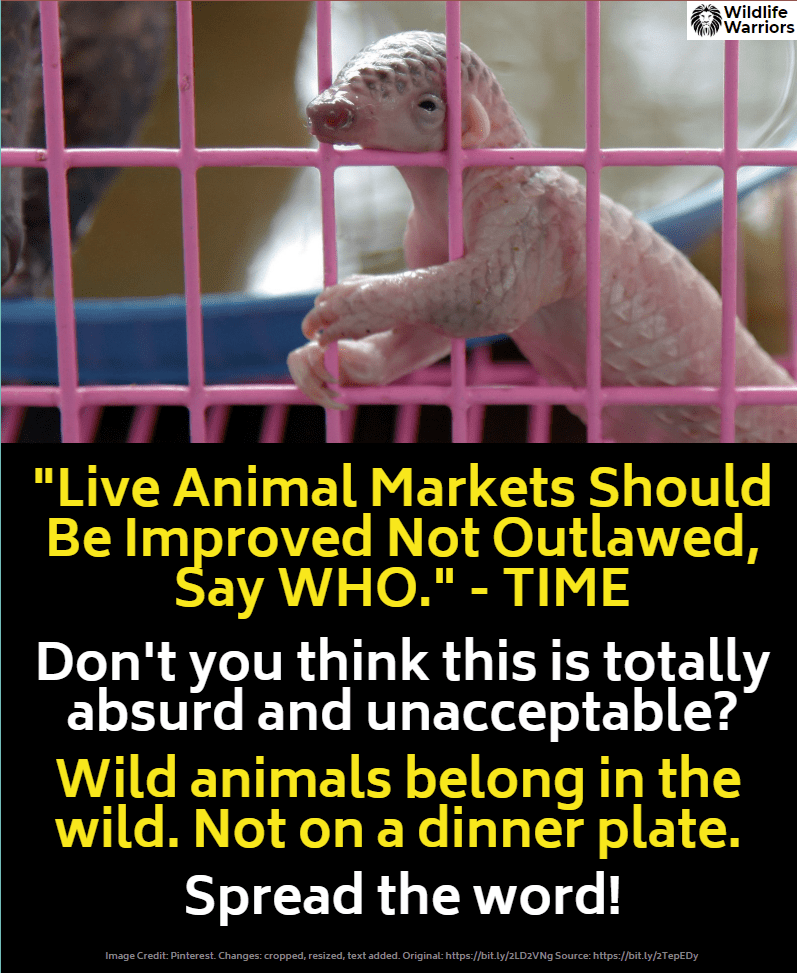
The source of the current pandemic of Covid-19 is believed to be a “wet market” in Wuhan, China. In a wet market, all kinds of animals, live and dead, are for sale for consumption, many of them still alive in cages, many killed on the spot. The virus is believed to have originated in bats before moving to an intermediary animal widely consumed by humans after sale in these markets.

wuhan7

These markets contain fish packed into shallow tubs that splash water all over the floor. The floors and counter tops of stalls are slick and red with the blood of animals killed, skinned and gutted as customers watch. Live turtles and crustaceans climb over each other in desperate bids to escape filthy plastic boxes. Birds and mammals scream as they are killed; sick and wounded animals crammed into small cages stacked high drip blood, pus, feces, and urine onto other animals in cages below.

wuhan5

In the eyes of all of them there is misery and terror. Water, blood, fish scales and animal guts are everywhere. Melting ice adds to the slush on the floor.

For years, scientists have warned that filthy markets crammed full of sick animals are breeding grounds for new, antibiotic-resistant “superbugs.”

Some studies claim that by 2050, more people will be dying from these infectious diseases than from cancer. What the world is witnessing in horror in 2020 will someday be common. The United Nations has found that 70% of new human diseases, such as HIV(chimpanzees), Mad Cow Disease, Avian Flu(birds), Ebola(bats) and Swine Flu(pigs) were directly linked to animals used for food.

toennies_schlachthof-

Amid the Coronavirus pandemic, we continue to be stunned by the lack of serious reporting on the source of the problem.

Finally, after weeks of sparse coverage, we are beginning to see the issue come to light through figures that have captured the world’s attention, like Dr. Anthony Fauci, Director of the National Institute of Allergy and Infectious Diseases, who stated that..

“It boggles my mind how when we have so many diseases that emanate out of that unusual human-animal interface [wet markets], that we don’t just shut it down. I don’t know what else has to happen to get us to appreciate that.”

The writing has been on the wall for years. Animal agriculture, in all of its manifestations — from the disembowelment of pigs, slaughter of cows, killing of chickens on assembly lines, to the bloodthirsty “sport” of hunting — is a ticking time bomb.

Poultry Farm And A Veterinary

And its not only, or even primarily, infectious agents that are doing the killing. Heart disease and stroke, also the direct result of a flesh-based diet, kill 18 million people worldwide each and every year.

We humans have a “vaccine” (a plant-based diet) for this major killer and yet knowingly fail to utilize it.

Unless humans change the way they live with animals, no amount of soap and hand sanitizer, social distancing or ventilators is going to save them as a species.

Maybe that’s a good thing.

ALF LOgo

https://animalliberationpressoffice.org/NAALPO/2020/04/11/on-the-covid-19-virus-and-animal-liberation/


I have no comment on this excellent article, just an addition:
We hear from the media every day … “If we stick to the measures, we will soon be able to return to” normal “life …” At the latest, it will become clear to everyone that we have learned nothing.

We didn’t have a normal life before. That’s why we have a deadly pandemic today.
It is not normal to keep, massacre and eat millions of animals in miserable conditions.
It is not normal to burn the tropical forests to create feed for animals that are used as food for the rich countries.
It is not normal to fell forests and cause the death of a thousand wild animals.

It is not normal to decide about the life and death of other non-human animals, it is the fascist right of the stonger!

Exploitation is a painful and murderous act.
It’s time for us to abolish it.

And not just for fear of pandemics!

To all vegans...thank you n

My best regards to all, Venus

Experts Warn – Intensive Animal Farming Is A Hotbed for Infectious Disease – But Will Governments Listen ?

Exclusive: ‘Zoonoses often take that route… and the more you have of a thing, the more that thing is going to be the likely conveyor,’ says UN environment chief


https://www.independent.co.uk/environment/coronavirus-meat-animal-farming-pandemic-disease-wet-markets-a9505626.html


Industrial animal farming has caused most new infectious diseases in humans in the past decade – and risks starting new pandemics as animal markets have done, experts are warning.

Experts from both the UN and the European Food Safety Authority (EFSA) have pinpointed animals or food of animal origin as a starting point for emerging diseases, such as Covid-19, which has killed more than 270,000 people worldwide.

And a separate report has cautioned that replacing Asia’s open-air slaughter markets with factory farming for meat would create similarly dangerous conditions for highly virulent flu strains to breed.

Valentina Rizzi, an expert in disease at the EFSA, said: “The diseases transmitted directly or indirectly from animals – including livestock – to humans are called zoonoses. A big proportion of all infectious diseases in humans are originating from animals, and more specifically the majority of emerging new infection in humans in the last 10 years really come from animals or food of animal origin.”

Inger Andersen, executive director of the United Nations Environment Programme (UNEP) told One Earth: “The virus usually originates in the wild, is transmitted often by wild birds, bats etc into livestock – domesticated animals.

“We see it more frequently in pigs than poultry but you do see it elsewhere, too, in other animals. Of course we can’t deny that these zoonoses often take that route – this we know from science.

“And the probability is the more you have of a thing, the more that thing is going to be the likely conveyor.”


The UNEP warned in 2016 of new diseases from animals, amplified by the world’s rising population of livestock for meat and dairy.

Ms Andersen said the more we as consumers demand protein from livestock and meat, the more the market would respond.

The experts spoke out as governments worldwide are facing a clamour of calls to ban live animal slaughter markets, such as that in Wuhan, linked to the emergence of the coronavirus. The World Health Organization has been pressured to intervene.

The Independent‘s campaign Stop the Wildlife Trade is calling for the trade to be strictly controlled and regulated.

Viruses such as Covid-19 have been linked to street stalls in southeast Asia and India, where animals are susceptible to disease because the stress caused by such close confinement and the sight of others being slaughtered is believed to weaken their immune systems.

A new report, called Is the next Pandemic on our Plate?, says the similarly crowded conditions of industrial agriculture play a key role in the emergence of pathogens.


Peter Stevenson, chief policy adviser at Compassion in World Farming and author of the document, said policymakers “must resist arguments that wet markets should be replaced by factory farming, or that industrial farming is needed to provide cheap food to feed the growing world population”.

The paper sets out ways to switch to keeping animals in “health-oriented” systems in which the wellbeing of the animal is prioritised so stress and disease vulnerability are reduced.

Such systems would also mean less soil degradation, water pollution, biodiversity loss and deforestation, Mr Stevenson argues.

Food should be regarded as a public good, not as a tradeable commodity, according to the report, which suggests economic policies that would allow for sustainable agriculture and a “nutritious, equitable” food system.

Maintaining a flawed global food system can and will lead to further pandemics,” he said.

Earlier this week researchers led by the University of Sheffield and Bath warned that intensive farming, involving overuse of antibiotics, high numbers of animals, and low genetic diversity are hotbeds for pathogens to spread.


USA: They Are Only Animals For Meat Eaters. Factory Farm Pigs Chopped Up and Spread Over the Land. But Rules Ensure Nobody Gets Sick !

american-flag-120402148


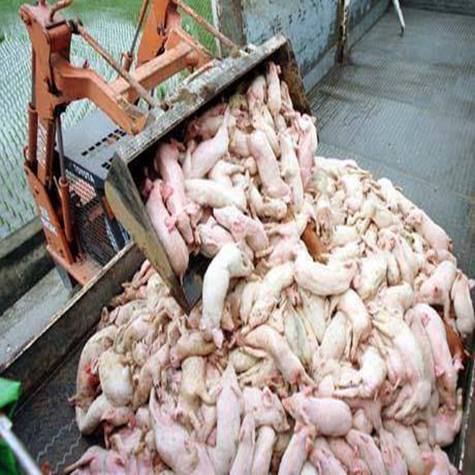
WAV Comment – how disgustingly sick is this ?; that thousand, maybe will be tens of thousands of innocent, living (if you can call the factory farm system that) animals suffering life long incarceration in intensive farming systems; being pumped full of antibiotics, and then finally hauled out of their bars and destined for crappy virus spreading meat processing facilities are now being killed; chopped up into little bits, mixed with wood chippings and spread all over the land !

“An incident management team that includes staff from the Board of Animal Health is overseeing the composting operation to ensure the compost pile is constructed correctly. Proper construction should eliminate the attraction of flies or scavengers, and should not emit an odor, Crusan said”.

Another example of what the ‘meat eaters’ are enforcing on everyone, including those who find this issue as sick as we do. Talking of sick; lets hope that everything goes as the Board of Animal Health suggest and that citizens don’t get sick.


baby-schweine-stock-foto_csp3674932


Wood chippers employed to help compost thousands of excess hogs near Worthington plant


https://www.twincities.com/2020/05/06/wood-chippers-employed-to-help-compost-thousands-of-excess-hogs-near-worthington-plant/


ROUND LAKE, Minn. — A parcel of land in Nobles County has been transformed into a major composting operation for euthanized hogs coming from the crippled JBS pork processing plant in nearby Worthington, as well as hogs from area farmers.

Mike Crusan, communications director with the Minnesota Board of Animal Health, said delivery of hog carcasses to the southwest Minnesota site began over the weekend. The parcel of land can accommodate the delivery of up to 2,000 head per day, though it hasn’t reached peak capacity at this point.

JBS announced last week it could euthanize 3,000 head of market-weight hogs per day because they couldn’t be processed before they grew too large for slaughter and packaging. The JBS plant in Worthington shut down temporarily because of an outbreak of COVID-19, the illness caused by the coronavirus, among workers at the plant. On Wednesday, it resumed operations but at reduced levels.

Crusan said the site northwest of Round Lake would not have been chosen if there were any potential environmental risks.

An incident management team that includes staff from the Board of Animal Health is overseeing the composting operation to ensure the compost pile is constructed correctly. Proper construction should eliminate the attraction of flies or scavengers, and should not emit an odor, Crusan said.

“It should just be, to the naked eye, a pile of wood chips out there,” he said. “The wood chips over the top of the pile, beneath the pile and all around it are going to be keeping all of those odors and all of those things contained as the microbes inside the pile do their work.”

The Minnesota Pork Producers Association is working with the team to establish three other composting sites in the state.

“They are trying to find other areas where there are congregations of large swine operations so they can better serve those people with a centralized site,” Crusan said, adding that farmers will have the option to deliver hog carcasses to those sites or compost on their own property.

The hog carcasses delivered to the Nobles County site will be run through the chipper simultaneously with the wood material — a new concept in the hog industry.

“This whole approach … began being evaluated in composting just within the last year because of African swine fever,” Crusan said. “The pork industry nationwide was studying ways of effectively composting mass carcasses if we were to get that in the United States.”

Chipping the hog carcasses with the carbon material was studied in the Carolinas, Crusan said.

“This is one of the ways we know that we can effectively compost and probably speed up the composting process,” he said.

Crusan said they don’t yet know how many days it will take for the hogs to be fully composted, though it will be considerably shorter than the 60 days it takes for a fully intact carcass to be composted.

Once the composting process is complete, the material can either be spread over the land or incorporated, adding nutrient-rich material to the soil.

A third-party contractor was hired to operate the chipping equipment and build the compost pile in Nobles County. The composting service is being offered to farmers at no cost to them, other than trucking the carcasses to the site.

Hog producers are welcome to contact the Minnesota Board of Animal Health with questions regarding composting hog carcasses by calling 651-296-2942 or emailing animalhealth@state.mn.us.

The agency also has a guide for carcass disposal on its website, mn.gov/bah/carcass-disposal.


England: Moo Free May !

gemalt-england-flagge-5d


Go Vegan World has accused the National Farmers' Union of ...


Moo Free May:


This MooFree May we’re taking our actions online – sharing information about animal welfare, human health and the environment, while encouraging the British public to ditch dairy once and for all.


This year our MooFree May campaign enters its third year! Launched in 2018 the initiative has been a huge success and we hope to reach even more people this year. Obviously, the circumstances are very different from those previous but we hope you’ll still join us digitally.

Last year our online campaign was supported by lots of Street Action events, when we visited cities all across the country to promote veganism. Together with our volunteers we reached thousands of people. With COVID-19 threatening people’s lives, we won’t be able to take MooFree May out on the street with us. However, this year it’s more important than ever to raise awareness about the impact of animal agriculture with three quarters of the world’s new or emerging infectious diseases coming from animals, mainly through trade in wildlife and factory farming.

While this pandemic is turning our world upside down and claiming lives around the globe, we can’t forget that the animals including cows in the dairy industry are still going through horrendous suffering every single day. With fewer staff being allowed to work on farms and financial pressure due to this crisis, welfare standards are likely to be even worse than under normal circumstances.


Scary Dairy | Scary Dairy

calf eoa


Scary Dairy

We’re brought up believing in an idyllic image of dairy cows grazing fields, eating grass and magically producing milk. Yet in reality, dairy cows are subjected to a perpetual cycle of artificial insemination, calving and milking year after year in order to keep their milk production up.

After a nine-month pregnancy, all dairy cows are separated from their young between 24-48 hours after birth. This happens across the board, whatever the system – organic, ‘free-range’ or zero-grazing. If born a boy he’ll likely be shot in the head as a useless by-product and if born a girl she’ll be reared as a milk machine to eventually replace her mother in the milking herd.

This continuous exploitation of a dairy cow’s reproduction system causes unnecessary suffering on an industrial scale but with so many amazing plant-based alternatives now available to us, it’s never been easier to go dairy-free.


Victory! ASA Rejects Complaints about TRASH Billboards | Scary Dairy


Do you need help going dairy-free?

Viva! has a vast amount of resources to help you go dairy-free. You can order our Everyone’s Going Dairy Free guide or have a look at our online section. If you’ve got a friend who’s been wanting to go dairy-free but hasn’t quite managed yet to give up cheese, why not get them one of our brilliant guides to help them with their journey?!


Happy Moo Free May everyone!


https://www.viva.org.uk/blog/moofree-may-2020?mc_cid=619d80533e&mc_eid=26c03356b8


https://www.viva.org.uk/blog/moofree-may-2020?mc_cid=619d80533e&mc_eid=26c03356b8


https://youtu.be/oOJ_8IWMpOA


Enjoy these great Vegan meals from Viva! –


French Toast Vegan Style:

https://www.veganrecipeclub.org.uk/recipes/french-toast-vegan-style?mc_cid=619d80533e&mc_eid=26c03356b8


Fast and Healthy Cereal Bars:

https://www.veganrecipeclub.org.uk/recipes/fast-healthy-cereal-bars?mc_cid=619d80533e&mc_eid=26c03356b8


Cheesy Broccoli and Tomato Quiche:

https://www.veganrecipeclub.org.uk/recipes/cheesy-broccoli-tomato-quiche?mc_cid=619d80533e&mc_eid=26c03356b8


The Ultimate Vegan Pizza:

https://www.veganrecipeclub.org.uk/recipes/ultimate-vegan-pizza?mc_cid=619d80533e&mc_eid=26c03356b8


Chocolate and Raspberry Torte:

https://www.veganrecipeclub.org.uk/recipes/chocolate-raspberry-torte?mc_cid=619d80533e&mc_eid=26c03356b8


EU: The main culprit for animal suffering

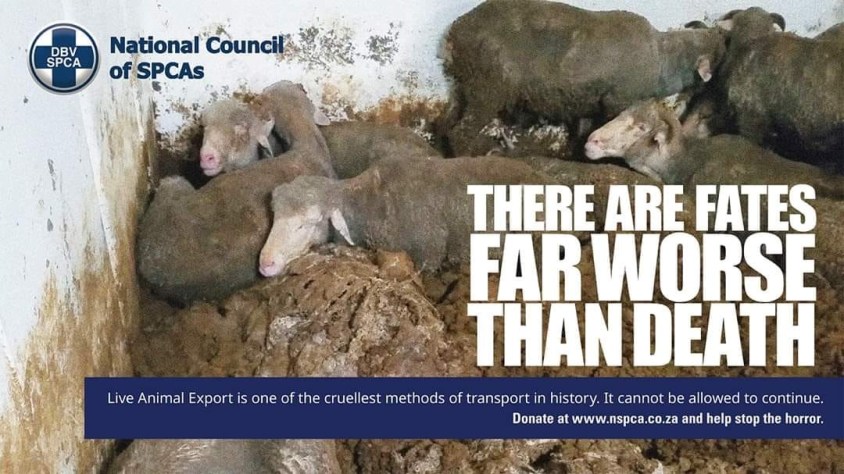
A new investigation from Animal Equality shows the pain and torment of Spanish lambs as they are shipped across long distances, with journeys lasting up to ten days, and slaughtered while fully conscious after arrival.

THE DETAILS: In distressing footage shot by our investigators, we documented how lambs, all less than a year old, are treated during their live transport from Spanish farms.

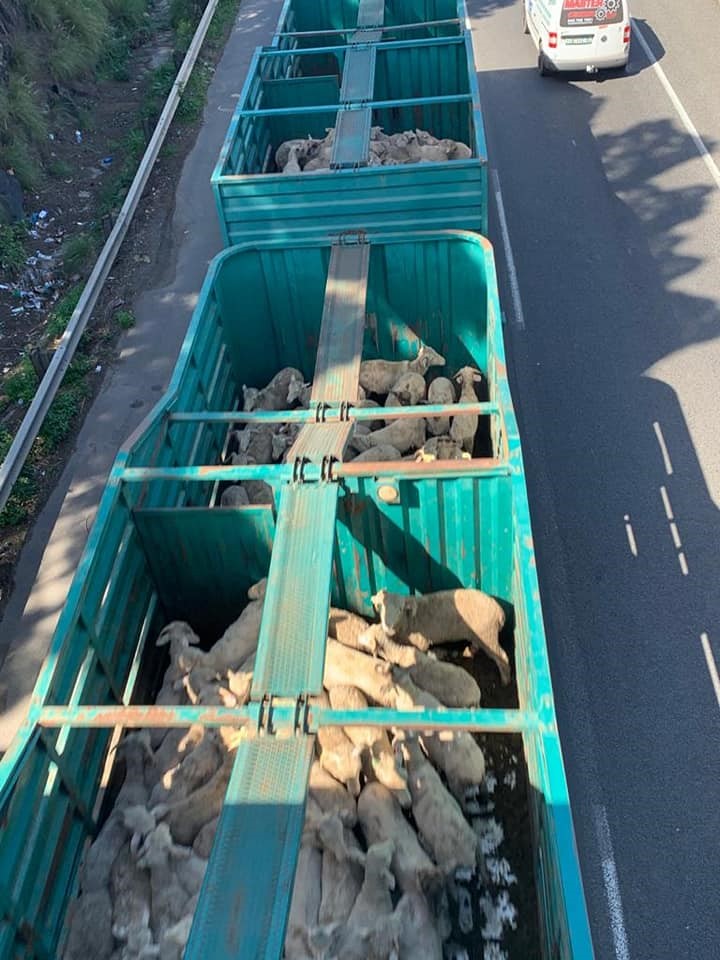
Tens of thousands of lambs are first shipped hundreds of miles by truck to Spanish port cities and then forced to travel by sea to countries in the Middle East to meet the demand for meat coinciding with Ramadan and the feast of the Sacrifice of the Lamb. Lambs are particularly sensitive animals that become paralyzed when they are afraid.

During the journey, workers are shown throwing the animals and grabbing them by their legs to prevent them from retreating.

spain_lambs_2pg COVID-19 A FACTOR: The meat industry is utilizing the exports of lambs to Middle East countries as a way of compensating for the lack of domestic demand due to the COVID-19 pandemic, as 90% of these animals are consumed in bars and restaurants. Data indicates that this year alone more than 250,000 lambs will be sent to countries in North Africa and the Middle East for Ramadan celebrations.

BILLIONS OF ANIMALS ENDURE CRUEL LIVE TRANSPORT: Worldwide, more than two billion farm animals undergo long-distance of travel each year as a means of transporting live meat. Thousands also die during long sea journeys, with their bodies thrown overboard, appearing on beaches days later.

Schafe_Lämmer_Schifftransport_834.600_0_0__95

In a 2019 report following an accident in which 14,000 sheep drowned in the Black Sea while being transported from Romania to Saudi Arabia, the European Commission acknowledged numerous deficiencies in this type of long-distance transport.

The report points out that the welfare of these animals depends largely on the conditions of the ship and because there are no suitable inspections carried are carried out, there are no guarantees that these ships have an adequate drainage or ventilation systems.

tiertransport zum Appel an die EU-Kommissionpg

In fact, for ships bound for Saudi Arabia, port operators or livestock owners are not even allowed access to the vessels’ interior. 

WHAT WE’RE SAYING: “Our investigations have clearly documented the mistreatment of lambs on these trips. It’s time to demand that both the Spanish government and the European Commission ban long-distance travel of live animals,” says Silvia Barquero, Executive of Animal Equality Spain.

WHAT ELSE WE’RE SAYING: “From farms to slaughterhouses, animals exploited for food suffer tremendously. What is often forgotten in this never-ending cycle of violence is the immense cruelty that happens when these animals are transported to be slaughtered. It’s more than time for this cruelty to be stopped and Animal Equality will continue to use its investigations to expose these truths,” says Sharon Núñez, President of Animal Equality.

LIVE TRANSPORT OF ANIMALS OUTSIDE OF THE EU MUST END: In Europe, Animal Equality launched a petition addressed to the European Commission and the Ministry of Agriculture, Food and Fisheries calling for an end to long-distance transport to countries that do not guarantee basic EU animal welfare standards (!!)

We are hopeful that our efforts will lead to much-needed change and will prevent the suffering of hundreds of thousands of animals every year. In the meantime, you can make a difference for animals by sharing out our investigations and ditching animal products.

Saving lives starts with consumer choices, and you can help end suffering by making the switch plant-based.

The animals, the planet, and your health will thank you.


https://animalequality.org/news/investigation-animal-equality-shows-torment-of-eu-animals-shipped-for-slaughter/


And I mean…Since the judgment of the European Court of Justice in April 2015, the legal situation has been clear: The EU animal welfare transport regulation No. 1/2005 must be observed until the animals’ final destination, even if it is outside the EU.

The longer the transport, the more the animals suffer.
The lower the financial ‘value’ of the animals, the worse the transport conditions – mostly with live exports from the EU.

In order to get rid of the overproduction of animals, the member states of the European Union export over three million animals per year to countries outside the European Union, especially cattle and sheep.

Sooner or later the animals will be slaughtered in the countries mentioned without anesthesia. The methods for fixing animals are inconceivable and far from the EU animal welfare laws for animal transport.

And now the following question arises: Why do we need EU law if it is constantly broken?

Has the EU Commission considered what happens to the ships that want to enter the ports of non-EU countries and are not allowed if the countries close their borders because of Corona?
Who will check whether Regulation 1/2005 is complied with in these countries?

The EU Commission has so far confirmed that they are indifferent to the suffering of animals in transports, farms, laboratories, circuses, aquariums, zoos…

Close the altar that worships power, excess, animal torture and tyranny
Let the bloated bureaucrats find real jobs in the fast food industry.

Turn these palatial EU buildings into nature wildlife parks for zoos animals
A Europe without an EU will be a win for everyone!

My best regards to all, Venus

New findings show Australian sheep face dangerous heat stress on export ships.

sheep123


As many of you are aware, live animal transport (live export) is one of our major hates and something we have been involved with for decades; personally acting as investigators into this sordid business – https://serbiananimalsvoice.com/about-us/ – thus we feel that we do have experience in; and feel we have some degree of knowledge to talk about this trade.

After the two articles we have reproduced from ‘the conversation’ which you can read below; with further links in the articles; we have reproduced a few links specifically relating to our own work monitoring sheep exported live from Romania (EU) to the Middle East. We published updates every day of the position of the vessel on its shipment, along with conditions and temperatures for the sheep which were clearly outside of EU regulation 1/2005 on the so called ‘Protection’ of animals in transport.

As we have said many times before, the EU regulation is just a smokescreen behind which all the authorities and regulators can hide, whilst really doing nothing. As always, in the end it is the animals that suffer terribly.

Regards Mark (WAV).


Here are just a few of our recent posts relating to Romanian sheep being exported to the Middle East in extreme temperatures:


https://worldanimalsvoice.com/2019/08/01/romanian-sheep-ship-update-1-8-19-1020hrsgmt-vessel-now-entering-kuwait-city-expected-to-dock-0300hrs-local/


https://worldanimalsvoice.com/2019/07/30/romanian-sheep-transporter-ship-update-30-7-19-currently-moored-at-jebel-ali-dubai-uae-no-speed-moored/


https://worldanimalsvoice.com/2019/07/26/update-26-7-19-2000hrs-gmt-for-romanian-sheep-livestock-carrier-al-shuwaikh/


https://worldanimalsvoice.com/2019/07/25/25-7-romanian-sheep-exports-update-vessel-now-n-the-gulf-of-aden/


https://worldanimalsvoice.com/2019/07/24/eu-se-england-meps-now-asked-by-wav-as-to-why-france-stops-live-transport-and-yet-romania-exports-70000-live-sheep-to-the-middle-east-in-temperatures-10-degrees-hotter/


https://worldanimalsvoice.com/2019/07/23/al-shuwaikh-romanian-sheep-shipment-70000-animals-current-position-red-sea-has-departed-jeddah/


https://worldanimalsvoice.com/2019/07/20/romanian-sheep-shipping-news-20-7-19-new-kuwait-eta-over-another-weeks-sailing-time-now-set-what-are-conditions-like-for-the-animals/


https://worldanimalsvoice.com/2019/07/16/romania-re-70000-sheep-exported-to-the-middle-east-how-to-contact-romanian-meps-to-express-your-disgust-at-their-nation/


https://worldanimalsvoice.com/2019/10/28/eu-remember-the-romanian-sheep-to-the-middle-east-in-extreme-temperatures-the-latest-from-the-eu-but-still-no-infringement/


https://worldanimalsvoice.com/2019/09/18/remember-the-al-shuwaikh-and-the-romania-sheep-now-it-is-trying-to-take-sa-sheep-read-the-latest-from-animals-australia-and-the-rspca/


https://worldanimalsvoice.com/2019/09/06/england-wav-now-write-to-europe-regarding-romanian-sheep-and-animal-carrying-box-trailers/


https://worldanimalsvoice.com/2019/09/04/nightmare-comes-true-for-romanian-sheep-exported-to-the-gulf/


https://worldanimalsvoice.com/2019/08/04/romanian-sheep-exports-on-al-shuwaikh-we-have-all-the-data-and-are-now-waiting-for-the-eu-to-return-from-summer-holidays-then-we-start/


Sheep legs


australia


https://theconversation.com/new-findings-show-australian-sheep-face-dangerous-heat-stress-on-export-ships-137598


New findings show Australian sheep face dangerous heat stress on export ships


May 4, 2020 8.50pm BST


It’s been almost three years since thousands of Australian sheep died during a voyage from Australia to the Middle East. My group’s new research provides insight into the heat stress faced by sheep exported in recent years and casts further doubt on the industry’s future.

We found sheep experienced heat stress on more than half of voyages to the hottest port in the Middle East, Doha, over three summers from 2016 to 2018.

This is the first time the extent of heat stress in live sheep exports from Australia has been quantified, and the findings do not bode well. A federal government ban on exports during the Northern Hemisphere summer is already hurting the industry. And COVID-19 looks likely to affect the annual Hajj pilgrimage and Eid al-Adha religious holiday, when our sheep meat is in high demand.

The future of Australia’s live sheep export industry appears bleak. Sheep farmers would be wise to seriously explore alternatives.

Severe heat stress exposed

Australia to the Middle East is one of the world’s longest sea transport routes of live sheep for slaughter, usually taking about 20 days.

The welfare risk to sheep from heat stress is highest on voyages departing Australia in our winter, and arriving in the Persian Gulf in the Northern Hemisphere summer.

In April 2018, whistleblowers released video footage filmed the previous year showing shocking live export conditions on the Awassi Express ship. More than 2,400 sheep died on the voyage from Fremantle to the Middle East.

The footage triggered public outrage. As part of its response, the federal agriculture department established a committee, of which I was a member, to assess the heat risk facing sheep exports to the Middle East.

The committee recommended measures to ensure sheep experienced heat stress on fewer than 2% of voyages. Subsequent research by my group would reveal just how far the industry is from that target.

Alarming findings

The federal government granted us access to temperature and mortality data from 14 voyages from Australia to the Middle East in May to December, between 2016 and 2018.

We wanted to know at what temperatures the welfare of the sheep began to be affected by heat stress.

To determine this, we analysed so-called “wet bulb temperatures” on the sheep decks. This measures not just air temperature but water vapour, which affects the levels of heat stress actually experienced at a particular temperature.

Wet bulb temperatures typically increased from 20℃ to 30℃ during the 14 voyages in the Northern Hemisphere summer. Ten out of 14 ships stopped at Doha in Qatar, the hottest of the four Gulf ports. There, daily maximum wet bulb temperatures from July to September exceed 27.5℃ half the time, at which point heat stress in sheep increases.

The wet bulb temperatures at Doha exceeded 32.2℃ 2% of the time, at which point sheep deaths are more common.

Ships docking at Doha sit in the sun for about a day and a half while some sheep are unloaded, exposing those left on board to high temperatures.

The ban is not enough

The federal government recently banned sheep exports to the Middle East between June 1 and September 14 this year, due to heat stress risks. Shipments to Doha are banned from May 22 until September 22.

The government has argued that a longer ban would have too great an impact on the industry. But our results show mortality increases during voyages from September to November, compared with May. This suggests more sheep will die as a result of the shorter ban.

The government introduced other measures this year to try to improve sheep welfare on ships.

First, it will require temperature data to be recorded at two sheep pens per deck. However my group has shown this does not produce representative results.

Read more: Grattan on Friday: Live sheep exports tarnish Australia’s reputation and should be stopped

Second, sheep can be unloaded at no more than two ports. But our results suggest that it is not the number of ports that influenced sheep deaths, but whether sheep were kept in hot conditions on board at Doha.

The COVID-19 pandemic has struck a further blow to sheep welfare. The federal government requires that animal welfare audits are conducted at holding facilities in the destination countries. But quarantine requirements have made these checks difficult.

It’s also worth remembering that heat stress is not the only challenge sheep face en route to the Middle East. They usually have very little space and likely get stressed by ship motion.

A double whammy

The Australian live sheep export trade has declined from about 7 million per year in the late 1980s to about 1 million per year now.

Australia has recently been unable to meet the Middle East’s demand for sheep meat – a problem the industry blames partly on the export ban. Middle East buyers are increasingly turning to the horn of Africa, Europe and Asia.

Compounding this, COVID-19 looks set to force the cancellation of the annual Hajj pilgrimage to Mecca in Saudi Arabia culminating in Eid al-Adha – a sheep-eating festival usually celebrated by millions of Muslims.

The double whammy will particularly hurt Western Australia, which in 2019 handled 97% of sheep leaving Australian ports.

If the festival is not cancelled, Australian sheep may be sent early to be stockpiled alive in the Middle East, to avoid the export ban. This would leave them exposed to the high temperatures the Australian government has sought to protect them from on ships.

Looking ahead

Some Western Australian sheep farmers have seen the writing on the wall. In the short term, some are turning to alternative livestock, such as prime lamb or beef cattle for domestic consumption or export as carcasses. This has the added benefit of keeping processing jobs in Australia.

In the long term, farmers would do well to look at the rising popularity of vegetarianism and veganism, and the threat to conventional meat production posed by “clean” meat grown in labs.

Some sheep grazing has already been replaced by cropping, and this is likely to increase in future.

There is no quick fix to the problems facing live sheep exports from Australia. The sooner we shift our economic reliance to more humane alternatives, the better.

Read more: Can meat exports be made humane? Here are three key strategies


https://theconversation.com/the-ban-on-live-sheep-exports-has-just-been-lifted-heres-whats-changed-123998


The ban on live sheep exports was only ever intended to be temporary. The Australian government enacted the ban earlier this year to prevent sheep from being shipped to the Middle East from the beginning of June through to September 22 – the highest heat stress risk period.

During this time, sheep are adapted to the cooler temperatures of a southern Australian winter. And for this reason they find it difficult to cope with the sudden increase in temperature and humidity as the transport vessels undertake the two week journey to the Persian Gulf region

This ban affected any voyages where the vessel would travel through waters in the Arabian Sea north of latitude 11°N at any time – effectively stopping the Middle East sheep trade as the entrance to the Gulf of Aden is at 12°N.

Why are Australian sheep shipped to the Middle East?

It seems outwardly strange to ship live animals (and their feed) across an ocean just for them to be slaughtered for meat shortly after arrival.

But there is a demand for live Australian sheep in the Middle East, which means it’s economically viable for exporters to ship animals from southern Australia, particularly out of Fremantle, but also from ports including Portland and Adelaide.

Read more: Government suspends licence of biggest live sheep exporter

Western Australian farmers received an average price of A$117 for each exported sheep during 2018, so the price of each sheep at the other end must be substantively greater.

There are significant animal welfare challenges in successfully live exporting sheep. Part of the problem has been that the location of the greatest concern for animal welfare is the Australian public. But the Australian public have no consumer power, they’re not the ones buying the sheep.

So, the Australian government has been required to “push” animal welfare requirements down the industry supply pipeline, rather than having these requirements being “pulled” through by market demand.

What we do not know is how the economics would change and whether additional market lines would open up for boxed meat – rather than live sheep – if the live trade were to be stopped.

Why was the ban put in place for the first time in 2019?

The ban was one of the consequences for the live sheep trade after disturbing video footage was revealed in April 2018. The graphic video showed sheep suffering and dying due to apparent heat stress on voyages from Australia to the Middle East.

The government immediately commissioned a review into the conditions for the export of sheep to the Middle East during the northern hemisphere summer.

Read more: Government to announce increased penalties for live sheep trade

That review made a number of recommendations, which were then implemented by the government, including increases in space allowance for sheep on board and independent auditing of ship ventilation systems. Government-appointed observers were also included on voyages, and the notifiable mortality threshold reduced from 2% to 1% of animals during a voyage.

Since government-appointed observers were included on voyages the notifiable mortality threshold on voyages reduced from 2% to 1% of animals.Trevor Collens/AAP

A key recommendation was that the regulatory framework should change from minimising mortality from heat stress to, instead, safeguarding animal welfare.

The government then commissioned further reviews to determine how to implement this recommendation, including an independent technical reference group.

This report was released on September 20, and the government has stated it will be used along with other information to determine the regulations for how (or if) live sheep shipments occur during the northern summer of 2020.

Are the changes sufficient?

The live export industry argues they have succeeded in making substantial changes to how it operates since the original footage was revealed in 2018.

Whether these will be sufficient to prevent further revelations of heat stress incidents or other adverse animal welfare outcomes remains to be seen.

Read more: Australia’s history of live exports is more than two centuries old

Including independent observers on voyages to keep an eye on animal welfare should increase the transparency of what happens to sheep during live export shipments. Although, there has been criticism of the delay in reporting from this initiative.

The new arrangements in place since 2018 and the temporary ban from June to September are unlikely to satisfy animal welfare advocates who are against live exports. On the other hand, the live export industry argues the sector is important for Australian livelihoods, including supporting sheep farmers.

What’s more, the current coalition government has repeatedly stated its commitment to maintaining a live export industry. Interestingly, the 2019 federal election was the first time there was a clear policy difference on the issue between the major parties, with the ALP committed to a phase-out of the live export sheep trade.

It will be interesting to watch whether this policy difference will remain after the ALP’s review of its 2019 election policies.

Read more: The ALP promises to phase out live sheep export

But in terms of what more needs to be done, it’s likely impossible for policy-makers to satisfy all parties in the live export debate.

New overarching standards for the export of livestock from Australia are scheduled to be introduced soon, covering more than just heat stress risk.

However, those who are against the trade in live animals are unlikely to be persuaded to desist in their efforts. A repeated history of damaging incidents and revelations serves as a reminder of what may happen again in the future if the industry does not get to grips with its animal welfare responsibilities.

USA: 1 in 5 ‘Wendy’s’ Is Now Out of Beef – Analysts Say.

USA Flagge


https://edition.cnn.com/2020/05/05/business/wendys-beef-shortage/index.html


New York (CNN Business)The national meat shortage has come for Wendy’s. The fast food chain says some menu items are unavailable, and one analyst estimates nearly one in five of Wendy’s restaurants are out of beef.

Around 1,000, or 18%, of Wendy’s 5,500 US restaurants are not serving any hamburgers or other meat-based items, according to an analysis of online menus at every location conducted by financial firm Stephens. Wendy’s is “more exposed” to the shortage sparked by the coronavirus pandemic because of its reliance on fresh beef compared with its competitors, the note said.

Wendy’s (WEN) said some of its menu items might be “temporarily limited at some restaurants in this current environment.” The company said its delivery schedule remains unchanged, but supply has been tight because beef suppliers across North America face production challenges during the pandemic.

Many meat suppliers have temporarily closed their factories because workers are falling ill from Covid-19.

“We’re working diligently to minimize the impact to our customers and restaurants, and continue to work with our supplier partners to monitor this closely,” a Wendy’s spokesperson said.


Continue reading via the link given above.


England: Every Day Is Like Sunday.

gemalt-england-flagge-5d


‘Meat is Murder’ by ‘The Smiths’ is an old track now but is well known in England as the song which converted more people to vegetarianism than anything else.

‘Morrissey’ was the lead singer of the Smiths – he has gone it alone but is a now, more than ever a massive animal rights campaigner.  He makes some bloody good music also.


mozza2

morrisey