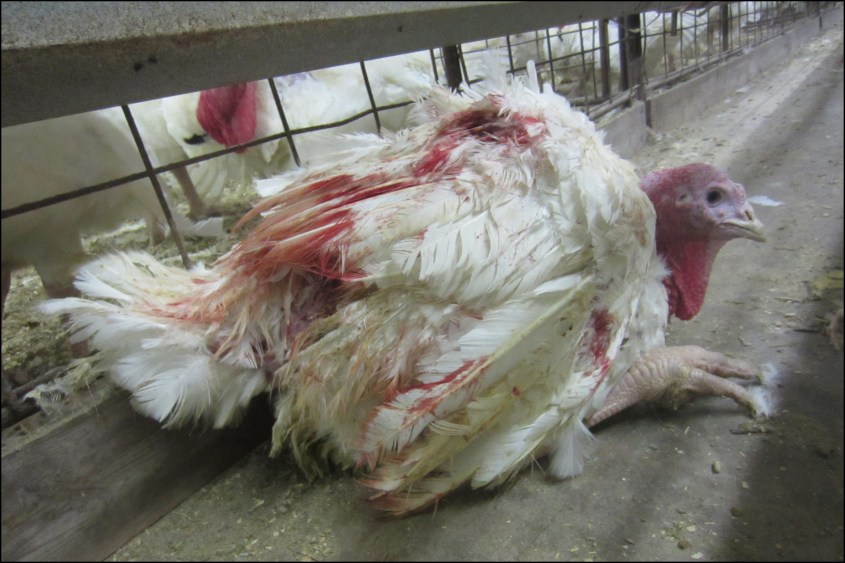
Images recorded with a camera hidden by Animal Equalia, show the wild abuse of animals in a slaughterhouse in Madrid.
Another example of what the industry considers “exceptional”, but that really happens every day everywhere. The “animal welfare” of advertising is nothing but covert abuse.
The lambs go in line. They resist death, but there is not much to do. An operator jumps on them to accelerate the chain. In another part, several sheep are thrown into the air. Metal doors are slammed shut. Blood.
These are some of the images recorded with a hidden camera in a slaughterhouse in Villarejo de Salvanés, in the Community of Madrid.
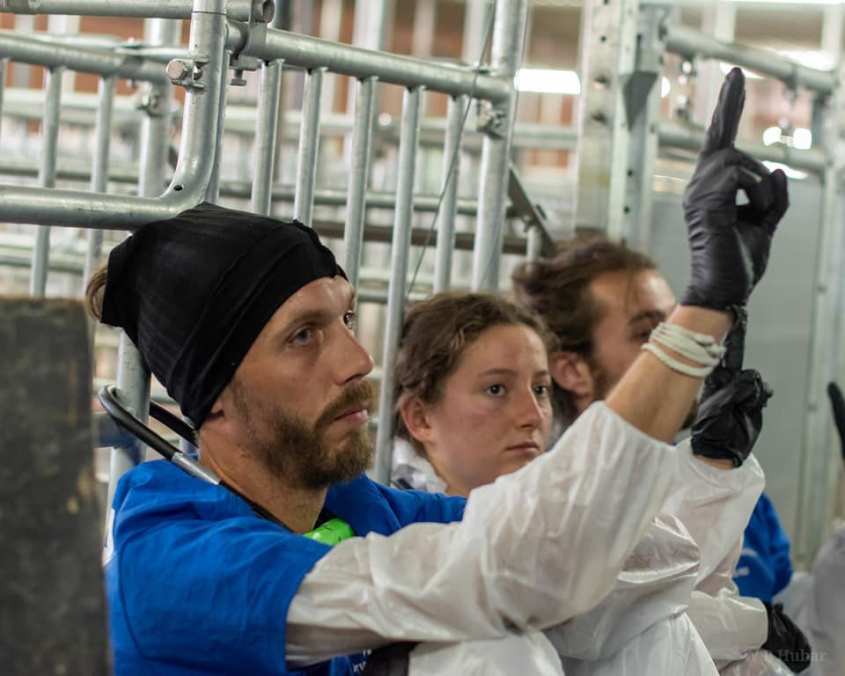
The images are eloquent: lambs thrown, kicked and beaten. A worker is repeatedly thrown over. Some, who do not have standing, go to the production chain, ready to consume. This is the slaughterhouse Cárnicas Salvanés SL, according to images provided to this newspaper by the Equalia association, which filed a criminal complaint on Monday in the courts of Leganés against this business for violating European animal welfare law and finding anomalies in hygiene of the facilities. The company denies the accusations.
The video begins with a drone image that places the slaughterhouse. It is in Villarejo de Salvanés, southeast of the region, and it is a family business run by three brothers and where lambs, sheep, goats and cows are slaughtered and subsequently consumed in the Madrid region and in areas of Toledo.
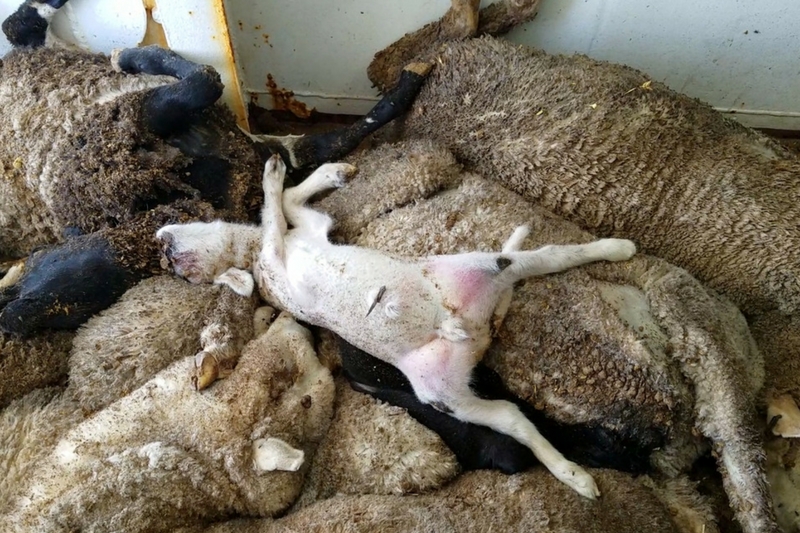
In the video, the slaughterers appear putting in the slaughter line sick lambs that “barely stand up”. Small sheep that are thrown alive,thrown over the rest of the flock, which remains confined in corrals full of fleas and feces. “It is a risk to public health,” denounced from Equalia, an organization that has disseminated the images.
The company had the Halal certificate until the beginning of 2019. This means that, within the same slaughterhouse, lots are made when sacrificing the animals: depending on the client, they are stunned or not (when the Islamic rite is followed). During this year, all animals without exception of Cárnicas Salvanés SL had to have been stunned to avoid unnecessary suffering.
David Herrero, spokesman for the organization Animal Equality, explains to the Public that, although it cannot be generalized, this is an example of how community regulations are breached in slaughterhouses in Spain. So, it is not the first time that Equalia manages to enter the opaque walls of the meat industry.
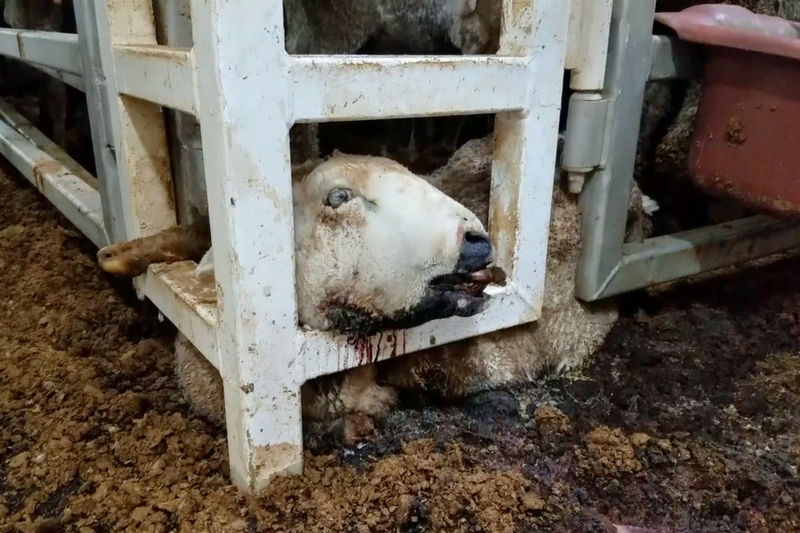
The diffused images show sheep that do not stand up or are sick, and are taken to the conveyor belt to enter the bleeding zone. One of them was filmed dying the night before. “It took ten hours until she was taken to the killing area,” explained Herrero.
The law contemplates that an animal that cannot walk will not be dragged or transported to the place of killing, and will be sacrificed in the same place where it is, without moving it or, of course, throwing it.
In fact, it can be seen that some of the animals agonize while, hanging, they bleed along with the rest of the herd. “One of them became fully aware until half an hour,” they say from Equalia.
This newspaper has tried to contact unsuccessfully with the company Cárnicas Salvanés S.L. to know its version of the facts.
My comment: Almost all the media in Spain report about it, but even in Germany this hell has caused great rage among civilized people. How has the human species degenerated so much and treats animals so primitive and sadistic still today, in the 21st century?
I have no answer but I found a good comment about it in RT, it is in Spanish but the translation was easy to do:
The comment: “Los españoles son unos malparidos (excluyendo a mi abuelo), leyendo a Fray Bartolomé de las Casas me enteré de la manera tan cruel que masacraron a los naturales de América, se estima que el genocidio mas grande en la historia de la humanidad lo realizaron estos degenerados. Solo en ese país podían nacer las corridas de toros, las peleas de gallos, las cruzadas y la Inquisición”.
Translation:The Spaniards are spoiled (excluding my grandfather), reading Fray Bartolomé de las Casas I learned in such a cruel way that they massacred the natives of America, it is estimated that the greatest genocide in the history of mankind was made by these degenerated. Only in that country could bullfights, cockfights, crusades and the Inquisition be born.
No animal should suffer like this. Please watch this to the end.
There are many things we can not imagine: that about 90% of people consider the life of a dog more valuable than that of a sheep.
Paul McCartney said, “If the walls of slaughterhouses were made of glass, no one would eat meat.”
The walls have been made of glass for a long time. With the undercover investigations, with the reports that even come in public television channels or newspapers. With the demos against slaughterhouses, with the mobilization of the mass resulting from successful petitions, such as “end the cage age”…
And yet: the consumption of meat increases, the animals are transported for days or weeks to death, meat remains cheap, the meat mafia goes richer.
Many say that’s capitalism.
But in the countries of the so-called real socialism, there has also been mass animal husbandry under dire conditions. Carelessness and cruelty seem to be the basic moral of any system.
If we take into account that the production moral of capitalism is: For what purpose can I use animals? How and to what extent can animals help increase my profit? then we come to the conclusion that the change in meat consumption will not (or not primarily) come from the masses, but from above, that is from the system.
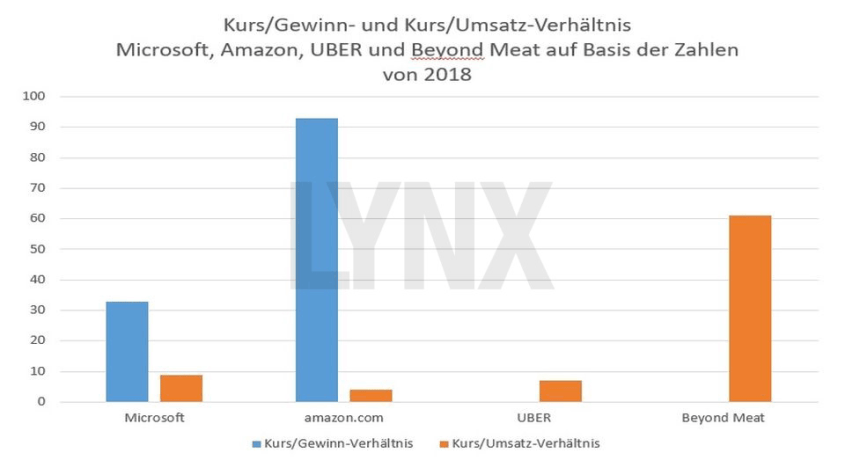
We have recently experienced the sensational entry of the “Beyond Meat”. Everyone talks about it, and many well-known and recognized animal rights organizations warmly recommend it.
Many have tried it, out of curiosity or conviction, many only want Beyond Meat, others will follow, at least for the moment it is seen as a sensation in restaurants; but it does not really matter. The result counts. And the result is…“the stock’s explosive 136% move higher since the May 2 2019 initial public offering”.
As the vegan products evolve, so too does the conscious wine and consumption of the mass.
Of course, this is also a capitalist product that subjecst to the usual capitalist rules, but with one important difference: the company that prizes it does not participate in the daily millionfold murder, which overshadows in cruelty, rudeness and cowardice all the terrors even of the world wars.
People will never stop seeing a value in their use of animals.
That was 500 years ago, today is the same, only extremely worse.
The original moral strength of capitalism was the usefulness of people’s attitude. Through battles, sacrifices and laws, human animals have achieved a (relatively) decent standard of living, and especially formal rights.
Animals are still subject to usability in today’s capitalist system. The pig, the cow, the sheep is not an animal. The system treats them just like a machine in a factory.
So if we want to abolish (or at least reduce) slavery and animal exploitation within this system, we have to play with its rules, we need giving capitalism the opportunity to earn money on vegan meat.
“LYNX”: Beyond Meat without question has wracked up several big partnership deals this year in the fast-food space. From one with Dunkin’ Brands (DNKN) for a sausage breakfast sandwich to faux chicken at Yum! Brands-owned Kentucky Fried Chicken (YUM) , Beyond Meat has shown it’s moving aggressively to expand distribution.
Yes! Of course, it is paradoxical and even unorthodox for people with a pronounced anti-capitalist ideology, if we support this system on an equal footing. On the other hand, it is even more paradoxical that the left has not been providing support or education for vegan ideology for decades, which we actually would have expected from the left, because it corresponds to their ideals that say, “The struggle for social justice is also a fight against the destruction of our environment and the brutalization of man against the animals”.
As much as these videos reflect our forces and hopes for a better world for animals, so honestly we have to say that there is a change in sight, we notice it on many levels of life.
Under our fight, which goes on and harder, has already brought many good results.
Hope, courage, fight is our ideology.
And our practice.
Regarding the issue of the 70,000 live sheep exported from Romania to the Middle East recently, which we covered on a daily basis; we then raised the issue with EU MEP’s as to what injunctions were going to be taken by the EU against Romania.
Yesterday, 19/9, we finally had one e mail back to us regarding the issue. It was from the office of Judith Bunting MEP (for SE England). The letter was worded:
Dear Mr Johnson,
I apologise that you have not received a response from our office regarding this issue.
This is a notice to say that we have received your email and Ms Bunting will be in touch with answers to your questions in due course.
For now, we are waiting on responses from other MEP’s offices regarding:
– The Commission’s infringement proceedings against Romania
With regards to the other questions in your letter, we have contacted both the European Parliament’s Research Service as well as the Health and Food Commissioner’s office. They should be able to provide more clarity on the issues you discuss.
Kind regards,
————————————
Finally; someone is addressing our concerns ! – it is worth looking at the ‘motion for resolution’ submitted by Dominique Bilde MEP via the link given above.
So now we wait to see what we get back from the EU.
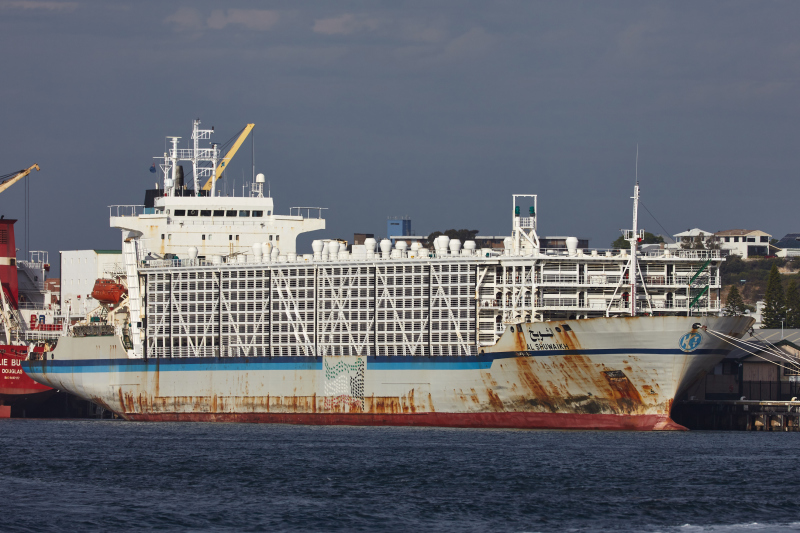
In the meantime; the same vessel (the Al Shuwaikh’) which carried all the suffering Romanian sheep to the Middle East is now trying desperately to get a consignment of sheep from South Africa – you can read more here:
We have yet to hear if the SA government are going to allow the shipments both now and in the future.
Here is a video showing the conditions in which the sheep are transported; and how they suffer during the voyage.
This is the reason why we fight the live export trade so vigorously; be it by road, sea or air. We will never give up with our exposure of the terrible suffering animals endure during live transport.
Have you noticed that when a truck of pigs or chickens pulls up at traffic lights, all eyes turn away from them? Why? Because when we look into their eyes we see individuals looking back at us. When we look into their eyes we connect with them — we feel our affinity with them. When we look into their eyes we recognise their vulnerability. We feel for them… The human heart instantly responds.
One of the defining reasons why pigs and chickens in this country have been denied the protection of animal cruelty laws is because they are unseen: hidden away in mammoth factory farms. The legislators who have the ability to change their lives for the better — cannot see them. The people who would make kinder choices — cannot see them. These animals are ‘invisible’.
But they don’t have to be.With decision-makers revisiting laws that allow hens to live their entire lives crammed in barren cages and sensitive mother pigs to be kept caged in crates — the most important thing we can do is ensure these animals are seen.
This time last year, an end to caging hens wasn’t even being considered. But unprecedented public feedback to the ‘poultry code review’ has put a ban on the battery cage squarely on the table.
Yet despite the public consultation ending over 18 months ago, we’ve just learned that a final decision on the future for hens in this country has again been delayed.
It seems various government processes are currently more focused on silencing and stopping those exposing animal cruelty than protecting animals from cruelty in the first place. And all the while, the animals wait. The very fact that they are hidden allows these outrageous delays.
For only the second time in the past 20 years, Australian laws that allow severe confinement of mother pigs and, inconceivably, body parts to be cut off their babies without pain relief are also due to be reviewed.
These animals desperately need us to create a window into their world. To reveal that these fragile hens are not production units, they are individual living beings who deserve so much better from us. As do the gentle and playful pigs whose lives in factory farms are so miserable they are known to suffer depression.
That’s why, now more than ever, we need to remind decision-makers who these animals are. That they live and breathe and dream and feel… That while they may be hidden from their view — they equally need protection from cruel treatment.
You’ve given animals your voice. Now help them find their own by clicking here to help us keep this powerful TV ad on air.
GIVE ANIMALS A VOICE »
Like most people, most politicians have never stepped foot inside a factory farm. They’re not places keen to open their doors. And there’s a reason for that. It’s because ‘life’ for the animals confined within them is so at odds with how things were meant to be.
Hens naturally want to flap their wings, peck in the soil and lay their eggs in privacy. Pigs naturally want to explore and dig, and build nests for their babies. Given the opportunity both hens and pigs will respond to kindness with affection. But in factory farms, the daily lives of these animals have been systematically stripped of everything that makes life worth living — because of ‘production systems’ that kept them hidden and unseen.
We have a vision to change that by shining a light on their existence and taking their plea for compassion and kindness directly to the very people who have the power to change their world.
If you too can envision a peaceful, kind world for animals then please help us create it.
The Carte Blanche TV show says: “Facing prolonged loading processes, poor ventilation, stifling heat and overcrowded quarters, some 65,000 sheep will soon be packed onto a mammoth livestock vessel due in the East London harbor later this month. The livestock will be transported for weeks on the high seas, standing in their own filth, with no space to even lie down. Amid methane gas and ammonia accumulating in the cargo hold, this controversial trade deal between South Africa and the Middle East will eventually see millions of our sheep sent abroad.”
The TV show notes the whistleblower footage released by in Australia in 2017 that focused on the Awassi Express but also included footage from the Al Shuwaikh. The Carte Blanche presenter said the footage was so disturbing that it was decided not to show it on the program. He interviews Australian Dr. Lynn Simpson, a former live export veterinarian who has sailed on the Al Shuwaikh and who has been raising the issue of poor welfare on live export ships since 2001. Simpson says when she saw the footage, she was just seeing her experience from 57 voyages repeated.
The controversy surrounding the whistleblower footage continues in Australia – and an Australian Department of Agriculture observer report from a May 2018 voyage of the Al Shuwaikh revealed suffering and death as a result of the vessel’s design and management of livestock on board. The report indicated that for eight days sheep were open mouth breathing, indicating severe heat stress, as they “attempted to gain position around the ventilation vents on all open and closed decks.” Multiple instances of “death by smothering” occurred as a result of this. Heat stress was worsened by “oil fuel heaters being left on during the equator crossing” and poor ship design with “dark colored steel roof surface absorbing radiated heat from above.”
Additionally, the observer noted that water troughs were fouled with manure, particularly towards the end of the voyage when a skeleton crew were available to attend the livestock due to discharge preparations. There were significant welfare concerns during discharge, with the livestock, vocalizing loudly, left without fresh feed for over 30 hours. Moldy food was observed in the bottom of troughs for both sheep and cattle on numerous occasions. Dusty pellets were also observed, and on some decks this was largely attributed to the workings of the automated feeding system. The observer also noted that during rough weather a ballast tank overflowed into one of the sheep pens.
A Kuwaiti export company is apparently planning to export two consignments of around 70,000 sheep from South Africa to the Middle East this year, followed by 600,000 sheep, goats and cattle annually for the next three to five years.
Shatha Hamade from Animals Australia, says on the Carte Blanche program: “Every animal welfare organization on the planet opposes the live export trade by sea, and for good reason. The inherent suffering and risks in this trade are actually unavoidable.”
Regarding the export voyage planned for departure from South Africa later this month, she says: “I challenge the farmer that might be contracting with the Kuwaiti company, I challenge him to sit down and watch this [whistleblower] footage and talk to me and tell me that he thinks that it’s okay.”
“The well-known pain in my chest is back, I can just walk, they can not.”
(Jo-Anne McArthur, photographer and animal welfare investigator)
Activists who exposed animal cruelty to the largest pig farm in France were TROUBLED.
What activists experience when they discover animal agony, you can see in the video!
This is how an activist describes the action in this slaughterhouse:
“The last days I hadn’t found any words for everything that happened, I tried several times to write this post and then deleted the lines again.
Five days ago I participated in the mass action of civil disobedience #OccupyCarrefourand we peacefully occupied one of the largest pig farms in France. Together with other activists i had my neck chained to the bars of the cages where the pigs are trapped, while other activists documented the terrible conditions to make it available to the public.
We were subjected to the same violence as the animals are every day, we were pushed and beaten by the farmers and I was even hit in the face with an iron bar.
People who use violence against animals on a daily basis do not shy away from violence against humans. While i was chained at the same height as the pigs, I had to look into their eyes the whole time and could hear their screams. But I also had to look into the eyes of my friends – full of fear and grief.
We had to experience what it’s like to be trapped there and were helplessly at the mercy of this violence just like the animals. The other activists tried to protect us with their bodies, but nobody protects the animals.
A young farmer even threatened to shoot us, there was so much hatred in the eyes of these people. We were lucky to be able to leave this cruel place alive again, but the animals are in captivity all their lives and are killed in the end.
Imagine what it is like to be locked up in a small cage for the rest of your life, where you can’t even turn around. Imagine what it’s like when your babies are taken away shortly after birth and you never see them again. Imagine what it’s like when you can’t run away from violence, when you can’t even try to save your own life. The animals are born in this hell, they don’t see daylight or sunlight all their lives, they don’t get fresh air and they just vegetate until their day of execution. Humane agriculture or humane killing does not exist in reality.
Let us make conscious choices and end systematic exploitation.
Such cruel conditions are even permitted by law and the police monopolize the use of force that is applied against the people who oppose this system. Police violence and repression thus affects the wrong people, who are free to denounce the bearer of a message instead of responding to the message itself and changing something. The consumption of dead animals and animal products is not only morally reprehensible, but also ecologically unacceptable as it contributes significantly to the climate – consuming huge amounts of water and energy.
Next time you buy meat or animal products, think of her face. Think of their fate and the suffering they have experienced. Think of the life they could never live just because of your taste. In today’s society, eating meat is no longer a necessity, but a decision. A decision for violence, indifference, suffering and death. And a decision against compassion, love, respect and freedom. Is this really what we as human beings want to stand for?
The only thing this industry fears so much is the truth and the truth is what we will reveal. Just because something is legal, does not mean it is also right. If there is a law to legitimize and legalize cruelty to animals, exploitation, oppression, discrimination and environmental destruction, then it is our moral duty to disregard these unjust laws.
When injustice becomes accepted, resistance becomes an obligation!
Please reconsider your decisions in the future, you have at least three choices a day. Do not apologize, do something! Become active and speak for the animals, they cannot speak for themselves”.
There’s nothing to comment on, just a lot to think about, and it’s best to make your decision here and today to stop cooperating with this fascist system of exploitation.
This is the meat and milk industry.
It’s time to finish it.
We thank the brave activists very much for their civil courage.
WAV Comment – remember we recently covered the entire shipment of the ‘Al Shuwaikh’ when it was transporting 70,000 live sheep from Romania to Kuwait and Iran – well now it is setting its sights on live exports from South Africa – read more below.
From Animals Australia:
The Kuwaiti company responsible for Aussie sheep ‘cooking alive’ at sea is trying to gain a foothold in South Africa.
Little did they know, we were already there waiting for them.
On Sunday night, their hopes of loading South African sheep onto the notorious Al Shuwaikh without any scrutiny or opposition were fully shattered when the country’s premier current affairs TV program, Carte Blanche, aired an unforgettable ’60 Minutes’ style segment as to why South Africa should not export live sheep.
Please take a moment to see how our efforts to protect animals from the live export industry are going global: WATCH NOW!
Along with former live export veterinarian Dr Lynn Simpson, I was interviewed for the program. Caring South Africans are now venting their outrage that this company — having been stopped from getting Australian sheep during the Middle Eastern summer — has turned its sights on South Africa.
The Al Shuwaikh is currently sitting off the South African coast hoping to wait-out the public furore created by the Carte Blanche program. We are teaming up with local animal protection group, the NSPCA, to lobby the South African government to not allow this shipment.
The NSPCA would love Animals Australia supporters to band together with caring South Africans to call on their government to say ‘no’ to live sheep export. You can sign their petition here:
When I landed in Johannesburg to be interviewed for Carte Blanche, it was impossible not to reflect on the enormity of our efforts to bring an end to the global live export trade and the different continents it has taken us to.
Little by little, these powerful export companies are realising that their industry is now being held accountable globally due to the efforts of a relatively small animal charity from ‘down under’ and our band of compassionate and generous supporters.
Achieving this unprecedented exposé on South Africa’s highest-rating current affairs TV programme would not have been possible without our investigations, and without your support. As an investigator and an advocate, I send you a heartfelt thank you.
For the animals,
Shatha Hamade
Legal Counsel – Animals Australia.
From the RSPCA Australia:
Mark, we know how strongly you feel about ending the cruelty of live animal exports.
So we wanted to update you on some recent developments in the trade.
Despite the clear evidence that suffering is inevitable, live sheep exports resume
After a moratorium was placed on live sheep exports from June to 22 September, exports are due to resume this week. This is despite the overwhelming evidence that heat stress is unavoidable for the entirety of the high risk May to October period.
We will be watching this space closely, and are continuing to call for the Department of Agriculture to heed the evidence and protect sheep from suffering by ending this trading period.
What is the Department of Agriculture trying to hide?
Late August, the RSPCA was advised that the Department of Agriculture would refuse to release video footage from live sheep export journeys to the Middle East (footage we requested under the Freedom of Information Act).
On the day the footage was due to be released, we instead received a letter from the Department stating that the footage could not be released, because it could result in adverse criticism of the live animal export industry as a whole and be used by those who are opposed to the industry to lobby for the banning of the trade.
It’s extraordinary. How bad must this footage be (captured under the watch of the government observer), if the Department is concerned it could be used to advocate for an end to the trade altogether?
If the footage is so risky to the future of live export, it’s even more important that we see it.
We’ll continue to challenge this decision, and bring you updates.
Inspector-General of Live Animal Exports Bill passes Parliament
The establishment of an independent Inspector-General to oversee the Department of Agriculture’s regulation of live export was a key recommendation of the 2018 Moss Review.
The Moss Review found that the Department’s focus on trade facilitation negatively impacted its culture as a regulator of animal welfare.
As long as the regulation of animal welfare falls to the Department of Agriculture, the need for strong oversight by the Inspector-General will remain.
More evidence of cruelty to Australian cattle in live export
Sadly last week, we also saw more horrific footage coming out of Indonesia, showing Australian cattle suffering shocking slaughter conditions after they were ‘leaked’ outside the approved supply chain.
Once again, we have evidence of the Exporter Supply Chain Assurance System (ESCAS) failing to protect Australian livestock.
The RSPCA is urgently calling for a review into the ESCAS, and will be watching developments on this issue closely.
We will keep bringing you updates, and letting you know how you can help end the suffering in live exports. Thank you for your support.
In the Greek Island of Paros, locals tie animals’ legs to their heads to disable them from walking in an incredibly cruel process called hobbling. The ropes and chains cut into the helpless animals’ skin, creating wounds that become painfully infected. The animals are so desperate to escape, they often break their bones trying to get free.
Hobbled donkeys, cows, and sheep are kept in areas without shelter or water, left to suffer in the baking sun or freezing cold. This often leads to an agonizing death.
Hobbling is illegal in Greece, but still prevalent. A Lady Freethinker eyewitness described seeing the shocking practice firsthand, along with further cruelty to animals in Paros.
“Dogs with heavy metal chains around their necks, burning in the sun, with no water available, nowhere to hide from the heat and sun or from bad weather. Stray cats, sick, living in garbage, being driven over often on purpose by locals,” reports the eyewitness.
The witness saw locals drowning newborn animals and poisoning stray cats, along with a general lack of animal welfare enforcement on the island.
It’s time to stop the suffering.
Sign this petition urging Mayor Koveos to enforce the law and end all hobbling, and work to drastically improve the way all animals are treated in Paros.
Surely most of you have signed the petition “End the Cage Age”.
For non-EU citizens and readers: This European Citizens’ Initiative aims to end the use of cages in EU agriculture by calling on the European Commission to consider new legislation in this area.
With 1 million signatures alone, the European Commission would be asked to propose legislation prohibiting the use of:
• Cages for laying hens, rabbits, pullets, chickens for fattening, laying hens, quails, ducks and geese; • farrowing crates for sows; • Sections, if not already prohibited; • Individual calf pens, if not already prohibited.
The petition ended with a great result: instead of the one million needed, over 1.5 million people signed the European Citizens’ Initiative against livestock caging. Now the European Commission has to deal with that: what’s next?
The collected signatures are checked first. Subsequently, the citizens’ initiative will be submitted to the European Commission. The Commission must then deal with the demands to abolish cages.
In addition, the initiators of the petition will be invited to a public hearing in the European Parliament.
This does not mean, however, that the caging ban automatically comes. Although the European Citizens’ Initiative fulfills all the criteria, the European Commission has the choice: it can accept the proposals of the initiative, change them or do nothing.
The last seems to me the most likely.
Not because I am a pessimistic person or because I have seen so much bad in my long-standing fight for the rights of animals and expect nothing positive.
But, from experience.
Because the 8hours campaign of 2013, with the requirement of 1.2 million people to limit animal transports to 8 hours, never came true. The animal transports became even worse, the controls weaker, the times longer, the victims more.
Instead of realistic improvements by the EU Commission for more humane animal transports, we got animated films with instructions on how have to be transported the animals. And blood still flows from the trucks to the streets and the ships.
Irresponsible, unethical, unprofessional has the EU Commission reacted.
On September 12, 2019, we read on the official website of Eurogroups for Animals: “With the largest European petition ever for farm animal welfare ending at 23:59 last night, today is one of the most significant days for farm animals….
…With more than 1.5 million signatures so far, End the Cage Age’s success should be more than enough to persuade the European Commission to start the legislative procedure to end the use of cages for farm animals across the continent.
…“Today we have crossed the finish line in the biggest political push in farm animal welfare history. But the fight to get animals out of cages isn’t over yet,” says Reineke Hameleers. “Now it’s time for the Commission to make the changes that the citizens demand and bring us closer to the day when cages are relegated to the history books.” (https://www.eurogroupforanimals.org/more-than-a-million-people-want-to-see-the-end-of-cages-for-farmed-animals)
Eurogroup and all those who render their services to the European Community for high salaries, all these must now mobilize theirselves strategically and actively so that the 1.5 million will not become bankrupt again, as they did then.
Now diplomacy, media work and commitment is announced.
If they really want to experience the day, like other 1.5 million citizens too, that “the cages are banned to the history books”, they must do everything so that the commission decides against the cages. Without compromise and consideration.
They are the ones who work closely and confidently with the commissioners, and that is why they know best that their bosses are the strongest agrarian lobyists, who not only allow painful mass animal husbandry, but demand and protect it by law.
Therefore, the question arises, what will they do if the European Commission does nothing?
In that case, we would demand of them that they give up their jobs, they leave that mendacious institution and, like us, fight on the streets for the abolition of the cages.
This is an effective and honest job.