Category: Farm Animals

Nightmare comes true for Romanian sheep exported to the Gulf.

-flag-of-romania-pg


Nightmare comes true for Romanian sheep exported to the Gulf.


Shu 3


WAV Comment – as some of you will be aware, we at WAV were tracking and reporting on this consignment throughout its time between Romania and Iran.

Here are just 3 of our links from the time:

https://worldanimalsvoice.com/2019/08/01/romanian-sheep-ship-update-1-8-19-1020hrsgmt-vessel-now-entering-kuwait-city-expected-to-dock-0300hrs-local/

https://worldanimalsvoice.com/2019/07/25/25-7-romanian-sheep-exports-update-vessel-now-n-the-gulf-of-aden/

https://worldanimalsvoice.com/2019/07/23/al-shuwaikh-romanian-sheep-shipment-70000-animals-current-position-red-sea-has-departed-jeddah/

Well it seems that all of our concerns at the time regarding how the sheep would be treated, as well as the extreme temperatures which we reported on throughout the trip, have now surfaced. Please read the article below.

It was not only this shipment that has caused us concern. We were informed that Romania was planning on exporting around 200,000 live sheep to the middle east every month for the next 6 months or so. This is backed up in the report below which talks of 1 million sheep planned for export to the Gulf. We repeat what is said in the article:

“It is clear that sheep have suffered terribly throughout this entire journey, and that’s before we even mention the routine abuse and fully conscious slaughter they are subjected to when they arrive at their destinations,” said Gabriel Paun. “These sheep come from the green meadows and high mountains of the Romanian countryside, and the contrast in how they are treated in the live export trade is unimaginable.”

Now that sun kissed MEP’s have finally returned from their Summer holidays; probably mostly oblivious to what has been going on, we call on them to take action to stop the export trade from Romania. As we said recently we will be writing to our MEPs on this issue and also that of the ‘box’ trailers (see picture below of sheep transporter) which are used to carry live animals all over Europe.

article 2

Yes it is full of live sheep – a ‘box’ trailer as used in the EU.


Also, as we published, there have been major problems regarding cattle being shipped from Brazil to Turkey. What a terrible journey that must be for the animals; only to be religiously slaughtered once they arrive in Turkey, not even considering the carbon footprint which is left by a ship hauling cattle half way round the world. The massive fires in Amazonia just show that cattle ranchers there are burning the land to make yet more space for cattle to be raised; for export half way round the world !

These are all issues we will be raising with the EU in the next few weeks. We will publish our letters and concerns; and reproduce any correspondence we get back from the EU.

Regards Mark

bad4

———————————————–

From the Eurogroup for Animals Website:

https://www.eurogroupforanimals.org/nightmare-comes-true-for-romanian-sheep-exported-to-persian-gulf

Animal protection organisations are calling for infringement proceedings against Romania, which allowed 66,000 sheep to be exported to the Persian Gulf in the middle of summer, despite the EU Commission urging authorities not to allow the vessel to leave.

In a recent letter to Animals International, Romanian authorities claim they required a 20% reduction in stocking density to mitigate heat stress. But the organization’s evidence, presented last week to the EU Commission, reveals that hundreds of sheep died by the time they reached their destinations, with an investigator describing the “piles of dead sheep” that were filmed at the unloading point in the Gulf.

They also saw surviving sheep being “beaten” as they disembarked in temperatures of over 40°C. While the initial destination was Kuwait, the vessel made 5 stops in the Gulf, increasing the risks of suffering and death from heat stress. Animals were unloaded in Saudi Arabia, Kuwait, Dubai, Qatar and Oman.

Romania’s daily reports were requested by the Commission after Commissioner Andriukaitis’s call on 10th July to Petre Daea, the Romanian Minister of Agriculture and Rural Development, to stop the cruel shipment was ignored. “These reports cannot be true. The vessel is a shipwreck that will not be allowed in Australia after the end of this year for being unable to have enough ventilation and access to animals. Even a single sheep on an empty deck will suffer severe heat stress once the temperature and humidity rises on the ship. The ship’s ventilation system is not able to reduce the heat and humidity below the ambient temperature, and in fact the temperature and humidity in the sheep pens will regularly be between 2 and 6 degrees higher than outside the ship. Even if stocking density was halved, the remaining sheep would still be subjected to unbearably high temperatures and would suffer heat stress during these months in the Red Sea and the Persian Gulf,said Gabriel Paun, EU Director of Animals International.

According to the Romanian authorities, this was just the first shipment. Over one million sheep are planned to be exported this year alone to the Gulf, in addition to a further one million animals to be sent to Jordan and Libya from Romania. Such journeys see heat and humidity combinations reach levels that cause heat stroke, resulting in sheep literally cooking alive in the holds of vessels. 

“It is clear that sheep have suffered terribly throughout this entire journey, and that’s before we even mention the routine abuse and fully conscious slaughter they are subjected to when they arrive at their destinations,” said Gabriel Paun. “These sheep come from the green meadows and high mountains of the Romanian countryside, and the contrast in how they are treated in the live export trade is unimaginable.”

There is one light at the end of the tunnel: a proposed law by the Romanian Parliament aims to follow the positive example of Australia and prohibit the sea transport of livestock during the summer months, which would make it the first EU Member State to have such regulations. But Animals International says that even if the law is rushed through in September, it won’t necessarily mean that no more sheep undergo such journeys in the future, as exporters have their eye on at least three other European countries as sources of animals.

Eurogroup for Animals and Animals International had a meeting with the EU Commission last week, during which they presented some of the distressing footage from the Middle East. Both organisations are calling on the Commission to start infringement proceedings against Romania.


Australia: The gruesome history of the Bader III live export ship.

Australia


I just came across this article today when looking around. As you know live animal exports is our biggest ‘hate’. With the recent issues we have covered re the 70,000 Romanian sheep to Iran, and the very recent troubles with the livestock ship carrying cattle from Brazil to Turkey not being allowed to dock in Spain, it seemed appropriate to get more facts. Here they are; with thanks to the RSPCA (Australia):

Regards Mark.

The gruesome history of the Bader III live export ship – which docks at Port Adelaide this week

https://www.rspcasa.org.au/live-export-bader-ship/ 

April 19, 2018

As Australians reel at sickening images taken by a whistleblower onboard several routine live export shipments, another vessel is due to dock in Port Adelaide this week to begin loading more sheep for the Middle East market.

Like most live export carriers, the Bader III has an appalling record of extreme animal suffering and mass deaths. The phase-out of this cruel trade must start now.

bad1

The Bader III’s latest victims of this trade are also headed to the Middle East. Livestock Shipping Services knows and presumably accepts that a percentage of its cargo will not survive.

Questions are now being raised about the role of insurance in the live export trade. Just how much live exporters like Livestock Shipping Services receive per dead sheep from their insurers is unknown.

But if mortality rates are any indication, there appears to be little commercial incentive to achieve what is surely the main aim of this trade, to deliver sheep that – by journey’s end – are still alive.

bad2

RSPCA South Australia believes it’s high time our state’s reputation-damaging involvement in this inhumane and unnecessary trade ends. Please join us in demanding a phase-out of long-haul sheep shipments from SA. Add your voice here.

The Bader III’s latest victims of this trade are also headed to the Middle East. Livestock Shipping Services knows and presumably accepts that a percentage of its cargo will not survive.

Questions are now being raised about the role of insurance in the live export trade. Just how much live exporters like Livestock Shipping Services receive per dead sheep from their insurers is unknown.

But if mortality rates are any indication, there appears to be little commercial incentive to achieve what is surely the main aim of this trade, to deliver sheep that – by journey’s end – are still alive.

bad3

RSPCA South Australia believes it’s high time our state’s reputation-damaging involvement in this inhumane and unnecessary trade ends. Please join us in demanding a phase-out of long-haul sheep shipments from SA. Add your voice here.

Sobering reading: official reports of mass sheep deaths

When large numbers of Australian animals die on live export ships, Australia’s Quarantine and Inspection Service (AQIS) is required to investigate and produce a report. These reports make for sobering reading.

Ships belonging to one of the largest live export companies operating from Australia, the Perth-based Livestock Shipping Services, frequently feature in AQIS reports. The Livestock Shipping Services ship Bader III, due to dock in Port Adelaide on Thursday April 19, is no exception.

bad4

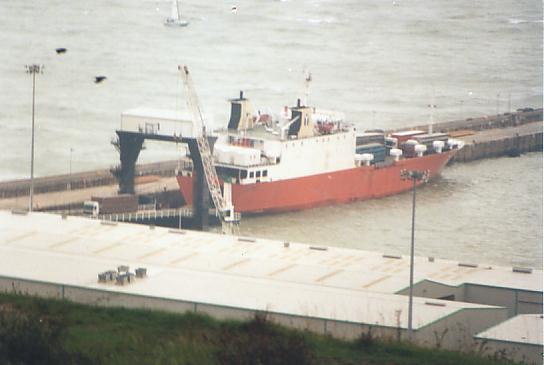
The Bader III is one of just three live export vessels that are two-tiered. This means animals are packed into two levels of pens on each deck, making welfare checks during the long sea crossings difficult if not impossible. This design also restricts the crucial ventilation needed to prevent heat stress.

AQIS’ Mortality Report Number 46 tells us that on August 17, 2013, nearly 45,000 sheep walked up the ramps on to the Bader III at Port Adelaide, along with an unknown number of camels.

The ship travelled on to Fremantle, where a further 30,795 sheep and some cattle were packed into pens onboard. The stocking density was in accordance with the Australian Standards for the Export of Livestock.

Bader III ship holds awful record for highest sheep deaths

The hottest time in the Middle East are the middle months of the year. Data shows that sheep deaths spike on board live export carriers entering the region at this time. The mercury climbed as the Bader III crossed the equator bound for its first Middle Eastern destination, Qatar.

Something went terribly wrong on Day 21 of this shipment, when the Bader III finally arrived in Qatar’s port city of Doha. The temperature in Doha on this day – 7 September 2013 – hovered around 38C. As the crew began offloading sheep, a staggering 4050 died – one of the largest numbers of exported Australian sheep to die onboard a ship in a single day.

Almost 80% of the sheep that died were from the Adelaide consignment. Unsurprisingly, the live export vet reported that most died from heat stress.

Thousands of sheep deaths legally sanctioned every live export journey

Under Australian regulations, live exporters must report to the Federal Agriculture Department if the mortality rate of sheep onboard ships exceeds 2%. The official end of journey death toll of 4,179 sheep on this 2013 shipment of 75,508 sheep represents a mortality rate of 5.53%. For the sheep loaded in Port Adelaide, the mortality rate was 7.28%.

Under our Federal Government’s 2% rule, more than 1,500 sheep had to die onboard this particular shipment before Livestock Shipping Services were required to make a report that would trigger an investigation by the regulator, Australia’s Federal Department of Agriculture.


That is a lot of dead sheep.

If less than 2% of sheep had died – say, 1400 on this 2013 shipment – that would have been considered an ordinary part of the live export business.

Even sheep that don’t die suffer terribly on live export ships

However, the number of dead animals on its own is not a good indicator of animal welfare. The ones that don’t die equally suffer.

The latest images aired on 60 Minutes give a shocking insight of what mass death and extreme animal suffering on board a routine live export shipment during the Middle East’s summer looks like.

Sheep unable to reach food and water. Sheep unable to lie down for the entire three to four week journey. Sheep panting and frothing at the mouth from heat stress and collapsing on decks belly-deep in excrement.

Yet still our Federal Government keeps issuing export permits to companies that routinely breach regulations, and the animals keep being loaded in full knowledge of the suffering that inevitably awaits them.

bad5

Help end the cruel and unnecessary live export trade

The Bader III’s latest victims of this trade are also headed to the Middle East. Livestock Shipping Services knows and presumably accepts that a percentage of its cargo will not survive.

Questions are now being raised about the role of insurance in the live export trade. Just how much live exporters like Livestock Shipping Services receive per dead sheep from their insurers is unknown.

But if mortality rates are any indication, there appears to be little commercial incentive to achieve what is surely the main aim of this trade, to deliver sheep that – by journey’s end – are still alive.

RSPCA South Australia believes it’s high time our state’s reputation-damaging involvement in this inhumane and unnecessary trade ends. Please join us in demanding a phase-out of long-haul sheep shipments from SA. Add your voice here.

Urgency for vaccine grows as virus ravages China’s pigs.

 In this May 8, 2019, photo, pigs eat feed at a pig farm in Panggezhuang village in northern Chinas Hebei province. As a deadly virus ravages pig herds across Asia, scientists are accelerating efforts to develop a vaccine to help guard the worlds po

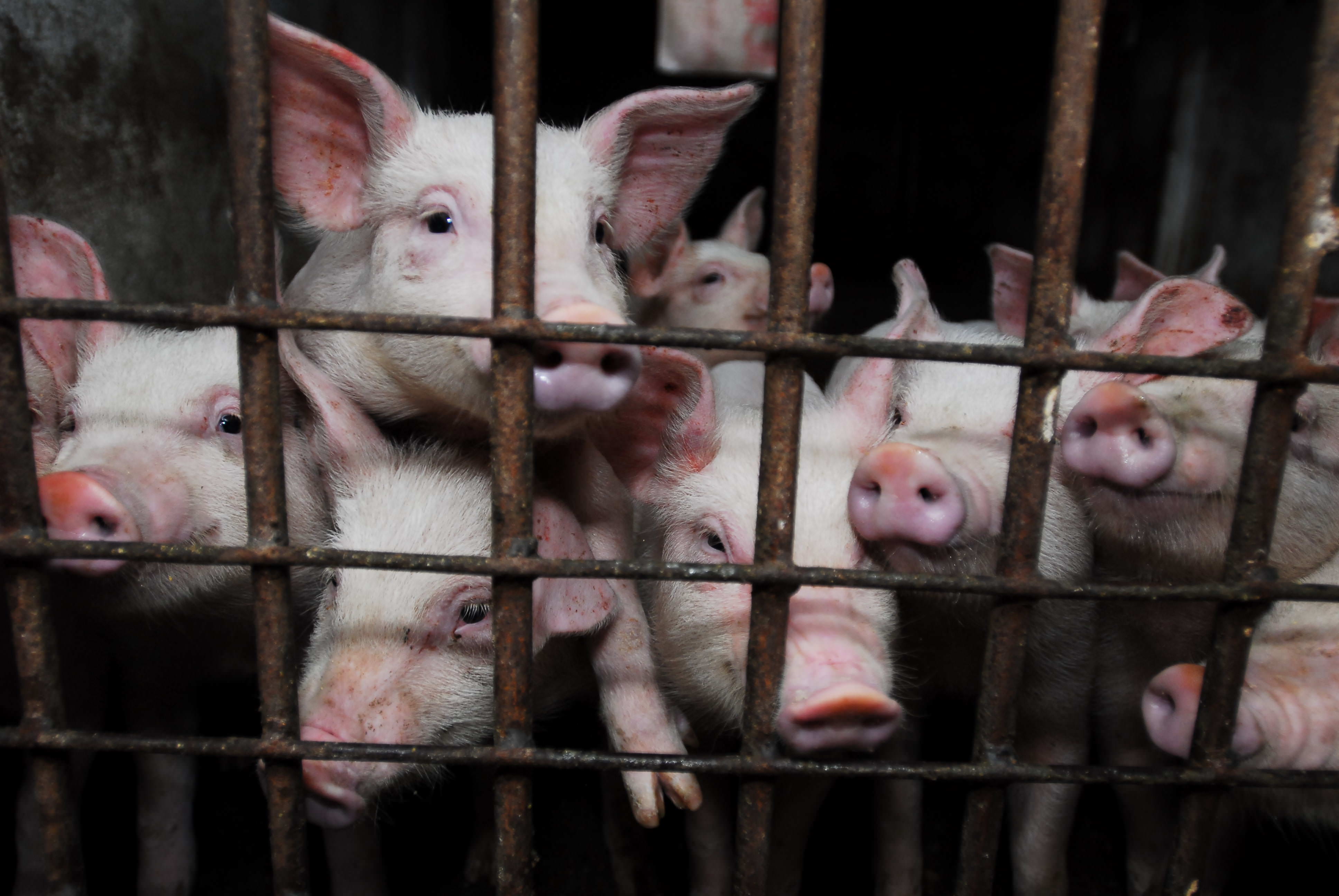
May 2019 -pigs endure a pitiful ‘life’ in a Chinese intensive system.

Urgency for vaccine grows as virus ravages China’s pigs

Scientists are working to develop a vaccine to help guard the world’s pork supply as a deadly virus ravages Asia’s pig herds.

Farmers have long contained its spread by quarantining and killing infected animals, but the disease’s devastating march into East Asia is intensifying the search for another solution.

The virus hadn’t been considered as high a priority for researchers until it turned up last year in China, home to half the world’s pig population, likely by way of Eastern Europe and Russia. Since then, it has spread to other Asian countries including Vietnam, killing millions of pigs along the way. Though it does not sicken people, the disease is highly contagious and deadly to pigs.

“Today’s situation, where you have this global threat, puts a lot more emphasis on this research,” said Dr. Luis Rodriguez, who leads the U.S. government lab on foreign animal diseases at Plum Island, New York.

One way to develop a vaccine is to kill a virus before injecting it into an animal. The disabled virus doesn’t make the animal sick, but it prompts the immune system to identify the virus and produce antibodies against it. This approach, however, isn’t consistently effective with all viruses, including the one that causes African swine fever.

It’s why scientists have been working on another type of vaccine, made from a weakened virus rather than a dead one. With African swine fever, the puzzle has been figuring out exactly how to tweak the virus.

In Vietnam, where the virus has killed 4 million pigs in six months, the government said this summer it was testing vaccines but provided few details of its program. In China, the government indicated scientists are working on a vaccine that genetically alters the virus, an approach U.S. scientists have been pursuing as well.

Taiwan last week imposed new security screenings for arriving air passengers carrying pork products in efforts to stave off an outbreak, according to the Taiwan News newspaper. Infected pig carcasses have been found washed ashore on Taiwan’s beaches, but there has been no outbreak on the island.

Myanmar reported its first outbreak in early August and North Korea reported an outbreak in May, according to the United Nations Food and Agriculture Organization.

The U.S. Department of Agriculture said it recently signed a confidential agreement with a vaccine manufacturer to further research and develop one of Plum Island’s three vaccine candidates. The candidates were made by genetically modifying the virus to delete certain genes.

But before a vaccine becomes available, it needs to be tested in large numbers of pigs in secure facilities with isolation pens, waste and carcass incinerators and decontamination showers for staff, said Linda Dixon, a biologist at London’s Pirbright Institute, which studies viral diseases in livestock. The process takes two to five years, she said.

The extensive testing is necessary to ensure vaccines made by weakened viruses don’t have unintended side effects.

In the 1960s, for instance, Spain and Portugal tested such a vaccine after outbreaks of African swine fever. The treated pigs seemed fine at first, but then lesions broke out on their skin, arthritis locked up their joints and the animals failed to fatten up, said Jose Manuel Sanchez-Vizcaino Rodriguez, who leads a lab focused on African swine fever at the University in Madrid.

The two countries eventually eradicated the disease by enforcing strict sanitary protocols, quarantining and killing infected and carrier pigs.

Even if vaccines become available, they might not work across the globe. Vaccines developed for the virus in China and Europe, for example, might do nothing in sub-Saharan Africa, where the disease has been around longer.

A vaccine might be most desirable in places where the disease is widespread, said Daniel Rock, who previously headed Plum Island’s African swine fever program. Other countries might prefer the quarantine-and-kill method.

That could be the case in the U.S., where health officials have been training pork producers how to spot and report potential symptoms, which can include bleeding, lethargy and loss of appetite.

Still, Rock said the disease’s global spread has made the option of a vaccine a high priority in the U.S.

https://abcnews.go.com/Technology/wireStory/urgency-vaccine-grows-virus-ravages-chinas-pigs-65068779 


WAV Comment – with intensive systems you eventually reap what you sow.  Intensification obviously contributes a lot to the rapid spread of this disease.  Do we feel sorry for the farmers who are losing animals through running intensive systems ? – NO.  When they analyse after all their animals dying; they may realise that there are better ways to raise animals.


Breaking 30/8/19: Situation Resolved – The Starving Cattle on the ‘Julia AK’ Have Now Been Fed and Watered. More News Later ?

Viehtransport per Schiff g


30/8/19.

News from Easy Horse Care Rescue Centre, Spain.

http://easyhorsecare.net/ 


BREAKING NEWS

Update on starving cattle!

We are delighted to confirm that the situation has been resolved-the animals have received the food.

We are awaiting written confirmation and will let you know the details as soon as possible.


Our WAV post from 29/8 on this issue:

https://worldanimalsvoice.com/2019/08/29/spain-update-29-8-cattle-from-brazil-to-turkey/

England: Lands of Confusion – Lets Hope the EU Sorts Us Out With Their Responses !

England


29/8/19.

Venus is taking a well deserved (my words not hers) holiday, as she informed on 28/8 – https://worldanimalsvoice.com/2019/08/28/venus-is-taking-a-short-vacation-2/

As you are probably aware, live animal exports is one of the main issues that annoys us both, especially EU failures on it; and so we give the issue a bit more time than some other things.   I (Mark) have been involved / associated with live animal investigation work for over 25 years; have been awarded for it in the past – https://serbiananimalsvoice.com/about-us/ – and am generally deeply bummed off by the continual suffering that we (the EU citizen) are still witnessing after all these years.

So, where are we going now with WAV / SAV ?

We will continue to cover many global animal issues as we always have done on this site – nothing changes there.  Our dear 751 European Parliament friends (MEP’s) who are supposed to be ‘the heart of democracy’ in the EU, by representing us, the 500 million citizens, http://www.europarl.europa.eu/about-parliament/en will finally return to work on 2/9/2019.

If only the EU ‘system’ really was as good as it thinks – https://en.wikipedia.org/wiki/European_Parliament

Finland will be the Presidential nation for the last 6 months of 2019.

Shu 3


During January – June of 2019 it was held by Romania.

Although the President Member State, Romania did not enforce existing EU legislation (Regulation 1/2005 on the ‘protection of animals during transport’) whilst it was in charge ! – remember the situation; we covered each day and reported on the shipment of 70,000 live sheep from Romania to Iran in temperatures exceeding (by 10 degrees or more) the maximum which is allowed by EU Regulation 1/2005 ? – this is why we say above ‘if only it (the EU) was as good as it thinks’;

– – if the President state at the time cannot enforce the rules whilst it is in charge, then who does ? – a simple question to MEP’s from simple EU citizens that they are supposed to represent.

So, as of next week we (WAV) will be formally writing to the (English) national members of our European Parliament to ask what is being done about Romania ignoring the EU rules on live animals transport whilst it was the President of the EU ? – we will publish our letter on the site and any explanations that we get back from our MEPs on the issue.

They are being sent a copy of this post in advance so they are prepared for what they can expect from us in the coming weeks.


article 2


Further, we will also be following up a lot on the issue of live animal ‘box’ type trailers which are used to transport live animals around the EU.  We did a investigative report on the ignorance of the export / transport industry using these trailers several years ago – see it here – https://worldanimalsvoice.com/2019/08/08/england-sealed-box-type-animal-trailers-how-the-industry-dodges-identifying-what-they-transport-and-the-eu-oks-it/

So the EU thinks it is good; representing the citizen and all that ?. We say not that good actually.  We will be writing to our MEP’s in the coming weeks and asking them some difficult questions about live animal transport; to see how good the system actually is for the EU citizen. The UK Lib Dems think it is fantastic to be members and say we need to remain in the EU; our evidence with all these issues to date simply means we are totally ignored regarding all we present.  So, Lib Dem MEP’s especially can provide us with the answers now.  We will also ask what is going to be done about the ignorance of the (EU) rules for animals; both in the shipment of Romanian sheep to Iran, and also with box trailers.

So, these issue will be priority over the next week or so; we will publish things when they are done and sent.

As very many EU citizens actually think, the EU is really just ‘lands of confusion’ !!


Regards and have a great evening;

Mark.


Hatzrnkamp

Thanks Anja Hazenkamp in the name of the animals!!


Korruption

Australia: The NSW government is implementing new laws aimed at jailing those who expose it !

Australia


The NSW government is implementing new laws aimed at jailing those who expose it !!

Lobbyist 1


dicker mit Steakjpg


Spain: Update 29/8 – Cattle from Brazil to Turkey.

Viehtransport per Schiff g

Update 29/8 – Cattle from Brazil to Turkey.

This morning. Mark (WAV) has had a really positive talk with the crew at Easy Horse Care Rescue Centre in Spain – http://easyhorsecare.net/   in order to get the latest news on the situation of the cattle being exported from Brazil to Turkey.


Basically, things have gone quiet and the shipping company from the Lebanon is not giving much away to anyone – (remember we phoned them yesterday and got little). We confirmed with EHCRC (Spain) that we also are having trouble tracking the vessel to its current location.

We were told by EHCRC (Spain) that they were also tracking, but now in their words “the ship has gone off the radar”. We fully agree with this.

Hopefully later today EHCRC (Spain) are aiming to get more updates and news about the situation. When they do they are going to issue a formal Press Release (PR).

Mark and EHCRC (Spain) had a good talk about the live animal export industry in general, and basically they have been having major problems getting the Press to follow up with this situation. We experience this all the time with much of our live export investigation work; and advised EHCRC (Spain) to make contact and complaints through the EU MEP route when they (MEP’s) return from their Summer holidays next week.

We finished by thanking EHCRC (Spain) for the efforts they have made on this live animal export issue. We also finished by agreeing that the Carbon footprint of livestock ships taking live animals all over the world to simply be slaughtered at the final destination was absurd; and that cattle grazing land clearance was one of the major factors for all of the fires in Amazonia at the moment.

We will update with the PR from EHCRC (Spain if and when they are able to get any update today.

Regards Mark.

England: The Hogwood (Victory) Truth Is Now On Video. Donate to Support the Campaign.

England


Mark it’s NOW LAUNCHED!


“We have got Better conditions than most nursing homes”

Hmm – the video shows differently !

It’s happening now. The meat industry is lying to us all. Hogwood Farm is horrific. All the evidence was there but, for nearly two and a half years, industry and government did nothing.


At first they ignored us – and over 70,000 people came together in protesting the cruelty at Hogwood Farm. The industry attacked us – because factory farming makes them money. They tried to silence us – and Dispatches’ attempt to discredit us backfired because YOU saw the truth.
We’re creating the definitive exposure of factory farming in the UK. Our documentary, Hogwood: a modern horror story, will shine a light on the millions of pigs trapped in intensive factory farms across the UK today.
We won’t be silenced. We will speak out for Hogwood pigs so that millions more people can learn the truth that the meat industry is trying to hide – and make a change for good.
Unlike these huge corporations, we don’t have millions to spend on advertising – but we do have you. Will you help us get the truth out there?


Be a part of the story:

https://www.viva.org.uk/hogwood-modern-horror-story?utm_source=Viva%21%20Vegan%20Charity%20-%20Email%20List&utm_campaign=be3e34ec8f-EMAIL_CAMPAIGN_2019_08_23_02_55_COPY_01&utm_medium=email&utm_term=0_dc176d21d2-be3e34ec8f-50196206&mc_cid=be3e34ec8f&mc_eid=26c03356b8


We’ve got 25 DAYS to raise enough money to fund our documentary – the UK’s biggest ever exposure of factory farming. This will be definitive – the truth about Hogwood, and factory farming, once and for all.

The documentary follows the Viva! Campaigns team as they enter Hogwood Farm for the very first time and shows what they found.

It records the public outcry and exposes the negligence and inaction of some of our biggest corporations and government bodies.


Narrated by Jerome Flynn (Bronn from Game of Thrones), Hogwood: a modern horror story has the potential to inspire millions of people to reject the barbaric practices of factory farming once and for all.


With enough support, we will have the opportunity to get the film onto some of the world’s biggest streaming platforms – reaching up to 60 countries with the true story of Hogwood.


You have the chance to be one of the first to support this campaign, and one of the first to be able to say ‘I helped make this documentary happen’.


Will you help us get the truth out there?


EU: Make Sure You Sign To Stop Animal Cages in Europe – Links Below.

eu-flagge-zerrissen-pg

We’re fast approaching an historic moment in the fight against cages – and you could help make history for farm animals all over Europe right now.

ACT NOW

The deadline for the End the Cage Age European Citizens Initiative (ECI) is Wednesday 11 September. This petition, which calls on the European Commission to ban all cages for farm animals, has united an entire Continent against cages.

With the Brexit deadline still uncertain, it’s now possible that signatures from UK citizens may count towards our ECI. And, one thing’s for sure: we must do everything we can to free 300 million farm animals in Europe from cage cruelty.

If you haven’t already done so, please sign the ECI.

In the fight to End the Cage Age, it’s crucial that the voices of UK citizens are heard. That’s why, over the past 12 months, we’ve run two UK-focused petitions: one targeting Britain’s agricultural ministers, the other calling for a ban on cages to be debated in Parliament.

With the support of amazing people like you, we’ve mobilised well over 250,000 people across both petitions and secured the parliamentary debate.

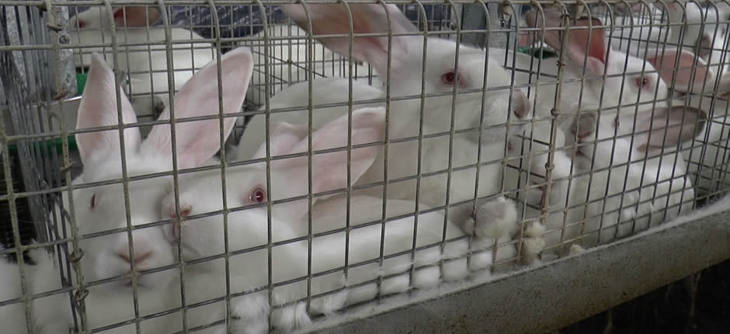
Now, we have a chance to make the voices of British citizens heard by Europe’s decision makers too – an opportunity that we cannot afford to miss. We owe it to the millions of animals – pigs, calves, hens, rabbits, ducks, quail, geese – confined in cages, sometimes for their entire lives.

The ECI must have at least one million verified signatures in order to succeed. All of the signatures collected so far are yet to be validated – that’s why it’s crucial we gain every last signature we possibly can, right up to the finish line.

Together, we can End the Cage Age.

Please, sign the ECI now and call on the European Commission to ban cages for all EU farm animals.

Thank you for taking the time to help give all farm animals a life worth living.

caged chicks