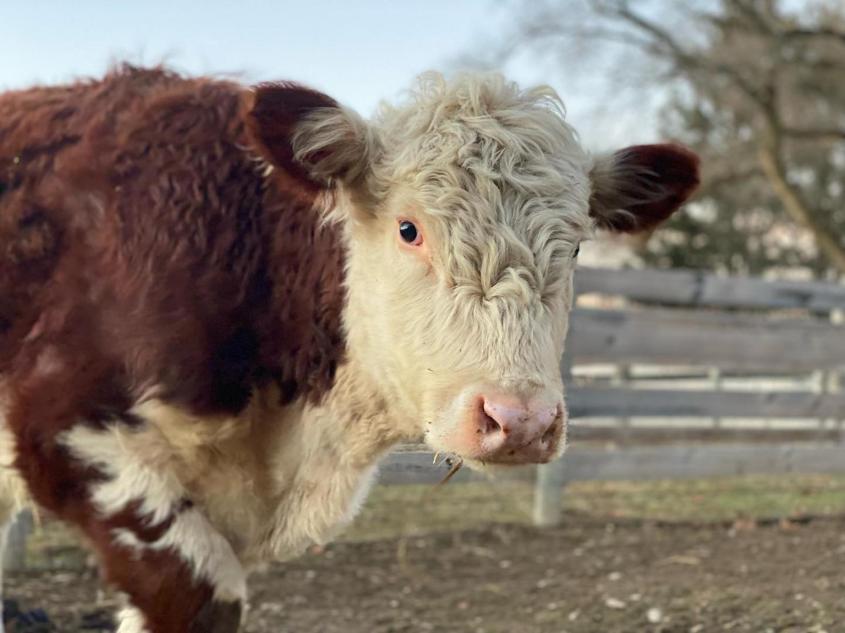
Category: Farm Animals

Switzerland on the way to banning the import of foie gras

Zurich, February 28, 2022 – Today the National Council adopted a motion for an import ban on foie gras produced in a cruelty-free manner.
The international animal protection organization FOUR PAWS welcomes the decision of the National Council: Millions of geese and ducks suffer every year from the brutal force feeding, a procedure that has long been banned in Switzerland.

FOUR PAWS is now calling on the Council of States to follow the National Council and put an end to the import of this cruelty-free animal product.

With 119 votes to 61 and 0 abstentions, the National Council unequivocally accepted the motion for an import ban on foie gras and thus made its position on the cruel practice of foie gras clear.
We are delighted with this consistent decision.

The production of foie gras has been banned in Switzerland for 40 years, but not in France, Bulgaria or Hungary, for example.

Netherless: Almost 200 tons of foie gras are imported into Switzerland every year, making it one of the world’s largest importers of this product, which is considered a delicacy.

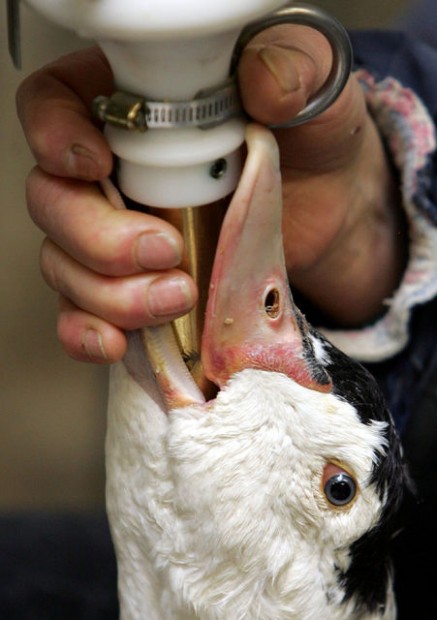
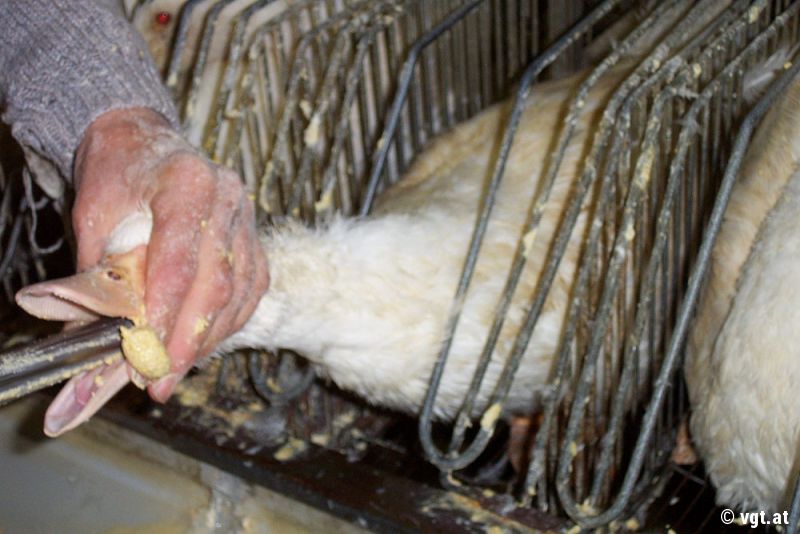
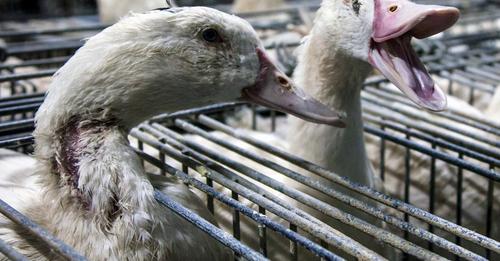
There, young geese and ducks are still being cruelly stuffed with food using metal tubes several times a day until their livers swell to ten times their normal size, which is associated with enormous pain.

We firmly hope that the Council of States will also agree to the import ban.


“The practice of force fattening used to produce foie gras violates Swiss animal welfare standards.
Banning animal cruelty in this country and importing it instead is hypocritical.
It’s time to end this double standard.
We are pleased that politicians have recognized this,” explains Livie Kundert, campaigner at FOUR PAWS Switzerland.

In reality, before being slaughtered at around three months of age, ducks suffer throughout their short lives. In their first weeks of life they are mutilated:
To avoid injury, their beak tips are burned off and their claws removed.
Their biological needs are completely ignored, they do not get access to a body of water.

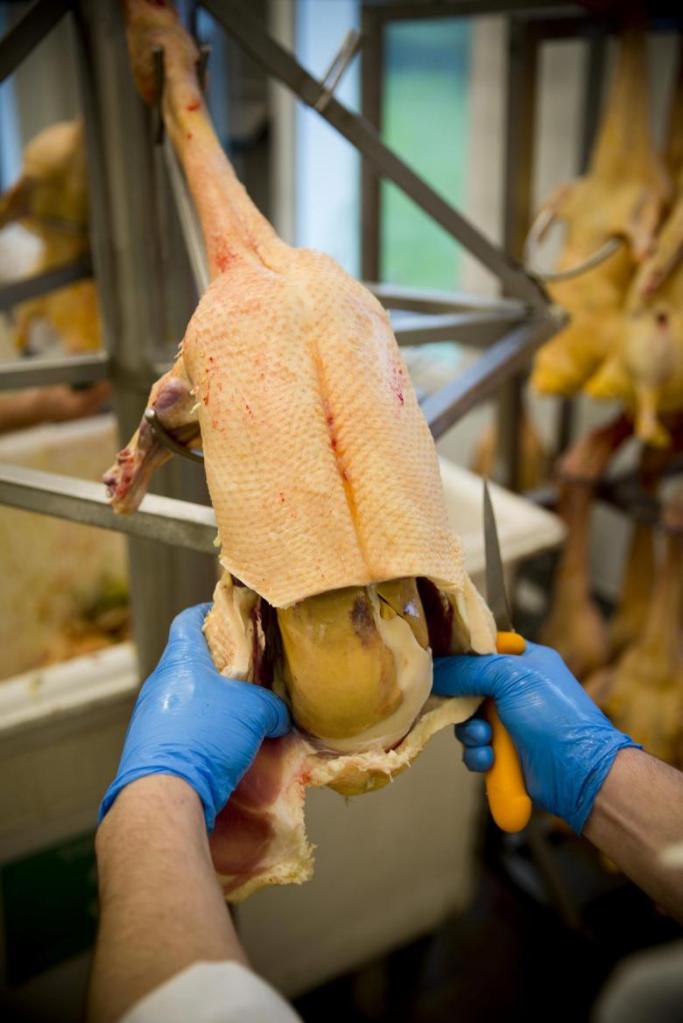
They are then stuffed for two weeks, which means that twice a day, up to 1kg of maize mash is stuffed down their esophagus in three seconds.
This cruel procedure leads to injuries, most of which are fatal. The animals become obese, unable to breathe and move properly before they are finally slaughtered.

The motion submitted was supported by members of the National Council across party lines. Martina Munz, National Councilor, pointed out to FOUR PAWS the immense animal suffering in the production of foie gras:
“Foie gras is not a staple food, it is a luxury product that is cruel to animals, like snakeskin. Let’s put an end to suffering. Not only the production, but also the import should be prohibited.”

The Green National Councilor Meret Schneider was particularly bothered by the Swiss double standards: “Praising the local animal protection law and at the same time importing animal products is hypocritical and disadvantages our agriculture.”

FOUR PAWS is now calling on the Council of States to follow the National Council and advocate an import ban on foie gras. With this, Switzerland would make history and set an international example for higher animal welfare standards.

https://www.presseportal.ch/de/pm/100004691/100885721

https://www.facebook.com/SentienceCH/

And I mean…40 years of force fattening ban in Switzerland and yet the import is booming with 200 tons of foie gras import!!

A nationwide representative survey by FOUR PAWS revealed that 74% of the Swiss population oppose the cruelty to animals and are in favor of an import ban of such products.

Force-feeding is a particularly cruel form of animal cruelty. However, that doesn’t mean that animal husbandry without force-feeding isn’t cruel.
Animal products always mean exploitation, suffering and murder.

To put an end to this there must be an EU-wide ban on the production and sale of foie gras.

The European Parliament has declared in a new report that the production of foie gras meets animal welfare requirements, having called for a ban on force-feeding eigt months earlier as it is considered “cruel and unnecessary”.

They are proving once again whose interest MPs represent when, just eight months after the June 2021 resolution calling for a ban on foie gras production, they vote for a report endorsing this cruel practice!

We call on every consumer of animal products to stop participating in the exploitation of animals and to leave all animals off their plates

My best regards to all, Venus

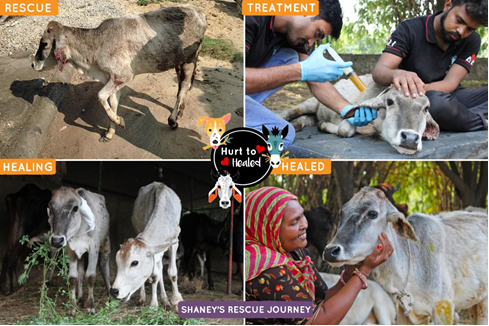
India: 2/3/22 – Latest From ‘Animal Aid Unlimited’.

Dear Mark,

We’ve rescued thousands of animals, yet we are still in awe of each and every animal’s uniqueness. Some animals take time to get to know, while others wear their heart on their sleeve. We’ll never know what an animal is really thinking, in a human sense, yet the presence of life and of feeling, not different from ours, is unmistakable. They probably don’t know that they feel better because of the injection we just gave them, or the splint now stabilizing their fracture, but in the moment when their worried eyes become soft, and their tense shoulders relax, we rejoice in just knowing that we’ve helped them feel better.

Watch these wonderful recovery videos below and know that you, wherever you are in the world, have helped a tail wag, given a peaceful night’s sleep, made a hungry belly full, and surrounded a worried animal with love.

Despite a ruptured eye,Sunny hugged his rescuer!

Sunny’s tail wags in every single frame of this video. Unusual under any circumstances, but incredible that he shared joy even with the excruciating pain he suffered having a completely ruptured eye. His eye was damaged beyond repair, but he pulled through surgery with flying colors and immediately seemed to show–not fear, but gratitude! It’s simply awful to imagine such a joyful puppy suffering in pain. Without rescue, his tail would soon have stopped wagging forever. This little sweetheart is simply Love Itself in a puppy package.

Keep tails wagging. Please donate today!

Rose’s love helped heal her baby Petal’s horrific wound

Rose’s little boy, Petal, was terribly injured on the back of his neck with a deep wound filled with maggots. We knew they needed to be together but the day we rescued him we didn’t have room in our ambulance to bring them both. The next day our ambulance pulled in with a big beautiful surprise for this little angel: his mommy! Happily together with Mom, his healing process galloped along! Daily wound cleaning and fresh dressings enabled that awful wound to close within a couple of weeks.

Meet Petal and Rose now! Donate today.

Giving peace and safety to sweethearts like Shaney who have a long healing journey ahead

When Shaney arrived she was a suffering sweetheart who had a fracture on her shoulder. Her ears were also wounded in the accident. She needed medical care for her ears, and for her fracture, she needs rest and limited mobility. Here she is now, completely at home in the our sheep and calf area where there are, of course, no passing vehicles and where tension is completely lifted and all her energy can go into further healing and strengthening her leg.


Thank you for giving us the means to provide complete rehabilitation for those who need time to heal.

Compassion in our Community

A community street animal care-giver often evolves beginning with giving the adorable dogs outside their home leftovers and table scraps. Gradually the bright eyes of the dogs or cows invite irresistible pets and cuddles. For many people, this blossoms into a friendship.

Photographed here, this elegant boy’s guardian brought him in their car and drove him to Animal Aid when they noticed he had a puncture wound that looked infected. Sure enough it was infected, but with antibiotics and their close monitoring, he did not need to be admitted into the hospital and he could heal happy in his own neighborhood with his caregivers near by.

Biggest thank you to the people in Udaipur and across India who have opened their hearts and hands to the angels on their path. 

New vegan purses!

Every purchase helps save someone Beautiful!

Hand-crafted earrings, necklaces, bracelets!


Go shopping here!

Regards Mark

Unsettling Developments On Slaughter Without Stunning in Greece.

2 March 2022

Hellenic Animal Welfare Federation

Instead of complying with the ruling of the Supreme Court, the Government amends the law on which the ruling was based

After having been defeated in Court by animal protection organisations who had appealed a ministerial decision allowing ritual slaughter of animals without prior stunning, the Greek government took the unprecedented step of getting rid of the existing animal protection law that stood in its way. 

In October 2021, in a ruling that made history, the Supreme Administrative Court of Greece annulled a ministerial decision which, in 2017, had introduced ritual killing of animals without prior stunning, a killing practice until then prohibited under Greek national law. 

The Court ruled that the Greek State had not made use of the “margin of appreciation” and the “level of subsidiarity” provided by the EU regulation which gives Member States the possibility to ensure wider protection of animals, by maintaining their national rules or adopt new ones – taking into account the evolution of values and perceptions in their society – especially given the fact that Greece has had a legislation prohibiting any killing of animals without prior stunning since 1981.

The government decided to remove the inconvenient article from the law, downgrading Greek animal protection standards to pre-1980s levels. This unacceptable amendment was slipped into a massive bill on corruption which was submitted three days ago and will be voted by Parliament with expeditious procedures.

Regards  Mark

28/2/22 – More Ukraine Links.

Hi all;

We all know the current terrible situation in the Ukraine; and obviously there is concern for animals as well ass humans.

Here is a link to WAN Ukraine which will provide you with names, sites and contact links if you wish to further follow things up yourself:

Results (worldanimal.net)

This post is additional to the Ukrainian info we provided recently at:

How You Can Support Animal Welfare Organisations In Ukraine. – World Animals Voice

Below (at the end) is additional info provided by friend Di;

Please note that it is possible that info is repeated in some cases; but that is not a problem.

The WAN info at Results (worldanimal.net)

Should be up to date and is a good starter.

https://www.surgeactivism.org/articles/ukraine-the-animal-photos-helping-to-tell-the-story-of-an-invasion

Info from Di:

Food will soon run out for stray animals as Russian invades, fear Ukraine’s shelters 

A list of shelters and charities you can support

  • Casa lui Patrocle – the Romanian animal rescue charity, located 25 miles from the Ukrainian border, has pledged to help families fleeing by providing veterinary care to their companion animals.
  • Sirius – the largest shelter for stray animals in Ukraine, established in 2000.
  • Happy Paw – a charity that cares for homeless cats and dogs.
  • UAnimals – works in Ukraine to protect animals from exploitation and abuse.
  • Shelter Ugolyok – recently announced via its Instagram account that it is in need of help, with some animals having been moved to basements.

Regards Mark

How You Can Support Animal Welfare Organisations In Ukraine.

25 February 2022

With tensions involving Ukraine having descended into war, we find ourselves in deeply troubling times and stand in solidarity with everyone affected.

Donation

If you would like to support those protecting the animals caught up in this conflict, here are organisations working in Ukraine: 

Deutscher Tierschutzbund – Shelter Tierschutzzentrum Odessa 

Donation page

Vier Pfoten – Bear Sanctuary Domazhyr

Donation page

Help from Romania

The Global Federation of Animal Sanctuaries has shared a list of Romanian Animal Shelters who are accepting refugee animals from Ukraine (some offer shelter for any species, including farm animals): 

The National Veterinary Health and Food Safety Authority (ANSVSA) also informs about the temporary abolition of compliance with certain conditions for the entry of pets from Ukraine to Romania.

Due to the exceptional conditions generated by the situation in Ukraine and in order to avoid possible difficulties with refugees coming from this country with pets, in accordance with Article 32 of Regulation (EU) 576/201 3 on the repeal of the conditions for non-commercial animal movement as a company, Romania authorizes non-commercial traffic on their  territory as follows:

Animals that meet the conditions for entry into the EU (identified, vaccinated, with/or without the title of antibodies) will be allowed to enter.

For animals that :

  • are not correctly identified by microchip/tattoo,
  • are not vaccinated against rabies or whose vaccination is no longer valid,

the responsible person will fill in the animal tracking form, which can be downloaded from the ANSVSA website.

The owner of the animal will be able to carry out all formalities and procedures after his entry into Romania.

To facilitate the access of refugees from Ukraine with animals, ANSVSA has sent instructions on the territory and at the border crossing points.

Regards Mark

Stacy escapes on the way to the slaughterhouse – and finds a new home!

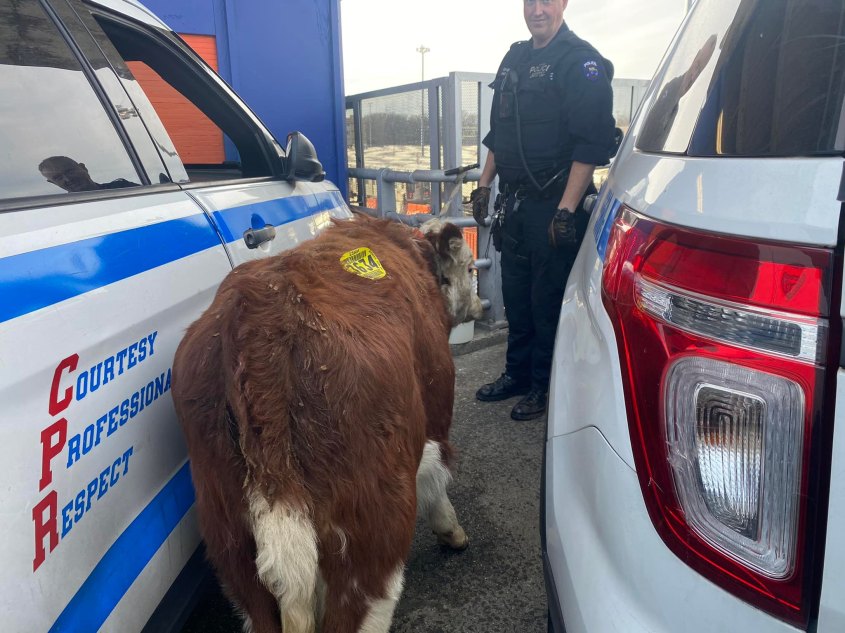
New York (USA) – It was a last-minute rescue when this little calf suddenly decided to flee during transport in New York.
The Hereford cow, which was only nine months old, was actually supposed to be taken to a slaughterhouse.
But as if it had suspected something, the animal escaped and ran straight into Flushing Meadows Park in the New York borough of Queens.

Park rangers who spotted the free-roaming cow in the park in the middle of the city called the police.
This was later announced by a special unit of the New York Police Department (NYPD) on Twitter.

Stacy

The rangers quickly caught the calf and, together with the police officers, took care of finding a new home for the young animal.
They christened the cow Stacy and contacted Wantage, New Jersey Animal Rescue.
She immediately made her way to New York to pick up the foundling.

In their Twitter post, NYPD police officers spoke of a “sentimental mood” among the rangers.
And Mike Stura, the founder of the animal rescue that Stacy eventually took on, described the rescue to World Animal News (WAN) magazine as particularly heartwarming.
It was very emotional to see how happy the rangers and police officers were and how they smiled when the calf was safe.

And Stacy?
After her fateful escape from the slaughterhouse, she found a new, loving home.
“The little one is safe with us. Today is a very good day,” the animal rescue team posted on Facebook shortly afterwards.
Right from the start, rescuers found Stacy to be an exceptionally calm and lovable calf.Stacy

After about ten days of quarantine, during which Stacy was examined and cared for, she was finally allowed to join the other cows on the farm – and immediately made new friends.
The calf is perfectly healthy and can now enjoy life to the fullest

Around 450 animals live at the animal rescue.
They have all been rescued by animal rights activists from slaughterhouses, from cattle markets or farms, from extreme neglect and abuse, from religious ceremonies or from the streets, as the organization describes on its website.

Nice that the clever calf from New York has found a new home here. (iwe)

https://www.hna.de/welt/rettung-zuhause-kuh-kalb-hereford-entwischt-weg-schlachthaus-schlachter-tod-polizei-new-york-usa-nypd-zr-91367036.html

There is still… the good news!
All the best in your new home Stacy, we wish you a long life

regards, Venus

Yes, Cultivated Meat Is Real Meat. 

Cultivated meat is real meat but more beneficial for public health

24 February 2022

In a series of 5 videos, we will address and debunk the most important myths surrounding cultivated meat. In today’s video we explain why cultivated meat is real meat and why it is beneficial for public health.

Yes, cultivated meat is real meat. 

As long as cultivated meat has the same characteristics and nutritional value as conventional meat it is real meat.

The name ‘meat’ is culturally and individually determined. In the past, meat used to be rather a general term for simply food. And, even today, asking consumers living in the same region whether certain products are meat or not, would provide a variety of answers. A steak is definitely meat, but nuggets and hybrid products could be a matter of debate. Some people do not even consider chicken meat as true meat.

On the question about cultivated meat, the American Meat Science Association (AMSA) came to the following conclusion:

Ultimately to be considered meat, in vitro meat must be originally sourced from an animal cell, be inspected and considered safe for consumption, and be comparable in composition and sensory characteristics to meat derived naturally from animals. In particular, the essential amino and fatty acid composition, macro- and micronutrient content and processing functionality should meet or exceed those of conventional meat.’

Yes, cultivated meat is beneficial for public health.

The cultivated meat production process has a great advantage over livestock: it is performed under sterile and closed conditions, so the risk of pathogens is far less. This is important because of the concerns about antibiotic resistance and infectious diseases.

After all, current meat production is by far the largest consumer of antimicrobial agents. 

Moreover, industrial farming is a breeding ground for pathogens and COVID-19 has made very clear to the wide world that zoonoses pose an existential risk.

Studies in other sectors show that in sterile and closed conditions, the incidence of contaminations via bacteria and fungi is very low. This aspect is also important considering foodborne illness. Due to the lack of enteric food pathogens, the risk for foodborne diseases is much lower and it potentially increases shelf lives and reduces spoilage (which means less food wasting).

A final advantage of cultivated meat concerning public health is the absence of trace chemicals. Pesticides, antibiotics, veterinary drugs, heavy metals, among others, are a matter of concern for conventional meat.

These residues are unlikely to appear in cultivated meat. 

Regards Mark

EU legislation on Corporate Sustainability Due Diligence misses out on animal welfare.

23 February 2022

Press Release

Eurogroup for Animals welcomes the Commission’s proposal aiming at further embedding sustainability into corporate governance. However, we call on the European Parliament and Member States to explicitly include animal welfare within the scope of the future legislation.

The Commission’s proposal lays down obligations only for big companies with more than 500 employees and a turnover of €150 million. The obligations and potential sanctions are about how the companies’ operations and value chains can have an “actual or potential human rights and environmental adverse impacts”.

The proposed mechanism would nevertheless apply to medium size companies (i.e. between 250 and 500 employees and more than €40 million worth of annual turnover) operating in high risk sectors. Interestingly, the high risk sectors, which are based on existing sectoral OECD due diligence guidance, cover among others “leather, […] agriculture, fisheries (including aquaculture), the manufacture of food products, and the wholesale trade of agricultural raw materials, live animals, food, and beverages”. 

Eurogroup for Animals welcomes the recognition of the above animal-based sectors as high-risk for human rights and environmental concerns, and calls for the introduction of a comprehensive due diligence mechanism explicitly encompassing animal welfare. 

Indeed, animal welfare is closely linked to environmental protection and human rights as suggested in the annex of the proposed legislation mentioning the violations to human rights (i.e. Annex part I A, point 18 and 19). For instance, highly industrialised and intensive farming systems have devastating effects on the welfare of farmed animals, but they also lead to high levels of water, air and ground pollution, to deforestation and biodiversity loss. 

Poor animal welfare is also linked to systemic human rights abuses troubling the global animal agriculture industry, including the abuse of farm and meat industry workers, child labour, and human slavery within the commercial fishing industry.

The upcoming legislation should explicitly recognise that the health and wellbeing of humans are inseparable from those of animals and the planet. Improving animal welfare by helping to reduce the risk of food-borne diseases and zoonoses and to lessen the use of antibiotics in animal productions, would benefit the right to health, which is a fundamental part of our human rights as recognised by the WHO. Improved animal welfare is also a leverage to fight the violations of human rights in the animal agriculture industry, and is a key element to deliver on the EU Green Deal and the Farm to Fork strategy, which calls for an urgent need to “improve animal welfare to achieve a fair transition towards sustainable food systems.

Stephanie Ghislain, Trade and Animal Welfare Programme Leader, Eurogroup for Animals

Finally, including animal welfare in the scope of the future Corporate Sustainable Due Diligence legislation would be relevant and consistent with actual trends. Existing international standards already recommend companies faced with animal welfare risks to address them in their due diligence policy, and many companies – especially in the food and textile sectors – already include animal welfare in their due diligence efforts. 

All eyes are now on the European Parliament and Member States to adopt a comprehensive Corporate Sustainability Due Diligence legislation responding to the high expectations of EU citizens and consumers. 

Regards Mark

Horse Meat Labelling – Still Not Mandatory – Take Action Now, Demand Change For Clear Labelling.

23 February 2022

Despite the 2013 horse meat scandal, it is still not mandatory for operators and authorities to provide and control information on the origin of horse meat. As a result, to put it simply, there is no certainty on where your meat is coming from.

For the past 10 years, alongside BEUC, the European Consumer Organisation, we have been demanding mandatory country of origin labelling for horse meat regardless of its shape and form.

Today, the European Commission runs a public consultation on the revision of food information to consumers (FIC) Regulation and we call for the inclusion of horse meat within the scope of the regulation introducing mandatory Country of Origin Labelling (COOL).

In 2020, around 60 million horses were registered as livestock worldwide by the Food and Agriculture Organisation for the United Nations (FAO), and just over 5 million of them are slaughtered every year.

The same year, the EU imported 16,340 tonnes of horse meat, mostly from Argentina, Uruguay, the United Kingdom, Canada and Australia. 

Below we present to you three reasons in favour of mandatory labelling requirements on horse meat.

Labelling to empower EU consumers

In 2013, the horse meat scandal exposed that numerous food in the EU sold as beef actually contained horse meat. Despite the public outcry, the situation has not changed as in 2021, Europol and Interpol investigations identified horse meat sold as veal. Mandatory COOL requirements would constraint industry stakeholders to give accurate information so that consumers can make informed decisions. Such requirements are already in place and indicate country of origin, raising and slaughter, for beef, swine, sheep, goats and poultry demonstrating the feasibility of the measure. Furthermore, investigations conducted by a consumers’ association show that origin-labelling provisions for these types of meat were implemented without unnecessary burdens on the meat supply chain and on national administrations.

Labelling to recognise production standards

Investigations conducted by animal welfare organisations have revealed shocking conditions and maltreatment of horses at assembly centres, during transport and at slaughterhouses in Argentina, Uruguay, USA and Canada. Some animals are kept in horrifying conditions in open-air feedlots, without any protection from the weather or veterinary care for six months until they can be slaughtered. The introduction of COOL requirements in the EU giving the possibility for EU citizens to choose local meat will incentivise horse meat industry operators to improve the living conditions of these horses so that they comply with EU animal welfare standards.

Labelling to enhance public health

Consumers build an association between the origin information of meat and a perceived level of food safety. Consumers also question the safety of their food and are particularly concerned about antibiotic residues and hormone levels in meat. Recent investigations have revealed the presence of EU banned chemicals in horse meat samples such as diclofenac or thiabendazole. In addition, issues around traceability and horse passports, as well as  number of horses slaughtered for meat and not registered as livestock raise a question of veterinary medicines in human consumption. These consumer concerns are therefore legitimate and it is essential to improve labelling and traceability of horse meat to ensure food safety for EU citizens.

What can you do?

You can reply to a European Commission public consultation on the food information to consumers Regulation until 7 March 2022. Raise your voice and demand the horse meat labelling.

*According to the French report, the argument of higher food prices due to traceability does not hold, since the impact on the price is minimal.; it represents only an additional cost of + 0.7% or only + 0.015 Euro for a tray of lasagna, for instance. Indeed, these increases are much smaller than the price differences usually observed between retail chains.

Regards Mark

EU: Study About EU-Mercosur Agreement Wrongly States That Animal Welfare Standards Apply to Agri-Food Trade.

17 February 2022

A study requested by the International Trade (INTA) committee of the European Parliament analyses the trade aspects of the EU-Mercosur agreement and recognises that the animal welfare provisions foreseen in the agreement are weak. However, the study wrongly states that imports of animal products must comply with EU animal welfare standards.

Eurogroup for Animals welcomes the study published in November 2021 as far as it recognises that animal welfare “is closely linked to sustainable development” and that the current deal “gives rise to questions as to whether [it] fully responds to the EU’s strong stand on the issue of animal welfare as such and its potential trade implications”. As long stated by Eurogroup for Animals, the EU-Mercosur agreement is a bad deal for animals, nature and people.

However, the study misunderstands the requirements that imports of animal products need to comply with, and hence wrongly concludes that the conditional liberalisation for egg products included in the deal is “closing a gap” for imports of animal products. Indeed, the study argues that in the EU, “animal welfare standards are quite ambitious”, and that given the ongoing revision of the animal welfare legislation and the European Citizen Initiative “End The Cage Age”, these standards “are likely to be defined even more strictly in the future”. As a consequence, the study suggests trade implications “since exporters are often required to conform with EU legislation by way of a certificate on equivalence to be presented on importation (calves, pigs, slaughtering, transports)”. Furthermore, the study, while analysing the liberalisation of agri-food trade, wrongly states that “in general, all products need to fulfil animal welfare standards”.

This seems to be a confusion between animal welfare standards and general import standards. Imports of animal products, which are often produced under poor animal welfare standards, do not need to comply with EU-equivalent animal welfare standards (on farm practices or transport), except for those at the time of slaughter. And imports of live animals, which are low, need certification mainly on health issues. Import standards are for instance, veterinary controls and maximum residue levels (MRLs) for pesticides.

This misunderstanding possibly led the study to assume a “notable exception” for egg products that would not need to comply with animal welfare standards. This “notable exception” would be “addressed by the preferential scheme on eggs, as the EU attached a condition to its liberalisation offer in view of compliance with relevant EU standards”.  However, the conditional liberalisation on shell eggs, far from “closing a gap”, is merely a step in the right direction with the first animal welfare-based condition in a trade agreement. 

Eurogroup for Animals calls on the EU to uphold the objectives of the Farm to Fork Strategy, and to take the opportunity of the revision of the animal welfare legislation to include a trade aspect in the future EU legislation on animal welfare. In parallel, the EU could extend the conditional liberalisation of the trade in shelled eggs, and to agree on animal welfare and sustainability-based conditions required to access tariff-rate quotas or liberalisation in all animal products, including the respect of EU-equivalent animal welfare standards. 

Regards Mark

Standards – What Standards ?