Wonder, Marvel, Yen and Pudding were victims of the illegal wildlife trafficking trade. Torn from their mothers at just a few weeks old, they were thrown into tiny cages to be sold to the highest bidder. But just as they were facing a terrifying future, Animals Asia rescued Wonder, Marvel, and Yen, and Hanoi Wildlife Rescue Centre rescued Pudding.
First few weeks at sanctuary
The first few days at our sanctuary were understandably difficult for the cubs. Terrified, confused, and desperately missing their mums, they paced, swayed their heads and sucked their paws – typical signs of distress in captive animals.
Our bear care team took it in turns to look after the cubs day and night. They quietly sat with them, gently offering food and natural enrichment, and talking to them in calm, soothing and reassuring voices.
Baby steps
After a few weeks, the cubs had developed good appetites, were playing with the natural toys we gave them, and their distressing behaviour had eased. Yen showed a particular interest in hessian sacks and played with them for hours, while Marvel, despite being very nervous when he first arrived, loved the noisy toys the most!
They were ready to move to the special area of our sanctuary that’s reserved for our smallest and youngest bears, the Cub House!
The cubs were moved to their own dens which were joined together but separated by sliding doors, so they could hear, smell and see each other from the safety and comfort of their own spaces.
Sadly, we know you’re not kidding, but imagine being so proudly opposed to decreasing suffering that you honestly believe Chris is your weapon-of-choice against veganism. What an absolute clown, to boast you don’t eat “veal” or cats, but eating other victims, including dairy victims, is what – ? An exercise in demonstrating how absolutely absurd and desperate you are to continue causing unimaginable suffering. And, please, tobacco, alcohol, driving, etcetcetc., ad nauseum, don’t REQUIRE victims, but ALL animal exploitation is related and fuels “other” animal exploitation, and it ALL requires victims, including their suffering and violent death.
And feigning indignation while being morally outraged at the perceived “equality towards human animals and non-human animals” is inherently based in the “meat eaters” comparison of human and non-human animals, not vegans’: yes, Chris, YOU’RE making the comparison, it’s only “problematic” when you think vegans are equating them, and I know this because, for example, except for vegans, nobody EVER criticizes nonvegans who benefit from equating nonhuman animals with human animals, but then arbitrarily dismiss similarities to attempt to justify animal suffering and violent death, like vivisectionists do, or animal farmers who claim to care about animals more than their own children but then kill and eat the same animals anyway. And if you don’t eat “veal” (ie, calves, unprofitable casualties of the dairy industry that you DO support and celebrate) because eating infants is “cruel”, are you then guilty of comparing calves to humans, equalizing them? Or is that argument only acceptable when YOU use it in some asinine dimension where you actually make sense?
And what in the AF is a “militant” vegan? One who challenges your cruel behaviours. Right? Like a “militant” opposed to FGM or a “militant” opposed to wrongful incarceration or a “militant” opposed to violence? “Militant” is how animal consumers treat their animal victims: body violation and intrusion, separation of child from mother, and concluding the animal’s brief life of exploitation with violent death. THAT’S “militant”. How people like Chris can use the word “militant” to describe people who DON’T violate, abuse, and kill others is astounding, that he and others don’t recognize their own hypocrisy surrounding their abusively MILITANT actions inflicted on animals is absolutely bizarre.
And COME. ON. Really? Animals are killed in better ways than humans? Are you determined to look as rational as the crusty grossness on the bottoms of your shoes? You’re not only threatened by decency but by logic, too? You have the privileged audacity and human supremacist position of NEVER EVER EVER having to experience a forced violent, terrorizing death in a slaughterhouse for people to eat you.
Were you one of the ones left behind??? Just by odds you should have at least hit one good point by now, but that you haven’t leads me to believe that you evading logic and facts so consistency must be one of your invented superpowers. I mean, effing yikes, Chris.
In a globally indoctrinated, normalized violent world that acceptably causes and celebrates incalculable suffering and death of animals, don’t be a Chris. Be an Ed. Or look like an idiot because any baby vegan could destroy Chris’s clumsy and mindless argument, and when you don’t actually have a legitimate answer, falling back on the BuT i cAn kILl BeCAuSe pErSOnaL cHOicE is a tired, overused, irrational trope. JFC. Seriously. SL
Download Your FREE Vegan PDFHERE Order a FREE vegan kit HERE Dairy-Free Info HERE Take the Dairy-Free Challenge HERE Click HERE for more Dairy-Free Fish alternatives can be foundHERE Learn about eggsHERE Find bacon alternativesHERE and HERE Take PETA’s Cruelty-Free Shopping Guide along with you next time you head to the store! The handy guide will help you find humane products at a glance. Order a FREE copyHERE Searching for Cruelty-Free Cosmetics, Personal-Care Products, Vegan Products, or more? Click HERE to search. Free PDF of Vegan & Cruelty-Free Products/Companies HERE Click HERE to find outHow to Wear Vegan! Want to do more than go vegan? Help others to do so! Click below for nominal, or no, fees to vegan literature that you can use to convince others that veganism is the only compassionate route to being an animal friend: PETA HERE Vegan Outreach HERE Get your FREE Activist Kit from PETA, including stickers, leaflets, and guideHERE Have questions? ClickHERE
After hearing from PETA, Southeastern Grocers (the parent company of Winn-Dixie) ended purchases from Culver Duck Farms! Ask other companies to reconsider their relationship with the company, as birds will continue to suffer in dank sheds at Culver as long as companies continue to sell their flesh.
Watch whistleblower footage here – and then take action:
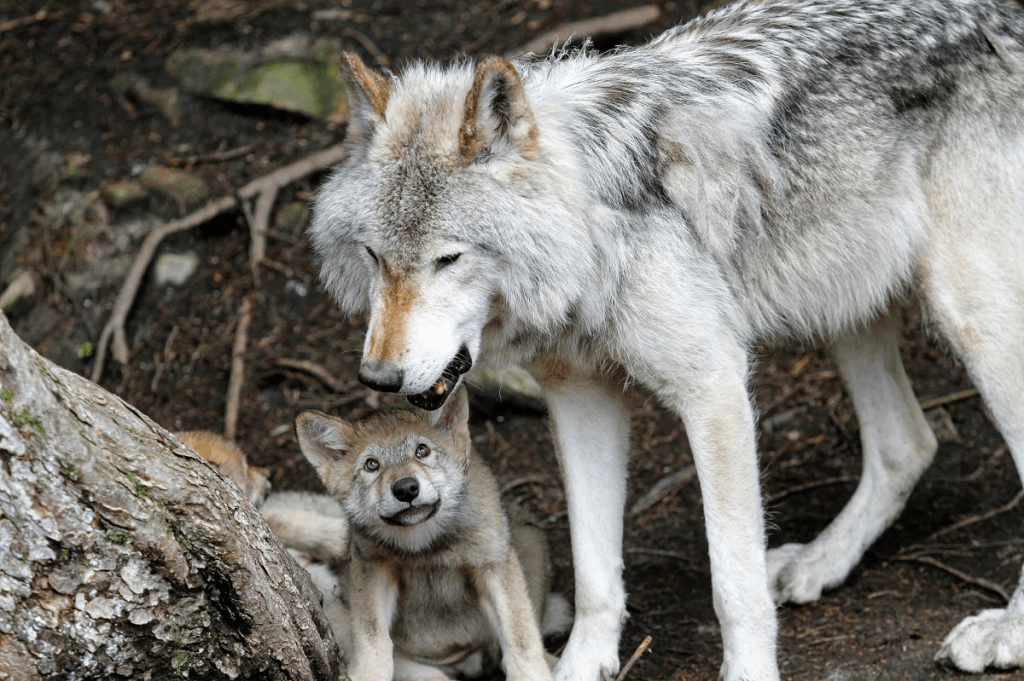
There’s good news, and there’s bad news: Although gray wolves in 44 states are once again protected under the Endangered Species Act, those in Idaho, Montana, Wyoming, and portions of several surrounding states continue to be unprotected. These animals are in danger of potentially being massacred. Help them by contacting the secretary of the interior today.
Update: March 7, 2022 Some good news for gray wolves! On February 10, a U.S. district court reinstated federal protections for gray wolves across much of the country, ruling that the U.S. Fish & Wildlife Service had failed to show that wolf populations could be maintained once the animals’ protections under the federal Endangered Species Act (ESA) were removed. Although gray wolves in 44 states will once again be protected under the ESA, those in the Northern Rocky Mountains—Idaho, Montana, Wyoming, and portions of several surrounding states—continue to be unprotected by it, even though these states have declared open season on massacring these animals!
Please contact Secretary of the Interior Deb Haaland via this online e-mail form and urge her to implement immediate emergency protections for gray wolves and to reinstate full federal protections for them under the ESA.
Freiburg, 16th March 2022. Animal Welfare Foundation (AWF), Compassion in World Farming (CIWF) and Animals International (AI) have witnessed how an old, former cargo ship with nearly 8,000 animals on board needed to be replaced while at sea. Inadequate European legislation and its poor implementation regularly lead to prolonged suffering of animals exported outside the EU.
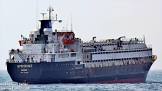
On February 23rd, the livestock carrier Spiridon II left Tarragona in Spain. The country is one of the main exporters of live animals in Europe. Around 300 young bulls from France and Spain as well as 7,600 Spanish sheep were on board. Their destination was the Port of Aqaba in Jordan.
On February 27th, engine problems occurred. The journey was interrupted, and the ship spent three days near Greek ports. Unloading the animals onto European grounds was not an option. Once on the water, they are declared as so-called “export” animals and cannot re-enter the EU. This often leads to tragic consequences, such as the odysseys of Karim Allah and Elbeik in early 2021, where 2,600 calves and cattle were subjected to emergency slaughter.
Spiridon II was finally brought to Eleusis, near Athens, Greece on March 4. There the 8,000 animals were loaded directly from one vessel to another, namely, the livestock carrier Adel I, via a ramp, on the water. The reason for this manoeuvre at sea was that the port of Eleusis is not authorised to transport animals to third countries. On long journeys like this, there is no veterinarian on board, regardless of the number of animals. This was also the case on Spiridon II. It remains unclear whether the animals were fit to continue the journey to Jordan after 10 days onboard the vessel. It also remains unclear whether unfit animals were emergency euthanised on site.
The livestock vessels currently operating in the EU were converted from car ferries or cargo ships to livestock carriers at the moment when they should have been scrapped because they were too obsolete to continue. They are ancient vessels, operating under suspicious flags, and are poorly designed and maintained. These vessels pose many risks for the safety of the animals, the crew, and the environment.
Maria Boada-Saña, Veterinarian and Project Manager at AWF
This latest event just adds to a long list of problematic live exports. And Spiridon II is just one of too many old vessels with many deficiencies and unexpected problems arising during the journey. NGOs have repeatedly drawn attention to the underlying problems. Emergencies at sea cannot be solved easily and result in longer transports. If the competent authorities lose responsibility for ships that have left port, any unforeseen incident can have tragic consequences, as the example of Elbeik and Karim Allah shows. There should be a systematic approach to solving the problem instead of makeshift solutions for every single case.
NGOs exposed that during exports by sea, Council Regulation (EC) No 1/2005 on animal transports cannot be complied with. This shows once again that the current legislation and the ruling of the European Court of Justice do not ensure real protection of animals during the entire transport.
Once more, this latest incident reveals the severe flaws of EU’s live animal exports. The horrendous suffering that animals endure during live exports and the all too frequent mechanical problems of the vessels cannot go unnoticed. We urge the EU Commission to take immediate action on this matter. The current revision of the EU’s animal welfare rules presents the perfect opportunity to ban this cruelty once and for all.
Olga Kikou, Head of CIWF EU
Spiridon II remained in the port of Eleusis until March 8, when it left for reparation. The animals who survived the stressful journey so far arrived in Jordan on March 9, to be slaughtered in the most shocking and cruel conditions which are illegal in the EU.
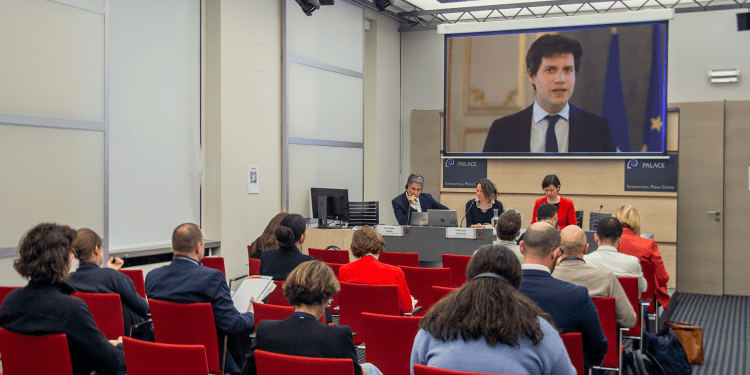
Together with the French Presidency of the Council of the EU, Eurogroup for Animals, in collaboration with its members Fondation Brigitte Bardot, Welfarm and Compassion in World Farming, today organised the event Animal Welfare and International Trade: Looking into the Mirror.
The conference aimed to discuss the trade dimension of the revision of European legislation on animal welfare, and to show how the approach adopted in “mirror measures”, one of the priorities of the French Presidency of the Council, can inject more coherence between the EU trade policy and the Green Deal, in particular with regard to animal welfare and the “Farm to Fork” strategy.
“Animal welfare is not properly considered in the framework of trade law, yet, it’s a crucial field when we discuss reciprocity”, said the French Minister for Agriculture and Food Julien Denormandie in his introductory remarks. “For the end of 2023 we’re expecting a legislative proposal on animal welfare in the context of the Farm to Fork strategy, and I believe it is essential for it to include a reciprocity component”, he added.
“Whilst facing huge global challenges, the EU can lead the way towards a truly sustainable and humane food system and trade policy. We believe that the mirror clauses represent a very good mechanism to support this transition. If the EU wants to become a truly sustainable producer and live up its reputation as leader in animal welfare, it is of utmost importance to revise the animal welfare acquis and this can only be done if our standards also apply to imported products. The concept of mirror clauses fits perfectly within this context and we thank the French government for being so persistent”, added Reineke Hameleers, CEO of Eurogroup for Animals
After Philip Lymbery, CEO of Compassion in World Farming, closed the introductory remarks, three speakers set the stage for the discussions: Stéphanie Ghislain, Eurogroup for Animals, opened on the interconnections between international trade and animal welfare; Lucie Carrouée from DG SANTE elaborated on the discussions around the trade dimension in the current revision of the European legislation on animal welfare; and finally, Clémentine Baldon, lawyer at the Paris Bar, argued that, from a legal perspective, imposing new animal welfare standards on imports could becompatible with the rules of the World Trade Organisation (WTO).
During the panel discussion, Marie-Pierre Vedrenne MEP, vice-chair of the European Parliament INTA Committee, supported the idea: “Reciprocity is an essential topic, in line with strong and necessary demands from civil society, but also from farmers, because it fits with an objective of coherence between public policies.” She also rightly underlined the key challenge of implementing such rules, “An issue that will keep us busy is the implementation of this objective of reciprocity”, confirming it will be an important topic for the European Parliament.
“Consumers are in favour of international trade as long as there is no race to the bottom in terms of regulations, and they can’t imagine that imported products do not respect the rules applied in the EU. 93% of EU citizens demand that trade policy reflect European norms, including on animal welfare”, explained Monique Goyens, CEO of BEUC.
“WTO rules can be a hurdle but it’s not impossible. We have a caselaw very clear on that and on the conditions that have to be met. When there is a moral concern, we can of course legislate and we’ll be doing this in a number of areas”, indicated Iciar Chavarri-Ureta, Deputy Head of the Agriculture, Food and Sanitary and Phytosanitary Matters Unit in DG Trade.
The event was also the occasion to launch the new reportBye Bye cages, by Eurogroup for Animals and Compassion in World Farming, on the legality of an EU ban on the sales of meat and eggs produced from caged animals including imported food.
I always find it revealing how videos demonstrating the violent death required of ALL exploited animals, are typically restricted, labeled graphic, and warning of disturbing images, completely opposite to what the agriculture adverts and propaganda deceptively promote, but you’ll NEVER get an agriculture industry employee, supporter, representative, or apologist (ie, all who comprise >90% of the human population) provide the truth of the suffering and violence necessary of animals, who are denied all opportunity to defend their bodies, their children, their lives. Conversely, nobody-in-the-history-of-ever has restricted footage or images of crop harvesting or apple picking.
Don’t let the explicit content that you so effortlessly inflict on vulnerable, defenseless animals prevent your education and hypocritically challenge your ethics.
And for all the radical cat-and-dog extremists who vilify the cat-and-dog-meat trades and relentlessly share the graphic footage of dogs being butchered alive and cats being boiled while conscious: why are you so happy to participate in the same torture, torment, and cruelties inflicted on other animals?
The USA routinely boils chickens alive, as well as other animals including lobsters and crabs and pigs, whose flesh and body parts you piously pass around on your nice dinnerware; I think people spend so much time picking out china patterns because pretty plates and other weapons of destruction deflect from the required violence and suffering of those on them.
And before you virtuously scream about “quick, ethical killing”: killing is inherently unethical, regardless of method or place, you don’t kill animals because you actually believe NOT killing animals is UNETHICAL, there is NO form of killing that is more humane than NOT killing. All killing causes suffering and destroys life, which can NEVER be “ethical”. Why you think that your transient taste preference validates the END OF LIFE is the epitome of privilege, arrogance, hubris, and selfishness. It’s not like you have to literally hold yourself back from eating your dog or cat or rabbit or whatever-animal-you-claim-to-like, if you can prevent killing your dog as “food”, you can prevent killing pigs.
There are those who ask, “Why should I listen to vegans?” … Which makes me wonder if you also ask, “Why should I listen to people opposed to child exploitation?” Really? This SHOULD be a no-brainer: Less harm is ALWAYS better. But for the GOP-ers and apologists who simultaneously cause and dismiss the suffering of others (I have no room to unpack the screaming hypocrisy of leftists who also ignore the suffering of others), you’d perhaps be more interested in the financial aspect: Me? I make NO money advocating on behalf of animals, I actually spend money on this blog. But, for the people who relentlessly oppose using gas “euthanasia” on cats and dogs, but who consume pigs who are predominantly slaughtered using gas, the former CEO and president of Smithfield Foods (that kills and profits from the suffering of pigs, in case you missed the association, because nonvegans are often naive and willfully ignorant about the animals they inflict with pain and fear and the entities they pay to cause such), which is actually owned by a Hong Kong, China-based company (the irony), earned $14,000,000.00 in approximately 5 years ……………………………
Who’s fooling whom? Why do you listen to the ones who depend on your complacency and conformity to take your money to kill? (Not to mention the subsidies used to prop up the death industry, if it wasn’t subsidized, a pound of “ground beef” would be about $35.) This also should be a no-brainer.
We are ALL animals who have the capacity to experience emotions and pain, if you enjoy “bacon” but condemn cat and dog flesh, guess what? You enable others to consume cats and dogs by your very support of animal exploitation of other animals: it’s all related, you just define the suffering of some animals in ways that provides you comfort causing it. To care for one species requires you reject the exploitation of all.
Don’t like facts? Too bad, you must not actually like cats or dogs either, then. Was that offensive? Too bad again, the violent torment forcibly endured by animals is what is ACTUALLY “offensive”. Have you ever seen the morally outraged masses absolutely verbally eviscerate and threaten with actual harm, others who kill cats and dogs? If your immediate reaction to my words is, “iF VEgaNs wERe mOrE NiCE I’d Be vEgAn…”: Cry more, who do you normally blame for your inability to be a decent human animal since you either don’t actually know any vegans, or you ignore the super nice ones? I posted a video just last week of nice, respectful Ed Winters encouraging veganism while destroying carnist arguments, if you won’t be vegan for the actual animals, be vegan for Ed.
And, too, what other social justice issues do you require personal benefit and niceties to support? Veganism is for animals, not your ego, you ignore the trillions of “nice” animals whose throats are stabbed and are therefore incapable of respectfully asking for your support, so don’t pretend reading a 5-minute vegan plea or watching a 30-second video had such a negative influence on you that you feel forced to continue greedily supporting the death industry, which includes dogs and cats. SL
A controversial vegan advertisement debuted on UK television channels over the weekend. Tom Bursnall, director of plant-based food company Miami Burger and producer of the advert, expects it will spark conversation and backlash. Bursnall created the 30-second ad in collaboration with the charity Vegan Friendly
Take PETA’s Cruelty-Free Shopping Guide along with you next time you head to the store! The handy guide will help you find humane products at a glance. Order a FREE copyHERE
Searching for Cruelty-Free Cosmetics, Personal-Care Products, Vegan Products, or more? Click HERE to search.
Free PDF of Vegan & Cruelty-Free Products/Companies HERE
Want to do more than go vegan? Help others to do so! Click below for nominal, or no, fees to vegan literature that you can use to convince others that veganism is the only compassionate route to being an animal friend:
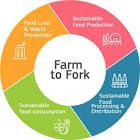
The impetus for the EU to develop and adopt the Farm to Fork strategy was the necessity of making the food system resilient, by adopting healthier and more environmentally sustainable practices, including improved animal welfare and a shift to healthy, sustainable diets.
The crisis in Ukraine has made large agri-businesses cry foul, claiming that without access to Ukrainian and Russian fertilisers, cereals, gas and oil, it is necessary to u-turn on the EU’s objectives and roll back policies that will make its food system more resilient.
The Farm to Fork strategy shows, on the contrary, foresight. Its roll-out will streamline and ensure food security by making the EU less permeable to volatility and constraints in international markets. By moving away from the most industrial and intensive forms of animal agriculture and promoting a shift to more plant-based diets, more people can be fed using less land and resources.
The outcry is about feed, not food
Agri-businesses cynically claim that the war in Ukraine will cause a food crisis, whereas the stress is on feed. The EU wastes 20% of its food, and exports more agri-food than it imports, with a positive trade balance worth €4bn to €6bn each month.
Access to cheap feed for animals and chemicals for intensive feed-crops is under stress because of the war. The Farm to Fork strategy aims at avoiding that intensive animal farming and its supply chains come into competition with food for people.
The EU produces over 290 million tonnes of cereals, 32 million more tonnes than are used domestically. Yet only 20% goes directly to feed people. The lion’s share is for feed (56%) and almost as much cereal is exported (45 million tonnes) than is destined as food for Europeans.
A resilient food system to weather this and future crises
A resilient food system will ensure that domestically produced food-crop is primarily used as food for people, while farm animals feeding themselves primarily by grazing. Agricultural production is, currently, mostly diverted to intensive animal farming. Apart from its detrimental impact on billions of animals it sustains an – economically and medically – unhealthy overconsumption of animal products and reliance on imported feed.
The Farm to Fork strategy will contribute towards cutting the EU’s reliance on the production and import of industrial feeds and allowing the EU’s agricultural sector to increase its production of food for people. The strategy’s objectives of moving towards a greater plant-based diet, reducing the consumption of red meat and improving the well-being of farmed animals will help the EU weather international crises like the deplorable war unfolding at its borders. Overall, the consumption of animal products would need to be reduced by around 70% in the EU in order to stay within the planetary boundaries.
With the war in Ukraine bringing the limits of the EU’s food system, heavy in animal protein, to light, the Commission should accelerate the roll-out of the Farm to Fork strategy: reduce the EU’s reliance on meat production that diverts home-grown food crops for people to feed for animals and requires significant imports of both feed-crop and fertilisers.
As Commission Vice-President Frans Timmermans said on 8 march 2022, “Farm to Fork is part of the answer, not part of the problem”.
Together with 85+ NGOs we sent a letter to Ms Ursula von der Leyen, President of the European Commission; Mr Frans Timmermans, Executive Vice-President for the European Green Deal; Ms Stella Kyriakides, Commissioner for Health and Food Safety; Mr Janusz Wojciechowski, Commissioner for Agriculture; and Mr Virginijus Sinkevičius, Commissioner for Environment, Oceans and Fisheries, asking them to defend the Farm to Fork strategy.
The Aquaculture Advisory Council (AAC) has published its Recommendations to the European Commission and the Member States, one on fish welfare in live transport, and on setting up a Fish Welfare Reference Centre.
Most fish in European aquaculture are moved between sites at least once during their life, and many are moved several times between or within sites. The live transport of fish is governed by EU regulation 1/2005 on the protection of animals during transport but currently contains provisions that cannot and should not be applied in fish transport.
As part of the Farm to Fork Strategy, the European Commission is now reviewing this regulation with a view to making a new legislative proposal. Eurogroup for Animals, Compassion in World Farming, and Vissenbescherming, have worked with aquaculture producers and other stakeholders in the AAC to develop these consensus positions.
Regarding fish welfare in live fish transport, the AAC notes that it is necessary to take the specific needs of fish, and sometimes species-specific needs, into consideration when establishing rules for animal and fish transport. The AAC makes detailed recommendations covering:
1. Pre-transport planning and preparations, including proper vehicles and equipment
2. Journey preparations, inspecting and preparing the fish and equipment
3. Loading and unloading, for most finfish species the most stressful part of live transport.
4. The journey itself should be gentle, with continual monitoring of oxygen and temperature.
5. Post-journey monitoring of appetite, behaviours, disease and mortality.
DG-SANTE, in cooperation with Member States, has already set up Animal Welfare Reference Centres in relation to pig welfare, poultry welfare and ruminants’ and equines’ welfare. The AAC has now made the recommendation that a fish welfare reference centre should be established to address the welfare of fish and other farmed aquatic animals that are produced and imported into the EU.
The AAC highlights priorities for the reference centre including:
the development of species-specific guidelines,
establishing validated indicators,
covering all stages including hatcheries, rearing, transport and slaughter.
97 percent of all laying hens have a broken sternum: X-rays with shock results!
Egg laying non-stop: The work of laying chickens has surprising consequences for the animals, as new analyzes by the University of Bern (Switzerland) show.
Organic hens from supermarket chain “Migros” and “Coop” are also affected, as reported by “K-Tipp” (a Swiss consumer magazine which is the magazine with the most readers in Switzerland. .
This result makes your egg stick in your throat: researchers from the University of Bern regularly X-rayed 150 laying hens in Switzerland over a period of ten months to analyze the physical consequences of their egg production.
They came to the conclusion that 97 percent of the animals had a broken sternum.
This is reported by the “K-Tipp” in its current issue.
On average, each chicken had three broken bones – in some animals it was as many as eleven.
According to the consumer magazine, the problem is not new, but the results indicated that it is bigger than previously known.
In earlier studies, for example, many fractures went undetected because the researchers only felt the bones and did not X-ray them.
Water with painkillers
That’s what Michael Toscano, head of the Center for Animal Welfare at the University of Bern, suspects. “You often don’t see the pain in the chickens. Nevertheless, there is evidence that a condition is present: Hens with broken bones move less. They take longer to get off their perches. And they choose to drink water that contains painkillers more often,” Toscano told “K-Tipp”.
According to the University of Bern, there are various reasons for the fractures.
But it is clear that the bones of the overbred chickens are brittle.
On average, a laying hen produces 323 eggs – almost one egg a day.
Chickens get the calcium they need for eggshells from their own bones.
The assumption of veterinarians is that the bones do not regenerate this calcium completely and therefore become porous.
Worldwide suffering
According to the report, it is also possible that some animals start laying eggs too early when their bones are not yet developed.
With the result that just a violent flapping of the wings or a collision with the perch causes the breastbone to crack.
Hanno Würbel, Professor of Animal Welfare at the Faculty of Veterinary Medicine in Bern, criticizes sharply the situation: “With today’s keeping and breeding of chickens, pain and suffering for many animals is inevitable. And that’s just not sustainable.”
The extent of suffering is enormous worldwide.
According to Würbel, almost all laying hens used in Switzerland are affected in all forms of husbandry, including free-range and organic farms that are sold in Swiss supermarkets.
The Swiss supermarket chain “Migros” only tells the magazine that the issue affects the entire industry.
She does not want to comment further on the broken bones.
According to the report, egg producers around the world keep the same high-performance breeds.
Their breeding is therefore in the hands of a few corporations such as the German EW Group or the Dutch Hendrix Genetics.
They are currently trying to breed hens that are less prone to fractures.
The federal government and the egg producers are also counting on this.
Low alternative offer
Instead, the animal protection organization recommends switching to dual-purpose chickens, which provide meat as well as eggs.
These lay 70 to 100 fewer eggs per year and are therefore likely to be significantly less affected by fractures.
However, of the 3.4 million laying hens in Switzerland today, just under 20,000 are dual-purpose chickens.
And I mean…Almost 70 percent of all “farm animals” in Switzerland are chickens.
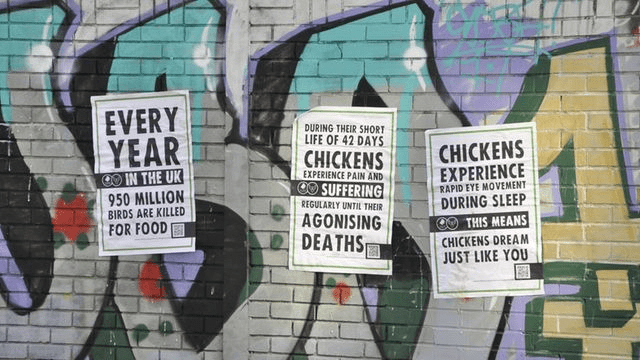
After fish, chickens are the animals we kill the most every year-worldwide.
The strongest intensification has taken place in poultry fattening. Approximately 63% of the chickens in Germany live in huge halls with up to 6,000 animals.
High-performance breeds are bred to lay a particularly large number of eggs in a short period of time.
After about a year, the animals are so exhausted that they can no longer perform well and are killed.
At the end of their lives, the animals are severely weakened by their cruel life, have an inflamed cloaca and almost no feathers left, partly because they peck at each other due to the poor keeping conditions.
They are kept in confined spaces, often without natural light, and live in cramped stalls on their own dung.
Male chicks must be discarded because they don’t lay eggs and weren’t bred to put on a lot of meat in a short amount of time—and so aren’t profitable.
Every year in the EU, more than 300 million chicks are crushed alive in a shredder or gassed immediately after hatching.
In Switzerland alone there are 2.3 million annually.
At the age of 12-15 months, the animals are slaughtered and often still marketed as soup chickens, turkeys are 3-4 months old at the time of slaughter..
When the chickens are caught, panic often breaks out in the coop, and many chickens are injured or suffocate under their own kind.
The brutal egg industry is responsible for massive animal suffering and apparently this is not uncommon and not country-related.
Dead hens, inflamed cesspools, broken legs and bones, bare pecked animals and wrongly declared eggs, the egg industry is gambling away a cruel reality with rosy advertising promises of allegedly happy chickens.
The global chicken business is a bad thing.
Locked up by the thousands in a very small space, the suffering of these animals bred for maximum performance never ends.
Using animals as disposable goods is unethical and reprehensible.
The tragic irony is that none of this all is actually necessary – because there are plenty of alternatives.
Good food is also possible without eggs, without meat, without animal products, i.e. without animals having to suffer and die for our food.
Animal Equality has released disturbing undercover footage of deliberate violence and neglect on Madox Farm, a large dairy farm in Carmarthenshire, South Wales, which holds over 650 cows and their calves.
Animal Equality’s investigator covertly filmed troubling scenes spanning several months, including a number of serious legal violations. The footage reveals workers kicking and punching cows in the face and stomach, twisting their tails, and hitting them with sharp, metal shovels.
Footage from the investigation was broadcast to millions of people on BBC One’s Panorama. The program also featured an interview with Animal Equality’s investigator, who spoke about the violent methods he witnessed farm workers using to attempt to get a cow who had collapsed back to her feet.
Managers on Madox Farm were also found on several occasions to knowingly leave cows to suffer in severe, prolonged pain. On one occasion a cow was left in excruciating pain after her unborn calf had died inside of her. Despite a veterinarian who was visiting the farm recommending prompt euthanasia, which would have put the cow out of her misery, the on-site manager opted to delay action. The veterinarian was recorded saying that “this is one place where they’d rather just save the money”. The cow died overnight.
Animal Equality has investigated four UK dairy farms over the past six years and found violent treatment of cows and/or illegalities on each one. They assert that it is never the case of just one farm or worker being a ‘bad apple’ – the entire dairy industry is built on exploitation and as a result, animal suffering is at its core.
Animal Equality is therefore demanding that the UK Government puts in place critical changes to the law to license farms, increase farm inspections and better protect farmed animals. They want to ensure that animal abusers are held accountable.