The third report from the Intergovernmental Panel on Climate Change (IPCC), launched on 4 April, covers the mitigation pathways that can reduce greenhouse gas emissions. It follows upon the previous report launched earlier this year that detailed the catastrophic consequences of climate change and concluded that the brief window to secure a liveable future is rapidly closing.
António Guterres, Secretary-General of the United Nations, warned during the press conference that the world is on a fast track to climate disaster. He called for rapid progress to shift to renewable energy, end the funding of coal, protect forests and ecosystems and reduce methane emissions.
The report warns that methane emissions continue to increase, the main source being enteric fermentation from ruminant animals. In addition to its contribution to global warming, diets heavy in animal protein also contribute to land being used inefficiently. Arable land is used to grow crops for animal feed, with negative impacts on ecosystems and biodiversity.
Conversely, a shift to plant-based diets has significant mitigation (action of reducing seriousness – WAV) potential according to the IPCC. More plant-based diets, with only a moderate intake of animal-source food, can lead to substantial decreases in greenhouse gas emissions.
IPCC notes that a dietary shift comes with co-benefits for animal welfare but also reduced land use for feed production, less nutrient run-off as well as health benefits, reduced mortality from diet-related diseases and lowered risk of zoonotic disease and antibiotic use.
The IPCC recognises that cellular agriculture, such as cellular fermentation and cultivated meat, can bring “substantial reduction in direct GHG emissions from food production”. The report notes that these food technologies use less land and water, have a lower nutrient footprint as well as address concerns over animal welfare.
On alternative proteins, the report indicates that insects could be a mitigation opportunity. However, insects are reared industrially to feed intensively farmed animals, thereby propping up animal production and they are often fed on crops that could be consumed directly by animals or people, which accentuates an inefficient way of producing food.
While lifestyle changes can accelerate climate change mitigation, these changes require systemic changes across all of society including on land use, the report states. When governments meet in Egypt this November at COP27 they will discuss the targets for cutting greenhouse gas emissions in line with the Paris Agreement to limit global warming to 1.5°C.
The report is a strong call on governments to take forceful actions to speed up the shift to more plant-based production and consumption and to reduce the number of animals raised for food production.
A recent ‘One Poll’, commissioned by Animal Aid, has shown that the majority of people believe that it is always wrong to cause animals pain and suffering.
The poll asked the question, “Is it ever acceptable to cause pain and suffering to animals?”, to which 71% of people answered “no”. The results show, as Animal Aid suspected, that most people ‘want to be kind’ but are seemingly unaware that there are many things we do on a daily basis that cause animals pain and suffering – for the food we eat, for entertainment, in the wild, and in laboratories.
Most people wouldn’t dream of harming animals, but our daily actions can cause animals huge amounts of pain and suffering – from the food we eat, the entertainment we choose to attend, and from the products we buy and use.
In the second episode of our brand-new podcast, Conversations on Compassion, our hosts interview XCellR8 co-founder, Dr Carol Treasure about her journey into living with compassion. We learn everything from what inspired Carol on her journey, to the ethical implications of some scientific language – and if there’s such thing as an average day in the lab! Take a listen now
On Sunday 24th April it’s World Day for Animals in Laboratories and we’ll also be sharing some facts about some of the animals who currently suffer in laboratories – so keep an eye on our social media!
It has been hard to ignore the Cheltenham festival, which this year claimed the lives of four horses. Ahead of the Grand National, we’re asking people to support horses by not betting.
If you’re out and about in London, see if you can spot our adverts on London buses, a reminder that horse racing is a dead sport. We’d love to see your pictures, so do share these with us on social media – and be sure to tag us so we can see them!
This week, we’ll visit London, Bristol and Liverpool (Monday, Tuesday and Wednesday respectively) with our ‘ad-vans’. These will host mobile screenings of our brand-new film “71%”, narrated by the fantastic Benjamin Zephaniah – poet, author, musician and legend. You can watch the full film here!
Enjoy a compassionate Easter with animal-friendly treats for every bunny! 🐰
Find truffle-filled eggs, zesty chocolate bunnies, deliciously dark chocolate hens, white chocolate treats and much more! All proceeds go towards our work to help animals. 🙏
We want to say a big thank you to everyone who supported our campaign to #BanSnares! Together we have reached the target of 100,000 signatures – a month ahead of the deadline! We’ll update you with more details of this campaign in due course.
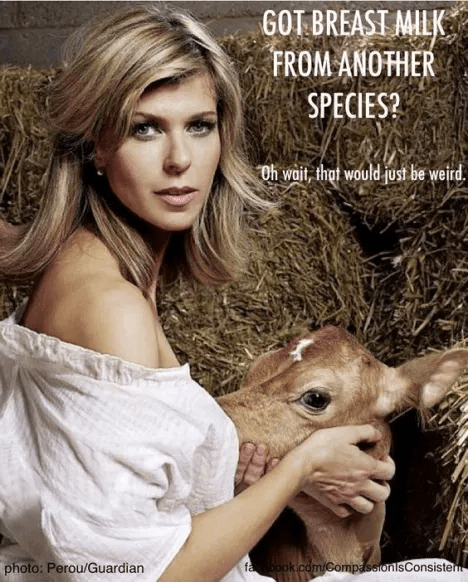
When these Londoners were asked to try a new milk, they were more than happy to offer praise for the creamy drink, but when a disturbing “fact” about the milk was revealed, everything changed. People were disgusted when they were told that the drink (which was actually soya milk) came from a dog. But if the thought of drinking dogs’ milk makes you feel ill, why drink the milk from any other animal?
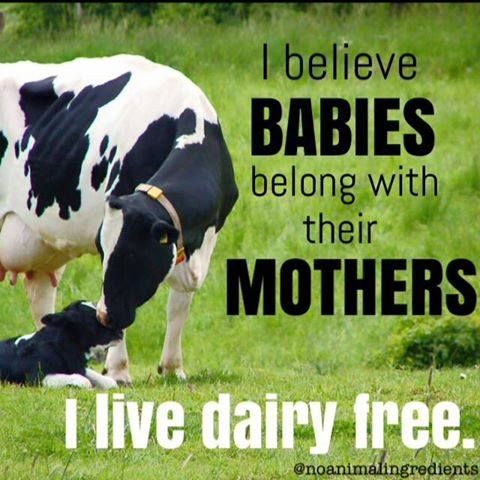
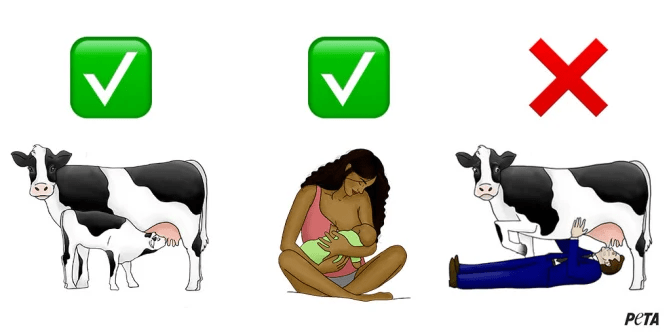
After all, there is nothing “normal” about artificially inseminating a cow and forcing her to give birth, only to tear her beloved calf away from her so that the milk that nature intended for her baby can be consumed by humans instead. Humans are the only species on the planet to drink another animal’s milk, and cows’ milk is no more natural for us than dogs’ or rats’ milk would be.
____________________________
So, if you “accidentally” drank dog’s milk, or cat’s milk, would you be angry? Pissed off? Morally outraged? You’re not the victim who’s forcibly impregnated, separated from her infants, and then violently killed.
Right?
Did you know there are actual industry video shorts on how to “safely” steal a calf from her mother, to protect the kidnapper from an angry and fearful mother trying to SAVE HER CHILD? Yeah, it’s all about how violent cows can be and how the farmer is just the innocent bystander risking bodily injury to nobly take an infant SO HUMANS CAN DRINK THE CALVES’ NATURALLY-INTENDED MILK INSTEAD.
What would YOU do if someone tried to take your child?
But what if, say, dogs were farmed for their flesh and for their breastmilk? Would that be ok? I mean, people say ALL THE TIME how much they love animals, but eat them, and farmers always say they care for the animals better than their own kiddos and then kill them. Right? Effing yikes.
So what about love for Fido or Fluffy or Lassie or Benji? Can you show THEM how much you care?
I bet you can also hear Sam Elliot proclaiming, “Dog. He’s what’s for dinner………………..”
(Be aware that due to some negative feedback they’ve received, ie., angry messages, hostile tweets, violent phone calls, death threats … they are monitoring their feedback more frequently, but want to let you know how important dogs are to them, and how much theylove dogslike you love pigs, chickens, cows, lambs, so please keep an open mind and remember this is all for the love of animals.)
Take PETA’s Cruelty-Free Shopping Guide along with you next time you head to the store! The handy guide will help you find humane products at a glance. Order a FREE copyHERE
Searching for Cruelty-Free Cosmetics, Personal-Care Products, Vegan Products, or more? Click HERE to search.
Free PDF of Vegan & Cruelty-Free Products/Companies HERE
Want to do more than go vegan? Help others to do so! Click below for nominal, or no, fees to vegan literature that you can use to convince others that veganism is the only compassionate route to being an animal friend:
WAV Comment – Are we ever going to see the scales fall from the eyes of the European Commission ?
As welfare people, activists and campaigners, we have been showing and asking for the ‘bloody obvious changes’ by the Commission for decades; and in the vast majority of instances, our requests have been ignored.
Now we have yet another Commission report; something which they are very good at producing, but not usually following up on (regarding actions), which has involved over 60,000 responses and has reached the conclusion that ‘ a clear majority agreed that a revision of the current acquis is needed, that species are not protected equally, that more information is needed as well as better and easier enforcement
Live animal transport has always really been my ‘main thing’ – you can read more about it at https://serbiananimalsvoice.com/about-us/ – there is a lot here about investigation work and the efforts made to stop the live animal transport business.
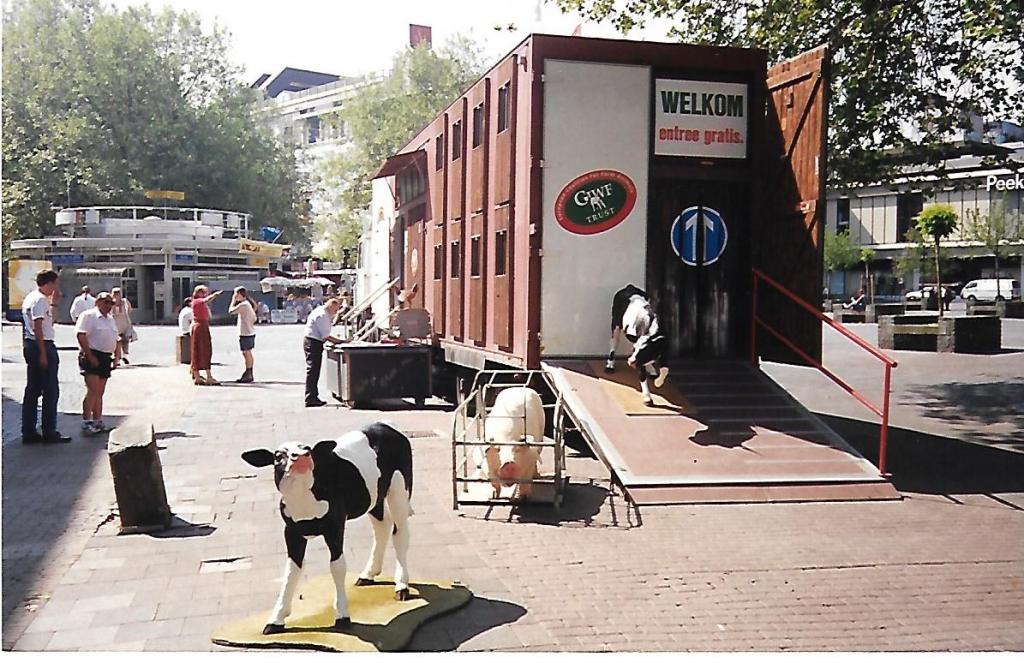
In the Netherlands campaigning about live animal transport.
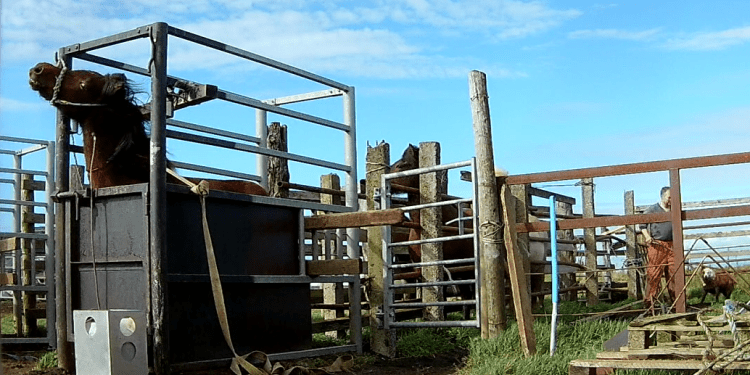
I have witnessed the ‘dark side’ of live animal transport for decades: I did a lot of work re horses being exported for meat. From around 2004: To this day, Mark will never forget what was witnessed in the investigations into beautiful, live horses being exported from the UK to Europe as a scam for the meat trade under the guise of ‘riding horses’. This, combined with live farm animal export work over the last 27 years or so has meant that the export of live farm animals is a top ‘hate’ and will always be campaigned against – be it in the UK, Europe, Australia, South America, North Africa, Anywhere ! – nobody needs to tell me how bloody useless the EU Commission is.
Things have not changed all these years later; and (Mark says) “in my mind I can still be there; watching, hearing, smelling what is in my opinion, just one of the biggest issues of animal abuse on the planet – anything to with the LIVE EXPORT trade”. Despite the bad times, it only strengthens your resolve to work harder and put this business of utter cruelty into the history books where it belongs.
I (personally) do not hold out much hope for improvements by the non elected Commission; despite the wishes of the (EU) citizens, the endless evidence of abuses and non compliances provided by welfare groups – hopefully, and I wish for it more than just about anything, as I have for decades, the the scales of the abuses will fall from the eyes of the Commission masters who sit in their EU Ivory towers; promoting their own and nothing else much. Whatever, the fight goes on.
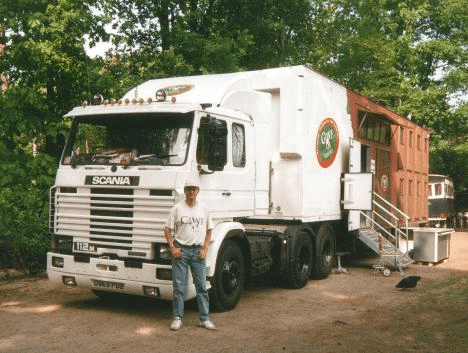
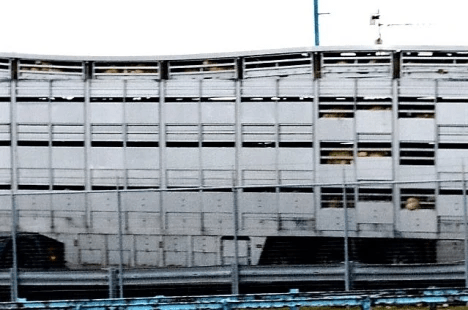
We say ‘the roof is bent and not fit for live animal transport’ – the EU says ‘problem, what problem ?’
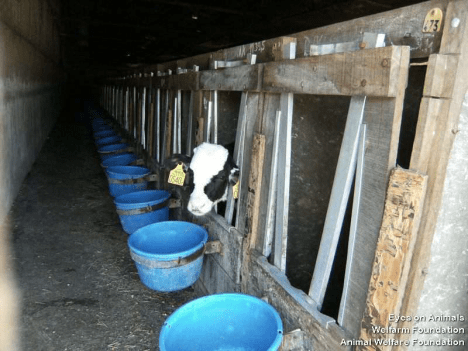
In 2012, Mark formally wrote to the EU Legal team regarding investigations by Dutch colleagues into the treatment of British calves exported from the UK to other EU nations such as Hungary. Calves that were still being crated many years after the EU formally banned crating.
He should not be there !, it is illegal under EU law; wake up Commission, please !!!
Regards Mark
31 March 2022
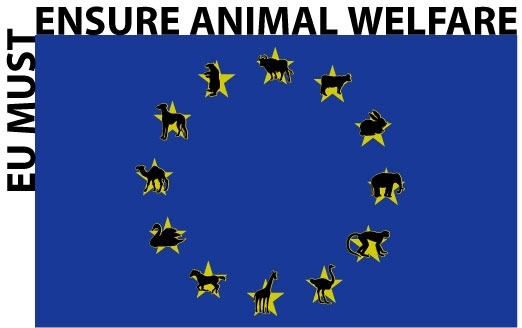
The European Commission has published their summary report of the contributions made by citizens, industry, public authorities and civil society organisations to the consultation on the future of animal welfare law in Europe, with the results showing a widespread desire for radical improvement, a desire for more information, and a furthering of protection to more species.
In October last year, the European Commission opened a landmark public consultation, asking citizens, farmers, businesses, Member State authorities and NGOs for their views and experiences on the fitness of the current rules relating to the welfare of animals in the EU, and to seek views on how they could be improved.
Nearly six months later, and with just under 60,000 responses in, we have the results, courtesy of the summary report (at bottom of page), which show:
A clear majority agreed that a revision of the current acquis is needed, that species are not protected equally, that more information is needed as well as better and easier enforcement
Majority support for the inclusion of more species within the scope of the legislation
Overwhelming support for a cage-free Europe
A clear desire to see the end of waterbath stunning, the killing of day-old chicks and for new specific rules for the killing of farmed fish
An overriding wish from citizens to see max journey times for animals who are transported, a ban on live exports to third countries, and ban on the transport of unweaned calves
Massive support for an animal welfare label which also includes information on if or how animals have been transported and slaughtered, respectively.
It is these results that will now form the basis of the impact assessments that the Commission will draft for the new legislative proposals that will be adopted, most likely as a package, in the winter of 2023.
These results are very welcome, of course, but are no great surprise. “The organisations we represent day in, day out, have felt the weight of citizens’ expectations for change – for improvement – for years. I am only pleased that we now have clear signals that cannot be ignored. Vox populi, vox dei.
That the response rate was one of the highest ever seen by the Commission speaks volumes. We now expect the European Commission to quench the thirst for systemic change that flows through these results. The time for ambition is now.
Whilst we expect proposals containing a swift phase out of caged systems, following the stunning success of the End the Cage Age European Citizens’ Initiative, we now expect a similar level of intent when it comes to ending live exports from the Union, to ending routine castration for pigs, waterbath stunning, the killing of day old chicks, and new powers to afford proper legal protection to the billions of other animals in Europe who deserve better, whether they be cattle, fish, poultry or pets. The citizens have spoken. Now it is time to honour their wishes.
Reineke Hameleers, Chief Executive of Eurogroup for Animals
Commission and Parliament uphold Farm to Fork strategy in light of Ukraine
30 March 2022
The war in Ukraine shines a light on the vulnerabilities of the EU’s food system. With fears of food shortages, price increases and disruption to crop and fertiliser supply chains, both the European Commission and the European Parliament came forward last week with proposals to counter the impacts of the war and trace a path forward.
The Farm to Fork strategy takes some blows put remains standing
As the impacts of the war began to be felt on the EU’s food system, voices within the Commission, not least agriculture Commissioner Janusz Wojchiekowski began asking for a pause in the roll out of the Farm to Fork Strategy. Particularly, rules on set-aside arable land and restrictions of certain chemicals in fertilisers were a particular bone of contention.
It was argued that more land was needed to produce more protein crop, as the meat sector was suffering from the disruption in imports from Ukraine. Arguments echoed by Members of the European Parliament, such as Herbert Dorfmann (European People’s Party), leading member of the Agriculture Committee, also in favour of stopping the Farm to Fork and Biodiversity strategies in their tracks.
However, to ensure broad support for a resolution, the EPP negotiated a text with other political groups. Calls to stop initiatives under the Farm to Fork strategy did not make the cut.
Plant-based diets, the missing resilience link
The Parliament did include a number of flexibilities in their final text, including on set aside land and aid to the meat sector. Importantly, nevertheless, the resolution confirmed that the Farm to Fork strategy is the right way forward to make the EU’s food system more resilient.
However, the most obvious link in the resilience debate, reinforcing the strategy’s commitment to move towards a more plant-based diet was overlooked. Yet it is a key aspect of the Farm to Fork strategy and a necessary step to ensure Europeans’ access to quality and affordable food.
As the Commission highlighted in a Communication published just hours before the European Parliament’s resolution was tabled, there is currently no risk of food shortages in the EU. The EU is self-sufficient in agricultural production and is one of the world’s major exporters.
The stress on the food system brought about by the war in Ukraine is, therefore, due to Europe’s over-consumption of meat products that divert two thirds of cereal crop to feed for animals.
The EU needs to ensure that the agricultural sector prioritises food for people over feed for intensively farmed animals.
Why do you still breastfeed? Even beyond the suffering violence inflicted on animals and their infants, humans drinking the breastmilk of another species, beyond infancy and with teeth, is bizarre at best, disturbing in general. Does the violent irony of human infants being unable to drink cow’s milk ever hit you?
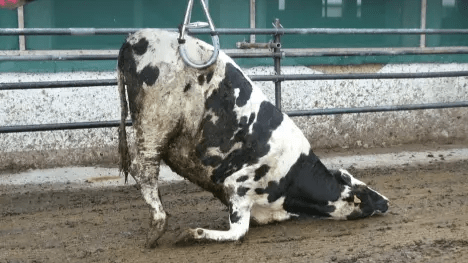
Feel free to milk humans who can produce breastmilk, that would at least be species specific and eliminate the disturbing nature of breastfeeding from other species and the required violence, reproductive exploitation, separation of mother and children, and violent death, including the downed cows who are so debilitated, diseased, and abused, they need to be moved by machinery, like bulldozers.
Profit and greed are not acceptable reasons; I don’t smoke to sustain tobacco farmers any more than I consume dairy to sustain animal farmers: they both result in suffering and death.
And don’t give me your regenerative nonsense, animal farmers make it sound as if animal exploitation is required to be environmentally responsible, and that animal suffering, violation, and death is just an unfortunate consequence of being “environmentally responsible”. Like, what would people do without the feces, bacteria, rot, gore, disease, pus, blood, decomp, and marrow, not to mention the suffering and violence, if they decided to NOT be “environmentally responsible”? — insert confused, bewildered emojis demonstrating utter clownish, ridiculous behaviour —
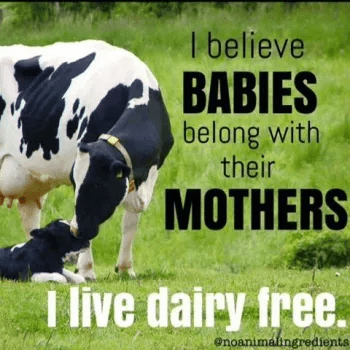
For too long, mother cows and their babies have suffered at the hands of an industry which views them as little more than production units or waste products. Many people don’t realise that cows must give birth in order to produce milk, and one of the dairy industry’s darkest secrets is what happens to those newborn calves.
The dairy industry
In 2021, nearly 5 million cows were farmed for their milk in New Zealand, over 4.5 million of whom gave birth to calves who were taken away within days of being born. The milk which would normally nourish and sustain their calves is instead taken to be consumed by humans. Female calves are raised by humans to one day replace their mothers in the milking shed, while male calves are often killed within a few days of being born, considered ‘waste products’ of the dairy industry.
Mother cows are not machines
Like humans, a mother cow will carry her pregnancy for nine months. She will love, nurture, nurse, and protect her calf until the day comes when her calf is no longer a baby, but a young adult who is old enough to care for themselves and begin a life of their own. Sadly, this otherwise unbreakable mother-child bond means nothing to the dairy industry.
Every year in Aotearoa, millions of mother cows helplessly watch as their newborns are taken away from them so that their breast milk can be harvested for human consumption.
This cycle of abuse only ends for mother cows when they are no longer able to pump enough breast milk to be profitable to the dairy industry. After 5-6 years of being impregnated, giving birth and being milked, mother cows will be sent to slaughter.
Male calves are not ‘waste products’
Around 2 million male calves, also known as ‘bobby calves’, are taken from their mothers and killed shortly after birth every year in Aotearoa. Because bobby calves are male and can’t be used for milking, the industry has no economic incentive to raise them. Male calves are deemed useless byproducts of the dairy industry, rather than the sentient individuals they are.
Some will be sent to slaughter four days after being born while others will be shot on the farm within just 24 hours of life, all so the dairy industry can take the milk that was meant for him to sell for human consumption.
Dairy is destroying our environment
Animals aren’t the only casualties of the dairy industry. The pollution caused by industrial dairy farming is severely impacting our environment. The dairy industry is New Zealand biggest climate polluter, generating more greenhouse gas emissions than the entire transport sector. In the last 30 years alone, the industry’s total emissions have risen 132%.
The dairy industry is also the largest source of water pollution and a major stressor on biodiversity and soil health. Run-off from dairy farms and synthetic fertiliser is poisoning our rivers, lakes and even our drinking water. As a result, 82% of waterways in farming areas are unfit for swimming and up to 800,000 kiwis may be at a greater risk of bowel cancer due to nitrates in water.
Dairy and your health
There is a growing body of evidence that links dairy consumption to many chronic diseases including diabetes, obesity, and cancer. According to Dr Neil Barnard of the Physicians Committee for Responsible Medicine, taking dairy off your plate can significantly reduce your risk of heart disease and diabetes and cut the chances of being diagnosed with certain cancers by more than 70%.
Mammals produce breastmilk to feed their infants until they are weaned onto solids. Humans are the only animals that consume milk from another lactating species throughout their lifetime. After infancy, most of us lose the ability to produce the enzymes that break down lactose, which explains why so many people experience bloating, discomfort and an upset stomach after consuming dairy.
Calcium, protein and iron are abundant in plants. It’s easy to nourish your body with plants once you know how!
It’s only a matter of time before Aotearoa can no longer sustain the continuous water pollution, soil damage and high greenhouse gas emissions the dairy industry creates. To protect the animals, our environment and our health; Aotearoa must embrace a future where its primary industries do not rely on the exploitation of our precious land and our animals for profit.
Our farmers are facing massive amounts of debt, increasing public scrutiny and a lack of industry leadership. Animal-free alternatives are shown to require up to 99% less water, produce 97% less greenhouse gas emissions, and requires no animal exploitation.
Governments around the world are recognising the harm dairy creates and are setting plans in place to assist farmers in transitioning away from animal agriculture. Now is the time for Kiwis to hold the New Zealand Government to account for failing to do the same. Our future depends on it.
Take PETA’s Cruelty-Free Shopping Guide along with you next time you head to the store! The handy guide will help you find humane products at a glance. Order a FREE copyHERE
Searching for Cruelty-Free Cosmetics, Personal-Care Products, Vegan Products, or more? Click HERE to search.
Free PDF of Vegan & Cruelty-Free Products/Companies HERE
Want to do more than go vegan? Help others to do so! Click below for nominal, or no, fees to vegan literature that you can use to convince others that veganism is the only compassionate route to being an animal friend:
On Monday 28 March, Eurogroup for Animals, jointly with 16 animal protection organisations, filed a complaint with the European Free Trade Association (EFTA) Surveillance Authority regarding blood farms in Iceland, as they are in breach of laws applying in the European Economic Area (EEA).
In November 2021, an investigation led by Animal Welfare Foundation and Tierschutzbund Zürich revealed the cruel conditions on Icelandic blood farms. There, blood is collected from pregnant mares in order to retrieve the pregnant mare serum gonadotropin (PMSG) hormone, also called equine chorionic gonadotropin (eCG), which is used in industrial animal breeding to increase the reproductive performance of farmed animals.
On Icelandic blood farms, the semi-wild horses are subjected to violence, risk numerous injuries, and suffer from repeated trauma. The amount of blood taken – five litres per week – exceeds any international guidelines existing on the topic.
Following these findings, Eurogroup for Animals has decided, jointly with 16 animal protection organisations, among which several are based in Iceland, to file an official complaint with the EFTA Surveillance Authority, arguing that Iceland does not properly apply its legislation on the protection of animals used for scientific purposes, which is derived from the EU Directive on the same topic. Indeed, Iceland, as a member of the European Free Trade Association (EFTA), must follow the rules of the European Economic Area (EEA), most of which are aligned with EU rules.
The argument laid down by the complaint is that blood collection for the production of PMSG should not be approved by the Icelandic authorities as it does not respect the principle of the 3 Rs (replacement, reduction and refinement) on which is based the relevant EU Directive, and thus the Icelandic law, on the protection of animals used for scientific purposes. Indeed, according to this principle, animal experiments must, whenever possible, be replaced by alternative methods not relying on live animals.
In the case of PMSG, these alternatives exist as a number of authorised synthetic medicinal products are available on the pharmaceutical market. Achieving good reproductive results is also possible with informed management techniques and hormone-free methods, as adopted in organic farming. The Swiss pig breeders association even stated that they will voluntarily stop using PMSG, proving that this transition is feasible.
Icelandic authorities argue that they do not see blood collection for PMSG production as an animal experiment – and therefore that this activity does not fall under this legislation and does not require any authorisation. Yet, EU authorities, as well as the World Organisation for Animal Health (OIE), have said the contrary at numerous occasions. Indeed, procedures using animals for the manufacture of drugs are classified as animal experiments.
The EU is the main destination for Icelandic PMSG and the hormone, in addition to being produced in cruel conditions, only further supports an intensive and unsustainable model of livestock farming, which goes against the goals listed in the European Green Deal, and more specifically the “Farm to Fork Strategy”. This complaint is thus crucial, alongside our call for the EU to ban production and imports of this hormone.
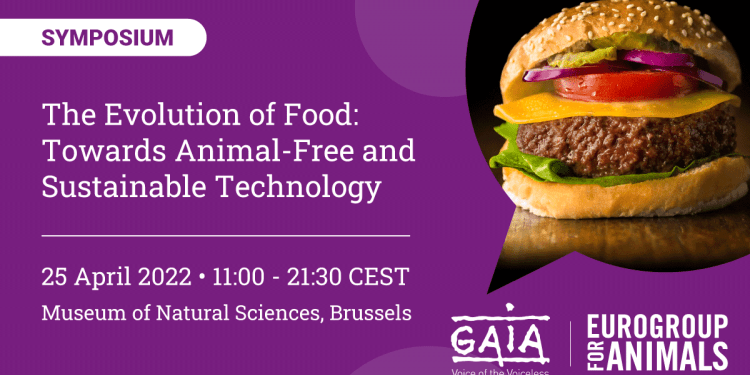
GAIA and Eurogroup for Animals are delighted to welcome you to Europe’s first-ever symposium on animal-free and sustainable meats, which will be held on 25 April at the Museum of Natural Sciences, Brussels.
Novel technologies, including cultivated meat and precision fermentation, are challenging conventional meat production. Which barriers still exist? What are the environmental and social benefits? And what is the perception of consumers?
Come join us together with international experts who will help clarify, debate and answer such questions and many more. We’d like to take this opportunity to announce the highly esteemed Jane Goodall will be our virtual guest of honour during the event.
Kindly note that you first need to fill in your email address on the registration page in order to proceed to the actual registration form. You can find the registration form here.
On Thursday 24 March, the European Parliament adopted a resolution on the need for an urgent EU action plan to ensure food security in and outside the EU following the Russian invasion of Ukraine.
Luckily the European Parliament (EP) rejected amendments calling for a review of the “targets and timetables” for certain initiatives and “suspend any new legislative initiatives” under the Farm to Fork and Biodiversity strategies. However, we regret that the EP did not take the opportunity to recognise the urgent need for a shift to more plant-based diets and “less and better” animal products. To simply allocate more land to produce animal feed is not an acceptable solution as it will increase the threat to biodiversity and serve to prop up an already unsustainable model of intensive animal farming.
In a letter co-signed with Compassion in World Farming, European Vegetarian Union, Four Paws, Future Food 4 Climate, GreenREV, Humane Society International and ProVeg International, Eurogroup for Animals called on MEPs to accelerate the transition to a truly sustainable food system, with fewer animals and more plant-based diets.
Feeding people with plant protein is more efficient than feeding animals to produce meat. For example, 2/3 of EU cereal and 70% of oilseed production go to animal feed. For pork, only 8.5% of the animal feed is converted to meat and 91.5% of protein is lost.
The latest IPCC report reminds that “while agricultural development contributes to food security, unsustainable agricultural expansion, driven in part by unbalanced diets, increases ecosystem and human vulnerability and leads to competition for land and/or water resources”. Science is clear that a reduction in the production and consumption of animal products is needed. In a recent statement, more than 550 scientists called on the EU to accelerate the shift towards healthier diets with less animal products in order to reduce the dependency on animal feed in food production.
The resolution was adopted with 413 votes in favour, 120 against and 49 abstentions.