14/2/22 – As many of you will know, donors from the animal rights movement, and others, have been donating money to get a vegan advert put on British television. Click on the above link to watch the ad.
Well last night (4/22) we saw the ad go live onto British television at 8-30pm (UK time); half way through the Jamie Oliver programme on food and cooking; so it was an excellent time to air the ad, especially as lots and lots of people tune in to watch the programme – Jamie O is one of the UK’s top chefs and his programme is watched by millions.
Over the next couple of weeks, the ad will be shown around 220 times across the Channel 4 network on channels including Channel 4, Dave, E4 and HGTV
Please be aware that, due to the dynamic nature of TV scheduling, these spots and times are subject to change at short notice. To keep up to date with the latest schedule please visit our website.
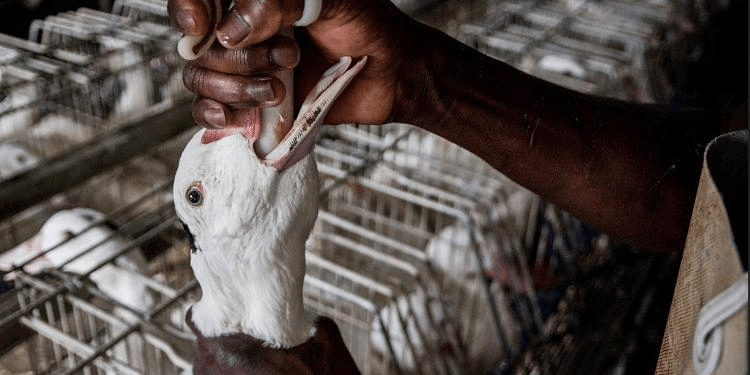
Equalia has exposed appalling conditions for animals at a chicken farm linked to Europe’s fourth-largest poultry producer, which sells its product in shops across Europe.
The video (see below), published by the Spanish NGO Equalia, was taken between July and August 2021 at a broiler poultry farm in Italy, owned by AIA, the fourth largest producer in Europe and a trademark of the Veronesi Group.
Decaying birds can be seen being pecked by live birds; others in agony; birds with various deformities and fractures, unable to stand up. For some, it is impossible to reach the drinking trough, which further magnifies their suffering. The images also reveal alleged malpractice on the part of the staff, inflicting kicks and blows. Their necks are also seen to be broken or some are trampled to death.
These images are a stark contrast to AIA’s self-proclaimed slogan: “Where there is AIA, there is joy”.
In view of these facts, the NGO Animal Law Italy has lodged a complaint with the Italian authorities for practices that could constitute crimes of animal abuse and public health.
The risks of this production system extend to sustainability, food safety and human health. The high density of chickens on factory farms poses a risk to public health. Large concentrations of animals of the same species in a confined space have been shown to increase the risks of zoonotic diseases.
The outbreaks of avian influenza detected in recent years on farms in several countries (including countries in the EU), reinforce the need for methods to reduce the risk of zoonotic diseases. One such measure is the farming of slow-growing breeds, which leads to higher disease resistance.
The serious poultry health problems depicted in the video are due to the genetic hybridisation that is carried out to achieve maximum growth in the shortest possible time. Fast-growing chicken breeds are prone to unavoidable diseases that the industry euphemistically refers to as “production diseases”. These health problems lead to a high use of antibiotics prophylactically, rather than their recommended therapeutic use.
More than 300 food companies have committed to change this reality. The European Chicken Commitment (ECC) is an agreement which sets out a series of realistic animal welfare measures, including the replacement of fast-growing breeds (such as those seen in the report) and a reduction in the density of poultry per square metre.
This is what it’s like to be a mini bull at the sanctuary.
Short legs, big belly: the little bull Napoleon has a genetic defect. Now he has landed on a sanctuary.
Napoleon is just 80 centimeters high – and he won’t get much taller.
The approximately eight-month-old bull suffers from a genetic defect and is therefore no longer growing.
Now the young bull, a Dexter cow, has found shelter at a sanctuary in Upper Bavaria – where he found his equal: two small cattle already live there.
“But he made friends with the biggest cow named Laura, of all people“, says the owner of the farm, Lukas Becker. Laura, saved from the butcher last year, “adopted” him.
Napoleon and Laura – Not centered
“Outwardly, he’s in top shape and pumperlgsund,”, says Becker about Napoleon. In small animals, however, it occasionally happens that the organs do not work properly.
In normal male animals, the shoulder height is about 112 centimeters on average. Since the animals are not as heavy as other cattle, they cause less damage when walked on and are well suited for nature conservation areas.
A malformation called chondrodysplasia occurs in some Dexter cattle.
A genetic defect causes the length growth of the bones to end prematurely because the cartilage ossifies early.
For Napoleon, the move to the sanctuary came about by accident, as reported by the Munich Animal Welfare Association.
One of the animal welfare inspectors knew the farmer where Napoleon was standing.
The club bought him. After a stopover he ended up in the sanctuary!
The sanctuary owner and his wife look after around a hundred animals. “I do it because I like animals,” says Becker.
He took over the farm from his grandfather; seven years ago the couple turned it into a sanctuary – as a hobby.
In the rest of life he is teacher.
And I mean…It could have ended tragically for the little man.
Because Napoleon could not be used for farming.
So…where to go with the mini bull?
But now Napoleon no longer needs to be afraid that he will end up in the slaughterhouse as an unwanted product of the meat industry.
Now he has friends, grass, freedom; now he is experiencing the sunny side of his fate and is happily secure for the rest of his life.
We need more news like this.
According to a survey by the State Farmers’ Association Baden-Wuerttemberg (state in southern Germany) wants to phase out around 50 percent of pig farming.
The precarious situation on the pig market continues.
Due to the corona crisis, pig and piglet prices are at a historic low and livestock farmers are in the deep red. The State Farmers Association(LBV)Baden-Wuerttemberg has therefore carried out a survey among pig farmers.
The result is sobering: more than 50 percent of those surveyed are planning a partial or complete exit from pig farming. In addition to legal requirements and inefficiency, the reasons for this are also a lack of prospects.
“In this situation, further development of the companies is impossible,” explain the LBV Vice PresidentsKlaus Mugele and Hans-Benno Wichert. “All market participants and politicians must finally act now, otherwise pork from Baden-Wuerttemberg will soon be history.”
Even today, the degree of self-sufficiency in the country is only around 45 percent.
Pig farmers in Baden-Wuerttemberg disappointed with politics and trade
According to the survey, the pig farmers in Baden-Wuerttemberg are disappointed and sobered by the empty promises and marketing campaigns of the food retail trade, which ultimately do not bring any improvement, but only cause more pressure on the producers. The respondents have accordingly lost all expectations of the trade.
“The meat industry and the other links in the chain must now develop new, integrated concepts on an equal footing with the producers,” explains Vice PresidentMugele.
“We have to become less dependent on price fluctuations on the international markets. To do this, the regional programs with a purchase guarantee must be expanded in the country so that livestock farmers can count on stable prices,” demands Mugele.
Pig farmers in Germany have no prospects: they are planning to exit
The survey of the State Farmers Association (LBV) comes to a similar result as the interest group of pig farmers in Germany(ISN).
According to an ISN (interest group of pig farmers in Germany) survey last summer, around half of the pig farmers intend to give up their farms in the next ten years.
60 percent of farmers who keep sows want to get out, and 40 percent of those who keep fatten it.
In contrast, there are only 6 percent sow farmers and 8 percent fatteners who can imagine expanding their production.
Franck Riester & Julien Denormandie, French ministers for Trade and Agriculture, called on the EU to apply more EU standards to imports as they presented the priorities of the French presidency of the Council to the European Parliament.
Eurogroup for Animals recalls that in order to be successful, the initiative, known as “mirror clauses”, must go beyond environmental, animal and public health standards, to encompass animal welfare.
On 24 January, Trade minister Franck Riester called for more EU environmental and sanitary standards to apply to imports, implying the measures could be adopted erga omnes, and thus apply to all imports and not only to those with preferential market access in application of a trade agreement. According to him, the European Commission recognises the legitimacy of these “mirror clauses”, as several EU rules already apply to imports, such as the rules on welfare at the time of slaughter or the ban on import of beef derived from animals who received antibiotics as growth promoters. The following day, agriculture Minister Julien Denormandie qualified reciprocity in standards as a top priority, calling for the withdrawal from the EU market of “imports from third countries which do not respect EU standards”.
Eurogroup for Animals welcomes the approach behind the French proposals of “mirror measures”. Nevertheless, we call for this approach to go beyond environmental and public health measures and to encompass animal welfare. Indeed, it should not only be about accelerating the implementation of the already adopted regulation on veterinary medicines, or strengthening the maximum residue levels for pesticides. This is a matter of consistency between EU trade and agricultural policies at times where the EU is revising its animal welfare legislation. The EU should take the opportunity of this revision to include imports within the scope of the new legislation, as suggested already by the Commission’s communication on the European Citizens’ Initiative (ECI) “End the Cage Age”.
By conditioning imports of animal products to EU-equivalent animal welfare standards, the EU would not only improve the welfare of trillions of animals, but also foster more sustainable methods of production abroad. Indeed, access to the EU market could be a positive and powerful leverage to incentivise farmers and producers to switch to more sustainable and humane methods of production. Such a measure is supported by 93% of EU citizens who want a legislative change to impose all EU animal welfare standards on imported food products. This ethical concern raised by EU citizens can guarantee that the measure would be WTO-compliant.
Plans for a new horsemeat pet food factory in South Korea have been nixed!
Keep reading to see how PETA and local activists pushed for this victory.
PETA’s investigation into horse slaughter in South Korea revealed that horses who were retired from being forced to race (most with American parents or who were U.S.-born) and other horses were abused and killed at a massive slaughterhouse in Jeju.
PETA documented that workers and drivers repeatedly beat panicked horses in the face while they unloaded them and killed other horses in front of them.
Several workers and the slaughterhouse itself were convicted and fined, and the shocking video made waves around the world—to South Korea’s shame.
One of the horses killed, Cape Magic, had arrived with a large bandage on his leg, and PETA learned that he’d come straight from a track where he’d been forced to race less than three days before.
This precipitated a health scandal when it was discovered that during this time he’d been administered phenylbutazone—a drug prohibited in animals for human consumption.
After an outcry—which caused the demand for horsemeat to plummet further—Jeju officials announced a new horsemeat certification program for restaurants that promised not to use meat from horses forced to race.
However, the racing industry continued to cast off injured and unsuccessful horses—about 1,600 each year.
So Jeju proposed a new plan to profit from this pipeline—a new factory to kill horses for pet food. But the public doesn’t want dangerous drugs in the food of companion animals.
Local animal rights groups and civic groups spoke out against the proposal and agitated for a humane retirement system for horses.
Both Jeju Vegan and Animal Freedom Coalition started holding regular marches from the racetrack to the slaughterhouse.
When South Korean–owned horse Knicks Go won the famed Breeders’ Cup Classic race in November, a PETA activist got herself invited into the winner’s circle, where she unfurled a sign with a message that U.S. media couldn’t decipher but that Koreans couldn’t miss: “Korea Racing Authority, how dare you turn racehorses into dog food!”
As a result of this pressure at home and abroad, Jeju withdrew its plans for the new horsemeat pet food factory!
However, the flow of horses to existing slaughterhouses continues, and Korea still lacks an aftercare system for horses. You can help—please tell the Korea Racing Authority(KRA) to renounce horse slaughter and designate 3% of prize money to create a comprehensive retirement plan for horses formerly used for racing. Take action below:
And I mean…Koreans bet more than $8 billion on horse racing every year.
So that the industry is always supplied with new horses (also for breeding), many animals are imported from America.
But some are not fast runners and as a result 1,600 horses are eliminated from the racing industry each year because they are no longer performing as intended.
One thing is certain: not only in South Korea, but also in Mexico, Argentina, Canada and the USA horsemeat is produced under dramatic circumstances.
Every year, the Netherlands imports meat from around 60,000 horses from Argentina, Uruguay, Mexico, the USA and Canada.
Most of the horsemeat in the world comes from these countries.
This meat is either exported or further processed for various snacks, horse steaks or smoked horse meat products.
A scam for the consumer is the supermarkets’ claim that the meat is also produced overseas under strict EU guidelines that guarantee animal welfare !!
What the horses go through before they are slaughtered until they are offered for consumption in our shops and restaurants is beyond horrific, both videos from South Korea and the Netherlands proved it (although coming from different corners of the world).
(The video is in Dutch, but you don’t necessarily have to understand the language, the language of the pictures is enough)
Horses aren’t the only animals to suffer either.
Such videos have often shocked and will continue to do so.
But the fact is that in Germany as well as in other countries, meat from torture production is imported and offered, while they advertise sustainability, animal welfare, controls and other phrases.
The market is dominated by a few import companies. Their statements regarding animal welfare and consumer protection are in stark contrast to the cruel reality, and as the undercover videos prove.
Without lies and hypocrisy, the meat industry would have been bankrupt long ago.
“All over the world, animals are abused in the animal feed industry Here we see young calves in the dairy industry in America Kidnapped by their mother immediately after calving And were thrown into drinking a cheap substitute in the bitter cold of a blizzard.
Many of the calves do not survive the cold nights And their death counts as rubble, like a damaged shoe thrown in the trash And farmers receive compensation from agricultural insurance”
And I mean…Treating baby animals under the age of five weeks this way is a perversion.
To conceal the perversion of enslaving other animals, we must become accustomed to cruelty.
The system of the criminal meat industry takes care of that.
This system has corrupted human consciousness, we are used to cruelty.
This cruelty has become part of our everyday life and is perceived by us as a universal necessity
That is why such systems are kept alive
On Thursday, the ARD magazine #PlusMinus (Germany’s first public national television channel) broadcast a program about blood collection from pregnant mares in Iceland.
Scenes of violence against them were unleashed in order to drain 5 liters of blood per “session”.
An outcry went through the social media landscape and many riders, who often celebrate their festivals with bratwurst, steak, schnitzel, etc., were also shocked!
➡ https://www.daserste.de/…/hormone-von-stuten-fuer… As the ARD correctly reported, this torture has to do in particular with the production of cheap meat.
Thus, the pork consumers are also directly involved in this cruelty to animals and therefore partly to blame!
But why is this blood needed at all?
The hormone #PMSG(Pregnant Mare’s Serum Gonadotropin) – also called eCG (Equine Chorionic Gonadotropin) – is found in the blood of pregnant mares.
This is a stimulating sex hormone which, among other things, European piglet producers use to stimulate their sows to become pregnant at a controlled time.
In this way, a group can be influenced to ensure that many sows are ready to conceive at the same time and therefore give birth at relatively the same time.
In intensive livestock farming, this is of course more lucrative in terms of the workflow!
A synthetic alternative would be e.g. Peforelin, which, however, does not lead to superovulation, i.e. the increased number of piglets as a side effect of PMSG, as well as a shortening of puberty, which contributes to earlier willingness to conceive and thus to higher profits.
The use of PMSG or eCG as a drug is approved in Germany for therapeutic and animal breeding purposes (!!!)
Politicians must act here and ban the use immediately and without a transitional period! According to the Federal Veterinary Association, 10-15% of sows in Germany are currently treated with hormones.
But back to #Iceland:
The abuse of the calm Icelandic horses caused particular outrage.
Particularly frightening: In Iceland, the blood buyer Isteka announced an increase in the delivery volume from 170 t to 600 t last year (as of December 2021).
Blood collection in South America has been known to everyone for years, it is not welcomed, but tolerated.
Even outraged riders are not dissuaded from consuming pork.
Now this perfidious form of hormone production has also been documented in Iceland.
And of course there is no obligation to declare on the packaging about the use of this preparation in Germany anyway…
After the “Island research” the German Animal Welfare Associationpoints out that there is also a horse blood farm in Germany. At the Meura Stud in Thuringia, the hormone PMSG is obtained from the blood of pregnant mares for the pharmaceutical industry.
And I mean…Animal Welfare’s videos clearly show the frightened animals being propelled forward through metal passages with bludgeons to the head, until they end up in a tethered position where their blood is drained.
On the so-called blood farms, which are mainly found in South America but even in Europe, hundreds of mares are crammed together
These are artificially inseminated in order to take up to 10 liters of blood once or twice a week for the first 11 weeks of pregnancy!
This insane amount, which corresponds to about a quarter of a horse’s total blood volume, is withdrawn from the horse with huge cannulas within a few minutes. About 30 percent of mares die from this process alone.
If the foal has not yet died from the extreme nutrient deprivation after the end of the 11 weeks, the workers on the blood farms abort it by hand.
The horse’s uterus is slit open with a knife without being anaesthetized, which often means not “only” the foal, but also the foal his mother also finds an agonizing death. The mare will be killed anyway as soon as she can no longer be inseminated quickly. There is no veterinary care.
The mare will be killed anyway as soon as she can no longer be inseminated quickly.
100 grams of the hormone bring in about $900,000.
It therefore makes sense for the authorities and traders to keep the brutal animal abuse used to obtain the hormone under lock and key.
And now in our own country!
According to the Animal Welfare Foundation’s “Island research”, the German Animal Welfare Association points out that there is also a horse blood farm in Germany.
At the Meura Studin Thuringia, the hormone PMSG has apparently been illegally extracted from the blood of pregnant mares for the pharmaceutical industry for over 30 years.
The taking of blood, which is to be regarded as an animal experiment requiring approval, has been illegal for years – this has now been proven by the German Animal Welfare Association.
The valid German guidelines for the protection of horses state unequivocally that no blood may be drawn from a mare that is in foal.
When asked, the owner of the Meura stud farm, Anke Sendig, openly admitted that she did not have any approval for taking blood, because “it is not necessary because it is a manufacturing process that is not subject to any approval requirements,” says Sendig.
Incidentally, the responsible veterinary office also confirmed this outrageously: “The legislator did not provide for this. Accordingly, it is neither necessary nor possible to grant a permit.”
But that violates the law when a county veterinary office unilaterally says it’s legal to rape horses and severely abuse pregnant mares.
Germany’s farm lobby has its own laws, some of which are self-written and controlled by farm dealers.
So the blood dealers of Meuka can breathe easy. They have little to fear because apparently in prosecuting crimes they dictate the state the law.
Matt Johnson, shown here holding Gilly, was charged with burglary, planting recording devices, and trespassing after conducting an exposé. Photograph: Direct Action Everywhere
From ‘The Guardian’ – London.
An animal rights activist was in court on criminal charges. Why was the case suddenly dismissed?
Matt Johnson conducted an undercover exposé of cruel practices used to mass exterminate pigs at Iowa Select Farms facilities
When animal rights activist Matt Johnson last made national news, he was in disguise. He appeared on Fox Business in December 2020, sporting a buzz cut and button-down (much different from his usual casual attire) and posed as the CEO of Smithfield Foods. The pork giant he claimed to be representing had factory farms that were “petri dishes for new diseases”, he told the news anchor. After the segment went viral online, Fox realized their mistake: “It appears we have been punked,” host Maria Bartiromo announced, apologizing to Smithfield, which called the interview “a complete hoax”.
Johnson’s antics, and his seeming lack of fear of the consequences, have made him a formidable opponent of the meat industry. But while the Fox incident offered a moment of levity, today, Johnson makes the news for something far more serious. He has just been let off for criminal charges that could have sent him to prison for up to eight years. After conducting an undercover exposé of conditions at the pork company Iowa Select Farms in May 2020, his actions put him on the line for burglary and planting recording devices. Another charge, for trespassing at a food operation (an offense created by an Iowa ag-gag law), was added in 2021.
While these specific charges against Johnson can’t be brought again, they may not be his last. His work as an organizer with the animal rights group Direct Action Everywhere (DxE) involves high-profile, high-risk actions like secretly recording factory farms and rescuing animals. Since farm animals are legally property and have no rights and almost no protection from suffering, removing them is usually treated as burglary, no different from stealing jewellery or someone’s wallet. In the last decade, many state “ag-gag” laws have sought to further criminalize such activism.The conditions that brought Johnson, an Iowa native now based in California, to Iowa Select Farms facilities were particularly cruel, according to DxE – and the outrage that followed his exposé suggests the public were similarly alarmed. As Covid was tearing through US slaughterhouses, Johnson had been tipped off by an Iowa Select truck driver about conditions at the company’s facilities.
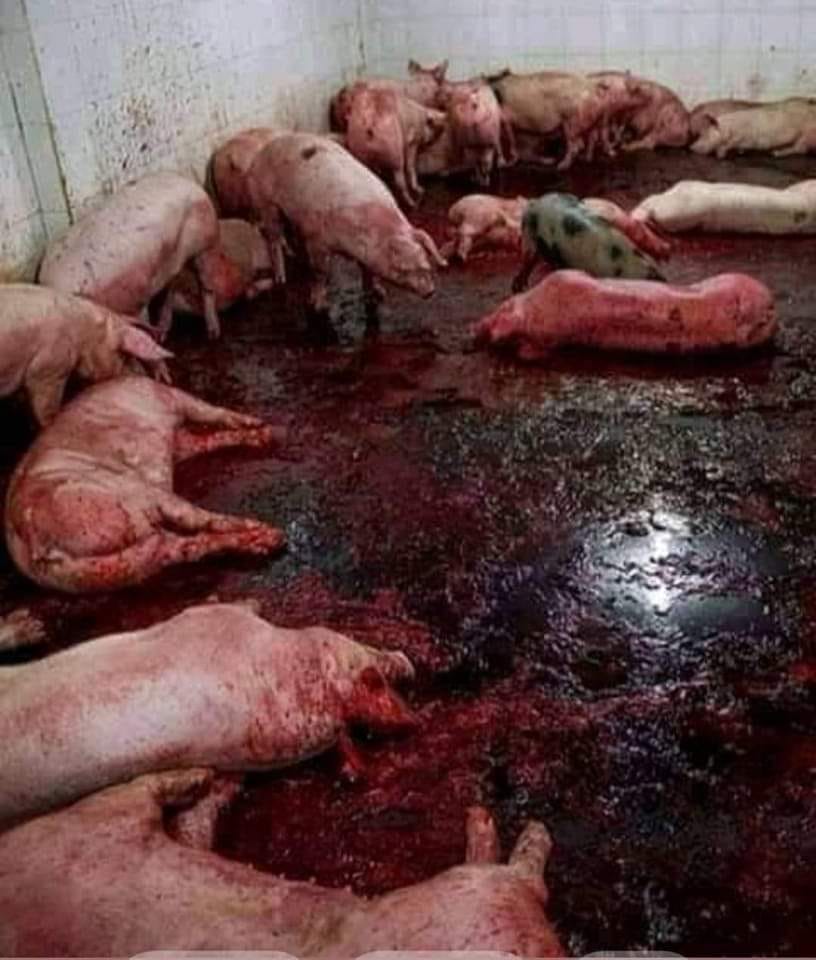
Across the meat industry, workers were falling ill, meatpacking capacity was significantly reduced, and farms were overloaded with animals and looking for ways to dispose of them. Johnson was made aware of a practice called “ventilation shutdown”, being used by Iowa Select to mass exterminate pigs: the animals were packed into sealed barns and essentially cooked to death by heaters and steam generators.
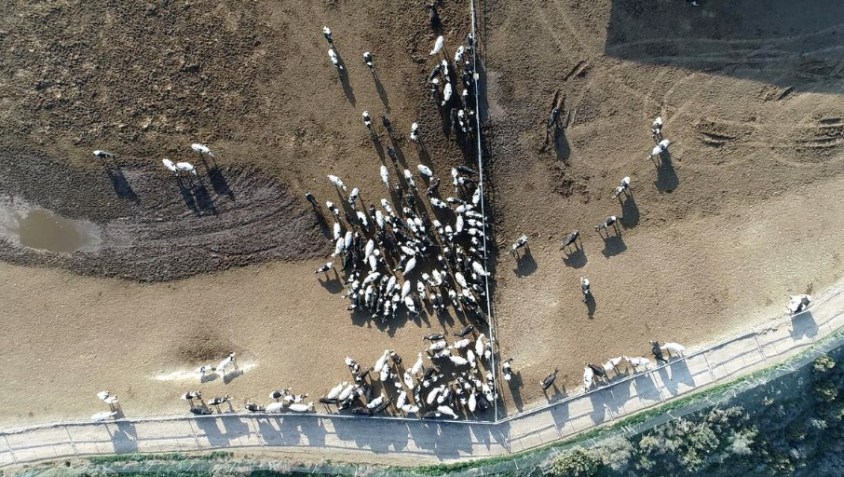
Farms were overloaded as Covid was tearing through US slaughterhouses and looking for ways to dispose of animals. Photograph: Direct Action Everywhere