The following tasty treats have come to us through liaison with the Viva! Vegan recipe club.
Why not give them a try (for Veganuary) when you have some time.
Speedy One Pot Kale, Bean & Lemon Stew
This is a lovely, hearty, healthy stew which is very quick to make – perfect for busy evenings or for taking to work in a thermos for the office lunch.
These seasonal pies are mmmnn delicious! You can choose whether to make 1 large pie, 6 medium-sized (using pie cases or ramekins) or 12 little pies (using a muffin tin).
Krimsey Lilleth was born in Baton Rouge, LA and raised in the rich, celebratory culture of the deep south. She spent a good deal of her childhood in the great outdoors and swampy, magical forest teeming with all sorts of critters she came to love and respect.
Krimsey’s mission is to inspire others to care for themselves, animals and the environment through food. She is the founder of the late-and-great Los Angeles restaurant, Krimsey’s Cajun Kitchen, the world’s first vegan Cajun restaurant!
We can’t wait to try Krimsey’s incredible recipes – perfect for a post-Christmas pick-me-up.
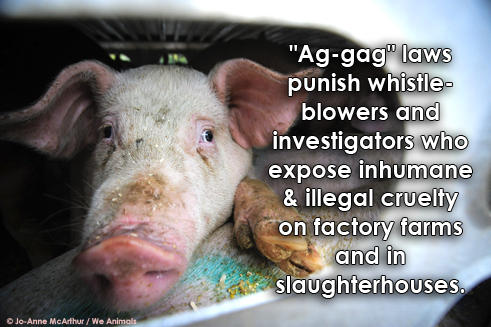
“I’m heading to Iowa later this week to visit my family for possibly the last time in a while. Later this month, I start a felony trial where I’m facing up to 8 years in prison for investigating Iowa’s largest “pork” producer and rescuing a sick piglet named Gilly.
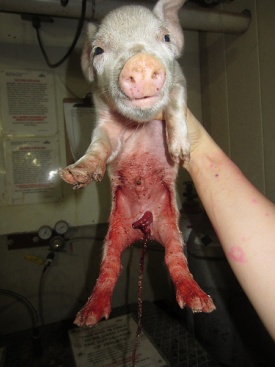
It happened in the spring of last year amid widespread COVID outbreaks at slaughterhouses nationwide. An employee whistleblower tipped us off about Iowa Select Farms — unable to send pigs to slaughter — using a gruesome mass kill method called “ventilation shutdown” or VSD. Thousands of pigs were loaded into a shed, the vents were sealed off, and heat and steam were pumped inside to kill them in an agonizing, slow death. With a team of investigators, I helped capture the horrific process on camera and sent it to the media.
The exposé garnered support from millions of people, but the authorities in Iowa decided to prosecute me instead of the animal-abusing company. And Iowa Governor Kim Reynolds stood by the factory farms too. Less than 2 weeks after the investigation was publicized, Governor Reynolds signed Iowa’s third ag-gag law, creating a new crime called “food operation trespass” which I was later charged under.
But you know what? I consider it a blessing in disguise.
My trial now has the opportunity to challenge the constitutionality of ag-gag laws and establish a precedent for a new wave of anti-ag-gag legislation.
Imagine if instead of covering up animal cruelty, our laws gave ordinary people the right to see inside these places, and even the right to rescue sick and suffering animals. That’s what is at stake in this trial.
And that’s why I want to ask you…
Will you join me in Iowa for this groundbreaking trial?
Sign up here to register for court support during my trial and get important updates about the event. Whether you’re supporting in person or online, stay tuned for more updates and ways you can help.
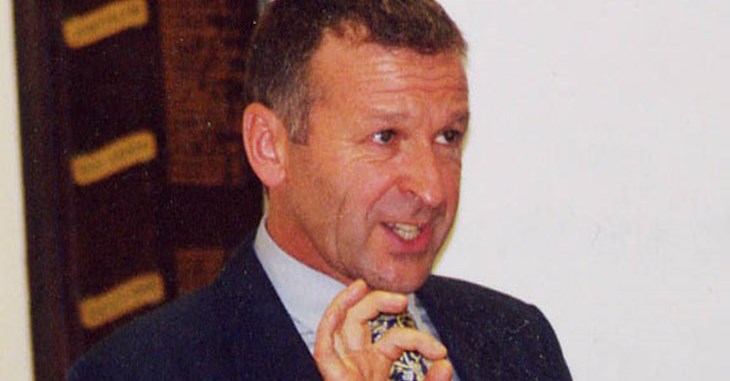
WAV Comment: Phil Hogan is Irish; https://en.wikipedia.org/wiki/Phil_Hoganand has, although not legally permitted in his position as EU Commissioner, been a very vocal supporter of the Irish agriculture industry. This should not be permitted by the EU of ‘their’ Commissioners; but hey, we all know the EU and how it operates. Phil Hogan has been a big voice for Irish Agriculture and probably not much else – full stop !
5 January 2022
On 2 December, the Slovenian Minister of Infrastructure and the President of the European Parliament formally signed into law three new regulations that, taken together, form the basis of the new Common Agricultural Policy for 2023 — 2027 (and possibly beyond).
This new CAP has been derided, disparaged and denigrated by environmental groups and agricultural producers alike, and not without good cause from the former. At a time when Europe aspires to lead the world in a green revolution, we have a policy that, whilst a big improvement on the current CAP, still fails to live up to the lofty ambition of the von der Leyen Commission’s Green Deal.
In a large part, this can be blamed on the fact that the proposals were not born of the current Commission at all, but were legacies of the Juncker Commission, and in particular of an Agriculture Commissioner (Phil Hogan) who was more interested in agricultural orthodoxy than environmental originality. Blame should also be levelled at the doors of Member States. In order for any legislative package to be adopted, it needed support from a minimum of 15 countries, representing 65% of the Union’s total population. Politics is still, ultimately, the art of the possible, and sometimes there is no point in reaching for the stars when you can only get as far as the moon.
EU Ag Commissioner Phil Hogan – A Promotional Voice for Irish Agriculture.
And so to the detail. Ultimately we needed a CAP that rewards a new set of environmental and animal welfare provisions: cleaner water, better soil quality, higher biodiversity, better grazing and housing standards. Farmers are custodians of our landscape; more of them need to be encouraged to follow best practice and behave as such. We needed a shift to rewarding the outcome, not the activity. Did we get this?
Yes, and no. Voluntary coupled support, which allows Member States to target ‘aid’ to a specific agricultural sector, survives. Although capped at 13% of the European Agricultural Guarantee Fund (otherwise known as the “first pillar”) — i.e. those funds that go straight to farms to support their incomes — this remains to be a remnant of the original CAP that is neither just nor justifiable. The use of voluntary coupled support in 2018, for instance, totalled €3.99 billion, of which 40% went to support beef production and a further 21% to support milk production. Furthermore, new “good agricultural and environmental conditions” (known as GAECs) — standards for environmental protection which directly impact on habitat protection — were watered down by Member States and MEPs.
However, it’s also not all bad. A full 25% of the European Agricultural Guarantee Fund will, for the first time, be composed of new incentives for farmers, obliging them to deliver outcomes that go above and beyond minimum requirements. Crucially, thanks to our efforts and collaboration with both European Parliamentarians and Member State diplomats, these new ‘eco-schemes’ also include measures to drive improvements in animal welfare. On top of this, the wholly discretionary European Agricultural Fund for Rural Development — the so-called “pillar II” — also remains available to improve animal welfare.
We should not underestimate the impact that these eco-schemes can have for millions of animals. For the first time in the history of the CAP, animal welfare can now be incentivised through direct payments, providing farmers with a pot of money worth over €10 billion per annum. Eco-schemes, which ultimately must be used, have already been identified as a key mechanism to enable farmers, for instance, to transition to cage-free systems. Several Member States have already identified their use to support pasture-based grazing for their cattle herds.
Indeed, under the new CAP, it is now over to Member States to make the best use of this new funding, and to ensure that animal welfare is prioritised. However, governments can no longer point fingers at Brussels and complain about a lack of funding for higher animal welfare. The money is there. Now it must be used.
The new CAP, taken as a whole, is certainly not perfect. The challenges for the next reform will be to do away with coupled support entirely, to ensure eco-schemes form the backbone of the European Agricultural Guarantee Fund, and to oblige all Member States to use some of the funds available to drive animal welfare forward.
However, this CAP still has the power to improve the lives of millions of animals across our European Union. It’s a big step in the right direction. We are not where we need to be yet, but we are, at least, on the right path.
WAV Comment: When you are in your 50’s and have been involved as an activist for a very large part of your life; you get to see and witness a lot of things. But this has struck me as one of the most barbaric things that I have come across for a while – On April 15, 2020, four weeks after the first American city was locked down in response to the COVID-19 pandemic, a gruesome experiment was performed. The experimenters filled a trailer, specially fitted with heaters capable of bringing the temperatures inside to lethal levels, with pigs, and turned the heat on. The experimenters wanted to know how long it would take for the pigs to die. The answer, for some of them, was over an hour.
For the animals themselves, it resulted in what the industry deceptively calls ‘euthanasia,’ but that is, in fact, in many cases an excruciatingly slow and torturous death.
Pigs are known as the ‘horizontal man’; really because all their internal organs are located in the same place as the body of a vertical human. Are pigs less intelligent ? – certainly not after some folk that I have met in my years – so what then is the difference in killing a trailer load of pigs to that of a trailer load of humans ?
I will not go on – instead, I suggest you read the following and decide for yourself if these abuses of sentient beings; the horizontal man; has been, is now, and will ever acceptable by the so-called civilized society of the humankind. No, it is animal abuse, pure and simple. There are and can never be excuses such as Covid for the suffering of intelligent beings.
Mark
Comment by Stacey:
As long as people consume animals and their secretions, biologically intended for infants of the species making the breastmilk (like cows for calves, not like cows for aging humans with teeth, even human infants cannot drink cow’s milk; get weaned, people, it’s embarrassing and violently abusive), then you don’t care about animals, it’s beyond nauseating to listen to people stumble around their euphemisms desperately searching for ANY word that provides them forgiveness and only landing on, “It’s illegal to be cruel to animals/animals are killed painlessly/when it’s done humanely/…/…/…” An endless rambling litany of preposterous excuses that benefits only the species – humans – that kill non-human animals.
Killing an unwilling being is inherently, violently abusive and cruel, dancing cows in party hats going to school notwithstanding. Taking a life that is not yours to take, is inherently, violently abusive and cruel. Subjecting another being to control, confinement, violation, and deliberate butchering is inherently, violently abusive and cruel.
The thing is, I don’t get paid anything to advocate on behalf of animals. Me asking you to not cause animals harm brings me zero profit. Conversely, humans are so willfully ignorant and complicit, believing the anag charlatans who rely on anthropomorphized English-singing cows to sell you milk you don’t need but that causes the violent death of all the animals including the infants who actually DO need the milk AND their mothers but who are stolen and butchered at a young age because males are unprofitable……you’ll give THOSE PEOPLE money, the ones with the actual “agenda”.
You don’t kill those you care for about, and even if you don’t care about any animals, you still have no right or legitimate reason to kill them.
It’s like, you don’t consume animals violently, fearfully, painfully humanely-butchered because you honestly believe that NOT consuming animals is INhumane.
Every year approximately 80 billion land animals are brutally slaughtered for human consumption.
Never in history has the demand for meat been so high, nor have the conditions in which meat is produced been so inhumane.
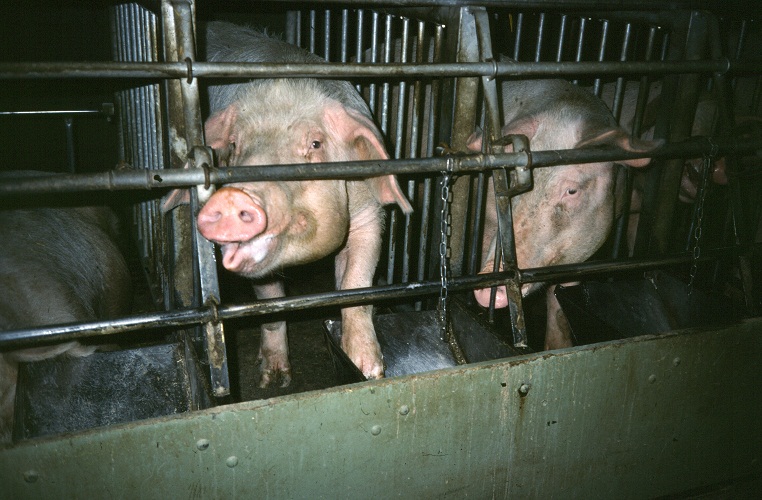
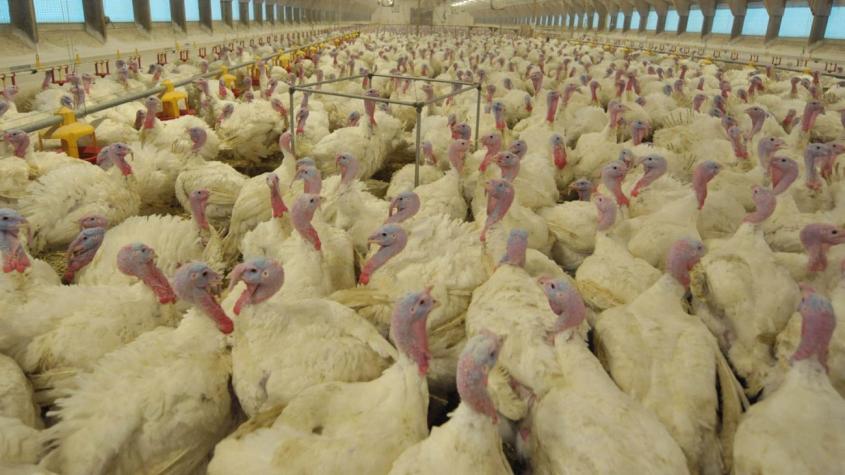
From battery cages to hormones to routine undercover footage of excessive violence by workers, factory farmed animals live humiliating, painful lives filled with unthinkable amounts of suffering.
Sign now to demand the USDA overhaul animal welfare policies in factory farming!
A broiler chicken is now four times the size of what it was in the 1950s, and it takes companies only 6 weeks — well under half the time it used to – to grow these poor animals to their slaughter weight.
In addition to added weight leading many chickens to be virtually unable to move, many die excruciatingly painful deaths, with their throats cut while they are conscious.
Some chickens survive even this, only to be dragged through boiling water that defeathers them, still alive.
This conversation is not new.
The horrors of factory farms are well-known and well-documented, and most Americans believe that the conditions in which animals are slaughtered en masse are unethical.
In recent years, concern for factory farming conditions has increased, with research echoing what animal rights organizations have been saying for decades: that animals are sentient, capable of experiencing pain and suffering, and have a right to dignified livelihoods.
Somehow, despite growing awareness and a rise in diets that reduce or altogether eliminate the consumption of animal products, the USDA has still yet to comprehensively reform our factory farming regulation.
Sign now if you agree that fixing the horrors of factory farms is long overdue! We demand comprehensive animal welfare reform in factory farming now!
And I mean…Animal population Germany: 26 million pigs 11 million cattle 173 million poultry
In the first 6 months of 2020,233,000 tons of pork were exported to China, half of the years before.
Factory farming has a huge impact on the environment. A pig eats and metabolizes 4 times that of a human. Most of these feedstuffs are imported.
Animal rearing is the main reason the rainforest is cleared!
In Europe, too, feed production contributes to the reduction of biodiversity.
Whether methane gas, ammonia or feces, the environmental pollution is enormous, groundwater and surface water are contaminated.
The prevailing opinion is that German products are animal welfare … that is not true!
There are a number of countries with much stricter animal protection (by the way, Germany also works with miserable protection when compared to animal experiments).
It’s nasty typical chauvinist behavior and nasty complacency to always be the best and claim “we have the best animal welfare law.”
IT IS NOT TRUE !
There are of course plenty of misconduct and scandals.
At least for the companies where these were discovered.
But that doesn’t change anything about the overall situation… if we look at organic farm and organic slaughterhouse scandals, Germany comes off very badly
Let’s take batteries and cages. Both have been banned in Switzerland since 1992!
Germany is not one step ahead.
Battery has been banned since 2013 and has been replaced by cage. With a battery, the chicken has 550 square centimeters ... read that correctly … SQUARE CENTIMETERS!
In the supposedly animal-friendly cage system, there are 780 square centimeters ….. that is an incredible 28×28 cm ….. and that is standard for laying hens in Germany too!
When it comes to fattening, there is no maximum number of animals and 90% of broiler chickens in Germany live in stalls with more than 100,000 animals.
Anyone who babbles about achieved animal welfare in Germany when 90% of the animals are at the worst level should live like this for a month themselves.
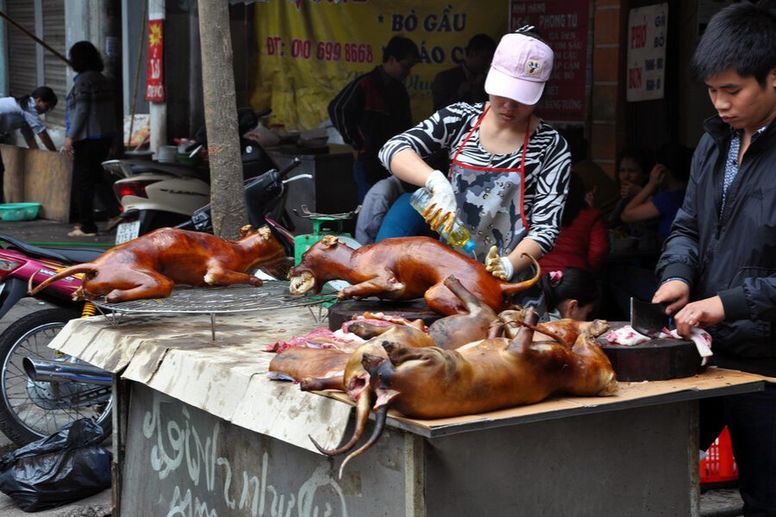
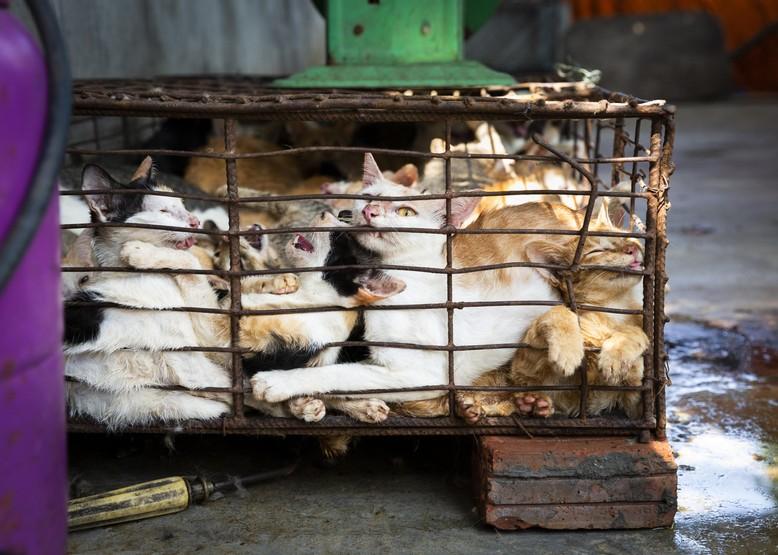
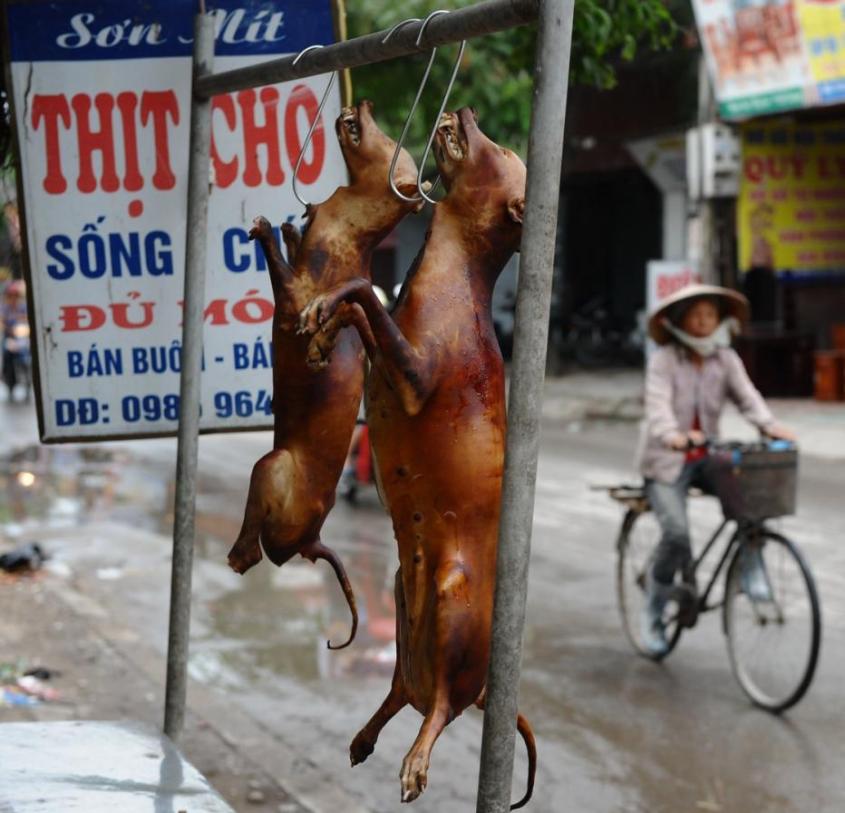
The global animal welfare organization FOUR PAWS has launched a new campaign called “This is not Vietnam”, which aims to show that the majority of Vietnamese are against the cruel and barbaric trade in which dogs and cats are killed for their meat.
Among other things, the campaign calls on the public to send a short message via email or other means to the Deputy Prime Minister of Vietnam, His Excellency Vu Duc Dam. This is intended to make clear the current mood in the population for an end to the dog and cat meat trade.
Every year around ten million dogs and cats are captured, transported and killed for their meat in Vietnam, Cambodia and Indonesia.
The majority of the animals in the dog and cat meat trade are stolen pets and strays. The scale of this cruel trade makes it one of the most massive animal welfare problems for pets in Asia.
A survey carried out in early 2021 found that the majority of the Vietnamese population is calling for the government to take action.
91% are in favor of restricting or banning the dog and cat meat trade.
When asked if they would support a trade ban, 88% of people answered yes.
Furthermore, 95% of those questioned stated that in their opinion the consumption of dog and cat meat was not part of Vietnamese culture.
This campaign comes at a pivotal moment in the country’s history as Vietnam’s perception and reputation of the dog and cat meat trade are changing, and the government now has the chance to act. A new generation of Vietnamese citizens join us in calling for us to break with the past and ensure that animal welfare is at the center of the change that Vietnam is currently undergoing.
Although progress may seem slow, there are already many changes in Vietnam.
Just this month, thanks to the cooperation of local authorities, the first city in Vietnam, Hoi An, committed to ending the trade in dog and cat meat.
However, there is still much to be done.
Our goal is to have stricter animal welfare laws put in place and enforced to put an end to this brutal trade.
This not only protects animals, but also people.
The COVID-19 pandemic has shown how dangerous the trade in live animals, including dogs and cats, is for meat.
“By protecting animals, we are also protecting public health. Prevention is the key to this, ”says Dr. Karan Kukreja, director of the FOUR PAWS pet campaigns in Southeast Asia.
A current FOUR PAWS petition addressed to the governments of Vietnam, Indonesia and Cambodia calling for an end to the dog and cat meat trade has already been signed over 1.4 million times*
Almost 250,000 signatures come from Vietnam.
FOUR PAWS wants to end the dog and cat meat trade once and for all by working with governments, supporting local stray aid projects, closing dog and cat slaughterhouses and rescuing the animals there, as well as educating people about the dangers of the trade.
And I mean…The first city, the most popular with tourists in Vietnam, now bans dog and cat meat.
That is a very big step, more will follow.
An estimated five million dogs and one million cats are consumed in Vietnam each year – the highest figure after China.
In contrast to the local dog meat trade, hunting, slaughtering and consuming cats was explicitly prohibited in Vietnam until January 2020.
However, the law has been abolished and cat meat is more in demand than ever – especially in the north of the country.
In the elderly, consumption is mostly related to customs, superstitions and the lunar calendar.
Some locals believe that eating cat meat wards off bad luck.
Others eat the meat – especially black cats – because they believe it has healing properties- that it is a simple folk stupidity.
Everywhere in Vietnam violent arguments are taking place between professional dog catchers, who sell man’s best friend for good money to restaurants, and angry dog owners.
They are increasingly fed up with the fact that the police can hardly do anything and are resorting to vigilante justice more and more.
Angry crowds in the villages were already rushing after thieves and beat them to death, one of whom the mob set on fire and left him lying on the roadside as a warning.
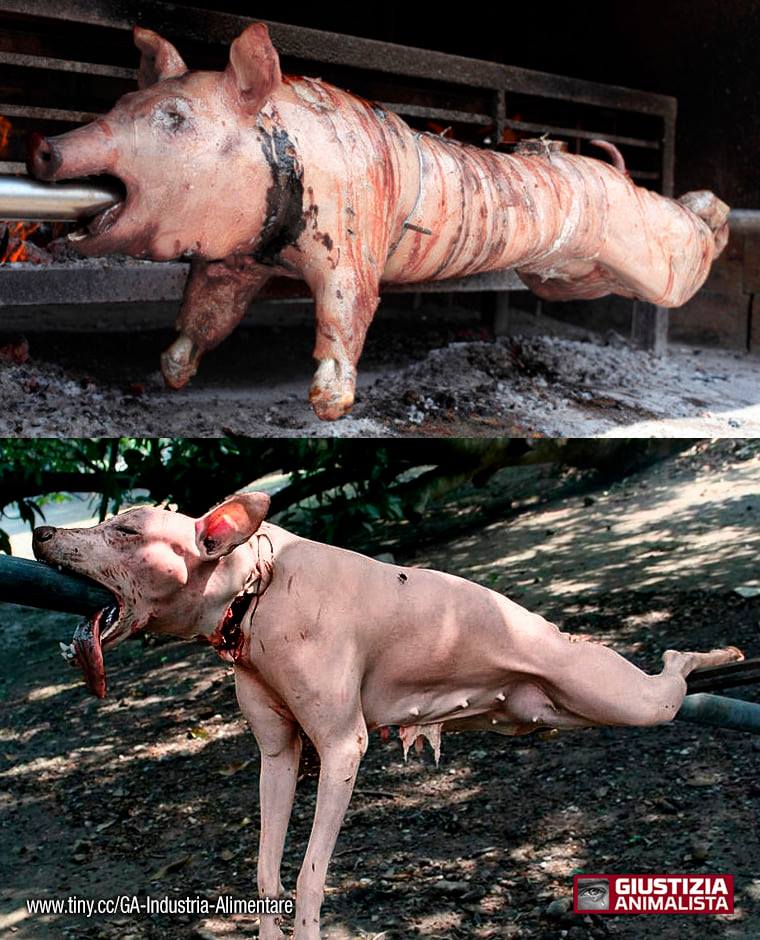
Dogs or cats are not the better or nicer animals than poultry, cattle, chickens, ducks or pigs – there is no difference!
They also have feelings and none of these animals are “humanely” slaughtered.
So instead of getting upset that dogs and cats are being eaten somewhere and declaring war on other peoples because they eat the “cute” pets, everyone should check their own disgusting eating habits.
In the year 2021, soon 22 there is no longer any reason to promote animal exploitation and animal murder and everyone should stop consuming the meat of ANY animal -> the future is VEGAN!
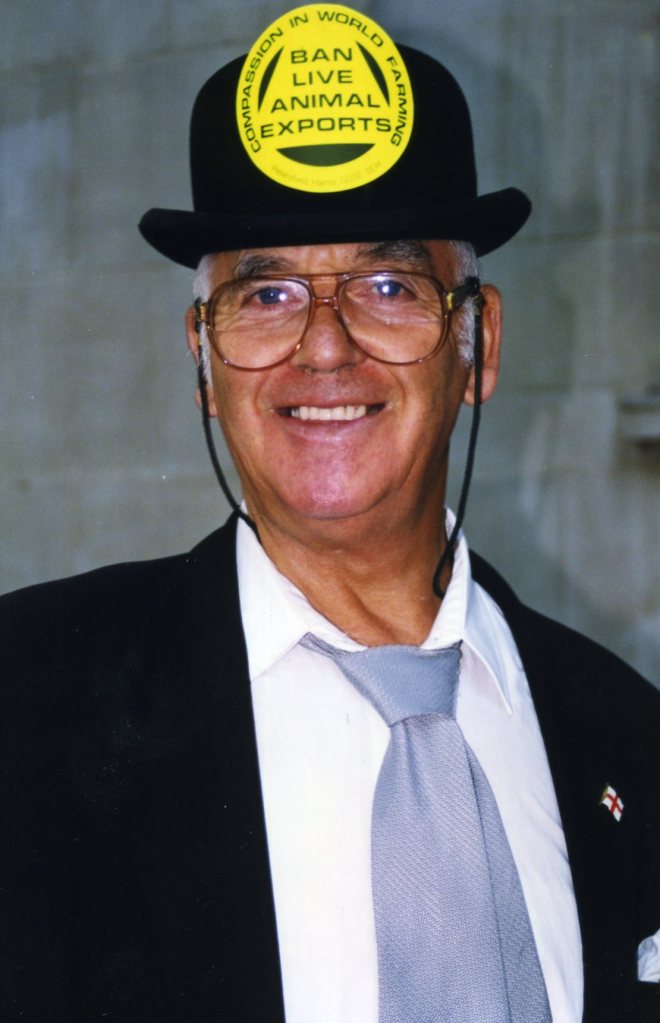
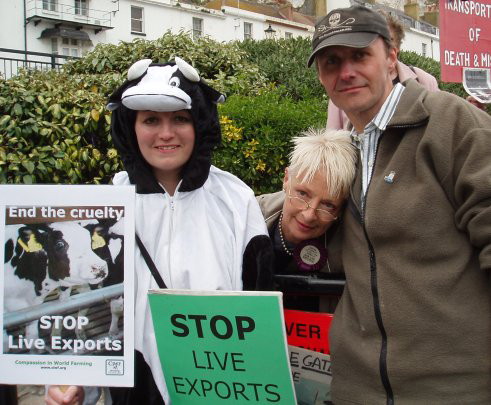
Making efforts to stop live animal transport / live exports campaigning has played a large part in my life for the last 30+ years. Maybe too large a part; there have been costs in other ways for sure ! – but would I do it all again ? – you bet.
I think maybe it best to let the pictures (mainly from my own personal archive) tell some of the story themselves a little more; I have added notes to pictures where I think applicable.
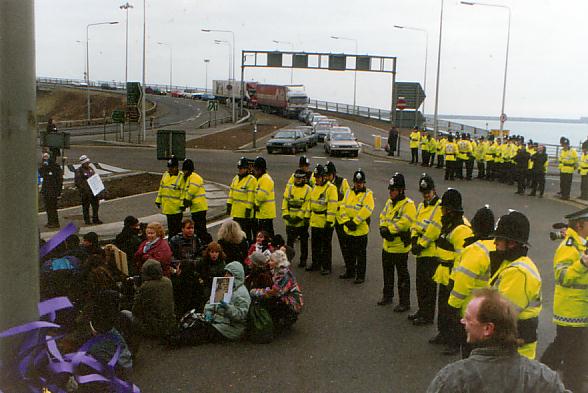
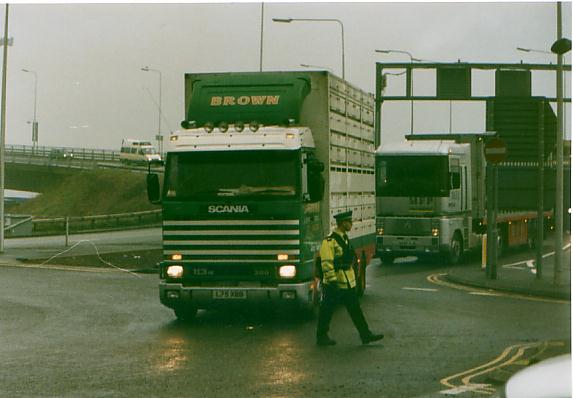
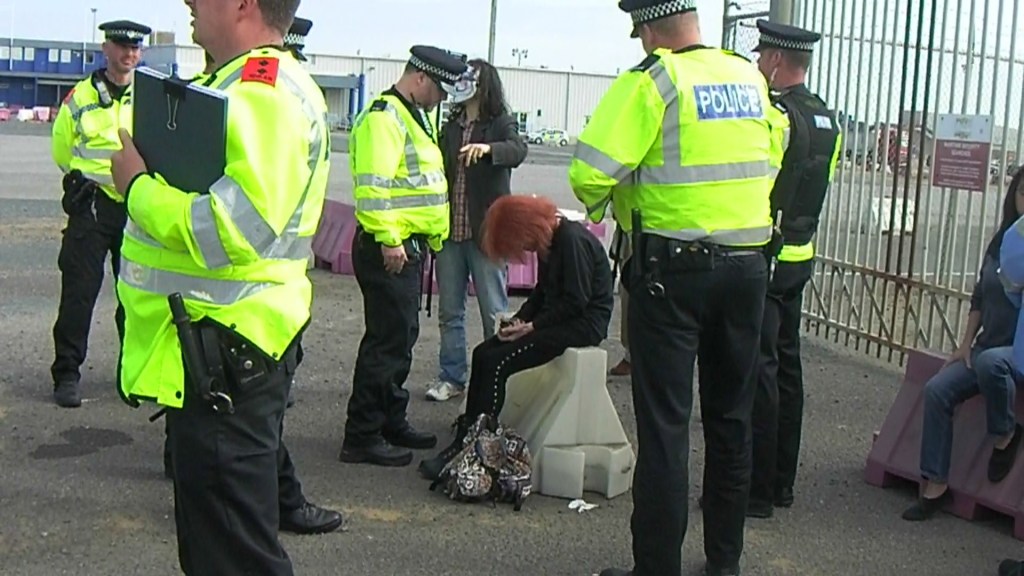
Above – ‘The Daffs’; our term for the exporter protecting police; looking like Daffodils in their bright yellow tops. Don’t you think ?
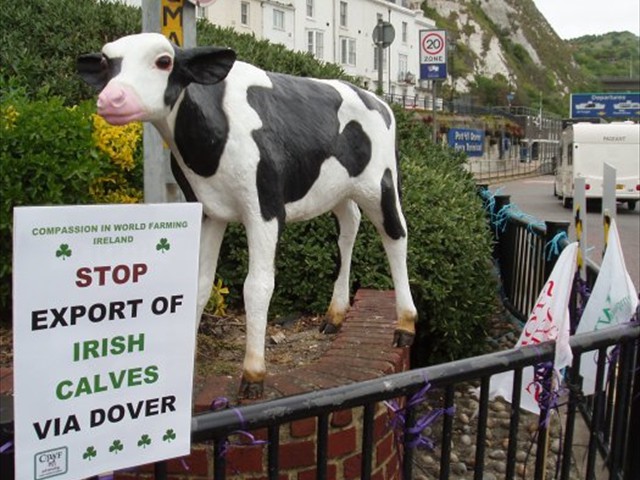
Our Dover export protests backdrop – the famous White Cliffs.
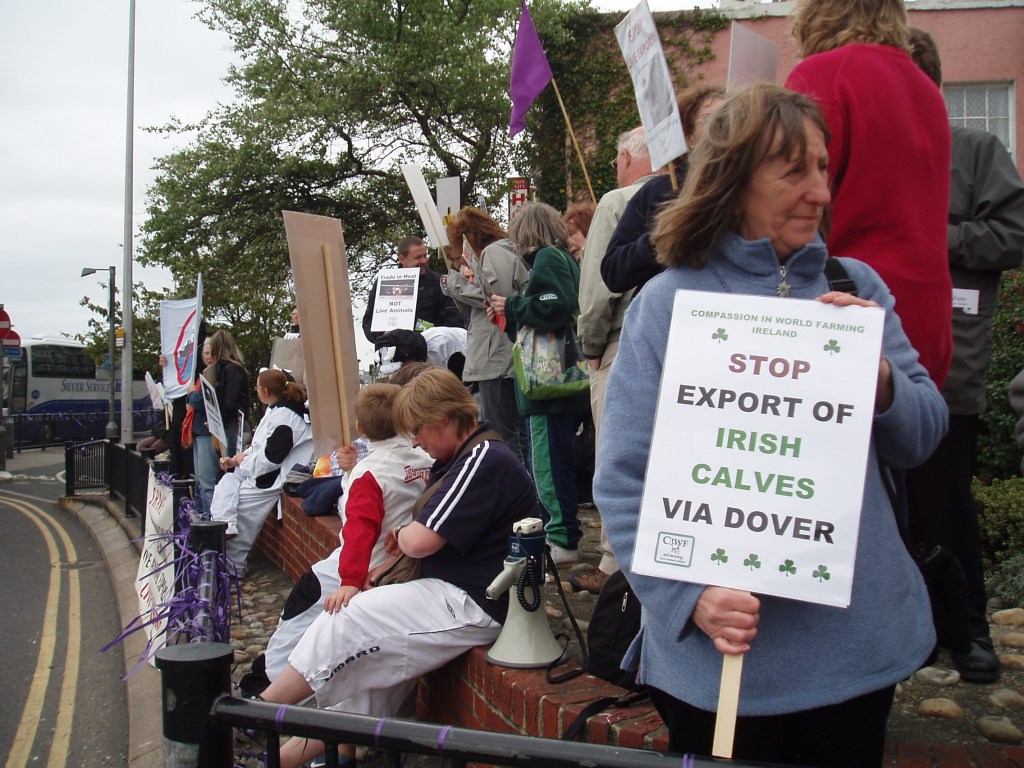
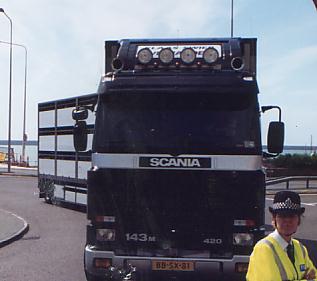
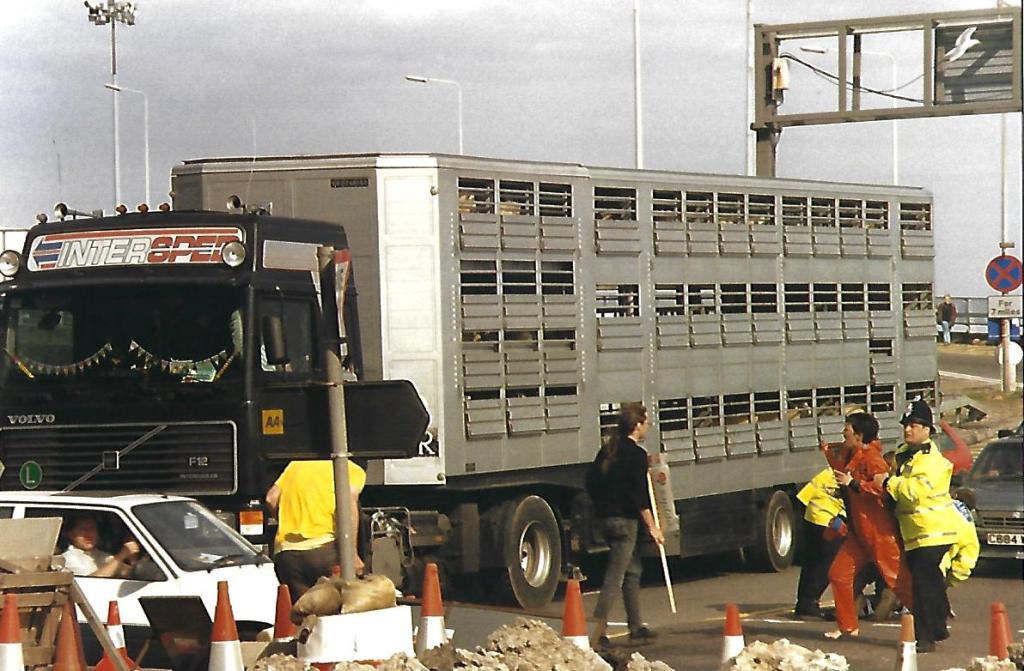
People against the live animal export trade were always at Dover in one form or other; one livestock driver famously quoted “they appear out of holes from everywhere – like bloody rabbits in the grass”; Dover was the main port used for export of live animals; until the protests eventually stopped the major cross Channel ferry companies taking the trucks as part of their business. A very big win for the anti export movement.
Mrs Plod makes sure I behave !
Dover – a battleground for live export protests.
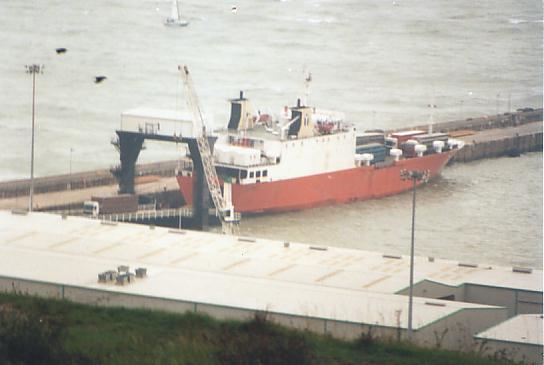
When the ferry operators shunned the trade, which always was the easy route for the hauliers over the Channel things changed drastically. They (exporters / hauliers) were then forced, with no other options, but to charter their own vessel(s) to get the livestock transporters over the water into Europe. In addition to the costs of chartering a boat, they also needed a pilot to get their ship into and out of port; so the costs mounted in several ways.
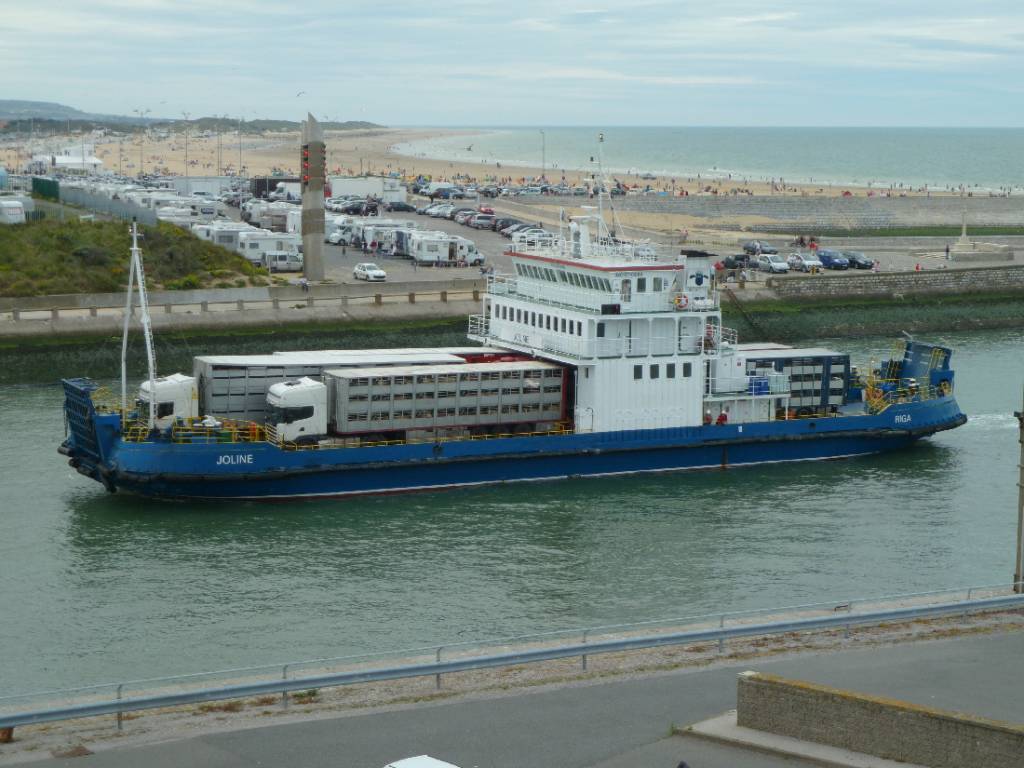
One of the ships that had to be chartered for live export trucks to be carried – see them on the top deck.
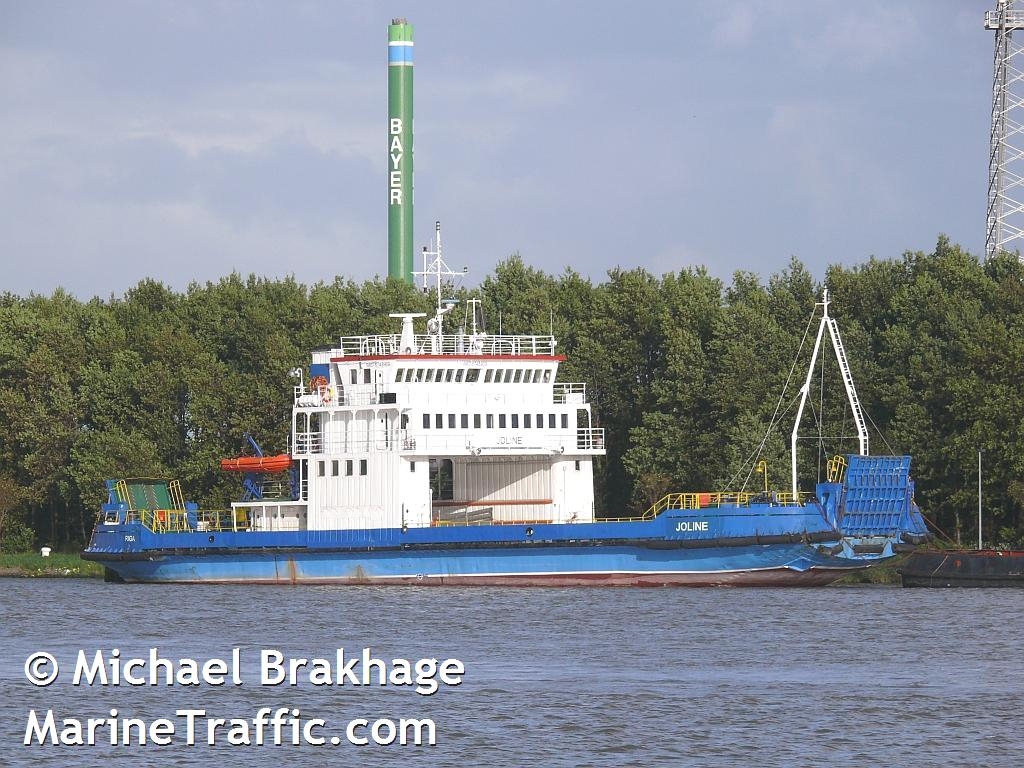
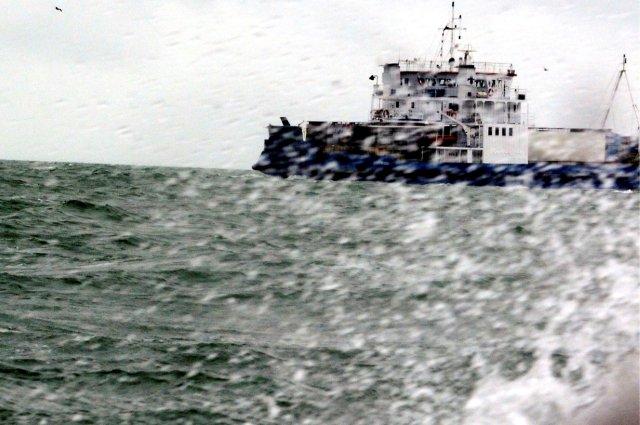
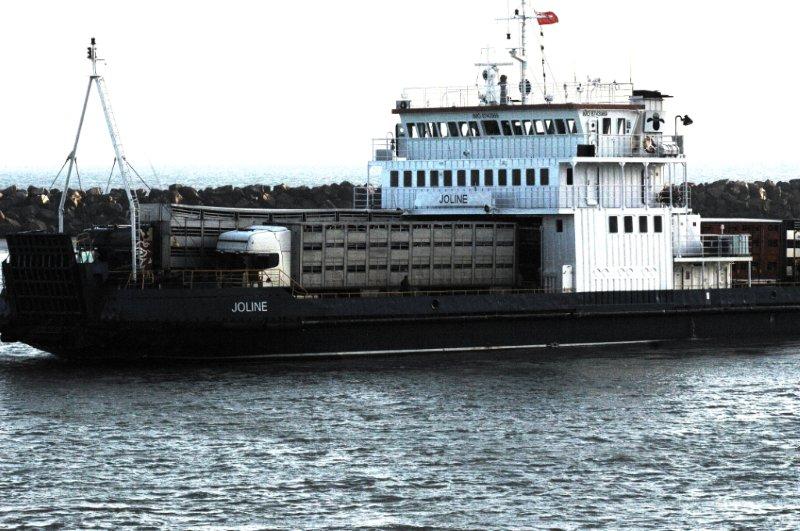
It was hoped these spiralling costs would eventually be the death knell for the trade; and it was, until Dutchman Onderwater suddenly stepped in with his own boat; an ex Russian river battle tank carrier called the ‘Joline’; to start the live animal trade from Ramsgate, another Kent port. The Joline was a bathtub of a vessel (designed for river usage) and totally unfit for carrying transporters (and their animal cargo) over the choppy waters of the English Channel. Fully loaded, it was low in the water; very low. It carried nothing else apart from livestock trucks and their drivers.
The ‘Joline’ – unfit for Channel crossings, but used to carry trucks nevertheless.
A loaded Joline arrives at Calais (France).
A loaded Joline in the Engllsh Channel.
As an activist at Dover, you could be in the docks yourself doing some monitoring work, when without doubt you would always without fail; bump into a fellow campaigner there also doing some ‘sniffing round’. It was a kind of brotherhood; a quick chat and then off again into the darkness to do your thing.
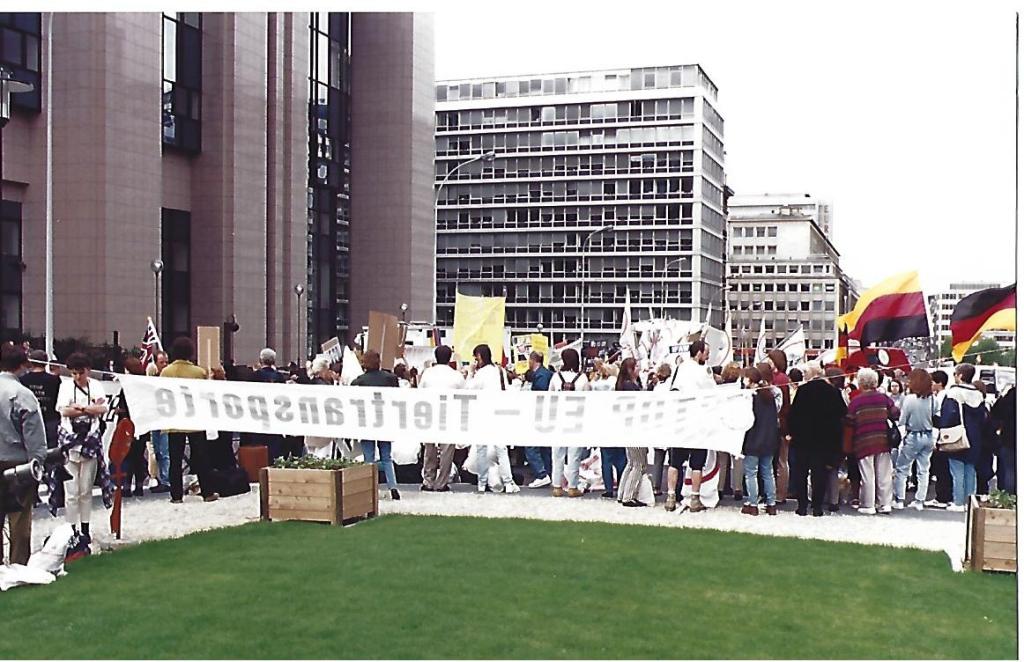
As campaigners, we also headed into Europe quite a lot, regularly going to EU Brussels to vent our anger. In one photo you can see the large German anti export contingent who protested there with us. Euro citizens with a simple united cause – to try and stop the trade.
Our friends the German anti export campaigners – Brussels.
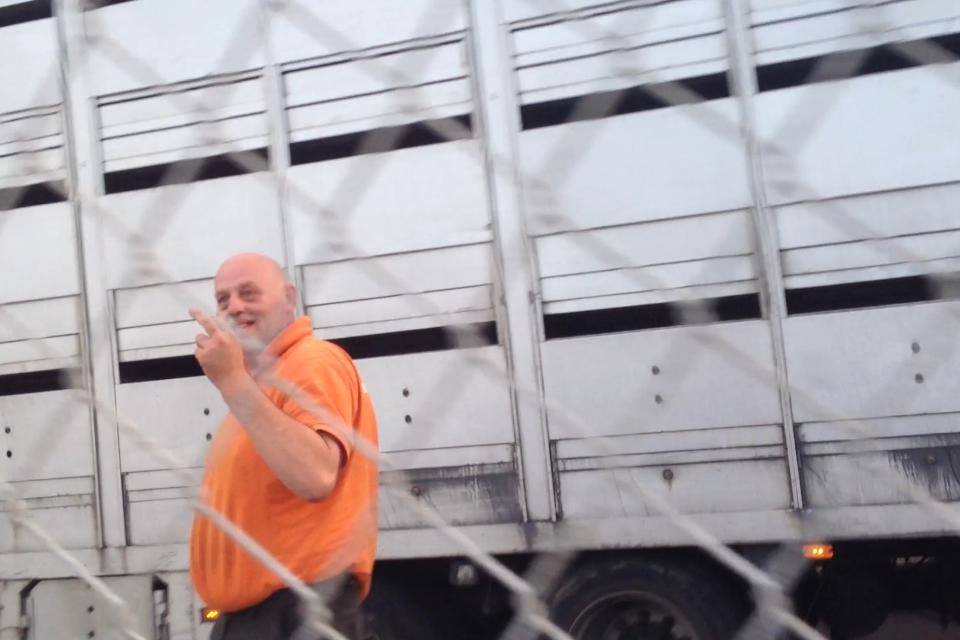
A livestock driver sends us his best wishes.
As a member state of the EU ‘club’, the UK was never allowed to ban live animal transport; even though it really wanted to due to pressure. Now it has left the EU via Brexit, it has taken back its own control rather than be dictated to by un elected Commissioners. Within a year the UK has held a consultation, and is now in the process via Parliament of banning all live animal exports.
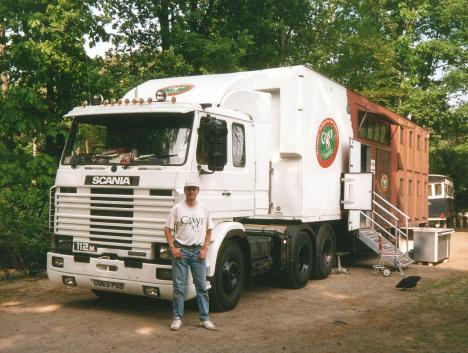
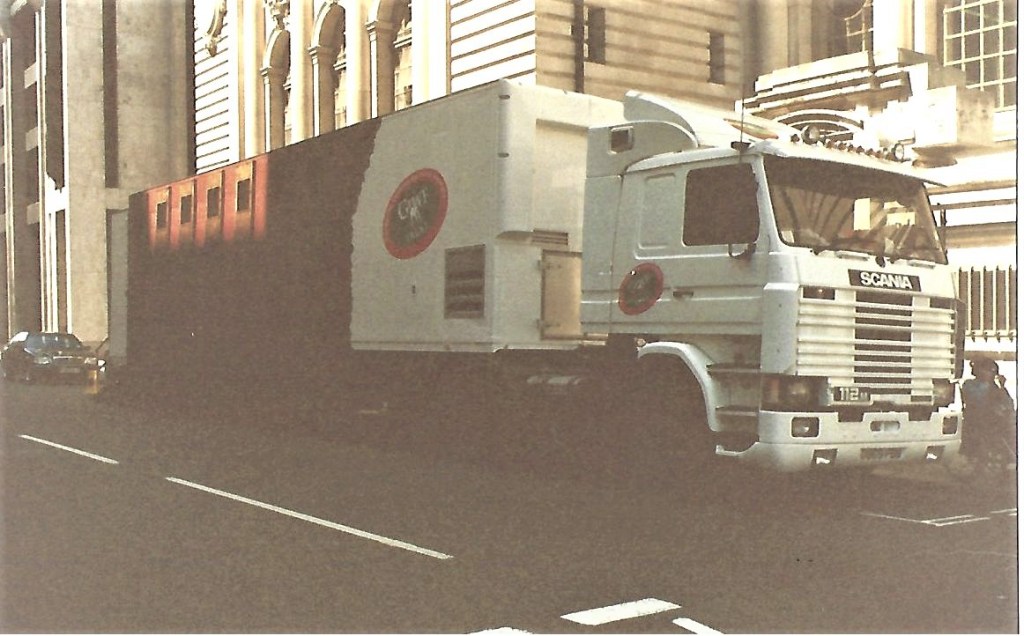
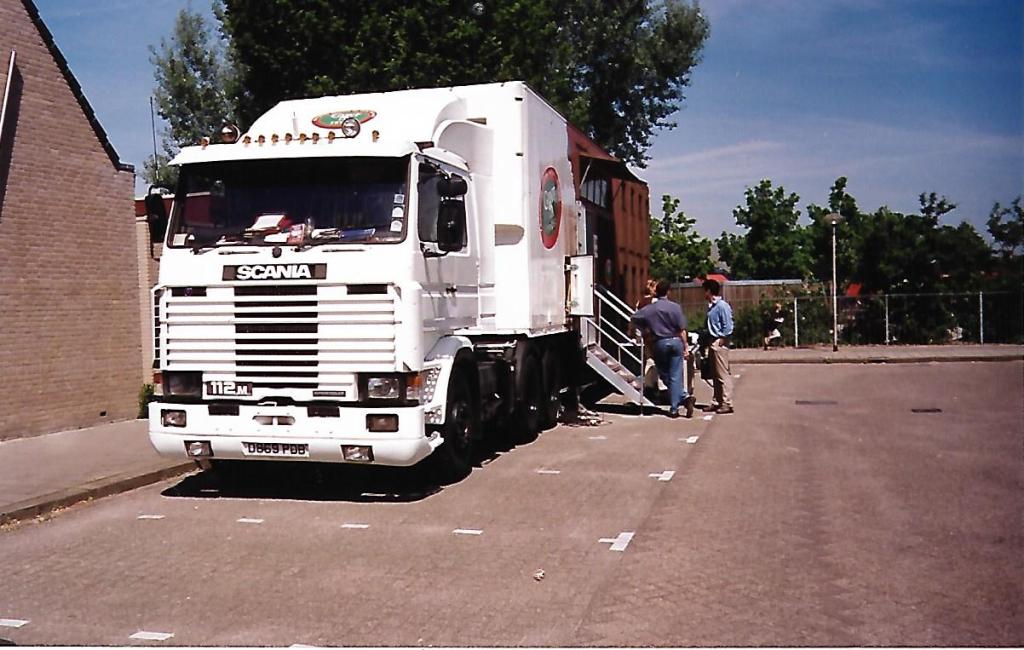
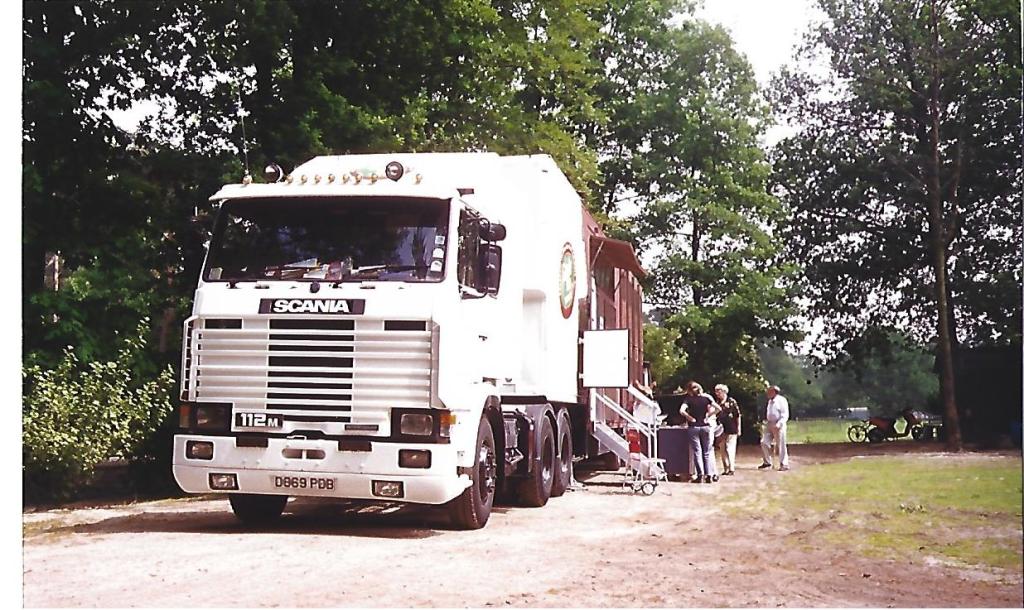
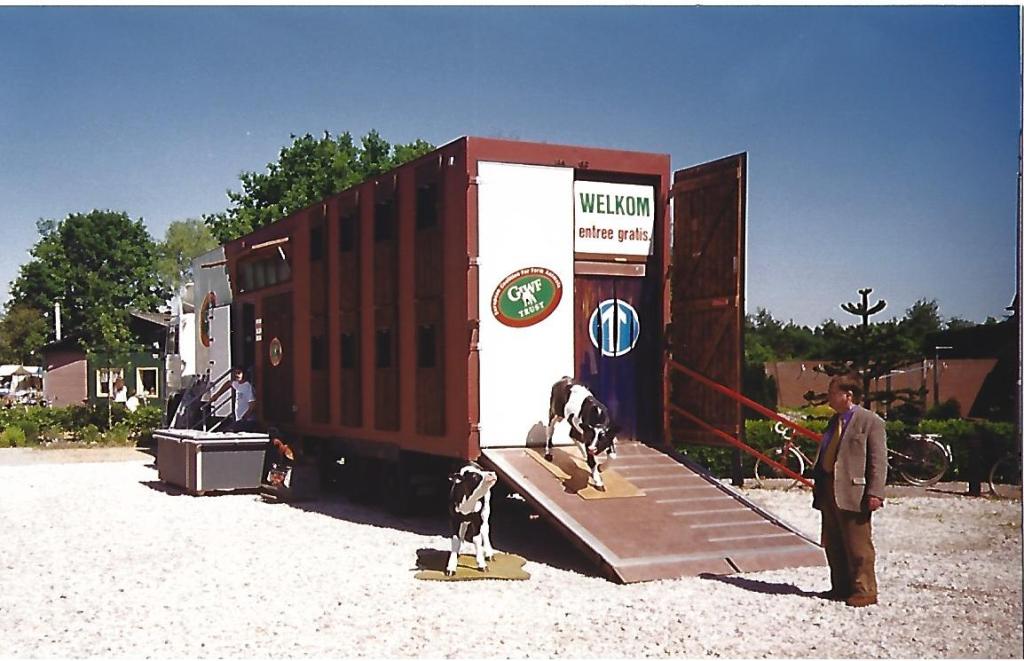
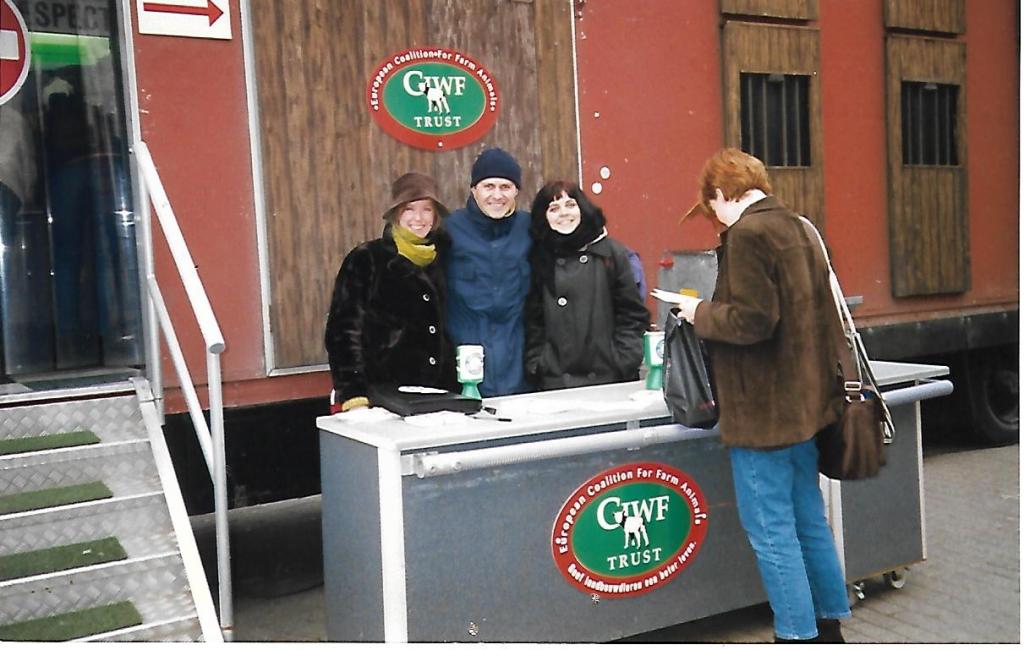
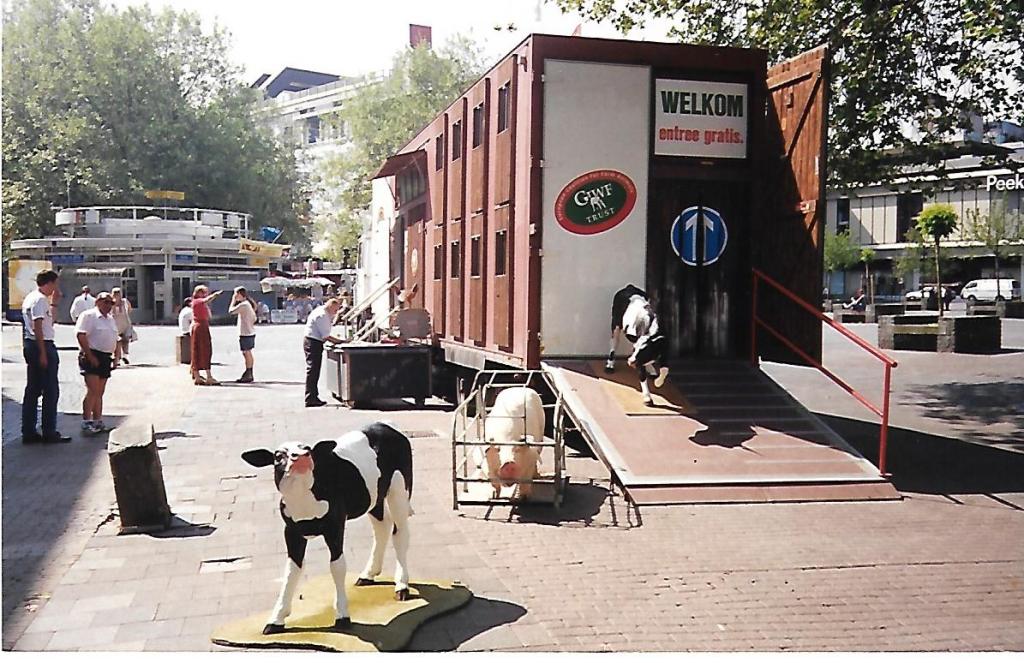
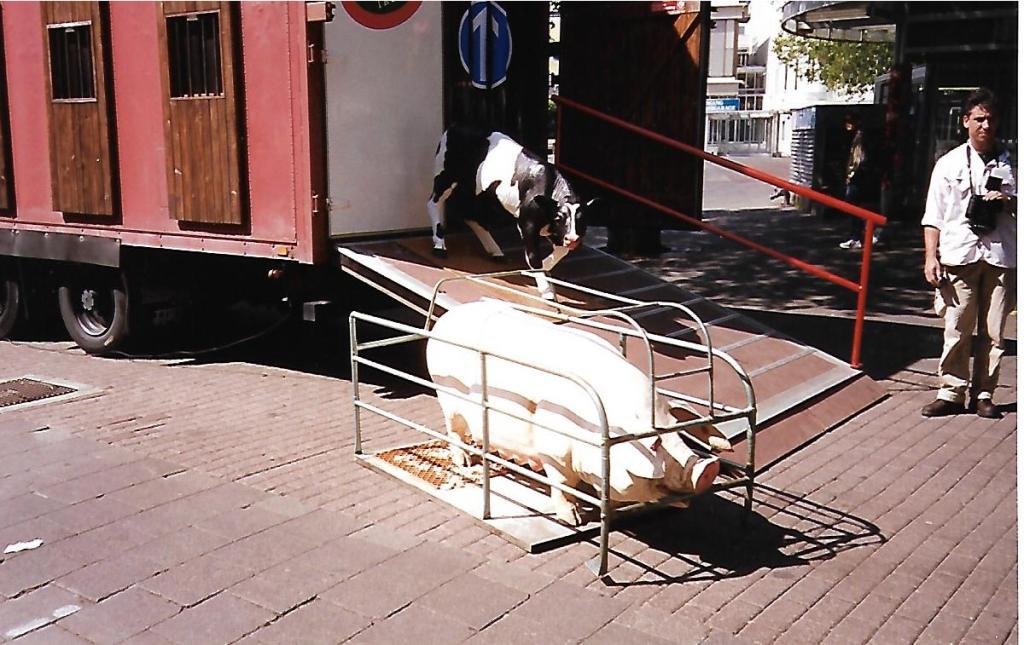
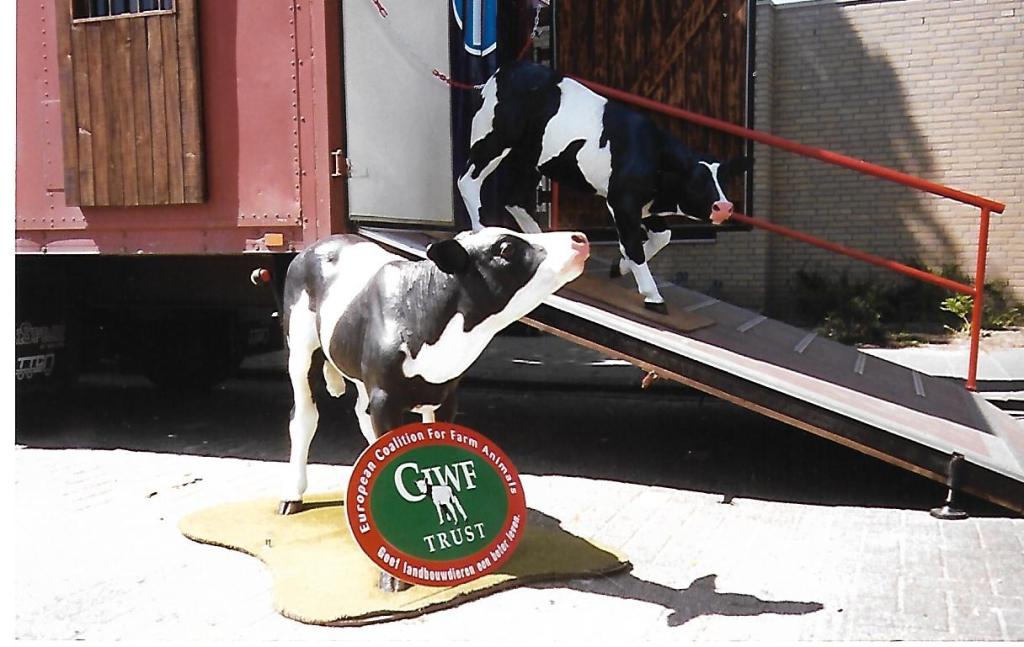
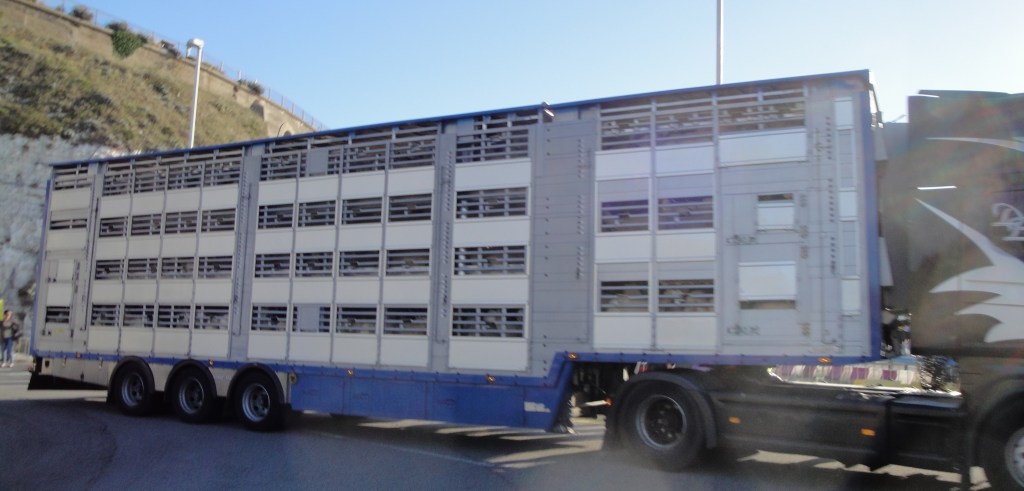
Working with CIWF who are based in London, the ‘intensive farming tour truck’ was taken all over Europe; informing people of the horrors of the systems. In the pictures you can see it in the Netherlands leg of the tour, which I took part in. In Amsterdam, we were very fortunate to be granted permission by HM he Queen to set the truck up for the display in front of the royal palace; for which were are very grateful to her majesty. With the tour truck, you always entered from the rear; immediately joined with the calves in transport; then moved into the next section which was a simulation of a typical battery farm. Then you moved on again into an intensive pig unit, complete with sow stalls and cages. Videos played all the time showing the real reality of all these systems.
The intensive farming tour truck parked up at a London demo.In the Netherlands – parked up and ready for another days school visitors.
Finally as you walked to the front of the trailer, you moved into the ‘refrigeration food zone’, which showed all the veggie and vegan options for the modern shopper at the supermarket which does not involve all this cruelty. See the truck from the outside, a livestock transporter for most, moving into the meat free shopping white refrigerated section at the front. Once you had experienced it all, you came down the front steps to the desk outside and added your name to all the petitions we had.
The Tour Truck in the Netherlands.Tour Truck enter from rear.Netherlands – Nanda, myself and Monica wrapped up for the Winter tour.Welkom – Warm sunny days on the Dutch Summer tour.Enter at the rear and join the calves in transport.
The Netherlands tours were held in both winter and summer. That winter it was freezing; one of the coldest in Europe for a long time; you can see Nanda, myself and Monica getting ready outside for a cold signature session. I am in the middle with the black beanie – the thorn between the 2 roses you could say ! It was Nanda (on left) who really got me into eating Falafel; which is still a favourite food of mine today. But the summer tour was oh so great with constantly good weather; we even took some time out to sniff around and investigate the veal facilities that British calves were being exported to at that time. I have some great memories of being on the road with John C; who like all the best people, went fer too soon: England: Another Terrible Loss – John Callaghan. – World Animals Voice
John – one of the kindest blokes.
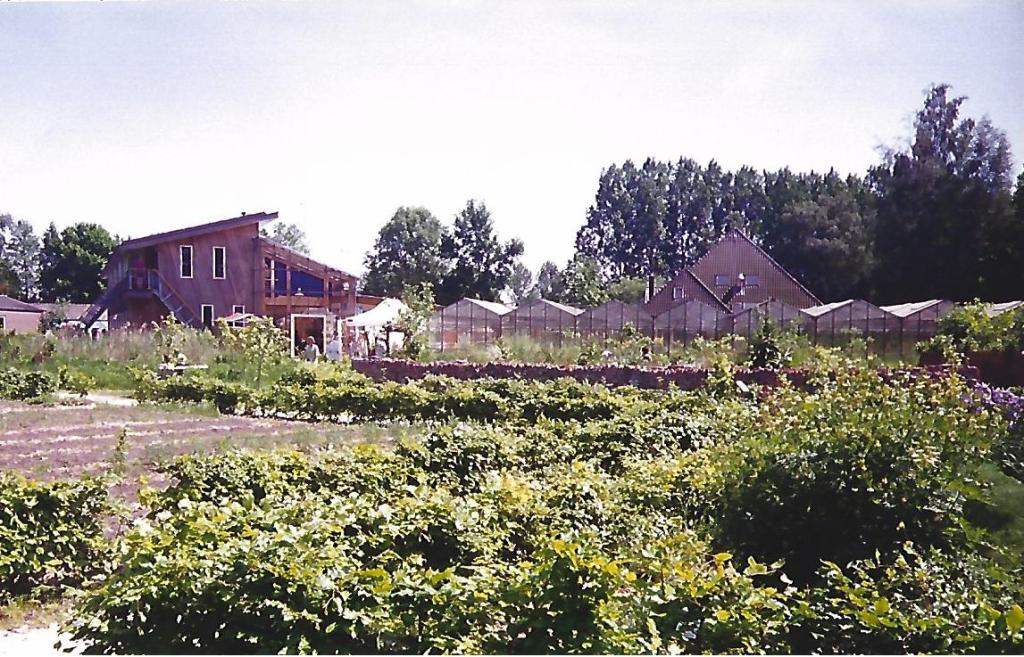
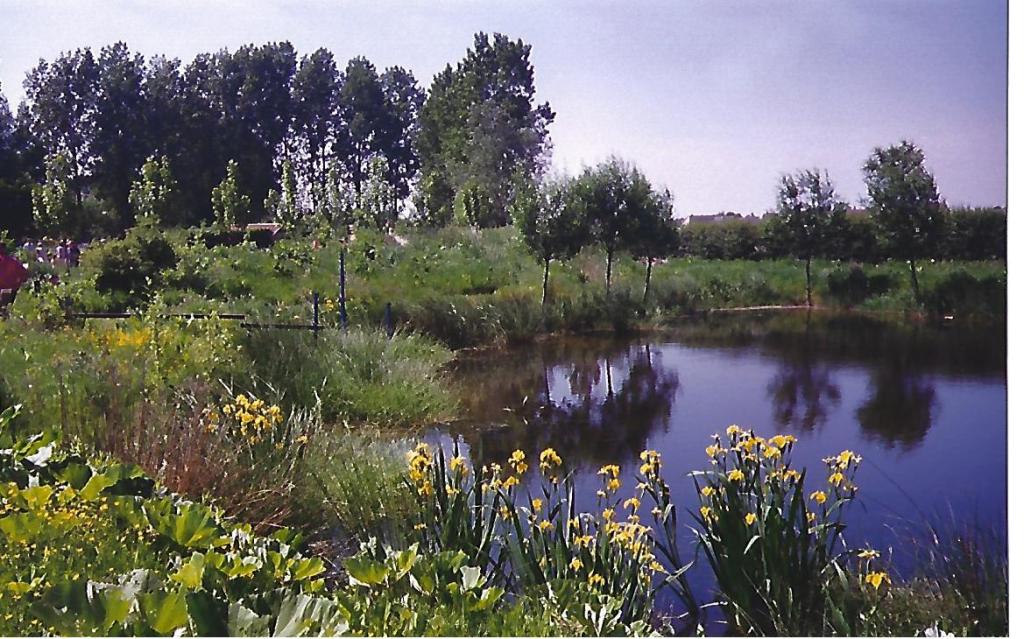
We had a busy schedule with the truck at the many pre arranged events – visiting schools, colleges and other facilities to inform students and the public about the realities of the intensive farming business. On some days, we visited (under invite) major eco facilities such as the wonderful ‘De Kleine Aarde’ to inform people, and also to see their wonderful ways of being ‘eco’. de kleine aarde – Bing images
De Kleine Aarde 1
De Kleine Aarde 2
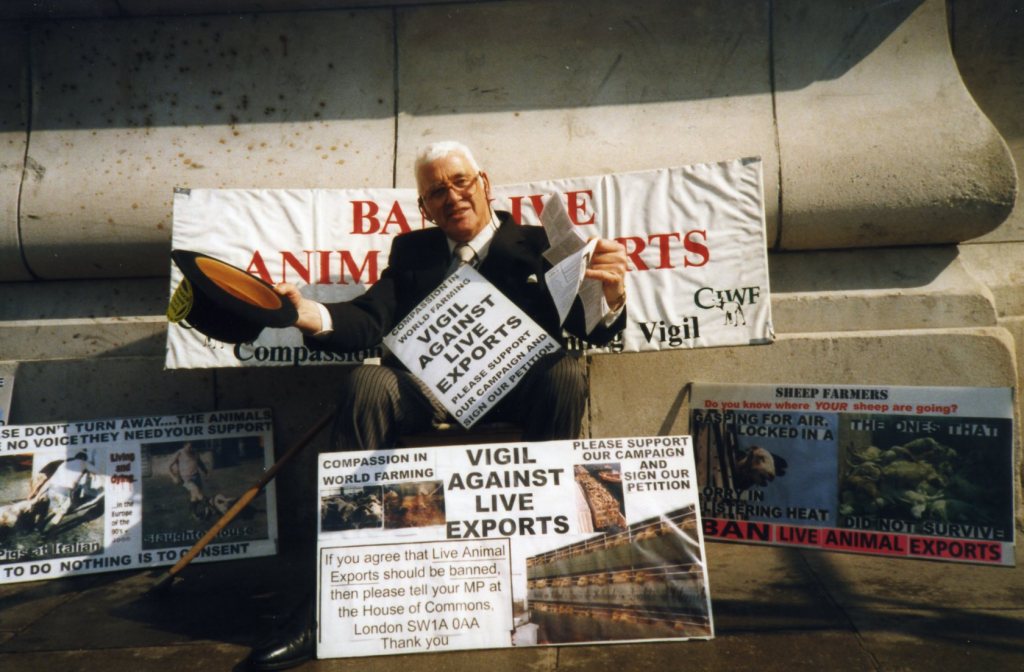
Back in rainy ol’ London town; organised by friend Liza; we also kept the daily vigil against live animal exports going at the bottom of the steps of the Ag. Ministry in Whitehall. A very regular was my good friend Mike who used to dress up as a city gent, whilst mopping down the front steps of the Ministry, telling then to ‘clean up their act’ when it came to live animal transports.
Mike does his bit in London with the daily ban live export vigil.
Wonderful Mike (RIP)
Liza (middle) – the London Vigil Organiser (Blonde middle) with me and Ellie.
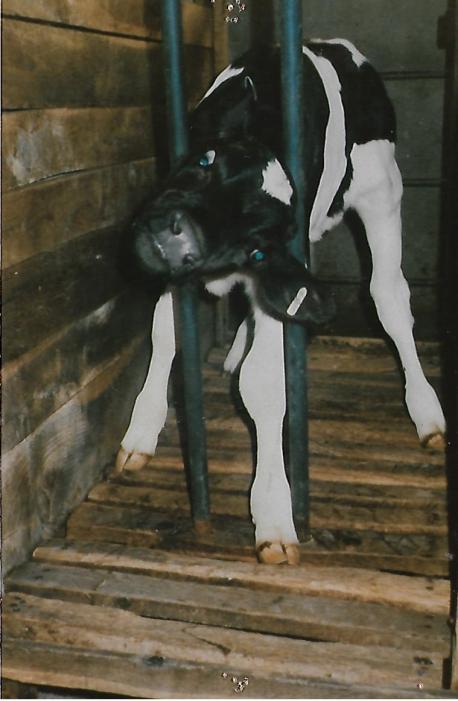
Why do it ? – well take a look at the photo of the British (exported) calf being restrained in a foreign veal crate. I don’t need to say any more, other than that is why we did what we did.
This is why we do it !!!
Photo – Jane
My great campaigner friend Jane – surrounded by Daffs !
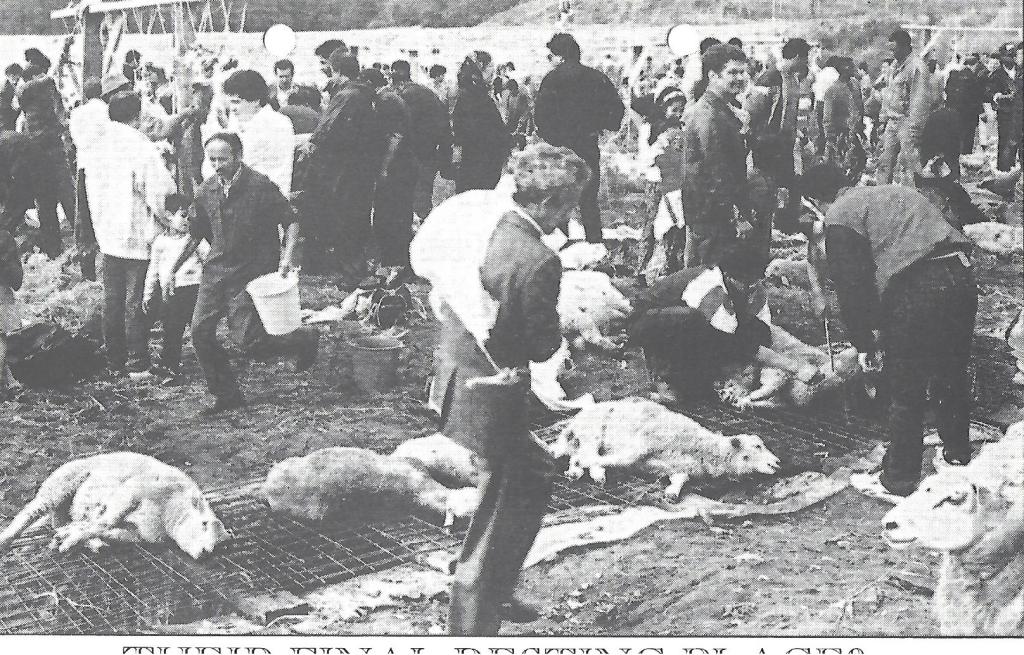
The festival of Eid (still goes on each year, but not as shown now); saw thousands of British sheep being exported to France for ritual slaughter. As you can see in the black and white photo; simple trenches were cut into the fields, wire laid across, and the sheep put onto them. The sheep’s throats were cut without any stunning, and the blood left to soak away into the field trenches. Citizens would attend these events and buy sheep meat to take back home for their Eid meals. Friends of mine who were there to witness the situation, often spoke of being on public transport buses, and witnessing blood dripping out of black sacks onto the bus floor from the sheep carcasses they had just purchased and bagged up. Eid was a very bad time for live export campaigners; and has been until very recently, with Dutch exporters coming to the UK to purchase live sheep for Eid festival celebrations.
British sheep are ritually slaughtered in the French (Eid) killing fields.
Fortunately, now the UK has left the EU, we can make our own laws, and are currently waiting for new legislation to get approval in Parliament which will see all animal’s being stopped from being exported live to Europe, for both slaughter and also for further fattening.
The Joline sails with transporters – Val C
Has it been worth it ? – after some 35 years of campaigning; I say that every minute was worth it for the place we (UK) have arrived at now. Things in the EU are still bad, so much effort is to now be shifted there.
Education of people and exposing the realities is the real thing now; 20 years ago we did not have the internet at our door, petitions were not online; but in todays world we can now show everyone at the flick of a button the real abuses and suffering. Education is key to change – so please get out and educate !
Regards Mark
Brussels export demo.
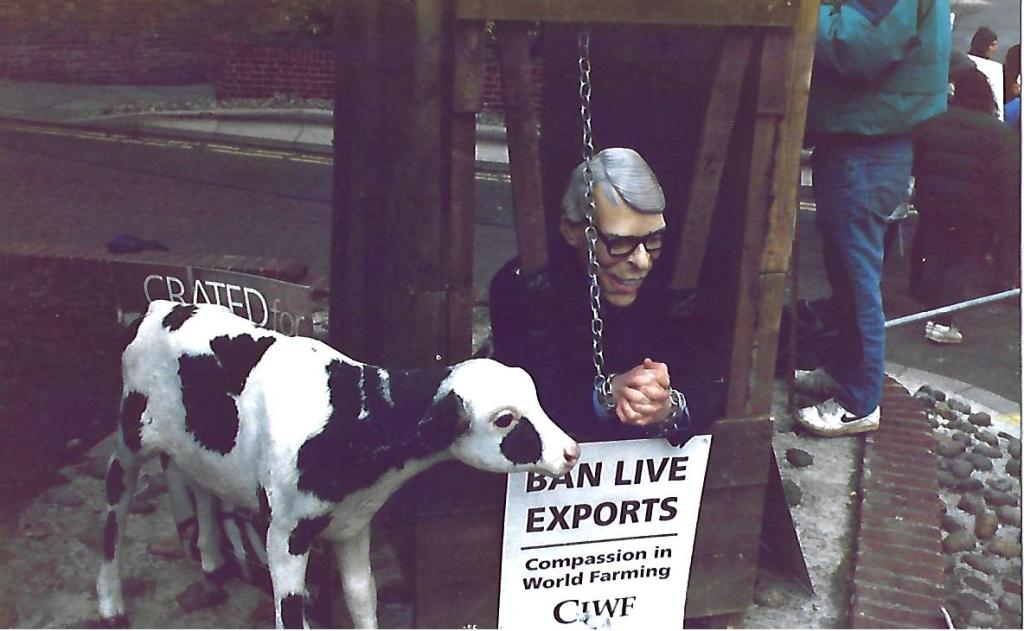
Dover – we liberate the veal calf from the crate and stick the British PM John Major into it instead.
You can read a bit more about live export work and my seal / horse export work; and see the Serbian stray issue at my old Serbian animals campaign site:
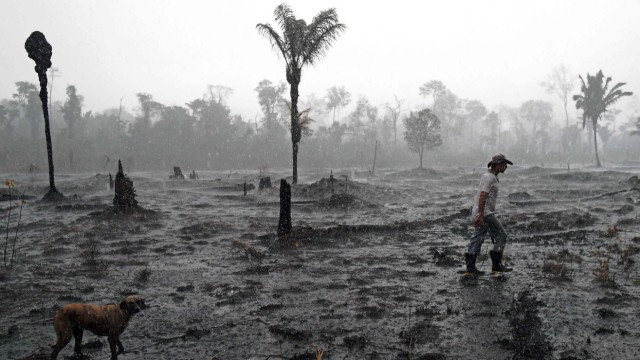
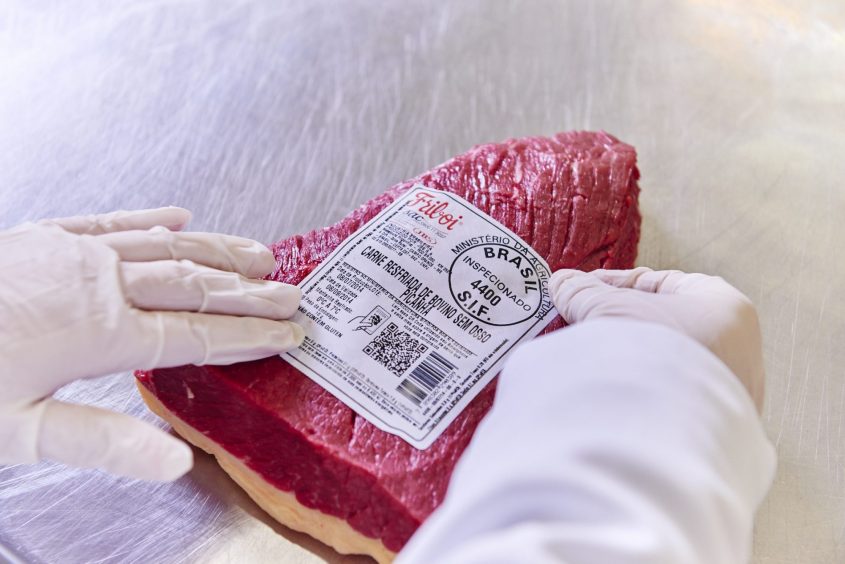
Beef from Brazil and other South American countries has been criticized for some time, as deforested areas are often converted into pastureland in a timely manner!
Now the first supermarket chains are listing beef from deforestation regions!
Brazil is the world’s largest beef exporter.
The South American country exports around 2 million t of beef annually, including to the European Union.
But export success is in jeopardy because Brazil has a problem, an image problem.
His agricultural exports are repeatedly associated with the illegal slash and burn in the #Amazonas and in other rainforest areas. Some large retail chains from the Netherlands, France, Belgium and Great Britain, including Albert Heijn and #Lidl Netherlands, have now pulled the emergency brake.
They are deleting beef and beef products from Brazil in whole or in part.
The “Reporter Brasil”, a network of investigative journalists, and the environmental organization “Mighty Earth” got the ball rolling.
Together they have traced the origins of beef steaks, corned beef and dried meat on the shelves of Albert Heijn,Lidl,Carrefour and Sainsbury’s back to the farms in Brazil.
The reporters uncovered a system they call “Cattle washing ,” based on laundering money, for example, from drug trafficking revenues.
When washing cattle, the animals are briefly kept on farms in regions where there is little or no deforestation in two JBS*plants in São Paulo before they are slaughtered.
This gives them a “clean” origin.
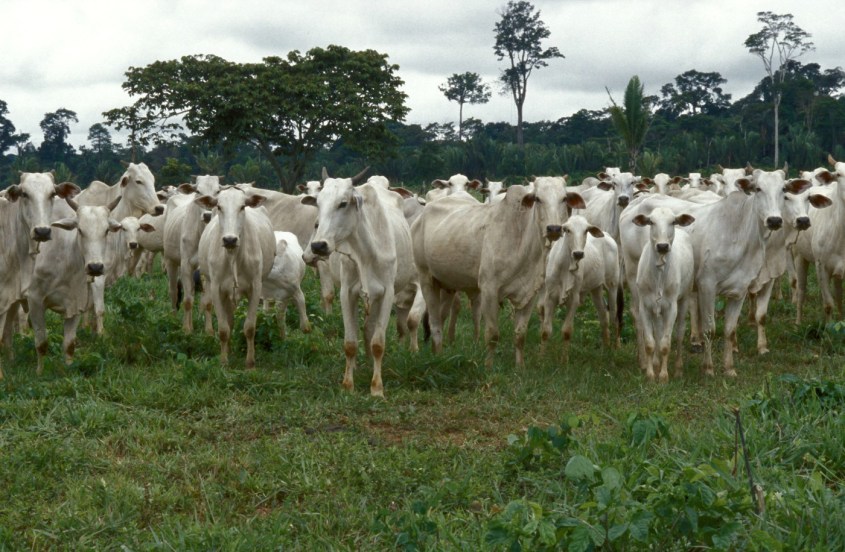
Vale do Jamari settlement, Candeias do Jamari, Rondônia. There are more cattle than people in the state of Rondônia.
However, these cattle had previously been raised on farms created by illegal slash and burn.
Some of the operators of these farms have been convicted under Brazilian law for illegal logging of rainforests and the destruction of protected areas.
I don’t normally do this, but I need to start this post with a WARNING.
The shocking viral video I’m about to share is harrowing to watch. It shows upsetting scenes of violence, cruelty and abuse towards vulnerable animals.
However, I believe it must be watched. I believe it must be shared and viewed by as many people as possible in order to expose the horrific cruelty which is inherent within the animal agriculture industry all over the world. Because, as terrible as this footage is, what is most upsetting is that these are not isolated incidents. Thousands of hours of undercover footage from hundreds of random farms and abattoirs in dozens of countries show that this kind of abuse is inherent throughout the industry. Animal agriculture is rotten to its core and this video shows why. I know how hard it is to watch but I beg you to watch it if you can and to share it with as many people as possible, because we can only tackle this abuse if we are aware of it.
After the video, I’ll drop a link so you can take action to help stop this abuse. For the animals in this footage it is too late, but with your help we can prevent millions more from suffering the same fate. So for now, please set aside a few minutes, brace yourself, and prepare to expose these horrors to the world… Once you’ve watched the video, there are three things I want you to do: Share this page like crazy with everyone you can think of — this cruelty needs to be exposedIf you’re not already vegan, take the 22 Day Vegan Challenge — this horror show will only stop when we stop paying for it.
Sign up HERE for notifications about future posts to keep you inspired and informed — together we are stronger. Together we can change the world.
Download Your FREE Vegan PDFHERE Order a FREE vegan kit HERE Dairy-Free Info HERE Take the Dairy-Free Challenge HERE Click HERE for more Dairy-FreeFish alternatives can be foundHERELearn about eggsHERE Find bacon alternativesHERE and HERE Take PETA’s Cruelty-Free Shopping Guide along with you next time you head to the store! The handy guide will help you find humane products at a glance. Order a FREE copyHERE Searching for Cruelty-Free Cosmetics, Personal-Care Products, Vegan Products, or more? Click HERE to search.Free PDF of Vegan & Cruelty-Free Products/Companies HERE Click HERE to find outHow to Wear Vegan! Want to do more than go vegan? Help others to do so! Click below for nominal, or no, fees to vegan literature that you can use to convince others that veganism is the only compassionate route to being an animal friend: PETA HERE Vegan Outreach HERE Get your FREE Activist Kit from PETA, including stickers, leaflets, and guideHERE Have questions? ClickHERE








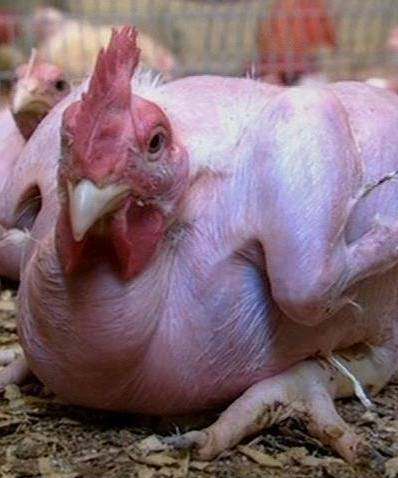 In addition to added weight leading many chickens to be virtually unable to move, many die excruciatingly painful deaths, with their throats cut while they are conscious.
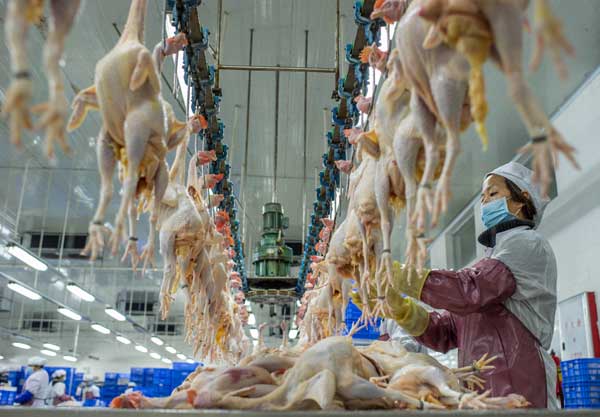 This conversation is not new.
 Somehow, despite growing awareness and a rise in diets that reduce or altogether eliminate the consumption of animal products, the USDA has still yet to comprehensively reform our factory farming regulation.
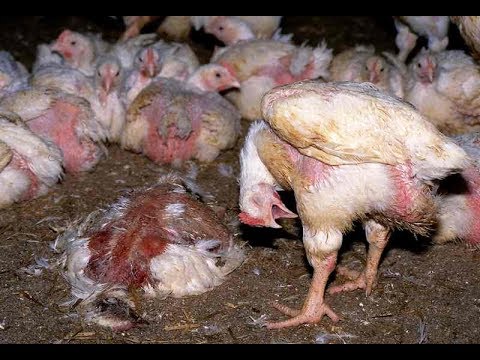 There are of course plenty of misconduct and scandals.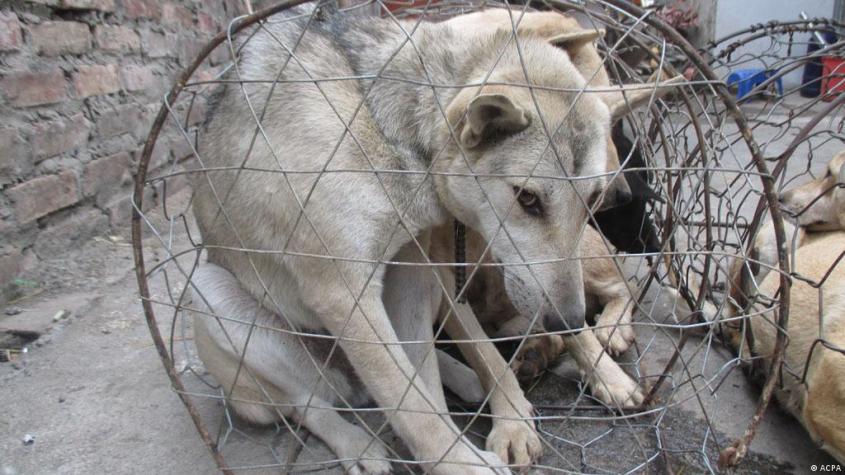
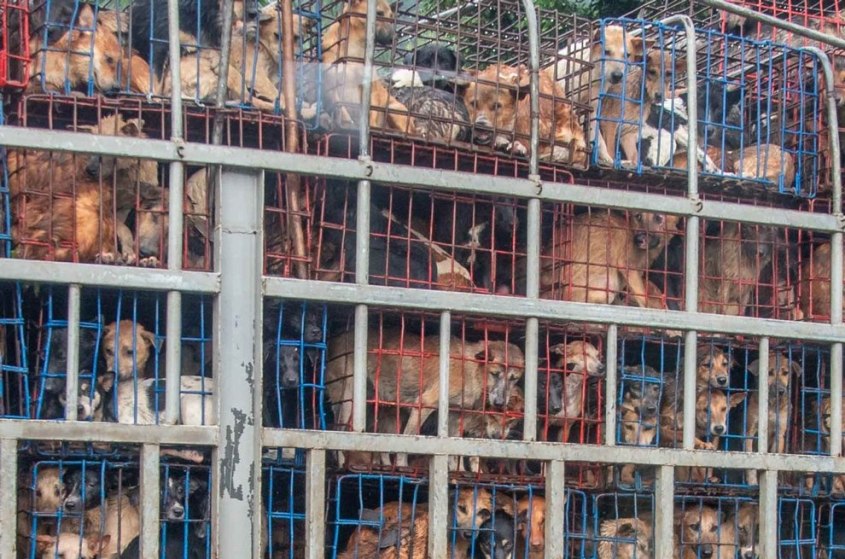 The majority of the animals in the dog and cat meat trade are stolen pets and strays. The scale of this cruel trade makes it one of the most massive animal welfare problems for pets in Asia.