Category: Farm Animals

38509 From Stacey. Disturbing but True.

Thanks as always to Stacey at ‘Out Compass’ for sharing.

Regards Mark

38509 by Stacey
https://vimeo.com/583906391
DontWatch.org

Source Pathless Pilgrim, Medium

I don’t normally do this, but I need to start this post with a WARNING.

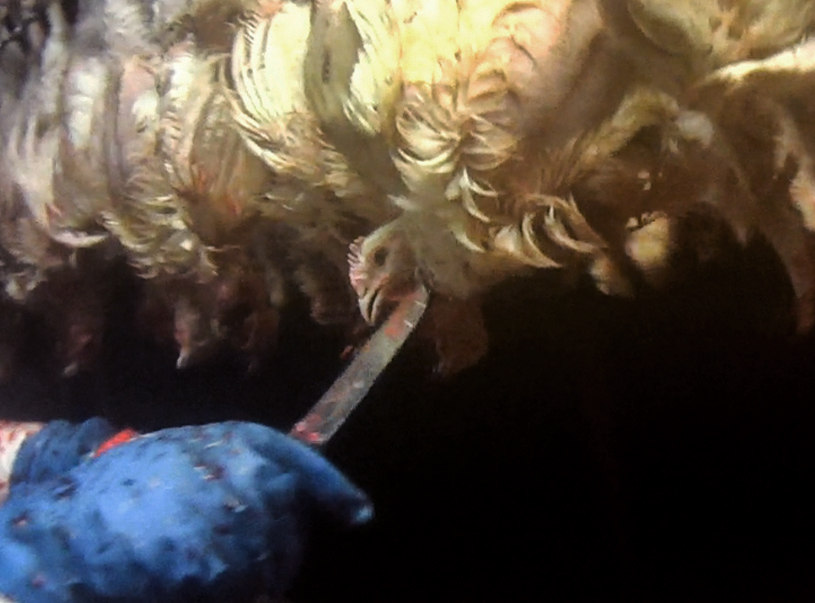
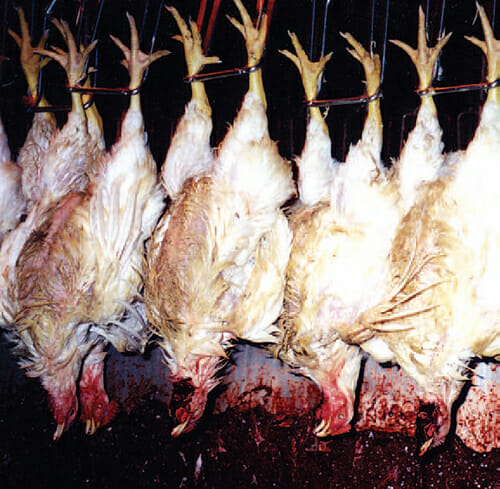
The shocking viral video I’m about to share is harrowing to watch. It shows upsetting scenes of violence, cruelty and abuse towards vulnerable animals.

However, I believe it must be watched. I believe it must be shared and viewed by as many people as possible in order to expose the horrific cruelty which is inherent within the animal agriculture industry all over the world. Because, as terrible as this footage is, what is most upsetting is that these are not isolated incidents. Thousands of hours of undercover footage from hundreds of random farms and abattoirs in dozens of countries show that this kind of abuse is inherent throughout the industry. Animal agriculture is rotten to its core and this video shows why. I know how hard it is to watch but I beg you to watch it if you can and to share it with as many people as possible, because we can only tackle this abuse if we are aware of it.

After the video, I’ll drop a link so you can take action to help stop this abuse. For the animals in this footage it is too late, but with your help we can prevent millions more from suffering the same fate. So for now, please set aside a few minutes, brace yourself, and prepare to expose these horrors to the world… Once you’ve watched the video, there are three things I want you to do: Share this page like crazy with everyone you can think of — this cruelty needs to be exposedIf you’re not already vegan, take the 22 Day Vegan Challenge — this horror show will only stop when we stop paying for it.

Sign up HERE for notifications about future posts to keep you inspired and informed — together we are stronger. Together we can change the world.

Download Your FREE Vegan PDF HERE
Order a FREE vegan kit HERE
Dairy-Free Info HERE
Take the Dairy-Free Challenge HERE
Click HERE for more Dairy-Free Fish alternatives can be found HERE Learn about eggs HERE
Find bacon alternatives HERE and HERE
Take PETA’s Cruelty-Free Shopping Guide along with you next time you head to the store! The handy guide will help you find humane products at a glance.
Order a FREE copy HERE Searching for Cruelty-Free Cosmetics, Personal-Care Products, Vegan Products, or more?
Click HERE to search. Free PDF of Vegan & Cruelty-Free Products/Companies HERE
Click HERE to find out How to Wear Vegan! Want to do more than go vegan? Help others to do so! Click below for nominal, or no, fees to vegan literature that you can use to convince others that veganism is the only compassionate route to being an animal friend: PETA HERE
Vegan Outreach HERE
Get your FREE Activist Kit from PETA, including stickers, leaflets, and guide HERE
Have questions? Click HERE

England: Live Export Memories.

everybody[1]
Mine was witnessing the suffering of the live animal export trade from Southern England.

England: Memories – a personal experience. By Mark. – World Animals Voice

Sorry all you innocent sentients – I and the others would have saved you all if it had been possible.

Your numbers were in the hundreds; there were just a few of us. All these years later I don’t (ever) forget your suffering.

So, it was time to take the export campaign to Europe.  Very soon I will write again on the roadshow in the Netherlands; education is the real thing about all this – and educate we did.

On the road in the Netherlands – photo Mark

A transporter loaded with sheep arrives at Dover – photo Mark

Sheep going for export (and death) – photo Mark

British calves being exported out of Dover – photo Mark

He used to stay awake to drive the dreams he had away …..

The drive home in the early morning hours was always bad – you always felt you had failed them.

Regards Mark

England: 24/12/21 – Videos From Some Animal Friends – Enjoy and Celebrate Your Achievements !

We have been sent some videos celebrating some of the animal achievements this year.

Enjoy watching the videos and celebrate your victories; but please remember, at this time, there are still animals confined to cages and stalls, and bears confined to horrific cage systems in order to be milked daily for their bile. 

The fight for animal rights is not over – will it ever be ? – but we must celebrate our wonderful results this year and the new lives that are happening for so many animals.

Regards Mark and Venus.

The first video is from Jill at ‘Animals Asia’; who says:

In Vietnam, 16 precious bears are celebrating their first-ever Christmas at our sanctuary.

And in China, 99 bears who made the long journey from the ex-bear bile farm in Nanning to our Chengdu Sanctuary will be celebrating Christmas with their new furry friends outside of concrete enclosures and surrounded by lush green trees.

What an incredible gift you’ve given these beautiful brave survivor bears. They may be thanking Santa Paws, but we are thanking you.

As a small gift to you, we’ve put together a special Christmas video that we hope will bring festive cheer and leave you grinning from ear to ear.

Some supporters sent baubles with touching notes of love and peace to Tuong Lai. You’ll see we made sure she received them.

And you’ll spot Goldie, Wonder, Yen and more joyful bears opening their Christmas gifts and filling up their big round bellies with some of the most deliciously sweet festive treats…

Once again, thank you so much. Your love and dedication to Asia’s animals are the reason so many bears have been freed from pain and suffering this Christmas. And it’ll be the reason no bear is left behind as we work towards ending bear bile farming in Vietnam.

I’d like to wish you and your family a bear-y merry Christmas, on behalf of everyone here at Animals Asia, including, of course, the rescued, contented bears whose lives you’ve changed for the better.

With festive bear hugs,

A close-up headshot of Animals Asia’s Founder and CEO, Jill Robinson smiling into the camera with blonde shoulder-length hair. She’s wearing a black t-shirt with the white Animals Asia logo on her shirt sleeve and a red and white Father Christmas hat.

Jill Robinson MBE, Dr med vet hc, Hon LLD
Founder and CEO

The second video is from live export campaigner friend of several decades, Phil at ‘Compassion In World Farming’ (London.

Philip says:

Every petition you have signed, every letter you have written and every £1 you have donated has contributed to making big changes for farmed animals this year that will significantly improve their lives in future. Without you, none of our work would be possible, so thank you.

To show you just how incredible you are, please have a look at this short video highlighting some of the wonderful changes you have helped to achieve. 

I do hope you and your loved ones have a wonderful Christmas and I look forward to the great things we can achieve together in 2022. Once again, on behalf of everyone at Compassion: thank you so much for being wonderful! With my warmest wishes,

I do hope you and your loved ones have a wonderful Christmas and I look forward to the great things we can achieve together in 2022. Once again, on behalf of everyone at Compassion: thank you so much for being wonderful!

With my warmest wishes,

Phil Lymbery

Philip Lymbery
Global CEO, Compassion in World Farming

Animal Aid – Kent, England UK

Belgium: GAIA Investigation – Turkey Farms In Flanders: Dire Poverty.

GAIA

See video footage here:

https://www.gaia.be/fr/actualite/les-elevages-dindes-en-flandre-misere-noire

All photos from our animal friends at GAIA, Belgium.

22 December 2021

GAIA

GAIA reveals once again the sordid state of Flemish turkey farms with a brand-new video footage, shot in November 2021. The footage shows thousands of turkeys crowded together, severely weakened, crippled, injured and dying; and even corpses in an advanced state of decomposition.

The situation is exactly the same as when GAIA went to three turkey farms in 2019. The intensive farming of turkeys for meat is still completely out of order and respect for animal welfare is totally absent. How is this possible? The reason is simple: there are no specific legal standards for turkey farms. This must change immediately. “In the turkey farms we visited, the situation is so bad that they must be closed down,” insists Ann De Greef, General Manager of GAIA.

Belgium still does not have specific legislation to protect the welfare of turkeys. For example, there is no clear legal limit concerning stocking density: breeders therefore determine for themselves the number of turkeys they wish to cram into a henhouse. “It is practically impossible to squeeze even more turkeys together, because hardly any animals would survive and the death rate is already so high,” says Ann De Greef.

The appalling conditions our investigation team found in the turkey farms we visited shows what the absence of concrete standards leads to. We can’t just settle for minimum standards that make little difference to the well-being of turkeys

Ann De Greef, General Manager, GAIA

GAIA therefore demands strict regulations that will set the bar very high to make a real difference and put an end to the recently exposed abuses.

State of play

There are currently around 25 intensive turkey farms in Flanders. GAIA filmed the living conditions of turkeys on four farms (Casteele turkey farm in Heuvelland, Lavens turkey farm in Wervik, a third in Lichtervelde and a fourth in Lendelede). It is important to note that the Casteele turkey farm in Heuvelland belongs to the president of the Flemish Association of Turkey Breeders: the images of its operations give an idea of ​​the state of play of the sector.

The situation as we discovered it in the four farms visited is terrible

Many turkeys crowded to the point where no additional animals can be added, stocking density taken to the extreme; numerous turkeys with necrotic tissue on their foreheads and hindquarters as a result of pecking, necrotic tissue on the ischium, elbow and other parts of the body, turkeys with bedsores, heavily soiled plumage (by faeces) and tangled, heavily soiled abdominal area, various decomposed and undecomposed carcasses, black scabs on bare skin caused by contact excoriation on a bony protrusion, severely lame turkeys, sick, weak and dying birds unable to stand on their feet in soaked litter, soiled with urine and faeces, rotten, turkeys with bony protrusions, birds with skin sores and heavily infected subcutaneous tissue, with gangrenous scabs on the scapula, severely weakened turkeys unable to reach the watering hole (starving and thirsty), several carcasses gnawed by one or more cats near the boot storage area (we saw a cat who was able to access the carcasses and feed on them); a basin filled with filthy and disgusting water, stagnant water near where a carcass was found; a large number of turkeys with cut beaks, etc. 

Turkeys live in their own faeces and those of their fellows, in overcrowded barns, injured due to pecking behaviour which is due, among other things, to a hierarchy disturbed by the excessive number of crowded animals. As in 2019, GAIA observed appalling necrosis (necrotic skin where pecking wounds were inflicted) on the heads and flanks of many turkeys.

GAIA demands strict standards that meet the behavioural needs of turkeys

GAIA therefore calls for very strict legal standards for the breeding of turkeys, which meet the natural behavioural needs of the animals. Stocking densities should be much lower, animals should be able to roam outdoors, perches should be adequate and sufficient, the use of slower growing breeds should be made compulsory, bedding should be dry and sufficient enrichment should be provided (such as straw bales to peck).

Disgusting scandal

As the breed used in intensive turkey breeding is selected for rapid growth, turkeys grow so fast that many suffer from lameness. These animals can die of hunger and thirst because they can no longer reach the watering hole and the feeder. Birds are also unable to clean their plumage, a vital need. “The current intensive farming of turkeys in Flanders is a crying shame,” says Ann De Greef. “The whole system is still a disgusting mockery of the concept of animal welfare, rotten through and through. The situation in Flemish turkey farms is totally unacceptable. There is an urgent need to adopt standards. Concrete, genuinely strict and animal-oriented legal regulations that will effectively protect turkey welfare must be a top priority, otherwise it would be better to stop and no longer breed meat turkeys in Flanders.”

Basic principles of animal welfare and welfare

The veterinarian François Sivine, who analysed the images, speaks of general lack of hygiene and a deplorable quality of litter. He calls the “infirmary” (the place where some animals are kept in isolation) “unbelievable”: the litter on the ground is filthy and soiled with faeces and soaked in ammonia. The average morbidity (disease rate) is “excessive”. Sivine draws a damning observation:

The management of these facilities and their hygiene, as well as in the individual monitoring of animals, is totally unprofessional. This is pure negation of any notion of animal welfare. The behaviour of those responsible for the farms in question is in every way contrary to the most elementary principles of animal protection and welfare

François Sivine, Veterinarian

And Wallonia?

The Walloon Government recently adopted at first reading a draft decree relating to the welfare of turkeys on farms (the intensive / industrial type does not yet exist in the Walloon region). However, the Walloon Minister for Animal Welfare, Céline Tellier, and her colleagues preferred not to follow the recommendations of the experts of the Walloon Council for Animal Welfare who proposed to ensure a density in each henhouse of maximum 30 kg/m2 for females and 36 kg/m2 for males, which corresponds to 3 females per m2 and 2 males per m2. The draft decree provides for 42 kg/m2 for females (4 per m2) and 48 kg/m2 for males (3 per m2). “Obviously, the interests of certain lobbies weigh more in the balance than ensuring a level of decent animal welfare,” remarks Ann De Greef. GAIA, just like the Walloon Union for Animal Welfare and the Francophone Federation of Shelters for Horses and Farm animals for that matter, ask Céline Tellier and the other ministers of the Walloon Government to amend the text for the passage in second reading.

Read more at source

GAIA

We cant change all the world, but when it comes to animal abuse, we will have a bloody good try !

Regards Mark

How WWF becomes a traitor to the animals

@WWF_Germany-23.12.21 

The Christmas 🎄clock is ticking. And with it the question: What should we eat?

If you want meat, then please organic from the region or game from the area. We have a guide for conscious meat consumption.

Please read: wwf.de/aktiv-haben/t…

Photo: WWF

The WWF advises you to buy meat consciously and recommends that you choose meat, the production of which has as little impact on the environment as possible.

This basically includes meat that has been produced according to the criteria of the EU organic seal, the organic cultivation associations and the Neuland production association, as well as so-called “pasture meat”, which comes from animals that have been on the pasture all year round.

The main criteria for “good” meat are:

– No synthetic nitrogen fertilizers are used for the production of the animal feed. A material and energy cycle that is as closed as possible should be aimed for.

– No synthetic pesticides are used in the production of the animal feed.

– The use of genetically modified forage plants for the production of animal feed is prohibited.

– The animals were kept animal-friendly. This includes, among other things, that the animals have sufficient space for movement throughout the year and that they are given access to exercise or grazing all year round. Fully slatted floors are prohibited.

– Painful interventions on animals are only carried out with anesthesia or pain treatment. In addition, the usual interventions in conventional animal husbandry, such as cutting off the tails, pinching the teeth in pig breeding and docking the beaks in laying hen husbandry, are prohibited.

– The use of conventional medication is only permitted in exceptional cases. The administration of antibiotics as fattening aid or preventive medication is prohibited. The use of synthetic substances that promote growth or increase production is also prohibited.

– Cattle, sheep and other ruminants spend a lot of time in the pasture and their feed consists largely of green forage (grass, hay, silage, clover). The meat is known as pasture meat.

-The live transport of livestock does not exceed four hours.

https://www.wwf.de/aktiv-werden/tipps-fuer-den-alltag/vernuenftig-einkaufen/fleisch-einkauf

Our answer..WWF and animal consumers have signed a tacit agreement: We lie to you – We let ourselves be deceived.
This has advantages for both sides: Undisturbed maximization of donations against a clear conscience.

Organic attitude

With this clever organic philosophy, the product – meat – can be saved elegantly and, above all, “ecologically” on morally safe grounds using arguments: Meat from animals that had a happy life!
Meat from animals that lived in the wild until their death is simply the ideal solution!

But behind the organic-lying fairy tale of beautiful words – “organic”, “eco”, “respect” – and beautiful pictures – on the packaging and in the advertising – there is pure horror, pure horror: absolute lawlessness of animals, absolute ruthlessness of their tormentors.

Organic attitude

A company that works according to “organic” and “eco” guidelines is not an idyllic farm with a few happy animals, but here too you will find the same factory farming with hundreds, thousands and tens of thousands of animals as in the “conventional” ” Area.
The desolate life of the so-called “eco-animals” is consistently propagated as “species-appropriate”: the “happy animals” are “gently transported” and treated “humanely”.
Because that makes the conscience easier.

Organic attitude

The reality: breeding sows in the crate, lethargic calves without mothers and far and wide no green meadow.
Tethered dairy cows, fattening pigs in defecated stalls, “organic chickens” that are just as torn as their female companions in barn housing.

Meat, milk and egg producers here in Germany who, under the eyes of the “German Animal Welfare Association”, are committed to “animal welfare”, “limits” animal husbandry in the affiliated companies to a “manageable” 10,000 (!) laying hens 6000 broiler chickens, 2000 broiler ducks, geese and turkeys per farm, as well as 650 fattening pigs or 500 fattening pigs plus associated breeding sows.

Organic attitude

A fattening pig weighing 100 kg does not become “happier” because it is given 2.3 square meters of space as a so-called “organic pig” instead of 0.65 square meters (“conventional husbandry”).

Such an “organic pig” also has no right to actual free run in the country and, like its conspecifics in the “conventional husbandry”, usually never sees a meadow.

“Eco” and “Bio” are not a happy pig that can splash around in the water to their heart’s content.

“Eco” and “organic” deceives and simulates a healthy world of livestock that does not exist.

Organic attitude

What is the meaning and purpose of “organic” then?

The same sense and purpose that Rip and fraudulent labeling always has: to calm the conscience of the consumer and to pull double and triple the money out of his pocket.
Not more.

Conclusion: “Bio” = cruelty to animals, a huge consumer deception and easy game for the criminal companies who like to cavort under the same dirty blanket with the ministries of agriculture.

We forgot another winner: an organization that loudly claims to be one for animal rights, but turns out to be nothing other than the loudspeaker of the food mafia.

In order to be an ethical and decent human being, one must be vegan. There is no gray area here. You are either vegan or you are complicit in the war on animals.

Even WWF must know that too!

Venus Reichenbach

Vietnam: New Jingle Bears – AA Vietnam Rescue Sanctuary Welcomes 6 New (Ex Bile Bears) To Their New Forever Home.

Will you help us care for these six rescued bears?

WAV Comment – we were happy to provide Animals Asia with a donation yesterday re on going work and updates at their Vietnam bear (rescue) sanctuary.  As you can read below from Tuan, the sanctuary has just welcomed 6 new (ex bile abused) bears to their new forever home.  Please continue reading below for more details.  This will be their first Christmas free from the daily abuses and suffering for the bear bile industry, and we really welcome that.  Free all the bears from suffering !

Regards Mark

Dear Mark,

Yesterday, thanks to the generous support of animal champions like you, we stood ready to welcome six more bears through the gates of our Vietnam sanctuary – just in time for Christmas.

The bears were being looked after at Hanoi Wildlife Rescue Centre before they made the short journey to their new forever home. The details of each individual are limited at the moment but I promise to keep you updated as we learn more.

What I can share with you, Mark, is that the group includes five moon bears – one of whom is a gorgeous little cub around the same age as our other recent arrivals Wonder, Yên and Marvel – and one sun bear, who we hope will thrive when bonded with our resident rescued sun bears.

In the spirit of the festive season, we’ve named the sun bear Angel and the five moon bears Thông (Pine tree), Noel, Pudding, Giáng Sinh and Tuyết (Christmas and Snow in Vietnamese).

It really is thanks to the continued kindness and generosity of supporters like you, that our Bear Rescue Team can be ready in a moment’s notice to help a bear, or two or six, and provide the tender loving care they’ll need long into the future.

And not only that, but your support is helping to foster invaluable relationships with local authorities and rescue centres like this one, which in turn will help more vulnerable animals throughout Vietnam. Thank you, Mark.

The arrival of these six precious bears means our Vietnam sanctuary is now only four places away from being full.

I understand that Christmas is a busy and expensive time for many. But if you’re able, will you make a loving donation today?

Your festive goodwill could help provide ongoing care for our rescued residents, as well as help to build a life-changing second sanctuary to take in more broken bears.

If you’ve already sent across your special Christmas donation to the animals, please accept my heartfelt thanks for helping to give animals the lives they truly deserve.

I hope you’re as overjoyed as we are to welcome six more beautiful bears to sanctuary, where, with your support, they’ll be able to snooze, splash, munch, climb and wrestle to their heart’s content.

With festive hugs of gratitude to you and yours this festive season,

Tuan Bendixsen,
Vietnam Director

PS Please note that our offices will be closed for Christmas from 23 December and will reopen on 4 January.

Regards Mark

https://www.animalsasia.org/

EU: (Hopefully ?) – EU proposal for Indonesia trade agreement strengthens position on animal welfare.

22 December 2021

The EU’s latest proposal for the sustainable food systems chapter in its trade agreement with Indonesia marks an improved position on animal welfare. However, the language could be further strengthened to better protect the interests of animals.

The EU has released a proposed legal text for the chapter on sustainable food systems (SFS) in the EU-Indonesia Comprehensive Economic Partnership Agreement (CEPA). CEPA negotiations were launched in July 2016, but progress is slow as the EU and Indonesia have quite different positions on key issues, such as on the content of the sustainable development chapter. The 11th round of negotiations was held in November 2021.

Under the proposed SFS chapter, animal welfare would be recognised as a component of sustainable food systems. The article on animal welfare would recognise animals as sentient beings and commit the parties to “strengthen their research collaboration” to further develop science-based animal welfare standards. It would also enable the parties to establish a technical working group to support the implementation of the article. The article on antimicrobial resistance would promote the “prudent” use of antimicrobials in animal production and commit the parties to phase out their use as growth promoters.

The proposal marks an improvement on the text initially published by the EU on animal welfare cooperation – which was in the chapter on sanitary and phytosanitary (SPS) measures. This 2016 proposal contained only a weak provision stating that the parties “shall promote collaboration on animal welfare”, which seriously lacked ambition.

While the progress made in the proposal is welcome, the EU could further strengthen the language and include, as they did in the agreement with Mexico, a reference to the need to implement OIE recommendations in the field. The text could also provide for capacity-building and technical assistance from the EU, as in the trade agreement with Vietnam.

The EU should also suggest making the liberalisation of trade in animal products dependent on the respect of EU-equivalent animal welfare standards by Indonesian exporters. At the moment, Indonesia does not export many animal products to the EU, but agreements are made to last and the country has demonstrated its willingness to develop its livestock sector. The EU should thus ensure CEPA does not contribute to fuelling the spread of unsustainable farming practices. To the contrary, the agreement should play a role in promoting higher animal welfare in Indonesia. 

Working with Indonesia on animal welfare, especially in the context of Sustainable Food Systems, is important not only because the country is a global player in the livestock sector (it’s one of the largest producers of chicken meat in the world), but also because the EU exports live chickens there, which consequently end up on Indonesian farms. Indonesia is also the first source of EU imports of frogs’ legs, and this trade involves serious welfare issues at the handling, transport and slaughter stages. Production methods are highly cruel; frogs are captured using hooks, nets, and spears and kept in overcrowded and unsanitary conditions. Their rear legs are cut off while they are still alive by scissors, blade or by hand and their torsos are added to a pile of other bleeding frogs, where they endure a painful death which can take a full hour. As the animals are usually caught in the wild, the trade also has a harmful impact on the conservation of certain frog species, which can compromise the welfare of the local ecosystem. The cooperation under the SFS chapter could allow us to address these issues.

Regards Mark

Italy: Fantastic News – Italy Bans Fur Farming as of January 2022!

Italy bans fur farming as of January 2022!

21 December 2021

ALI

Today marks history: after having adopted a temporary ban linked to the COVID-19 outbreaks in mink farms and the potential impact on pubic health, Italy decided today to ban fur farming for good as of 1 January 2022.

Over 60,000 minks were killed every year in Italy for the “value” of their fur. Thanks to the endless efforts of Italian animal protection organisations and the mobilisation of citizens, from 1st January 2022 this cruelty will never be repeated.

The approved amendment:

  • Fur farming ban (for all species, not only mink), as already established by almost twenty other European countries, from 1st January 2022.
  • Dismantling by 30th June 2022 of the 5 latest farms which in 2020 produced 60,000 mink per year; and, at the same time, confirmation of the breeding ban already in place since last January for the 7,039 breeders still held in these farms.
  • A Decree of the Ministry of Ecological Transition, the Ministry of Agriculture and the Ministry of Health will be issued by 31st January 2022 to regulate eventual change of ownership, sterilization and detention of mink from former fur farms to sanctuaries/shelters preferably managed directly or in collaboration with recognized animal rights associations.
  • State indemnities up to a maximum of 3 million euros for the closure and disposal of each farm, as well as 3 million euros in total for their conversion into agrivoltaic the production of clean energy, to be assigned by 31 January 2022.

A special congratulations to our Italian member organisations who have been very busy achieving this historical step during the last months: LAV, Essere Animali Animal Law Italy and Animal Equality

Italy is a more civilized country, we have put an end to a cruel, anachronistic, unjustifiable industry that has no more reason to exist in a civil society where the value of respect for animals, as sentient beings, is always more widespread and rooted

Simonhe Pavesi, Animal Free Fashion Area Manager at LAV

Read more at source

LAV

Regards Mark

Italy: New investigation reveals cruelty and illegalities on an Italian egg farm.

Essere Animali

New investigation reveals cruelty and illegalities on an Italian egg farm

20 December 2021

Essere Animali

NewsAn Essere Animali investigator worked undercover on an egg producing hen farm and witnessed, among others, covert slaughter, cruel killing of sick hens and violent loading procedures.

For years, through investigations carried out in a random selection of farms and slaughterhouses, Essere Animali has documented frequent violations which were reported to the relevant authorities. 

Yet their latest investigation in an egg farm adds on additional evidence that an urgent change in animal protection is needed. Essere Animali calls on more controls, severe sanctions for those who act in violation of these laws, and also a plan for a transition towards ending intensive farming.

The images reveal several unacceptable behaviors such as:

  • Illegal slaughter of hundreds of hens without prior stunning;
  • Repeated violent behavior towards animals;
  • Images and testimonies of eggs produced by caged hens being marketed as free range eggs.

INVESTIGATION IN A HEN FARM: covert slaughter, possible fraud and illegal work

https://www.youtube.com/embed/3ZjDhvcNKRc?autoplay=0&start=0&rel=0&enablejsapi=1&origin=https%3A%2F%2Fwww.eurogroupforanimals.org Read more at source

Essere Animali

Regards Mark

Lizards are beheaded for Gucci accessories

In never-before-seen footage, a PETA Asia investigation into an Indonesian slaughterhouse that supplies Gucci with lizard skins reveals how Gucci wallets, belts, and purses are made.
The lizards’ legs are tied, then they’re callously thrown around and beheaded without stunning—causing them a prolonged, agonizing death.
This kind of cruelty goes into every one of Gucci’s lizard leather purses, belts, wallets, and other fashion accessories.

Workers put the lizards on a wooden block one by one and chopped off their heads.
PETA Asia’s investigators documented workers striking lizards up to 14 times with a machete until the decapitation was complete.
Lizards struggled and thrashed throughout the process.

According to Dr. Clifford Warwick, a reptile expert who reviewed PETA Asia’s footage, decapitating live, conscious reptiles has been recognized as extremely inhumane by major scientific bodies for approximately four decades and is illegal in some parts of the world.

Decapitation does not cause an instantaneous death in lizards. According to Dr. Warwick, the lizards’ brains were probably conscious—fully aware and feeling intense physical pain and psychological stress—for over 30 minutes after they had been beheaded.

PETA Asia’s footage shows lizards’ heads moving after being severed.

Workers then inflated the lizards’ headless bodies with an air compressor to make their skin easier to remove.

“The film depicts the brutal treatment and killing of lizards using methods that are strongly inconsistent with scientific evidence-based protocols, are contraindicated, are abusive, and are inhumane.”
Dr. Clifford Warwick, PGDip (MedSci), Ph.D., C.Biol., C.Sci., EurProBiol, FRSB

Despite hearing from PETA, Gucci continues to profit from this kind of cruelty.

Lizards have individual personalities, just like cats and dogs. Research has shown that some species of lizards are devoted parents and mates, and three generations of lizards may live together in family groups.
Rather than exploring lush rainforests, the lizards used by Gucci are taken out of their natural habitat, abused, and violently killed for cold-blooded vanity.

No matter what standards companies tout, PETA entities have repeatedly exposed the horrendous ways in which animals are abused by the exotic skins trade.

A previous PETA Asia investigation documented that snakes in Vietnam are killed by being inflated with compressed air and that crocodiles are electroshocked, stabbed, inflated, and then likely skinned alive.

In South Africa, PETA U.S. investigators caught workers on camera striking ostriches in the face during transport, and at the slaughterhouse, they were stunned and flipped upside down, and then their throats were slit in full view of the other terrified birds—all for the bumpy-textured ostrich-skin purses sold by Gucci.

No bag, belt, or wallet is worth so much pain and suffering.

Please don’t buy accessories made out of exotic skins: Choose humane, eco-friendly, vegan options instead.

Gucci banned fur and angora after hearing from PETA and our supporters. It’s time for the company to do the same with exotic skins.

Please join PETA in calling on Gucci to stop using exotic skins today.

https://investigations.peta.org/lizards-killed-gucci-accessories/

And I mean…Luxury items make money.

The trade in Asian pythons alone is an estimated 1 billion US dollars annually.

Because the leather of the phyton snake is particularly popular.

To do this, the living phyton snakes are hung with their jaws on a hook and pumped full of water so that the body is full and the snakeskin can be peeled off with a straight cut.

A living python with a compressor hose: anus and mouth are sealed with tape Photo: dpa / Peta

After that, the skinned phythons, which are disposed of as waste, often live for several days before they die in agony.

The EU countries alone imported an incredible 6.3 million whole hides and more than 4 million pieces of skin from protected snakes, crocodiles, monitor lizards and tejus (monitor lizards from Latin America).

Most of the leather used is imported from “low-wage countries” such as China, Brazil, India, Bangladesh and Vietnam.

The conditions there are cruel in terms of keeping and killing the animals, but also in terms of working conditions.

In the countries of origin, leather can now often be sold more expensive than meat, which is why leather is no longer a waste product of the meat industry, as is widely believed, but the opposite is often the case.

The leather of exotic reptiles is back in vogue: The reptile leather is mainly imported from luxury fashion brands such as Gucci, Cartier, Hermès and Bally and processed by them into watch straps, shoes and bags.

Switzerland is the world’s largest dealer of goods made from the leather of exotic animals.

The industry and the exclusive clientele do not seem to care what agony the animals have to suffer from in order to end up as an accessory.

There is no species-appropriate way to kill an animal. Millions of animals die each year for trade in exotic skin, and every single animal goes through the same excruciating killing process.

We don’t need wildlife products for luxury fashion. This damages the ecosystem and causes incredible torture for the animals

My best regards to all, Venus