
Category: Farm Animals

Cat meat in Asia

CAT MEAT – When Central Europeans’ favorite pet ends up on the plate in some countries

Many people around the world can no longer imagine life without the cat as a loyal companion.
In Central Europe, especially in Austria and Germany, the sweet velvet paws have even replaced the dog as the most popular pet.
They enrich our existence with their unmistakable nature, but their individual character and are pampered and looked after by us.

Not so in large parts of southern China, northern Vietnam, Korea and Peru.
There, cat meat is still seen as a natural food and remedy.
The cat has the same status there as dogs, which unfortunately are also consumed.
The keeping and the cruel slaughter of the animals look accordingly.

In southern China and northern Vietnam, cat meat is considered warming in winter.
The cat’s stomach and intestines are eaten, and the meat is often turned into meatballs while the head is thrown away.

According to a market analysis published in February 2020, 8% of the people living in Hanoi have consumed cat meat in their lifetime (!!!)

There are professional cat catchers in the Chinese city of Pukuo.
They regularly transport cats to the southern province of Guangdong, where they have become scarce since they were used as food.

In Korea, cat meat is sometimes cooked into a tonic for nerve pain and joint inflammation, but the meat itself is not very common as a food.

Cat cooking techniques will be demonstrated at the Peruvian Santa Efigenia Festival in a town in La Quebrada in September.

According to a report by “Four Pows” around 10,000,000 cats and dogs are slaughtered in Southeast Asia every year.

Four Pows published the market analysis “The Dog and Cat Meat Trade in Southeast Asia: A Threat to Animals and People” in February 2020 and, together with the “Change For Animals Foundation”, calls on the Vietnamese government to reinstate the previously applicable government laws that have specifically banned the trade in cat meat

In Germany, for example, the consumption of cat meat and its import and export is prohibited by the Food Ordinance, in Austria by the Animal Welfare Act.

In China, a nationwide dog and cat meat ban was enacted in May 2020, but this is hardly controlled, as can be seen from the fact that the largest annual dog massacre, the “Yulin” slaughter festival, took place unmolested despite the ban.

Dogs and cats are still being slaughtered and eaten, although many Chinese are against cats becoming increasingly popular pets and Chinese animal welfare organizations rioting.

Our position on this cruel issue is clear and precise: the slaughter of cats and dogs is globally prohibited and severe penalties are imposed if it is violated.

The same applies to the miserable attitude and lack of appreciation for living animals.
And we make one thing clear in advance: Before some people write that we should rather look at the slaughter of “farm animals” because they are also treated very cruelly, take a close look at our site !!!
We do that again and again because we don’t make any distinction between species.

For us, all animals are the same.
But this article is now devoted to the cat and the cruel ways it is treated in some places.
You can read about other animals in other articles.

We thank you for your understanding and ask you to sign the following petition on this topic:

https://help.four-paws.org/de-DE/stoppe-den-hunde-und-katzenfleischhandel-s%C3%BCdostasien

https://www.facebook.com/marschfuerdietiere/

And I mean…As soon as such articles (mostly accompanied by petitions) appear, the wave of outrage with comments in animal welfare groups immediately begins

They have dedicated themselves to the task of explaining to the Chinese and other Asians that instead of dogs they should finally eat the right animals: cattle, chickens, pigs … just like normal people.
And that’s because we Europeans are firmly convinced that our animal protection laws are way ahead and can therefore dictate to other countries which animals they are allowed to eat.

We often refer to our Animal Welfare Act. And that says:
“Nobody should inflict pain, suffering or harm on an animal without a reasonable cause”.

But the trick is that it is so cleverly worded that, in terms of animal welfare, it is not even worth the ink with which it was signed.
Otherwise, and if we should decide to take it seriously, it would really be forbidden in the end animals to torture and brutally murder in order to eat them.

We reserve the right to decide for ourselves who the “reasonable cause” is.

What does homo sapiens have that other animals don’t?
He has rights! And lots of it. The right of the fittest, for example.

So we use all rights and all kinds of ways to torture animals, to enslave them in order to eat them!
We can destroy any animal because we are stronger.

And we take this right seriously. So serious that we even consider it the duty of the strong to eat the weak ones for a “reasonable reason” (pleasure) under all suffering and torture.
Except for dogs and cats, of course.

It is now a very common fact that the pigs killed here are more intelligent than dogs (not that intelligence has to be a mandatory criterion in order to be murdered or not).
That is why the argument among animal rights activists seems to be particularly widespread that it is not the killing that is criticized, but only the torture. It’s about torturing!
So the outrage gets a rationalization.

In the future, outrages and petitions would completely fall through if Chinese, Koreans, Vietnamese … etc would refrain from eating dog meat.
That wouldn’t change the number of animals tortured and eaten, but it would at least be comforting to know that they are now eating the right animals, just like us.

My best regards to all, Venus

USA: Traditional Thanksgiving: Where the “Sacred” and the Profane Intersect.

This is a 3 page post.

WAV Comment:

Thanks as always to supporter friend Stacey at ‘Our Compass’ for sending this link across.

Regards Mark


Traditional Thanksgiving: Where the “Sacred” and the Profane Intersect | Our Compass (our-compass.org)


Traditional Thanksgiving: Where the “Sacred” and the Profane Intersect

NOVEMBER 29, 2021

“Two turkeys — named Peanut Butter and Jelly — were pardoned by President Biden on Friday during this year’s annual turkey pardoning ceremony.” “I want to take a moment to recognize the brave turkeys that weren’t so lucky, who didn’t get to ride the gravy train to freedom,” Obama said from the Rose Garden in November 2016. “Who met their fate with courage and sacrifice and proved that they weren’t chicken.” 

Continued on next page.
 

Australia: NSW laws criminalising secret recordings of animal cruelty ‘too great a burden on speech’, high court hears.

Source – Guardian, London.

NSW laws criminalising secret recordings of animal cruelty ‘too great a burden on speech’, high court hears | Animal welfare | The Guardian

NSW laws criminalising secret recordings of animal cruelty ‘too great a burden on speech’, high court hears

Animal rights group in legal fight against laws which provide no public-interest exemption for use of footage

Laws criminalising the use of secretly recorded vision of animal cruelty and abuse are posing “too great a burden on speech”, animal rights activists have told the high court.

The Farm Transparency Project, an Australian animal advocacy group, launched a case earlier this year arguing New South Wales laws restricting the use of covert footage were an unfair burden on freedom of political communication.

The state’s Surveillance Devices Act criminalises the use of footage or audio that was obtained using a listening device or hidden camera, but, unlike other states, gives no public-interest exemption.

The laws have been used to pursue activists on criminal charges and have prevented media outlets from using footage depicting cruelty or abuse in abattoirs and knackeries across the state.

Guardian Australia was recently prevented from showing secretly recorded footage of ex-racehorses being sent for slaughter at NSW pet food factories, a clear breach of industry rules.

In its written submissions to the high court, the Farm Transparency Project said the case was not about how activists were perceived by the general public.

“It is about the law that is challenged,” it said.

“Whether the plaintiffs are viewed as admirable activists, or vulgar vigilantes, or something in between, is irrelevant. If anything, the case is about the publishers whose freedom to publish is curtailed.”

The submissions point to similar laws in Victoria, the Northern Territory, South Australia and Western Australia, which contain carve-outs allowing the use of such footage that accommodates the implied right to freedom of political communication.

“That is essentially because the blanket prohibition is too great a burden on speech, having regard to the legitimate social interests in the publication of surveillance device material, especially to ‘blow the whistle’,” the transparency project argues.

“It is not to be overlooked that vigilantism cannot be condoned. But this is to highlight the importance of careful balancing – in each case – of where the public interest lies, which in turn, highlights the importance of a ‘public interest’ exemption.”

The submissions point to the greyhound live baiting scandal as an example of a public interest served by the publication of such footage. That video helped spark a public inquiry and a finding that the NSW industry had lost its social licence, prompting a proposed ban that was not implemented after a backlash.

‘Horrific scene’: more than 35 horses shot dead on outback Queensland property

Read more

The Farm Transparency Project executive director, Chris Delforce, has said previously the case has broader implications for so-called “ag-gag” laws across the country.

Delforce said challenging the validity of the law would help prevent other jurisdictions from enacting similar blanket bans.

“We’ve had enough – these industries need more transparency, not less,” he said. “The animals suffering in our nation’s farms, slaughterhouses and knackeries deserve to have their stories told, and the Australian public deserves the opportunity to hear them.”

Not all animal rights groups support the use of hidden cameras. The RSPCA is opposed to using unlawful means to fight for animal welfare.

The high court is expected to receive submissions from the NSW government this week, and Farm Transparency Project will be given a chance to reply next month.

Regards Mark

South Korea: Said Last Week It Will Launch a Task Force To Consider Outlawing Dog Meat Consumption – But It Will Not Be Easy To Get There !

FILE - Dogs are seen in a cage at a dog meat farm in Siheung, South Korea, Feb. 23, 2018. South Korea said Thursday, Nov. 25, 2021, it'll launch a government-led task force to consider outlawing dog meat consumption, about two months after the country's president offered to look into ending the centuries-old eating practice. (AP Photo/Ahn Young-joon, File)
FILE – Dogs are seen in a cage at a dog meat farm in Siheung, South Korea, Feb. 23, 2018. South Korea said Thursday, Nov. 25, 2021, it’ll launch a government-led task force to consider outlawing dog meat consumption, about two months after the country’s president offered to look into ending the centuries-old eating practice. (AP Photo/Ahn Young-joon, File)

25/11/21

SEOUL, South Korea (AP) — South Korea on Thursday said it will launch a task force to consider outlawing dog meat consumption after the country’s president offered to look into ending the centuries-old practice.

Restaurants that serve dog meat are dwindling in South Korea as younger people find dog meat a less appetizing dining option and pets are growing in popularity. Recent surveys indicate more people oppose banning dog meat even if many don’t eat it.

In a statement, seven government offices including the Agriculture Ministry said they decided to launch the group comprising officials, civilian experts and people from related organizations to deliver recommendations on possibly outlawing dog meat consumption. It said authorities will gather information on dog farms, restaurants and other facilities while examining public opinion.

“As the number of families with pet animals has risen rapidly and public interest in animal rights and welfare has grown in our country, there have been increasing voices saying that it’s difficult now to see dog meat consumption as just traditional food culture,” Prime Minister Kim Boo-kyum, the country’s No. 2 official, said ahead of the statement’s release.

The government says the initiative, the first of its kind, doesn’t necessarily guarantee the banning of dog meat. The joint statement noted that “public awareness of the basic right (to eat preferred foods) and animal rights issues are tangled in a complicated manner” when it comes to dog meat consumption.

The seemingly vague stance drew quick protests from both dog farmers and animal rights activists.

Farmers say the task force’s launch is nothing but a formality to shut down their farms and dog meat restaurants, while activists argue the government’s announcement lacks resolve to outlaw dog meat consumption.

Ju Yeongbong, general secretary of an association of dog farmers, accused the government of “trampling upon” the people’s right to eat what they want and farmers’ right to live.

Lee Won Bok, head of the Korea Association for Animal Protection, called the government’s announcement “very disappointing” because it didn’t include any concrete plans on how to ban dog meat consumption.

“We have deep doubt about whether the government has a resolve to put an end to dog meat consumption,” Lee said.

About 1 million to 1.5 million dogs are killed each year for food in South Korea, a decrease from several millions about 10-20 years ago. Thousands of farmers currently raise a total of about 1 million to 2 million dogs for meat in South Korea, according to Ju’s organization.

Ju said the farmers, mostly poor, elderly people, want the government to temporarily legalize dog meat consumption for about 20 years, with the expectation that demand will gradually taper off. Lee said animal rights organizations want a quicker end of the business.

“South Korea is the only developed country where people eat dogs, an act that is undermining our international image,” Lee said. “Even if the K-pop band BTS and the (Korean drama) Squid Game are ranked No. 1 in the world, foreigners are still associating South Korea with dog meat and the Korean War.”

Lee accused many farmers of animal cruelty and other illegal activities when they raise and slaughter their dogs. Ju said that activists “exaggerated” such information, and that it only applies to a small number of farms.

According to Lee, dogs are consumed as food in North Korea, China and Vietnam as well as in South Korea.

In September, President Moon Jae-in, a dog lover, asked during a meeting with the prime minister “if it’s time to carefully consider” a ban on dog meat consumption, sparking a new debate over the issue.

Dog meat is neither legal nor explicitly banned in South Korea.

South Korea to launch task force on banning dog meat | AP News

Regards Mark

UK: Less Than 24 Hours To Call For Better Food Labelling. Please Sign NOW

The UK Government is currently collecting evidence on mandatory method of production labelling. As part of our response, we will be submitting the signatures of everyone who has signed our petition. Please stand up for farmed animals by adding your name now.

Time to change food labelling

Hi,

Meat and dairy labels are confusing and can be misleading. They can hide animal cruelty. Join me in calling for all products to be honestly labelled by farming system:

Join 142,000 others demanding change:

Little time left – please sign immediately;

Thank you;

Regards Mark

New report presents key recommendations to improve animal welfare under the modernised EU-Chile trade agreement.

25 November 2021

Press Release

In the midst of national elections in Chile, Eurogroup for Animals and Vegetarianos Hoy launched a report calling on the EU and Chile to better address animal welfare in their modernised trade agreement. The conclusion of the first EU-Chile agreement, back in 2002, was followed by increased intensification in the Chilean livestock and aquaculture sectors. The new text must do better and contribute to a transition towards sustainable food systems, in which the animals’ wellbeing is promoted and respected.

The first round of the Chilean presidential and parliamentary elections just occured last weekend. In the run up to these elections, the debate around the finalisation and ratification of the modernised EU-Chile association agreement increased in the EU. The two leading candidates that will run against each other in the second electoral round (19/12) have not expressed clear opposition to concluding such an agreement with the EU. 

In 2002, when the EU and Chile concluded their first trade agreement, they added, for the first time ever, provisions on animal welfare cooperation. Even if this cooperation was only based on animal welfare standards established by the World Organisation for Animal health (OIE), the inclusion of these provisions contributed to fast-forwarding the adoption by the Chilean government of a national law on the protection of animals in 2009. 

As negotiations are ending, Eurogroup for Animals and the Chilean based organisation Vegetarianos Hoy reiterate their call on both partners to seize the opportunity offered by the modernisation of the EU-Chile agreement to guarantee that EU-Chile trade does not have a detrimental impact on animals, and that the new trade deal contributes to a transition towards sustainable food systems that would benefit animals, people and the environment.  

The timing has never been better for the EU to engage with Chile on this topic: the Chilean Parliament is currently debating two pieces of legislation about the legal status of animals and cage-free egg production. 

There is also urgency to act. Since the entry into force of the 2002 trade agreement, the livestock industry in Chile has grown and intensified significantly. Exports of Chilean salmon, chicken and pig meat to the EU have increased as well, and, as the 2002 agreement did not condition trade preferences with the respect of any animal welfare-related conditions, this trade between the EU and Chile has indirectly contributed to the spread of this more intensive model of livestock farming – which is not only detrimental to animal welfare, but also fuel global challenges such as the spread of zoonoses, the surge of antimicrobial resistance, biodiversity loss, deforestation and climate change.  

This phenomenon could even worsen as Chilean producers indicated more market access would provide them with more incentives to develop their exports to the EU. If the modernised EU-Chile trade agreement were to provide such significant market access to Chilean animal products, it should also condition this preferential access to the respect of EU-equivalent or higher animal welfare standards. Moreover, the modernised deal must include ambitious provisions on animal welfare cooperation, with a recognition of animal sentience and cooperations aiming at regulatory alignment with EU rules.

The first EU-Chile agreement was a turning point for animal welfare in trade policy. Yet, the intensification of livestock farming and aquaculture that followed shows that stronger tools are needed to ensure trade policy does not negatively impact animals. The EU must use the modernisation process around the EU-Chile agreement  to condition the granting of further market access on the respect of EU-equivalent animal welfare standards. By doing so the EU would not only contribute to improving the welfare of animals, but also incentivise farmers and producers to switch to more sustainable and humane methods of production.

Reineke Hameleers, CEO, Eurogroup for Animals

All eyes are on the EU to reconcile the objectives of the Green Deal, and, as foreseen in the Farm-to-Fork strategy, use its trade policy to “obtain ambitious commitments from third countries in key areas such as animal welfare”.

Chile – Animal Protection in EU Trade Negotiations

File

Briefing: Chile | Animal Protection in EU Trade Negotiations – November


Regards Mark

Direct Action Everywhere are animal rescuers, not criminals

Direct Action EverywhereDxE

BREAKING: The felony case against Wayne Hsiung and Paul Darwin Picklesimer for rescuing turkeys from a Utah farm in 2017 was just “dismissed by compromise.”
The company and prosecutor agreed that “the criminalization of this nonviolent investigation and rescue is unnecessary.”

This is a step toward the #RightToRescue!

Background: In January 2017, the six activists entered a farm in Moroni, Utah, that supplies turkeys to Norbest, a large company that aggressively markets itself to the public as selling “mountain-grown” turkeys who are treated with particularly humane care.
Its marketing materials feature bucolic photographs of Utah nature, designed to create an image that its turkeys are raised in fresh and healthy natural settings, accompanied by assurances that its “practices are humane” and ethical, “with the health and comfort of the birds of paramount importance.”


What the activists found at the farm was something radically different: tens of thousands of turkeys crammed inside filthy industrial barns, virtually on top of one another.
The activists say the animals were suffering from diseases, infections, open wounds, and injuries sustained by pecking and trampling one another.
Countless chicks and adult turkeys were barely able to stand, or were lying in their own waste, close to death.

The activists, all volunteers with the animal rights group Direct Action Everywhere, or DxE, filmed and photographed the conditions inside the farm.
“In my 20 years of investigating animal abuse, I’ve never seen conditions this horrifying at a corporate farm,” Hsiung told the Intercept.
“We saw animals that looked dead but were still breathing; animals, languishing, who had virtually been pecked to death; many animals collapsed on the ground in their own feces and filth.
It was as bad as it gets.”

The activists also rescued three turkeys who were clearly suffering from extreme disease and injury and on the brink of death, part of a tactic known as “open rescue,” in which activists choose a symbolic handful of animals from industrial farms who are close to death, provide them with veterinarian care, and then publicly post film of their recovery at a shelter.

The three birds removed from the farm have no commercial value, because they were virtually certain to die within days, if not hours.
DxE activists estimate that up to 25 percent of animals at industrial farms die before they can make it to the slaughterhouse due to the conditions in which they are kept.

In November 2017, DxE published video and photographic findings from its investigation of the Norbest-supplying farm. The publishing of the investigation was highly embarrassing to Norbest, as the materials received substantial local press coverage.

The activists also rescued three turkeys who were clearly suffering from extreme disease and injury and on the brink of death, part of a tactic known as “open rescue,” in which activists choose a symbolic handful of animals from industrial farms who are close to death, provide them with veterinarian care, and then publicly post film of their recovery at a shelter.

The three birds removed from the farm have no commercial value, because they were virtually certain to die within days, if not hours.
So severe and horrifying was the abuse and disease documented by DxE that Norbest executives proclaimed themselves highly “disturbed” by what they saw.
The Fox report filmed Norbest CEO and President Matthew Cook watching the video for the first time.
Cook said he felt “deep disappointment” at what he saw, adding: “This just shouldn’t happen.”

The company then issued a formal statement on its site, proclaiming itself “deeply disappointed that our standards were not upheld by the farmer in question.”

Given that Norbest itself admits that the conditions revealed by DxE were horrifying, and given that it led to reforms, why would the activists be prosecuted for their investigation?
And given that they took nothing of commercial value, why would they be prosecuted for felony theft charges that, aggregated, carry a possible punishment of 10 years in prison?

For their successful efforts to expose these abuses and force reforms, Hsuing (lawyer, founder of the activist group Direct Action Everywhere, and lead investigator) and his five fellow activists now face prosecution and the possibility of prison terms.

Thus appears the same dynamic seen in so many other American realms, from torture to illegal spying to Wall Street fraud: The most powerful actors responsible for the most egregious acts are immunized from consequences, while the only ones punished are the ones who expose them.

https://theintercept.com/2018/05/04/six-animal-rights-activists-charged-with-felonies-for-investigation-and-rescue-that-led-to-punishment-of-a-utah-turkey-farm/

And I mean…We are glad to hear the great news.
Thanks to the team for the great work!

Stealing a live animal is a punishable offense, but stealing its life is fine.
This is how thieves and criminals think, and move on that way because they simply legalized their crimes according to this principle and have gotten through for decades.
Through such actions the naive consumer learns where his “happy thanksgiving turkey” comes from.
And the meat industry gives up and finally learns that not everything that does not suit them can be criminalized
Good this way.

Whether the meat consumers wake up after these videos and find that the meat industry not only tortures animals, but also deceives them as consumers is questionable.
The fact is that with every new scandal the meat industry gets serious cracks, and so the likelihood of its disintegration increases.

My best regards to all, Venus

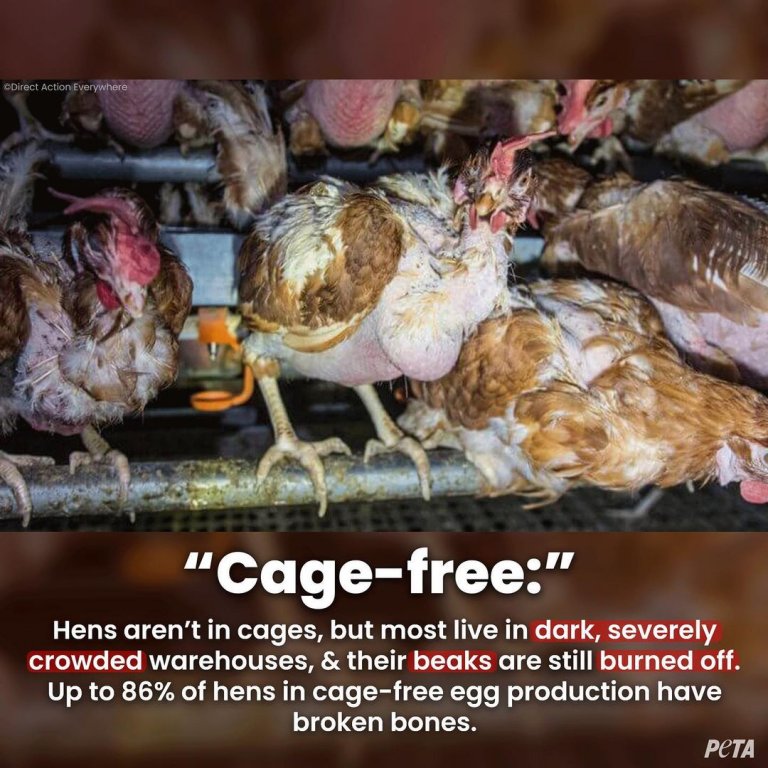
Latest Report Shows Companies Continue To Make Progress On Their Commitments To Source Cage-Free Eggs.

Latest report shows companies continue to make progress on their commitments to source cage-free eggs

24 November 2021

CIWF

Eurogroup for Animals’ member Compassion in World Farming launched its latest GLOBAL EggTrack report which shows that, despite supply chain disruptions caused by the COVID-19 pandemic, companies continue to make progress on their commitments to source cage-free eggs.

According to the 2021 report, 156 of 219 (71%) tracked companies are reporting progress against their cage-free commitments – up from 63% in 2020. Of the 47 companies with global commitments, 26 (55%) reported progress against these commitments, and since last year, an additional 12 companies have expanded their commitments to cover their entire global egg supply.

Highlights from the report:

  • Overall, 71% of companies tracked are reporting progress against their cage-free commitments
  • 12 companies expanded their commitments to cover their entire global supply including CarrefourGroupe Holder and Restaurant Brands International
  • Two companies – Danone and Hormel Foods – met their global cage-free commitments this year
  • Of the 116 companies with European commitments (as part of a regional or global commitment), 84% reported progress
  • Two companies – Nestlé and Yum! Brands (for its KFC Western Europe Subsidiary) – met Europe-level commitments in 2021
  • 9 companies have recognised the need to eliminate combination systems from their egg supply chains including BarillaDomino’sEurovo and Metro Group
  • 13 companies met their country-level commitments within Europe including Aldi Sud (Hofer Italy), Domino’s (Ireland and UK), Greggs plc (UK), and Schwarz Group (Lidl Spain)

Find out more about EggTrack and read the full report here.

Read more at source

Compassion in World Farming

Regards Mark


Iceland: Animal Welfare Violations On Blood Farms – 5 Litres Of Blood Taken Each Week From Pregnant Mares.

Iceland: animal welfare violations on blood farms

23 November 2021

AWF

Press Release

New investigation from Animal Welfare Foundation on blood farms in Iceland uncovers a business involving around 100 establishments and 5,000 Icelandic horses. The investigators discovered a sequence of animal welfare violations, contrary to all statements made by the pharmaceutical companies, blood farmers and veterinary authority involved. Eurogroup for Animals reiterates its call to ban the import of eCG, the hormone derived from the mares’ blood, into the EU.

Around 90,000 horses live in Iceland where they contribute to the country’s economy through industrial animal breeding, tourism, sport and meat production. There is also another, less known, use: the blood of pregnant mares is collected to obtain eCG (equine Chorionic Gonadotropin), also known as PMSG (Pregnant Mare Serum Gonadotropin), which is used in animal breeding to induce follicular growth, ovulation and estrus. 

To this end, five litres of blood are drawn from each mare every week, for up to ten weeks. In order to extract eCG from the blood, the mares must be pregnant. The foals are thus a by-product and usually end up in the slaughterhouse. Prices for foals are now at rock bottom and exploiting the mares’ blood has become much more lucrative, further stimulating the growth of the sector.  

Arnthor Gudlaugsson, CEO of Isteka ehf, the Icelandic pharmaceutical company working with the farms that Animal Welfare Foundation investigated, confirmed that production has tripled since 2009. This translates into revenues of around 10 million euros per year. Isteka operates several blood farms and is a contractual partner of more than 100 other blood farms.

The business has been booming for years due to the demand from pharmaceutical companies, such as MSD/Intervet and Ceva Santé Animale, and from animal producers in the EU.

York Ditfurth, AWF|TSB board member

The blood collection violates animal protection laws in force in Iceland, and in the EU. Most of the mares are semi-wild, they have hardly any contact with humans. The film recordings made during the blood collection show workers beating the horses and using dogs to move them around.

Since only veterinarians are allowed to carry out the blood collections, according to Icelandic law they would have to intervene immediately in case of animal welfare violations and report them to the veterinary authority. However, this does not happen because the veterinarians earn good money from the blood business too, as informants confirmed to us.

Sabrina Gurtner, Project Manager, AWF|TSB

AWF and TSB submitted the video footage to the Icelandic animal welfare lawyer Árni Stefán Árnason and his verdict is clear “The beating scenes depict cruelty to horses which is strictly forbidden. This can be punished with a heavy fine or imprisonment of up to two years, as well as with a prohibition to keep animals”. 

Professor Stephanie Krämer of the Department of Veterinary Medicine at Justus Liebig University in Giessen (Germany), described the blood collection procedure as a repetitive traumatisation of the mares. 

After the numerous investigations led on blood farms in Latin America, the case of Iceland further demonstrates the need for the EU to take action. Together with several international animal welfare organisations, Eurogroup for Animals, AWF and TSB call upon the European Commission to follow the direction indicated by the European Parliament in its resolution on the Farm to Fork Strategy, and  to ban the import and domestic production of eCG.

The full investigation report is available upon request. 

Iceland – Land of the 5,000 Blood Mares 


Regards Mark

MILKED – White Lies In Dairyland.

WAV Comment – with thanks to Stacey at ‘Our Compass’ as always for sending over the info. Great and very informative as always.

Regards Mark

https://our-compass.org/author/ourcompasses/

MILKED: White Lies in DairyLand by Stacey

Stopping animal exploitation doesn’t require human benefit, but that it DOES and humans still radically embrace animal cruelty as their “right/choice/blahblahblah” is disturbing. You literally drink the breastmilk of a different species, beyond infancy and with teeth, that requires the suffering, pain, misery, and violent death of the other species.

Animals don’t belong to you; what comes out of their bodies doesn’t belong to you. That you can be ethical but deliberately choose to not be is a perversion. Stop defining others’ suffering in manners that brings you comfort but does nothing to ease the suffering of your victims. I recently read about how adding cameras in slaughterhouses will help to decrease cruelty. In SLAUGHTERHOUSES. A slaughterhouse is INHERENTLY CRUEL, it’s where animals die in fear, blood, and often torturous manners in some grotesquely defined “humane” ethic slander. Slaughterhouses do not attract people who care about animals, and the evidence is in: animals experience abject fear; they smell and hear the death of their death-mates; and they die in often agonizing, torturous manners.

Euphemistic morals serve only those whose intentions are the absolute antithesis of morals but do nothing to help their animal victims: HUMANS.

SL

Photo – Mark WAV

Source MILKED

MILKED is a topical feature documentary that exposes the whitewash of New Zealand’s multi-billion-dollar dairy industry. 

Young activist Chris Huriwai travels around the country searching for the truth about how this source of national pride has become the nation’s biggest threat. It’s rapidly gone from a land with no cows to being the biggest exporter of dairy in the world, but the industry seems to be failing in every way possible. 

Featuring interviews with high-profile contributors such as Dr Jane Goodall, environmentalist and former actress Suzy Amis Cameron, and Cowspiracy co-director, Keegan Kuhn, MILKED reveals the behind-the-scenes reality of the kiwi dairy farming fairy-tale. It uncovers alarming information about the impacts of the industry on the environment and health, leading up to the discovery that we’re on the edge of the biggest global disruption of food and agriculture in history. 

An impactful global story told with a local eye, the film also points to what New Zealand and other countries can do to change their fate.

MILKED facts:

Photo – PMAF

See More About What You Can Do HERE

Download Your FREE Vegan PDF HERE

Order a FREE vegan kit HERE

Dairy-Free Info HERE

Take the Dairy-Free Challenge HERE

Click HERE for more Dairy-Free

Fish alternatives can be found HERE

Learn about eggs HERE

Find bacon alternatives HERE and HERE

Take PETA’s Cruelty-Free Shopping Guide along with you next time you head to the store! The handy guide will help you find humane products at a glance. Order a FREE copy HERE

Searching for Cruelty-Free Cosmetics, Personal-Care Products, Vegan Products, or more?
Click HERE to search.

Free PDF of Vegan & Cruelty-Free Products/Companies HERE

Click HERE to find out How to Wear Vegan!

Want to do more than go vegan? Help others to do so! Click below for nominal, or no, fees to vegan literature that you can use to convince others that veganism is the only compassionate route to being an animal friend:

PETA HERE

Vegan Outreach HERE

Get your FREE Activist Kit from PETA, including stickers, leaflets, and guide HERE

Have questions? Click HERE

Photo – PMAF
Photo – Mark WAV – If you look carefully on the rear trailer especially, you can see the baby calves, desperate for milk from their mums; which they will never experience again. They suckle the bars to try and get milk – milk for them, NOT us. The dairy industry really gets me – I say to them, come down and see this, hear their cries, smell the smells – Go Vegan Now.


All the above photos were used for a report I presented to the EU – 5 undercover investigations with EU animal welfare organisations on the live calf transport trade between Ireland and France (EU member states).

I may upload the report for you to view soon. In the meantime here is just one of the investigation reports which I know will show you how absurd the EU live animal transport regulations are.

Read, rage and repent !

Regards Mark

Liza and Mark - Dover
With friends Ellie and Liza Protesting against the live calf trade at Dover, England.