Category: Farm Animals

Animal markets in Romania

November 23-Report from the Animals ‘Angels organization

Animals ‘Angels inspected four animal markets in Romania.
For a good six years now, we have been denouncing the fact that the authorities are neither adequately controlling nor taking action against the mistreatment of ‘farm animals’ when they are sold and transported in the markets.

The animals are often brought to the market in the trunk of normal cars and sold directly from the cars.

Due to the animal disease warning, markets in the country are currently closed.
We are relieved.
But animals are still being sold illegally just a few meters away from the markets – albeit significantly less.
Partly under the eyes of the police.
Here we mainly meet chickens. They suffer from the cold and they tremble.

The chickens are housed in narrow cages or placed on the floor with their legs tied together.

They often have injuries to their wings and are cuffed by the legs.
The sellers put them on the floor like inanimate goods.
Interested buyers pick them up by the legs and wings and put them down again – as if they were heads of lettuce. They don’t care if they cause pain to animals.

Only a child shows empathy when it sees us petting the hen Emma and imitates us.
At our request, it also puts some cardboard under the animal to protect it from the cold.

At Christmas and Easter, animals are also illegally slaughtered directly in the markets.

Now that the markets are closed, hundreds and thousands of animals are no longer transported and are exposed to the heat or cold for hours without water or food, but that is not enough!
The cruel and reckless handling of the ‘farm animals’ was not eliminated.

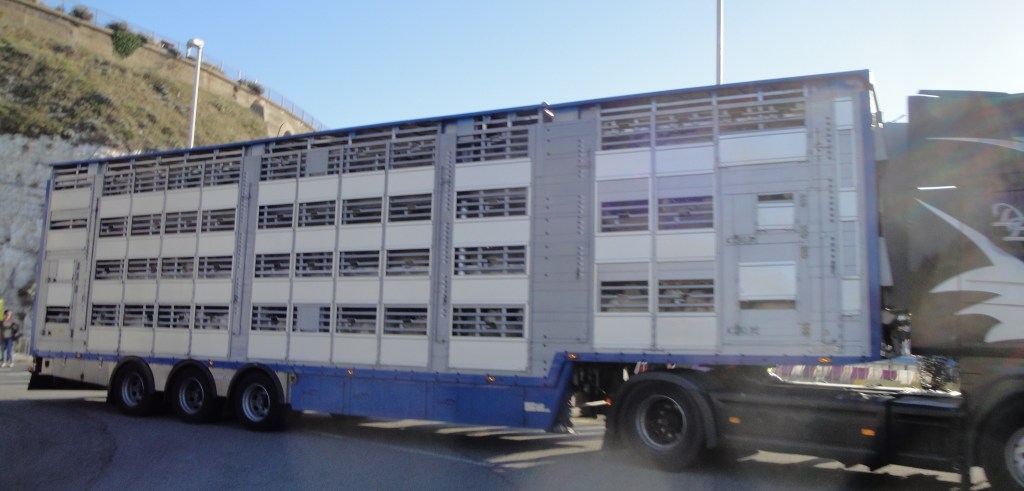
For the transport of the animals are mostly completely unsuitable vehicles are used, such as vans or cars.

We demand that the Romanian authorities also control the unofficial markets and enforce the regulations for the protection of animals here.

https://www.animals-angels.de/neuigkeiten/beitrag/rumaenien-die-tiermaerkte-sind-geschlossen-doch-das-leid-geht-weiter.html

From the same report: Large parts of Romania’s population live in the countryside and breed and keep animals for their own needs.
Since there is a brisk trade in these animals too, local animal markets have a long tradition here.
Since Romania joined the EU in 2007, the EU laws on the protection of animals should also apply here.
However, our research over the past few years clearly shows that these laws are largely disregarded in the market.

In the animal markets in Romania, the applicable EU laws are hardly enforced. We keep observing and documenting similar problems there:

-The animals are transported in all kinds of unsuitable vehicles: on horse-drawn carts, bicycles, in the trunk of cars or on the back of mini-vans and sprinters.
-Due to the lack of infrastructure, the animals are often sold directly from the vehicles and not kept in pens.
-The animals usually do not get any water – even in summer.
-The animals are tied by the legs, placed on the often wet, cold and dirty floor, and offered for sale.
-Violent handling, such as B. wearing or grinding on individual limbs, wings or ears.
-Illegal slaughter in many markets (mainly before Christmas or Easter).
-So-called ‘pull tests’ for horses, in which the animals usually have to pull heavy objects with lashes in order to demonstrate their strength.
-No or insufficient supervision or sanctions by the responsible veterinarians.Left: chickens with their legs tied together. Middle: A pig is dragged around its jaw onto a cart with the help of a metal wire. Right: A horse being lashed with the whip during a so-called “pull test”

Large parts of Romania’s population live in the countryside and breed and keep animals for their own needs.
Since there is a brisk trade in these animals too, local animal markets have a long tradition here.
Since Romania joined the EU in 2007, the EU laws on the protection of animals should also apply here.
However, our research over the past few years clearly shows that these laws are largely disregarded in the markets.

In the animal markets in Romania, the applicable EU laws are hardly enforced. We keep observing and documenting similar problems there:

The animals are transported in all kinds of unsuitable vehicles: on horse-drawn carts, bicycles, in the trunk of cars or on the back of mini-vans and sprinters.
Due to the lack of infrastructure, the animals are often sold directly from the vehicles and not kept in pens.
The animals usually do not get any water – even in summer.
The animals are tied by the legs, placed on the often wet, cold and dirty floor, and offered for sale.

Violent handling, such as wearing or grinding on individual limbs, wings or ears.
Illegal slaughter in many markets (mainly before Christmas or Easter).

So-called ‘pull tests’ for horses, in which the animals usually have to pull heavy objects with lashes in order to demonstrate their strength.
No or insufficient supervision or sanctions by the responsible veterinarians.

Brute force and ruthlessness often rule these markets.
Everyone wants to sell at any price.
Cattle are tied by the horns and are beaten for no reason because people are afraid of them.
Sheep, chickens and turkeys lie tied up like parcels on the floor.
The whole thing reaches its climax when pigs are brutally slaughtered in the days leading up to Christmas.

All live animal markets in the world must be closed.
Because for the animals these markets are hell on earth.

My best regards to all, Venus
UK: No routine checkups on welfare of fish at slaughter, officials admit.

Atlantic salmon (Salmo salar) in a salmon farm cage
Campaigners are calling for farmed fish to be given similar rights to other farmed animals. Photograph: Bluegreen Pictures/Alamy

No routine checkups on welfare of fish at slaughter, officials admit

Campaigners say fish farmed in England, Wales and Scotland face cruelty, with no penalty for those who fail to meet welfare needs

The government has admitted there are no routine checkups on fish welfare at slaughter, after an investigation found no department would take responsibility.

Campaigners have said this means fish face cruelty with no repercussions for those who fail to meet their welfare needs, and have asked that fish are given the same oversight as other farmed animals.

An undercover investigation by Animal Equality into a Scottish salmon slaughterhouse this year showed fish having their gills cut while conscious and being repeatedly and painfully clubbed, with it taking up to seven blows to stun the animals.

Campaigners said the fish faced “vicious and imprecise bludgeoning”, and many fell to the floor to suffocate. Unlike farmed land animals, which have legislation for them to be slaughtered as humanely as possible, the fish farming industry sets its own standards regarding humane slaughter.

A government spokesperson admitted that in England and Wales, there was no routine animal welfare inspection programme at farmed fish processing premises.

While they claim the Animal and Plant Health Agency (Apha) did checkups in Scotland, freedom of information requests submitted by the Humane League to the Scottish government reveal there is no established process for regular welfare inspections at fish processing sites. The Humane League did not include Northern Ireland in the scope of its investigation.

Apha confirmed that it did not have “a routine programme of official inspections at fish processing sites”.

Scotland is the third biggest producer of farmed salmon in the world. The biggest, Norway, has a law mandating the pre-slaughter stunning of farmed fish. Scotland, England and Wales do not. The most recent estimate, from 2017, was that 22-52 million farmed salmon are farmed and slaughtered in the UK each year.

The same issue applies to trout farming in England. The trout industry has its own certification scheme, Quality Trout UK (QTUK), including standards for pre-slaughter stunning, but these are not enforced by the government and there are no routine checks.

Responses to freedom of information requests show not one public body has a clear understanding of what regime is in place, with the Food Standards Agency, the Fish Health Inspectorate, local government environmental health departments and Apha all confirming they do not conduct checks on fish farms in England. This means no government officials are monitoring fish welfare at the time of killing.

Cordelia Britton, the head of campaigns at the Humane League UK, said: “It is alarming that apparently zero government officials are inspecting fish welfare at slaughter. From our correspondence it seems clear that no relevant agency knows what’s going on, with each institution passing the buck to another. Without proper oversight, cruelty goes unnoticed. It is time for the government to take responsibility for how farmed fish are slaughtered, as they do for other farmed animals.”

Campaigners are calling for farmed fish to be given similar rights to other farmed animals. In the last few years there has been debate among scientists over the extent to which fish can feel pain, which is a growing area of research. In 2018 the science writer Ferris Jabr found that “the collective evidence is now robust enough that biologists and veterinarians increasingly accept fish pain as a reality”.

Dr Vicky Bond, the managing director of the Humane League UK, said: “Fish are often forgotten in discussions and decisions on animal welfare, and this is wholly unjustified. The scientific and public consensus is that they feel pain, so refusing farmed fish the same protections afforded to land animals is completely irrational. The government animal welfare committee suggested the law be updated with detailed stunning requirements back in 1996, and 25 years later farmed fish still have the same inadequate safeguards. This needs to change.”

A Defra spokesperson said: “The UK has some of the highest animal welfare protections in the world, including when animals are slaughtered or killed. We are carefully considering issues raised in the review of the welfare of animals at the time of killing (England) regulations, including detailed protections for the welfare of farmed fish.”

No routine checkups on welfare of fish at slaughter, officials admit | Fish | The Guardian

Guardian – England.

Regards Mark

Germany-“Avernalic agony in the slaughterhouse”

Organization report: “Together for the animals”

The images are shocking and go to the bone, the criminal complaints read “Avernalic agony in the slaughterhouse”.

Undercover research in thehorse butcher’s shop” Härting GmbH in Kaiserslautern, during which meaningful video evidence was created by courageous animal rights activists, shows shocking conditions in this company, including the most severe animal cruelty.

The Härting horse butchery in Kaiserslautern is being accused of cruelty to animals and is not allowed to slaughter any animals for the time being – Photo: Ralf Vester

Operation was under observation for a total of 5 weeks in September and October 2021.

Apparently systematic violations during the slaughter of cattle in the area of ​​stunning and bleeding were recorded.
The recognizable incompetent anesthesia regularly fails.
The first bolt shot is often not enough due to amateurism and the animals still show violent reactions.

Death struggles over several minutes were captured in pictures, a total of 37 bolt shots on 18 animals can be proven.
The torture of the animals was also recorded by means of an eccentric driver, which was used on sensitive parts of the body such as the head and spine.

Unfortunately it doesn’t look any better with the horses and incompetence or indifference reigns here as well.
Despite unsuccessful anesthesia and severe defensive reactions, anesthetized animals are stabbed to bleed into the chest.

During the bleeding, clear movements can be seen, also in the eyes and nostrils.
And the same misery with the pigs.
After amateur anesthesia with electric pliers, many animals show violent reactions, struggle for air and exhibit body movements in the bleeding area that clearly indicate failure of the anesthesia.

Criminal charges against this horror operation were filed with the Kaiserslautern public prosecutor’s office on November 12, 2021, on presentation of the collected video material.

The responsible veterinary office was able to obtain a temporary suspension of the slaughterhouse until the situation was clarified.

You can find a video evidence of the atrocities of this company under the following link (The text of the video can be read partially translated below )
However, we expressly draw your attention to the fact that it is only for extremely strong nerves and only serves as evidence.
We saw it ourselves and are shocked:

https://fb.watch/9rzyt04TBy/

We strongly condemn such cruel treatment of sentient beings.
Before the only thing they have, namely their life, is taken away from them, there is absolutely nothing to excuse them.
If you do this to an animal, you have something very “bad” deep inside you and, in our opinion, must be stopped and punished with long prison sentences.

The operators of this death block are also to be brought to justice and sentenced.
The business should be shut down and locked with immediate effect, and the last thing he sees should be the wrecking ball.

Therefore we appeal to the court in Kaiserslautern not to get away with those responsible for these massacres with a black eye, but to let the full harshness of the judiciary prevail, because what they have done can be described simply with one word: CRIME !!!

https://www.facebook.com/marschfuerdietiere/posts/590604385613367

Some translated passages from the video:
“Horse butcher Härting GmbH in Kaiserslautern – it is a traditional company with a 100-year history.

Origin of the animals
our horses come from the southwest of Germany.
They are recreational and breeding animals as can be seen everywhere in the pastures.
These animals are given up when they can no longer be used for breeding or recreational riding.
The owners often bring these animals themselves to see for themselves that they are treated appropriately
Our pigs come from Guthof Franck.
These animals are fed normally and have enough space.

These are the slaughter conditions at a trusted butcher.

Brutal use of the electric driver against the head of the cattle
The cattle fought for minutes.
There are no individual cases, but sad everyday life.

These recordings were made over 5 weeks in September and October
All images were handed over to the police
Different animals – same fate

Who are you caressing
who do you let kill”

And I mean…Giving people the information is one goal.
But we have to get them to react to this information
It is more important and more effective when the consumer finally listens, looks and ACT.

There are apparently still people who do not want to understand that the consumer, with his consumer behavior, his greed for meat and animal products, is responsible for precisely these conditions.
The butcher, livestock farmer or whoever is just the executive organ.

As a consumer, you are the client – animals are sentient individuals who have rights and deserve a life without pain and suffering, like you who eat them.
It should be the highest moral principle for everyone that animals are not there to be exploited or “serve” people.

My best regards to all, Venus
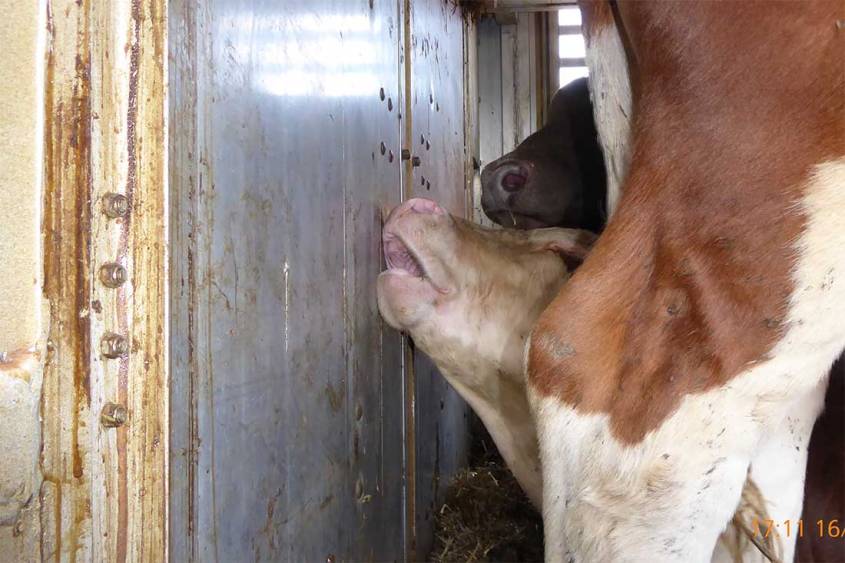
Live Animal Transport – A New Petition has Been Launched in the Czech Republic by Animal Campaigner Friends – Please Support.

WAV Comment – As many of you know. The stopping of live animal transport is one of our main issues.  It is great to see our Czech Republic friends have now set up a petition to support the stopping.  Below we have given all the links to the petition; please add your voice by supporting it.  Note – a ‘translate’ message should automatically appear when you go to the petition.

Regards Mark

Open petition to end long-distance live animal transport in Czech Republic

18 November 2021

Společnost pro zvířata

A new petition has been launched in Czech Republic by Společnost pro zvířata to demand a ban on long-distance live animal transport. They already have collected 4.000 signatures and they need to reach 10.000.

Back in June, our Member Organisation Společnost pro zvířata lit candles for the animals, victims of cruel transport practices, in front of the Czech Republic Ministry of Agriculture sending a strong message to the representatives. 

MEP Jiří Pospíšil, member of the Intergroup on the Welfare and Conservation of animals, also sent his support and lit a candle for the animals. 

The ceremony was also an opportunity to launch a petition calling the Czech government to :

  • Ensure maximum journey times of 4 hours for chickens and 6 to 8 hours for cattle, pigs, sheep and other mammal (including waiting, loading and unloading hours),
  • Work on a strategy to shift from live transport to a trade of meat and carcasses as well as genetic material only,
  • Ensure the protection of animals at the time of slaughter or killing by enforcing mandatory stunning.

The petition is nearing its goal of achieving 10,000 signatures. 

Read more and support the petition here.

Wording:

Petition for an end to long-distance transports with animals and for the export
of meat, for the breeding and life of animals as close as possible to their place of birth

for the Government and Parliament of the Czech Republic

motto: Animals are living sentient creatures, just like we humans. They are not goods.

Therefore, we, the undersigned citizens of the Czech Republic, ask the Government and Parliament of the Czech Republic to adopt legislation and its implementation in practice, which will ensure:

  • that the animals (used for farming purposes) live and live in or near the place of birth;
  • a maximum limit of 4 h (poultry) and 6 to 8 h (bovine, pig, sheep and other mammals) for transport to slaughterhouses, fattening and rearing/rearing, without exception and including waiting, loading and unloading;
  • the replacement of long-lasting transport of animals by the transport of meat, half-carcases and other animal products;
  • the creation of economic incentive tools for the above requirements;
  • the slaughter and killing of animals at their place of birth, as quickly as possible and brought unconscious by prior stunning, without exceptions;
  • severely penalise natural and legal persons for infringements relating to the protection of animals during transport and during the slaughter/killing of animals.

Regards Mark

The calf blood: a billion dollar business

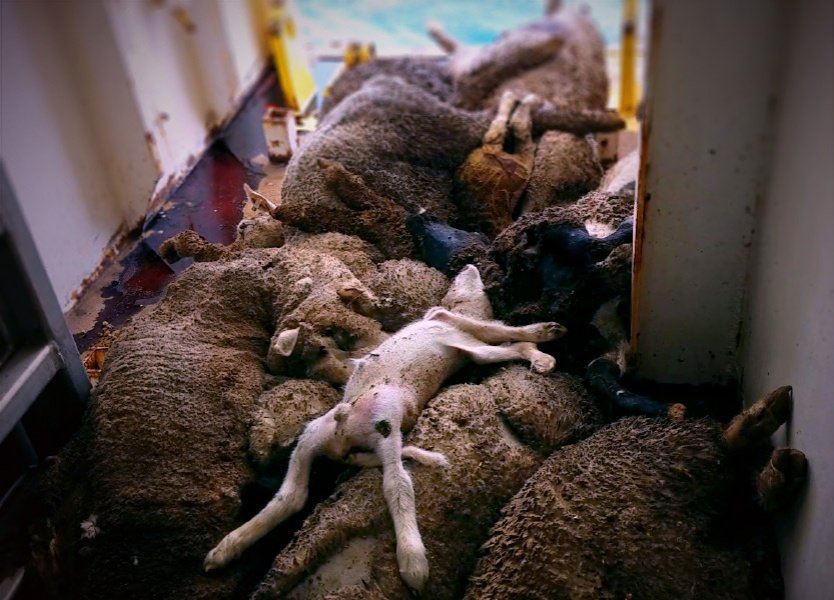
Millions of pregnant cattle are slaughtered around the world and the unborn calves are disposed of as “slaughterhouse waste”.

Some cows give birth to their young on the way to the slaughterhouse, in most cases the cow arrives at the slaughterhouse pregnant.
There the mother is stunned with a bolt shot and – often hanging by one leg – killed by bleeding.

The fetus suffocates in the dead womb.
If a pregnant animal is found on the slaughterhouse assembly line, it is separated, the uterus and the still unopened amniotic sac removed from the mother’s skeleton and disposed of.

In non-European countries, like in Argentina, Australia and New Zealand, but also in some EU countries such as France, the calves face an even more terrible fate – a thick needle is stuck without anesthesia through the ribs into the still beating heart of the calf fetus and around half a liter of blood is drawn from each anima, in order to obtain the raw material for the production of FCS.

While the demand is particularly high in Europe and the USA, the VCS is mainly obtained in countries where cattle is raised intensively, such as Brazil, Argentina, South Africa and others.
It is estimated that 800,000 liters of VCS are sold worldwide each year.
That means-two million cattle fetuses are being exploited for this.

That equates to one million liters of fetal calf serum per year.
So far there are no federal or EU uniform laws for the protection of the mother animal or the fetus for handling during slaughter

The serum from the blood of unborn calves is used in research and for the manufacture of medicines.

Additional information on thisWhen the cow is slaughtered, the unborn calf is removed from its body.

The fetus is taken to a special room and cut out, where it is removed from the amniotic sac and disinfected.
Then a thick cannula is pierced through the ribs into the beating heart without anesthesia.
The heart still has to beat so that the blood can be drawn off more quickly and so that the blood does not wrestle.

Tapping into it takes between 5 and 25 minutes.
Millions of unborn calves are systematically bled.
The blood goes into the centrifuge to be separated from the red blood cells and then it is purified under sterile conditions with a very fine filter to make the serum.

Blood serum has enormous value.

Depending on the quality, it can cost up to 15,000 euros per liter
This means that 1-2 million unborn calves worldwide per year have to die a slow and miserable death.

They are then processed into animal feed.
The serum is needed in research and for the production of medicines.
It is also used for multiple sclerosis and cancers.
But nobody knows exactly what is in this serum, which is obtained from the blood of tortured animals.
Yet it is used in laboratories and around the world – it is considered a miracle cure!

The most important reason fetal calf serum should not be used is that its production is associated with immeasurable suffering of millions of calf fetuses.
Because fetuses also feel pain.

My best regards to all, Venus
Welfarm is Calling for a Ban on the Castration of Piglets.

Castration of male pigs

Welfarm is calling for a ban on the castration of piglets

19 November 2021

WELFARM

Welfarm is calling for a ban on the castration of piglets in its new campaign launched on November 4th in Paris!

For more than ten years, Welfarm has been campaigning against the castration of piglets. On November 4th, Welfarm has launched its campaign to call for a definitive ban on piglet castration: in just a few weeks, it will be prohibited to castrate piglets without anesthesia and analgesia. However, no measures have been taken to definitively ban physical castration despite the many problems that it causes.

Under these conditions, it is likely that piglets will continue to be mutilated. 

Castration with anesthesia and analgesia is not a satisfactory solution in the long run. Indeed, as it stands now, no anesthesia and analgesia protocol allows to fully manage the pain of piglets during and after the procedure. Moreover, no current protocol seems compatible with the reality of farms. 

Today, two alternatives that respect animal welfare exist:

The breeding of non-castrated pigs (known as “whole male breeding”)

And immunocastration, which acts like a vaccine to block puberty in pigs.

Europe seeks alternatives to surgical castration on pigs - Farming  (Livestock)

These two alternatives are reliable, economically advantageous for farmers and have been tried and tested for a long time in many European countries. Thus, for the vast majority of productions (cooked ham, pâté, rillettes, etc.) castration of pigs is no longer necessary.

Unfortunately, some meat companies, including the Bigard group (which is the market leader), are opposed to the development of these alternatives because they refuse to change their practices.

Castration should eventually be abandoned and replaced by alternatives that respect animal welfare. Welfarm therefore asks that castration under anesthesia and analgesia be authorised only temporarily in order to facilitate the transition to the definitive ban on piglet castration. 

To find out more about the campaign, click here

Read more at source

https://welfarm.fr/stop-castration-evenement-paris

Regards Mark

Holder Easier Pig Farming Castration Tools Device For Piglet Castration -  Buy Pig Castration Device,Pig Castration Tool,Castration Tool Product on  Alibaba.com

EU: Summary of the 10th meeting of the Platform on Animal Welfare.

PMAF

Summary of the 10th meeting of the Platform on Animal Welfare

15 November 2021

Green REV

The Platform on Animal Welfare met on the 10th of November to discuss a number of important issues from the sustainable food system framework to the recent citizens initiative to end the cage age, to the ongoing fitness check of the revision of the EU animal welfare legislation.

The aim of the platform is to promote dialogue among competent authorities, business, civil society organisations and scientists on animal welfare issues that are relevant for the Union. The dialogue intends to build mutual understanding, foster trust and encourage voluntary commitments between platform members to achieve concrete results in improving the welfare of animals. Eurogroup for Animals is a member of the platform along with our member organisations World Animal Protection, Green REV Institute, Welfarm, Compassion in World Farming, Four Paws and our Equine Working Group Chair Joe Collins. It was a lively meeting, however it left many people with more questions than answers, particularly concerning the balance between business and NGO stakeholders in the platform.   

The meeting kicked off with a video message from Commissioner Kyriakides, who couldn’t be in attendance, but gave her strong commitment to continue to improve the welfare of animals at European Union level. The platform received a presentation on the Sustainability Food Systems Framework, the public consultation on the sustainability food systems initiative will open in early 2022. The recent roadmap received a lot of feedback, with NGOs particularly stressing the need for policy option 4 as the only option with the capacity to deliver the change needed. 

Mark – WAV

The Commission then presented the Inception Impact Assessment on the revision of Animal Welfare Legislation with follow up presentations from the Vught Alliance Member States (NL, SE, DK, DE and BE), Eurogroup for Animals, and Copa Cogeca, representing the position of the farming industry, each outlining their vision for the new legislation. Eurogroup for Animals presented the No Animal Left Behind white paper which is calling for a new Kept Animals Regulation, that would provide protection for all animals kept for commercial purposes. This regulation would ensure all animals are afforded proper protection relevant to their species specific needs.

In the afternoon the platform discussed the creation of new subgroups and ongoing and new voluntary initiatives. The Commission proposed the creation of six new subgroups, which will contribute to the analysis of the different options developed in the context of the preparation of the revision of the animal welfare legislation. These subgroups are pigs, poultry, calves/dairy cows, transport, animal welfare labelling, slaughter/killing. There was a strong call to link these subgroups with voluntary initiatives to maximise the usage of expertise in these specific areas. The voluntary initiatives are currently on the responsible ownership and care of equidea, on the health and welfare of pets (dogs) in trade, on the welfare of fish and on the welfare of pullets. Members of the platform are invited to apply for different subgroups – Eurogroup for Animals will collaborate with our member organisations on the platform to ensure we are represented across all subgroups. 

Mark – WAV

The final presentation of the day was by PPILOW, who presented a Multiactor approach for improving animal welfare in poultry and pig low-input outdoor and organic production systems. Andrea Gavinelli, DG SANTE closed the meeting. The next Platform on Animal Welfare meeting will be held in June next year.

Powerpoint presentations from the meeting are available here.


Summary of the 10th meeting of the Platform on Animal Welfare | Eurogroup for Animals

Regards Mark

PMAF
Mark – WAV

EU: A European Commissioner for Animal Welfare? 70% of Europeans want it.

WAV Comment: Lets see the EU now put its money where its mouth is; and act !

A European Commissioner for Animal Welfare? 70% of Europeans want it

15 November 2021

GAIA – Belgium

Press Release

The numbers are clear: 70% of EU Citizens want to appoint a European Commissioner for animal welfare, as shown in an international survey conducted in June 2021. Now, Members of the European Parliament have started the process to support the proposal with the signatures collection for an oral question.

Back in June 2021 IPSOS asked 3,500 European adults between 18 and 65 years old whether they think there should be a European Commissioner for Animal Welfare. The study was conducted in the ten largest EU countries, covering 81% of the EU population: France, Germany, Poland, Spain, Italy, Belgium, Netherlands, Romania, Hungary and Sweden. In all these countries 7 out of 10 citizens think there should be a European Commissioner for Animal Welfare. 

Currently there is no European Commissioner for Animal Welfare and the responsibility is attributed to the Commissioner for Health and Food Safety. However, some countries, like Belgium, appointed a minister explicitly in charge of this domain. 

This decision triggered important effects: a clear responsibility in the government for all legislation related to animal welfare, more transparency, and the allocation of adequate human and financial resources to provide concrete responses on this important topic.

In March 2021, Eurogroup for Animals member GAIA, based in Belgium, launched the campaign #EUforAnimals with the support of over forty other animal rights and welfare organisations across Europe, asking the European institutions to finally give animal welfare the attention it deserves, by integrating it explicitly in the job title of the relevant EU Commissioner. 

The #EUforAnimals campaign has already received the support of over 130,000 citizens and 133 Members of the European Parliament (MEPs).  

Twelve MEPs have also launched the signature collection to table a cross-party oral question supporting the demand. The process was initiated by the Niels Fuglsang MEP (S&D, Denmark) and is co-promoted by Sylwia Spurek (Greens/EFA, Poland), Petras Auštrevičius (Renew, Lithuania), Manuel Bompard (GUE/NGL, France), Michal Wiezik (EPP, Slovak Republic), Emmanouíl Fragkos (ECR, Greece), Anja Hazekamp (GUE/NGL, the Netherlands), Johan Van Overtveldt (ECR, Belgium), Emma Wiesner (Renew, Sweden), Sirpa Pietikäinen (EPP, Finland), Maria Noichl (S&D, Denmark) and Francisco Guerreiro (Greens/EFA, Portugal). 

Members of the European Parliament have often well represented the EU citizens’ will to improve the way animals are treated in Europe. It is my hope and the hope of the other MEPs who are co-promoting this oral question, that many colleagues will join us and that the European Commission will respond positively to our proposal, to see as soon as possible Ms Kyriakides’ title changed into EU Commissioner for “Health, Food Safety and Animal Welfare”
 

Niels Fuglsang MEP

The survey clearly shows that the campaign’s demand is supported by a great majority of EU citizens. The EU Commission should not delay giving a positive answer to a proposal that can bring great and lasting benefits to animal welfare both at the continental level and beyond. We hope that Commissioner Kyriakides will decide to support #EUforAnimals and become the first EU Commissioner for Animal Welfare.

Ann De Greef, Director, GAIA

Notes

The full survey results can be found here 

For more information on the initiative visit the #EUforAnimals campaign website

Regards Mark

Spain: Animal Equality calls for the elimination of exemptions allowing the slaughter of animals without stunning in Spain.

Animal Equality calls for the elimination of exemptions allowing the slaughter of animals without stunning in Spain

12 November 2021

Animal Equality

An increasing number of Spanish slaughterhouses, currently 28%, are licensed to slaughter animals according to religious rites and without stunning. Many consumers are buying meat from animals slaughtered according to these rites without knowing it.

In 2020, the Court of Justice of the European Union certified that Member States are entitled to ban the slaughter of animals without stunning and thus not to allow any exceptions. As part of a big campaign, Eurogroup for Animals’ member Animal Equality Spain has already collected more than 14,000 signatures calling on the government to put an end to these exceptions.

In the European Union, the Slaughter Regulation requires animals to be stunned (i.e made unconscious) before bleeding to prevent unnecessary suffering. However, the law includes religious exceptions (halal rite and kosher rite) that allow for the slaughtering of animals while fully conscious.

Currently, in Spain, animals are slaughtered without stunning in 198 (28%) of the 700 existing slaughterhouses: 51 in Catalonia, 35 in Castilla y León, 24 in Andalusia, 16 in Castilla La Mancha, 15 in Valencia, 11 in Aragon, 11 in Galicia, 7 in Madrid, 7 in Murcia, 5 in La Rioja, 4 in the Basque Country, 4 in the Canary Islands, 3 in Extremadura, 3 in Navarre, 1 in Melilla and 1 in Asturias (1). The number of slaughterhouses licensed to slaughter without stunning has been growing steadily in recent years.

Eurogroup for Animals’ member Animal Equality Spain has documented the terrible suffering that animals slaughtered in the context of religious rites without stunning. As part of their campaign MATADEROS, Animal Equality has released these harsh images.

In December 2020, the Court of Justice of the European Union ruled that Member States are entitled to ban slaughter of animals without stunning, regardless of the slaughter context. The Court rules that reversible stunning methods allow for the protection of religious freedom and improve animal welfare.

A number of countries, including Slovenia, Finland, Denmark, Sweden and two regions of Belgium (Flanders and Wallonia), have already adopted rules without exceptions to the mandatory stunning of animals before slaughter. The latest country to join this list is Greece whose Council of State has declared the decree allowing slaughter without stunning unconstitutional, null and void.

The lack of stunning causes unnecessary and extreme suffering to animals. Reversible stunning makes freedom of belief compatible with improving the welfare of animals in their last minutes of life. It is time for Spain to move forwards and join other Member States that have already banned this cruel practice. We call on the Spanish Government to prohibit slaughter without stunning.

Javier Moreno, Co-founder of Igualdad Animal

For more than fifteen years, Animal Equality has documented and denounced the abuses suffered by animals in slaughterhouses. To reduce the extreme suffering that animals endure during their last moments of life in these facilities, the organisation is calling on the government to implement various measures, including: 

The elimination of the exceptions that allow the slaughter of animals without stunning.

The elimination of the electrified bath as a measure to stun birds

The abolition of the stunning of pigs with carbon dioxide because of the suffering it causes them

The installation of chambers in slaughterhouses with independent supervision 

The drawing up of rules making it compulsory to stun fish. 

In the last month, more than 14,000 people have signed up to demand that the government implement these measures.

Read more at source

Animal Equality

Regards Mark


San Francisco: the “No More Factory Farms” campaign gets support

Report-Direct Action Everywhere – DxE

Yesterday, the San Francisco Board of Supervisors unanimously passed a resolution urging the California state government to pass a moratorium on the construction and expansion of factory farms and slaughterhouses!
This is a big win for our “No More Factory Farms” campaign (https://www.nomorefactoryfarms.com/), as it’s no longer just organizations and individuals calling for a statewide moratorium.

We have the city and county of San Francisco behind us!

The resolution also expressed support for the federal Farm Systems Reform Act and includes this language: “The Board of Supervisors hereby declare that animal agriculture is a leading cause of environmental destruction, poses grave risks to public health, abuses and kills nonhuman animals, and often creates dangerous and exploitative conditions for workers.”

https://www.facebook.com/directactioneverywhere/

And I mean…The campaign demand was:
“We are calling on Governor Newsom to issue an executive order enacting an immediate moratorium on the expansion of or construction of new factory farms and slaughterhouses in the state, as a first step to phasing out these destructive facilities entirely”.

And the San Francisco Board of Supervisors has responded very positively.

Given the legislative powers of this body, there is great hope that the California state government has no choice but to approve the moratorium and thereby improve the living conditions of factory farming animals

Let’s hope so, and we think it is a very important step.
But we must not rely on this first step! we have to make sure that the government of California acts accordingly.

My best regards to all, Venus