Category: Farm Animals

Portugal: 14 animals die during sea transport from Portugal to Israel.

14 animals die during sea transport from Portugal to Israel

10 November 2021

AWF

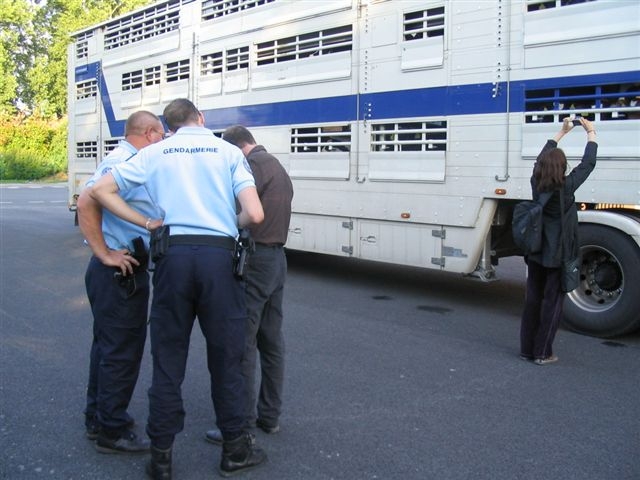
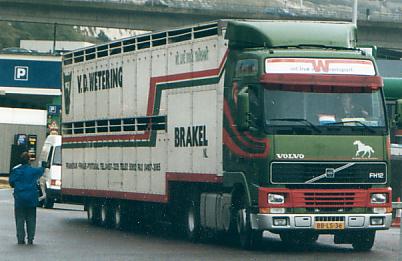
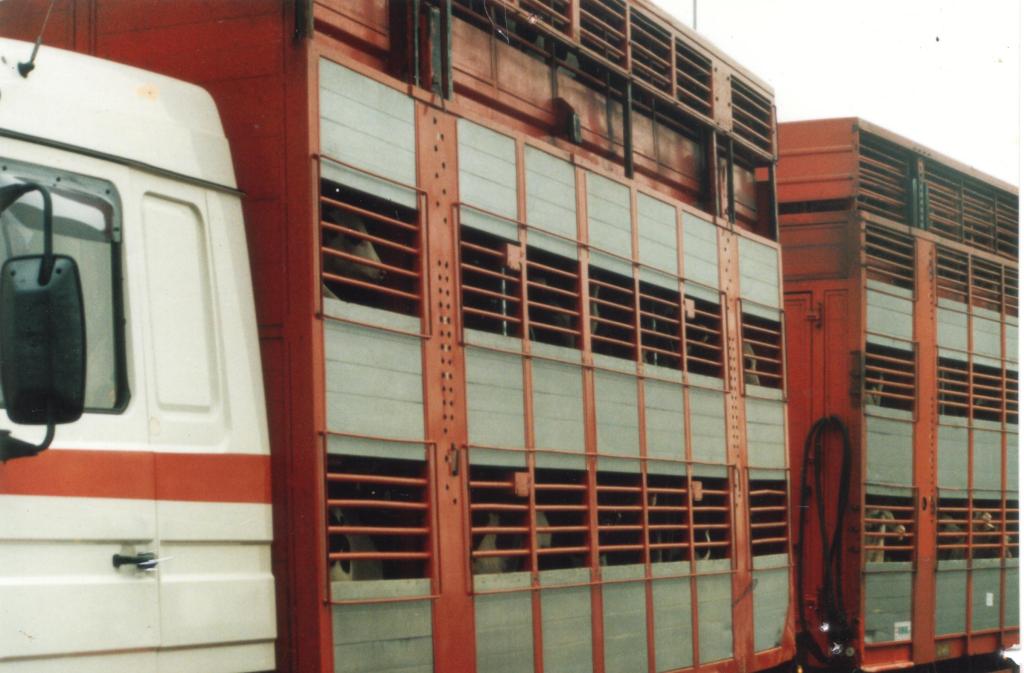
Live animal transport from Portugal to Israel: livestock vessel stuck off the Italian coast for two days, 14 animals died during the trip.

NGOs call on the ANIT Committee to ask for a ban of live animal transport at sea.

The vessel Phoenix III, heading to Israel with a cargo of 1,200 young bulls and 5,644 sheep, was dangerously stuck for two days at sea near Mazara del Vallo, Italy. 

Portuguese authorities were informed by PATAV (a Portuguese civic movement) that the vessel had stopped for 48 hours. The ship, which left Sines (Portugal) on October 22nd and stopped on 27th near Italy, then left again after two days and reached its destination port in Israel on November 4th. 

A coalition of NGOs, which followed the ship and filmed the animals while they were unloaded in the port of Haifa, wrote to the ANIT Committee (Committee of Inquiry on the Protection of Animals during Transport) urging to support a ban of live export.

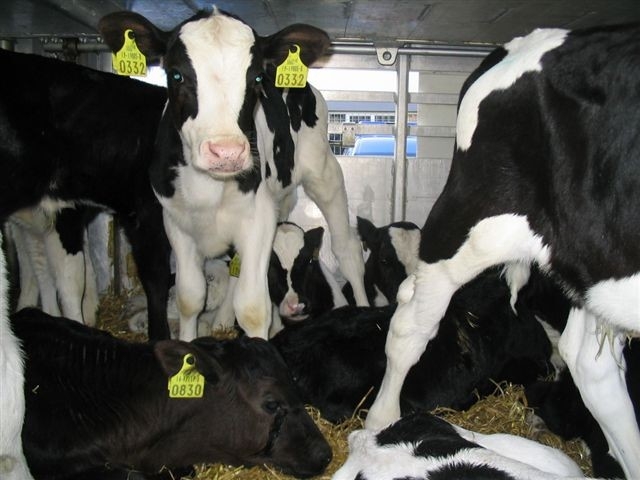
The images taken during the unloading process show stuck and exhausted animals in high overcrowded conditions, with animals on top of each other, and very dirty bulls with broken horns. Some of the animals also showed heat stress symptoms. The animals were quickly loaded again on trucks. They will spend eight days in quarantine in the region of Mehola (90 km from the port), and then they will be transported again to different feedlots in Israel for 4-8 months before slaughter.

This case, as in the well-known cases of Karim Allah and Elbeik at the beginning of 2021, shows again how dangerous sea journeys can be for the animals.

In this incident, 14 animals were reported dead, but if the vessel were stuck for more days, we could have witnessed another tragedy.

In the letter to the ANIT committee, the NGOs referred to the importance of contingency plans and the need, by competent authorities and organisers, to take into account the forecast weather conditions until final destination when authorising a transport. Lack of feasible contingency plans and lack of weather verification have the potential to negatively affect animal welfare when unexpected situations arise.

Phoenix III is a 43 years old livestock vessel (Ex-reefer converted in 2011 at the age of 33 when it should have been already scrapped). Most of the livestock vessels operating in the EU are under similar age and conversion situation, andsince 2017, they are the No. 1 category for the number of detentions worldwide, and considered as a high risk in Paris MoU risk profiling. 

Furthermore, according to a recent study published in 2021, 36%of EU-approved livestock vessels have suffered major incidents, failures, or loss.

Besides that, there are concerns regarding the Phoenix III authorisation: according to the Romanian central authority Phoenix III had been transporting live animals without authorisation from April to August 2021 when it made 8 journeys exporting animals from Croatia, Portugal and Romania to Israel. On August 18 the vessel was re-authorised to export animals by Croatia.

Aside from the reason for the stopping, this episode is again a good example of how the welfare of exported animals remains largely unknown during the sea part of the journey, and during transport in third countries to the final destination.

The many tragedies already happened in the past (the Queen Hind, Karim Allah, Elbeik vessels among others) show that the protection of animals during transport at sea is not possible for various reasons: bad weather and technical failures can cause delays, most ports are not able to shelter the animals, and conditions at sea can deteriorate suddenly with no possibility to escape putting both animals and crew at great risk.

Given the comprehensive work that the ANIT did on transport via sea, the NGOs are now asking for the Committee to recommend a phase out of extra-EU sea transport and to urge stricter and refined rules on intra-EU sea transport.

Regards Mark

The Dairy Industry In 60 Seconds Flat.

Thanks to Stacey at ‘Our Compass’ as always;

Stacey | Our Compass (our-compass.org)

Regards Mark

PETA LAMBS

Source Plant Based News

By Switch4Good

Why do adults still drink milk? Why do we obtain it from an entirely different species, let alone a being who is not our mother? Why do we continue to guzzle down a drink that leaves us bloated and uncomfortable hours later? It simply does not make sense.

According to evolutionary history and fossil records, the modern human being has inhabited this earth for the past 200,000 years (1). 

Historians date the practice of drinking cows’ milk back to the past 8,000 to 10,000 years. (2).

What this tells us is that consuming the milk of another species isn’t instinctual, and our bodies don’t naturally ‘crave’ it. So the question is – which one of our brilliant ancestors looked at a cow’s udder, licked their lips, and started sucking? Perhaps more importantly, why did others join in? 

‘A short but riveting history’

Relative to human existence, the history of milk is considerably short – yet it is truly riveting. Power, corruption, greed, mass manipulation—all are present in the evolution of milk in our modern-day society. 

Thanks to the bizarre thinking of that early human, most of us are guzzling down a substance not meant for human consumption. It’s time to leave cow’s milk to the textbooks, and of course, to baby cows

Dairy farms organize

Fast-forward through the evolution of lactase persistence in European regions (yes, all early humans were lactose intolerant past their toddler stage), domestication of dairy cows, the invention of cheesemaking, millions of people who died from milk-borne illnesses prior to the invention of pasteurization (a fourth of all food-borne illnesses in the US were attributed to cows’ milk prior to the early 1900s), and the invention of the glass milk bottle, and we find ourselves in 1922 with the seminal passing of the Capper-Volstead Act (3). 

This bill gave agricultural industries permission to act together, form organizations, and market their product. While the industry was very much reliant on small farms back in the day, this bill paved the way for the enormous dairy conglomerates and massive milk marketing campaigns of today. Without it, the American people would have never known the phrase: “Got Milk?”.

The popularization of skim milk

Before pressing further, a note on skim milk. Prior to the 1930s, most of it was literally sent downriver. Families who drank milk had one option – whole – but skim milk still existed as a byproduct of the butter-making process. 

This ‘waste’ was commonly disposed of by dumping it into rivers throughout the 1920s until the government was forced to put a stop to it due to the horrific odor of spoiled milk that permeated the surrounding areas. 

Skim milk powder

It wasn’t until the 1950s that skim milk received some commercial attention, though this was in the form of a dry, powdered, ‘just add water!’ mix (4). As awful as instant milk powder sounds today, we can’t blame our grandparents – instant was all the rage back then. 

The industry also had plenty of skim milk to get rid of, as much of it was leftover from WWII when dry milk powder was used as a relief food. To chisel down this surplus, the industry employed skilled marketers to position skim milk as a weight-loss food. 

Milk dealers received backing from physicians to pedal this product as a health food, and by the 1950s, skim milk had transformed from a waste byproduct to a trendy weight loss beverage mostly consumed by affluent society (15).

In reality, farmers just need a way to get rid of (and profit of off) the skim milk they had made during the war effort … which tends to be a theme in milk’s history: made too much? Turn to clever marketing.

Continued on next page

World leaders must address the impacts of animal farming on climate change.

World leaders must address the impacts of animal farming on climate change

8 November 2021

Eurogroup For Animals calls on world leaders to enhance pledges to reduce greenhouse gas emissions in order to better uphold the obligations derived from the Paris Agreement. Linking animal protection, trade policies and sustainable food systems would be a first step in the right direction.

Six years after the Paris Agreement, the 26th United Nations Climate Change Conference of the Parties (COP) is taking place in Glasgow. This conference is particularly important because it’s the first time the ‘ratchet mechanism’ foreseen in the Paris Agreement will be used

Indeed, each country is expected to submit enhanced “nationally determined contributions” (NDCs) every five years to ratchet up ambition to mitigate climate change.  However, despite the fact that the 2020 conference was postponed due to the pandemic, dozens of countries still have not updated their pledges to reduce their greenhouse gas (GHG) emissions by the time of the 2021 conference.

The implications are serious. A global temperature rise of 2°C above pre-industrial levels delivers the probability of dangerous climate change. Hence, GHG emissions need to be drastically reduced but countries continue to do “business as usual”. 

Livestock farming represents a significant share of the planet’s emissions that cannot be ignored as they account for approximately 18% of global GHG emissions, which is more than all transports combined. 

As outlined in the recent IPCC report, we have no time to lose in cutting methane emissions. Reducing livestock numbers could contribute significantly to meet the Paris target, while failing to reduce them will put most of the UN SDGs out of reach. 

World leaders need to explicitly recognise the intrinsic link between animal protection and the UN SDGs, and the importance of animal protection in putting the world on a sustainable path to 2030. Changing the food system and how we treat animals is a major opportunity for climate change mitigation. Political leaders and governments can, for example:

  • Redirect subsidies from industrial animal production, the main receiver today, to plant-based ones. 
  • Put the EAT-Lancet Planetary Health Diet at the basis for public procurement.
  • Invest in the development of plant-based proteins and cultivated meat.
  • Use the land differently, since deforestation is driven by animal feed production.


It is also high time to address the impact of trade on climate. Currently, trade agreements liberalise trade without any climate or animal welfare conditions. As a result, they fuel unsustainable production systems, harming people, animals and the planet. For instance, the EU-Mercosur trade deal, by granting significant market access to animal products, will fuel intensification of animal farming which highly contributes to deforestation, which in turn will contribute to climate change. In Brazil alone, over half of the country’s deforestation over the last twenty years came from the beef sector, mainly due to the conversion of forests into cattle pasture. 

Eurogroup for Animals’ contribution

To inform COP26 attendees about the environmental issues associated with animal-related sectors, as well as how improved animal welfare and transformed food systems can help build back better, Eurogroup for Animals have created a leaflet entitled “Protecting Animals to Protect the Planet”.

Download the leaflet

File

Protecting Animals to Protect the Planet

Regards Mark

New film shines light on the environmental impact of animal agriculture.

New film shines light on the environmental impact of animal agriculture

8 November 2021

Eating Our Way to Extinction is a new documentary exploring how our broken food system contributes to ecological collapse around the world. Narrated by Academy Award winner Kate Winslet, the film features undercover footage, shocking evidence from globally renowned figures and leading scientists, and firsthand accounts from Indigenous people directly affected by animal agriculture and climate change.

The film, Eating our Way to Extinction, spotlights the links between our food system and the unfolding ecological crisis – an important message as parties and world leaders gather at the 26th UN Climate Change Conference of the Parties (COP26). 

It calls for a switch to a plant-based diet due to unsustainable intensive livestock and fish farming that is leading to routine suffering, deforestation, ocean dead zones and species extinction.

At the COP26 climate summit this week, world leaders have pledged to end and reverse deforestation and lower global emissions of methane by 30 percent by 2030. The film explores both issues and finds that animal agriculture is the largest source of methane emissions and by far the greatest forest destroyer. 

Steep cuts to livestock production will greatly benefit the climate by slashing short-term emissions to give us the circuit-breaker desperately needed to stem global warming.

Eating our Way to Extinction trailer

To inform COP26 attendees about the environmental issues associated with animal-related sectors, as well as how improved animal welfare and transformed food systems can help build back better, Eurogroup for Animals have created a leaflet entitled “Protecting Animals to Protect the Planet”.

Download the leaflet

File

Protecting Animals to Protect the Planet

Regards Mark

Australia’s Live Export Trade: Business among Criminals

Butchered Alive:Australian cattle killed overseas for leather shoes

Chilling scenes of abuse of Australian animals have been documented at Indonesian abattoirs this year, prompting a fresh set of complaints to be filed against Australia’s live-export industry, but consumers must take action as the government has shown no inclination to lift a finger.

The footage is a harrowing glimpse into the trade that supplies flesh to dangerous wet markets and skin to the global leather industry. Some of the facilities visited by PETA Asia investigators are even part of the Australian government’s Exporter Supply Chain Assurance System (ESCAS), dispelling all doubt about government inaction.

In the same month this abuse occurred, Australian Livestock Exporters’ Council (ALEC) CEO Mark Harvey-Sutton expressed his “full confidence in the standards the Australian industry upholds” (!!)
Watch the footage below and decide if you can say the same. If not, please stop buying leather right now!

Botched Stunning or None at All

PETA Asia investigators visited seven randomly selected abattoirs in Indonesia in April and May 2021 and filed an official complaint.

They found steers and bulls being forced into restraint boxes and shot in the head with captive-bolt guns. The cattle were often fully aware of what was happening to them. They slammed their bodies against the metal chute they were trapped in, in a futile attempt to turn around and escape.

Workers repeatedly failed to stun cows adequately. Clearly still conscious after being shot in the head, one steer was jabbed 64 times in the face and on his torso with a steel rod to try to force him to stand back up so a worker could shoot him again.

Workers also violently twisted his tail until it was broken. In a last-ditch attempt to move the struggling, panicked steer, they pulled on his broken tail a dozen times.

Then there were those for whom stunning wasn’t even attempted at all. Some cattle were simply physically restrained before their throats were slit – which, believe it or not, is a killing method approved by the Australian government.

ALEC boasts on its website that 95% of Australian cattle in Indonesia are now stunned prior to slaughter. But based on what investigators saw, that’s not the case.

Continue reading “Australia’s Live Export Trade: Business among Criminals”

EU-Committee on Agriculture: “foie gras production respects animal welfare criteria”!

European Parliament AGRI Committee vote fails to promote animal welfare

27 October 2021-News-Eurogroup for Animals

In a disappointing move for animals, the Committee on Agriculture and Rural Development of the European Parliament adopted draft implementation report by Jeremy Decerle (Renew Europe, FR) on on-farm animal welfare.

Contradicts Farm To Fork

The report calls for future EU-wide animal welfare legislation that would be uniformly transposed in all Member States, but falls short of the Farm to Fork (F2F) ambition for a strong, improved animal welfare acquis with a broad revision of all existent regulations and directives.

Concentrates on economic interests of farmers

Whil it promotes the European Citizens’ Initiative to “end the cage age” (??), it continuously refers to farmers’ compliance with animal welfare standards as an “extra burden”.

Promotes further cruel production of foie gras 

A disappointing amendment downplaying the intensivity and suffering of animals subjected to foie gras production wriggled its way into the report. The amendment claims that foie gras production respects animal welfare criteria (!!)

An overtly contradictory statement considering ducks and geese subjected to foie gras production are force fed and their bodies pushed beyond their biological parameters, resulting in intense pain, fear and suffering.

Amendments addressing the tragic practice of killing male chicks were also voted down.

Labelling remains voluntary 

Labelling is a fundamental tool to ensure farmers receive fair compensation for improved animal welfare measures on farms and enable consumers to purchase products that align with their animal welfare ethics.

A mandatory “Method of Production +” (MOP+) label across all animal products and including rearing, transport and slaughter is key.

Unfortunately, MEPs decided to let the labelling of animal products remain voluntary, leaving dangerous room for manoeuvre to farmers and the industry.

Despite being a report on “on-farm animal welfare”, it does not go the distance to reflect its title. Instead, it tries to sugarcoat the realities of the changes that truly need to be implemented.

We need farmers to be ambitious and take a main role in implementing the F2F goals. The report will be voted on in plenary, possibly during the December session.

https://www.eurogroupforanimals.org/news/european-parliament-agri-committee-vote-fails-promote-animal-welfare

And I mean…What can one expect from an EU Parliament member who is also the chairman of the French agricultural union federation (Fédération nationale des syndicats d’exploitants agricoles)?

Quote: “While it promotes the European Citizens’ Initiative to” end the cage age “it continuously refers to farmers’ compliance with animal welfare standards as an “extra burden”.

What a hypocritical gang this EU is …

On April 15, 2021 the public hearing of the European Citizens’ Initiative (ECI) “End the Cage Age” took place in the European Parliament – we thought great!
During the three-hour meeting, the three EU Commissioners present welcomed the initiative with blah, blah, blah, with confidence that the Commission will govern quickly and positively and that “the initiative is an excellent example of democracy at its best Shape .”

Result:At some point the Commission will examine whether the proposed legislation will come into force in 2027 !!”

Meanwhile, the Committee on Agriculture and Rural Development is creating its own business; for example deciding that foie gras meets all animal welfare criteria and rejecting amendments to end the brutal slaughter of male chicks.

If meat producers and agro-industry lobbyists occupy the most important positions in this unrestrained apparatus, no one can trust anyone to do something good for the animals

My best regards to all, Venus

England: Check Out the Viva! Podcast For Fun and News.

Russell Brand: Actor, Comedian, Vegan and Activist

In this episode, Viva! founder and director, Juliet Gellatley, chats with award-winning comedian, actor and activist, Russell Brand.

Russell is passionate about climate change, animals and veganism. He shares his thoughts on these issues in a lively conversation with Juliet.

The interview was recorded live at Vegan Camp Out 2021.

Helen and Faye’s chat

Viva!’s head of communications, Faye, joins Helen to break down the interview and expand on some of the topics discussed.


You can hear our show via Apple Podcasts, Google Podcasts, Spotify and on lots of other apps and websites.

The Viva! Vegan Podcast and Vegan News Minisode – available every month!

In addition to the Viva! monthly Podcast, we now have a Vegan News Minisode!

Together, they’ve got you covered with the latest vegan news, the best celebrity and thought-leader interviews, expert vegan advice and more than a few laughs as well…

Co-hosted by Helen Wilson and Viva!’s head of comms Faye Lewis, each month they’ll be serving up some cracking in-depth chats with some of the most interesting figures in the vegan movement.

Each Podcast episode features a different individual – breaking down their vegan journey and recounting their highs and lows – followed by a candid chat between Helen and Faye on everything from mushroom-based leather alternatives to terrible cooking blunders.

In our Vegan News Minisode, we deep-dive into the world of vegan news and politics in a quick five-minute round-up of newsworthy events in veganism.

No matter where you are in your vegan journey, there’ll be something for you in the Viva! Vegan Podcast and the Vegan News Minisode.

Check out and listen to the Podcasts via this link:

Viva! Vegan Podcast | Viva! The Vegan Charity

Poland: Green REV Institute Urges Polish President to Introduce Carbon Pricing for Food.

Green REV Institute urges Polish President to introduce carbon pricing for food

4 November 2021

Green REV

Just ahead of the UN Climate Summit (COP26), a press briefing was held at the Presidential Palace in Warsaw where Green Rev Institute and Democracy Action delivered an open letter to President Andrzej Duda from the international coalition “Carbon Pricing for Food”.

In the letter, numerous organisations from all over the world appeal to on the presidents of 50 UN member states to introduce fair prices for animal products (meat and dairy) that take into account the costs of their negative impact on the climate. 

Reducing industrial animal production, which accounts for over 14% of greenhouse gas emissions, is one way to meet the Paris Agreement goals, which Poland also ratified in 2015. 

At the same time, the organisations call for lower prices for plant products and compensation for farmers who turn to more sustainable plant-based food production.

Healthy food should be available here and now. That’s why we must stop subsidising animal production in our taxes: meat, dairy, eggs. Animal agriculture is responsible for nitrous oxide and methane emissions, for deforestation, for pollution and excessive use of water, for the decline in biodiversity and for lifestyle diseases (…) Therefore, together with NGOs and companies from all over the world, we turn to President Andrzej Duda to support the transformation of the food system and to support all actors in this process: farmers, consumers, decision-makers and politicians. It’s time for real leadership to change and fix the broken food system

Anna Spurek, COO of Green REV Institute

Read more at source

Read our report: The EU campaigns to promote meat, eggs and dairy

Regards Mark

EU Invests €2m to Develop Cultivated Beef for Commercial Markets.

Photo – Like Meat

EU invests €2m to develop cultivated beef for commercial markets

3 November 2021

News

Funding from a Covid recovery package that was set up by the European Commission, known as React-EU, has been granted to two Dutch food firms – Nutreco and Mosa Meat – attempting to lower the costs of growing meat in vitro.

The React-EU package (Recovery Assistance for Cohesion and the Territories of Europe) was first established in December 2020, setting aside €50.6bn in funding for countries to adopt a greener and more sustainable economic recovery in response to the Covid-19 pandemic.

The collaborative project “Feed for Meat” aims to address one of the the leading challenges in cultured meat development; affordability. The grant will fund research and development on lower-cost and sustainable nutrients for the base media in which the beef cells grow in order to make production more commercially viable for European markets.

According to an independent Life Cycle Analysis study, cultivated beef production is projected to reduce climate impact by 92%, air pollution by 93%, use 95% less land and 78% less water when compared to industrial beef production.

The project was ranked first place in this highly-competitive scheme, which received over 60 funding applications – yet another indicator that cellular agriculture has a critical role to play in helping the European Union meet the robust goals of the Farm to Fork strategy within the Green Deal.

Read more at source

Independent

Regards Mark

France: Tribute to Doctor Jean-Pierre Kieffer – A Man Dedicated To Improving Slaughter Conditions.

Tribute to Doctor Jean-Pierre Kieffer

29 October 2021

News

Eurogroup for Animals would like to pay tribute to Doctor Jean-Pierre Kieffer, former President of OABA in France, who has dedicated years of his life to improve slaughter conditions in France.

It is with deep sadness that we have learned of the passing of Doctor Jean-Pierre Kieffer.

Doctor Jean-Pierre Kieffer initiated the representation of French associations at Eurogroup for Animals, and he was at the origin of the Foundation’s entry into this international coalition.

We extend our deepest condolences to his family and to the OABA team.

And also from us at WAV – Thank You Sir.

Read more at source

Adieu, Jean-Pierre – OABA

Regards Mark