Category: Farm Animals

EU: EU disgraced after report found bloc ‘offshores environment damage’.

EU disgraced after report found bloc ‘offshores environment damage’

World leaders have mostly left Glasgow’s COP26 climate summit after striking a range of agreements on reducing carbon emissions and other elements of human-induced climate change. More than 100 countries promised to end and reverse deforestation by 2030, while a number of leaders joined an initiative led by the US and EU to cut emissions of methane by at least 30 percent by 2030. China, Russia and India were not among the names on the list.

India did, however, pledge to reach net zero emissions by 2070 – ending its position as one of the last major economies in the world to hold out on such a commitment.

European Commission President Ursula von der Leyen announced a €1billion (£846million) contribution to the Global Forests Finance Pledge.

EU news: The bloc's Green Deal was torn apart by scientists
© GETTY EU news: The bloc’s Green Deal was torn apart by scientists

The five-year support package looks to help partner countries protect, restore and sustainably manage forests worldwide and deliver on the 2015 Paris Agreement.

Last year, the EU threw its weight behind the climate debate after announcing its ambitious Green Deal which was at the heart of its coronavirus pandemic recovery plan, and doubled up as a step towards federalism.

While the announced figure to help the cause was put at €750bn (£637bn), the European Commission said the real figure would be almost €2trillion (£1.7tn) after spending from future budgets was added in.

Many hailed the plans as outlining what the future looked like, with Ms von der Leyen declaring: “This is Europe’s moment.”

Yet, others were less convinced.

Richard Fuchs, Calum Brown and Mark Rounsevell, three scientists writing in a report for the science journal Nature, claimed that: “Europe’s Green Deal offshores environmental damage to other nations.”

They focused on the element of the deal which saw millions of tonnes of crops and meat imported into the bloc each year.

This is part of the bloc’s efforts to make Europe the first climate-neutral continent by 2050, setting targets to reduce carbon emissions and enhance forests, farming, green transport, recycling and renewable energy – all of which Ms von der Leyen said will help the EU show “the rest of the world how to be sustainable and competitive”.

But, the authors said: “Problems lurk behind the rhetoric.”

The EU relies heavily on agricultural imports, only China imports more, with the EU in 2019 buying one-fifth of the crops and one percent of the meat and dairy products consumed within its borders.

his allows Europeans to farm less intensively, but “the imports come from countries with environmental laws that are less strict than those in Europe. And EU trade agreements do not require imports to be produced sustainably.”

The October 2020 paper notes the various deals the EU has signed in the past two years with countries and trade blocs around the world, which have covered nearly half of its crop imports.

The authors write: “The net result? EU member states are outsourcing environmental damage to other countries, while taking the credit for green policies at home.

“Although the EU acknowledges that some new legislation will be required around trade, in the short term, nothing will change under the Green Deal.”

Between 1990 and 2014, European forests expanded by nine percent, an area roughly equivalent to the size of Greece, some 13 million hectares (Mha).

Elsewhere around the world, however, some 11 Mha was deforested to grow crops that were consumed within the EU.

And, three-quarters of this deforestation was linked to oilseed production in Brazil and Indonesia.

These are regions of the planet that hold unparalleled biodiversity and are home to some of the world’s largest carbon sinks – crucial for mitigating climate change.

The paper goes on to note the various transformations that will take place within European agriculture under the deal: “A ‘farm to fork’ initiative aims to reduce fertiliser use in Europe by 20 percent and pesticides by 50 percent, with one-quarter of land to be farmed organically by 2030.

Continued on next page.

Eating Meat is Cultural Narcissism.

With thanks to Stacey at Our Compass as always.

Stacey | Our Compass (our-compass.org)

Regards Mark

Eating Meat is Cultural Narcissism

by Stacey

Dominion Movement

Source All-Creatures.org

By Robin Schaper

In a healthy environment, people would be thrilled to find out that we can end animal exploitation and improve our health and the environment at the same time. We would all be working together to close slaughterhouses immediately. So, why do people side with the animal abusers and gaslight anyone who doesn’t? Because eating and using animal products is a form of cultural narcissism.

We’re becoming increasingly aware of narcissism, but few of us know that it doesn’t only apply to individuals. Collective and cultural narcissism also exist. The problem is, however, that this can be hard to see when it’s part of our own culture. So, I’m going to unpack exactly how the meat industry and other animal industries engage in collective narcissism, and how society’s support for these industries is a form of cultural narcissism.

If you eat or use animal products yourself, then please read this with an open mind. My goal is not to call you a narcissist, but to arm you with information, so we can end this form of cultural narcissism together.

Objectification

Two thirds of US households have at least one cat, dog, or other companion animal. We don’t expect these animals to do anything for us. They’re valued purely for their company. Often, they’re considered part of the family, and we recognize that they each have their own unique personality and love them for it.

In the animal industries, however, the exact opposite happens. One of the core traits of narcissism, treating others like objects, is expressed to the fullest extent here. The industries don’t bring animals into this world to love them, but to kill them and sell their bodies. They literally turn living beings, who are just as sentient as cats and dogs, into products. The animals’ desire to stay alive isn’t even factored into the decision, only how much they weigh when they’re killed.

Entitlement and grandiosity

Entitlement is about taking what isn’t ours. And if there’s one thing that isn’t ours, it’s someone else’s life. Taking a life is the most extreme form of entitlement. Even if it was an “us or them” situation, the idea that animals should die for us would still be entitled, but it would be understandable. However, that’s not even remotely the case. To quote the largest organization of nutrition experts in the US:

“It is the position of the Academy of Nutrition and Dietetics that appropriately planned vegan diets are healthful, nutritionally adequate, and may provide health benefits for the prevention and treatment of certain diseases. These diets are appropriate for all stages of the life cycle, including pregnancy, lactation, infancy, childhood, adolescence, older adulthood, and for athletes.”

So, not only are all animal products unnecessary, cutting them out of our diet can actually benefit our health. And the average person has access to a wide variety of plant-based food. We even have plant-based products that look and taste like animal products. So, the industries aren’t killing trillions of animals for us out of any kind of necessity.

The fact that, even under these circumstances, they feel entitled to kill as many animals as they want so we can eat as many animals as we want can only be described as grandiosity.

Continued on next page.

COP26: Changing food systems and how we treat animals is a major opportunity for climate change mitigation.

COP26: Changing food systems and how we treat animals is a major opportunity for climate change mitigation

31 October 2021

News

For too long, animal protection has been absent from the conversation around the climate emergency. However, animals and animal-related sectors play a significant role in ensuring a transition towards climate-resilient societies.

Today marks the start of the 26th UN Climate Change Conference of the Parties (COP26) in Glasgow, where parties and world leaders will come together to accelerate action towards the goals of the Paris Agreement and the UN Framework Convention on Climate Change.

One of the main themes of this year’s COP is nature-based solutions to the twin crisis of climate change and biodiversity loss. This provides an important opportunity to raise the profile of animal protection issues in the climate agenda.

Livestock farming represents a significant share of the planet’s emissions that cannot be ignored. The recent report on global warming from IPCC is clear: we have no time to lose in cutting methane emissions. Reducing livestock numbers could contribute significantly to achieving the Paris Agreement targets. Failing to reduce livestock numbers will put most of the UN SDGs out of reach.

Eurogroup for Animals’ contribution

To inform COP26 attendees about the environmental issues associated with animal-related sectors, as well as how improved animal welfare and transformed food systems can help build back better, Eurogroup for Animals have created a leaflet entitled “Protecting Animals to Protect the Planet”.

Download the leaflet here:

File

Protecting Animals to Protect the Planet1.2 MB

Our Trade & Animal Welfare Programme Leader Stephanie Ghislain will be speaking at the conference in November. Stay tuned for further details. 

Regards Mark

Greece: Religious slaughter: A spectacular win for animals in Greece.

Religious slaughter: A spectacular win for animals in Greece

29 October 2021

Hellenic Animal Welfare Federation

The Hellenic Council of State (Supreme Administrative Court of Greece) annulled a 2017 ministerial decision which, in the context of religious slaughter, allowed the slaughter of animals without prior stunning. The Court ruled that the Greek state omitted to aim for a balance between its obligation to protect animals and that to respect religious freedom.

The Court rejected the claims of the Greek State that it was bound by Regulation (EC)1099/2009 to allow slaughter without prior stunning, accepting instead the arguments put forward by Animal Protection associations and meanwhile confirmed by the European Court of Justice.

This confirms that the Regulation itself does not make the compromise between animal welfare and freedom of religion, but merely sets the framework for the necessary compromise between the two principles, providing member states with the possibility to regulate religious slaughter and maintain national rules or adopt new rules to ensure wider protection of animals, taking into account the evolution of values and perceptions in their society.

Regards Mark

The unknown suffering of the rabbits

Rabbits are bright, curious and sensitive animals that love to dig in the cool sand, play with their friends and jump around in the grass. In the meat industry, however, they cannot meet these natural needs.

The keeping, rearing and killing of rabbits in the meat industry was not regulated in detail for a long time. There have only been minimum legal requirements since 2014 – but similar to the requirements for pig and chicken rearing, these provisions do not allow the rabbits to live in a species-appropriate manner.

There is also another major problem in rabbit fattening: private breeders.
Due to the widespread hobby keeping of rabbits, it is hardly possible to check whether the minimum requirements are being violated.
How many rabbits are bred and fattened in Germany for their meat has not yet been officially recorded.
However, it is estimated that there are tens of thousands of animals.

Rabbit meat: husbandry, production, laws and numbers

Before August 11, 2014, there were only non-binding guidelines that were determined by the breeding and rabbit keepers’ associations themselves.
Since then, legal minimum requirements have been set for keeping rabbits, but they are by no means sufficient to enable the rabbits to lead a species-appropriate life.

Even keeping them in cages with grid floors is still allowed. At the end of a life full of privation, the rabbits die in the slaughterhouse.

Production and sales figures can hardly be recorded

In contrast to meat from other animal species, rabbit meat (around 34 percent) is largely produced as a hobby and offered through direct sales.
This makes it difficult to regularly collect current data on kept and killed animals.

The main producing countries of the EU are Spain, France and Italy.

But in Germany too, it is estimated that around 15 million rabbits are killed every year for their meat in “backyard slaughterhouses” – less than 25 percent of rabbit meat is produced in industrial fattening operations.
China is the world’s largest producer of rabbit meat and the main supplier of rabbit meat to the EU.
Overall, however, EU imports only make up a small percentage of the rabbit meat traded.

Facts about breeding and fattening: Millions of rabbits are killed every year in Germany

According to the federal government in 2010, over 41,000 tons of rabbit meat are consumed in Germany – this corresponds to around 30 million rabbits.
The majority of it, around 33,000 tons, is produced in Germany. The indication in tons once again makes it clear: The animals do not count as individuals, but are degraded to a factor of production.

As in pig farming, a distinction is made between breeding and fattening rabbits. While female rabbits have to give birth to as many young as possible in breeding, rabbits in fattening should put on a lot of meat as quickly as possible.

Continue reading “The unknown suffering of the rabbits”

Chickens are one of the most abused animals on the planet

Posted on 22/05/2019 by Jonty Whittleton and Monica List in theAnimals in farming blog”

The number of chickens in factory farming who are suffering and dying every day is staggering. We take a look at the chicken crisis that’s exploding around the world.

Too big a problem to comprehend

There comes a point where the size of a problem does little to make it more potent.
Climate change is a classic example – the vast, often-complex nature of our warming planet has been a big hurdle for those with the job of convincing policy makers and the public at large that we face a genuine emergency.

Seven-day-old broiler chickens in a commercial farming system

And the same effect can be seen with animal welfare, specifically, chickens and other factory farmed animals who are suffering daily. The story of a single suffering creature always seems to motivate people in a way that tales of mass suffering always seem to fail to do.

It makes sense; our brains are hard-wired to prioritise stories over scale.

The scale of suffering for factory farmed chickens

The scale of suffering is important to us as animal welfare campaigners, showing us where we can improve the lives of the greatest number of animals.
And there’s no better example of suffering at scale than the factory farming of chickens (perhaps with the exception of fish and shellfish, but that’s for another day).

Let’s be frank; industrial chicken production is one of the biggest causes of animal cruelty in the world.

The problem for the modern chicken

When we talk about meat chickens, we mean the cookie-cutter, white-feathered ones who teeter around on legs that can barely take the mass of their immense breasts.

32-day-old broiler meat chicken in a commercial indoor farming system

These animals have been genetically ‘tuned’ to maximise weight gain at all cost. And it’s a hefty cost that these animals must pay, in the form of painful lameness, skin lesions, leg fractures, breathing difficulties and even heart failure.

These animals are only 40 days old when they’re slaughtered and consumed – still just babies, not that you’d know it to look at them.

And the houses in which these giants are reared add insult to injury. Factory farm conditions for these animals are extremely poor.
The barren sheds are stuffed full of chickens and provide little to keep these naturally curious, playful animals from abject boredom.

Rest is a constant challenge, as most sheds don’t provide more than four hours of ‘darkness’ at a time. And for most of the time, the chickens are bathed in harsh artificial light and crammed in alongside tens or even hundreds of thousands of other chickens.

Imagine being forced to gain an unhealthy amount of weight while spending your whole life in a poorly lit, window-less, cramped, unfurnished flat with nothing to do.
Not fun, right? It would be quite a job to design a less appropriate house for a living, breathing, feeling animal.

Continue reading “Chickens are one of the most abused animals on the planet”

UK: COP26 – ‘You Can’t Be A Meat-Eating Environmentalist’ Declares New (Bus) Campaign (In Glasgow) Aimed At COP26. Go Vegan !! – Also, Don’t Have Blood On Your Hands !

New Bus Campaign Urges World Leaders At COP26 To Go Vegan To Save The Planet

‘You Can’t Be A Meat-Eating Environmentalist’ Declares New Campaign Aimed At COP26

WAV Comment: Credit where it is due – we know its politics and votes at the end of the day, but we will say clearly that Boris Johnson – UK Prime Minister (and NO relation – a surname only thing !) is trying his best to do something about the global environmental issue. It is the Chinese and Russian leaders who are not even attending who are showing their real national colours about a situation that effects the entire planet and every one of us.

Other leaders, like Scott (I love fossil fuels like coal) Morrison, the PM of Australia, have been hauled kicking and screaming to the conference; not wanting to, but being given little choice really by HM the Queen, and other (British) commonwealth politicians who are all doing their bit to improve the global situation.

Scott Morrison – I love coal !, sod the climate.

Anyway, the excellent bus campaign now adorning buses around the streets of Glasgow, venue for the conference; urging people to go vegan for the sake of the planet; is sending a message loud and clear on the streets of the conference venue.

Well done all concerned.

Regards Mark

COP26 has come under fire for its decision to serve meat, including beef, at the upcoming summit

New Bus Campaign Urges World Leaders At COP26 To Go Vegan To Save The Planet – Plant Based News

People for the Ethical Treatment of Animals (PETA) has launched a campaign aimed at the world leaders attending COP26 this year. The initiative urges them to go vegan for the sake of the planet – a message that’s sent loud and clear via the sides of half a dozen buses. 

PETA, said to be the largest animal rights organization in the world, launched the campaign in Glasgow, where the United Nations’ climate change conference is being held this year. It’s the 26th event of its kind.

The advertisement will appear on buses that run through the city center, including past the Scottish Event Campus where COP26 will take place from October 31 to November 12, 2021.

“You can’t be a meat-eating environmentalist. Take Personal Responsibility: Go Vegan,” the bus ads reads. The campaign will run until November 14.

COP26

COP26 unites world leaders with the shared goal of protecting the planet from the escalating climate emergency. There, they will conjure up strategies to reduce emissions, pollution, and deforestation, for example.

But some have criticized COP26 for overlooking the food system’s impact on the planet. Animal farming practices, in particular, are resource-intensive and responsible for huge amounts of greenhouse gas emissions

As a consequence, environmentalists have called on the conference to serve only vegan food. 

However, despite promising to focus on plant-based meals, COP26’s menu still features dishes like turkey, salmon, and beef. The latter has repeatedly been identified as one of the most destructive foods to produce.

“The UN has stated that a global shift to vegan eating is necessary to combat the worst effects of climate change,” commented PETA Senior Campaigns Manager Kate Werner. “PETA’s ad blitz is a wake-up call to anyone who can look at a plate of sausage or black pudding without considering the environmental impact of these foods – or the animals who suffered for them.”


Regards Mark

AND ….

Shoppers Caught Out By Hand Sanitiser ‘Filled With Blood’ In Vegan Stunt

With the government not ‘taking the climate crisis seriously’ the activists took it into their own hands – by getting fake blood on others’

Vegan activists are hijacking hand sanitizer stations outside meat and fast-food stores with fake blood. It’s hoped the ‘caught red-handed’ scheme will encourage people to rethink their food choices and go vegan.

Hand sanitizers filled with fake blood

Activists took to south London this week, where they positioned hand sanitizer stations outside McDonald’s and KFC outlets, as well as a butchery.

As customers left venues in Brixton and Clapham high street, they went to clean their hands only to be met with fake blood.

While many were shocked, others welcomed the stunt. And one shopper reportedly said they would consider cutting down their meat intake.

The activists, known only as Jane and Gaby, said the point was to leave people’s consciences stained as well as their hands.

Moreover, McDonald’s and KFC were chosen as meat features heavily on their menus.

Activists encourage public to go vegan

In a statement sent to PBN, the activists said: “We thought that if the government isn’t going to take the climate crisis seriously and the role that the consumption of meat plays in this, then we would have to get the general public to take notice.

“We thought hand sanitizing stations were perfect as it taps into a current everyday behavior.

“And, also doubles up as a metaphor to show that the responsibility of eating less meat is in everyone’s individual hands.”

Regards Mark

UK: Britain Preparing For Meat Tax; For Better Animal Welfare (Farming) Methods and To Encourage Other Meat Exporting Nations To Go Greener.

WAV Comment: People across the world need to change their habits to purchasing locally produced food. This cuts down on Carbon footprint – simple !

We hope this move by the UK government will encourage farmers to get animals out of intensive systems and move them back to the land. If they are to be paid subsidies for going greener, then this is the route they must take.

Also, it will encourage ‘less Green’ nations such as Australia to step up to the plate and make their green credentials better, if they want to sell their exported meat in the UK. We will always and only support people moving to a vegan (plant based) diet, for many reasons; but we also accept that there will always be some who want to continue eating meat.

If this is the case, get the animals out of intensive systems and move them back on the land. Hopefully, if UK farmers will be given subsidies to do this, it will be a massive positive for future animal welfare.

Regards Mark

Above – a free range pig farm in Suffolk, England.

Meat taxes will make British farmers go greener, says George Eustice

Emma Gatten  

The farming minister has signalled his support for meat taxes, in an interview with The Telegraph.

On the eve of the Cop26 summit in Glasgow, George Eustice has said that the UK will need to “move into the realms of things like carbon taxes” when existing EU agricultural subsidies are finally phased out.

Mr Eustice, the Environment, Food and Rural Affairs Secretary, disclosed that the Government was already working on a new tax system for parts of the food sector that contribute most to global warming, such as meat and dairy.

By placing levies on high polluters, such a move could help cut down emissions, and is also likely to help British farmers compete with post-Brexit imports.

Any new tax could, however, raise the price of red meat. Mr Eustice said that according to the Government’s own modelling, prices were already set to increase in real terms by 10 per cent over the next five years.

Mr Eustice told The Telegraph that a planned restructuring of the £3.5 billion EU agricultural subsidies would encourage farmers to produce higher-welfare and more environmentally friendly food over the next seven years.

But he added: “Beyond that, you then start to move into the realms of things like carbon taxes. But we need to do the thinking about it now.”

It comes as Boris Johnson warned that civilisation could fall once again like the Roman Empire if the world failed to make sufficient progress on curbing climate change.

Speaking on Friday night as he landed in Rome for the G20 summit, the Prime Minister said being in the Eternal City should serve as a “fantastic reminder” and a “memento mori” that societies could go “backwards as well as forwards”.

“You saw that with the decline and fall of the Roman Empire and I’m afraid to say it’s true today, that unless we get this right in tackling climate change we could see our civilisation, our world, also go backwards.”

Mr Johnson then deployed a football analogy to warn that humanity was currently “5-1 down” at half-time against the “formidable opponent” that is global warming.

The new carbon taxation system raised by Mr Eustice would be introduced after 2027, by which time the Brexit transition period for agricultural subsidies would have come to an end.

He said carbon border taxes would also be brought in and their purpose “would be to encourage countries like Australia, like New Zealand, to tackle their own greenhouse gas emissions”.

Mr Eustice said: “If there are other countries in the world that don’t pull their weight, and don’t do their share, you know, at some point you will have to find a way of reflecting that in international trade.”

He said: “The Treasury and BEIS [the business department] are doing a piece of work on this. Ideally for it to work obviously it would be agreed multilaterally.”

He added: “All of this is supposes that you would move in the direction of carbon emissions trading” first in the UK agriculture sector.

Continue reading on next page.

EU: European Parliament AGRI Committee Vote FAILS To Promote Animal Welfare.

European Parliament AGRI Committee vote fails to promote animal welfare

27 October 2021

In a disappointing move for animals, the Committee on Agriculture and Rural Development of the European Parliament adopted draft implementation report by Jeremy Decerle (Renew Europe, FR) on on-farm animal welfare.

Contradicts Farm To Fork

The report calls for future EU-wide animal welfare legislation that would be uniformly transposed in all Member States, but falls short of the Farm to Fork (F2F) ambition for a strong, improved animal welfare acquis with a broad revision of all existent regulations and directives. 

Concentrates on economic interests of farmers

Whilst it promotes the European Citizens’ Initiative to end the cage age, it continuously refers to farmers’ compliance with animal welfare standards as an “extra burden”.

WAV Comment – Burden !!!

Promotes further cruel production of foie gras 

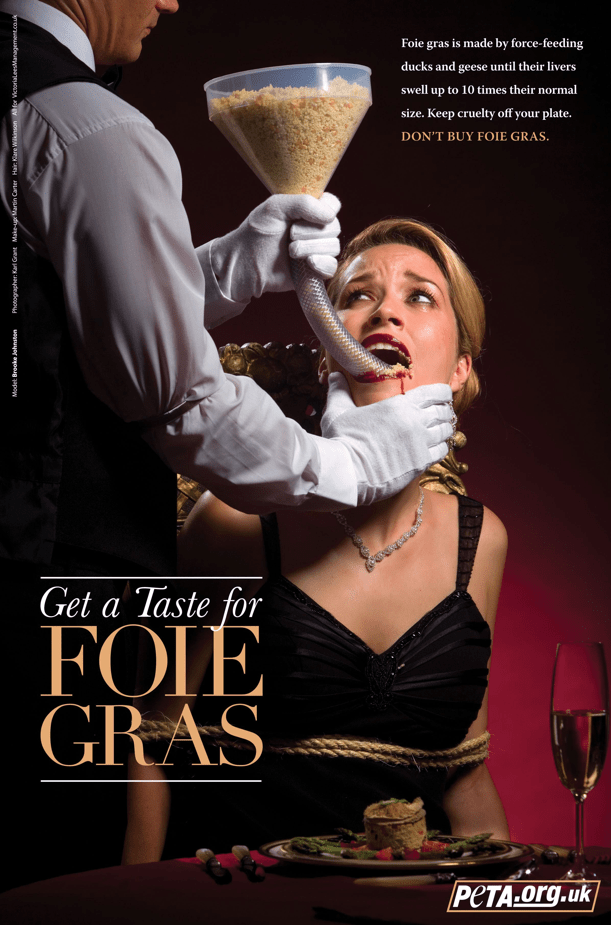
A disappointing amendment downplaying the intensivity and suffering of animals subjected to foie gras production wriggled its way into the report. The amendment claims that foie gras production respects animal welfare criteria.

WAV Comment – RESPECTS animal welfare ! – what planet do you people come from ?

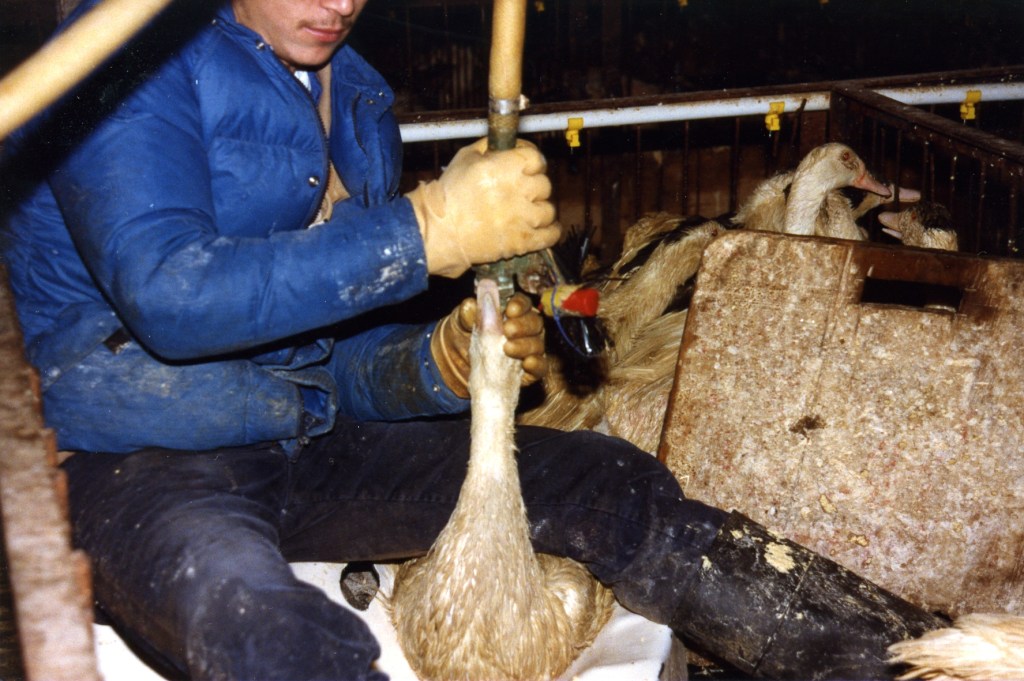
An overtly contradictory statement considering ducks and geese subjected to foie gras production are force fed and their bodies pushed beyond their biological parameters, resulting in intense pain, fear and suffering.  

Amendments addressing the tragic practice of killing male chicks were also voted down.         

Labelling remains voluntary 

Labelling is a fundamental tool to ensure farmers receive fair compensation for improved animal welfare measures on farms and enable consumers to purchase products that align with their animal welfare ethics. A mandatory “Method of Production +” (MOP+) label across all animal products and including rearing, transport and slaughter is key. Unfortunately, MEPs decided to let the labelling of animal products remain voluntary, leaving dangerous room for manoeuvre to farmers and the industry.

Despite being a report on “on-farm animal welfare”, it does not go the distance to reflect its title. Instead, it tries to sugarcoat the realities of the changes that truly need to be implemented. We need farmers to be ambitious and take a main role in implementing the F2F goals. The report will be voted on in plenary, possibly during the December session.

So; get out of the EU and make your own national legislation !

Regards Mark

France: New investigation from L214 in a French slaughterhouse reveals serious abuse.

New investigation from L214 in a French slaughterhouse reveals serious abuse

27 October 2021

L214

Today, L214 unveils a new investigation conducted in a French slaughterhouse of the Bigard Group (which owns the Bigard, Socopa and Charal brands), leader in bovine meat production in France and Europe.

Thomas Saïdi, an investigator from L214, applied for a position as a health officer within the official veterinary services of the slaughterhouse. These are the services that are supposed to control the respect of sanitary and animal protection rules. He was hired without any experience or qualificationThomas filmed a part of the chain, from the arrival of the animals in the slaughterhouse to their killing and the first cuts.

He witnessed serious shortcomings of the veterinary services, numerous breaches of regulations leading to acute yet avoidable animal suffering.

Thomas decided to testify openly.

In his testimony, Thomas shows:

  • That hygiene and sanitary controls (including ritual slaughter controls) were performed without training
  • The lack of staff for veterinary inspection and the sporadic controls
  • Serious regulatory violations and avoidable animal suffering
  • Calf fetuses of all ages arriving on the slaughter line daily (about 50 per day) while regulations prohibit the transport of cows beyond 90% of the gestation.

L214 will file a complaint for serious abuse with a prosecutor as well as a liability claim against the French State for failure to fulfill its mission of controlling the application of the regulations.

L214 has also launched a petition asking the government to ban the killing of pregnant cows, at least during the last trimester of gestation. 

In this petition, L214 also asks :

  • That the operations of immobilisation, stunning, slaughter and killing of animals be truly placed under the continuous surveillance of inspection service agents, as required by the regulations,
  • That infractions are sanctioned and that slaughterhouses are forced to put an end to them without delay.

In addition, this investigation proves once again the urgent need to make pre-cut stunning mandatory, to spare animals severe and prolonged suffering. 

For Thomas Saïdi, investigator from L214:

The images I shot are harsh, but they are necessary at a time when it is forbidden to reveal what happens inside slaughterhouses without any logic of confidentiality, competition or security being at stake (…)”

For Sébastien Arsac, spokesperson for L214:

The Bigard Group does everything to make people forget the animals behind the meat. When you see the images from inside, you understand why! But the consumers who buy the group’s products (the brands Charal, Bigard or Socopa) have the right to know (…) With the presidential elections just a few months away, this is a good time to open our eyes to the savagery of our society towards animals and to rethink the relationship we want to have with them.

Further details:

Read more at source 

Link to the video investigation

Link to the petition to ban the killing of pregnant cows

Regards Mark