Category: General News

How WWF becomes a traitor to the animals

@WWF_Germany-23.12.21 

The Christmas 🎄clock is ticking. And with it the question: What should we eat?

If you want meat, then please organic from the region or game from the area. We have a guide for conscious meat consumption.

Please read: wwf.de/aktiv-haben/t…

Photo: WWF

The WWF advises you to buy meat consciously and recommends that you choose meat, the production of which has as little impact on the environment as possible.

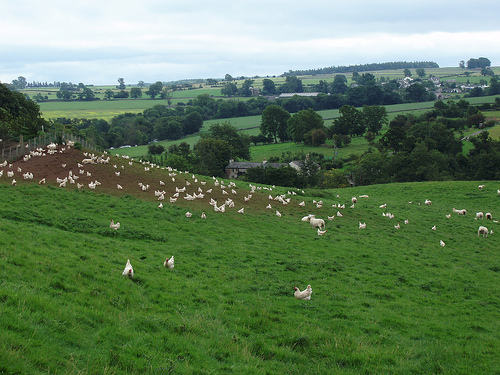
This basically includes meat that has been produced according to the criteria of the EU organic seal, the organic cultivation associations and the Neuland production association, as well as so-called “pasture meat”, which comes from animals that have been on the pasture all year round.

The main criteria for “good” meat are:

– No synthetic nitrogen fertilizers are used for the production of the animal feed. A material and energy cycle that is as closed as possible should be aimed for.

– No synthetic pesticides are used in the production of the animal feed.

– The use of genetically modified forage plants for the production of animal feed is prohibited.

– The animals were kept animal-friendly. This includes, among other things, that the animals have sufficient space for movement throughout the year and that they are given access to exercise or grazing all year round. Fully slatted floors are prohibited.

– Painful interventions on animals are only carried out with anesthesia or pain treatment. In addition, the usual interventions in conventional animal husbandry, such as cutting off the tails, pinching the teeth in pig breeding and docking the beaks in laying hen husbandry, are prohibited.

– The use of conventional medication is only permitted in exceptional cases. The administration of antibiotics as fattening aid or preventive medication is prohibited. The use of synthetic substances that promote growth or increase production is also prohibited.

– Cattle, sheep and other ruminants spend a lot of time in the pasture and their feed consists largely of green forage (grass, hay, silage, clover). The meat is known as pasture meat.

-The live transport of livestock does not exceed four hours.

https://www.wwf.de/aktiv-werden/tipps-fuer-den-alltag/vernuenftig-einkaufen/fleisch-einkauf

Our answer..WWF and animal consumers have signed a tacit agreement: We lie to you – We let ourselves be deceived.
This has advantages for both sides: Undisturbed maximization of donations against a clear conscience.

Organic attitude

With this clever organic philosophy, the product – meat – can be saved elegantly and, above all, “ecologically” on morally safe grounds using arguments: Meat from animals that had a happy life!
Meat from animals that lived in the wild until their death is simply the ideal solution!

But behind the organic-lying fairy tale of beautiful words – “organic”, “eco”, “respect” – and beautiful pictures – on the packaging and in the advertising – there is pure horror, pure horror: absolute lawlessness of animals, absolute ruthlessness of their tormentors.

Organic attitude

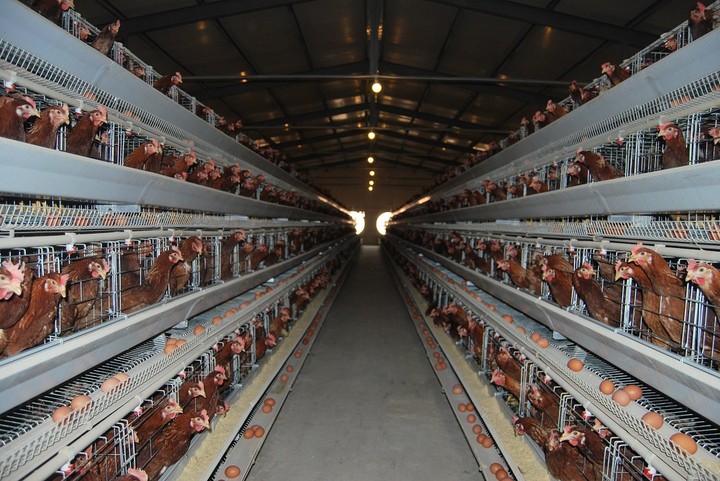
A company that works according to “organic” and “eco” guidelines is not an idyllic farm with a few happy animals, but here too you will find the same factory farming with hundreds, thousands and tens of thousands of animals as in the “conventional” ” Area.
The desolate life of the so-called “eco-animals” is consistently propagated as “species-appropriate”: the “happy animals” are “gently transported” and treated “humanely”.
Because that makes the conscience easier.

Organic attitude

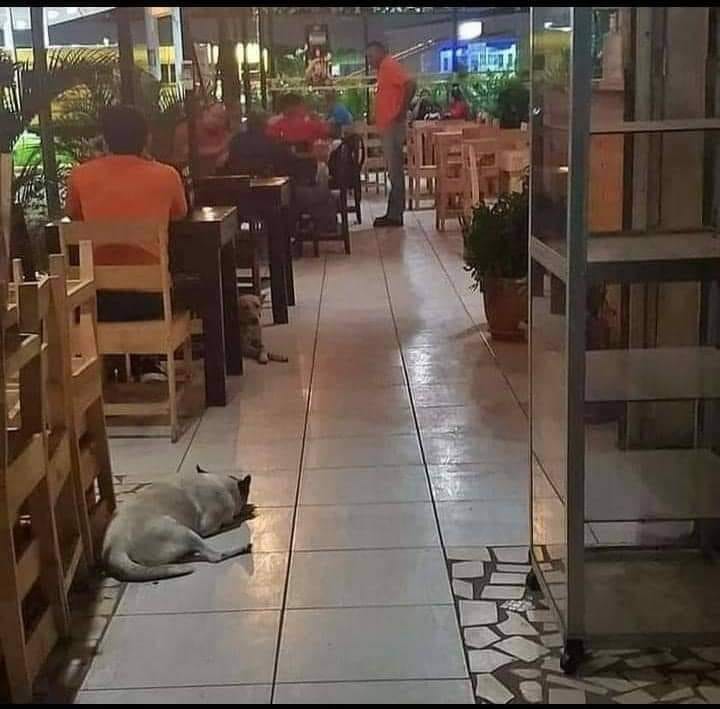
The reality: breeding sows in the crate, lethargic calves without mothers and far and wide no green meadow.
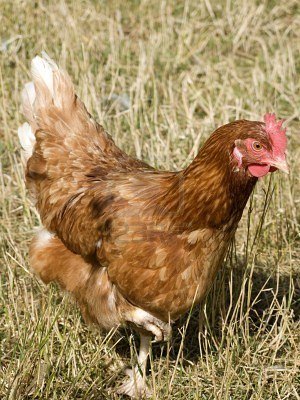
Tethered dairy cows, fattening pigs in defecated stalls, “organic chickens” that are just as torn as their female companions in barn housing.

Meat, milk and egg producers here in Germany who, under the eyes of the “German Animal Welfare Association”, are committed to “animal welfare”, “limits” animal husbandry in the affiliated companies to a “manageable” 10,000 (!) laying hens 6000 broiler chickens, 2000 broiler ducks, geese and turkeys per farm, as well as 650 fattening pigs or 500 fattening pigs plus associated breeding sows.

Organic attitude

A fattening pig weighing 100 kg does not become “happier” because it is given 2.3 square meters of space as a so-called “organic pig” instead of 0.65 square meters (“conventional husbandry”).

Such an “organic pig” also has no right to actual free run in the country and, like its conspecifics in the “conventional husbandry”, usually never sees a meadow.

“Eco” and “Bio” are not a happy pig that can splash around in the water to their heart’s content.

“Eco” and “organic” deceives and simulates a healthy world of livestock that does not exist.

Organic attitude

What is the meaning and purpose of “organic” then?

The same sense and purpose that Rip and fraudulent labeling always has: to calm the conscience of the consumer and to pull double and triple the money out of his pocket.
Not more.

Conclusion: “Bio” = cruelty to animals, a huge consumer deception and easy game for the criminal companies who like to cavort under the same dirty blanket with the ministries of agriculture.

We forgot another winner: an organization that loudly claims to be one for animal rights, but turns out to be nothing other than the loudspeaker of the food mafia.

In order to be an ethical and decent human being, one must be vegan. There is no gray area here. You are either vegan or you are complicit in the war on animals.

Even WWF must know that too!

Venus Reichenbach

Why should animals have rights?

People who support animal rights recognise that all animals have an inherent worth – a value completely separate from their usefulness to humans. We believe that every being with a will to live has the right to live free from exploitation and suffering.

It’s a Philosophy

Animal rights is based on ethical and moral philosophy.
It has been discussed by some of the world’s most influential thinkers, from historical figures such as Pythagoras and Leonardo da Vinci – who embraced vegetarianism – to Jeremy Bentham, the founder of the utilitarian school of philosophy, who famously identified animals’ capacity for suffering as the characteristic that gives them a right to equal consideration.

“The question is not ‘Can they reason?’ nor ‘Can they talk?’ but ‘Can they suffer?’”
– Jeremy Bentham

All animals have the ability to suffer in the same way and to the same degree that humans do.
They feel pain, pleasure, fear, frustration, loneliness and familial love. Whenever we consider doing something that would interfere with their needs, we are morally obligated to take them into account.

In his book Animal Liberation, the philosopher Peter Singer states that the basic principle of equality does not require equal treatment – it requires equal consideration.
This is an important distinction when talking about animal rights.

People often ask if animal rights means that animals should have the right to vote or drive a car.
Of course, that would be silly because those aren’t rights that would benefit animals. But animals have the right not to suffer at the hands of humans and to live their lives free from suffering and exploitation because they have an interest in doing so.
That is the difference between equal consideration and equal treatment.

It’s Intuitive

You don’t have to be a philosopher to know that hurting animals is wrong. At its core, animal rights is simple. It’s about being kind to others – whether they’re members of our own species or not.

Almost everyone cares about animals in some context, whether it’s a beloved family companion, an irresistibly cute kitten or a majestic wild animal seen in a documentary. After all, we each have some built-in capacity for empathy and compassion, as can be seen from the lengths that children often go to in order to help animals.

Logically and morally, there’s no reason to differentiate in the way we treat the animals we share our homes with and those who are farmed for food.

They’re all individuals, with the same capacity to feel pain and fear. Animal rights helps us to look past the arbitrary distinctions between different species, to rediscover our innate compassion and to respect all animals equally.

“When it comes to pain, love, joy, loneliness and fear, a rat is a pig is a dog is a boy. Each one values his or her life and fights the knife.”
– PETA founder Ingrid E. Newkirk

It’s a Way of Life

There’s nothing abstract about animal rights, and there are no barriers to getting involved. Anyone who cares about animals can start putting these principles into practice every single day with the food they eat, the clothes they wear and the products they buy.

These choices are a form of nonviolent protest that makes a real difference both by reducing the profits of corporations that harm or kill animals and by creating a growing market for cruelty-free food, fashion, services and entertainment.

To learn more about making kind choices, visit the Living section of our website and order a free vegan starter kit.

“Never doubt that a small group of thoughtful, committed citizens can change the world.”
– Margaret Mead

It’s a Social Movement

Like other major social movements, animal rights brings people together from across political, religious and cultural boundaries to fight against injustice.

And like those movements, it’s also about fairness. Only prejudice allows us to deny others the rights that we expect to have for ourselves.
Whether it’s based on race, gender, sexual orientation or species, prejudice is morally unacceptable.
Alongside the struggles against racism, sexism and homophobia, there’s the struggle against speciesism – discrimination against other beings on the basis of their species.

“Injustice anywhere is a threat to justice everywhere.”
– Dr Martin Luther King Jr

It’s the Way Forward

Society is evolving and becoming fairer all the time. Despite all the people who say change will never happen, most countries in the world have outlawed human slavery and child labour.
Recognising the rights of animals is the next stage in our progress towards a fairer world.

As biologists and animal behaviourists learn more about animals’ intelligence and the complexity of their lives, there’s even less excuse for treating them as commodities rather than the sensitive individuals they are.

Most of us grew up eating meat, wearing leather and visiting zoos.
Yet, just as we’ve made the mental shift towards a way of life that respects animals, so society as a whole must outgrow the unethical mindset that animals are here for us to use and kill as we please.

“The greatness of a nation and its moral progress can be judged by the way its animals are treated.”
– Mahatma Gandhi

https://www.peta.org.uk/action/what-is-animal-rights/

And I mean…We have a moral duty to educate.

We’d like our governments, lawmakers, and politicians to help end factory farming, but they just don’t seem interested in animal slavery, suffering, and murder.

Therefore: we have the moral duty to actively and massively oppose all forms of animal exploitation and to encourage and educate others to become vegan with the core goal of eradicating speciesism. We have to go together, and together we can make some important changes.
For the animals.
Because we owe it to them

My best regards to all, Venus

England: Primary School Teacher Sacked After Being Caught on Film (By Hunt Sabs) Kicking Horse.

Footage of Sarah Moulds shared online by Hertfordshire Hunt Saboteurs viewed by millions in November

A primary school teacher has been sacked after footage of a horse being kicked and slapped sparked outrage on social media.

Sarah Moulds, 37, was initially suspended from her position after the video showed a horse being kicked in the torso, slapped repeatedly in the face and dragged back to a trailer.

The footage was shared online in November by the anti-hunt group Hertfordshire Hunt Saboteurs, who said it filmed the incident while observing the Cottesmore Hunt, based in Rutland, east Midlands.

The clip, which has been viewed millions of times, sparked anger and Moulds was suspended by the Mowbray education trust, which represents seven schools in the Melton Mowbray area.

The trust has now said she has been dismissed. In a statement, Paul Maddox, the chief operating officer, said: “I can confirm that Sarah Moulds’ employment with the trust has been terminated.

“As a trust, we are committed to ensuring the best standard of education for all of our young people and we look forward to continuing this throughout the 2021/22 academic year and beyond,” the statement continued.

Moulds was also removed from her volunteer leadership position at the Pony Club, which organises horse rides for children.

Her uncle, David Kirkham, said Moulds was a “fantastic person who absolutely loves her horses”.

He added: “I’ve seen the video but we don’t know what the horse had been doing and if it was out of control. But we know it ran out on to the road and she told it off. There was no malice intended.”

In a statement at the time, the Pony Club said: “The welfare of horses and ponies is of the utmost importance to the Pony Club, therefore the lady in question has been removed from her voluntary position as a team organiser for a branch.”

The Hertfordshire Hunt Saboteurs called the footage “shocking”, while the RSPCA described it as “upsetting”. Moulds is being investigated by the RSPCA and the Hunting Office, the governing body which oversees hunting, and Leicestershire police confirmed it would assist the RSPCA with its inquiries.

In response to the video, the Hunting Office said it “expects the highest level of animal welfare at all times – both on and off the hunting field – and condemns the actions taken by this individual, who is not a member of the hunting associations”.

The Cottesmore Hunt said it did not condone the actions shown “under any circumstances”.

Regards Mark

Enjoy !

Vietnam: New Jingle Bears – AA Vietnam Rescue Sanctuary Welcomes 6 New (Ex Bile Bears) To Their New Forever Home.

Will you help us care for these six rescued bears?

WAV Comment – we were happy to provide Animals Asia with a donation yesterday re on going work and updates at their Vietnam bear (rescue) sanctuary.  As you can read below from Tuan, the sanctuary has just welcomed 6 new (ex bile abused) bears to their new forever home.  Please continue reading below for more details.  This will be their first Christmas free from the daily abuses and suffering for the bear bile industry, and we really welcome that.  Free all the bears from suffering !

Regards Mark

Dear Mark,

Yesterday, thanks to the generous support of animal champions like you, we stood ready to welcome six more bears through the gates of our Vietnam sanctuary – just in time for Christmas.

The bears were being looked after at Hanoi Wildlife Rescue Centre before they made the short journey to their new forever home. The details of each individual are limited at the moment but I promise to keep you updated as we learn more.

What I can share with you, Mark, is that the group includes five moon bears – one of whom is a gorgeous little cub around the same age as our other recent arrivals Wonder, Yên and Marvel – and one sun bear, who we hope will thrive when bonded with our resident rescued sun bears.

In the spirit of the festive season, we’ve named the sun bear Angel and the five moon bears Thông (Pine tree), Noel, Pudding, Giáng Sinh and Tuyết (Christmas and Snow in Vietnamese).

It really is thanks to the continued kindness and generosity of supporters like you, that our Bear Rescue Team can be ready in a moment’s notice to help a bear, or two or six, and provide the tender loving care they’ll need long into the future.

And not only that, but your support is helping to foster invaluable relationships with local authorities and rescue centres like this one, which in turn will help more vulnerable animals throughout Vietnam. Thank you, Mark.

The arrival of these six precious bears means our Vietnam sanctuary is now only four places away from being full.

I understand that Christmas is a busy and expensive time for many. But if you’re able, will you make a loving donation today?

Your festive goodwill could help provide ongoing care for our rescued residents, as well as help to build a life-changing second sanctuary to take in more broken bears.

If you’ve already sent across your special Christmas donation to the animals, please accept my heartfelt thanks for helping to give animals the lives they truly deserve.

I hope you’re as overjoyed as we are to welcome six more beautiful bears to sanctuary, where, with your support, they’ll be able to snooze, splash, munch, climb and wrestle to their heart’s content.

With festive hugs of gratitude to you and yours this festive season,

Tuan Bendixsen,
Vietnam Director

PS Please note that our offices will be closed for Christmas from 23 December and will reopen on 4 January.

Regards Mark

https://www.animalsasia.org/

EU: (Hopefully ?) – EU proposal for Indonesia trade agreement strengthens position on animal welfare.

22 December 2021

The EU’s latest proposal for the sustainable food systems chapter in its trade agreement with Indonesia marks an improved position on animal welfare. However, the language could be further strengthened to better protect the interests of animals.

The EU has released a proposed legal text for the chapter on sustainable food systems (SFS) in the EU-Indonesia Comprehensive Economic Partnership Agreement (CEPA). CEPA negotiations were launched in July 2016, but progress is slow as the EU and Indonesia have quite different positions on key issues, such as on the content of the sustainable development chapter. The 11th round of negotiations was held in November 2021.

Under the proposed SFS chapter, animal welfare would be recognised as a component of sustainable food systems. The article on animal welfare would recognise animals as sentient beings and commit the parties to “strengthen their research collaboration” to further develop science-based animal welfare standards. It would also enable the parties to establish a technical working group to support the implementation of the article. The article on antimicrobial resistance would promote the “prudent” use of antimicrobials in animal production and commit the parties to phase out their use as growth promoters.

The proposal marks an improvement on the text initially published by the EU on animal welfare cooperation – which was in the chapter on sanitary and phytosanitary (SPS) measures. This 2016 proposal contained only a weak provision stating that the parties “shall promote collaboration on animal welfare”, which seriously lacked ambition.

While the progress made in the proposal is welcome, the EU could further strengthen the language and include, as they did in the agreement with Mexico, a reference to the need to implement OIE recommendations in the field. The text could also provide for capacity-building and technical assistance from the EU, as in the trade agreement with Vietnam.

The EU should also suggest making the liberalisation of trade in animal products dependent on the respect of EU-equivalent animal welfare standards by Indonesian exporters. At the moment, Indonesia does not export many animal products to the EU, but agreements are made to last and the country has demonstrated its willingness to develop its livestock sector. The EU should thus ensure CEPA does not contribute to fuelling the spread of unsustainable farming practices. To the contrary, the agreement should play a role in promoting higher animal welfare in Indonesia. 

Working with Indonesia on animal welfare, especially in the context of Sustainable Food Systems, is important not only because the country is a global player in the livestock sector (it’s one of the largest producers of chicken meat in the world), but also because the EU exports live chickens there, which consequently end up on Indonesian farms. Indonesia is also the first source of EU imports of frogs’ legs, and this trade involves serious welfare issues at the handling, transport and slaughter stages. Production methods are highly cruel; frogs are captured using hooks, nets, and spears and kept in overcrowded and unsanitary conditions. Their rear legs are cut off while they are still alive by scissors, blade or by hand and their torsos are added to a pile of other bleeding frogs, where they endure a painful death which can take a full hour. As the animals are usually caught in the wild, the trade also has a harmful impact on the conservation of certain frog species, which can compromise the welfare of the local ecosystem. The cooperation under the SFS chapter could allow us to address these issues.

Regards Mark

Italy: Fantastic News – Italy Bans Fur Farming as of January 2022!

Italy bans fur farming as of January 2022!

21 December 2021

ALI

Today marks history: after having adopted a temporary ban linked to the COVID-19 outbreaks in mink farms and the potential impact on pubic health, Italy decided today to ban fur farming for good as of 1 January 2022.

Over 60,000 minks were killed every year in Italy for the “value” of their fur. Thanks to the endless efforts of Italian animal protection organisations and the mobilisation of citizens, from 1st January 2022 this cruelty will never be repeated.

The approved amendment:

  • Fur farming ban (for all species, not only mink), as already established by almost twenty other European countries, from 1st January 2022.
  • Dismantling by 30th June 2022 of the 5 latest farms which in 2020 produced 60,000 mink per year; and, at the same time, confirmation of the breeding ban already in place since last January for the 7,039 breeders still held in these farms.
  • A Decree of the Ministry of Ecological Transition, the Ministry of Agriculture and the Ministry of Health will be issued by 31st January 2022 to regulate eventual change of ownership, sterilization and detention of mink from former fur farms to sanctuaries/shelters preferably managed directly or in collaboration with recognized animal rights associations.
  • State indemnities up to a maximum of 3 million euros for the closure and disposal of each farm, as well as 3 million euros in total for their conversion into agrivoltaic the production of clean energy, to be assigned by 31 January 2022.

A special congratulations to our Italian member organisations who have been very busy achieving this historical step during the last months: LAV, Essere Animali Animal Law Italy and Animal Equality

Italy is a more civilized country, we have put an end to a cruel, anachronistic, unjustifiable industry that has no more reason to exist in a civil society where the value of respect for animals, as sentient beings, is always more widespread and rooted

Simonhe Pavesi, Animal Free Fashion Area Manager at LAV

Read more at source

LAV

Regards Mark

Prague bans horse-drawn carriages from 2023

SUCCESS 🥳!!

After Czech animal rights activists were able to collect over 12,000 signatures, the city council of Prague changed the market regulations so that horse-drawn carriages are no longer allowed to drive in the city from 2023.

Berlin- Germany

Prague joins a large number of animal-friendly cities that have already abolished this cruelty to animals: Paris, Barcelona, London, Rome, Oxford, Montreal, Chicago, Salt Lake City, Las Vegas and many more.

We are very happy about the news.
Especially when an organized struggle is crowned with success
We continue to fight in the hope that this animal suffering will be understood as such by all countries and finally abolished.

My best regards to all, Venus

India: 2 Latest Rescues From ‘Animal Aid Unlimited’. Please Donate If Possible.

Dear Mark,

Give a sponsorship gift of an Animal Aid Unlimited sweetheart as a Christmas present this year. Your gift will include special edition certificate of your sponsored animal sporting a cheerful Santa hat, sharing with the recipient that this life-loving gift comes from YOU.

Oh, and our newest sponsorship dogs Sammy, (blind and adorable), Kitu (partially disabled and filled with play) wish you Happy Holidays from Animal Aid.

Click here to give a sponsorship gift today!

Milky Way is not “just” a donkey. Shy, a little inward, and an essential part of the universe!

A passing vehicle must have hit this boy we named Milky Way. The laceration was very deep, and if the injury had been lower on his leg he would have surely died. Fortunately, we could give him a chance.

The bandaging was very tricky. We useda bandaging technique in which a few stitches are placed around the wound, and padded bandages are then tied down protecting the wound. This kept the wound clean and eased his pain as his healing journey began.

He’s not a very social boy, remaining quite independent and inward, but Milky Way’s eyes shine like stars.

Rescue. Heal. Love. Donate today

Snuggler’s mother “told” his rescuers that she was desperately worried…

The mother of a collapsed, comatose puppy told us everything we needed to know.

She held her anxiety in her shoulders, but most of all in her eyes, which were filled with the greatest sorrow–a mother watching her baby dying.But her worried posture alerted neighbors to look more closely at the grey mound in the soil and saw the little one still breathing. He twitched unconsciously.

The little one was in critical condition and we hurried him to our hospital and treated him for life-threatening hypothermia (cold), pain, and gave him IV fluids to stabilize him. He had no fractures but we cleaned and dressed several puncture wounds on his neck. He was still comatose when we lay him bundled in a basket, and he slept through the night. In the morning, we were delighted to find his eyes open: he had woken up from the coma! Now the next task would be to get him to eat–if he would eat we knew he had a good chance of surviving.

Watch life return to little Snuggler, and his return home to his busy siblings, and his beautiful mom and dad.

For injured puppies, a happy ending is a new beginning… Please donate today!

Holiday giving can mean more than cool stuff.

Save lives with your purchases here.

Animal Aid Unlimited Shop

Regards Mark

Photo tourism industry and its victims

Even those who are only sporadically on Instagram, Facebook, Youtube and Twitter cannot ignore it:
Happy vacationers post pictures of themselves with a monkey on their shoulder, petting a big cat, riding a camel – or even riding an elephant.

The photo tourism industry is growing and flourishing – in every major tourist destination you can meet traders who offer to take a photo with monkeys, koalas, snakes or even elephants and big cats. The presence of such images on social media shows how eagerly tourists accept these offers – great business.

What does it actually mean for the animals to end up as a photo souvenir?

Abuse and mutilation
Behind the “photo accessories” are animals that were torn away from their mother and other social partners at a young age, often immobilized with medication and made submissive by force.
The animals’ claws or teeth are often removed so that they do not bite or otherwise injure the tourists – that would be bad for business.
If the animals are too old or too unpredictable, they are disposed of – big cats such as tigers, lions and leopards then usually end up on a “game farm”, where they are released for hunters to shoot for a fee.
Other animal species spend the rest of their short lives cooped up in tiny cages.

Species extinction and illegal trade
Many of the animal species that can be seen in the photos are endangered – for example the slow lorikeet.
These animals may not be kept legally – and certainly not be used as a photo object all day as a tourist attraction or as fun objects.
These animals are likely to have been trafficked – that is, they were captured from the wild to attract tourists.

The victims of photo tourism die early
Reaching around means unbelievable stress for the animals – regardless of whether they belong to an endangered species or not.
They often die early as a result of the hardships and inadequate care.
Taking photos, often with a flash, also scares the animals off. Improper posture and constant contact with a wide variety of people mean that the likelihood of infections and a generally poor physical condition is very high.
The nocturnal slow loris, which unfortunately you see more and more often in pictures of tourists, are shown in broad daylight.

These factors cause the animals to die miserably early.

Photo tourism encourages the illegal trade in endangered species
Seeing photos of people together with wild animals often encourages the desire to keep these animals as pets.
In the meantime, various research studies show that animals that can be seen in photos / videos together with people are perceived as less threatened and are also assessed as suitable pets.
Thus the demand of the pet trade with these animal species is growing – and with it, unfortunately, the illegal wildlife trade

Photo tourism is spreading

The photo tourism business is expanding due to its high popularity with tourists – celebrities such as the singer Rihanna, who was photographed with a slow loris in Thailand, have also contributed to this.
With dramatic effects.

A few years ago, the offer of photos with these animals was only limited to those countries where slow loris can be found in the wild (e.g. Thailand), the trend is spreading.
Researchers found, among other things, several slow loris in a popular holiday destination in Turkey.
These then often end up with tourists as “monkeys” “lemurs” or “bush babies” on social media.
How the animals ended up in Turkey is not clear – only one thing is clear: it did not happen legally.

Because business is booming, more and more animal species, often endangered, have to serve as photo souvenirs.
Slow loris, macaws, various big cats, turtles, lemurs, various species of monkeys and many more – many of them are endangered species.
The providers themselves often cannot even name the species of the animals – in a study in Turkey the slow loris found were touted as lemur and sloth.
The sellers are probably not even aware that these animal species are all threatened and protected.

You can change something here – show your commitment to exotic animals in need!

-Under no circumstances should you accept offers with animals as a photo souvenir.
-Do not like or share pictures on social media that show people with “animal photo souvenirs”
-Point out the negative consequences of photo tourism to people around you and ask them not to take advantage of the offers and not to spread them.

https://www.etn-ev.de/fototourismus/

And I mean…All over the world, animals are suffering as photo tourist attractions.
Sloths and parrots are captured in South America and young Barbary macaques in Morocco so that tourists pay for photos with the animals.
In Japan owls and in South Korea raccoons are used to attract visitors to animal cafes.
In Vietnam, turtles, snakes and other reptiles are very popular in cafes, while in Thailand foxes and meerkats are on display.

Who is interested in this tormenting circus?
The operators.
And the visitors who are lied to, that the animals do it voluntarily and with fun;
This means that some earn money from cruelty to animals and many are lied to.

The question is: would visitors ever take part in this excruciating circus if they were fully informed?

Perhaps not, and that is why the cruel truth is hidden and the outrageous lie spread that the captive animals are happy to serve visitors.
There is hardly a wild animal that does not have to be used to entertain stupid tourists.

In addition to entering the zoo and selling souvenirs, petting baby tigers and predator selfies are guaranteed ways to make money.
Obviously, snapping a selfie with a wild animal is not as easy in the wild as it is in captivity.
That is why there are now more tigers in the shabby private zoos in the USA than in the wild in the world.

Thanks to everyone who doesn’t take part in this tormenting circus

My best regards to all, Venus

Italy: New investigation reveals cruelty and illegalities on an Italian egg farm.

Essere Animali

New investigation reveals cruelty and illegalities on an Italian egg farm

20 December 2021

Essere Animali

NewsAn Essere Animali investigator worked undercover on an egg producing hen farm and witnessed, among others, covert slaughter, cruel killing of sick hens and violent loading procedures.

For years, through investigations carried out in a random selection of farms and slaughterhouses, Essere Animali has documented frequent violations which were reported to the relevant authorities. 

Yet their latest investigation in an egg farm adds on additional evidence that an urgent change in animal protection is needed. Essere Animali calls on more controls, severe sanctions for those who act in violation of these laws, and also a plan for a transition towards ending intensive farming.

The images reveal several unacceptable behaviors such as:

  • Illegal slaughter of hundreds of hens without prior stunning;
  • Repeated violent behavior towards animals;
  • Images and testimonies of eggs produced by caged hens being marketed as free range eggs.

INVESTIGATION IN A HEN FARM: covert slaughter, possible fraud and illegal work

https://www.youtube.com/embed/3ZjDhvcNKRc?autoplay=0&start=0&rel=0&enablejsapi=1&origin=https%3A%2F%2Fwww.eurogroupforanimals.org Read more at source

Essere Animali

Regards Mark