
Heavy metal icon Rob Zombie, real name Robert Bartleh Cummings, has been vegan for nine years.
The star, who is a founding member of the band White Zombie, made the announcement in a recent interview with GQ.
Why Rob Zombie went vegan
He told the publication he ditched animal products while at school after watching a film ‘on how brutal’ factory farming is. Several years later he cut out dairy and eggs too – dubbing them ‘disgusting’.
“Once I went vegan, it was, like…now there’s nothing to eat,” Zombie said.
“Every day it gets easier, and every day the food gets better. Veggie burgers used to be like tasteless hockey pucks, and now they’re so delicious.”
Vegan meat
Zombie also described faux meats such as the Beyond Burger as ‘transitional’ – stating that he and his wife no longer consumes them.
“Your tastes change and what you consider healthy changes,” he explained. “But it is a process, and if someone tries to go hardcore instantly they might fail.”
“You just realize, ‘oh’. This is one giant brainwashed lie we’re fed from the moment we’re born.”Rob Zombie, Singer-Songwriter
‘One giant brainwashed lie’
The singer-songwriter then talks about how veganism was prevalent in the punk era due to its link to being anti-establishment.
“Once you make these decisions, you can’t help but learn more about it. And every day you uncover what an evil industry everything is,” Zombie says.
“Dairy is the leading cause of breast cancer, yet Dannon is a big sponsor of the pink ribbon walks. It’s like Marlboro sponsoring the lung society or something.
“And you just realize, oh, this is one giant brainwashed lie we’re fed from the moment we’re born. You have to uncover each layer of the sham. “
WAV Comment – You could say in response that the beef, (general) meat and dairy industries are getting concerned about the amount of people switching to a plant based diet.
An ad commissioned by members of the meat industry claims eliminating beef consumption is not realistic Credit: Adobe.
Dear Wall Street Journal: Anti-Vegan Propaganda Isn’t Just Wrong, It’s Dangerous
The beef industry paid for a major ad to be placed in Wall Street Journal. The ad claimed that meat is not damaging the planet
Last week, major international newspaper Wall Street Journal (WSJ) published a full-page ad that praised the sustainability of the meat industry. The ad also took a swing at the vegan movement, claiming that if every American stopped eating animal products, greenhouse gas emissions would only fall by 0.36 to 2 percent globally.
The ad was, unsurprisingly, paid for by the Beef Checkoff, a program designed to increase the consumption of beef.
The Center For Consumer Freedom (CCF) also worked on the ad. The CCF – which has meat industry representatives on its advisory board – runs campaigns attacking environmental protection groups and animal rights organizations.
“Beef’s environmental footprint may drive headlines, but the truth is, eliminating beef is not a realistic or impactful solution for climate change,” part of the ad reads. It carries on, saying that raising cattle actually helps protect the planet.
But the claims lack meaningful evidence. And while the meat industry’s editorial tantrums are not a new concept (see the similar ads it placed in WSJ and The New York Times in 2019), they are arguably more damaging than ever.
The global climate emergency is accelerating at an unprecedented rate. We cannot afford to be spreading misinformation on such a major scale (WSJ distributes around 2,834,000 copies a day).
So, here is an open letter to the publication, urging it to correct the advertisement. You can read the full version below.
Dear Wall Street Journal, Dear Mr. Murray,
We were forwarded the attached advertisement with manipulated science displayed in the Wall Street Journal on August 14, and we would like to ask your help in rectifying the advertisement, as continuing to promote beef consumption will cause tremendous damage to our planet.
This advertisement is based on questionable data. It is not credible, and contradicts data supported by the international scientific reports and data from institutions such as the FAO, UNEP, and the IPCC (leading international climate data sources).
Total emissions from global livestock: 7.1 Gigatonnes of Co2-equiv per year, representing 14.5 percent of all anthropogenic GHG emissions … Cattle (raised for both beef and milk, as well as for inedible outputs like manure and draft power) are the animal species responsible for the most emissions, representing about 65 percent of the livestock sector’s emissions … feed production and processing (this includes land use change) and enteric fermentation from ruminants are the two main sources of emissions, representing 45 and 39 percent of total emissions, respectively.
The US figures for livestock production are lower but typically do not include any emissions caused elsewhere, for example for the production of livestock feed, usually in South America, which are a key driver of greenhouse gas emissions.
Furthermore:
Switching to a plant-based diet could reduce your food-related emissions by up to 50 percent.
We would prefer the Wall Street Journal to disassociate itself from the advertisement, and a confirmation it will not advertise such misleading data again.
We would be grateful if this message could be forwarded to the correct department within the Wall Street Journal.
Yours truly,
Jasmijn de Boo, Vice President, ProVeg International
“Even if zoos claim that there is no place of learning where one can observe and learn to understand nature better, the exact opposite is the case: Zoos are suitable for nothing less than establishing a clear reference to nature.
Rather, zoo visitors are systematically instructed to misunderstand the distorted images, clichés and caricatures of nature presented in cages and concrete bunkers as nature itself.
That is why they do not notice the suffering of the caged animals, robbed of their freedom and dignity: They learn to see the unnatural as the natural.
At most, zoos encourage visitors to buy their own cages, terrariums or aquariums and to place exotic wild animals – monkeys, parrots, geckos, ornamental fish, etc. – as decorative elements in the living room: seen in the zoo, bought in the zoo animal trade.
Myriads of exotic wild animals are imported into Germany every year in order to disappear, completely uncontrolled, in some private households (where they are often kept under even more inadequate conditions than in zoos and / or are “disposed of” after a short time if the maintenance costs become too high or interest in them wanes).
It is not uncommon for the zoos themselves to sell “surplus” animals to private owners”.
(from the book by Colin Goldner** : The Zoo – No Place for Animals, Aschaffenburg, Germany 2017)
“Not a single one of the zoos comes up with the idea of encouraging zoo visitors through appropriate information and education to make a personal contribution to animal, nature and environmental protection.
And to discourage them from eating dead animals or food made from animal products at least on the day of their visit to the zoo.
Quite the opposite: the food on offer in most zoo restaurants is extremely meat-heavy and corresponds to that of a below-average factory canteen or motorway service station (…) Nowhere is it more obvious than on the menu of a zoo restaurant.
The message to the zoo visitors: Animals can be gazed at in the zoo just as safely as they can be eaten in the zoo restaurant: after all, there are only animals that are there for this very purpose. ”
(From the book by Colin Goldner: Lifelong behind bars – The truth about gorillas, orangutans & Co in German zoos)
*The Great Ape Project, initiated in 1993 by the philosophers Paola Cavalieri and Peter Singer, calls for the great apes – bonobos, chimpanzees, gorillas and orangutans – to be recognized because of their great genetic similarity to humans and their similarly complex cognitive, affective and social ability to recognize certain basic rights that have hitherto been reserved for humans: the basic right to life, to individual freedom and to physical and psychological invulnerability.
**Colin Goldner (* 1953 in Munich) is a German psychologist who also works as a non-fiction author and science journalist.
In 2011 Goldner was entrusted with the relaunch of the Great Ape Project, which demands basic rights for great apes, and speaks about this at home and abroad.
And I mean...Zoos are open air prisons.
In Europe, these prisons – which are even funded by the EU – operate as follows: Young wild animals are separated from their mother, the natural environment in which they lived and their family and sold to owners of open prisons, where they are kept for life in some pitiful squares of land but mainly in narrow cells.
Frankfurt Zoo: 50-year-old facility that looks like the toilets of a train station
There they spend a life in restriction and monotony, winter and summer, with a unique freedom of movement the “come and go” without the ability to behave and act as dictated by the needs of their species. Depression, mental trauma, unusual aggression, premature death are some of the consequences of slavery.
The inmates receive daily visits.
Like all the uneducated, ignorant, uninformed, some fall victim to the dirty advertising that the outdoor prison company sells on the internet and go out with their wives and children on the weekends because … “it is a place of knowledge and recreation for young and old”.
A solid portion of dementia and anesthesia is required for a parent to choose animal prisons as a place of education for their children and to even pay for their maintenance with a ticket.
No civilized and sensitive person should find fun and enjoyment at the sight of a daily tragedy of animal creatures
In terms of our moral behavior towards other animals we still live on trees.
WAV Comment – we have experienced exactly the same scenario working with stray dogs in Serbia; which started in 2005. See https://serbiananimalsvoice.com/about-serbian-animals/ for more details of the work / legislation. The Serbian government have always attempted to kill strays in different regions as they considered it most effective at reducing numbers. In reality, we have always argued that killing strays in any area simply creates a void; (less dogs in ‘the area’ initially, for a week or so max); which very quickly opens the door to strays from other areas to wander in and fill the void as they often find more opportunity for food left by the culled strays.
As they are un sterilised, and with a more adequate food supply; the strays that have entered a newly culled region multiply rapidly, often ending with stray numbers above and beyond those experienced before the cull (planned to reduce numbers !). In addition, there is always the risk that specific animal diseases not experienced in a particular region (in the past) may now become infected with new disease due to animals moving in to fill the cull void. Culling makes no sense.
Killing strays does not work; but sterlilisation of strays, so that they can no longer reproduce, does reduce stray animal numbers significantly over a relatively short time. This (sterilisation – NOT kill) was always our argument with the government; and we were ignored by the ‘kill’ mental vision attitude of the Serbian government, which they continue to enforce to this day.
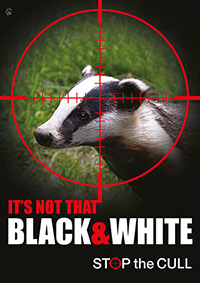
Are we not witnessing exactly the same type of thing here with the badger cull in the UK ? – read the article below – Killing off badgers sees the beautiful animals that survive cover 61 per cent more land each month, say scientists from the Zoological Society of London and Imperial College of London.
After a cull, the odds of a badger visiting a new area increases 20-fold. Researchers believe this could be linked to reduced competition and increased food availability as (culled) badgers are removed from the population. As with Serbia, here, others move in to fill the void left.
Increased food availability is the reason why these animals wander over greater areas; they take up the remnants in the food chain which has been left by murdered animals. Culling Serbian strays, and Culling British badgers; two of the same very wrong government approaches in reality.
The worst thing is that in both circumstances; governments are convinced that their approach is the only way forward. We are very happy to view things from a different angle, and strongly disagree from our own experiences.
Separate research published in March also suggested culling badgers actually spreads TB. It found that culls disrupt local populations and drive them into previously uninfected areas. It makes no sense, other than a blood lust shown by Serbian shinters and UK badger killers.
Culling badgers actually spreads TB, latest study suggests
Odds of a badger visiting neighbouring territory after a cull increased 20-fold – which spreads infection
The government’s claim that culling badgers reduces tuberculosis rates in cattle has come under fire after a major study suggested it could be making the problem worse.
Killing off badgers sees the creatures that survive cover 61 per cent more land each month, say scientists from the Zoological Society of London and Imperial College of London.
After a cull, the odds of a badger visiting a new area increases 20-fold.
This is because new territories open up as individuals are removed – which increases the risk of TB transmission to both cattle and other badgers, according to the paper published in Applied Ecology.
The badger cull is designed to halt the spread of bovine TB, which costs taxpayers more than £100m a year in compensation payouts to farmers.
The practice is highly controversial, with farmers and ministers often squaring off against campaigners who have called it “the biggest destruction of a protected species in living memory”.
Lord John Krebs, emeritus professor at the University of Oxford, commented: “This research shows how important it is to find out about badger behaviour. It shows that culling badgers can cause surviving individuals in an area to move around more, and as a result they could come into contact with infected cattle and help to spread TB.
“The ill-thought out plan to control TB by killing badgers could therefore backfire.”
Scientists say the changes were witnessed as soon as culling began, meaning even badgers that were killed may have first spread the infection over wider areas while the scheme was being implemented.
However, the animals spent less time outside of their setts in culled areas – on average, 91 minutes less per night.
Researchers believe this could be linked to reduced competition and increased food availability as badgers are removed from the population.
The research group, from ZSL’s Institute of Zoology and Imperial’s MRC Centre for Global Infectious Disease Analysis, studied 67 badgers across 20 cattle farms in areas with and without farmer-led culling in Cornwall, collecting GPS-collar data between 2013 and 2017.
Separate research published in March also suggested culling badgers spreads TB. It found that culls disrupt local populations and drive them into previously uninfected areas.
Scientists at Scotland’s Rural College found that unless strict rules are followed, it may be better to carry out no culling at all rather than continuing an ineffective operation that makes things worse.
Lead author and ZSL-Imperial PhD researcher Cally Ham said: “Badgers spend a large proportion of the night foraging for food above ground, and as culling reduces the size of the population, competition for food will also be reduced.
“We believe this accounts for the reduced activity levels, as well as bold individuals becoming obvious targets for culling and being quickly removed from the population.
“Because culling partly relies on shooting badgers moving around at night, the fact that badgers were active for fewer hours per night could actually be undermining culling efforts to further control badger numbers.”
Last year the government commissioned a review of its strategy for tackling bovine tuberculosis in livestock amid ongoing controversy about badger culling to control the disease.
Measures to tackle the disease include cattle testing and movement controls, improving “biosecurity” or protective measures to prevent disease spread on farms, developing vaccines for cattle and badgers, and culling badgers – which can spread TB to cattle – in 32 areas of England.
The independent review found farmers must do more to tackle the spread of TB between cattle, which is a bigger part of the problem than badgers.
While it said that culling showed a “real but modest effect” and was a judgement call for ministers, the review led by Sir Charles Godfray said poor uptake of biosecurity measures and trading in high-risk livestock was hampering disease control.
Since the government implemented the culling policy in 2011, ZSL scientists have been working to understand whether badger vaccination could be used to reduce the infection of TB in the UK’s badger population, and so help control TB in cattle.
Ellie Brodie, senior policy manager at The Wildlife Trusts, said: “This new study further shows that instead of helping to control TB, culling badgers can in fact contribute to spreading the disease across ever larger areas.
“Badgers live in tight-knit groups but culling disrupts their normal behaviour as survivors roam to new fields that can be shared with cattle. Vaccinating badgers is a positive solution to controlling TB in the badger population and one we urge the government to invest in”.
A spokesperson for the Badger Trust said: “The latest research from ZSL shows that this mass destruction of a protected species could be resulting in perturbation, increasing the risk of TB spread in badgers and possibly cattle.
“Badger vaccination is the most cost effective and humane way of reducing TB in badgers that do not have the disease. It also removes the risk of perturbation and brings farmers and wildlife protection groups together in a spirit of mutual respect, trust and confidence.
“The government should halt the culling of badgers and move to a national badger vaccination strategy.”
A Defra spokesperson said: “Bovine TB remains the greatest animal health threat to the UK, costing taxpayers over £100m every year as well as causing devastation and distress for farmers and rural communities.
“There is no single measure that will provide an easy answer to beating the disease and we are pursuing a range of interventions to eradicate it by 2038, including tighter cattle movement controls, regular testing and vaccinations.”
Eyewitnesses found that reptiles were denied basic care, left to suffer with gruesome injuries, and cruelly killed at a PetSmartsupplier.
PETA eyewitnesses spent a combined 15 weeks at the facility, documenting systemic abuses and deprivation inherent in the pet trade.
Animals crammed into filthy, crowded plastic bins stacked into shelving units like old bank statements. Living beings deprived of water for days or even weeks. Sick and injured animals denied veterinary care.
Emaciated, severely dehydrated animals desperate for water. Animals cruelly killed by being gassed or frozen to death.
We’ve seen it time and time again at dealers that sell animals to pet stores, and now we’ve seen it again at Reptiles by Mack,a reptile mill in Xenia,Ohio, that breeds and sells frogs, lizards, turtles, and other animals to pet stores across the country, such as PetSmart.
Shipped thousands of miles in soda bottles
For many animals, the stress and suffering started even before they arrived in Ohio.
Animals were shipped from all over the world in barbaric conditions: crammed into plastic two-liter bottles, one-gallon milk jugs, mesh bags, and wooden crates separated into tiny compartments like egg cartons.
Many were dead on arrival—having surely suffered tremendously during capture and transport, and workers carelessly cut open the containers with box cutters.
At the other end of the journey—when animals were shipped out to PetSmart—conditions were equally harsh. Animals were shipped in plastic containers resembling restaurant “to go” boxes.
101 BEARS ARE HOME. NOW THEY NEED YOUR HELP TO HEAL…
Animals Asia had been caring for over a hundred bears on a former bile farm in Nanning, China for seven years. Until the day that all of us here at Animals Asia (and many of you too!) had been waiting for…
Finally, we were able to bring the Nanning bears home to our sanctuary in Chengdu, in what was the biggest bear rescue in history.
If you’ve seen the incredible short film above, you’ll know what a mammoth task it was, and how much work is now needed to rehabilitate and provide life-long care for these brave bears.
Will you help them on their road to recovery with a donation?
For years, these poor frightened bears suffered relentless, agonising bile extractions. The rest of the time they were mostly left in their tiny metal cages, with minimal food and water and nothing to keep them entertained.
Now that these ex-bile bears have left their concrete prison and made it safely through the sanctuary gates, we need to carry out urgent surgery, diagnostics, heart scans, ultrasounds and provide vital medicines – the cost of healing the hurts of all these gentle moon bears is daunting.
They’re finally free, but waiting to heal. Please, make an urgent donation today.
After covering the suffering of innocent little pigs in the USA this morning, and watching the harrowing video footage, I thought I would share with you some views on politicians – ie; those who can make change, but usually tend not to.
Regards Mark
We hang petty thieves and appoint the great ones to public office. Aesop, Greek slave & fable author
Those who are too smart to engage in politics are punished by being governed by those who are dumber. Plato, ancient Greek Philosopher
Politicians are the same all over. They promise to build a bridge even where there is no river. ~Nikita Khrushchev, Russian Soviet politician
When I was a boy I was told that anybody could become President; I’m beginning to believe it ~Quoted in ‘Clarence Darrow for the Defence’ by Irving Stone.
Politicians are people who, when they see light at the end of the tunnel, go out and buy some more tunnel. ~John Quinton, American actor/writer Politics is the gentle art of getting votes from the poor and campaign funds from the rich, by promising to protect each from the other. ~Oscar Ameringer, “the Mark Twain of American Socialism.”
I offered my opponents a deal: “if they stop telling lies about me, I will stop telling the truth about them”. ~Adlai Stevenson, campaign speech, 1952..
A politician is a fellow who will lay down your life for his country.~Texas Guinan. 19th century American businessman
I have come to the conclusion that politics is too serious a matter to be left to the politicians. ~Charles de Gaulle, French general & politician
Instead of giving a politician the keys to the city, it might be better to change the locks. ~Doug Larson (English middle-distance runner who won gold medals at the 1924Olympic Games
I am reminded of a joke: What happens if a politician drowns in a river? That is pollution. What happens if all of them drown? That is solution!!!
I have come to the conclusion that one useless man is a shame, two are lawyers and three or more are the government. ~John Adams (1735 – 1826)
Suppose you were an idiot. And suppose you were a member of Government. But then I repeat myself. Mark Twain (1835- 1910)
I don’t make jokes. I just watch the Government and report the facts! ~Will Rogers (1879- 1935)
I contend that for a nation to try and tax itself into prosperity, is like a man standing in a bucket and trying to lift himself up by the handle. ~Winston Churchill (1874 – 1965)
A Government which robs Peter to pay Paul, can always depend on the support of Paul! ~Will Rogers (1879- 1935)
The problem we face today is because the people that work for a living are outnumbered by those who vote for a living. ~George Bernard Shaw (1856- 1950)
I don’t like political jokes, but a lot of them get elected!
Politicians – Act, dont bleat on and do nothing. I bleat, you dont !
They could smell the misery even before they saw it.
Inside a sprawling Indiana farm, the bodies of dead or dying piglets just hours old were strewn on a filthy floor inches above a lagoon overflowing with feces. Mother pigs, crammed inside metal crates, lay helpless while their babies cried out in agony just beyond their reach.
If we don’t take action to help piglets and their mothers—and other vulnerable, tormented animals in need—who will?
“At East Fork Farms there is nothing but fear and distress,” a whistleblower wrote. “Pain, injury and disease [are] everywhere.”
Horrifying conditions like these are inherent in the massive facilities where pigs, cows, chickens, and others are imprisoned, fattened, and violently killed, all for a cut of flesh on someone’s plate. Pigs are at least as sensitive, kind, and intelligent as the dogs who share many of our homes—but their wonderful qualities don’t protect them from such tremendous suffering.
They can’t do anything to end the neglect and abuse, but we can.
No one should endure this agony—will you help stop it?
We’re making progress, but there is still so much work to do. A day after hearing from PETA, JBS USA—a subsidiary of the world’s largest slaughterer of farmed animals—banned this hideous Indiana farm from its supply chain. Hundreds of thousands of people have now viewed the disturbing footage online. We’ve placed billboards urging authorities to take action against the facility. And as more consumers than ever consider the environmental devastation, pathogen risks, and cruelty associated with eating other animals, we’re providing a wealth of resources (including our popular, free vegan starter kit) to help kind consumers embrace a healthier and more animal-friendly way of living.
Thank you so much for all that you do for animals.
But animal farmers LOVE the animals, and as anag representatives often claim, the animals are treated better than otherhumansmychildrenmysignificantother …
Why do you believe their lies? All animals exploited for food, die for food; any victim “produced” in a manner that considers them commodities, is a being NOT cared for. Animal exploitation is inherently cruel, and the “process” requiring suffering, pain, and violence, is one mimicked globally, from the smallest HappyHappyFarm to Smithfield, it is all related, your Uncle Ted’s Fun Farm that kills ten animals per year directly contributes to CAFOs/FFs/ILOs that kills trillions of animals worldwide each year. Humane? Welfare? Humans have historically claimed animals deserve care and consideration, a belief that has led to the normalized violence and abject fear of animals who are denied all choices about what is fundamentally theirs – their bodies.
I have seen so many people horrified by this expose. Why? What do otherwise rational, knowledgeable people think happens to animals they use and consume?
But I do wonder how many of them are actually horrified enough to STOP CONSUMING ANIMALS. But not contributing to such horrors may be a little “too humane” for people who love the taste of animals more than they believe the animals don’t want to die for such.
And for all the Prop 12 cheerleaders, have you stopped consuming animals as you clearly agree that the current “model” is worse than what Prop 12 will deliver? When veal crates were largely replaced in the United States with a roomier form of confinement, veal consumption INCREASED: people feel responsible inflicting violence on infants because calves are “allowed” a larger prison.
Too, if more space is important for animals, NOT KILLING ANIMALS IS MORE SO. Humans are so obsessed with self-indulgence that they actually believe the cost of “retrofitting” confining spaces is more than the cost of lives.
Short and funny report from the police in Bochum, Germany
🐢🐢🐢 #turtlecontent 🐢🐢🐢
📌 No, this road user was not driving too fast on the streets, she was not drunk and was not under the influence of narcotics.
📌 However, police officers from the night watch had to pull her out of circulation and take her into custody late on Saturday evening (August 7th). 📌🐢Who are we talking about here? From a turtle whose age, name and address have not yet been determined.
After a concerned citizen called, the officers placed the armored reptile very carefully in a police hat, took it to the station and informed the public order office.
City workers then housed the turtle in a species-appropriate manner.
And I mean...A special kind of mission.
That was once a mission according to my principles, which say that every life counts; well done guys and girls, thank you so much for this heartfelt turtle rescue.