Category: General News

WAV Comment – if it is the EU then there has to be a ‘strategy’. Lets hope that more is done by the EU on this global destruction than all the promises they gave us about taking firm action against Romania and the export of 70,000 live sheep to the Middle East in temperatures which well exceeded the EU’s very on regulations on the ‘protection’ of live animals in transport. Like all things, some member states of the EU will do whatever they can to adhere to the rules; others (like Romania) will not give a damn and probably do almost nothing – except take whatever they can in EU financial handouts that is. We have an ‘EU Strategy’ – it is basically called enforcing all members states to follow the rules; otherwise they are punished hard ! – this has yet to be adopted.
European strategy for plastics
Plastics are an important material in our economy, and modern daily life is unthinkable without them. At the same time however, they can have serious downsides on the environment and health. Action on plastics was identified as a priority in the Circular Economy Action Plan, to help European businesses and consumers to use resources in a more sustainable way.
The first-ever European Strategy for Plastics in a Circular Economy adopted on January 2018 will transform the way plastic products are designed, used, produced and recycled in the EU. Better design of plastic products, higher plastic waste recycling rates, more and better quality recyclates will help boosting the market for recycled plastics. It will deliver greater added value for a more competitive, resilient plastics industry.
The strategy is part of Europe’s transition towards a circular economy, and will also contribute to reaching the Sustainable Development Goals, the global climate commitments and the EU’s industrial policy objectives. This strategy will help protect our environment, reduce marine litter, greenhouse gas emissions and our dependence on imported fossil fuels. It will support more sustainable and safer consumption and production patterns for plastics.
EU plastics strategy key documents:
- EU Strategy for Plastics in the Circular Economy – staff working document – brochure
- Strategy for plastics press release and questions and answers
- Factsheets on the strategy for plastics in a circular economy
- Factsheet – changing the way we use plastics (EU wide)
- Factsheet – changing the way we use plastics -EU countries (in all EU languages)
- Other 2018 Circular Economy Action Plan initiatives
EU-wide pledging campaign:
The European Commission is promoting an EU-wide pledging campaign for the uptake of recycled plastics and calls on stakeholders to come forward with ambitious voluntary pledges to boost the uptake of recycled plastics.
Proposal for a single-use plastics directive
The European Commission proposed on May 2018 new EU-wide rules to target the 10 single-use plastic products most often found on Europe’s beaches and seas, as well as lost and bandoned fishing gear. Together these constitute 70% of all marine litter items.
Single-use plastic directive key documents:
- Single-use plastics directive proposal and annex
- Impact assessment part 1 – part 2 – part 3 and summary
- Supporting study
- Implementation plan
- Synopsis report stakeholder consultation
- Single-use plastics – factsheet
- Single-use plastics – press release
- Single-use plastics – questions and answers
Conference “Reinventing Plastics – Closing the Circle”
The conference “Reinventing Plastics – Closing the Circle” took place the 26th September 2017 in Brussels and was an important opportunity to explore issues and potential solutions to be proposed in the plastics strategy.
Related links
- Infographic with facts and figures on plastic waste
- Intentionally added microplastics in products – october 2017
- Plastic study
- Coherence study
- Green Paper on a Strategy on Plastic and Plastic waste in the Environment
- Green paper on Plastic Waste – results of the consultation
https://ec.europa.eu/environment/waste/plastic_waste.htm
There is no need for baby calves to be separated from distraught mothers just hours after they are born. Above is the cruelty of the diary industry. Here below are alternatives which do not include animal abuse. Try it.
The clearing of rainforest by ranchers to produce yet more land for rearing beef is now regarded as the main factor why there are currently so many uncontrolled fires in the Amazon. Thousands of animals and species destroyed by man for want of a burger or steak. Do you want to be part of that destruction process ?
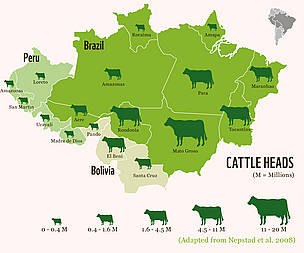
Want some evidence ?
https://wwf.panda.org/knowledge_hub/where_we_work/amazon/amazon_threats/unsustainable_cattle_ranching/
http://deforestationamazonia.weebly.com/causes.html
http://amazoniandeforestation.blogspot.com/2008/12/cattle-ranching-in-amazon.html


Image Credit: Flickr/SCI Houston First for Hunters
Revealed: Trophy Hunters are Killing Animals so Endangered, They’re Declared Extinct
Posted by Erica Schneider
A loophole in international animal trade regulations allows trophy hunters to legally kill animals deemed as extinct in the wild. And they’re doing it with the blessing of the US and U.K. governments, as revealed by the Campaign to Ban Trophy Hunting.
The Convention on International Trade in Endangered Species (CITES) is a trade agreement between world governments. CITES classifies animals into three appendices, and Appendix 1 contains the most critically endangered species. However, instead of protecting these magnificent creatures, CITES awards permits to trophy hunters to brutally murder them for fun.
Trading nearly extinct animals listed in Appendix 1 is banned except when it comes to killing them for “commercial purposes”.
Approximately 2,500 endangered species trophies have been imported into the U.K. between 2004 and 2014 because of this loophole. 2,500 animals that should have been protected, but instead were legally murdered in the name of entertainment.
Even more sickening, ranch owners in the US are breeding animals classified as extinct for the sole purpose of selling them as paid trophy ‘hunts’ for profit.
Several animals declared as extinct are advertised at captive hunting ranges, such as the scimitar-horned oryx and Père David’s deer. The federal government regulates this industry and issues permits through various treaties, including CITES.
“The domestic wildlife trade is the dirty underbelly of the trophy hunting industry,” said Kitty Block, CEO of the Humane Society of the United States. Block told CBS News that “Animals are fenced-in, hand-reared, hand-fed, and they’re baited so food is out when hunters come. Hunters are then driven up to the area where animal is eating and they’re shot there.”
Despite these horrific revelations, CITES is an important global animal trade regulator. Before CITES, wildlife trade was unrestrained. Animals that were killed and exported illegally from one country could easily be imported legally into another.
It’s time to do better than lax regulations that legally permit trophy hunters to kill animals declared as extinct for cruel entertainment.
We must close these loopholes and urge CITES to stop issuing legal permits allowing trophy hunters to kill the world’s rarest exotic animals. They deserve our protection and should not be pawns in a sick game.
CITES international conference started last weekend in Geneva and runs for 2 weeks. There, delegates from 180 countries will deliberate changes to the rules. 50 Members of the European Parliament have already written to Ivonne Higuero, secretary-general of CITES, urging her to close down these loopholes.
We can make demands too. Join us in speaking out against allowing hunters to mercilessly murder nearly extinct animals by emailing the head of CITES Ivonne Higuero at info@cites.org.

PLEASE SIGN, CIRCULATE AS WIDELY AS POSSIBLE, ON FACEBOOK, TWITTER, SOCIAL MEDIA ETC. AND SHARE
Subject: Amazon – EU trade deal with the Americas (Sum of Us petition)
Dear friends –
- The EU is about to sign a trade deal that could destroy what’s left of
the Amazon rainforest. We can stop this from happening:

AND
- EU set to overturn ban on baby African elephants being caught and sent to foreign zoos for a life of torture and Hell!
Threatened giraffes are however, given protection from unregulated trade for first time ever

As Ricky says – the asshole gets a new asshole !
Gold-clad Spanish bullfighter gets his deserved justice as he is gored in the groin during Basque culture celebration
- The painful moment a Spanish bullfighter was gored in the groin was captured in a series of grueling images
- Paco Urena was tussling with the animal as part of the Semana Grande fair in Bilbao, Basque Country, Spain
- A photographer captured the moment a bull lunged its horn between his legs at the Vista Alegre bullring
- Mr Urena had also been pictured smiling as he held two bull’s ears as trophies as part of Semana Grande
- The celebration of Basque culture sees thousands of festival-goers descend into northern Spain’s streets


https://www.theguardian.com/world/2019/aug/23/brazil-protests-amazon-bolsonaro-failure-protect
Protesters have laid siege to Brazilian embassies around the world as international outrage over Jair Bolsonaro’s failure to protect the Amazon intensified and supporters maligned critics of the Brazilian president as leftist conspirators.
Hundreds of demonstrators gathered outside Brazil’s embassy in central London on Friday with placards reading: “The planet deserves better” and “Our house is on fire”.
“Bolsonaro wants to destroy the forest … and we do not want this,” one indigenous leader from Brazil told the crowd.
There were also rallies outside Brazil’s embassies in Mexico City and Paris, where demonstrators reportedly carried banners reading: “Fora Bolsonaro!” or “Bolsonaro, out!”
Protesters also surrounded the Brazilian consulate in Geneva while further marches were planned in cities including Adelaide, Lisbon, Stockholm, Boston and Florida.
Brazil’s far-right president has rejected the international outcry over the fires raging in the Amazon and his stance on the environment.
Bolsonaro on Thursday painted the barrage of criticism as part of a foreign conspiracy that might eventually be used to justify a foreign “intervention” in the Amazon.
“This happens all over the world, it’s not just in Brazil,” he said of the fires decimating the world’s largest tropical rainforest.
Bolsonaro’s politician son, Eduardo, claimed criticism of his father was part of an international intrigue designed to damage his government.

“The GLOBAL left has come together in a clear attack against president Jair Bolsonaro,” he tweeted.
Rômulo Batista, a Greenpeace campaigner in the Amazon, said such claims – and Bolsonaro’s baseless insinuation that NGOs were behind the fires – were merely an attempt to deflect from Bolsonaro’s own responsibility for the environment calamity. “He is trying to hide behind a smokescreen,” Batista said.
In Brazil, demonstrators were preparing to mobilize for a weekend of protests in cities including Rio de Janeiro, Salvador, Curitiba, Recife and the Amazon city of Manaus.
“Almost everyone I know will go,” said Frederico Svoboda, 18, a history student from the Federal University of Rio de Janeiro.
“I believe that if there is not international pressure to force the government to deal with the fires and guarantee the protection of biodiversity and indigenous peoples there could be climate disasters in Brazil and maybe South America.”
People around the world should “pressure the Brazilian government to act”, Svoboda added.
Anna Mello, a 24-year-old biologist, said she would march in the north-eastern city of Recife.
“For me this is surreal, I can’t believe it is happening. It is absurd that … people can support this as if it were totally normal rather than a crime and something that might affect the whole of humanity.”
Writing in the O Globo newspaper, the columnist Bernando Mello Franco said that thanks to Bolsonaro, “Brazil is on track to go back to being seen as an environmental pariah”.
If you wish to contact your local Brazilian embassy, then please use the following link:
https://www.embassy-worldwide.com/country/brazil/
https://en.wikipedia.org/wiki/List_of_diplomatic_missions_of_Brazil
LONDON:
Address: 14-16 Cockspur St, St. James’s, London SW1Y 5BL
Closed ⋅ Opens 9AM Mon
| Saturday | Closed |
| Sunday | Closed |
| Monday
(Summer Bank Holiday) |
9am–6pm
Hours might differ |
| Tuesday | 9am–6pm |
| Wednesday | 9am–6pm |
| Thursday | 9am–6pm |
| Friday | 9am–6pm |
Phone: 020 7747 4500
by Helmut Kaplan, Austrian animal ethicist and author
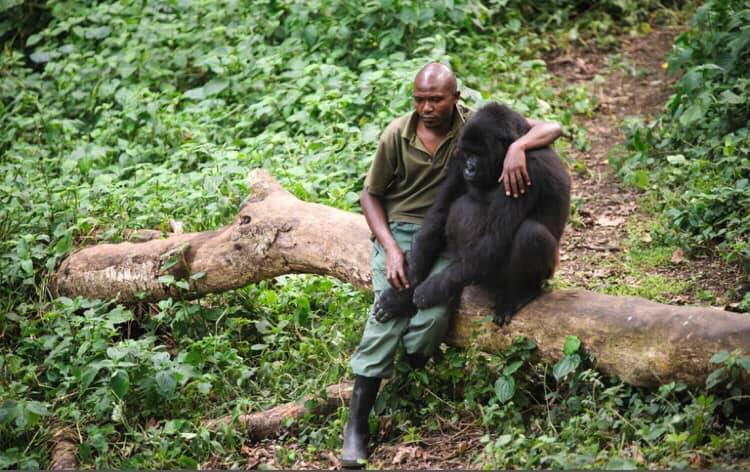
Generously, one is ready to reproach “animal friends” with so much “craziness” – just BECAUSE they are “animal friends” and thus at least slightly crazy: that they spend too much time on animals, that they love animals too much (“dog fool”, Cats fool “, etc.) and much more.
In a reproach, however, any understanding finds a sudden end: “They love the animals more than the people!” As soon as this capital crime is first suspected, one has immediately squandered all credit and sympathy! Why?
1) Anyone who assumes as a matter of course that one must value people more than animals, answers prematurely a question that should be reasonably first asked and discussed: WHY should people be more valuable in any case?
2) The demand for people to love people more than animals can also be seen as an invitation to a very bad habit: as an invitation to partiality.
By partiality is meant a bias against “strangers”. This is basically a classic ANTI ethics approach -because ethics is just about questioning and overcoming partisanship.

3) After the experience, we know that many animals are morally superior to many people, at least not morally inferior: The mere human moral ability, that means the ability to distinguish and decide between good and evil, is still no merit.
Somebody deserves that only when he positively USE this ability, that is, actually decides for the good.
On the other hand, the ability to moralize creates the danger of morally failing, that is, of deciding to do evil.

Moral ability does not mean moral superiority automatically, but involves the danger of becoming morally inferior – inferior to those who are not capable of morality. (If and to what extent certain animals are capable of morality, we will not discuss in this context.)

4) Who does not close his eyes, ears, brain and heart, to how horribly people treat animals, this one must love the animals more than the people who tyrannize, torture and kill these innocent animals!
https://tierrechte-kaplan.de/sie-lieben-die-tiere-ja-mehr-als-die-menschen/
My best regards to all, Venus


France will block an EU trade deal with Brazil and its neighbours over the country’s handling of fires in the Amazon rainforest, a spokesperson for Emmanuel Macron has said.

Brazil’s far-right president Jair Bolsonaro has been criticised around the world for his response to the fires, which scientists say are man-made and campaigners have linked to businesses looking to exploit the land.
“The president can only conclude President Bolsonaro lied to him at the Osaka summit,” a spokesperson for the Elysee told the Reuters news agency.
Wildfires raging in the Amazon rainforest are an international crisis that must be tackled by the world’s richest nations, President Macron has declared.
The French leader said that the record number of fires that have broken out this month, ravaging forests in Brazil and neighbouring countries, must be top of the agenda at this weekend’s G7 summit in Biarritz.
His remarks drew a sharp response from President Bolsonaro of Brazil, who blames environmental groups for the surge in wildfires as he tries to deflect international criticism
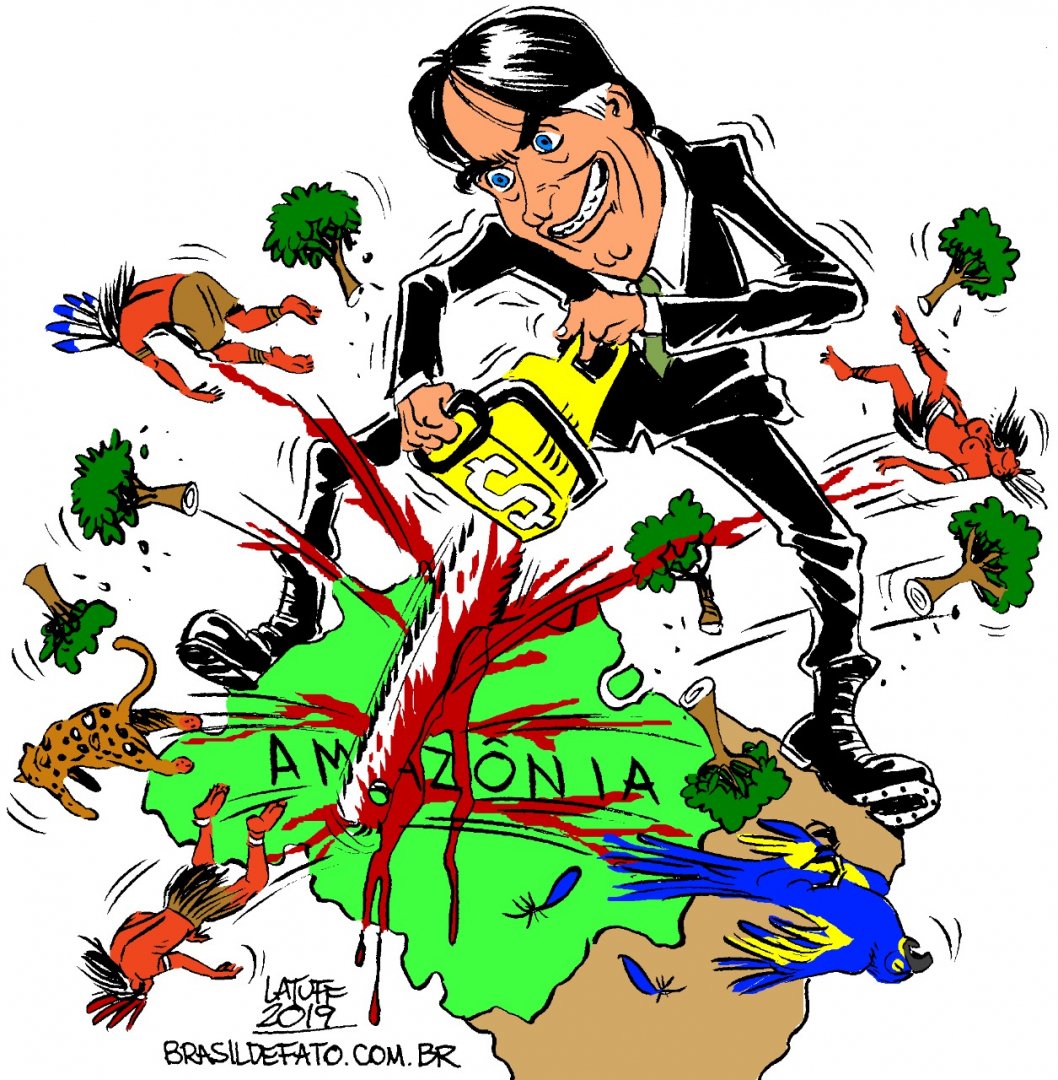
The rainforest might seem a remote place, but it is the heart of the planet – and it is under attack as never before
The Amazon is the centre of the world. Right now, as our planet experiences climate collapse, there is nowhere more important. If we don’t grasp this, there is no way to meet that challenge.
For 500 years, this has been a place of ruins. First with the European invasion, which brought a particularly destructive form of civilisation, the death of hundreds of thousands of indigenous men and women and the extinction of dozens of peoples. More recently, with the clearance of vast swaths of the forest and all life within it. Right now, in 2019, we are witnessing the beginning of a new, disastrous chapter. The area of trees being cleared has surged this year. In July, the deforestation rate was an area the size of Manhattan every day, a Greater London every three weeks. This month, fires are incinerating the Amazon at a record rate, almost certainly part of a scorched-earth strategy to clear territory. Why is this happening now? Because of a change in power.
A predatory form of politics called Bolsonarism has assumed nearly total, and totalitarian, power in BrazilA predatory form of politics called Bolsonarism has assumed nearly total, and totalitarian, power in Brazil. President Jair Bolsonaro’s chief project is to create more ruins in the Amazon forest, methodically and swiftly. This is why, for the first time since Brazil became a democracy again, it effectively has a minister against the environment.
What is happening in the Amazon?
Thousands of fires are burning in Brazil, many of them in the world’s biggest rainforest, which is sending clouds of smoke across the region and pumping alarming quantities of carbon into the world’s atmosphere.
Does this happen every year?
Yes, but some areas have suffered far more than usual. In the worst-affected Brazilian state of Amazonas, the peak day this month was 700% higher than the average for the same date over the past 15 years. In other states, the amount of ash and other particulates in August has hit the highest level since 2010.
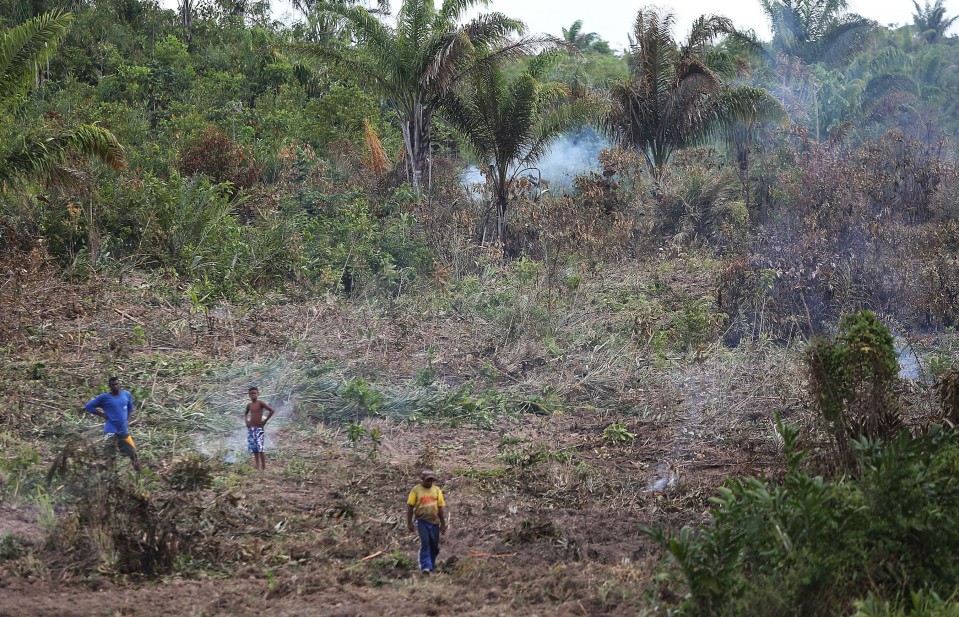
What is the cause?
Most of the fires are agricultural, either smallholders burning stubble after harvest, or farmers clearing forest for cropland. Illegal land-grabbers also destroy trees so they can raise the value of the property they seize. But they are man-made and mostly deliberate.
Unlike the huge recent blazes in Siberia and Alaska, the Amazon fires are very unlikely to have been caused by lightning.
Is the entire forest ablaze?
No. Satellite monitoring experts say the images of an entire forest ablaze are exaggerated. A great deal of misinformation has been spread by social media, including the use of striking images from previous years’ burning seasons. This week, there are more large fires in Colombia and eastern Brazil than in the Amazon. Most of the agricultural burn-offs are in deforested areas. But there are also fires in protected reserves.
So should we still be concerned?
Extremely. The fires are mostly illegal and they are degrading the world’s biggest terrestrial carbon sink and most important home for biodiversity. They also contribute to a more important trend, which is an alarming rise in deforestation. Scientists say the Amazon is approaching a tipping point, after which it will irreversibly degrade into a dry savannah. At a time when the world needs billions more trees to absorb carbon and stabilise the climate, the planet is losing its biggest forest.
How much forest is being lost?
In July, deforestation spiked to a level not seen in more than a decade. According to preliminary satellite data from Brazil’s space agency trees were being cleared at the rate of five football pitches every minute. Over the single month, ,2,254 sq km (870 sq miles) were lost, a rise of 278% on the same month last year. Scientists say this year could be the first for 10 years in which 10,000 sq km of Amazon are lost.


Is this the fault of the Brazilian president?
Jair Bolsonaro has made things a lot worse by weakening the environment agency, attacking conservation NGOs and promoting the opening of the Amazon to mining, farming and logging. The far-right leader has dismissed satellite data on deforestation and fired the head of the space agency. But it is not solely his fault. The agricultural lobby is powerful in Brazil and it has steadily eroded the protection system that was so successful from 2005-2014. Deforestation crept up in the past five years under the previous presidents Dilma Rousseff and Michel Temer. But the rate has accelerated rapidly in the first eight months of Bolsonaro’s rule.
What is the outside world doing?
The UN secretary general and many world leaders and celebrities have expressed concern. The Amazon will be high on the agenda for G7 leaders at a summit in France this weekend. They are likely to make a strong statement condemning the recent increase in deforestation and urge Brazil to restore the Amazon protections that previously made the country a global environmental leader.
Is that enough?
No. The priority should be building a buffer against the tipping point and drawing down emissions, which means not just protection of the Amazon but massive reforestation. This will require far more financial support than anything seen until now. For this to be effective, governments will also need to align their environment and trade policies. Currently countries like the UK spend small sums on overseas conservation, then promote billions of dollars worth of trade in beef, soy, timber, minerals and other products that undermine Amazon protection efforts. Politicians should also listen more to the voices of the people who live in the forest, such as indigenous groups and riverine communities.
Indigenous people from the Mura tribe show a deforested area in unmarked indigenous lands in Amazonas state. Photograph: Ueslei Marcelino/Reuters
What can individuals do?
Sign up to the Green Light email to get the planet’s most important stories
Read more
The most important actions are political and collective. Join a party or campaign group that makes the Amazon a priority. Through these groups, urge your elected representatives to block trade deals with countries that destroy their forests and to provide more support for countries that expand tree cover.
Apart from this, donate to organisations that support the forest, forest dwellers and biodiversity, including Instituto Socioambiental, Amazon Watch, WWF, Greenpeace, Imazon, International Rivers and Friends of the Earth.
As consumers, think twice before buying Brazilian beef or other products unless certified by groups such as Rainforest Alliance. The Amazon connection is not always obvious.
As the crisis escalates…
… in our natural world, we refuse to turn away from the climate catastrophe and species extinction. For The Guardian, reporting on the environment is a priority. We give reporting on climate, nature and pollution the prominence it deserves, stories which often go unreported by others in the media. At this pivotal time for our species and our planet, we are determined to inform readers about threats, consequences and solutions based on scientific facts, not political prejudice or business interests.


