“…That’s why dogs are happier than humans…”
Best regards to all, Venus
“…That’s why dogs are happier than humans…”
Best regards to all, Venus

As you can see from our global map; or ‘Clustrmap’; https://clustrmaps.com/site/1a9kn – we are getting lots of visitors from all over the World. The site is truly becoming a World Animals Voice.
If there are any specific issues that you would like us to try and investigate further; then please drop us a quick line using the ‘Contact’ link – https://worldanimalsvoice.com/contact/
For the animals;
Regards Venus and Mark.
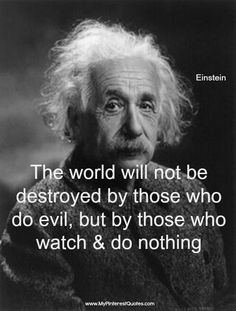

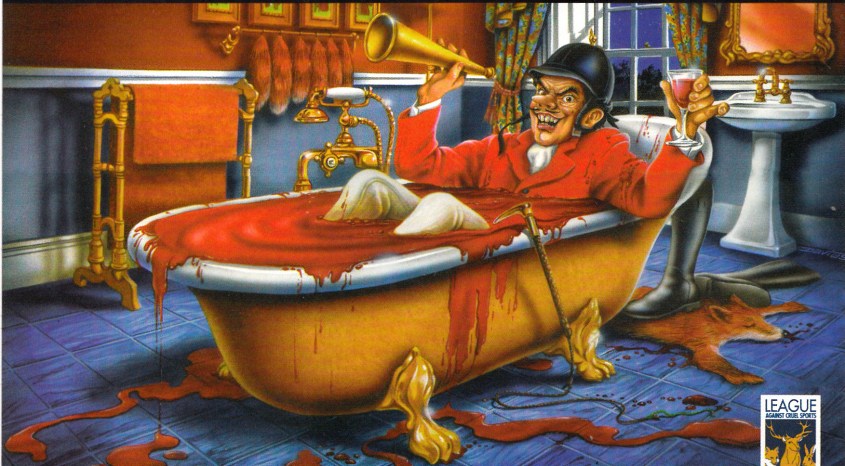
Bloodbath
https://www.league.org.uk/fox-hunting?gclid=EAIaIQobChMI4rrhkpyD5AIVyLTtCh3usQv-EAAYASAAEgK6afD_BwE
Reproduced from the ‘League Against Cruel Sports (LACS) – England.
Fox hunting is a ‘traditional sport’ in which hunters, usually on horseback, follow a pack of hunting dogs aiming to pick up the scent of a fox, chase it – and kill it. Fox hunting is illegal in England, Scotland and Wales, but evidence suggests that hunts are regularly breaking the law.
Carry on reading for some more fox hunting facts.
Fox hunting is illegal in England, Scotland and Wales. It is still legal in Northern Ireland.
Fox hunting was banned by the Hunting Act 2004 in England and Wales, and the Protection of Wild Mammals (Scotland) Act 2002 in Scotland. But while these were both welcome and hard-fought pieces of legislation, overwhelming evidence suggests that both are being ignored or exploited by hunts on a regular basis.
Hunts in England and Wales invented the activity of ‘trail’ hunting after the fox hunting ban came in. This claims to be a non-lethal sport where the hunt simply follows a pre-laid trail rather than searching for and chasing a fox. However, years of evidence shows that hunts are using trail hunting as a cover for illegal hunting by claiming to be following a trail but still carrying on and hunting foxes the way they did before the hunting ban.
Hunts in England and Wales also use ‘exemptions’ in the Hunting Act. These were designed to allow certain types of ‘pest’ control or scientific research, but are being exploited by the hunts to give them an excuse to carry on hunting.
In Scotland, an exemption in the law allows foxes to be killed by ‘flushing to guns’, where a pack of hounds is allowed to be used to chase a fox from cover where it can be shot. However, evidence from League investigators shows hunts claiming to be flushing to guns – but without having any guns present in the right place.
If you are opposed to hunting, then you are in the majority. More than eight out of ten people are opposed to hunting. This includes more than eight out of ten people in rural areas – which shows that people who truly understand and experience what hunts do want to see it remain illegal.
Hunting is not a town vs country issue, and it is not a ‘class’ issue. More than seven out of 10 Conservative voters want hunting to remain illegal. Hunting is an issue of animal cruelty, nothing else.
Some argue that ‘hunting’ should continue because it’s a grand old British tradition. However, bear baiting and bull baiting were also traditions, and they were rightfully consigned to the history books. Traditions are measured in more than years. They have to reflect the values and attitudes of a society, and the vast majority of the British people oppose hunting with dogs.
Fox hunting is not a credible form of pest control. Hunters claim that they are helping farmers by killing foxes, but this is a senseless argument that most people no longer believe. The League does not believe that there is any requirement for lethal fox control, but even if there was, then hunting is neither a humane nor effective way of doing it.
Any suggestion that fox hunting is about ‘pest control’ can be dismissed very quickly by the fact that hunts have been caught capturing and raising foxes purely so they can then be hunted. In May 2015, a League investigation revealed 16 terrified fox cubs held captive in a barn linked to a fox hunt in Yorkshire. We rescued them, took them to a vet, and sadly one died, but we released the others to safety. We are proud to have protected those foxes.
While the scale of this fox ‘factory’ was shocking, it’s not an isolated case. In December 2015, League Investigators released a fox found locked in a building near to where the Belvoir Hunt was meeting. It is worth mentioning that a few months later, while monitoring the same hunt, our Investigators were brutally attacked, leaving one with a broken neck, which we believe was retaliation for us rescuing this fox.
Watch the story of 16 fox cubs found captive in a barn close to a hunt kennel.

Sign the petition at:
https://takeaction.league.org.uk/page/19719/data/1

The Result – Photo – Mark (WAV).

I just had to put this beautiful little pup on here tonight, as it really made me laugh ! – just to end the day with something good after all the export downers we have been experiencing.
Regards Mark.

Images of a beautiful rescue puppy born with a Salvador Dali-like “mustache” have caused a stir online after the dog was saved from the streets and put up for adoption, along with her mother and ten siblings, by Hearts & Bones Rescue.
Initially referred to as “mustache pup,” this adorable five-week-old puppy has now been named Salvador Dolly due to her resemblance to the surrealist Spanish artist. Inquiries about adopting her are flooding into the non-profit organization.

Dolly, along with her mother and siblings, is currently living with a loving foster family in Dallas. The whole crew is looking for forever homes in New York City and will be ready for transport at the end of August.
The rescue organization has highlighted the vital importance of people fostering and adopting rescued animals. “We were only able to save Dolly and her family because we had a foster to take them in,” it stated in a Facebook post. “The more people we have ready to open their hearts and homes to a dog in need, the more we can save!”

Salvador Dolly’s road to fame is just getting started, as she is now the face of Hearts & Bones Rescue animal adoption drive and is even on a T-Shirt saying “I mustache you to adopt.”
Rescue dogs make great companions and this unique little puppy is a great reminder of how special all animals are.
I am supplying the following as additional reference / information to the excellent post which has recently been provided by Venus relating to animal transport guides: https://worldanimalsvoice.com/2019/08/14/eu-animal-transport-guides-animals-are-transported-in-the-best-possible-ways/
The following all directly relates to EU Regulation 1/2005 on the (so called) ‘protection’ of animals during transport. Relevant sections and what they state are given.
A full copy of Reg 1/2005 can be accessed by the following link: https://eur-lex.europa.eu/legal-content/en/ALL/?uri=CELEX%3A32005R0001
As an additional reference, we give you a link to a very specific document produced by ‘Eyes on Animal’ in the Netherlands, which specifically deals with the issue of the importance of access during transport.
Here is the link to the report: https://www.eyesonanimals.com/wp-content/uploads/2011/12/Downloads_Eyes_on_Animals_report_Importance_of_Access.pdf
We will identify our own (WAV) specific concerns clearly in relation to the Regulation in the following.
As Venus says in her post:
And we mean: The video work is actually very good, congratulations.
What we do not quite understand, to whom are the videos directed.
To the truck driver?
And before 2018, before the project is completed, did the drivers not know which laws apply to animal transport at EU level?
And now that they finally know, do they have to follow these rules? Or only if they want?
Exactly Venus – as we will show below, since the implementation of Reg 1/2005 in December 2004, all livestock drivers are supposed to be certified (since then) to ensure they are knowledgeable and competent in the transport of live animals.
If this is the case; then why have the EU wasted a lot of time and money in producing new videos on animal transport (links shown in your post) ? – is this rather like making a video to instruct a qualified pilot the basics of flying a plane ? – drivers are supposed be certified by 1/2005 since 2004; so what is the real point of these new EU videos; apart from wasting lots of money ?
Anyway; we move on.
EU Regulation 1/2005 on the protection of animals during transport declares:
ANNEX IV
TRAINING
The training courses referred to in paragraph 1 shall include at least the technical and administrative aspects of Community legislation concerning the protection of animals during transport and in particular the following items:
(a) Articles 3 and 4 and Annexes I and II;
(b) animal physiology and in particular drinking and feeding needs, animal behaviour and the concept of stress;
(c) practical aspects of handling of animals;
(d) impact of driving behaviour on the welfare of the transported animals and on the quality of meat;
(e) emergency care for animals;
(f) personnel handling animals.
Article 6
Transporters
ANNEX I
TECHNICAL RULES
(as referred to in Article 6(3), Article 8(1), Article 9(1) and (2)(a))
CHAPTER I
FITNESS FOR TRANSPORT
No animal shall be transported unless it is fit for the intended journey, and all animals shall be transported in conditions guaranteed not to cause them injury or unnecessary suffering.
When animals fall ill or are injured during transport, they shall be separated from the others and receive first-aid treatment as soon as possible. They shall be given appropriate veterinary treatment and if necessary undergo emergency slaughter or killing in a way which does not cause them any unnecessary suffering.
CHAPTER II
MEANS OF TRANSPORT
2. Additional provisions for transport by road or rail
2.1 Vehicles in which animals are transported shall be clearly and visibly marked indicating the presence of live animals,

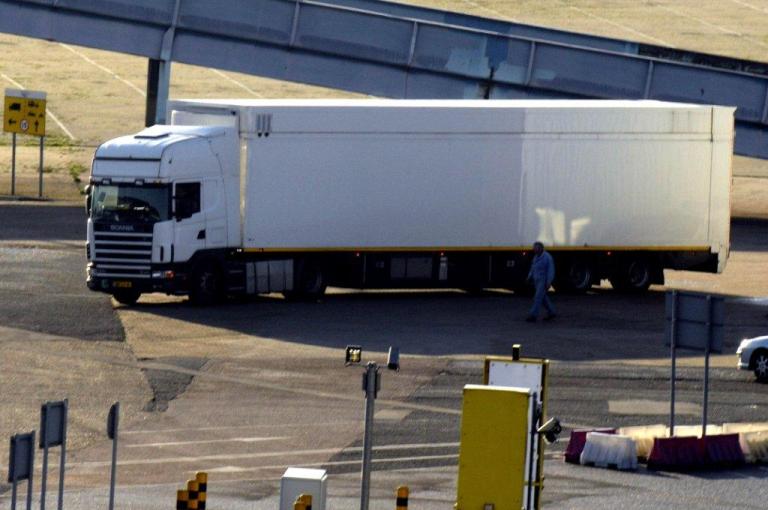
Clearly and Visibly Marked ???
WAV Comment – Regarding the last couple of points shown red above, we draw your attention to one of our recent posts on how the industry is not being compliant with EU Regulations when transporting live animals in box type trailers.
Here is the link: https://worldanimalsvoice.com/2019/08/08/england-sealed-box-type-animal-trailers-how-the-industry-dodges-identifying-what-they-transport-and-the-eu-oks-it/
We ask; when box type trailers are being used:
Nothing has ever been done by the EU Commission to address our concerns about live animals being transported in box type trailers.
So, we add all this up and what do we get:
Nothing much really – we (and many other organisations) provide all the evidence top show that adherence to EU rules are a complete and utter joke within the live animal transport sector; we show that the EU does nothing except make nice new videos for drivers who are supposed to be fully trained and competent in the first place, and we see a Eurogroup for Animals which does not really do much to address any of the issues; when they are supposed to be the direct link to MEPs at the European parliament, who can make changes to the law !
Fed up; disgusted on behalf of the animals; and don’t even ask me about the Brussels crowd; I think we have now proved they in EU circles are utterly incompetent.
Regards to all – Mark.
We have also today (14/8) attempted to make contact by e mail with the 2 primary contacts at the Eurogroup about the live transport issue; but the following has come back to us:
Thank you for your message. I will be on summer leave until 25 August 2019 and will respond to you upon my return.
For urgent matters you can contact my colleague Alessia Virone, a.virone@eurogroupforanimals.org
Best regards,
Andreas Erler
Senior Political Adviser, Eurogroup for Animals
And Alessia (the urgent contact) says:
Thank you for your message!
I will be out of the office until the 18th of Augustus.
I will answer to your email as soon as possible upon my return.
If your question is urgent, please contact my colleague Andreas Erler (a.erler@eurogroupforanimals.org).
Best,
Alessia
Strong cup of tea, please !
|
|

There is a nice anecdod that illustrates the absurdity in our live very well:
A gentleman goes to the psychiatrist: “Doctor,” he says, “my brother thinks he is a chicken.”
“And why don`t you bring him to the clinic?” asks the doctor
“I would like to do that, but I need the eggs”!
It’s the same in life, we see the absurd, the paralogue, but we need the eggs.
Therefore, it is not very easy to admit that the EU has failed at every level if one is well paid by the EU.
Everyone needs the eggs!
In the case of the EU Commission the absurdity is only a harmless word, we should actually speak of convinced animal haters.
Who else would extend the castration of the piglets without anesthesia?
Who else would prolong the chick shredding?
Who else would bury the 8-hour campaign in the sand, despite the 1.2 million signatures?
Who else would let criminals animal tansporteure unpunished if they drive animals with 40 degrees to death?
Who else would have slaughterhouse operators continue to work if they sent pregnant, sick and injured animals for transport?
The questions go to Eurogroup for Animals, because according to their statutes they are the skilful actors to transform animal suffering to animal welfare, as a trusted bridge between the European Commission and animal suffering!
Nobody would deny that the driving force of any Eurogroup for Animals member is the defense of animal rights, at least in the first phase. It is more difficult for anyone to understand, how is it possible to work for them, who the animals demonstrably hate and have not done anything else until now, rather than closing lucrative deals with those who live on animals.
In that sense, a job for Animal Rights in Brussels is like any other job, except that it is seductively rewarded.
Over time, and having experienced all facets of anger and disgust inside ourselves for the validity of the EU Commissioners, we believe that we should not expect any improvement from either groupings or individual officials.
The groupings, because they do not even believe themselves that they have the power to persuade and convince the inept and unwilling commissars to take action.
But they need the eggs, they stick to it.
The commissioners because they have no interest in defending neither animal rights nor human rights (the case of Catalonia, a sad proof), and because the EU, as the largest agricultural lobby, has betrayed the animals.
For a long time, we have only known EU Commission and Eurogroup for animals as egg sellers from happy chickens.
My best regards to all, Venus

Posted by Lori Lovely


Petition link – https://ladyfreethinker.org/sign-stop-the-barbaric-hanging-of-coyotes-by-savage-hunters/?utm_source=Newsletter&utm_medium=Email
PETITION TARGET: Vermont Governor Phil Scott
Two young coyote pups were dangled by their feet from a utility pole in front of a home in Vermont’s rural Essex County. The grisly sight took place on a main road and horrified people who passed by. These innocent victims were hunted, killed, and hanged in a smug showcase of vanity.
Brenna Galdenzi of the group Protect our Wildlife was shocked when she saw these poor creatures strung up for a gruesome display. Outraged, she told New England Cable News, “I don’t really think there’s any other way to look at those photos than to be completely appalled.”
Because these pups were hanged on private property, no current laws were violated. Coyotes can be hunted all year in Vermont. In fact, it’s open season on coyotes year-round in most of the US. Even more sickening, most states hold annual coyote-killing contests that are nothing short of “gruesome celebrations of slaughter,” as reported by The Washington Post.
Vermont has recently become the 2nd state to ban these horrific contests, but we need more. Animal advocates are calling for change. However, the Vermont Fish and Wildlife Board recently denied a petition to restrict coyote hunting. We must speak out to save coyotes and other animals from such brutal treatment.
Sign this petition to urge Governor Scott to call for legislation that would protect coyotes and end barbaric practices such as stringing them up like criminals on display.

London University bans hamburgers ‘to tackle climate change’

A London university is banning the sale of burgers to try to fight global warming.
Goldsmiths, University of London, is removing all beef products from sale – and charging a 10p levy on bottled water and single-use plastic cups.
It plans to install more solar panels across its New Cross campus, in south-east London, and switch to a 100% clean energy supplier as soon as possible.
It will spend money on its allotment and identify other areas where planting could help to absorb carbon dioxide.

The university emits about 3.7 million kg of carbon each year but is hoping to become carbon neutral by 2025.
And it will try to increase the number of students studying climate change.
Scientists say beef is more damaging to the environment as cows produce more methane and require more land and water than other livestock.
The college’s new head, Prof Frances Corner, said: “The growing global call for organisations to take seriously their responsibilities for halting climate change is impossible to ignore.
“Though I have only just arrived at Goldsmiths, it is immediately obvious that our staff and students care passionately about the future of our environment and that they are determined to help deliver the step change we need to cut our carbon footprint drastically and as quickly as possible.
“Declaring a climate emergency cannot be empty words.
“I truly believe we face a defining moment in global history and Goldsmiths now stands shoulder to shoulder with other organisations willing to call the alarm and take urgent action to cut carbon use.”
Goldsmiths Students’ Union president Joe Leam said: “Our house is on fire,” invoking the words of teenage climate activist Greta Thunberg.
“I believe Frances Corner and the university management are realising this and making these changes to put their part of the house fire out.
“The SU will be a part of this process every step of the way to make sure this stays true, seeking to speed the process up wherever possible, and will keep the college community updated throughout.”
Rosie Rogers, of Greenpeace UK, said: “It’s encouraging to see an institution like Goldsmiths not simply declaring a climate emergency but acting on it.
“From energy use, to food sales and plastic pollution – all universities and organisations with campus sites can make changes across their facilities that are better for our planet.
“We call on others to urgently follow suit and to include cutting all ties from fossil fuel funding in their climate-emergency response.”
https://www.bbc.co.uk/news/education-49321560
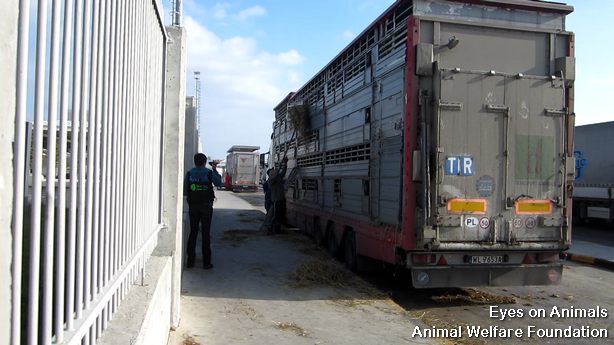
From Mark – this is what I have to say. I am sure Venus will want to say more, and I leave the page open for her to write further posts if she desires.
The text below (at the end) is from the ‘Eurogroup for Animals’ – we have provided the link so that you can see the site. We have reproduced the text in full.
We (WAV) as a group have over the past few weeks have, shall we say, ‘had a different view’ to some organisations over the subject of live animal transportation. As you have probably seen with some of our past posts, we don’t really hold back; and if we feel that not enough is being done by institutions such as the EU with regard prosecutions or following up on specific incidents, then we shall say so; simple as that. We are not simply content to just sit back and accept non action after non action on issues that we consider are so important in the welfare of animals, such as live transportation in extreme temperatures.
So, here are a few instances where we. as an animal advocate organisation, would for example disagree a bit with the statement which is put out (By Eurogroup) below. We give the statement form the site, and then follow on with our own perspective. This is for you; our visitors, to read and then hopefully discuss. We are not saying that either party is correct or wrong in what they say; there is though, a difference of opinion on the issue, and importantly; how it should be addressed.
Statement – “Despite a warning from the EU Commission to Member States not to export animals during hot weather conditions, evidence collected by NGOs at the main EU exit points demonstrates that animals are systematically loaded into trucks and vessels regardless of weather forecast and EU requirements”.
Our Comment – we think here that really the Eurogroup are saying that no (or not many) EU member states actually adhere and act to warnings given by the EU about hot weather transportation. So why is the EU continually allowing its member states to ignore what it requests / warns ? From the statement it is clear that even the EU itself, accept that ‘animals are systematically loaded into trucks and vessels regardless of weather forecast and EU requirements’. We would say rather than just continually pushing the actions of member states who break the rules to one side; the EU needs to wake up and through the Commissions, needs to take firm and decisive actions against those member states who are non compliant. What is the point in having a ‘Regulation’ on the so called ‘protection of animals during transport’; ie. 1/2005 of 22nd December 2004, and to which all member states should adhere to, when many of them just turn around and give 2 fingers to the rules ?
Statement – “Transportation of live animals outside the EU has proven to be problematic from a welfare point of view even under normal circumstances.”
Our Comment – so the EU is basically accepting itself in this statement that live animal transport from a welfare point of view is not really working; or in other words, that member states are not following the regulations to ensure better welfare, or no shipments under such circumstances. If the engine of a particular type / series of car is found to be ‘problematic’; then the manufacturer usually does a recall of vehicles involved and attempts to rectify the problem. So in this case, why is the EU not attempting to look at the reports and evidence provided to them by NGO’s (and there sure is enough !!) and then actually do something to rectify the ‘problems’ ? – you could call it turning an EU blind eye to the problems.
Statement – “.As concluded by DG SANTE: “Due to the inability of the livestock vehicles ventilation system to lower the temperatures in the animal compartment below the external environmental temperature […] it is very difficult for transporters to ensure that animals inside the lorry are kept below 35°C when ambient temperatures are over 30°C”.
Our Comment – An EU (DG SANTE) ‘fact-finding mission’ took place in Turkey from 5 to 8 September 2017, as part of the published DG Health and Food Safety audit programme. The objective was to collect information on causes of delays in the import of EU animals into Turkey at the Kapitan Andreevo-Kapikule border point, in order to identify actions that allow the transport of live animals to Turkey to operate smoothly, while ensuring a satisfactory level of protection for the animals concerned.
The report concludes that “there is a high risk of causing unnecessary pain and distress to animals transported on this route during hot days”.
“Due to the inability of the livestock vehicles’ ventilation system to lower the temperatures in the animal compartment below the external environmental temperature and the limited opening hours of the veterinary control point, it is very difficult for transporters to ensure that animals inside the lorry are kept below 35 degrees C when ambient temperatures are over 30 degrees C. This is made worse by the lengthy administrative procedure”.
Section 4 ‘Background’ of the report states:
“After a sudden drop in exports to Turkey between 2012 and 2013 this trade has been increasing significantly in recent years. The number of live ruminants exported to Turkey in 2016 (more than 290,000) has surpassed the numbers for 2011 (more than 280,000) and is expected to reach similar numbers in 2017”.
“The central (Turkish) competent authority indicated that national guidance points towards not performing official veterinary controls at the border during the night as there is limited visibility to perform an appropriate inspection”.
“There is a dedicated lane for livestock vehicles waiting to undergo veterinary controls.
This lane has one single water source available for vehicles; on the day of the visit there were six (6) trucks present here.
Shade is not available for vehicles waiting to undergo veterinary controls.
There are no facilities at the border inspection post to unload any animals. If the animals are detained due to shortcomings detected during controls, they have to remain in the vehicle”.
“The veterinary border control point opens for the veterinary checks at 8:30 and closes at 17:30. During this time, controls stop between 12:00 and 13:00 (lunch break)”.
“Conclusions on conditions at the veterinary border control point:
The scarce availability of facilities to address the needs of the animals and the lack of facilities to unload them is a high risk to the welfare of the animals transiting this border, in particular during the hotter periods of the year and/or when they have to be detained. This makes it difficult for transporters to comply with EU rules when travelling along this route”.
So, move on to now, almost September 2019; 2 years later; and ask yourself what improvements have there been ? – we ask why is there a ‘limited opening hours (8-30 am to 5-30pm with an hour lunch break !) of the veterinary control point’, when transporter vehicles are turning up at all hours of the day and night often in temperatures that very easily the maximum permitted ? – could it be that the EU authorities really need to talk with Turkish counterparts and ensure that facilities at control points are open 24/7 ? – and could they also not take action to reduce the ‘lengthy administrative procedures’ ? – are we missing something or is this NOT quite rocket science !
The (Turkish) competent authority’s response to the recommendations can be found at:
http://ec.europa.eu/food/audits-analysis/rep_details_en.cfm?rep_inspection_ref=2017-6110
Ask the 290.000+ animals being exported if they are now benefitting as a result of the DG SANTE fact finding mission of 2017 and the resulting actions of the Turkish ‘competent’ authority.
We have no further information showing us that there have been any follow up visits by DG SANTE to see if their comments in the report of 2017 have actually been addressed by the Turkish competent authorities. If anyone does have information, then please let us know via the ‘contact’ route.
Hungary is one EU member state that has taken action regarding these shipments, and we congratulate them on their actions. The Eurogroup for Animals states:
“We welcome the Hungarian ministerial decision and we urge other Member States to follow this example,” says Reineke Hameleers, director of Eurogroup for Animals. “We call on the Member States and the Commission to suspend the live export during summer, as compliance can’t be guaranteed. We need to avoid the immense suffering of the animals as witnessed over the past years at all costs.”
We ‘urge’ and we ‘call on’ ! – “We need to avoid the immense suffering of the animals as witnessed over the past years at all costs”.
Here at WAV, we also ‘urge’ and ‘call on’; we call on a 2017 follow up visit and report by DG SANTE to investigate exactly what improvements, if any, there have been. We urge the EU officials and Commissioners to come out from behind their desks in ivory towers and actually take action, in the way of prosecutions, towards members states who are exporting animals in conditions; and who have paperwork which is non compliant with the (1/2005) regulations.
How much longer do we have to wait for positive action ?
Will the EU ever really wake up to the issue of live animal transport ?
With all these EU animals being exported to a non EU state, does this not tell us that the EU is overproducing – EU subsidies to pay farmers, to produce, and then export the ‘not required’ produce to non EU nations ?
Like everything with the EU, finance is the driving force. Other issues such as those shown above take a very lowly second place in the stack
We vote for the European Parliament to act on our (EU citizens) behalf. It never really happens with live animals, despite positive votes in the Parliament in the past, the Commissioners never act to follow up what the people and parliament say.
If you’ve been feeling the heat this week, imagine what it’s like for animals crammed into trucks for transportation – often for several days or weeks – without receiving water and veterinary care, and in temperatures largely exceeding 30 degrees.
Despite a warning from the EU Commission to Member States not to export animals during hot weather conditions, evidence collected by NGOs at the main EU exit points demonstrates that animals are systematically loaded into trucks and vessels regardless of weather forecast and EU requirements.
Transportation of live animals outside the EU has proven to be problematic from a welfare point of view even under normal circumstances. With the increase of temperature, the situation drastically worsens. As concluded by DG SANTE: “Due to the inability of the livestock vehicles ventilation system to lower the temperatures in the animal compartment below the external environmental temperature […] it is very difficult for transporters to ensure that animals inside the lorry are kept below 35°C when ambient temperatures are over 30°C”.
Some EU countries are starting to take action to ensure that animals don’t have to endure this hell during heatwaves such as this one. Hungary has recently made a ministerial decision to suspend the export of ruminants to Turkey in high temperatures. The suspension applies to all consignments of live animals without air conditioning, and means that if the temperature of the vehicle reaches a maximum of 30°C + 5°C, the vehicle will be directed to the nearest rest station. The Ministry of Agriculture decision also forbids trucks to continue on from the Hungarian resting places to Turkey if animal welfare conditions are not met. Some restrictions are also in place in Germany, Austria and the Czech Republic, where due to extreme temperatures for 3 days starting from today, the State Veterinary Administration announced that it will not dispatch consignments of farm animals from the Czech Republic for more than 600 km.
“We welcome the Hungarian ministerial decision and we urge other Member States to follow this example,” says Reineke Hameleers, director of Eurogroup for Animals. “We call on the Member States and the Commission to suspend the live export during summer, as compliance can’t be guaranteed. We need to avoid the immense suffering of the animals as witnessed over the past years at all costs.”
The Federation of Veterinarians of Europe (FVE) stresses that transportation of live animals should not be started if temperatures are expected to exceed 30 degrees during any stage of the journey.


