British Member of Parliament Rehman Chishti is seeking to introduce legislation under which any motorist who runs over a cat and callously drives off could be fined up to £20,000 (around $25,436).
The MP for Gillingham and Rainham wants to get the new law passed to ensure that people don’t simply leave injured or dying cats suffering by the roadside.
As well as ensuring all cats be microchipped so that their carers can be easily contacted in the event of an accident, the proposed ‘Cats Bill’ would place a legal requirement on motorists who knock down a cat to inform a local vet. If the driver doesn’t report the accident, they would face a significant fine.
In the UK, even if a motorist hits and kills a cat, the driver isn’t legally obliged to report it under the Road Traffic Act (1988). The Act does, however, require drivers to report if they hit a dog, so this change in legislation would offer felines the same level of protection as canines currently, and rightly, enjoy in Britain.
“There are 11.1 million cats in the UK, and they are often regarded as a member of the family, bringing immense happiness and joy to their owners,” Chishti states on his website. “This is why their welfare should be a priority at every level.”
“Cats that have been hit often are in critical condition and so the quicker they are seen by a vet, the better,” said Mandy Lowe, co-founder of the Cats Matter campaign group, speaking to Yahoo News UK. “A fine is one of those things we have pushed for hardest, simply so there is a comeuppance ensuring drivers think twice about leaving them in the road.”
“We figure if people can’t do the right thing out of compassion for an animal, they will with the threat of financial burden,” Lowe added. “Offences under the Animal Welfare Act can see offenders pay up to £20,000 or jail time, and we want this legislation to come under that.”
According to Cats Matter, approximately 230,000 cats are run over each year in the UK, equivalent to a car hitting a feline every 2.5 minutes. A horrifying statistic.
If you find an injured or deceased animal on the road, take them to the nearest vet who will be able to treat the animal or contact their carer.
We want cats protected by the law; not only dogs ! – WAV.
The EU is the second largest meat producer in the world with around 47 million tonnes (China, the first: 85 million tonnes).
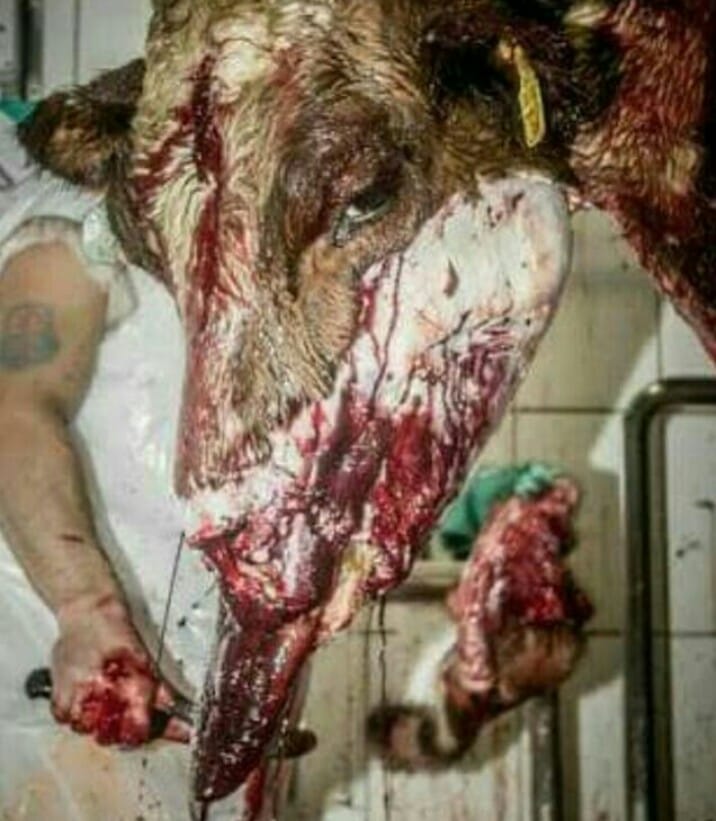
Over the past 50 years, global meat consumption has quintupled. Demand for meat and, above all, poultry is rising rapidly worldwide. To cover them, global meat production must increase to 470 million tonnes by 2050. To this end, the meat industry uses: vaccines, antiparasitic and antibiotic products for pigs, poultry and cattle!
Germany is not only one of the largest meat producers, but also one of the largest milk producers in the world. Subsidized with tax money! Germany produces 8 million tons of meat every year!
In order to be able to produce that amount of meat at all, it needs food for the animals.Germany imports most of the soya from Latin America.
This is the illegal deforestation of Mato Grosso, a federal state of Brazil
This soy, mostly genetically modified, is used for the rearing of chickens, pigs and cattle or for the production of meat, eggs and dairy products.
To be able to produce this amount of soy, forests are cleared and burned. An extraordinary, century-old ecosystem with a high biodiversity disappears.
So, if the topic of climate change or CO2 is under discussion, why is the topic of factory farming not mentioned?
Animal products are associated with high greenhouse gas emissions, water consumption and inefficient land use! The agricultural lobby is powerful, that’s well known. And it is subsidized in Germany with tax money, which then for education, care, etc. not available. From the EU, the German agricultural lobby receives about 6 billion euros and these are causing severe damage in other countries. On average, every EU citizen pays 32 cents a day for the EU’s agricultural policy.
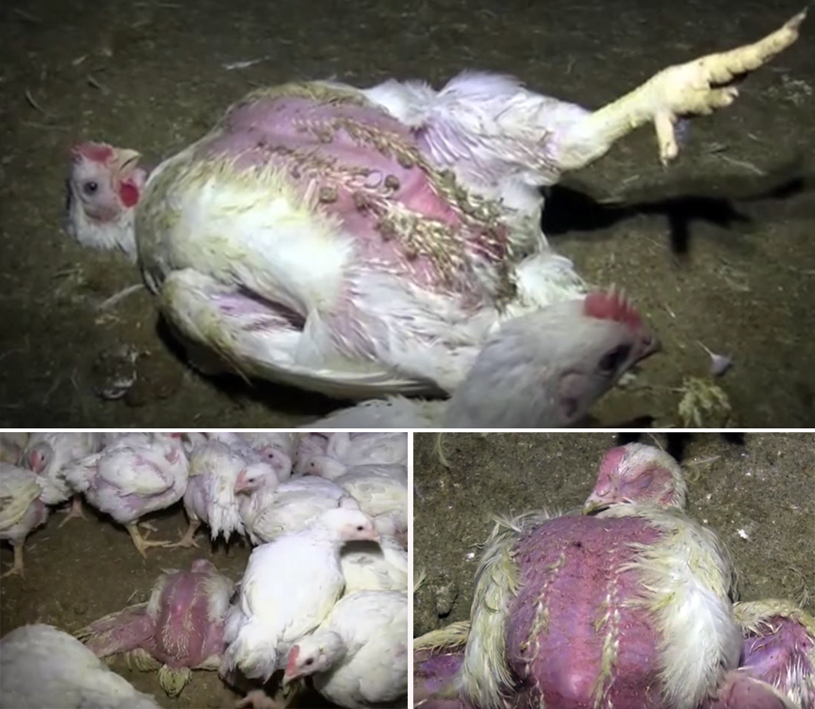
Europe’s largest chicken farm is located in Germany, north of Hanover, where over 2.6 million chickens are killed every week.That’s between 7 and 8 per second. Europe’s largest slaughterhouse for poultry was subsidized with 6.5 million euros from taxpayers’ money!
And to ensure that meat production continues to boom, EU Agriculture Commissioner Hogan promised to help “productive” farm animal owners to open up new export markets, and he referred to market voyages to Vietnam and Indonesia.
In 2017, 35 million tons of soybeans and soybean meal from North and South America were shipped to the European Union – in absolute terms 68 kilograms for each EU citizen.
Without these imports, the production of animal food would not be possible at the current level. Because Europe does not produce enough protein-rich forage plants to be able to feed the large numbers of livestock – especially pigs and poultry, but also cattle. Maize is mainly grown for bioenergy.
Most of the more than 312 million tons of soybeans grown worldwide feed on humans only indirectly.
Processed into animal feed it serves the growing meat production in the factory.
The vast majority of world trade in soybeans and meal (around 90%) is in those countries where genetically modified soybeans are grown.
Meat consumers eat GMOs without them knowing it. Chickens, pigs and cattle get genetically modified food. In addition to genetic engineering are the pesticides that were made suitable for these genetically modified plants, such as glyphosate. Unfortunately, many people are not aware of the amount of pesticides they are exposed to daily from their diet. The majority of our meat and dairy products come from animals fattened with GMO feed.
It is estimated that over 30 million tonnes of genetically modified feed are imported into Europe each year to feed pigs, poultry, dairy and beef cattle and farmed fish.
Much of the soybean and corn used for this purpose is grown in South America, including Brazil, Argentina and Paraguay.
Cheap meat, cheap milk and cheap eggs can only be produced with cheap soybeans, which, however, the countries of origin pay dearly: deforested rainforests, destroyed environment, poisoning of humans and animals are the result.
“All rivers, all water resources are dead. Where previously grew forests, there are now only soy plantations. Everything is poisoned, which is mainly due to the massive use of agrochemicals. At the same time, indigenous communities, which have always lived in the Atlantic rainforests, have been displaced. Particularly affected are the Guarani’I m’gba” Elias Diaz Pena, Sobrevivencia, Paraguay.
This is not agriculture. This is an environmental crime!
This documentary video explores the catastrophic effects of soybean cultivation in South America and shows people in South America and Europe alternatives to the devastating vicious circle. The video is in English or Spanish with German subtitles.
My comment: The Ex-UN representative, the Swiss Jean Ziegler said:
“A child dying of hunger today is being murdered”!
By whom murdered? Of all those who are involved in this system. This also applies to those meat consumers who are indifferent to the suffering of animals and the destruction of the environment and who finance this system through their purchases.
Because we and our children want to have our steaks, the poor countries sell their crops to the livestock of the rich nations, while in the 122 of the third world countries, and according to UN statistics, 43,000 children die of hunger… per day!!
Each of us makes daily the decision whether he wants to participate in the dirty system of the farm animal mafia by the consumption of meat, milk, cheese and eggs and whether he wants to make himself guilty of the brutal consequences for the environment, the hunger and the suffering of the animals.
WAV Comment – we wish dear Erika all the very best with what sounds like a bad injury. Time will heal and she will soon be back to full strength saving the many animals as always with AAU. Please support them and give a donation if possible; follow the links below. Thanks – Mark and Venus – WAV.
For the team at AAU with thanks for their dedication and compassion:
A special introduction to this newsletter from AAU Co-Founder Erika Abrams:
This is just a quick editorial, typed with my left hand, about a subject I can’t seem to escape this week: pain and comfort. I slipped in the house and crashed down on my elbow, fracturing my upper arm in jagged line that descended into the elbow joint. During the past few days I’ve had surgery, plates, screws, staples, you name it…and it hurts. I’ve emerged from this mishap loving Animal Aid’s staff more than ever. I am deeply impressed by how gently they treat our patients. I would have felt lucky to have had them as nurses. And with this new, uninvited consciousness of pain, I deeply thank you so much for making it possible for us to give this gift of comfort and healing to the animals who are hurting. –Erika (even hitting the shift key and the e at the same time to ‘achieve’ a capital E was difficult!)
Birju was burned and left to die. But loving help was waiting…
This donkey’s heart-breaking abuse left him stranded in the road, unable to move with scalding burns on his back that were filled with thousands of maggots. His back was almost giving out and his lower legs shredded from rope burns by an unknown cruel owner. We rushed him into treatment that would last for 200 days and is still on-going, but today, gorgeous Birju is in our forever home, safe, recovering and full of cheerful personality. His wound is still not healed because of a condition called exuberant granulation, which can slow and prevent tissue re-growth in horses and donkeys. Managing this enormous wound has taken hundreds of caring hours but we’re seeing great progress in Birju’s overall condition, and his attitude suggests that he’s now free from pain. We tell him every day that he’ll never again see his abuser, and he’ll never be forced to work again. He seems to understand.
For abused animals, let there be help. Please donate.
Tiny kitten dying in drain, rescued and…Feisty!
This wild little sweetheart was so ill he couldn’t move, collapsed in the water of a shallow drain. When rescuers arrived, they found his face covered in blood, too weak to resist being picked up. We treated him for pain, warmed him up, and watched in wonder as his resilient little body bounced back within just a few days. And food? Well just watch this teeny tiger transform, from doubting to devouring, and then, the play fights began. Meet Feisty now!
Encrusted bones hid a sparkling star named Rockstar!
Sores and scabs covered this terrified boy, but nothing could hide his adorable nature once the ravaging itching from mange was under treatment. Meet handsome Rockstar-and fall in love. Every. Single. Animal. Is. Precious.
Sweet baby donkey covered in puncture wounds rescued
This little angel must have been so bewildered when his gentle world of mother’s love was turned upside down by an animal attack. We don’t know if it was a dog or even possibly a young leopard from the size of the punctures and scratches covering his backside. Daily wound dressings for a month got him healed good as new, with his mother close by at every turn. A school bus driver had spotted him and called Animal Aid Unlimited to the rescue. Without help, he would have probably soon been plagued by maggots and infection; he wouldn’t have stood a chance. But wow. Meet Snuggles now.
Bheru Singh is hailed by many as having a terrific sense of humor –he’s needed it because of the serious nature of his work as supervisor in Puppy Isolation–temporary home to the most gravely ill little sweethearts who are showing signs of contagious diseases. Bheru has become an expert nurse, giving drips, medicine, special feeds, lots of cleaning and comforting. Working in isolation is just that: once clad in special clothing workers must completely wash and change before entering any other area of the hospital. We thank Bheru for performing a very sensitive, difficult role with such loving kindness and–when needed–humor!
As you will know, we have posted on this site several times about the Beyer-Monsanto bee killing attitude they have with their products.
So for something different, I want to give you a quick general insight into our little friend who is so essential for food pollination and the wellbeing of the planet.
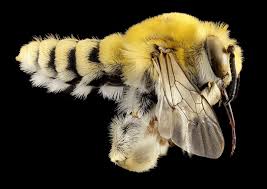
Other than humans; the Bee has the most sophisticated form of communication. Honeybees tell each other the quality, distance and precise location of a food source by a series of complex sequence of movements and vibrations called the ‘waggle dance’. Each ‘waggle’ represents about 150 feet from its hive. This discovery was made in 1945 by Karl von Frisch; who went on to be awarded the Nobel prize for his study of animal behaviour.
Bees are able to see in the ultraviolet range; which makes them more attracted to some kinds of flowers than others. They have a sense of time, and can even recognise the ‘human face’; which is pretty remarkable for a little creature who has a brain about the size of a pinhead ! In tests, bees have been rewarded with nectar when shown some familiar faces, and not when shown others. The ‘human faces’ tested, were actually different kinds of flowers; not pictures of human beings.
Bees don’t do smalltalk like us; instead they only really concentrate their communications on two subjects – food, and where the next hive should be established. Bees were considered sacred by the Greeks, Babylonians and Egyptians; the hive representing a well ordered society which is also full of drama.
A new Queen, will make her ‘nuptial flight’ after murdering all her sisters; and mate with around 15 drones in mid air. All of the drones then die; with their penises exploding (ouch), leaving the end inside of her. The Queen the returns with enough sperm inside of her to establish / stock an entire colony of her own. She can lay up to around 1,500 eggs per day; during her lifetime which lasts about 3 years. On odd occasions; chemical balances wobble and female worker bees may start to lay as well. Very quickly, these ‘rebels’ are destroyed and all the imposter eggs are eaten by fellow workers.
The Bee provides us with honey; the only other secretion from animals that humans take without causing any natural harm or injury (we have to now question the milk process and abuses of cows and calves in its production). Honey is a food that does not spoil; and some over 3,000 years old has been found and tasted by archaeologists from the tombs of ancient Egyptian pharaohs. Honey is ‘hygroscopic’ which means that it can absorb and hold moisture so that any moulds or bacteria that touch it quickly lose their own moisture and then die.
In the USA alone, bees pollinate over $20 Billion worth of crops each years, and so they are vital; to human existence. Every 3rd mouthful we owe to our little friend the Bee – and without them there would be no agriculture.
So, promote the establishment of bees into your area and provide them with flowers that will enable them to live long and well. Sadly, everyone in this world does not see the humble Bee as an essential tool in our existence. We do, so welcome them and most importantly; encourage and provide for them. They will provide for you in return.
We stand united with Lyn and all the crew at Animals Australia in their continued fight to stop the (disgusting) live animal export trade from their shores. Whatever the result of the recent elections; we know that the team at AA have the tenacity to carry on being a voice for voiceless regardless. Politicians come and go; but the animal advocate is around for life ! – we wish them the very best with all their future strategies. They will win ! – WAV.
Mark,
I woke up yesterday morning, and my first thought was you.
The closer one gets to fulfilling a dream, the more disappointing or devastating it can be when something occurs to put it just out of reach again.
Numerous polls told us that we were on track to elect a government that would bring an end to the cruelty of live sheep export — so we were well-justified in our optimism that this outcome, that was years in the making, was within our grasp. The deep disappointment we feel is well-founded.
But while the celebration we had hoped for is, for now, on hold, I promise you that it will come. The foundation has been laid and the pathway to end live export paved, by you and other compassionate Australians.
As I walked my beloved dogs by the sea yesterday morning I looked up at the clear blue sky and consciously made the decision to reflect not on what might have been — but rather on how far, together, we have come.
Just 12 months ago, no-one would have thought it possible for a Coalition government to bring an end to the summer live sheep trade. But they did, and over 1 million sheep have been, and will be this year, saved from the worst of cruelties because of you. Just 12 months ago, no-one would have thought it possible that a Coalition government would dramatically reduce the numbers of animals who could be loaded on ships at any time of the year. But they did because of you.
Unprecedented changes have been made because of you.
In reflecting while I was walking on the significance of these achievements, determination replaced my disappointment and I was filled with the deepest sense of appreciation, in fact an overwhelming sense of gratitude … to you.
The diminishing of the Coalition’s previous ironclad support of the live trade over the past 12 months is proof that the force of human compassion can make the seemingly impossible, possible. The political wall that has for so long protected the operations of this trade — no matter the cruelty it inflicted — is being dismantled, and together we will continue to pull it apart, brick by brick.
As history shows, change is not easy for humanity to embrace. Fear of altering course can fuel self-interest, create separation and make maintaining the status quo desirable.
And therein lies the critical importance of the ‘path paving’ we are doing together…
Negotiating the challenges of the human journey is not easy as you know. But as we can also attest to, that evolutionary urge to grow into our best selves and to build a better and kinder world is nourished and strengthened by witnessing others embracing that path.
At this time in our history, I have never been more certain of the importance of every single kind act; of every single act of generosity. Because the antidote to fear is kindness. The antidote to separation is kindness. Doors are opened, bridges built and a new path is paved and illuminated, through kindness.
And so, you have never been more important than you are today.
I said prior to this election that it was your compassion, your commitment, your resilience and your heart-fuelled dedication that have sustained me throughout the years.
Not a single effort has been wasted. As you have inspired me, I know you will inspire and empower others to join us on this journey.
When the dust settles from this election and the make-up of the Senate is known, I will meet with our political allies and determine our next steps.
Our resolve is not diminished by this election result, it is only strengthened. The flame that burns within us all to end the live export trade and create that kinder future, only grows stronger and brighter. Brick by brick we will continue to dismantle the remaining support for this trade.
As always, my heartfelt gratitude goes to you. It is my great honour to serve and share this journey with you.
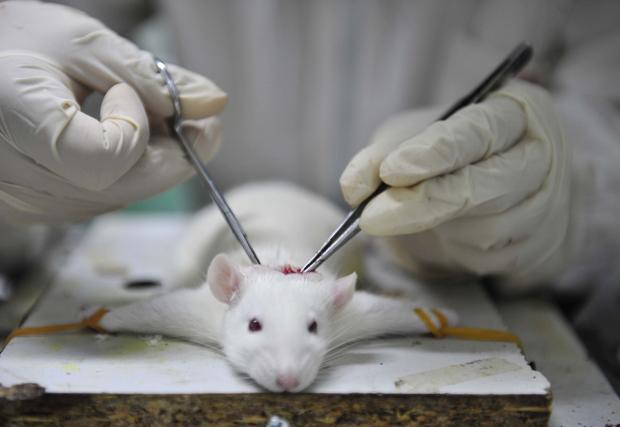
From 1 July 2020, Australia will have a de facto ban on new animal testing for chemicals solely used in cosmetics.
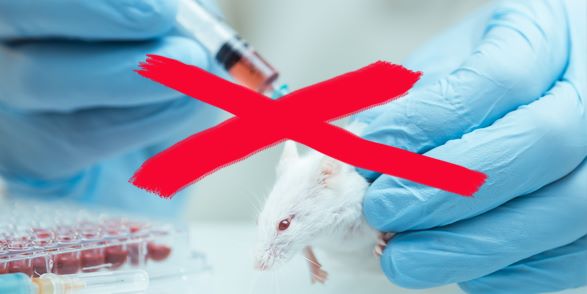
Whilst the ban does not actually apply to animal testing as such, it targets the use of data from animal testing to prove that chemicals manufactured in or imported to Australia are safe to humans and the environment and is therefore, for all intents and purposes, a ban. Under the new legislation, industrial chemicals for sole use in cosmetics can be imported or manufactured only if they provide safety data that do not rely on new animal testing. This provides a disincentive for companies to conduct toxicity (safety) testing on animals, because such data will not be acceptable under the new legislation.
The new legislation
The Industrial Chemicals Act 2019 became legislation on 12 March 2019. It is part of a package of Acts and establishes a legislative framework for the Australian Industrial Chemicals Introduction Scheme (AICIS). It replaces the previous scheme, the Australian Government’s National Industrial Chemicals Notification and Assessment Scheme (NICNAS).
From 1 July 2020, AICIS will regulate the introduction (importation and manufacture) of industrial chemicals. This will ensure that chemicals used in consumer products are safe for consumers and the environment.
Under the new Act, industrial chemicals do not include chemicals used for agricultural, veterinary or therapeutic purposes, or in food or feed. These are regulated by other legislation. Cosmetic products are considered industrial chemicals, and they will be regulated under AICIS.
The new legislation does not apply to historical animal test data. The restrictions only apply to data obtained by a test on animals conducted after 1 July 2020.
Ministerial Rules
The Act gives power to the Minister to make rules that guide the implementation of the Act. The Act provides an overarching framework, and Ministerial Rules will add much of the detail of how the scheme will operate. This is where Minister McKenzie’s 11 commitments made to Humane Society International (HSI) and the #BeCrueltyFreeAustralia Campaign will come into play.
The Minister’s commitments
Despite the fact that most ingredients for cosmetics have multiple end uses, we are encouraged that the Government has promised to look at the possibility of extending the ban to include multi-use cosmetics ingredients.
This promise is one of Minister McKenzie’s 11 commitments to HSI, which had lobbied for additional measures to strengthen the ban.
The 11 commitments, if adopted as Ministerial Rules, will reduce animal testing of cosmetics ingredients further, and will perhaps signpost the way towards a broader ban on animal testing of chemicals and drugs.
Animal testing can and must be banned when better, cruelty-free methods are available. Such human-relevant, non-animal test methods are already available and are being used in other countries, for example in the European Union. But we need more of these methods, and government support is essential for further progress in this area.
So it is reassuring that Minister McKenzie has made a commitment to explore whether it is possible to make a portion of existing funding available to support the development and uptake of new animal-free testing methods that will be acceptable under the new legislation.
Other Ministerial commitments refer to encouraging the cosmetics industry not to use animal test data even if the legislation allows them to do so, to publish statistics on the use of animal test data, and generally consult with all stakeholders. For example, she committed to “Include representatives from HSI and other relevant stakeholders, in a governance arrangement to guide the implementation of its policy to ban cosmetic testing on animals”.
The new legislation is indeed good news.Although no animal testing of cosmetics has occurred in Australia for years, the new Act will ensure that we don’t slip backwards.The Minister has acknowledged the “general international trend away from reliance on the use of animals to determine the hazards and risks associated with the use of industrial chemicals”. Together with the Minister’s 11 commitments, this gives us hope for further progress on the slow road towards phasing out all animal research and testing, which will be replaced with better methods that are relevant to humans.
Our colleagues at HSI have worked tirelessly to negotiate and achieve commitments in addition to the Act, and we commend them on their hard work.
My comment: There was every reason to celebrate in 2013 : A ban on animal testing for cosmetics entered into force in the EU.
However, under certain circumstances, the authorities still require that cosmetic ingredients be tested on animals – under the guise of the REACH Regulation.
REACH is a regulation for Registration Evaluation, Authorization and Restriction and of Chemicals. That this continues to require animal testing is a clear violation of REACH itself and of the EU Cosmetics Regulation.
An EU court ruled that only tests without human animals should be used to meet the requirements for the safety assessment of cosmetic ingredients.
This means, that animal testing in the cosmetics industry with the aim of still testing ingredients that are allegedly harmful are insignificant.
Nevertheless! Even today, animals suffer and die in such experiments in EU countries.
We hope that Australia will act more consistently and honestly than the EU with the ban on animal testing.
PETA has an official list for animal-free cosmetics, it is unfortunately in German. If anyone is interested, I can post it.
I find cosmetics very important in our everyday lives.
And we all can not imagine living without soap, shampoo or toothpaste.
But just today we have NO excuse to use cosmetics that has been tested on animals.
We have information, knowledge, alternatives.
We just have to use it consistently.
Venus and I are both writing posts for the site which we hope make a tiny difference. How they appear is by pure chance of who gets done first – there is no preference of posts; but please scroll down a little through the site to see if you have missed anything. We are WAV and so will try to cover as many international topics as time allows us.
The following is from Stacey at ‘Our Compass’. Thanks Stacey.
I am having to show you this as it very dramatically shows the difference you can make by changing to a Vegan lifestyle. If you are a vegan already, then you can complete the sections and see what a difference you have already made.
For example; using myself as an example – I have followed a plant based diet for the last 25 years or so. When I put this data into the calculator, I get the following results:
9,131 animals NOT EATEN
186,000 pounds of CO2 saved
274,000 square feet of forest SAVED
411,000 pounds of grain SAVED
10,044,161 Gallons of WATER SAVED.
A photo of an overweight man sitting on an old couch with a very large unhealthy meal on his lap and a pint of beer in his hand. Obesity is a major cause of diabetes.
Vegan and Vegetarian calculators are available. You simply punch in how long you have followed the diet; in months or years. Results are immediately published. I think you will find them rather amazing.
Just imagine the savings to our now very fragile earth if everyone adopted a plant based diet – either Veggie or vegan. Then we could see a real difference and start to make amends for immense damage we have impacted on this wonderful planet within what ? , the last 100 years or so – recently; very recently. Animal species are now being wiped out or threatened with extinction like never before; and we have a duty to them to make changes right now, before it is too late.
The recent big climate change demos here in London recently had massive support from the public. Many people were inconvenienced by what was going on; but they accepted that this was a real issue that cannot be put on hold for several more years. There were a few on the tv who naturally had a real gripe that their day was being ruined by the protests; that it was delaying them getting to a meeting or something. I though that they made be delayed; but continue to ignore the problem and in the next decade or so, you may need to bring your swimming trunks to get to the meeting rather than take the taxi today !
Ignorance or what about their future; your future; my future ?
Please give the calculator a go. For me personally, knowing that over 9,000 animals have been saved from slaughter because I choose to eat a healthier way is satisfaction enough; even before I start to look at the CO2, Water and forestation saved by what are really simple changes to your lifestyle.
10, 15 years ago; Vegans and Veggies had a bit of a problem in getting in food products to satisfy their needs. Today it is not like that at all; supermarkets and producers are falling over themselves to get the massive change to plant based that we are now seeing. People will feel physically better in themselves also – when did you last see an obese Vegan ? – sadly; a lot of the entire UK national health system budget goes into helping sufferers with diabetes. Let me give you some current facts to support this:
The cost of diabetes to the (UK) NHS alone is over £1.5m an hour or 10% of the NHS budget for England and Wales. This equates to over £25,000 being spent on diabetes every minute.
Absorb that – £25,000 being spent by the NHS on diabetes every MINUTE.
This is often caused by people becoming obese in the first place and then continuing with what is basically a wrong diet. If they changed to plant based; just think of the savings that would be made all round that could be invested into other things.
At the end of the day each person makes their individual choices. I am not here to preach a Vegan or veggie diet, but I will support and publicise it given the chance.
Use the calculator and see what a difference you can make for animals and for a better planet.
Regards Mark
Finally; the most important thing for me: he does not want to die for my ‘gastronomic’ tastebuds. I do NOT forget him and what being a carnivore would mean for him. HIS END.
During the 2018 Iditarod, a total of 350 dogs were pulled off the trail, likely because of exhaustion, illness, or injury. One of those dogs, Blonde, later died from aspiration pneumonia—probably as a result of inhaling his own vomit. More than 150 dogs have died in the race’s history—not counting those who were killed because they lacked the speed and stamina to make the cut.
But a handful of companies are still sponsoring this death race, including Chrysler, Donlin Goldand its parent companies—Barrick Gold Corporation and NOVAGOLDResources, Inc.— GCI, and Matson.
After the 2017 race, a whistleblower came forward with disturbing photographs and video footage that reveal apparently dying puppies and injured, sick dogs at a kennel reportedly owned by Dallas Seavey, the four-time Iditarod champion who was implicated in a dog-doping scandal last year. According to the whistleblower, operators at the Willow, Alaska, kennel allowed severely injured and ailing dogs to suffer—sometimes fatally—without veterinary care.
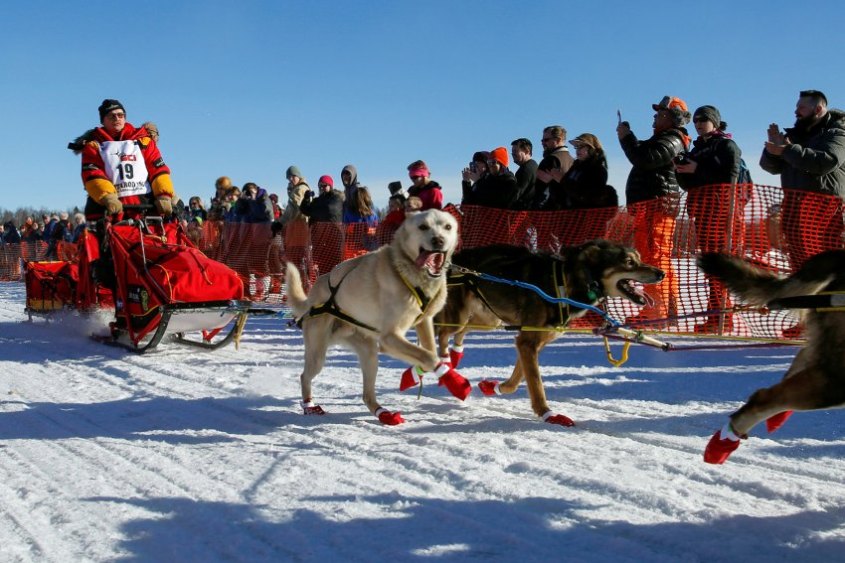
Dogs in the Iditarod are forced to run nearly 1,000 miles—roughly the distance from Orlando, Florida, to New York City—in under two weeks. On average, they must run 100 miles a day, with only a few brief periods of rest.
They’re subjected to biting winds, blinding snowstorms, and subzero temperatures. Their feet become bruised, bloodied, cut by ice, and just plain worn out because of the vast distances that they cover. Many pull muscles, incur stress fractures, or are afflicted with diarrhea, dehydration, intestinal viruses, or pneumonia.
Up to half the dogs who start the race don’t finish.
This follows a veteran musher’s revelation that she believes that some trainers—including those at Seavey’s kennels—have killed “hundreds on top of hundreds or more dogs” because they were deemed slow or otherwise unfit for races. She wrote, “Sadly, this has been going on in the family ‘dynasty’ for decades.
“These reasons why the Iditarod Race should be terminated will leave you outraged:
1. Dog deaths at the Iditarod are so routine that the official rules blithely state that some “may be considered unpreventable.”
The Iditarod has killed more than 150 dogs since it began in 1973. Five died in 2017 alone.
2. If the dogs don’t die on the trail, they’re still left permanently scarred.
3. There’s no retirement plan.
4. Dogs pull mushers’ sleds up to 100 miles a day.
5. As many as half the dogs who start the Iditarod don’t finish.
6. No dog would choose to run in this arctic nightmare.
7. Thousands of dogs are bred each year for sled racing.
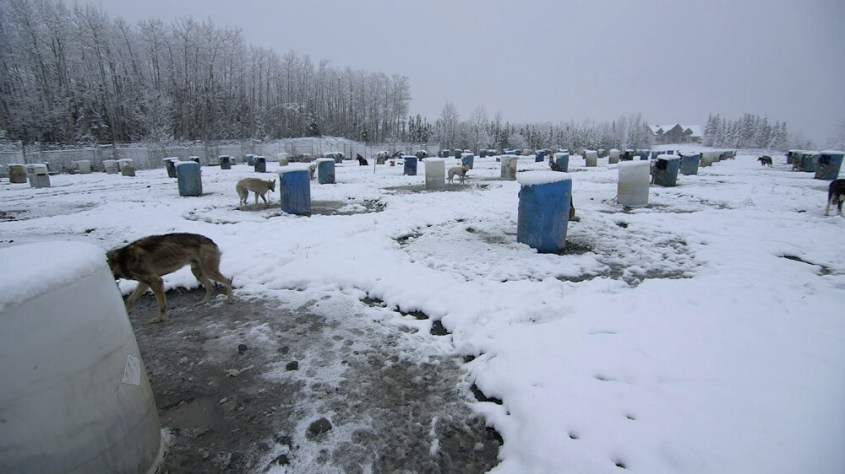
This is how sled dogs were warehoused for 40+ years in the mountains of Colorado
8. Dogs at sled-dog breeding compounds have died of numerous ailments.
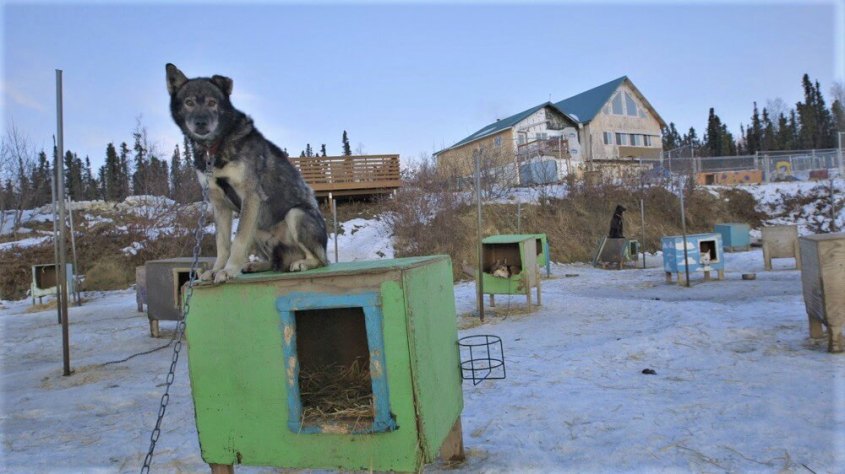
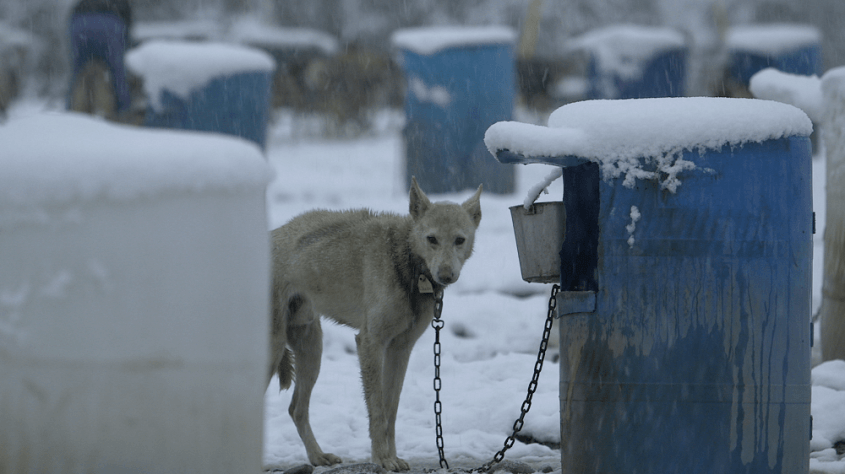
Dog residing at a kennel run by 2017 Iditarod champion Mitch Seavey.
Some have frozen to death, while others have died of complications from eating rocks—presumably a result of the intense frustration of spending years on a chain.
Dogs deserve far better than a lifetime of isolation, cruelty, suffering, and death on the Iditarod Trail. Dogs should never be interchangeable sports accessories. They belong in the warm, as members of a family. We demand that this dangerous and deadly race be finally abolished.
Please urge the Iditarod Trail Committee and the mayors of Anchorage and Nome—the start and finish points—to celebrate Alaskan huskies and protect them from suffering and death by replacing them with willing human cyclists, cross-country skiers, or snowmobilers.
My comment: The dog sled drivers – the so-called mushers – come from the USA, Canada and Norway. Many also from Germany.
Because they probably lead a totally boring life behind an office all year round, these sled cowboys want to experience adventure at the animals’ expense.
Torture, squeezing and suffering is the solution for bored non-users and a common human specialty.
But our protests (and most of all those from PETA) have spilled on some sponsors in recent years, most recently the heavyweight financier Wells Fargo – the money is running out for the Alaska Cowboys.
After discussions with PETA USA, numerous sponsors, including Nestlé, Panasonic and Pizza Hut, have stopped sponsoring the “Iditarod”. To stop further economic support, PETA is calling on all animal lovers to participate in the online protest.
Hopefully! We are doing everything to put an end to this cruel fun for money-hungry psychopaths.



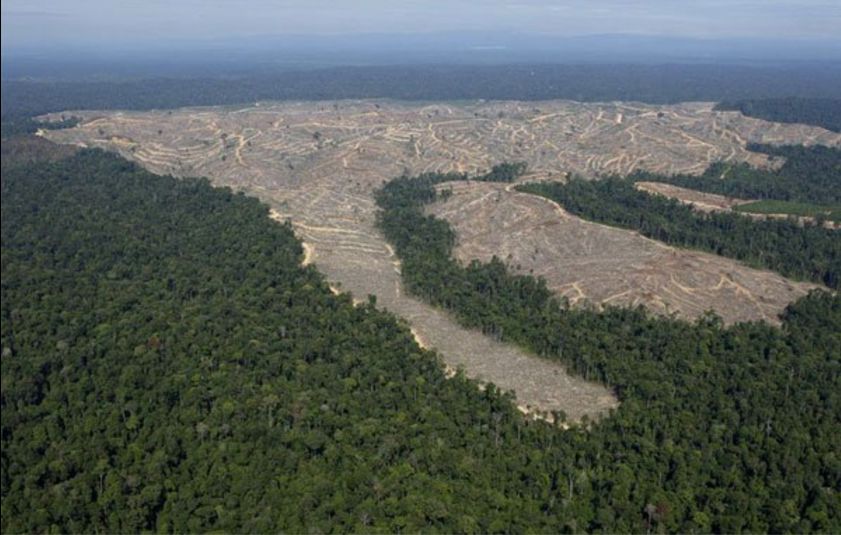 This is the illegal deforestation of Mato Grosso, a federal state of Brazil














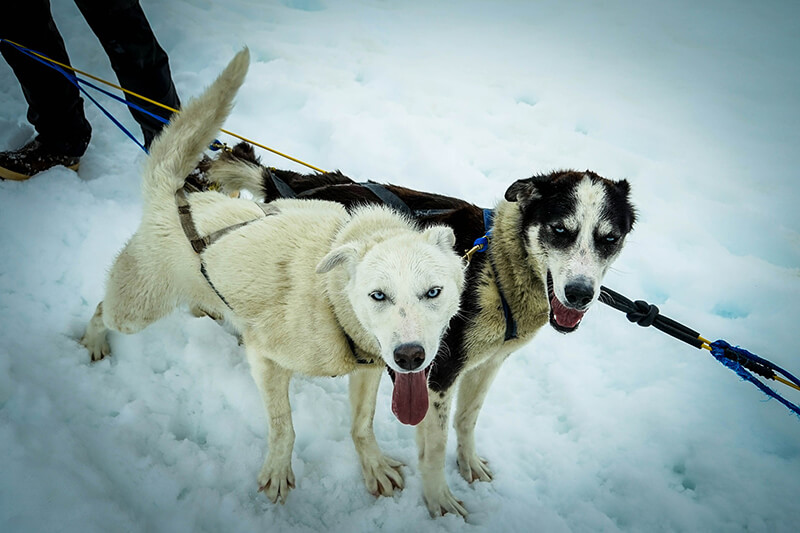
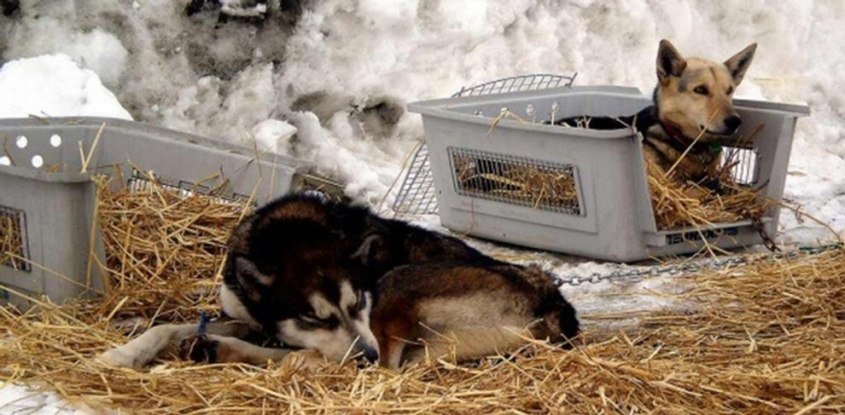


 This is how sled dogs were warehoused for 40+ years in the mountains of Colorado
 Dog residing at a kennel run by 2017 Iditarod champion Mitch Seavey.