From Magazin “Der Spiegel”:02/26/2022
The South African government allows hunting of endangered species – including black rhinos, which are classified as critically endangered. The proceeds will go to impoverished villages.
South Africa has cleared a number of endangered species for shooting. “A total of 10 black rhinos and 150 elephants can be hunted,” said the country’s Ministry of Forests and Environment. Some leopards will also be shot under certain circumstances.
Proceeds from the sale of hunting licenses go to impoverished rural communities in the hunting areas.
Black rhinos are listed as critically endangered by the International Union for Conservation of Nature.
The number of animals in the wild had recently doubled from an all-time low three decades ago to more than 5,000.
The ministry said the quota allocated was based on population estimates “which are currently trending upwards.”
In 2014-2017, black rhino poaching had increased dramatically.
On average, 1,000 animals per year were illegally killed during this period. However, the problem could be contained. Last year, 451 black rhinos were illegally killed.
The official hunting quota for elephants has been set in accordance with international laws on trade in endangered species, the ministry said. The elephant population is growing (!!!) and 150 animals is less than 0.3 percent.
According to the ministry, hunting of leopards is limited to animals over the age of seven (!!!) and only in regions where the populations are “stable or increasing”.
And I mean…If a hunter buys such a license, can the animal stay alive?
No! because the hunter wants something for his money, namely satisfying the desire to end a life.
This is blood money.
There has never been a worse excuse to legitimize hunting and poaching.
This is an excuse to bring rich big game hunters into the country.
Any Saudi prince or son of American politicians will take great pleasure in pulling the trigger.
Or can the old king of Spain do it again…
What a disgusting perversion…
Nobody has lost anything in the habitats of these animals.
Rhinos defend their calves should someone get too close to their habitat.
Elephants and leopards too, by the way.
Because humans don’t respect their habitats and rob them, the simplest “solution” always comes up: shoot them down.
Shame on South Africa!
The goal must be for Africa to benefit from its biodiversity and intact nature without destroying it.
And quite frankly now: if a country like South Africa isn’t even able to help these impoverished regions without shooting down these endangered animals, then something suspicious is afoot
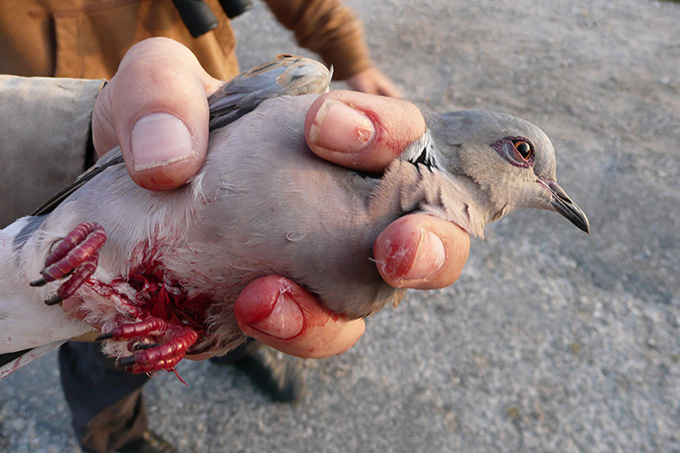
Or to put it the other way around: what kind of punishment is appropriate for someone who kills a turtledove?
A criminal court in Malta has now answered this question for itself and sentenced a hunter to a fine of 1,000 euros for illegally shooting down a turtle dove.
In addition, the man’s hunting license was confiscated for two years.
Judge dr. Elaine Merciecasaw it as proven that on April 20, 2020, the man had killed a turtle dove near the village of Selmun during the closed season. The main piece of evidence was a video created by the Committee Against Bird Slaughter that shows the shooting down.
The committee welcomes the verdict, even if many feel that the sentence is too low.
The reason is that according to Maltese law it is “only” a closed season offense and not the shooting of a strictly protected species that is protected all year round.
Turtle doves are a huntable species in Malta and may legally be shot in autumn but not in spring when the birds are on their way to their breeding grounds.
And I mean…Hunting remains widespread in southern European countries such as Spain, Italy and Malta.
Maltese hunters even start shooting turtledoves in spring
According to estimates by the University of Giessen (Germany) from 2016, millions of turtle doves are shot every year in the Mediterranean alone.
In addition to the official catches or kills for the pastime of the registered hobby hunters, the number of unreported cases is many times higher.
In Italy alone, it must be assumed that 5.6 million birds of various species are illegally killed every year.
The Italian Hunting Federation, a member of FACE, the European hunting federation, has campaigned hard to blast the very last lovebirds out of the sky.
Driven by their murderous hobby, hunters don’t want to give up their beloved prey.
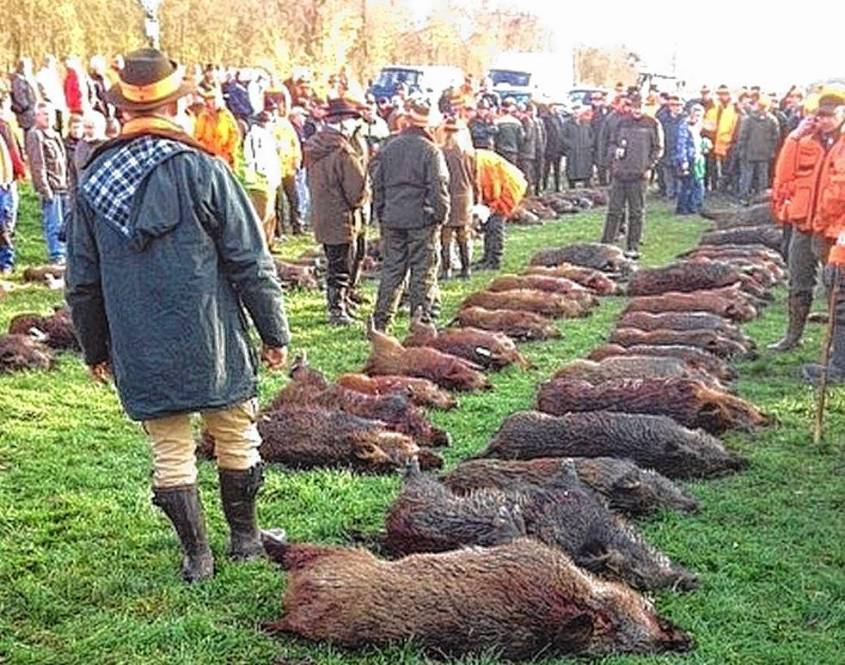
Planck and Einstein thought hunters were psychopaths.
If one reads the daily news how many wild boars with their children or how many foxes are being massacred by hunters and only out of a lust for murder, this opinion is confirmed.
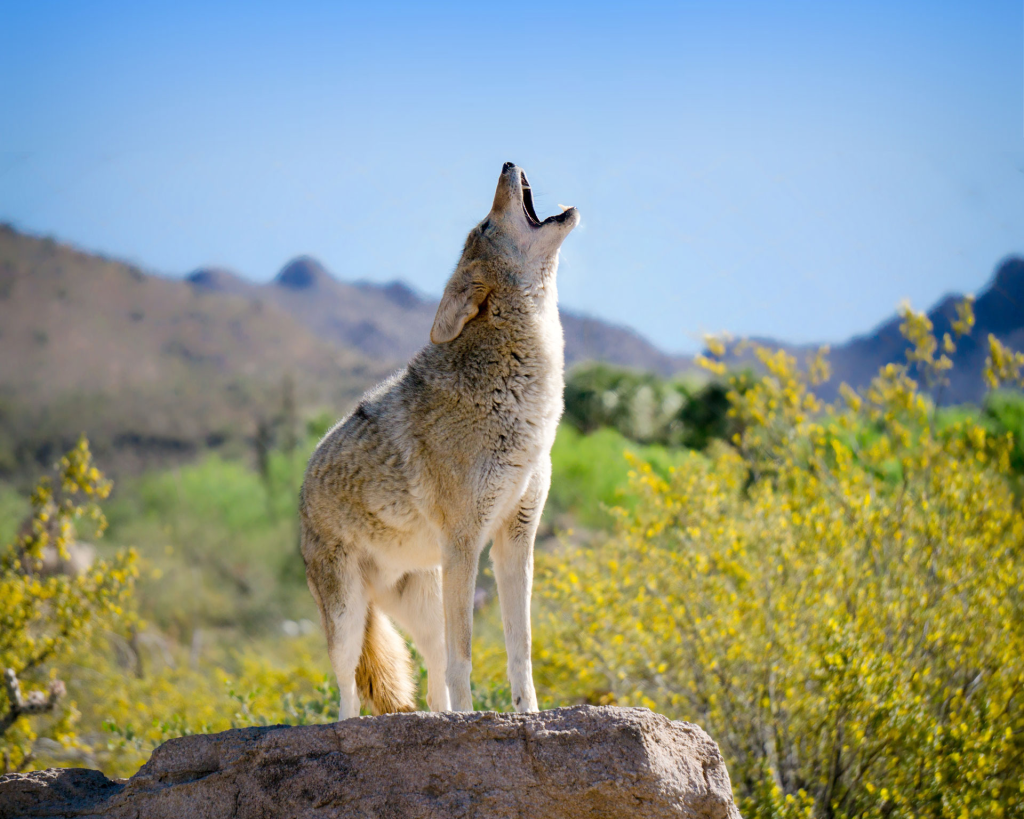
On February 10, wildlife advocates across the U.S. celebrated a federal district court ruling to relist wolves after the Trump administration removed federal protections for wolves in January 2021. The Biden administration failed to reinstate emergency federal protection, thereby opening up expanded slaughter across their range. Last week’s ruling reinstates federal protections for gray wolves under the Endangered Species Act across the lower 48 except for three separate groups of wolves. The first two groups, Mexican gray wolves and red wolves, are already federally protected. Tragically, the third group of wolves in the Northern Rockies states of Idaho, Montana and Wyoming, are not included in that ruling and still face intense persecution under state management with new laws allowing liberalized killing through trophy hunting, trapping, snaring, baiting, aerial gunning and night hunting. We’ve been advocating for wolf protections for a long time and now is no time to let up
Project Coyote‘s new billboard campaign in Idaho and Montana challenges this egregious mismanagement, calling for the relisting of wolves in the Northern Rockieswhere populations continue to attract millions of visitors to famed Yellowstone National Park from all over the globe to glimpse a wolf in the wild.
At the base of this mismanagement of wolves and other apex predators is a governance system that is out of sync with current science and public sentiment. Such a broken system is reflected in myriad other states where wildlife commissions continue to allow and even expand the wanton killing of wild carnivores. Some recent examples of where we’ve been countering the actions of commissions that simply shills for a small contingent of hunting and agricultural interests include: expanded opportunities to trophy hunt black bears in California and North Carolina, hound hunting of coyotes in Vermont, wildlife killing contests in Virginia and trophy hunting of wild cats in Colorado. We’re also part of a newly formed coalition called Wildlife For All that aims to reform state and federal wildlife agency governance structures and institutions pushing for change that reflects diverse values for wildlife, more democratic decision-making and recognition of wildlife as a common good to be conserved for the benefit of all. Across all these issues and more, Project Coyote is on the front lines, advocating on behalf of North America‘s wild carnivores who have no voice and are often still seen as vermin needing to be expunged from the landscape.
On another front, we’re excited to expand our reach into the Midwest through the Big River Connectivity project in collaboration with The Rewilding Institute, the Half-Earth Project and BeWildReWild. Through this partnership we aim to restore at least 9 million acres in the Midwest to create a wilder, more beautiful, more biologically diverse and more enduring Mississippi River watershed. We will do so by shifting the paradigm from traditional agricultural practices to a more holistic, sustainable and humane approach of interacting with land and wildlife.
Our work is defensive and offensive — working to stop wanton wildlife killing while concurrently seeking to educate, empower and inspire action for wildlife and wildlands. Read more about these efforts below and our expanded team who will help bring these bold goals to fruition.
We could not do this work without you — our supporters and the many foundations who believe in our vision for a wilder world. Thank you for helping foster compassion for the other beings with whom we share this planet.
Make the use of free-running snares illegal for trapping wildlife
The Government should prohibit the sale, use and manufacture of free-running snares under the Wildlife and Countryside Act 1981, putting them in the same category as self-locking snares, which are already illegal.
We believe that people setting free-running snares cannot ensure animal welfare as required under the Animal Welfare Act 2006, that such snares cause unnecessary suffering to mammals, are indiscriminate and should be banned.
Currently 74,144 signatures
So lets get it past 100.000 for a debate in Parliament.
Government responded
This response was given on 13 January 2022
The Government recognises that some people consider snares to be an inhumane and unnecessary means of trapping wild animals and will launch a call for evidence on the use of snares.
At 100,000 signatures, this petition will be considered for debate in Parliament
Hunting lobbyists always like to use the lack of natural enemies as an argument when it comes to hunting encroachment on wildlife populations. At least in the case of foxes and other predators in our latitudes, this is a false conclusion.
Fox hunting has been banned in Luxembourg since 2015.
The horror scenarios projected by the local hunting association FSHCL, but also by the German colleagues at the time, did not come to pass: Environment MinisterCarole Dieschbourg confirmed only last year in response to a parliamentary request from the opposition that after years there were no indications of an increase of the fox population in Luxembourg.
Controls and counts with wildlife cameras would rather indicate a stable, constant stock.
Even the infestation of foxes with the fox tapeworm has decreased since the hunting ban.
While the fox tapeworm was still diagnosed in 40 percent of foxes in 2014, it was recently less than 20 percent.
Nor can one blame the foxes for the decline in ground breeding or even biodiversity.
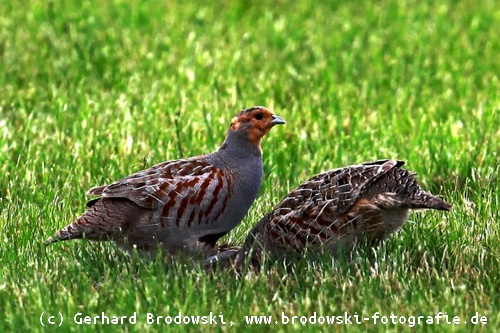
In Luxembourg, for example, the partridge was almost extinct at the beginning of the 1980s, despite the fact that fox hunting was still intensive at the time.
According to the Minister for the Environment, the loss of biodiversity, particularly among ground breeders, is due to the destruction of the habitat and the associated loss of insects as a source of food.
Luxembourg could be a model for Europe when it comes to fox hunting.
However, there is probably a lack of political will in this country to make hunting at least animal welfare-friendly.
For most animal species there is not even a reasonable reason for hunting within the meaning of the Animal Welfare Act.
Together with many other animal protection societies and the Fox Action Alliance, Wild Animal Protection Germany demands the abolition of fox hunting and the review of all animal species subject to hunting law with regard to a reasonable reason.
And I mean…While the German lust killers, also known as “hunters”, pursue the foxes with all sorts of violent means at this time of the year, the neighboring European countries present themselves in some cases much more rationally when it comes to hunting.
And they are proud that the abolition of fox hunting, which has been going on for over six years, is so effective.
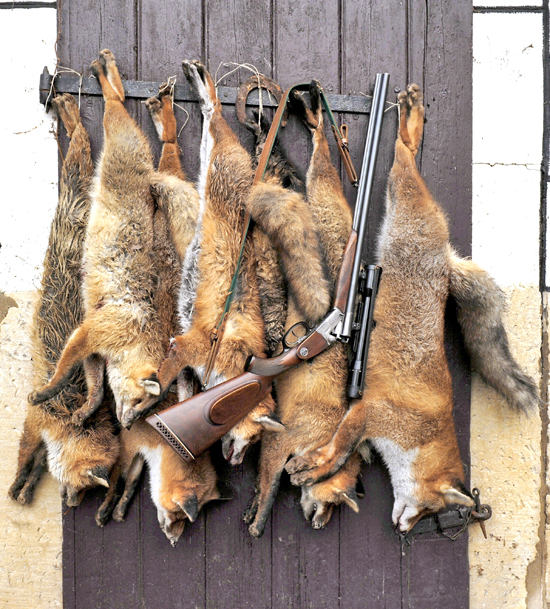
German hunters kill and dispose of over 400,000 foxes every year
In most federal states, the red fox is hunted without a regular closed season.
During the mating season, during the gestation period, while rearing the young, while wandering in search of a territory.
They are hunted with traps, dogs are sent into their burrow, the retreat for the birth of the puppies, they are kept in barren kennels to train so-called burrow or ground dogs on them, they are victims of battue hunts and fox weeks.
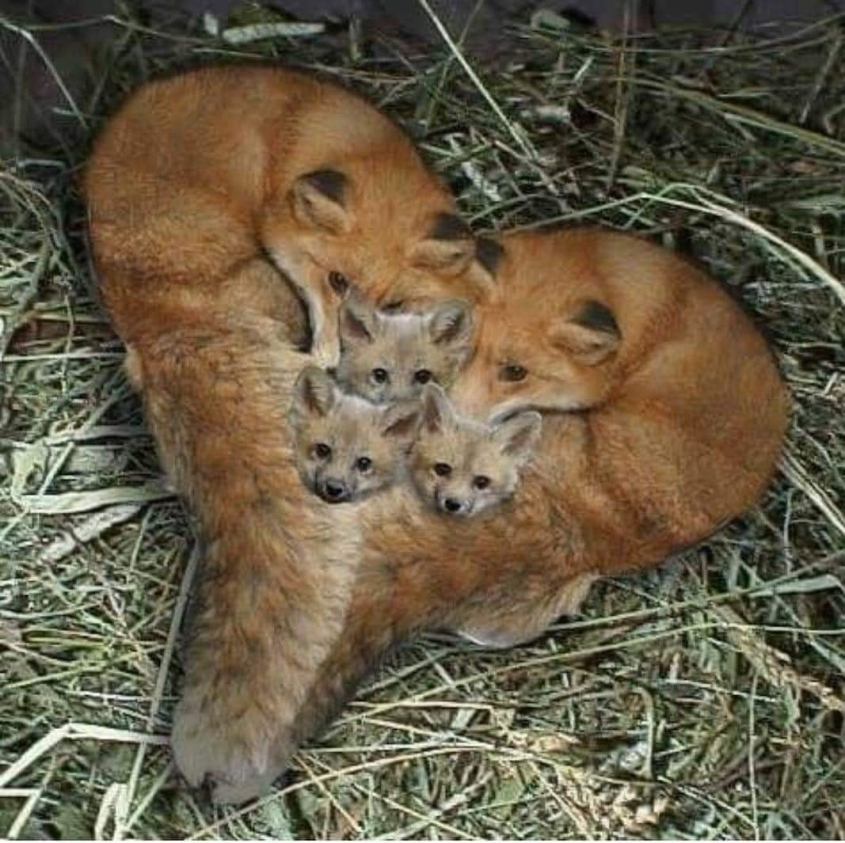
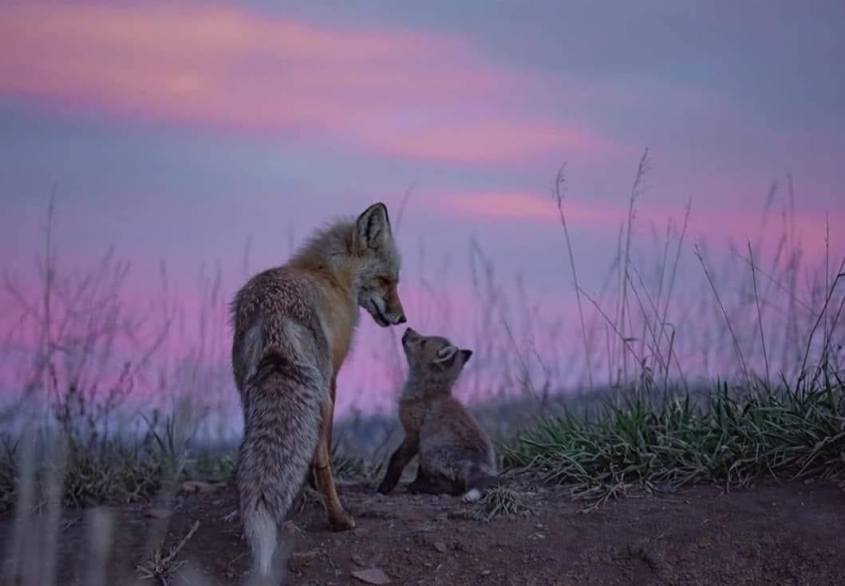
Every year well over 400,000 red foxes die in Germany from hunting!
Foxes cannot be used as food, and fox fur has long ceased to be popular.
About 97 out of 100 foxes killed are thrown into bushes or, at best, buried.
The hunters in Germany basically justify the fox hunt with three “reasonable” arguments:
– The fox also transmits diseases that are dangerous to humans, such as rabies and fox tapeworm,
– It is by no means endangered because of its high population and thirdly
– The fox has to be hunted because there is a risk of wiping out ground-breeding birds that have become rare.
There is also not just one single scientifically reliable research paper that could be used to justify the three steep theses mentioned.
This is especially true for the blind claim that more intensive fox hunting would have a stabilizing effect on the populations of endangered species.
That is just as much nonsense as the statement that hunting can significantly reduce the fox population.
The opposite is true, as scientists and wildlife biologists can attest. The more vehemently these animals are pursued, the higher their reproduction rate.
In this way, losses can be compensated for quickly.
Nature arranged it that way.
So…the only honest reason for fox hunting and any other hunt is, that the perpetrators enjoy it.
And a murderer won’t let that can be spoiled.
Researchers believe that the Huanan Seafood Market in Wuhan,China was ground zero for the COVID-19 pandemic.
Until its closure, numerous wildlife species were kept there, tightly crowded in cages – a rich breeding ground for pathogens. Pangolins sold there are believed to have been an intermediate host for the virus, which originated in bats.
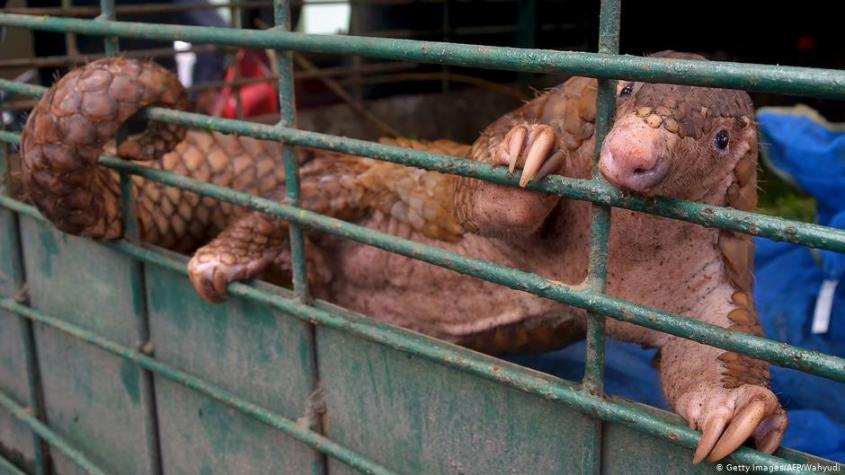
Pangolin poaching and smuggling is a lucrative business, with Chinese and Vietnamese restaurants willing to pay up to $400 for a kilo of pangolin meat.
Pangolins have become so rare in the wild that coming across one is not unlike finding a winning lottery ticket for villagers in remote corners of Asia.
Traffickers are frequently arrested while shipping hundreds of live animals or pangolin scales by the ton, but the true magnitude of the trade remains in the dark.
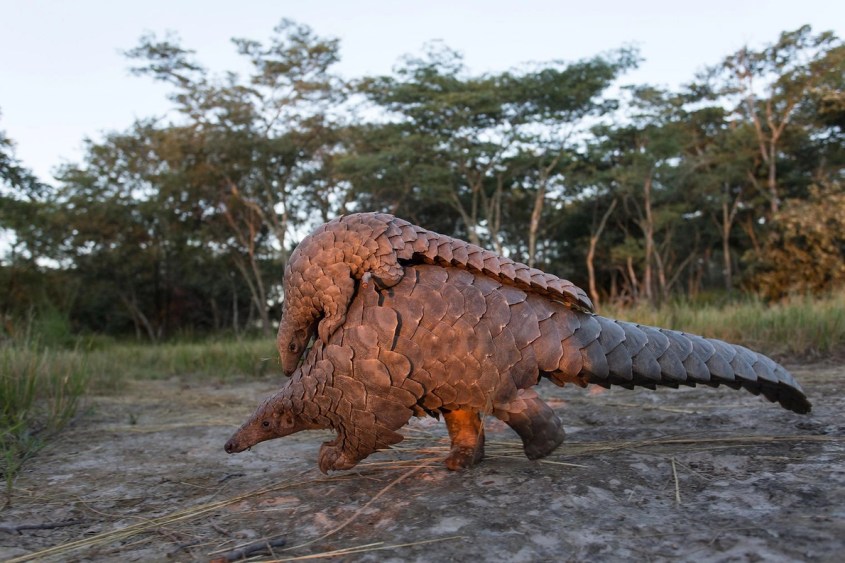
Eight different pangolin species exist in Asia and Africa.
All four Asian species are already on the IUCN Red List of Threatened Species, and pressure on the African species is mounting.
The Environmental Investigation Agency(EIA) has published an interactive map highlighting the international nature of the pangolin trade.
The survival of the pangolin is in the hands of the Chinese and Vietnamese governments – only they can pass and enforce stricter laws to curb hunting and shut down trafficking.
Background
As endangered wildlife, pangolins have not received the attention they deserve, even though all eight species of the scaly creature are on the Red List. The situation is most dire for the critically endangered Chinese and Sunda pangolins, which could become extinct within the next fifteen years.
The International Union for Conservation of Nature(IUCN) has seen the need to establish a specialist group dedicated to preserving the animal.
Hunting and illegal trade are the main forces driving the toothless insectivores to extinction – no other mammal is subject to such extensive smuggling.
The pangolin’s scales – which consist of keratin, the same material as human fingernails – are believed to have beneficial properties in traditional Chinese and Vietnamese medicine.
The ills they supposedly cure include “excessive nervousness and hysterical crying in children, women possessed by devils and ogres, malarial fever and deafness” (Nature 141, 72-72, 08 January 1938).
Pangolin meat is considered a delicacy and often among the most costly dishes on restaurant menus.
According to some estimates, hunters have killed one million pangolins over the last ten years. Between 2011 and 2013 alone, 23,400 illegally traded animals were confiscated.
Please call on Chinese and Vietnamese policymakers to stop standing by idly while the pangolin is hunted to extinction.
And I mean…Pangolins have been around for at least 47 million years.
This could be over soon.
The four Asian species are almost extinct.
The meat is considered a delicacy, the scales are used as talismans and, above all, for therapeutic purposes.
And according to local ritual customs, they are real all-rounders for stomach problems, asthma, rheumatism, inflammation, menstrual problems or even blood cancer.
Even the potency is said to increase the scales.
The stupid thing about it is that, like rhinoceros horn and human nails, they consist exclusively of keratin.
But tragically, it’s also a major destination for the global, illegal and devastatingly efficient wildlife trade, with up to 2.7 million pangolins poached each year.
International trade in pangolins or their scales has been banned under the Washington Convention on International Tradein Endangered Species since 2017.
In China, there were signs of change.
International trade in all Asian pangolins was banned in 2000.
While it’s a positive move, but many experts remain skeptical that these measures will make a difference.
Despite all measures, illegal trade of pangolin continues to be on the top of illegal wildlife crime around the world.
Clearly, measures to combat illicit trade are not enough.
In order to better protect the animals, measures must be taken along the entire supply chain.
Because so far, illegal traders in Africa and Asia have only rarely been arrested and if they are, then the majority of cases do not even go to court.
One speaks of well-equipped criminal syndicates.
Paying for, collecting and transporting large volumes of pangolin products requires significant upfront investment and coordination.
It also likely means the smugglers don’t have to worry about being intercepted by law enforcement as they transport tens of millions of dollars’ worth of shipments weighing tons.
Therefore: it is essential that those caught smuggling pangolin parts are properly punished.
Following Born Free’s formal response to the government’s call for views on new measures to reduce transmission of bovine TB among cattle, we are pleased to report that the Department for Environment, Food and Rural Affairs(Defra) has issued a positive response.
Despite efforts from the National Farmers’ Union to get this process shelved or watered down, new measures will include improvements in TB testing for cattle, speeding up TB cattle vaccine trials, expanding badger vaccination and ending intensive cull licences – although not until 2024.
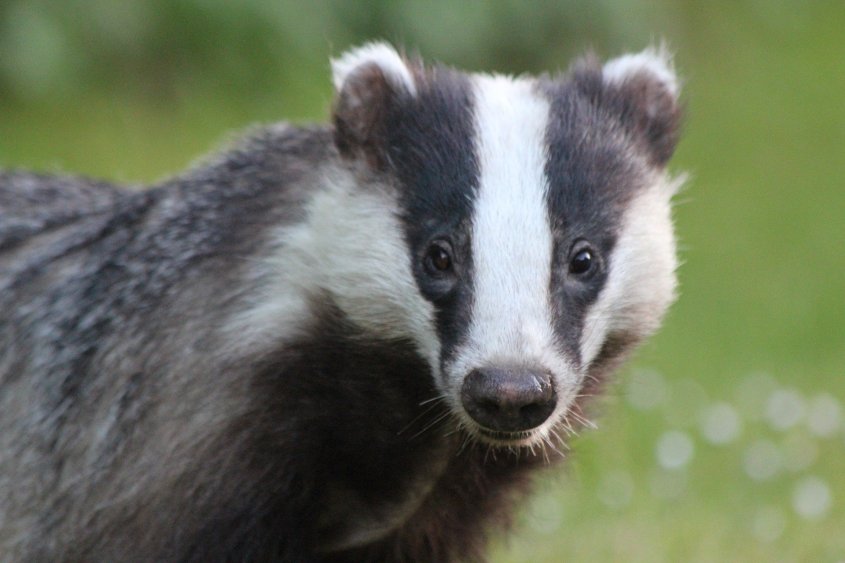
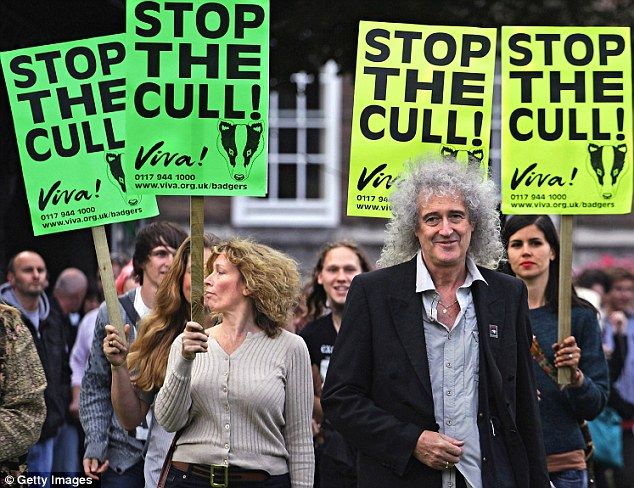
However, we could still see tens of thousands more badgers brutally killed before the barbaric cull policy finally ends. Since 2013, over 140,000 badgers have been trapped and gunned down, with many most likely suffering a prolonged and painful death, and at a public cost of over £70m, in the UK government’s ill-advised effort to control tuberculosis in cattle.
“This debacle is the largest slaughter of a protected species in living memory,” explains badger expert Dominic Dyer, Born Free’s British Wildlife Advocate & Policy Advisor. “Badgers have been shot across a huge area of England stretching from Cornwall to Cumbria, pushing the species to the verge of local extinction in parts of the country which they have inhabited since the Ice Age.
“Despite the huge cruelty and cost of the badger cull, the government has provided no reliable scientific evidence to prove that the mass destruction of badgers is making any significant contribution to lowering bovine TB in cattle in or around the cull zones.
The levels of bovine TB in cattle herds within cull zones remains virtually the same as that outside of the killing fields. The cull policy has made no difference, yet thousands more badgers will lose their lives before it is finally brought to an end.
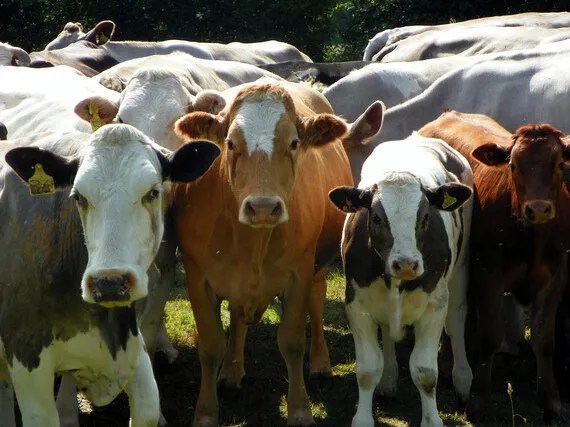
“There are over 9.6 million cattle in Britain and we move more cattle than anywhere else in Europe, the movement of cattle is a key driver for the spread of bovine TB in both cattle and badgers.
For too long the government and the farming industry have wrongly blamed the badger for spread of bovine TB in cattle, which has become a dangerous distraction from tackling the root cause of the disease in the cattle industry.
Despite push back from the National Farmers’ Union, the government is now waking up to this reality and is finally getting serious about an exit strategy from badger culling. But it can’t come soon enough.
“It’s time the government stops playing the badger blame game and brings an immediate end to all further killing of badgers.”
And I mean…Badger culling licences have been granted across 44 areas in England, Natural England published a list of regions where badger culling licenses have been issued on September 7, 2020.
Tens of thousands of the animals have been killed in a government-backed scheme lasting nearly a decade that has left campaigners fearing badgers could become extinct in parts of England.
New licences have been issued in areas in Lincolnshire, Wiltshire, Warwickshire, Somerset, Shropshire, Oxfordshire, Leicestershire, Herefordshire, Gloucestershire, Derbyshire and Avon.
This is no longer a badger control policy, it’s a badger eradication exercise.
The tragedy is, that the “vast majority” of badgers being killed were TB-free, with no impact from their deaths on reducing the disease in cattle.
Badger Trust executive director Peter Hambly said: “New national polling shows that only 15% of people in England support the ongoing badger cull, and yet the cull is bigger than ever and the Government continues to chaotically expand and intensify the killing.
“There is simply no let-up in the way the cull continues to expand and claim more badger lives.
“When the Government releases the 2021 cull figures, people will be shocked at the huge number of badgers killed and increasing areas of the country will be empty or near-empty of badgers.
“This is a national wildlife tragedy happening right before our eyes.”
This is the usual way to “solve” problems, most of which are caused by humans.
This is what the government in Denmark did with the millions of mink, and Germany is also practicing the cruel culling of thousands of chickens because of bird flu
The cruel irony is that such diseases will continue to affect us in the future, as long as we want to engage in factory farming and animal exploitation
Man is the only animal on the planet that doesn’t learn from his mistakes.
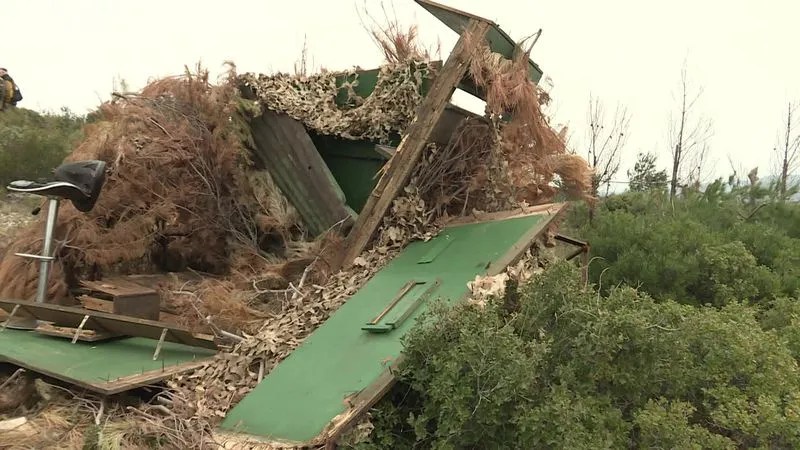
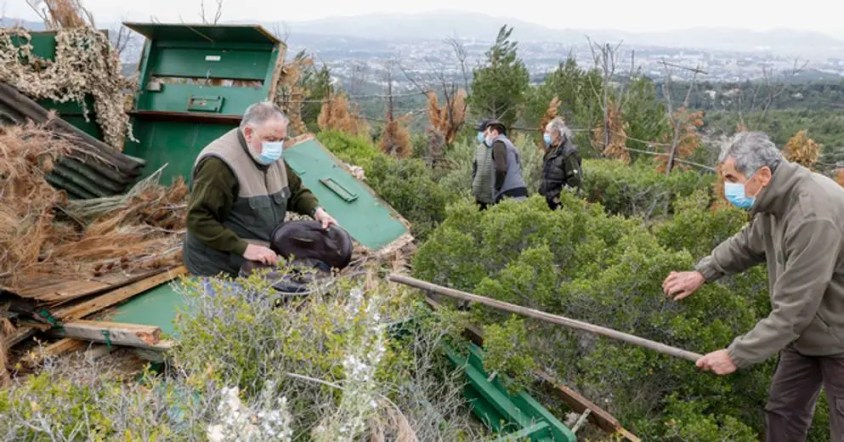
Hobby hunters in southern France are distraught.
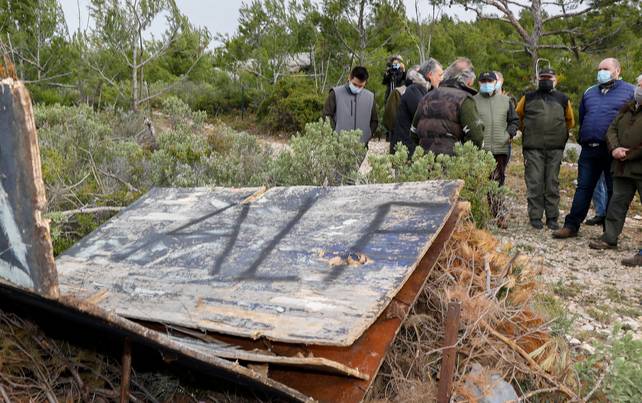
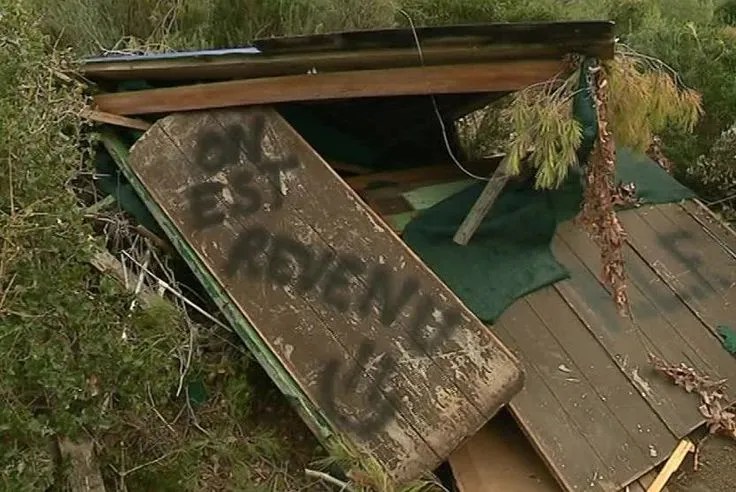
Within a short period of time, their animal cruelty facilities were repeatedly destroyed because of a technique they practiced in Provence for trapping blackbirds and thrushes, which is very controversial.
“That’s a real command,”Eric Camoin rants. “There are several who came here to reconnoiter and then destroy everything – on a full moon night!”
A fortnight earlier similar destruction had been recorded in the departments of Vaucluse and Var.
Near the destroyed posts were found signs calling hunters murderers or animal rights activists.
The chairman of the national association for the defense of the traditional thrush hunt, who invited the local press to express his “weariness”, said: “This is the tenth time this has happened.”
He said: “Whether one likes these practices or not, that’s another debate. I’m not asking you to love the hunt. Everyone is free in their opinion. But at a certain point you can’t take it all and just destroy it.”
A hunt that sparks debate
“Hunting with glue is part of our heritage,” says Gérard Guidice, President of the Marignane Hunting Society. “Here we are in Provence. If you attack this kind of hunting, you attack our culture!”
In fact, glue hunting, practiced mainly in Provence-Alpes-Côte d’Azur, is regularly denounced by environmentalists and animal rights activists.
At the end of August, Emmanuel Macron decided to suspend the hunt with glue for this season, denounced by environmentalists and bird conservationists.
The gesture was also in response to orders from the European Commission that gave France three months in early July to phase out this illegal hunting method, which a 2009 directive bans barring an exemption.
“There are clubs that stir up hatred against this practice and groups behind it do the dirty work,” according to Eric Camoin.
“We’ve filed complaints,” says Eric Camoin. “However, the gendarmes and police officers don’t even come by. They don’t care. They receive the complaints and file them. We can’t go on like this.”
“One day we will attack the perpetrators,” says a hunter from Marseille, who prefers to remain anonymous. We’ll get her. We manage to hunt every kind of animal, so we’ll get them! This is not a death threat, but a warning…”. (!!!)
Eric Camoin is concerned: “There will be drama. There will be a catastrophe because sooner or later we will find it. We won’t give up and we’ll manage to find out who it is. If a hunter comes across a guy destroying a post, I don’t know how the guy will react!”
France remains the only EU country that still allows glue hunting. The hunters are demanding urgent intervention from the Minister of the Interior, Gérald Darmanin, at the risk of the amateur hunters becoming the police themselves.
The activists anonymously left the following “message”:
English : Action Stop Hunting Animals in France “The murderers and animal killers are still cracking down, which is why the members of ALF came back to destroy 21 hunting houses. Real structures in nature with concrete roof steel beams … empty cartridges left to pollute the community.
Armed psycopathes who cut open and put perches to kill all kinds of animals such as thrushes and blackbirds! You degenerates, have you not seen that there are almost more birds …
For the birds, mumps and other animals you raise, feed and hunt, ALF will always be there. Also learn to count band of “shit hunters”, not 18 but 21 more cisterns”
And I mean…Hunting birds with so-called limesticks fundamentally violates EU law.
Limestick hunting was once used throughout France to capture and eat songbirds.
Hence the trick with the sticky mass.
This is how you can catch birds without hurting their bodies.
Today, however, the hunt has become more of a competition of murders, where it is all about who catches the most blackbirds or other thrushes.
We’ve been protesting the brutal and illegal method of killing birds with limesticks for decades.
Even the EU Commission warned France’s hunters in July 2020 to end this “illegal form of hunting”.
Apparently, however, the hunters of France do not want to civilize and they still practice their murderous and illegal hunting techniques in the 21st century, in the heart of Europe, in the name of tradition and heritage..
If the hunters from Provence want to take revenge, then they still have to practice a bit.
We show solidarity with the courageous activists.
We say “Thank you”!
WAV Comment: It was probably around 30 years ago that Joanne, Trev and I (see photo below) took to the streets (and Faroe fish buyer supermarkets) about this very issue, see all our past links here:
I am British (English), and am personally disgusted, or more than disgusted by the actions of my own government; which obviously puts money ahead of the slaughter of whales and other marine life. Victoria Prentis is just like all other Conservatives – that is bloody useless; and we have witnessed it with Covid No. 10 ‘piss up’ parties; one rule for everybody else, from them, and a completely different rule for them.
And now the Faroe fishing supportive murderers of the British Conservative government inform us “The UK is strongly opposed to the hunting of any cetaceans and continues to call on all whaling nations, including the Faroe Islands, at every relevant opportunity to cease their whaling activities in favour of well-managed, responsible tourism, such as whale-watching.”
What complete and utter crap – trade deal talks (a trade deal should never have even happened) was the ideal opportunity for the UK government to really come out and inform the Faroese in no uncertain terms that Britain is a nation of people that are opposed to whale slaughter; and as such; we do not ‘do trade’ with whale murderers. But the British government sees money as the prime issue, as do all Conservatives; Prentis (the fisheries minister of the UK) needs to take a long walk off a very short plank, and I personally ask her what my 30 years plus as a campaigner against the slaughter and attempting to stop the massacre has achieved when she proudly boasts that she has done a trade deal with a nation that murders whales !.
I can tell her, simple, cards on the table; it has shown that my own Conservative, Boris Johnson government, and his supposed animal campaigner wife Carrie; have no backbone; they are utterly spineless.
Dom Dyer, Wildlife-protection lobbyist and very respected animal rights campaigner, who launched the petition on the government website calling for a suspension of trade, said he was very angry about the agreement, which showed how “out of touch” ministers were with public views in the UK and Europe.. We could not agree more with what you say Dom; MP’s are always bullshitting that they ‘represent the people’; well in this case ‘representing the people’ is the last thing in your heads – if you did represent us then you would have told the Faroese what they can do with their whale killing rather than bending over backwards to please them.
The fight goes on as it has for a long time with me and others. Victoria Prentis will be forgotten about very soon and put in the history books as one of the Conservatives who supported whale killing for financial reasons rather than respect for sentient creatures who are slaughtered by the Faroese in an utterly barbaric way. All the more reason never to vote again – all Conservatives say one thing, whilst actually doing the complete opposite; as I say we have seen with No. 10 ‘piss up parties’ during Covid lockdowns.
Mark
———————————————————–
Or you may get a UK trade deal ! – No, you get that regardless !!
Fury as UK ministers sign new Faroes deal after record dolphin slaughter
Conservationists are up in arms over a UK government decision to sign a new deal with the Faroe Islands following a record mass dolphin slaughter.
Ministers have been accused of being “an absolute disgrace” and of “flying in the face of public opinion” after announcing the £5.5m agreement allowing UK and Faroe vessels to fish areas of each other’s waters.
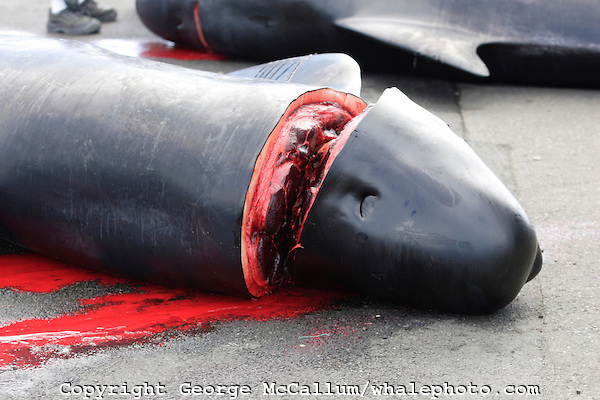
There was worldwide uproar in September when Faroese hunters caused a bloodbath with the killing of 1,428 dolphins in one go, and dozens of pilot whales just days later.
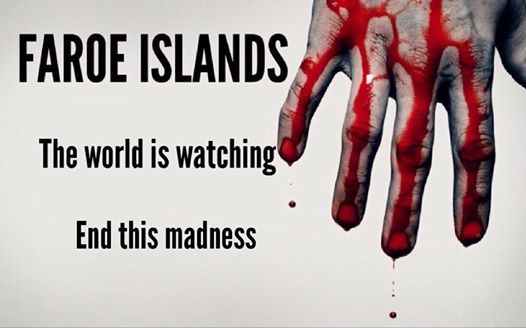
Since then, calls for the government to suspend its 2019 trade agreement with the islands until whale and dolphin hunts end have gathered pace, with 73,000 people signing a petition, and supermarkets being urged to stop selling seafood from the Faroes.
UK animal welfare minister Zac Goldsmith wrote to the Faroese and Danish governments condemning the massacre.
But fisheries minister Victoria Prentis said on Tuesday she was “pleased to announce” the deal that allows the UK to fish 1,000 tonnes of cod and haddock, worth £2.2m, as well as other species.
Fish consumption has risen in the UK as people have stopped eating meat in recent months and years.
Responses from the public on social media overwhelmingly condemned the deal when Ms Prentis announced it, some asking whether it was a joke, and others accusing the government of turning a blind eye to mass torture for money.
Wildlife-protection lobbyist Dominic Dyer, who launched the petition on the government website calling for a suspension of trade, said he was very angry about the agreement, which showed how “out of touch” ministers were with public views in the UK and Europe.
“It’s really badly timed. They’re giving the islanders more access to enriching the economy at a time when international opinion is definitely turning against these horrible hunts,” he told The Independent.
“We need to restrict tourism to the islands and trade – we need to hurt them in their pockets and make Denmark feel the pinch so that if they lose more trade, the Danes have to pick up the bill.”
The Sea Shepherd and Born Free conservation organisations are carrying out polling in Germany Denmark and Britain on the hunts – called “the grind”, which Mr Dyer was confident would show widespread opposition.
The campaigners are aiming to take a delegation of leaders, politicians, naturalists and broadcasters to the islands in the spring to draw the attention of the Faroese government and Danish governments to the “cruelty that has no justification”.
Mr Dyer, who said the government argued this deal was a separate strand from other post-Brexit trade, said pressure must also be put on retailers over where they source fish. If the petition reaches 100,000 names, it will be considered for debate by MPs.
One commenter tweeted to Ms Prentis: “The UK had an opportunity to state its opposition to the mass #slaughter of #whales and #dolphins. This is nothing to be proud of.”
Another said: “Did you by any chance bring up the subject of how they hack dolphins and whales to death in front of their terrified and struggling families? Thought not. Not one moral fibre between the lot of you!”
A third told her: “Worldwide condemnation yet you choose to reward them. Shameful.”
The government says the Faroe Islands are in no doubt as to the UK position on cetacean hunts, which it raises “at every relevant opportunity”.
Immediately after September’s bloodbath, Sea Shepherd said it believed the slaughter had been the largest single hunt in Faroese history, and was possibly the largest single hunt of cetaceans ever recorded worldwide. It said footage showed dolphins suffered prolonged suffering before being killed.
The Blue Planet Society said the EU Commission could not “sit back and let the Faroe Islands devastate Europe’s protected dolphin and small whale populations”.
A government spokesperson said: “The UK is strongly opposed to the hunting of any cetaceans and continues to call on all whaling nations, including the Faroe Islands, at every relevant opportunity to cease their whaling activities in favour of well-managed, responsible tourism, such as whale-watching.”
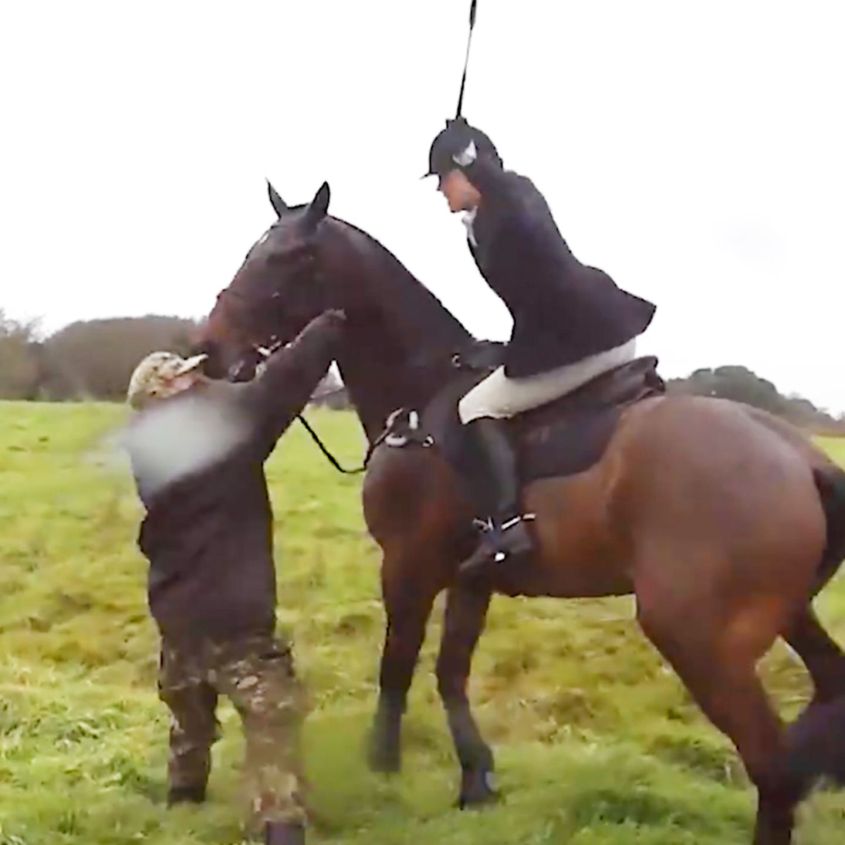
30 years ago today, on the 9th of February 1991, hunt saboteur Mike Hill was killed at a meet of the Cheshire Beagles.
Towards the end of the days hunting, with sabs having prevented any kills, the huntsman boxed up his hounds in a small blue trailer being towed by an open-top pick-up truck.
The kennel huntsman, Allan Summersgill, along with another man, jumped into the pick-up and on impulse, three sabs who were nearby, jumped onto the back of it to prevent them driving the pack to another location to continue hunting.
Summersgill drove off at high speeds down winding country roads for 5 miles with the terrified sabs clinging onto the back.
It is thought that Mike jumped from the pick-up as it slowed to take a bend but failed to clear the truck properly and was caught between the truck and the trailer, which crushed him. Mike died where he lay in the road.
Despite the thud, and the screams of the other sabs, Summersgill continued driving for a further mile.
The truck only came to a halt when one of the sabs smashed the rear window of the cab.
The sab was hit with a whip as he tried to stop the truck. Once it had stopped one sab ran back to Mikes prostrate body while the other ran to a nearby house to call for an ambulance.
Summersgill drove off.
Allan Summersgill was never charged
He later handed himself in at a police station. No charges were brought against him and in a travesty of justice, a verdict of Accidental Death was brought at the inquest. Summersgill is still hunting hares.
Here, a long-standing member of Liverpool Hunt Saboteurs remembers Mike, and the extreme violence that sabs were met with generally throughout that period and which, although to a lesser extent, still continues to this day:
Mike cared deeply about injustice and cruelty towards animals and humans alike.
A naturally kind and caring person who was willing to put hard work into fighting for what he believed in. He loved being with animals and doing rescue work. It was a natural thing for him to get involved with the anti-hunt movement.
We would talk about the danger of disrupting the hunts.
Sometimes we would make light of it as a coping mechanism but very often the conversation would focus on who was the latest person to be attacked or what we could do to protect ourselves.
So although it was a shock to hear that Mike had been killed, it came as no surprise to most of us.
In fact it was a miracle that we had survived the violence for so long without a fatality.
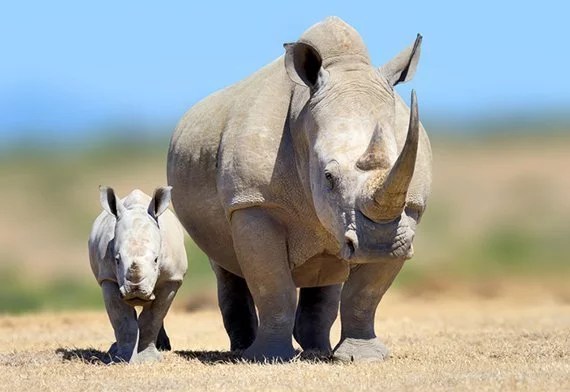 South Africa has cleared a number of endangered species for shooting.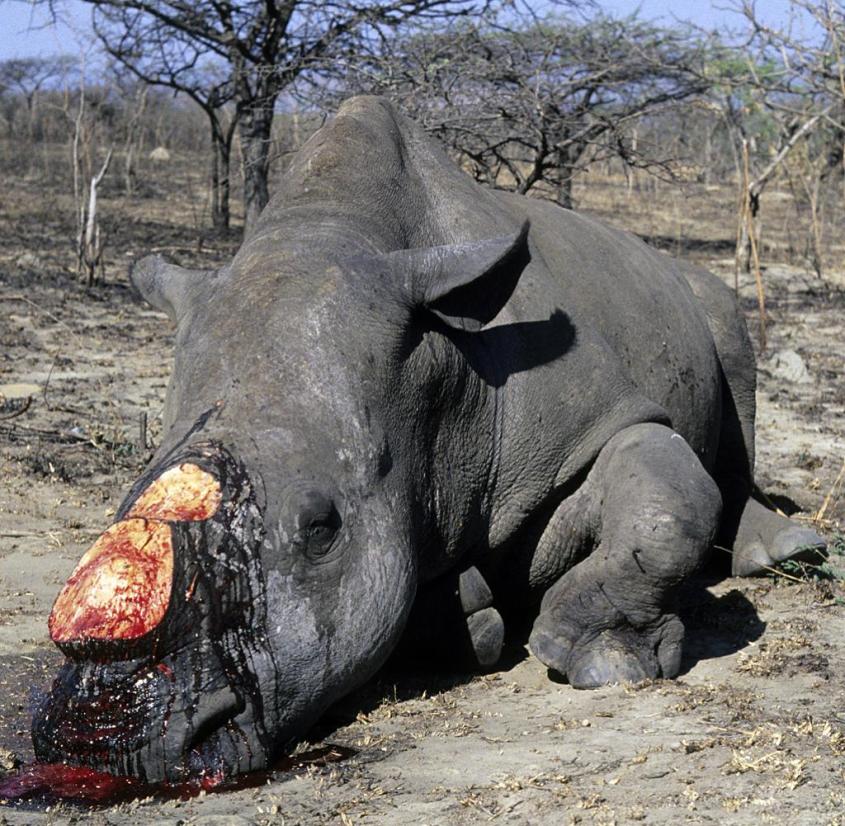
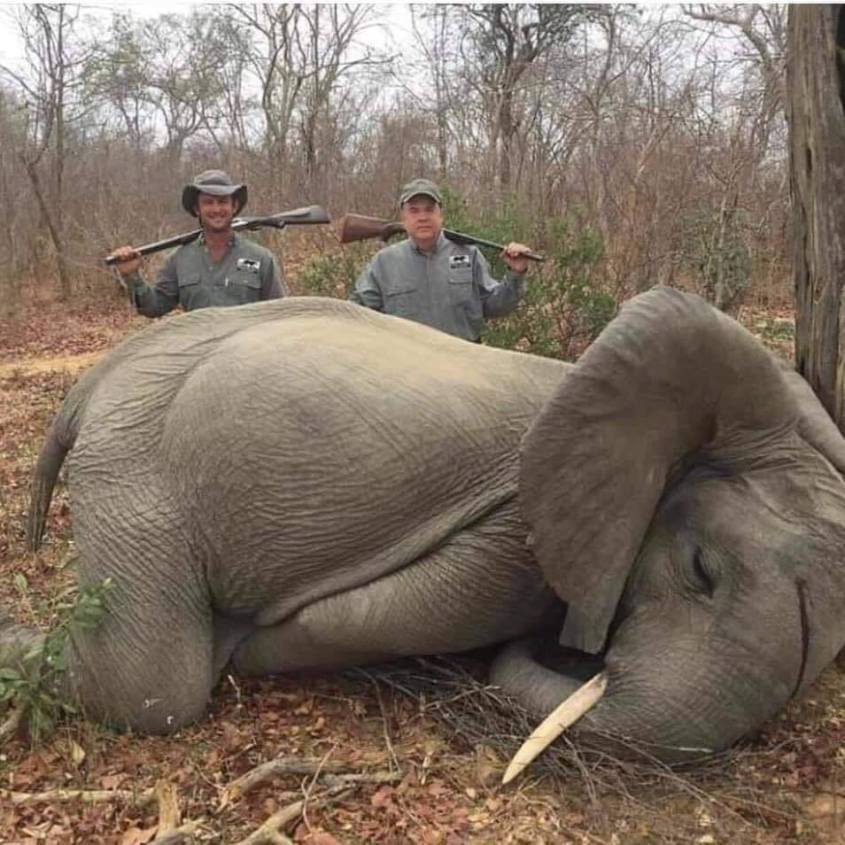 According to the ministry, hunting of leopards is limited to animals over the age of seven (!!!) and only in regions where the populations are “stable or increasing”.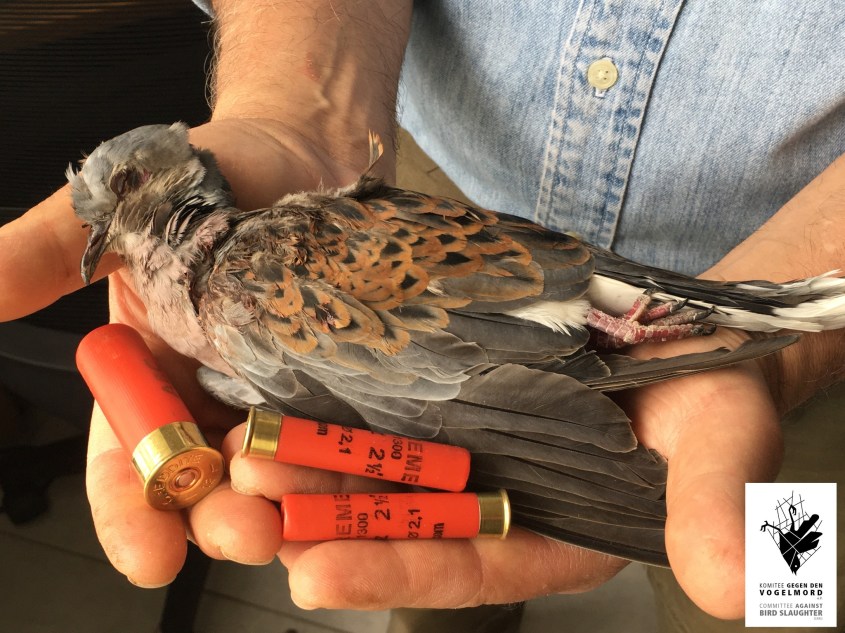
 Planck and Einstein thought hunters were psychopaths.



 According to the Minister for the Environment, the loss of biodiversity, particularly among ground breeders, is due to the destruction of the habitat and the associated loss of insects as a source of food.
 Every year well over 400,000 red foxes die in Germany from hunting!
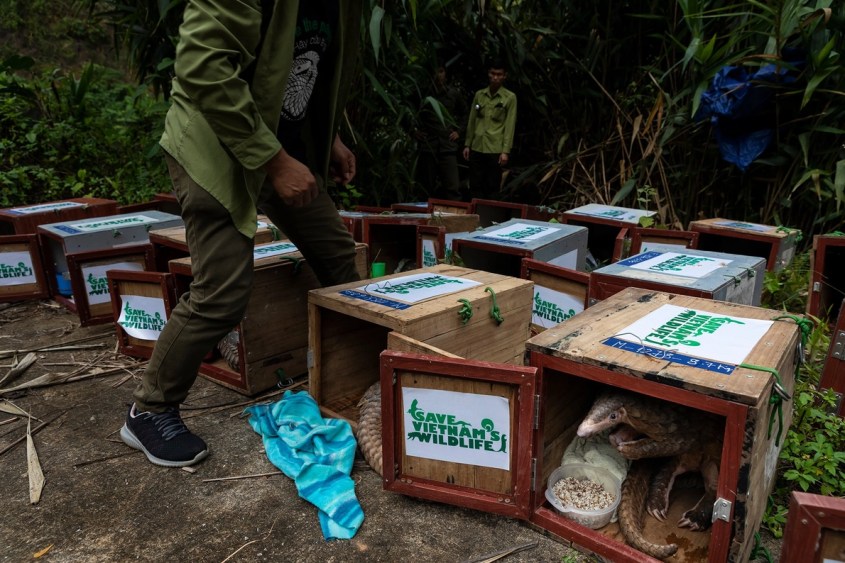
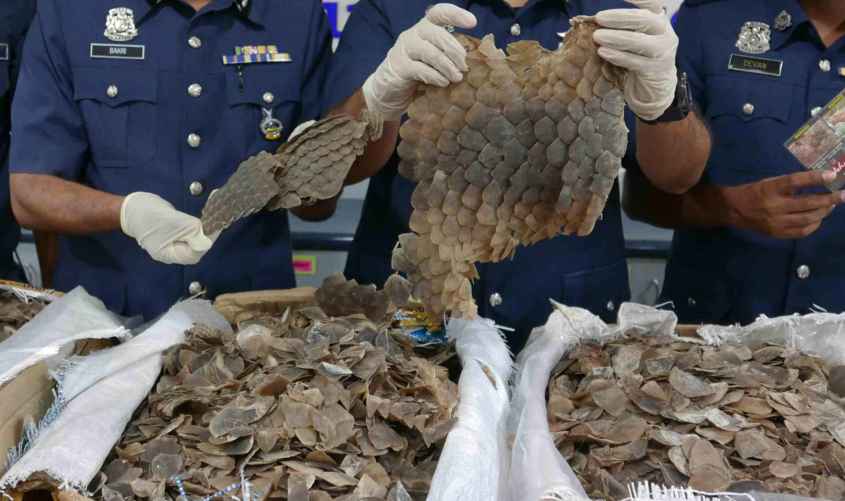 The ills they supposedly cure include “excessive nervousness and hysterical crying in children, women possessed by devils and ogres, malarial fever and deafness” (Nature 141, 72-72, 08 January 1938).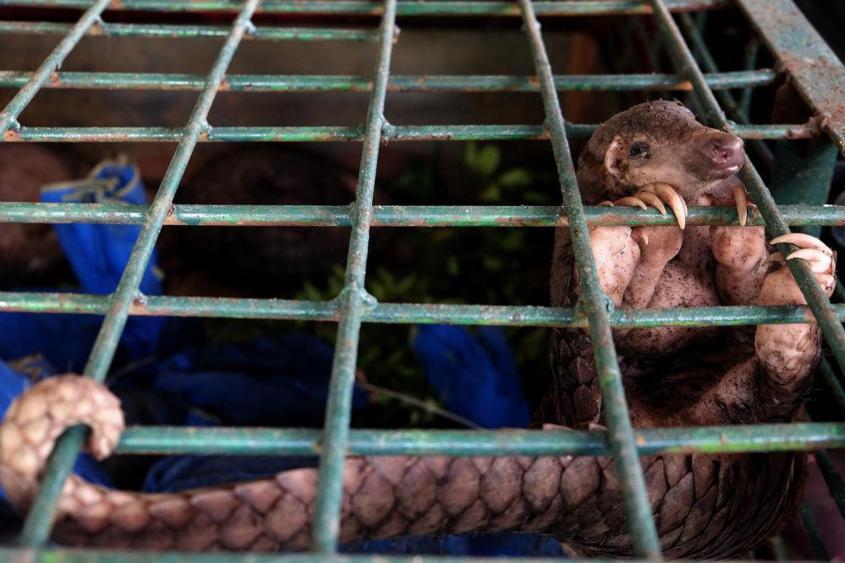
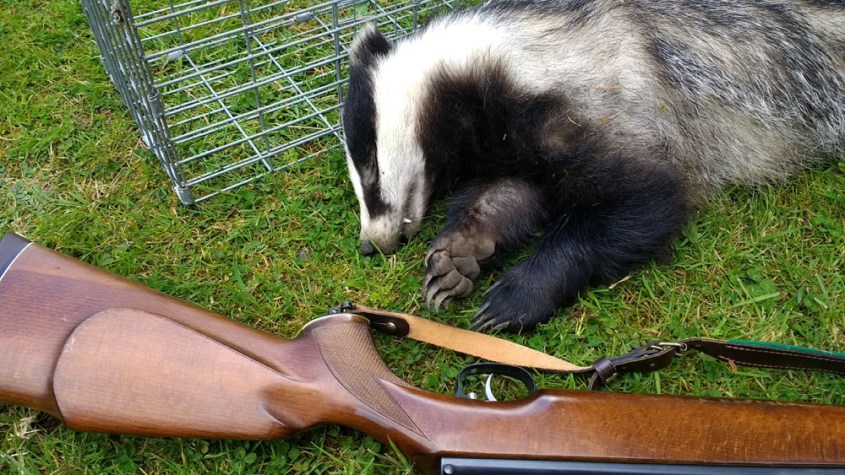
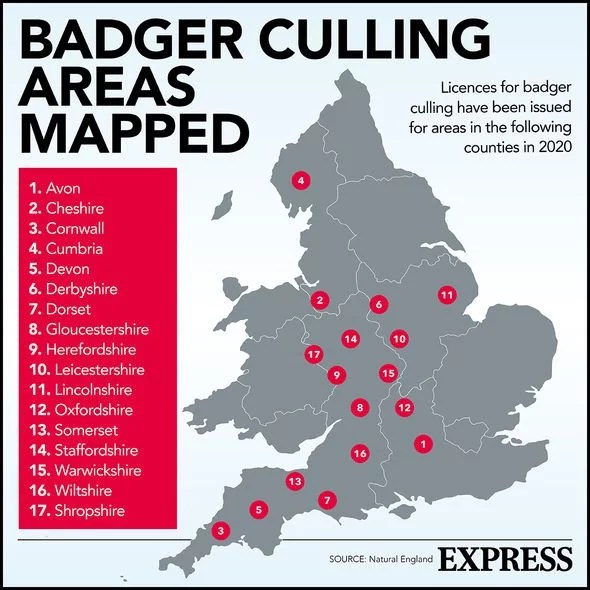 New licences have been issued in areas in Lincolnshire, Wiltshire, Warwickshire, Somerset, Shropshire, Oxfordshire, Leicestershire, Herefordshire, Gloucestershire, Derbyshire and Avon.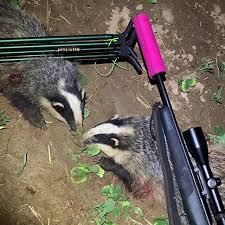
 The chairman of the national association for the defense of the traditional thrush hunt, who invited the local press to express his “weariness”, said: “This is the tenth time this has happened.”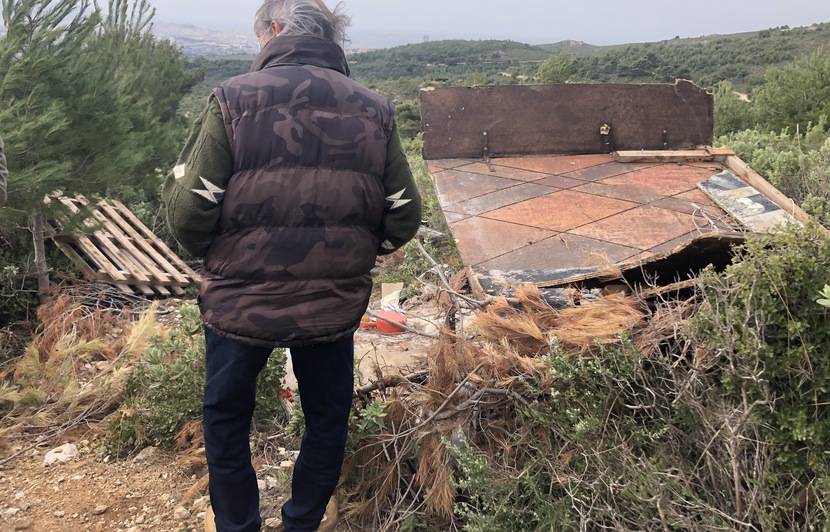





 Despite the thud, and the screams of the other sabs, Summersgill continued driving for a further mile.
 Allan Summersgill was never charged
 Mike cared deeply about injustice and cruelty towards animals and humans alike.
 So although it was a shock to hear that Mike had been killed, it came as no surprise to most of us.
 World Animals Voice