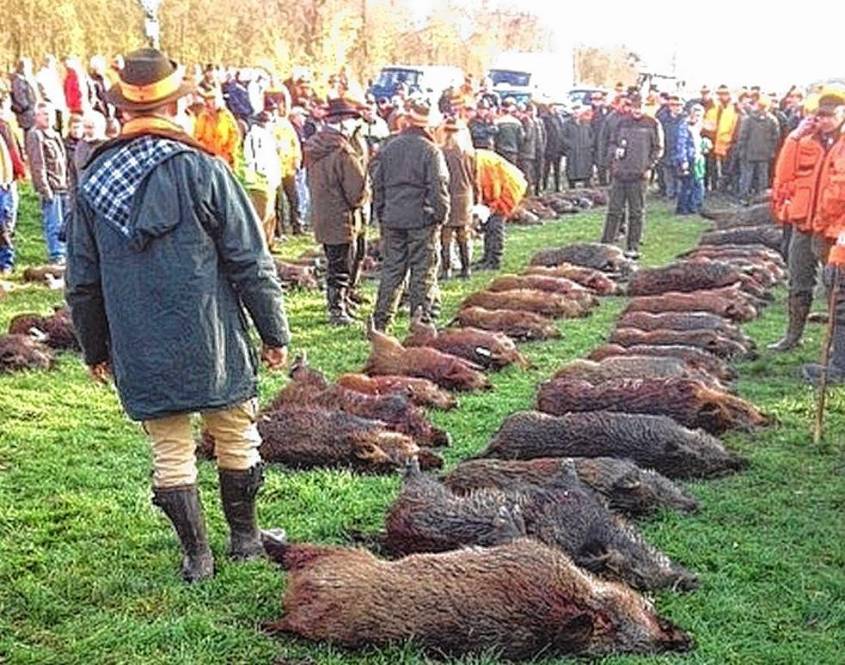
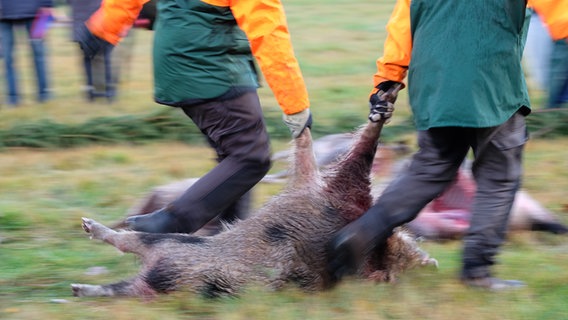
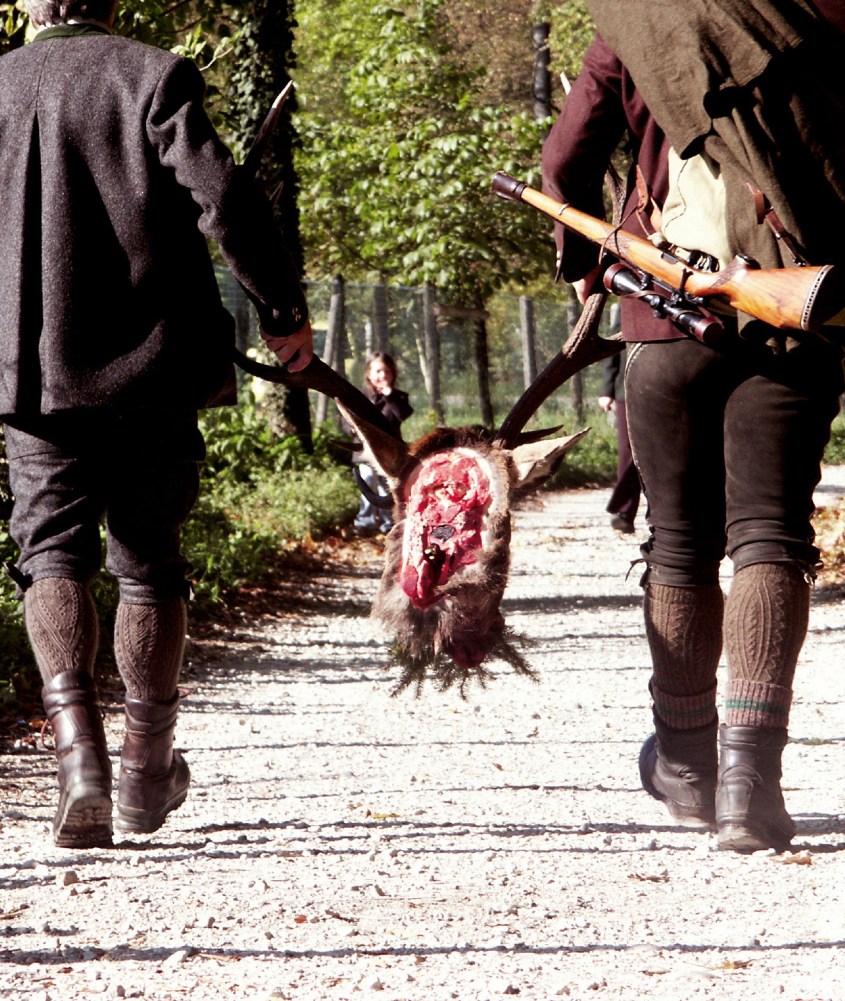
A public outcry was caused by the death of an 18-year-old from Apricale in the northern Italian region of Liguria, who had been traveling with his dog in a forest on Sunday. He was accidentally shot by a 29-year-old hunterlooking for wild boars (STOL reported). The case caused outrage in Italy.
In the past 10 years, 218 people were killed in hunting accidents and 807 others were injured.
Environment Minister Sergio Costa put pressure on the regions responsible for setting the hunting season and called for the suspension of Sunday as the day for hunting from next weekend.
The former Minister of Tourism and Forza Italia MP, Michela Brambilla, urged the adoption of a bill prohibiting hunting, which already exists in Parliament.
Regardless of the many victims, the number of hunters since 2000 has dropped from 801,000 to 570,000.This is mainly due to the ever more expensive hunting licenses, reported experts, according to media reports.
My comment: Hopefully, Germany too is imitating the good example of its neighbors. It may be a small step, but even small steps often have big effects.
Basically, there is no need for specialist or detailed knowledge to realize that there is no justification for the hunt:
Given the environmental damage that PEOPLE cause – car traffic, climate change, marine pollution! – it is downright obscene to point your finger at the ANIMALS!
Also, the ecological balance in the habitat of animals has destroyed the HUMAN, which is why it is highly inconsistent and unfair to clean up this human-caused imbalance on the backs of ANIMALS!Nowhere in the civilized world do we solve problems by shooting. In the computer age and after we were on the moon, humane and smarter solutions should be found!
And: It does not take a deeply psychologically sharpened look to realize that hunters are NOT concerned with the ecological balance!
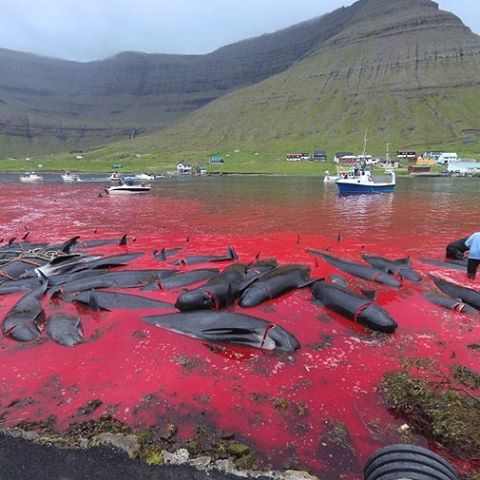
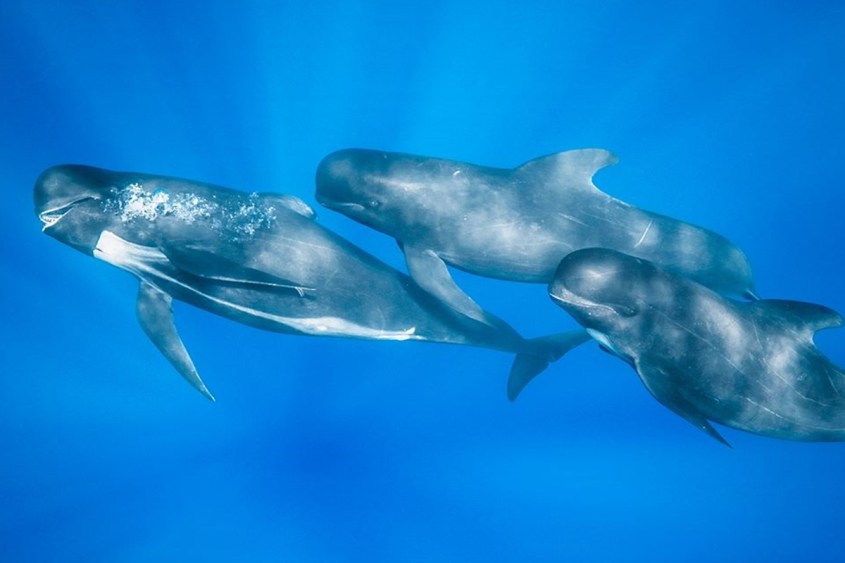
DURING the last 10 years a total of 7,744 small cetaceans of five different species (58,897 cetaceans of at least six species over the last 50 years) have lost their lives in the Faroe Islands grindadráp hunts.
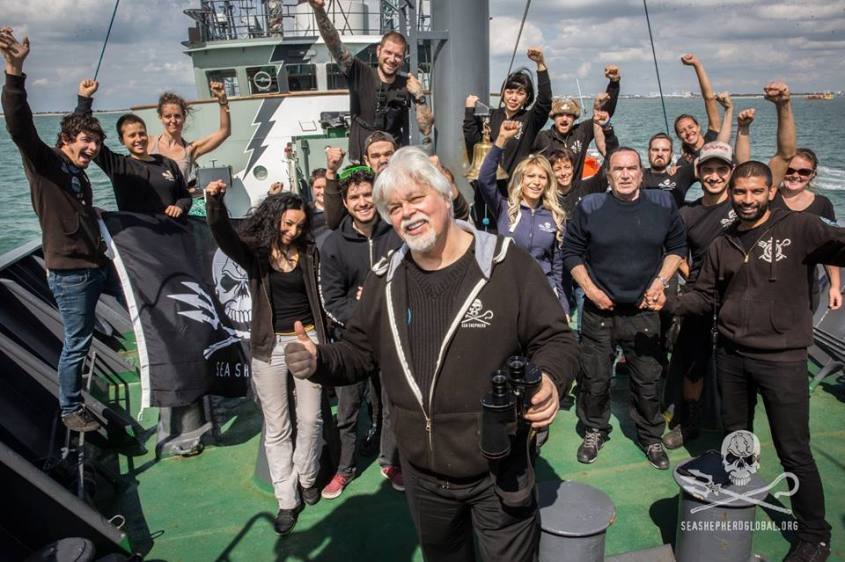
Sea Shepherd UK, a marine conservation charity working to defend ocean wildlife and habitats, is offering a financial incentive to the Faroe Islands of One Million Euros in total over the next 10 years to bring to an end the grindadráp.
The one million Euros will be payable over ten instalments of 100,000 Euros at the end of every calendar year for 10 years starting January 2019 with the first instalment of 100,000 Euros on the 1st January 2020.
All of the incentive payments must only be spent in the Faroe Islands (with documented proof provided to Sea Shepherd UK) on the following projects:
1. Promoting Eco-friendly tourism to the Faroe Islands
2. Establishing cooperative whale/dolphin watching businesses in small communities around the Faroe Islands
3. Provision of teaching materials or specialist lectures to Faroese children on Marine Conservation
4. Training to Faroese citizens in Marine Mammal Rescue techniques so that stranded cetaceans can be saved whenever possible
Each yearly payment of 100,000 Euros will only be made if ZERO cetaceans are deliberately hunted and killed in the Faroe Islands throughout the entire preceding 12-month period. If during any year a cetacean is deliberately killed in the Faroe Islands, then the current and subsequent yearly payments will be cancelled.
“This offer has been made direct to the government of the Faroe Islands on the 25th September 2018,” said Sea Shepherd UK Chief Operations Officer, Robert Reed.
My Comment:She Shepard was often classified as a terrorist organization!!
Because of their brave activism against Japanese fishing fleets, which had illegally killed whales in forbidden sea zones.
And these “terrorists” now give 1 million euros to stop the murder of these animals.
Not a house to buy and ten years holiday in Mallorca to do.
But to save a few thousand whales from the knife of the battles!
We hope it works.
Because for many, the intoxication of murder is stronger than money…
Please note – this petition can only be signed by US citizens with a US Zip Code.
Brett Kavanaugh has spent his judicial career making endangered species conservation and environmental protection more difficult.
If confirmed by the Senate, there is every reason to conclude that he would continue on that destructive path during his lifetime appointment to the U.S. Supreme Court.
His judicial record is abysmal:
In his 12 years on the U.S. Court of Appeals for the D.C. Circuit, he has ruled against endangered species protections in 17 out of 18 cases before him. That is roughly 95 percent of the time.1
I’m thrilled to deliver this news: Just minutes ago a federal judge ruled in our favor to restore protection to Yellowstone grizzly bears.
That means that the trophy hunts planned for Wyoming and Idaho, set to begin this fall, cannot move ahead.
It’s a massive win for wildlife, and I’m so proud that the Center — and you — helped make it happen. Thank you for supporting this incredible fight.
There’s been so much at stake in this campaign. Wyoming and Idaho wanted to let more than 20 Yellowstone grizzlies be gunned down by trophy hunters if they left the protective confines of the national park. More than half of them could’ve been female bears.
But the future of Yellowstone grizzlies was also hanging in the balance. The Trump administration removed Endangered Species Act protection from these bears in the summer of 2017. We knew it was premature and that the bears have yet to fully recover. So we sued — and we’re glad the judge saw it that way too.
I hope you’ll join us in celebrating this victory today. We’ll rest easier knowing Yellowstone’s bears won’t be gunned down anytime soon.
But I hope you’ll also stay with us for the long haul. These are difficult, time-consuming battles that we have to win. We know the enemies of bears and other wildlife won’t slow down. And neither will we.
Thanks again for your continued support.
For the bears,
Kierán Suckling Executive Director Center for Biological Diversity
Police consider drones to monitor badger cull protesters
Devon and Cornwall police warn activists as cull zone is massively expanded
Police have warned badger cull protesters that they may use drones to try to keep order in the far south-west of England following heightened tensions between activists and officers.
In an email to protesters seen by the Guardian, a Devon and Cornwall officer said the force would consider using drones “where intelligence dictates”.
The force said it was considering drones because of a spike in crimes in some areas within cull zones but protesters insisted the move would not stop them from trying to prevent badgers being killed.
The cull in England has been hugely expanded into 10 new areas, with up to 42,000 animals now due to be shot in an attempt to curb tuberculosis in cattle, up from 32,500 last year.
The cull zones now cover vast swathes of many counties, including 68% of Devon and 54% of Cornwall.
The increase is adding to pressure on police forces in these areas. In the email to the protester, the officer wrote: “I have been asked to let you know – and that you forward as you believe necessary – that a decision has been made that where intelligence dictates police will consider the deployment of drones.”
A new, independent report revealing that 97 dogs were euthanised following an outbreak of bovine tuberculosis (bTB) at a hunting kennel confirms that hunts are a major biosecurity risk, argues an animal protection charity.
The report, by researchers at the University of Edinburgh, also contains information which suggests both the hunt and Defra kept quiet about key aspects of the outbreak – such as claiming only 25 dogs were affected, rather than the actual total of 97.
Given that disease, not just bTB, is one of the biggest threats to the lives of farm animals and the livelihoods of farmers in the UK, this raises grave concerns about the way biosecurity across the UK is being managed.
Chris Pitt, Deputy Director of Campaigns at the League Against Cruel Sports, said:
“We’ve been saying for a long time that hunting is a major biosecurity threat to our countryside and this report confirms it. The 97 dogs which were destroyed because of bTB are just the tip of a diseased iceberg. This story isn’t about one kennel infected with bTB, it’s about the way hunts routinely avoid even basic biosecurity and animal welfare measures, meaning their poor dogs are often living disease carriers.
“There’s a simple truth here. When livestock dies, potentially of disease, it is given to hunts to feed raw to their hounds. These hounds are often in poor health due to kennelling conditions and lack of care, and pick up the disease. They then spread the disease back into the countryside – and the cycle continues. The government knows this is a huge risk but is either turning a blind eye or not giving people the full picture, both of which are unacceptable.”
Key concerns are:
·The number of dogs put down was 97, not 25, as originally admitted by the hunt, which suggests a deliberate attempt to play down the outbreak. The number of recorded bTB outbreaks in the Kimblewick Hunt’s territory almost doubled to 90 in the four months after the disease was discovered in the kennels.
·Government statements about the outbreak gave the impression that there was no real threat of disease spread by hunting hounds – while at the same time they amended regulations to restrict the feeding of offal to hunting hounds. If there was no threat – why change the regulations?
·The condition of the Kimblewick kennels – a typical hunt – is described as ‘suboptimal’, with dogs being kept in dirty, unhygienic conditions which are a breeding ground for disease.
·Some biosecurity measures were introduced at the kennels once the infection had been confirmed. However this backs up evidence that basic biosecurity measures at hunting kennels are generally low or non-existent.
Chris Pitt added:
“If farmers are concerned about disease on their farms, be it bTB or anything else, then they need to take a close look at any hunts in their area. There is stacks of evidence showing that disease can spread between livestock and hunting hounds, but the government seem intent on playing this down with misleading or disingenuous statements which deflect from the truth.
“They brought in new regulations last year while pretending there was no problem when clearly there was. And those regulations won’t make any significant difference – it’s a clear case of shutting the kennel door after the hounds have bolted.
“If this country wants to take disease control seriously and protect livestock, then proper biosecurity is vital – and that means stopping hunts from galloping all over farm land.”
·For more information about the diseases spread between hunting hounds and livestock, see a summary here or the full study, Hunting with hounds and the spread of disease, by Professor Stephen Harris, BSc PhD DSc and Dr Jo Dorning, BSc PhD.
·For more information or interview requests please contact the League Against Cruel Sports Press Office on 01483 524250 (24hrs) or email pressoffice@league.org.uk
·The League Against Cruel Sports is Britain’s leading charity that works to stop animals being persecuted, abused and killed for sport. The League was instrumental in helping bring about the landmark Hunting Act. We carry out investigations to expose law-breaking and cruelty to animals and campaign for stronger animal protection laws and penalties. We work to change attitudes and behaviour through education and manage sanctuaries to protect wildlife. Find out more about our work at league.org.uk. Registered charity in England and Wales (no.1095234) and Scotland (no.SC045533).
The pro-whaling nations argue that the ban — which has been in place since 1986 — doesn’t take into consideration the species of whales that have healthy populations and complain that the IWC is too focused on conservation. Their proposal, entitled “The Way Forward,” suggested creating a “sustainable whaling” program.
Fortunately, the motion was denied by a vote of 41 to 27. Iceland and Norway were two of the countries who voted in favor — not surprisingly, as they are the only countries that continue to hunt whales commercially in objection to the moratorium — but the vote was also supported by Cambodia, Kenya, Cambodia, Morocco, and several other nations.
“This decision sends a clear message to governments around the world that the exploitation of animals will no longer be tolerated, and animals must be protected at the highest level,” said Kate Nustedt, global director of wildlife at World Animal Protection. “All eyes are now on Japan to respect this decision. Neither commercial nor scientific whaling have any place in the 21st century, and we urge all governments to increase pressure on Japan to end its whaling once and for all.”
Japan’s proposal to the IWC included a request for permission to hunt minke whales — one of the few species of whales not currently in danger of extinction. The nation claims that minke whaling is part of their economy and history. Although Japan technically — and reluctantly — adheres to the moratorium on commercial whaling of minke, they do still catch and kill hundreds of these whales every year, claiming that the whales are killed for research purposes. Japan’s quota of minke is 333 per year, while Iceland and Norway are estimated to slaughter around 600 each year.
However, the IWC has now agreed to stop supporting Japan’s excuse of hunting whales for “scientific research,” putting the pro-whaling nation further at odds with the commission.
Following the rejection of the proposal, Japan has hinted that it may withdraw from the IWC.
“If scientific evidence and diversity is not respected, if commercial whaling is completely denied … Japan will be pressed to undertake a fundamental reassessment of its position as a member of the IWC,” said Japan’s vice-minister for fisheries, Masaaki Taniai.
But for now, animal activists are breathing sighs of relief after the IWC decision to maintain the whaling ban.
“Japan’s proposal to resume commercial whaling would be like jumping from a plane without a parachute,” said Claire Bass, director of Humane Society International. “Whales face so many threats in our increasingly degraded oceans; it’s critical that the IWC focuses its time and resources on tackling the many problems that we create for whales, such as entanglements in fishing gear and pollution.”
The bodies of nearly 90 elephants have been discovered close to Botswana based wildlife sanctuary, Okavango Delta wildlife sanctuary.
Many of the 87 elephants found were slaughtered for their tusks mere weeks ago, with the scale of poaching deaths now reported to be the highest recorded in Africa.
The spike among elephants poached within Botswana’s borders has reportedly coincided with the disarmament of Botswana’s anti-poaching unit, suggesting this could well be a cause.
Fearing the Botswana government is ignoring the scale of the problem in a bid to protect the country’s reputation, conservationists are now urging new president Mokgweetsi Masisi to take action to protect Botswana’s elephants.
Dr Mike Chase, from Elephants Without Borders, told the BBC:
“I’m shocked, I’m completely astounded. The scale of elephant poaching is by far the largest I’ve seen or read about anywhere in Africa to date”.