Category: Live Transport

England: I Met the Met, and Had The Bruises To Prove It.

I said recently that I would try and write a little more about live animal exports from England.

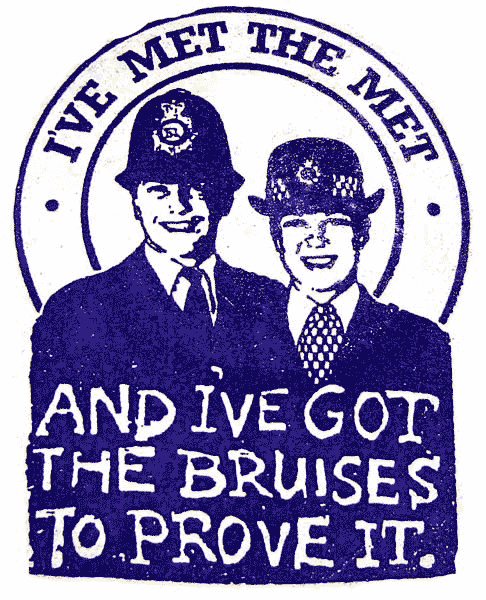
‘I’ve met the Met, and got the bruises to prove it’.
The history of live animal exports from the UK has been a long and troublesome one; with most Brits supporting a ban on the export and consequent suffering of animals, whilst the exporters, hauliers and those involved in the business / trade sat strongly on the other side of the fence.

I (Mark) come from Kent county (SE England); and with Dover port being in Kent, it was for years a battleground for anti export campaigners and the pro export lobby.  At one point, due to relentless and very effective campaigning by good people, Dover harbour banned the export of live animals.  As a result, hauliers and exporters turned their attention to other facilities in Southern England to try and get the animals into Europe.  Live calves were even flown out of Coventry airport to be crated in Europe; what with the UK boasting a ban on the use of veal crates, was it somewhat hypocritical for UK farmers to then send their calves to Europe to suffer a fate that had been banned in the UK on cruelty grounds ???

Live calves being exported to mainland Europe – Mark (WAV).

and the crating that resulted …

Banned in the UK on cruelty grounds, UK calves were still exported to Europe for crating ! – hypocritical ??

It was during the anti export protests at Coventry that Jill was run down and killed by an export truck:

February 1995:

Exporter Christopher Barrett-Jolley

Exporter Christopher Barrett-Jolley was behind the calf flights from Coventry; he was later jailed for being a Cocaine dealer which resulted in him being given a 20 jail sentence – read about it here:

England: There Is More To The Jill Story When You Have the Facts. – World Animals Voice

I personally journeyed many times to Shoreham to take part in anti export protests whilst Dover (my patch) was closed down.  There was a massive opposition to the trade as you can see in the film; the Met police from London had to be transported down to the SE port (at huge costs) every time there was a shipment – and in the end, it was these massive costs that stopped the trade from Shoreham.  There is an old saying in animal rights protester circles that they met the Met (police) and have the bruises to prove it – please watch the video and decide for yourselves.

In the end after the High Court ruling which was undertaken by live animal exporter Peter Gilder; the trade returned to Dover.  But, Shoreham and the unity of locals and the anti export protesters has and will always go down as one of the great stands by the Brits to defend the animals that cannot defend themselves.

April 1995 – Fury as live exports ban is lifted

Wednesday 12 April 1995

Dover is facing the threat of major disruption by protesters against the livestock export trade after a decision yesterday by the High Court that the port authority had acted illegally by banning the live animal traders from the port.

The court also ruled that Coventry airport and Plymouth City Council must allow live animal exports.

The landmark judgment, which in effect ensured the future of the trade for the foreseeable future, was greeted with glee by exporters and horror by animal rights campaigners. Mark Glover, of Respect for Animals, who orchestrated the original mass protests which led to the recent ban, predicted civil disobedience would close Dover to all traffic.

“The judges were calling for the rule of law to be upheld but they’ve wholly ignored the consequences of their judgment. We’ll be calling on all our supporters to take part in all the demonstrations against the trade and that will include Dover,” he said.

Jonathan Sloggett, managing director ofDover Harbour Board, said that when the trade restarted – probably after Easter – he feared there would be disruption for 99 per cent of Dover’s customers for the sake of the 1 per cent of animal export traffic.

He added: “The board has been, and remains, very concerned that the admission to the port of Dover of the trade in live animals for export will cause considerable disruption to all the other users of the port.

“The board very much hopes that all those who sincerely object on moral grounds to the exportation of live animals for slaughter will accept that Dover has a legal duty to admit this trade and cannot lawfully refuse to do so.”

Kent police have previously warned Dover that, in the event of any serious disturbance, the A2 and A20 approach roads to the port would have to be closed, causing widespread disruption. They are now drawing up plans for dealing with fresh protests.

Lord Justice Simon Brown and Mr Justice Popplewell ruled that Dover, Coventry and Plymouth had no right to surrender to “mob-rule” and they must accept the trade regardless of the protests that will ensue.

The judges ruled that the port and airport authorities must accept all lawful trade despite their determined opposition to accepting livestock exports.

The judges severely criticised the authorities for acting out of “narrow self-interest”. Dover and Coventry had warned the court that their operations would be severely hampered or halted by animal welfare campaigners, who would take their protest wherever the trade was conducted.

The authorities argued that the interests of existing port and airport users must take precedence over newcomers. Dover warned specifically that a 250-strong demonstration could be capable of closing Britain’s busiest port.

The judges said the demonstrators should now recognise it was “impossible” for the ports to submit to unlawful protest and accept “the limitations upon their lawful right to protest”.

Lord Justice Simon Brown said: “If ever there were cases demanding the courts’ intervention in support of the rule of law, these are they.

“It may indeed be doubted whether there remains any logic in protesting at the ports: the only body properly able to ban this lawful trade is Parliament itself – unless indeed the Secretary of State is advised that even that would be unlawful under Community law, in which event the only solution lies across the Channel.”

The decision marked a victory for the livestock exporters Peter Gilder & Sons and Russanglia Ltd, who argued that Dover’s decision to ban the trade was unlawful because the port was duty bound to accept all lawful cargoes.

Their victory was shared by Phoenix Aviation, which argued that Coventry City Council acted unlawfully by trying to block the trade, and by Associated British Ports, owner of Plymouth’s Millbay docks, which argued that it had no power to unilaterally ban the trade despite the claims of the city council.

Liberty, formerly the National Council for Civil Liberties, also joined in the criticism of yesterday’s judgment.

Andrew Puddephatt, its general secretary,said: “A Private Member’s Bill to stop live animal exports was introduced into Parliament in February but ran out of time when one of William Waldegrave’s aides spent 24 minutes reading chunks from the Encyclopaedia Britannica to furious MPs.

“In the face of antics like that, it seems both ludicrous and insulting to claim that people should trust in the parliamentary process rather than engaging in protest that has been largely peaceful.

Fury as live exports ban is lifted | The Independent | The Independent

Shoreham – the film:

This film follows weeks of daily demonstrations by hundreds and, at times, thousands of people, who converged on a small harbour port in West Sussex, England, to protest about the export into Mainland Europe of thousands of cattle and sheep.

Thousands of young calves were also destined for veal crates, a system where calves are kept locked into tiny boxes, only able to lay or stand and are chained or tethered, forced to drink iron deficient milk so as to satisfy those who like their flesh (veal) light rose coloured and tender. This system was already banned in the UK and so farmers were exporting these baby animals to Europe where it was still legal.

The film demonstrates the power of ordinary people, when they get together and fight for the rights of those who do not have a voice. Within weeks, these advocates for animals managed to stop in their tracks, big business who were profiteering from what many people believe is a trade in suffering. Other harbour ports across the UK also saw these exports stopped, due to persistent and daily demonstrations. Ordinary folk, from all walks of life, young and not so young, put their own liberty and personal safety at risk to try and protect animals as well as to highlight this issue. Watch this film and be inspired.

View the film – Shoreham live export demonstrations 1995

 By watching directly.

Live animal exports have been a subject of tension between animal rights and welfare groups, the public and the farming community since the late nineteenth century. Alun Howkins (1947-2018), a founding editor of History Workshop Journal, and Linda Merricks explored changing attitudes towards live animal exports, drawing extensively on material from the Mass Observation Archive at the University of Sussex which aims to record the everyday lives and opinions of ordinary people. They found that campaigns against the transport of live animals had their origins in the late nineteenth century, corresponding with the growth of the antivivisection movement and environmental activism in Britain. Eight animal protection groups had been established in Britain by 1900 and another eight by 1944. While only one more group was formed before 1960, there were a further fourteen by the end of the 1980s. This suggests that interest in animal protection peaked in the late nineteenth century and then, again, after 1960 with the advent of modern animal rights. In the nineteenth century, concern about animal welfare in Britain was associated with religious-inspired moral reform which raised awareness of animal cruelty, whereas from the 1960s it reflected growing public consciousness of the relationship between humans and animals. Interest in animal welfare and animal rights has since become more central to public and political debate in Britain, but it is important to distinguish between the two. Animal welfare permits the use of animals by humans as long as they are provided with adequate food, shelter, veterinary treatment and other needs to prevent suffering, whereas animal rights advocates share the belief that it is morally wrong to exploit animals.

The past and future of live animal exports – History Workshop

Moving on to current times; live animal exports to be banned in England and Wales

Published 3 December 2020

Live animal exports to be banned in England and Wales – BBC News

STILL remembering Jill, and for the animals;

Regards Mark
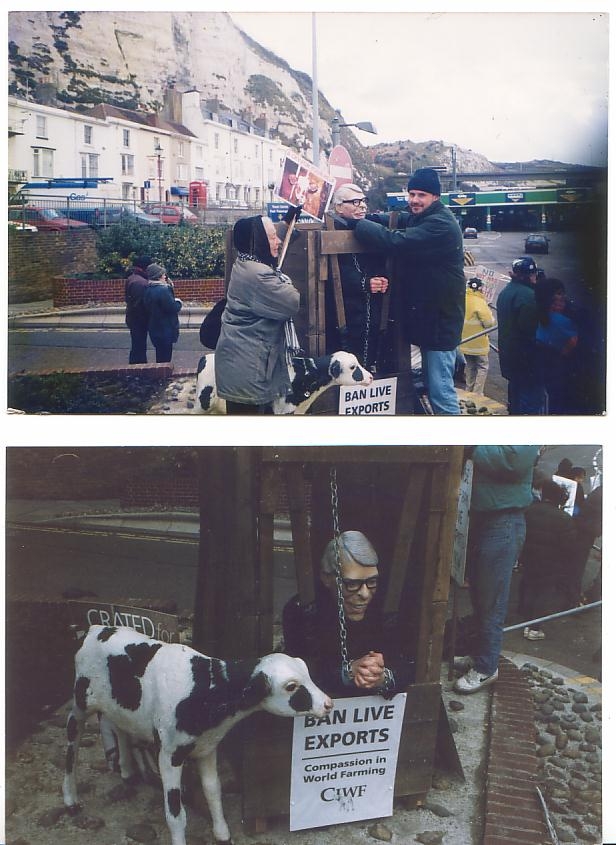
Shaking him warmly by the throat – Mark (WAV) and Barb protest at Dover against live calf exports – a liberated calf and the Prime Minister (then John Major) is shoved in the veal crate; for experience type of thing !!!

UK: Animal Advocate Oldies, and Still Getting Stronger.

LEAGUE AGAINST CRUEL SPORTS (LACS).

The League Against Cruel Sports (LACS), formerly known as the League for the Prohibition of Cruel Sports, is a UK-based animal welfare charity which campaigns to stop blood sports such as fox hunting, hare and deer stalking; game bird shooting; and animal fighting. The charity helped bring about the Hunting Act 2004 and Protection of Wild Mammals (Scotland) Act 2002, which banned hunting with hounds in England, Wales and Scotland.

Thanks to our friends at Wikipedia:

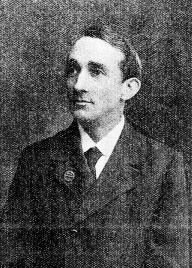
  • 1924 – The League was founded by Henry B. Amos to oppose rabbit coursing[7] – he was successful in achieving a ban. This resulted in the organisation expanding its remit to include other blood sports – such as fox, hare and deer hunting.
  • In 1935, Amos was jailed briefly for throwing a copy of Henry Stephens Salt‘s Creed of Kinship through a stained glass window at Exeter Cathedral during evensong
  • He first became interested in vegetarianism in about 1886.
Henry Brown Amos (24 May 1869 – 22 October 1946) was a Scottish animal rights activist, humanitarian and vegetarian.
  • 1975 – A bill seeking to ban hare coursing, supported by the League, was passed through the House of Commons, but did not receive approval in the House of Lords.
  • 1978 – The League secured legal protection for otters, including a ban on hunting them. The aquatic mammal was up until that point hunted with packs of hounds, one of the reasons for their numbers declining.
  • 1992 – The League helped secure the Protection of Badgers Act, which expanded the protection of the mammals themselves to their setts. The homes of badgers are illegally targeted for several reasons, including being blocked by fox hunts to stop animals being pursued by hounds fleeing underground.
  • 2002 – Fox, hare and deer hunting and hare coursing was banned in Scotland under the Protection of Wild Mammals (Scotland) Act 2002, which was introduced by MSPs following campaigning by the League and other animal protection organisations.
  • 2004 – Fox, hare and deer hunting and hare coursing was banned in England and Wales under the Hunting Act 2004. The legislation was introduced by MPs following campaigning by the League and other animal protection organisations.
  • 2005 – The Hunting Act 2004 came into force – making fox, hare and deer hunting and coursing illegal across England and Wales.
  • 2005 – The Waterloo Cup hare coursing competition held its final meeting at Great Altcar in Lancashire, closing after 169 years following passage of the Hunting Act.
  • 2006 – A huntsman with the Exmoor Foxhounds was found guilty of illegally hunting foxes with dogs in a private prosecution brought by LACS, but the case was overturned on appeal.[8][9]
  • 2007 – Two members of the Quantock Staghounds were successfully prosecuted by the League following chasing a deer across Exmoor.[10]
  • 2008 – Two members of the Minehead Harriers pleaded guilty to chasing a fox with a pack of hounds in a private prosecution by LACS.[11]
  • 2009 – The League announced a new campaign against dog fighting, amidst news reports that there is an increase in dog fighting in London.
  • 2014 – The League celebrates 90 years of campaigning against cruelty to animals in the name of sport. Figures from the Ministry of Justice show that there have been 341 convictions under the Hunting Act 2004.
  • 2015 – Prime Minister David Cameron offered a free-vote on repealing the Hunting Act, backing down shortly afterwards following pressure form the League, MPs and other animal protection organisations.
  • 2015 – Cross-channel ferry companies stop shipping pheasants and partridges from French factory-farms to British shooting estates, following an investigation and lobbying by the League.
  • 2018 – Conservative Party drops its manifesto commitment to offer a free-vote on repealing the Hunting Act following pressure from the League, meaning no Westminster party any longer supports repealing the hunting ban.
  • 2018 – Scottish Government announces intention to strengthen the Protection of Wild Mammals (Scotland) Act 2002, which bans hunting with hounds in Scotland, following pressure from the League and other animal protection organisations.
  • 2018 – Welsh Government bans pheasant and partridge shooting on public land following campaigning and pressure from the League and Animal Aid.
  • 2018 – The Labour Party backs calls made by the League to strengthen the Hunting Act – including prison sentences for those who chase and kill wild mammals.
  • 2019 – University of Wales suspends pheasant shooting on its countryside campus at Gregynog Hall following campaigning by the League.
  • 2020 – In January 2020, an employment tribunal in Britain ruled that ethical veganism is a “philosophical belief” and therefore protected in law. This is the first time an employment tribunal in Britain ruled this. This case was in regards to vegan Jordi Casamitjana, who stated he was fired by the League due to his ethical veganism.[12

Web link: Home | League Against Cruel Sports

Photo – Mark (WAV) / East Kent Hunt Sabs.

ROYAL SOCIETY for the PROECTION of CRUELTY to ANIMALS (RSPCA)

The society was the first animal welfare charity to be founded in the world.

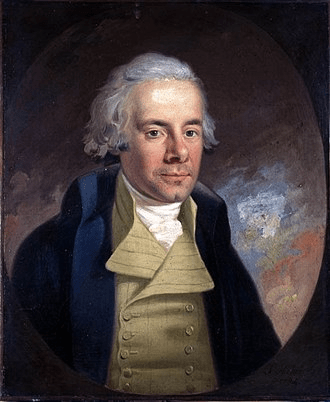
Founded on the 16th June 1824, by Richard Martin, William Wilberforce and the Reverend Arthur Broome, at the Old Slaughter’s Coffee House, near Trafalgar Square, London, who together agreed that the neglect, cruelty and abuse of animals was unacceptable.

William Wilberforce – One of the RSPCA founders and anti slavery staunch campaigner.

Now very close to its 200th anniversary; and going stronger than ever.

Wilberforce was an advocate and staunch campaigner for the abolition of the slave trade; which he achieved shortly before his death:

William Wilberforce – Wikipedia

This proves that animal welfare campaigners are also strong supporters of human welfare issues, as we show with our support for ‘Free Tibet’ who are based in London:


Search Results for “free tibet” – World Animals Voice

Read a lot more about the RSPCA history at:

Royal Society for the Prevention of Cruelty to Animals – Wikipedia

Web site link:  The Largest Animal Welfare Charity in the UK | RSPCA

Above are a few links to enable you to read and learn more about these wonderful animal advocate organisations;

Regards Mark.

Enjoy

Guns and Roses at London:

Italy: Three trucks carrying lambs sanctioned by traffic police in Italy following investigation.

Three trucks carrying lambs sanctioned by traffic police in Italy following investigation

22 April 2022

Essere Animali

During Essere Animali’s roadside checks with MEP Eleonora Evi, three trucks carrying lambs were sanctioned by the traffic police. The conditions were not adequate to guarantee that the animals could move naturally. In one case, a lamb traveled for hours with one leg stuck between the bars of the truck.

Organisation Essere Animali recently carried out checks of the trucks used to transport live animals that pass through the border with Slovenia to Italy. 

Two vehicles from Hungary and one from Romania, each carrying over 700 lambs across four floors, were identified at the border with Slovenia. They were reported to the authorities and followed at a distance for a total of over 2,500 km, until the traffic police intercepted them. The vehicles were sanctioned under Legislative Decree 25 July 2007, n. 151 which provides for the sanctions for the violation of the provisions stipulated in European Regulation 1/2005 on the protection of animals during transport and related operations.

In particular, the violations concerned the insufficient height of the compartments, which did not allow the animals to move naturally. The lambs’ heads touched the upper floor of the compartment, a condition that can cause bumps, bruises, and burns, as well as preventing adequate ventilation of the compartments. For violations of the provisions on animal welfare during transport, penalties can reach up to 6,000 euros.

Essere Animali’s activists also filmed a lamb that traveled for hours with one leg stuck between the truck bars, as well as issues related to the watering system installed in the vehicles, which several organisations have denounced as unsuitable for some time as it puts lambs at risk of suffering from thirst and potentially dehydration.

Last January, the European Parliament approved a series of recommendations drawn up by the ANIT Committee which do not place animal welfare at the centre of the revisions. In fact, the text approved by the majority of MEPs does not propose adequate solutions to numerous urgent problems, including the transport of animals over long distances (over 8 hours), and that of unweaned animals.

We thank MEP Eleonora Evi for her valuable collaboration, and police forces for their timely intervention. We will inform the European Commission and the Minister of Health of the outcome of the violations, providing images that document this alarming reality. The European Regulation, in addition to being frequently violated, is unable to concretely protect animals. Today it is legal to transport lambs less than two months old for journeys lasting up to 30 hours, subjecting them to conditions that cause them great stress and suffering. Together with other NGOs from all over Europe, we are calling for greater animal protection, such as a ban on the transport of live animals over long distances and unweaned animals. The European Union has the opportunity to really improve the conditions of animals; it shouldn’t betray the demands of its citizens.

Simone Montuschi, President, Essere Animali

Regards Mark

UK: 7/4/22 Your Victory – A Massive Day For UK Animals and Their Welfare; After Losing Their Protection Post Brexit, The Updated Animal Welfare (Sentience) Bill Has Been Voted Through In Parliament Today; Which Means That Animals are Legally Recognised as ‘Sentient Beings’ Once Again.

WAV Comment:  Often in animal welfare, there are not immediate solutions to concerning animal welfare problems.  Tenacity (the quality or fact of being very determined; determination.) has to be something; and is something, which all of us in the rights / welfare movement need to have and show.  To put it simply, if you give up, you lose.

Myself campaigning with CIWF in the Netherlands against animal factory farming.

UK animal people did not give up; in fact, their resolve strengthened.  Why:

Despite the huge success in getting animal sentience recognised in EU law, the recognition of animal sentience in the UK took a big step backwards following the Brexit referendum in 2016.

The following year, Compassion in World Farming discovered that the UK Government’s European Union (Withdrawal) Bill, which formally enacted Brexit, would not carry across provisions from EU Treaties – including Article 13 of the Treaty on the Functioning of the EU.

This meant that reference to animal sentience would disappear from UK law when the UK formally left the EU on 31st December 2020. Both the recognition of animals as having the capacity to have feelings, including pain and joy, and the requirement for governments to pay “full regard” to their welfare when formulating and implementing policy, would be lost from UK law. Read more about what Brexit meant for Animal Sentience in this news article.

Campaigning on animal sentience in the UK starts again
We (CIWF) had to start campaigning immediately to ensure that this cornerstone of animal welfare law was not lost when the UK left the EU. We mobilised supporters to lobby the Government, contacted Members of Parliament, and liaised with other NGOs to alert them to the threat to animal welfare. Unfortunately, it faced strong Government opposition and was narrowly defeated when it was put to the vote in Parliament.

And finally, on the 12th of December 2017, following the media furore over the vote in Parliament – and under pressure from a 155,000-strong Compassion petition, the UK Government announced a new Bill would be introduced. This was a momentous moment as the Bill would permanently incorporate the legal recognition of animal sentience into UK law post-Brexit.

2018: Campaign setback as Government delays sentience legislation
Despite the positive announcement from the Government at the end of 2017, the campaign to recognise that animals are sentient beings faced even more setbacks in the following years.

Firstly, Parliament’s Environment, Food and Rural Affairs Select Committee published a report which suggested the Bill should be redrafted. The Committee raised concerns that, as the Bill was worded, paying regard to animal sentience would lead to the slowing down or freezing of policymaking and result in widespread Judicial Reviews. Following that report, the UK Government announced in September 2018 that the legislation relating to animal sentience would be delayed.

2019: Over 100,000 calls for animal sentience recognition

In September 2019, our Senior Policy Manager, James West, handed in a 103,000-signature petition to Downing Street, alongside other members of the #BetterDealForAnimals coalition. The petition called on the UK Government to introduce legislation recognising animal sentience and require that full regard be given to animal welfare in UK Government policies.

2020: MPs debate animal sentience

As a result of the 2019 petition reaching over 100,000 signatures, MPs debated the issue in March 2020. Watch the highlights of the debate.

Then, following continued inaction from the Government, in September 2020 dedicated Compassion campaigners took action again.

Thousands of people urged their MPs to call on Ministers to introduce animal sentience legislation before 1st January 2021. This was the day after the UK would formally leave the EU, at which point EU laws recognising animal sentience at the time were due to run out.

2021: UK Government introduces Animal Welfare (Sentience) Bill
As the clock struck 11pm on 31st December 2020, despite persistent campaigning, animals in the UK were, for the first time in almost a quarter-century, no longer recognised as sentient beings under the law.
Then, on 13th May, the efforts of compassionate people around the country finally worked in British animals’ favour. The UK Government announced it would introduce the Animal Welfare (Sentience) Bill as part of its ‘Action Plan for Animal Welfare’.

During the summer and autumn of 2021, the Bill progressed through the House of Lords, completing all its stages by December 2021.

Today – 7/4/22.

On Thursday 7th April, we achieved a momentous victory for animals. 

The updated Animal Welfare (Sentience) Bill was voted through by the House of Lords which means that animals are legally recognised as sentient beings once again.

Thank you to everyone who emailed politicians or signed petitions, donated in response to this campaign, shared posts on social media, and asked friends and family to take action.

It’s official. UK law will now recognise that animals can feel joy, pain, and fear once again.. 

Read about the highs and lows of sentience over several decades:

Animal Sentience: the highs and lows | Compassion in World Farming (ciwf.org.uk)

In the end, positive results always come to those who have the tenacity to fight and continue fighting.  Never ever give up the fight(s) for your issues;

Regards Mark
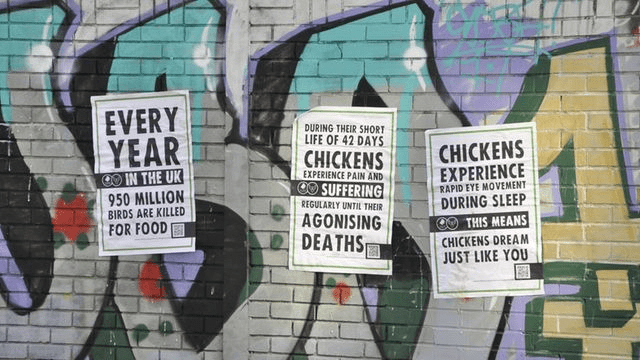
Sentient Beings – Protected In the UK Once Again.

EU: European citizens’ expectations ride high, as animal welfare acquis shown NOT TO BE FIT FOR PURPOSE.

WAV Comment – Are we ever going to see the scales fall from the eyes of the European Commission ?

As welfare people, activists and campaigners, we have been showing and asking for the ‘bloody obvious changes’ by the Commission for decades; and in the vast majority of instances, our requests have been ignored.

Now we have yet another Commission report; something which they are very good at producing, but not usually following up on (regarding actions), which has involved over 60,000 responses and has reached the conclusion that ‘ a clear majority agreed that a revision of the current acquis is needed, that species are not protected equally, that more information is needed as well as better and easier enforcement

Live animal transport has always really been my ‘main thing’ – you can read more about it at https://serbiananimalsvoice.com/about-us/ – there is a lot here about investigation work and the efforts made to stop the live animal transport business.

In the Netherlands campaigning about live animal transport.

I have witnessed the ‘dark side’ of live animal transport for decades: I did a lot of work re horses being exported for meat. From around 2004: To this day, Mark will never forget what was witnessed in the investigations into beautiful, live horses being exported from the UK to Europe as a scam for the meat trade under the guise of ‘riding horses’.  This, combined with live farm animal export work over the last 27 years or so has meant that the export of live farm animals is a top ‘hate’ and will always be campaigned against – be it in the UK, Europe, Australia, South America, North Africa, Anywhere ! – nobody needs to tell me how bloody useless the EU Commission is.

Things have not changed all these years later; and (Mark says) “in my mind I can still be there; watching, hearing, smelling what is in my opinion, just one of the biggest issues of animal abuse on the planet – anything to with the LIVE EXPORT trade”.  Despite the bad times, it only strengthens your resolve to work harder and put this business of utter cruelty into the history books where it belongs.

I (personally) do not hold out much hope for improvements by the non elected Commission; despite the wishes of the (EU) citizens, the endless evidence of abuses and non compliances provided by welfare groups – hopefully, and I wish for it more than just about anything, as I have for decades, the the scales of the abuses will fall from the eyes of the Commission masters who sit in their EU Ivory towers; promoting their own and nothing else much. Whatever, the fight goes on.

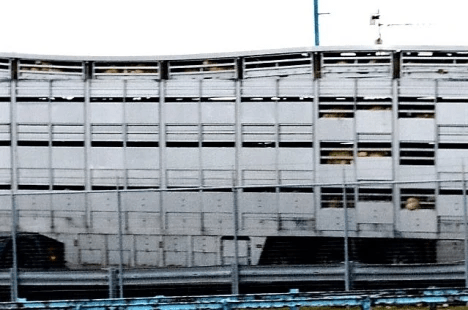
We say ‘the roof is bent and not fit for live animal transport’ – the EU says ‘problem, what problem ?’

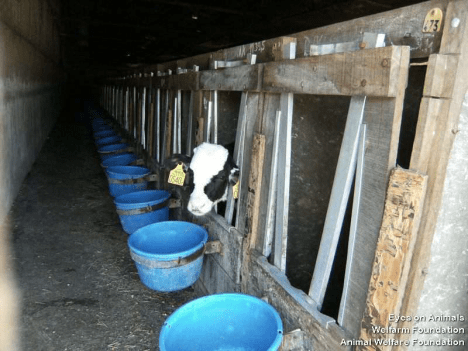
In 2012, Mark formally wrote to the EU Legal team regarding investigations by Dutch colleagues into the treatment of British calves exported from the UK to other EU nations such as Hungary.  Calves that were still being crated many years after the EU formally banned crating.

He should not be there !, it is illegal under EU law; wake up Commission, please !!!

Regards Mark

31 March 2022

The European Commission has published their summary report of the contributions made by citizens, industry, public authorities and civil society organisations to the consultation on the future of animal welfare law in Europe, with the results showing a widespread desire for radical improvement, a desire for more information, and a furthering of protection to more species.

In October last year, the European Commission opened a landmark public consultation, asking citizens, farmers, businesses, Member State authorities and NGOs for their views and experiences on the fitness of the current rules relating to the welfare of animals in the EU, and to seek views on how they could be improved.

Nearly six months later, and with just under 60,000 responses in, we have the results, courtesy of the summary report (at bottom of page), which show:

A clear majority agreed that a revision of the current acquis is needed, that species are not protected equally, that more information is needed as well as better and easier enforcement

Majority support for the inclusion of more species within the scope of the legislation

Overwhelming support for a cage-free Europe 

A clear desire to see the end of waterbath stunning, the killing of day-old chicks and for new specific rules for the killing of farmed fish

An overriding wish from citizens to see max journey times for animals who are transported, a ban on live exports to third countries, and ban on the transport of unweaned calves

Massive support for an animal welfare label which also includes information on if or how animals have been transported and slaughtered, respectively.

It is these results that will now form the basis of the impact assessments that the Commission will draft for the new legislative proposals that will be adopted, most likely as a package, in the winter of 2023.

These results are very welcome, of course, but are no great surprise. “The organisations we represent day in, day out, have felt the weight of citizens’ expectations for change – for improvement – for years. I am only pleased that we now have clear signals that cannot be ignored. Vox populi, vox dei.

That the response rate was one of the highest ever seen by the Commission speaks volumes. We now expect the European Commission to quench the thirst for systemic change that flows through these results. The time for ambition is now. 

Whilst we expect proposals containing a swift phase out of caged systems, following the stunning success of the End the Cage Age European Citizens’ Initiative, we now expect a similar level of intent when it comes to ending live exports from the Union, to ending routine castration for pigs, waterbath stunning, the killing of day old chicks, and new powers to afford proper legal protection to the billions of other animals in Europe who deserve better, whether they be cattle, fish, poultry or pets. The citizens have spoken. Now it is time to honour their wishes.

Reineke Hameleers, Chief Executive of Eurogroup for Animals

Summary report

File

090166e5ea55b805 (1).pdf666.15 KB

Regards Mark
London: Last London Chicken Slaughterhouse (Kosher) Blockaded By Animal Rights.

Chicken slaughterhouse blockaded by animal rights activists

Protesters have blocked trucks leaving a Hackney Wick abattoir this morning, demanding it be shutdown and replaced by community gardens. 

According to police, at around 8am Animal Rebellion activists used a lorry to blockade the road leading to the Kedassia abattoir on Smeed Road in Hackney Wick. 

Police were called at 8.14am on March 23

Some of the protesters have climbed on to the truck, to prevent it from leaving.

The lorry has been draped in a banner, dripping with red paint meant to symbolise blood. 

Protester and local resident Bel Jacobs said: “I’m a mother and I know that our kids need a space to learn how to grow vegetables, not kill birds.

“Community gardens would give us a much-needed green space and a social hub where everyone can meet and connect.”

The group is demanding Kedassia Poultry be shut down and replaced by community gardens – Credit: @sheepistakingphotos

Activists can be seen climbing on to the empty truck. The blockade began at around 8am on March 23. – Credit: Cavalier Fantome

Animal Rebellion say the abattoir is the “last remaining slaughterhouse in London”.

The action is part of a local campaign, called Gardens not Slaughterhouses, which wants to see the site transformed into community gardens.

The group is demanding Kedassia Poultry be shut down and replaced by community gardens – Credit: @sheepistakingphotos


Miranda Whelan, a spokesperson for Animal Rebellion, said: “We need to build a just and sustainable future by replacing slaughterhouses, which kill gentle and intelligent animals and damage the environment, with community gardens.

“Gardens improve the wellbeing of the local people and allow them to grow healthy, sustainable food.

“We are demanding that Kedassia shut down and let this land be used for something that will benefit the whole community.”

Kedassia Poultry Ltd is a Kosher chicken abattoir. It was targeted by a group of animal rights activists, calling themselves East London Chicken Save, in 2016, 

The animal and climate justice group state their protest aims to end animal suffering as well as to tackle climate change, claiming the Tower Hamlets abattoir kills thousands of chickens every week, produces “large amounts of waste” and that it wastes water.  

Those involved said that they waited for the chickens to be taken inside before blockading the entrance, “so as not to prolong their suffering”. 

The activists have formed a local campaign called Gardens Not Slaughterhouses – Credit: @sheepistakingphotos

The Gazette has attempted to contact Kedassia Poultry Ltd for comment.

Regards Mark

Animal Rebellion stage protest at Hackney Wick abattoir | East London Advertiser

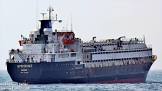
8,000 animals stranded at sea: NGOs call for systematic approach to end live exports by sea.

17 March 2022

Animals International

Freiburg, 16th March 2022. Animal Welfare Foundation (AWF), Compassion in World Farming (CIWF) and Animals International (AI) have witnessed how an old, former cargo ship with nearly 8,000 animals on board needed to be replaced while at sea. Inadequate European legislation and its poor implementation regularly lead to prolonged suffering of animals exported outside the EU.

On February 23rd, the livestock carrier Spiridon II left Tarragona in Spain. The country is one of the main exporters of live animals in Europe. Around 300 young bulls from France and Spain as well as 7,600 Spanish sheep were on board. Their destination was the Port of Aqaba in Jordan. 

On February 27th, engine problems occurred. The journey was interrupted, and the ship spent three days near Greek ports. Unloading the animals onto European grounds was not an option. Once on the water, they are declared as so-called “export” animals and cannot re-enter the EU. This often leads to tragic consequences, such as the odysseys of Karim Allah and Elbeik in early 2021, where 2,600 calves and cattle were subjected to emergency slaughter. 

Spiridon II was finally brought to Eleusis, near Athens, Greece on March 4. There the 8,000 animals were loaded directly from one vessel to another, namely, the livestock carrier Adel I, via a ramp, on the water. The reason for this manoeuvre at sea was that the port of Eleusis is not authorised to transport animals to third countries. On long journeys like this, there is no veterinarian on board, regardless of the number of animals. This was also the case on Spiridon II. It remains unclear whether the animals were fit to continue the journey to Jordan after 10 days onboard the vessel. It also remains unclear whether unfit animals were emergency euthanised on site.

The livestock vessels currently operating in the EU were converted from car ferries or cargo ships to livestock carriers at the moment when they should have been scrapped because they were too obsolete to continue. They are ancient vessels, operating under suspicious flags, and are poorly designed and maintained. These vessels pose many risks for the safety of the animals, the crew, and the environment.

Maria Boada-Saña, Veterinarian and Project Manager at AWF

This latest event just adds to a long list of problematic live exports. And Spiridon II is just one of too many old vessels with many deficiencies and unexpected problems arising during the journey. NGOs have repeatedly drawn attention to the underlying problems. Emergencies at sea cannot be solved easily and result in longer transports. If the competent authorities lose responsibility for ships that have left port, any unforeseen incident can have tragic consequences, as the example of Elbeik and Karim Allah shows. There should be a systematic approach to solving the problem instead of makeshift solutions for every single case. 

NGOs exposed that during exports by sea, Council Regulation (EC) No 1/2005 on animal transports cannot be complied with. This shows once again that the current legislation and the ruling of the European Court of Justice do not ensure real protection of animals during the entire transport.

Once more, this latest incident reveals the severe flaws of EU’s live animal exports. The horrendous suffering that animals endure during live exports and the all too frequent mechanical problems of the vessels cannot go unnoticed. We urge the EU Commission to take immediate action on this matter. The current revision of the EU’s animal welfare rules presents the perfect opportunity to ban this cruelty once and for all.

Olga Kikou, Head of CIWF EU

Spiridon II remained in the port of Eleusis until March 8, when it left for reparation. The animals who survived the stressful journey so far arrived in Jordan on March 9, to be slaughtered in the most shocking and cruel conditions which are illegal in the EU.

Gabriel Paun, Animals International

Regards Mark
Related Past:

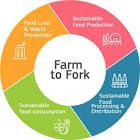
EU: The Farm to Fork Strategy was designed to make our food system more resilient, now it’s time to make it work.

14 March 2022

The impetus for the EU to develop and adopt the Farm to Fork strategy was the necessity of making the food system resilient, by adopting healthier and more environmentally sustainable practices, including improved animal welfare and a shift to healthy, sustainable diets.

The crisis in Ukraine has made large agri-businesses cry foul, claiming that without access to Ukrainian and Russian fertilisers, cereals, gas and oil, it is necessary to u-turn on the EU’s objectives and roll back policies that will make its food system more resilient.    

The Farm to Fork strategy shows, on the contrary, foresight. Its roll-out will streamline and ensure food security by making the EU less permeable to volatility and constraints in international markets. By moving away from the most industrial and intensive forms of animal agriculture and promoting a shift to more plant-based diets, more people can be fed using less land and resources. 

The outcry is about feed, not food

Agri-businesses cynically claim that the war in Ukraine will cause a food crisis, whereas the stress is on feed. The EU wastes 20% of its food, and exports more agri-food than it imports, with a positive trade balance worth €4bn to €6bn each month.

Access to cheap feed for animals and chemicals for intensive feed-crops is under stress because of the war. The Farm to Fork strategy aims at avoiding that intensive animal farming and its supply chains come into competition with food for people.

The EU produces over 290 million tonnes of cereals, 32 million more tonnes than are used domestically. Yet only 20% goes directly to feed people. The lion’s share is for feed (56%) and almost as much cereal is exported (45 million tonnes) than is destined as food for Europeans.

A resilient food system to weather this and future crises

A resilient food system will ensure that domestically produced food-crop is primarily used as food for people, while farm animals feeding themselves primarily by grazing. Agricultural production is, currently, mostly diverted to intensive animal farming. Apart from its detrimental impact on billions of animals it sustains an – economically and medically – unhealthy overconsumption of animal products and reliance on imported feed. 

The Farm to Fork strategy will contribute towards cutting the EU’s reliance on the production and import of industrial feeds and allowing the EU’s agricultural sector to increase its production of food for people. The  strategy’s objectives of moving towards a greater plant-based diet, reducing the consumption of red meat and improving the well-being of farmed animals will help the EU weather international crises like the deplorable war unfolding at its borders. Overall, the consumption of animal products would need to be reduced by around 70% in the EU in order to stay within the planetary boundaries. 

With the war in Ukraine bringing the limits of the EU’s food system, heavy in animal protein, to light, the Commission should accelerate the roll-out of the Farm to Fork strategy: reduce the EU’s reliance on meat production that diverts home-grown food crops for people to feed for animals and requires significant imports of both feed-crop and fertilisers. 

As Commission Vice-President Frans Timmermans said on 8 march 2022, “Farm to Fork is part of the answer, not part of the problem”.

Together with 85+ NGOs we sent a letter to Ms Ursula von der Leyen, President of the European Commission; Mr Frans Timmermans, Executive Vice-President for the European Green Deal; Ms Stella Kyriakides, Commissioner for Health and Food Safety; Mr Janusz Wojciechowski, Commissioner for Agriculture; and Mr Virginijus Sinkevičius, Commissioner for Environment, Oceans and Fisheries, asking them to defend the Farm to Fork strategy. 

Regards Mark

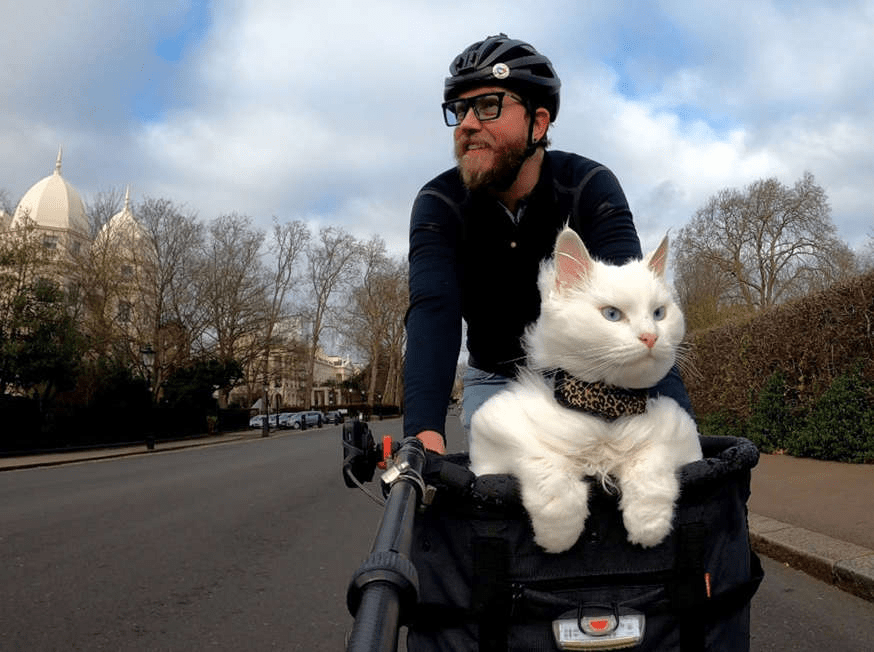
England: Meet the Adorable Deaf Cat Who Loves Bike Rides Around London.

 Sigrid rides in owner Travis’s bike basket (Picture: @sigirides/Caters News)

Norwegian forest cat Sigrid may be deaf, but it doesn’t stop her getting out and about.

In fact, the fluffy white moggy likes nothing more than going for a cycle – and you may even have spotted her traversing the streets of London in her owner’s handlebar basket.

Software engineer Travis Nelson, 46, takes Sigrid with him when he explores the city, with the four-year-old cat attracting plenty of attention from passers-by.

A typical journey for the pair will begin in Regent’s Park and end up in Jubilee Park, so Sigrid can see the sights.

Travis said: ‘This is fairly normal for us! Although we usually stop for more pets.

‘She definitely loves the bike rides. She often begs at the door to go out and gets excited when I start messing with my bike.

‘She’s always happy and inquisitive when we’re out.’

Travis first took Sigrid out on his bike when he was made redundant during the pandemic, looking to try something new with his ‘best friend’.

What started with training her to walk on a lead led to her being comfortable enough to relax in a basket, even wearing goggles to protect her eyes from wind.

Travis now shares photos and videos of their journeys together, during his time out from work spending up to four hours a day editing content and replying to Instagram messages.

Spot Jeremy Clarkson in the back, as well as Sigrid’s chic cycling goggles (Picture: @sigirides/Caters News)

Speaking to Ham and High, he said: ‘I usually describe us as best friends. We’re together all the time. Sigrid does mean a lot to me. It’s been a tough year and she’s been a big comfort. 

‘It’s a little odd now, almost every time we go riding we get recognised by someone. It feels like we have friends everywhere.’

Sigrid’s unique hobby has seen them attending the Pride Ride together, as well as their picture being shown on screens on the Moscow Metro.

It’s really more about the fun of it for the duo, however, and the adventurous cat has no problem making her intentions to head outside known to her owner.

Travis added: ‘She always seems to love going outside. She’ll stand at the door and whine.

‘She sees me messing with my bike and she starts running around getting excited, it’s her favourite thing to do.’

Travis and Sigrid’s usual route is through Regent’s Park, where passers-by often stop to pet the intrepid kitty (Picture: @sigirides/Caters News)

Love the picture of her in her little goggles – cool !

Regards Mark

EU: Aquaculture Advisory Council Releases 2 New Recommendations On Fish Welfare.

10 March 2022

The Aquaculture Advisory Council (AAC) has published its Recommendations to the European Commission and the Member States, one on fish welfare in live transport, and on setting up a Fish Welfare Reference Centre.

Most fish in European aquaculture are moved between sites at least once during their life, and many are moved several times between or within sites. The live transport of fish is governed by EU regulation 1/2005 on the protection of animals during transport but currently contains provisions that cannot and should not be applied in fish transport.

As part of the Farm to Fork Strategy, the European Commission is now reviewing this regulation with a view to making a new legislative proposal. Eurogroup for Animals, Compassion in World Farming, and Vissenbescherming, have worked with aquaculture producers and other stakeholders in the AAC to develop these consensus positions.

Regarding fish welfare in live fish transport, the AAC notes that it is necessary to take the specific needs of fish, and sometimes species-specific needs, into consideration when establishing rules for animal and fish transport. The AAC makes detailed recommendations covering:

1. Pre-transport planning and preparations, including proper vehicles and equipment

2. Journey preparations, inspecting and preparing the fish and equipment

3. Loading and unloading, for most finfish species the most stressful part of live transport. 

4. The journey itself should be gentle, with continual monitoring of oxygen and temperature.

5. Post-journey monitoring of appetite, behaviours, disease and mortality. 

DG-SANTE, in cooperation with Member States, has already set up Animal Welfare Reference Centres in relation to pig welfare, poultry welfare and ruminants’ and equines’ welfare. The AAC has now made the recommendation that a fish welfare reference centre should be established to address the welfare of fish and other farmed aquatic animals that are produced and imported into the EU. 

The AAC highlights priorities for the reference centre including:

  • the development of species-specific guidelines, 
  • establishing validated indicators,
  • covering all stages including hatcheries, rearing, transport and slaughter.

Read more at source

Aquaculture Advisory Council

Regards Mark