Category: Live Transport

8,000 animals stranded at sea: NGOs call for systematic approach to end live exports by sea.

17 March 2022

Animals International

Freiburg, 16th March 2022. Animal Welfare Foundation (AWF), Compassion in World Farming (CIWF) and Animals International (AI) have witnessed how an old, former cargo ship with nearly 8,000 animals on board needed to be replaced while at sea. Inadequate European legislation and its poor implementation regularly lead to prolonged suffering of animals exported outside the EU.

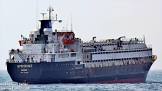
On February 23rd, the livestock carrier Spiridon II left Tarragona in Spain. The country is one of the main exporters of live animals in Europe. Around 300 young bulls from France and Spain as well as 7,600 Spanish sheep were on board. Their destination was the Port of Aqaba in Jordan. 

On February 27th, engine problems occurred. The journey was interrupted, and the ship spent three days near Greek ports. Unloading the animals onto European grounds was not an option. Once on the water, they are declared as so-called “export” animals and cannot re-enter the EU. This often leads to tragic consequences, such as the odysseys of Karim Allah and Elbeik in early 2021, where 2,600 calves and cattle were subjected to emergency slaughter. 

Spiridon II was finally brought to Eleusis, near Athens, Greece on March 4. There the 8,000 animals were loaded directly from one vessel to another, namely, the livestock carrier Adel I, via a ramp, on the water. The reason for this manoeuvre at sea was that the port of Eleusis is not authorised to transport animals to third countries. On long journeys like this, there is no veterinarian on board, regardless of the number of animals. This was also the case on Spiridon II. It remains unclear whether the animals were fit to continue the journey to Jordan after 10 days onboard the vessel. It also remains unclear whether unfit animals were emergency euthanised on site.

The livestock vessels currently operating in the EU were converted from car ferries or cargo ships to livestock carriers at the moment when they should have been scrapped because they were too obsolete to continue. They are ancient vessels, operating under suspicious flags, and are poorly designed and maintained. These vessels pose many risks for the safety of the animals, the crew, and the environment.

Maria Boada-Saña, Veterinarian and Project Manager at AWF

This latest event just adds to a long list of problematic live exports. And Spiridon II is just one of too many old vessels with many deficiencies and unexpected problems arising during the journey. NGOs have repeatedly drawn attention to the underlying problems. Emergencies at sea cannot be solved easily and result in longer transports. If the competent authorities lose responsibility for ships that have left port, any unforeseen incident can have tragic consequences, as the example of Elbeik and Karim Allah shows. There should be a systematic approach to solving the problem instead of makeshift solutions for every single case. 

NGOs exposed that during exports by sea, Council Regulation (EC) No 1/2005 on animal transports cannot be complied with. This shows once again that the current legislation and the ruling of the European Court of Justice do not ensure real protection of animals during the entire transport.

Once more, this latest incident reveals the severe flaws of EU’s live animal exports. The horrendous suffering that animals endure during live exports and the all too frequent mechanical problems of the vessels cannot go unnoticed. We urge the EU Commission to take immediate action on this matter. The current revision of the EU’s animal welfare rules presents the perfect opportunity to ban this cruelty once and for all.

Olga Kikou, Head of CIWF EU

Spiridon II remained in the port of Eleusis until March 8, when it left for reparation. The animals who survived the stressful journey so far arrived in Jordan on March 9, to be slaughtered in the most shocking and cruel conditions which are illegal in the EU.

Gabriel Paun, Animals International

Regards Mark

Related Past:

EU: The Farm to Fork Strategy was designed to make our food system more resilient, now it’s time to make it work.

14 March 2022

The impetus for the EU to develop and adopt the Farm to Fork strategy was the necessity of making the food system resilient, by adopting healthier and more environmentally sustainable practices, including improved animal welfare and a shift to healthy, sustainable diets.

The crisis in Ukraine has made large agri-businesses cry foul, claiming that without access to Ukrainian and Russian fertilisers, cereals, gas and oil, it is necessary to u-turn on the EU’s objectives and roll back policies that will make its food system more resilient.    

The Farm to Fork strategy shows, on the contrary, foresight. Its roll-out will streamline and ensure food security by making the EU less permeable to volatility and constraints in international markets. By moving away from the most industrial and intensive forms of animal agriculture and promoting a shift to more plant-based diets, more people can be fed using less land and resources. 

The outcry is about feed, not food

Agri-businesses cynically claim that the war in Ukraine will cause a food crisis, whereas the stress is on feed. The EU wastes 20% of its food, and exports more agri-food than it imports, with a positive trade balance worth €4bn to €6bn each month.

Access to cheap feed for animals and chemicals for intensive feed-crops is under stress because of the war. The Farm to Fork strategy aims at avoiding that intensive animal farming and its supply chains come into competition with food for people.

The EU produces over 290 million tonnes of cereals, 32 million more tonnes than are used domestically. Yet only 20% goes directly to feed people. The lion’s share is for feed (56%) and almost as much cereal is exported (45 million tonnes) than is destined as food for Europeans.

A resilient food system to weather this and future crises

A resilient food system will ensure that domestically produced food-crop is primarily used as food for people, while farm animals feeding themselves primarily by grazing. Agricultural production is, currently, mostly diverted to intensive animal farming. Apart from its detrimental impact on billions of animals it sustains an – economically and medically – unhealthy overconsumption of animal products and reliance on imported feed. 

The Farm to Fork strategy will contribute towards cutting the EU’s reliance on the production and import of industrial feeds and allowing the EU’s agricultural sector to increase its production of food for people. The  strategy’s objectives of moving towards a greater plant-based diet, reducing the consumption of red meat and improving the well-being of farmed animals will help the EU weather international crises like the deplorable war unfolding at its borders. Overall, the consumption of animal products would need to be reduced by around 70% in the EU in order to stay within the planetary boundaries. 

With the war in Ukraine bringing the limits of the EU’s food system, heavy in animal protein, to light, the Commission should accelerate the roll-out of the Farm to Fork strategy: reduce the EU’s reliance on meat production that diverts home-grown food crops for people to feed for animals and requires significant imports of both feed-crop and fertilisers. 

As Commission Vice-President Frans Timmermans said on 8 march 2022, “Farm to Fork is part of the answer, not part of the problem”.

Together with 85+ NGOs we sent a letter to Ms Ursula von der Leyen, President of the European Commission; Mr Frans Timmermans, Executive Vice-President for the European Green Deal; Ms Stella Kyriakides, Commissioner for Health and Food Safety; Mr Janusz Wojciechowski, Commissioner for Agriculture; and Mr Virginijus Sinkevičius, Commissioner for Environment, Oceans and Fisheries, asking them to defend the Farm to Fork strategy. 

Regards Mark

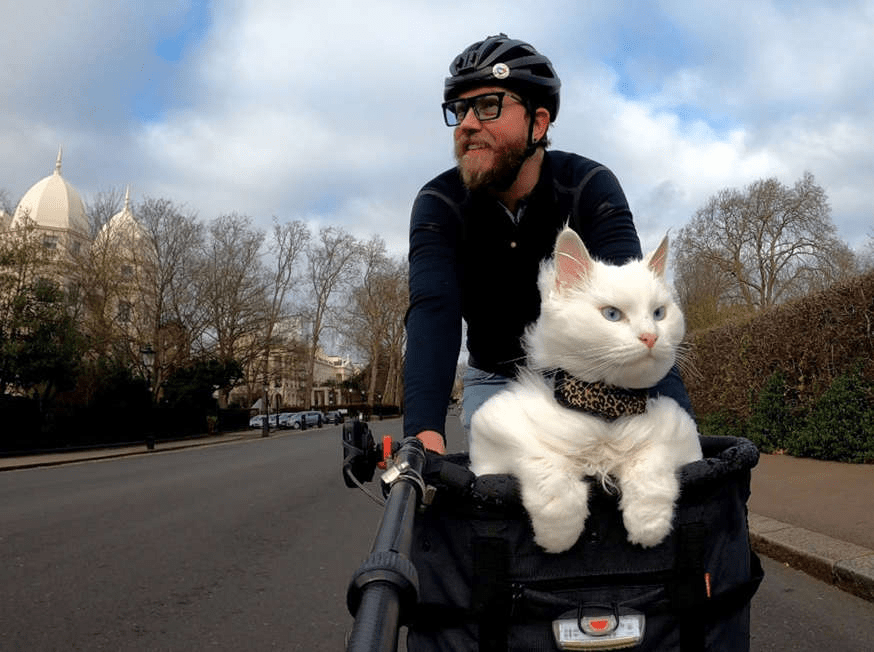
England: Meet the Adorable Deaf Cat Who Loves Bike Rides Around London.

 Sigrid rides in owner Travis’s bike basket (Picture: @sigirides/Caters News)

Norwegian forest cat Sigrid may be deaf, but it doesn’t stop her getting out and about.

In fact, the fluffy white moggy likes nothing more than going for a cycle – and you may even have spotted her traversing the streets of London in her owner’s handlebar basket.

Software engineer Travis Nelson, 46, takes Sigrid with him when he explores the city, with the four-year-old cat attracting plenty of attention from passers-by.

A typical journey for the pair will begin in Regent’s Park and end up in Jubilee Park, so Sigrid can see the sights.

Travis said: ‘This is fairly normal for us! Although we usually stop for more pets.

‘She definitely loves the bike rides. She often begs at the door to go out and gets excited when I start messing with my bike.

‘She’s always happy and inquisitive when we’re out.’

Travis first took Sigrid out on his bike when he was made redundant during the pandemic, looking to try something new with his ‘best friend’.

What started with training her to walk on a lead led to her being comfortable enough to relax in a basket, even wearing goggles to protect her eyes from wind.

Travis now shares photos and videos of their journeys together, during his time out from work spending up to four hours a day editing content and replying to Instagram messages.

Spot Jeremy Clarkson in the back, as well as Sigrid’s chic cycling goggles (Picture: @sigirides/Caters News)

Speaking to Ham and High, he said: ‘I usually describe us as best friends. We’re together all the time. Sigrid does mean a lot to me. It’s been a tough year and she’s been a big comfort. 

‘It’s a little odd now, almost every time we go riding we get recognised by someone. It feels like we have friends everywhere.’

Sigrid’s unique hobby has seen them attending the Pride Ride together, as well as their picture being shown on screens on the Moscow Metro.

It’s really more about the fun of it for the duo, however, and the adventurous cat has no problem making her intentions to head outside known to her owner.

Travis added: ‘She always seems to love going outside. She’ll stand at the door and whine.

‘She sees me messing with my bike and she starts running around getting excited, it’s her favourite thing to do.’

Travis and Sigrid’s usual route is through Regent’s Park, where passers-by often stop to pet the intrepid kitty (Picture: @sigirides/Caters News)

Love the picture of her in her little goggles – cool !

Regards Mark

EU: Aquaculture Advisory Council Releases 2 New Recommendations On Fish Welfare.

10 March 2022

The Aquaculture Advisory Council (AAC) has published its Recommendations to the European Commission and the Member States, one on fish welfare in live transport, and on setting up a Fish Welfare Reference Centre.

Most fish in European aquaculture are moved between sites at least once during their life, and many are moved several times between or within sites. The live transport of fish is governed by EU regulation 1/2005 on the protection of animals during transport but currently contains provisions that cannot and should not be applied in fish transport.

As part of the Farm to Fork Strategy, the European Commission is now reviewing this regulation with a view to making a new legislative proposal. Eurogroup for Animals, Compassion in World Farming, and Vissenbescherming, have worked with aquaculture producers and other stakeholders in the AAC to develop these consensus positions.

Regarding fish welfare in live fish transport, the AAC notes that it is necessary to take the specific needs of fish, and sometimes species-specific needs, into consideration when establishing rules for animal and fish transport. The AAC makes detailed recommendations covering:

1. Pre-transport planning and preparations, including proper vehicles and equipment

2. Journey preparations, inspecting and preparing the fish and equipment

3. Loading and unloading, for most finfish species the most stressful part of live transport. 

4. The journey itself should be gentle, with continual monitoring of oxygen and temperature.

5. Post-journey monitoring of appetite, behaviours, disease and mortality. 

DG-SANTE, in cooperation with Member States, has already set up Animal Welfare Reference Centres in relation to pig welfare, poultry welfare and ruminants’ and equines’ welfare. The AAC has now made the recommendation that a fish welfare reference centre should be established to address the welfare of fish and other farmed aquatic animals that are produced and imported into the EU. 

The AAC highlights priorities for the reference centre including:

  • the development of species-specific guidelines, 
  • establishing validated indicators,
  • covering all stages including hatcheries, rearing, transport and slaughter.

Read more at source

Aquaculture Advisory Council

Regards Mark

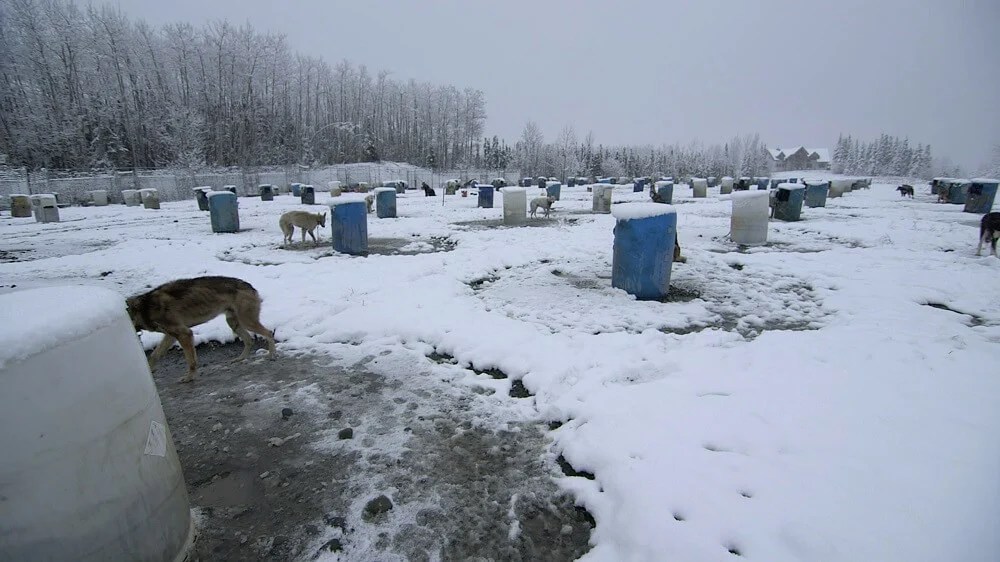
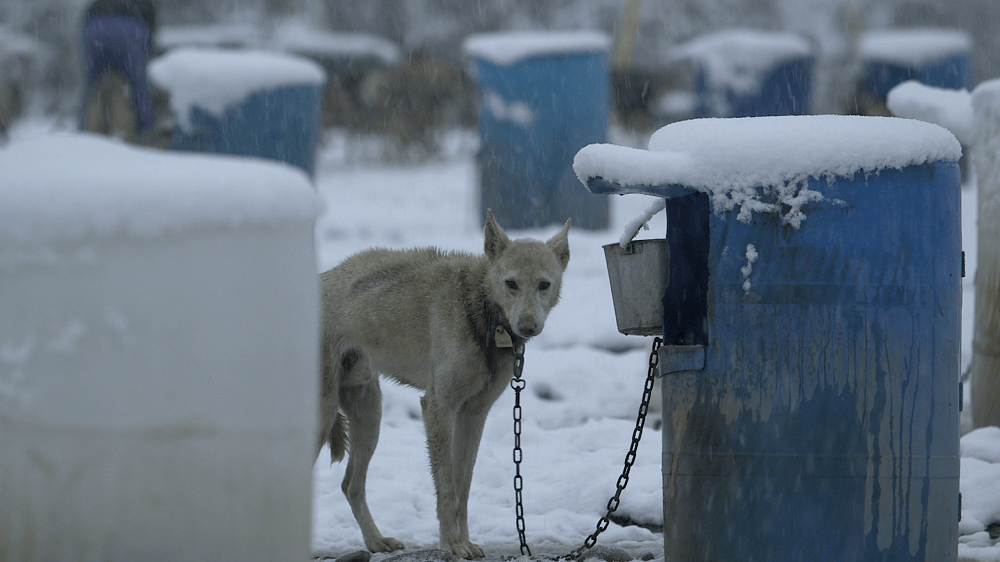
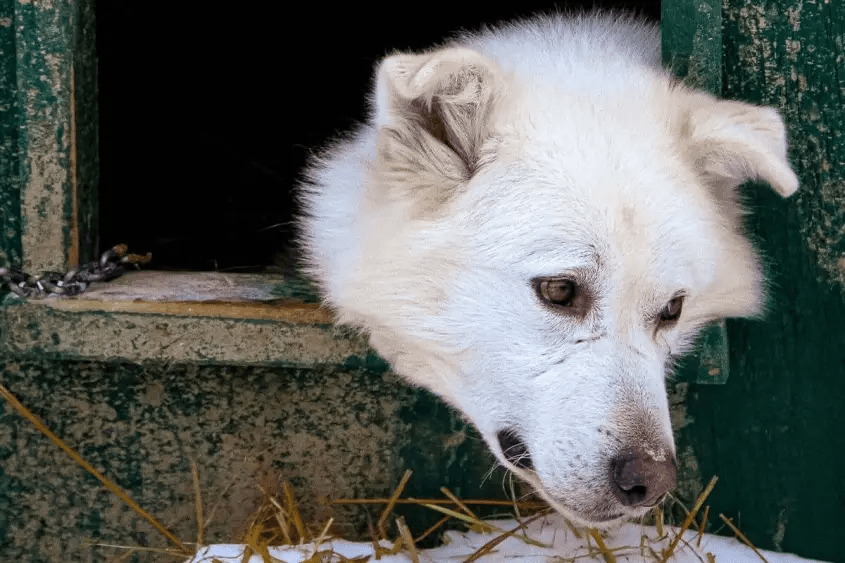
USA: Iditarod, The Cruelest Dog Race In The World, Has Started.

Iditarod

What we are told:

Iditarod Trail Sled Dog Race

Iditarod Trail Sled Dog Race
DateMarch
LocationAnchorage to NomeAlaska, United States
Event typeSled Dog Race
Distance938 mi (1,510 km)
Established1973
Course recordsMitch Seavey, 2017, 8d 3h 40m 13s
Official siteiditarod.com

The Iditarod Trail Sled Dog Race, more commonly known as The Iditarod, is an annual long-distance sled dog race run in early March. It travels from Anchorage to Nome, entirely within the US state of AlaskaMushers and a team of 14 dogs, of which at least 5 must be on the towline at the finish line, cover the distance in 8–15 days or more. The Iditarod began in 1973 as an event to test the best sled dog mushers and teams but evolved into today’s highly competitive race.

Teams generally race through blizzards causing whiteout conditions, sub-zero temperatures and gale-force winds which can cause the wind chill to reach −100 °F (−73 °C). A ceremonial start occurs in the city of Anchorage and is followed by the official restart in Willow, a city 80 miles (129 km) north of Anchorage. The restart was originally in Wasilla through 2007, but due to too little snow, the restart has been at Willow since 2008. The trail runs from Willow up the Rainy Pass of the Alaska Range into the sparsely populated interior, and then along the shore of the Bering Sea, finally reaching Nome in western Alaska. The trail is through a rugged landscape of tundra and spruce forests, over hills and mountain passes, and across rivers. While the start in Anchorage is in the middle of a large urban center, most of the route passes through widely separated towns and villages, and small Athabaskan and Iñupiat settlements. The Iditarod is regarded as a symbolic link to the early history of the state and is connected to many traditions commemorating the legacy of dog mushing.

Iditarod Trail Sled Dog Race – Wikipedia

Our recent posts -see the full list, including videos, by clicking on the following:

Search Results for “iditarod” – World Animals Voice

Search Results for “musher” – World Animals Voice

Race Map – click on ‘Checkpoints’ for more details of each. 

Race Map – Iditarod

Main website  Iditarod

Dog Care ? – see our video links given above –  Leaders in Dog Care – Iditarod

Regards Mark

Luxembourg bans exports of live animals for slaughter in third countries

LUXEMBOURG. As the Luxembourg Ministry of Agriculture has announced, from March 1st the Grand Duchy will ban exports of live animals for slaughter in third countriesa year earlier than planned by the EU.

With this decision, Luxembourg is becoming a European pioneer when it comes to animal welfare.

According to the Luxembourg Minister of Agriculture Claude Haagen, the ban serves to improve animal welfare on the one hand, and on the other hand it also meets the expectations of the population and the agricultural sector itself.

The Grand Duchy hopes other states in Europe will follow suit and enact restrictions before the European Commission presents its revised rules for live animal transport next year.
Among other things, the transport routes to the slaughterhouses should be limited.

https://lokalo.de/artikel/254298/beschraenkung-von-tiertransporten-luxemburg-vorreiter-in-der-eu/

Please sign and share the petition: https://help.four-paws.org/…/stoppt-grausame…

And I mean…In 2019, over 1.6 billion live animals (sheep, cattle, birds and pigs) were transported across and beyond the EU borders.
97% of the animals are birds (chickens, turkeys, ducks, geese).
Cattle, pigs, sheep and goats are mostly transported for fattening or slaughter purposes.

In June 2020, a committee of inquiry exclusively for animal transport (ANIT) was therefore set up, which, after eighteen months of work, made its recommendations to the European Commission in December 2021.
557 MPs (an overwhelming majority) agreed, but only for part of the recommendations.

The EU Parliament is asking the Commission to limit the transport time for “animals for slaughter” to eight hours.
No limit is required for “breeding animals” and animals in intermediate fattening, so they may probably be transported for up to 29 hours in the future.

And so the agonizing transports to third countries should remain permitted – Parliament only voted for the introduction of a control system for animal transports to third countries.
Both the EU Parliament and the EU Commission know very well that as soon as the transports leave the EU border, control is not possible.
In this respect, this vote by the EU Parliament was a betrayal of the animals; we reported about it: https://worldanimalsvoice.com/2021/12/04/anit-committee-vote-an-anti-animal-welfare-work/

Luxembourg is sending an important signal, but a ban on animals for slaughter is absolutely not enough, because many animals are officially declared as breeding animals.
They too are usually slaughtered cruelly after a very short time. The transport for breeding or slaughter animals is also no different and is always painful.

Germany’s new Minister of Agriculture, Cem Özdemir, supports an EU-wide ban on long-distance transport and wants his ministry to “solve the problems of animal welfare during transport to third countries”.
And yet animals are still being transported from Germany to third countries.

We don’t judge politicians by what they say, but by what they do.
And as long as there are no actions, we do not trust anyone.

My best regards to all, Venus

EU: Study About EU-Mercosur Agreement Wrongly States That Animal Welfare Standards Apply to Agri-Food Trade.

17 February 2022

A study requested by the International Trade (INTA) committee of the European Parliament analyses the trade aspects of the EU-Mercosur agreement and recognises that the animal welfare provisions foreseen in the agreement are weak. However, the study wrongly states that imports of animal products must comply with EU animal welfare standards.

Eurogroup for Animals welcomes the study published in November 2021 as far as it recognises that animal welfare “is closely linked to sustainable development” and that the current deal “gives rise to questions as to whether [it] fully responds to the EU’s strong stand on the issue of animal welfare as such and its potential trade implications”. As long stated by Eurogroup for Animals, the EU-Mercosur agreement is a bad deal for animals, nature and people.

However, the study misunderstands the requirements that imports of animal products need to comply with, and hence wrongly concludes that the conditional liberalisation for egg products included in the deal is “closing a gap” for imports of animal products. Indeed, the study argues that in the EU, “animal welfare standards are quite ambitious”, and that given the ongoing revision of the animal welfare legislation and the European Citizen Initiative “End The Cage Age”, these standards “are likely to be defined even more strictly in the future”. As a consequence, the study suggests trade implications “since exporters are often required to conform with EU legislation by way of a certificate on equivalence to be presented on importation (calves, pigs, slaughtering, transports)”. Furthermore, the study, while analysing the liberalisation of agri-food trade, wrongly states that “in general, all products need to fulfil animal welfare standards”.

This seems to be a confusion between animal welfare standards and general import standards. Imports of animal products, which are often produced under poor animal welfare standards, do not need to comply with EU-equivalent animal welfare standards (on farm practices or transport), except for those at the time of slaughter. And imports of live animals, which are low, need certification mainly on health issues. Import standards are for instance, veterinary controls and maximum residue levels (MRLs) for pesticides.

This misunderstanding possibly led the study to assume a “notable exception” for egg products that would not need to comply with animal welfare standards. This “notable exception” would be “addressed by the preferential scheme on eggs, as the EU attached a condition to its liberalisation offer in view of compliance with relevant EU standards”.  However, the conditional liberalisation on shell eggs, far from “closing a gap”, is merely a step in the right direction with the first animal welfare-based condition in a trade agreement. 

Eurogroup for Animals calls on the EU to uphold the objectives of the Farm to Fork Strategy, and to take the opportunity of the revision of the animal welfare legislation to include a trade aspect in the future EU legislation on animal welfare. In parallel, the EU could extend the conditional liberalisation of the trade in shelled eggs, and to agree on animal welfare and sustainability-based conditions required to access tariff-rate quotas or liberalisation in all animal products, including the respect of EU-equivalent animal welfare standards. 

Regards Mark

Standards – What Standards ?

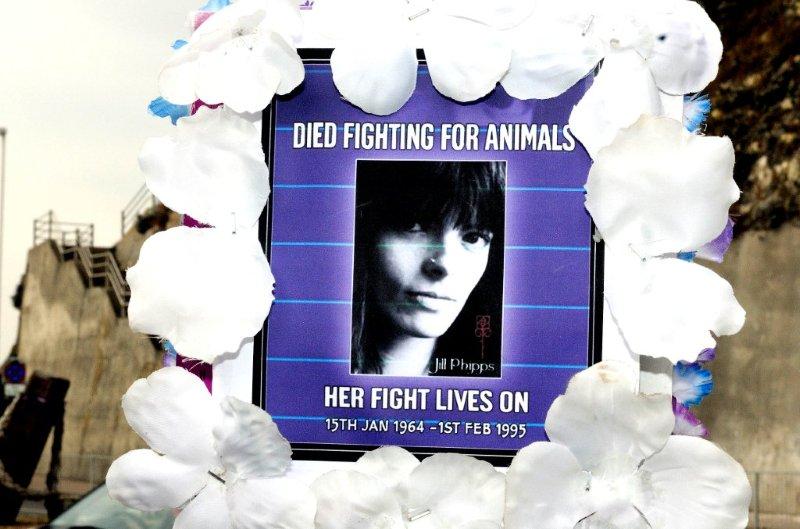
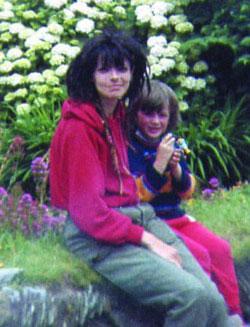
England: Remembering Jill and The Tragic Event of 1/2/95.

You can read lots here about Jill and her death at Coventry airport whilst trying to stop the export of live calves.  Visit the links at:

Search Results for “jill phipps” – World Animals Voice

Jill was killed on 1/2/1995.  The link given above will provide a lot of different information on her life, her death trying to protect animals; and the people involved in it; including (her death), Christopher Barrett-Jolley, was a known gun runner who had flown arms to vulnerable developing countries including South Yemen and Sierra Leone.  He was behind the calf shipments from Coventry, and was later jailed for 20 years for attempting to smuggle 270 kg of cocaine into Southend airport, Essex, England.

England: There Is More To The Jill Story When You Have the Facts. – World Animals Voice

We will never forget the actions of Jill; and this is a simple tribute to an animal advocate who was murdered, literally, by a system that at the time viewed animal rights activists as the ‘bad’ ones; rather than looking more into the actions of the ‘other side’ who were involved in the abuses.

Thank you Jill for your actions – you will never be forgotten.

Regards Mark

Veal EU 2

England: Archive: Live Animal Exports From Kent, England. By Mark (WAV).

All photos shown here were taken by Val C.

Recent Past  – Live animal exports to Europe from Ramsgate port, Kent, England.

As many of you will know, live animal transport has been a major part of my life for decades:

About Us – New Category (As Requested). – World Animals Voice

I am from Kent County; which lies directly to the SE of London and is the nearest English county to mainland Europe – you can see it’s position here and read about much of past history: Kent – Wikipedia

Being the nearest county to Europe; Kent has several ports which operate ship ferry services across the English Channel.  Dover is the one we probably all hear about most, but there is another – Ramsgate; which was quite an important port until recently but is not used much now. This appealed to live exporters, who did not have to comply with the very tight arrival and departure schedules if they operated from Dover – it was kind of more relaxed for them.

For years I was involved with an English group (as the EU Correspondent) dealing specifically with live animal shipments from SE England ports which included Dover and Ramsgate.  I want to share here just for the record / interest; some (now archive; but recent until a year or two ago) photographs taken by our official group photographer Val C, who was a member of the official journalists union; hence the excellent quality of her work.

These pictures deal mainly with a vessel operated by a (trader / exported / haulier) Dutchman named ‘Onderwater’; who owns and operates a vessel named the ‘Joline’. 

The ‘Joline’

This vessel was originally constructed as a Soviet battle tank carrier to be used only on rivers; not across the English Channel with loaded livestock transporters full of live animals.  As a vessel it has a low draft (draft in the American spelling, draught in the British) which is defined in technical terms as the distance between the ships keel and the waterline of the vessel.

A battle tank carrier for use on rivers should not carry livestock transporters across the English Channel.
Note the low draught – sides of the vessel – not suitable for Channel waves.

Loaded transporters on the Joline
.. and more.

Continued on next page

EU: EP (Euro Parliament) Plenary: Disappointing Vote on Live Animal Transport.

WAV Comment: The EU never has, does not wow, and never will act in defence of animals in transport – they are instead at the control of the mafia meat industry. The EU talks big on ‘farm to fork’ strategies; but they are just simple words from simple folk that mean nothing. If the EU cared; it would have acted a long time ago; instead the EU citizen is bullshitted to with all the talks, reports and votes which basically result in nothing. The UK left the EU a few years ago; now it has legislation going through Parliament to stop ALL live animal transport. Spot the link ? – NO EU, nations take back control and make their own laws; if you stay in the EU, and you must obey, Commissioners say; regardless of your own national views or consequences.

EP Plenary: disappointing vote on live animal transport

20 January 2022

Press Release

Today the European Parliament voted on the Recommendation of the Committee of Inquiry on the Protection of Animals during Transport (ANIT), watering down an already weak text which won’t stop the suffering of billions of animals.

Stella Kyriakides, European Commissioner for Health and Food Safety, opened and closed the debate reminding the Members of the European Parliament (MEPs) that animal welfare is a priority within the Farm to Fork Strategy and, at the same time, a priority of her mandate and personally for her. 

The European Commission (EC) is due to revise the Transport Regulation (Council Regulation (EC) No 1/2005) and will do it “based on the latest scientific evidence, creating a European database for official controls and auditing livestock vessels in Member States”, alongside making sure that the existing rules will be implemented. As such, a new legislative proposal is expected in the autumn of 2023, whilst executive acts relating to controls on sea transport (under provisions in existing law) will also arrive before the end of this year. 

Some MEPs were quite vocal during the lengthy debate, calling on the EC to act now and put an end to the suffering of billions of animals, as reported in the Committee of Inquiry’s findings. 

The December vote didn’t address several key issues linked to the live transport of animals, within and outside the EU, and today the Plenary missed the opportunity to strengthen the text approved by the ANIT Committee. 

We hoped that the European Parliament would step up the ANIT Report’s ambition and reflect citizens’ views by banning any long-distance transport, and refining, replacing and reducing intra-EU transport.

Reineke Hameleers, CEO, Eurogroup for Animals

After decades of campaigning to stop the suffering of animals during transport, we are disappointed in seeing more failings from the vote.

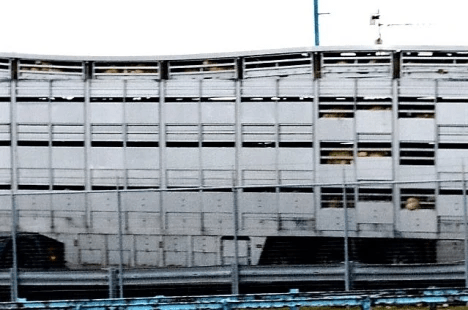
Photo – Val C. – the white box trailer pictured is full of LIVE SHEEP.

The EP recommends that, in future legislationjourney time for domestic animals going to slaughter should, in principle, not exceed eight hours except transport by sea, which is deplorable (§ 87).

Unfortunately, the EP also voted against amendments that would have called for a definition of journey time as the entire time of movement including the time of loading and unloading (§ 91), against the European Commission interpretation that “time spent for loading and unloading should be included as to establish maximum journey time”(1), thus potentially watering down the impact such a 8h journey time limit could have.

The EP also rejected amendments which would have forbidden the transport of pregnant animals at 40% of the gestation stage, and the call to ban the transport of very young animals (ovine, caprine or porcine, and domestic equidae) below the age of 35 days disappeared (§ 104). The limit of 4 weeks to allow transport remains only for calves.

We believe that the EP missed the chance to support systemic changes and failed in delivering citizens’ demands. Now our hopes lie with the EC and we entrust it to enable the replacement of live transport by a meat, carcasses and genetic material trade only. Not “as much as possible”, as in the EP text.

Reineke Hameleers, CEO, Eurogroup for Animals

WAV Related:

England: Is A Change In Campaigning Now Needed After the Massive EU (ANIT) Failures In Live Animal Transport This Week ? – By Mark (WAV). – World Animals Voice

ANIT Committee vote: An ANTI – animal welfare work – World Animals Voice 

Regards Mark