Category: Live Transport

UK: Live Animal Exports – Overview Of The Current Situation.

Live Animal Transport

Photo – Mark WAV

WAV Comment –

The UK government has recently (since Brexit and leaving the EU) undertaken a consultation on live animal transport which has been open to the British public and any for / against (live export) organisations wishing to submit comments on the subject of all categories associated with live animal transport (exports).  We at WAV took a lot of time (several weeks) with precise submissions and evidence to argue our case on why we considered that long distance live animal transport is unnecessary and should be banned – or at the very most be a one off transport time of 8 hours maximum; which would basically stop all exports from the UK to mainland Europe. 

Here is just one short clip of the response start:

Q1: Do you agree that livestock and horse export journeys for slaughter and fattening are unnecessary?

87% of respondents agreed that livestock and horse export journeys for slaughter and fattening are unnecessary. 11%4 disagreed and 2% did not express a definitive opinion. The majority of respondents who agreed that such journeys are unnecessary were members of the general public and animal welfare groups. The main reason respondents gave for agreeing was that they were concerned about welfare standards during the transportation of live animals. Many individual respondents and animal welfare organisations stated that live exports were cruel and degrading to the animals involved.

Great to see such a high figure of 87% of the British people and organisations basically agreed that live animal exports were unnecessary.

The full document which details the summary of responses to every section of the consultation:

Document title – UK Government:  Improvements to animal welfare in transport Summary of responses and government response Date: August 2021

Click on the following to review the document:

Improvements to animal welfare in transport: summary of responses and government response (publishing.service.gov.uk)

In this document – an Introduction by the UK government:

The welfare of all animals, including in transport, is a real priority for both the UK Government and the Welsh Government. The UK Government has a manifesto commitment to end excessively long journeys for slaughter and fattening, which we are taking forward through our Kept Animals Bill.

Now we have left the EU, we have the opportunity to look at alternative methods to better protect animal welfare during transport. The Farm Animal Welfare Committee (FAWC, now known as the Animal Welfare Committee) report in 2019 identified several aspects of transport that have a detrimental effect on animal welfare. They made a series of recommendations to the current regulations on animal welfare during transport. A Welsh Government response to this paper was published in 2020.

Following the findings in this report, we have looked at improvements to animal welfare in transport, including maximum journey times, thermal conditions and ventilation, space and headroom allowances and sea transport.

We have received a wide range of views to our consultation. We have listened to those views, and will continue to work with industry, NGOs and others to identify priorities where the evidence is clear and in other cases to explore some of the issues and evidence together in more detail. I want us to work together to develop practical solutions that generate the good welfare outcomes we all want to see.

This is a big step, but where the evidence is clear we must act. We want to work with industry to co-design solutions to achieve high welfare outcomes and help them make this transition.

The Rt Hon George Eustice MP Secretary of State for Environment, Food and Rural Affairs

Lesley Griffiths MS Minister for Rural Affairs and North Wales, and Trefnydd

As a result of the consultation, the following statement was issued by the UK government:

Live animal exports

Having considered the evidence available, including responses to this consultation, the government confirms it will proceed with a ban on the export of livestock (cattle, sheep, goats and pigs) and horses from England, Wales and Scotland for slaughter and fattening. Exports for slaughter and fattening from England, Wales and Scotland will be prohibited whether the animals originate from or are travelling through England, Wales and Scotland.

For the purposes of this consultation, exports for fattening were defined as exports where the animal is to be slaughtered within 6 months of arrival. A large proportion of respondents were critical of the proposed definition and considered a time limit to be unenforceable. Having taken account of this feedback, we propose to remove the reference to a 6-month time limit so that the prohibition will apply to all exports of livestock and horses where an animal is exported to the place of destination in order to be fattened for subsequent slaughter.

To further support our (WAV) welfare organisations call for a complete ban on live animal exports; I have decided to include here for you a series of undercover videos which were undertaken in years prior to the consultation relating to live export issues around Europe.  I have included journey routes, times and animal species.  So here we go:

CIWF live export investigations.

Below are undercover investigations undertaken by CIWF (London).

Video links for each are given; but if you wish to read additional information about the investigations, then head to:

Our investigations into live animal transport | Compassion in World Farming (ciwf.org.uk)

  • UK to continental Europe – Trucking Hell.

Journey route: Southern Scotland to France and beyond

Animals transported: Calves

  • Journey route: Eastern Europe to Israel

Estimated distance: 2,500 miles

Estimated time: 7 days

Animals transported: Calves

  • Journey route: Northern England to Western France

Estimated distance: 630 miles

Estimated time: 18 hours

Animals transported: Sheep

  • Journey route: Southern England to Southern Germany

Estimated distance: 590 miles

Estimated time: 23 hours

Animals transported: Sheep

  • Journey route: West of England to Northern Spain

Estimated distance: 1,100 miles

Estimated time: 60 hours

Animals transported: Calves

  • Journey route: Hungary & Slovakia to Turkey and Latvia to Iraq

Estimated distance: 3,000 miles

Estimated time: up to 13 days

Animals transported: Bulls – click ‘watch on YouTube’ to view.

  • Journey route: EU to Turkey

Animals transported: Sheep and cattle

  • Journey route: Poland to Italy & the Netherlands

Estimated distance: over 1,000 miles

Estimated time: over 24 hours

Animals transported: Calves

Additional – For more and info on the international live export awareness day on 14/6/22 please click on  Ban Live Exports | Compassion in World Farming (ciwf.org.uk)  or go to

Ban Live Exports International Awareness Day | Compassion in World Farming (ciwf.org.uk)

Regards Mark

Kindness Footprints – Philip Wollen – WAV Patron.

https://www.kindnesstrust.com/philip-wollen-speaks

Philip is our Patron here at WAV.

We share many things, but especially that of promoting veganism and also of stopping the transport of live animals all around the world – live exports.

14/6/21 – Mr Philip Wollen Becomes The First WAV Patron; We Are (More Than) Delighted, and Welcome Him To The Group. – World Animals Voice

Home – Winsome Constance Kindness (kindnesstrust.com)

Thanks to Phil for leaving his major exec job in the corporate world and instead being a voice for animals.

We are all united in our attempts to make things better; a lot better.

Regards Mark

https://worldanimalsvoice.com/?s=live+exports

Australia: The Australian People Have Given Their Opinion On Climate Change, Live Animal Exports, and More.

I have been personally involved with anti live animal exports for the last 30+ years, probably more like 35+ when I think about it.  It was during the anti export campaigns from English South coast ports that Phil and I became friends all those years ago.  He is now the CEO of Compassion In World Farming (CIWF) – Compassion in World Farming | Compassion in World Farming (ciwf.org.uk)

CIWF Patrons and high profile supporters:

United against factory farming | Compassion in World Farming (ciwf.org.uk)

Part of the SE England anti exports campaign:

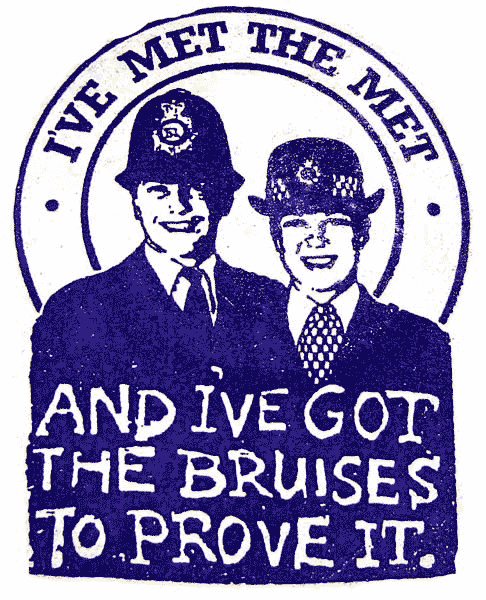
England: I Met the Met, and Had The Bruises To Prove It. – World Animals Voice

The live animal export trade has always been top of my real hate listings; and regardless of where it happens; I will try to give additional support to locals who are attempting to make a difference and get the trade stopped.

Check out some/all past posts here if you wish:

Search Results for “live exports” – World Animals Voice

So, personally the very recent news in from Australia can only be positive for animals as far a I am concerned.  I am English, not Australian, but follow the happenings in the Aus export trade very closely through the work of Animals Australia and others.  The election results for Australia have only just started to arrive in the last day or so; but with a change in government now, it would appear that the (fed up) people are having their say about issues such as climate change, by putting ticks in boxes to attempt change.  The feelings of most Australians about live animals exports was obviously another issue which influenced how some people voted.

Mr Philip Wollen is our WAV Patron; and he is an avid vegan and anti export campaigner; you can see him speak about the trade here:

Kindness Footprints – Phil Woolen – WAV Patron. – World Animals Voice

Lets kick off with a video from our friends and fellow (anti live export) campaigners at Animals Australia to show you a little about the Australian live export business;

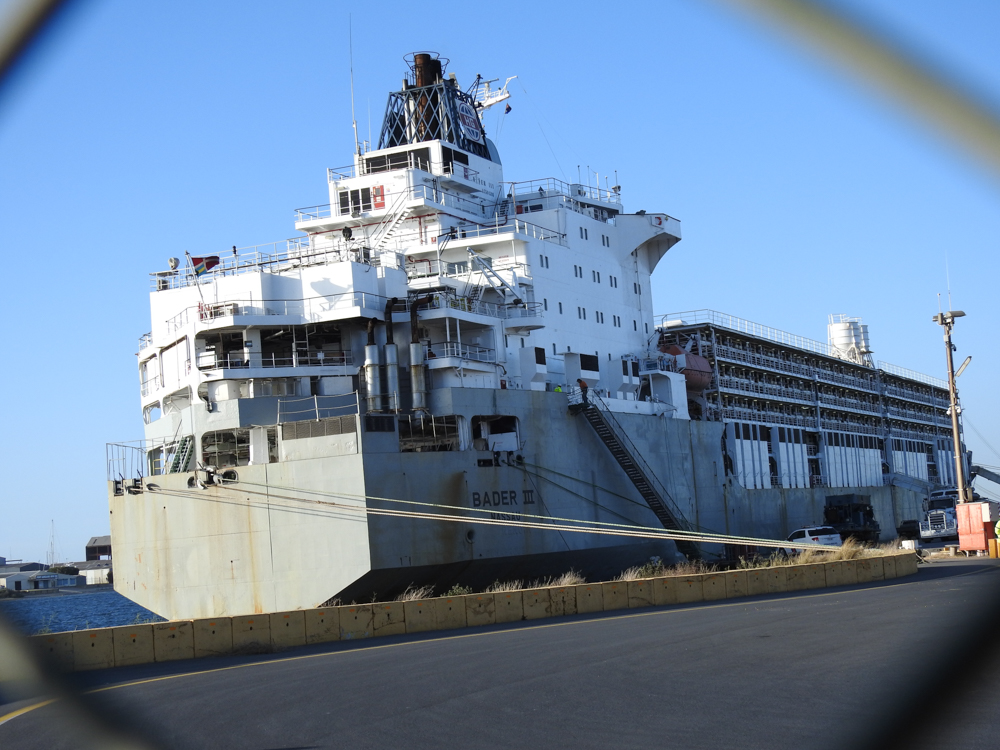
Live Export Ships Exposed – Animals Australia

Here below I am supplying you with some links relating to the trade and the recent election in Australia.  Some are pre election articles, but they are all associated with the trade in some way.  I quoted our good friends at Animals Australia earlier, and by being involved like them as an activist against the suffering, cruelty and abuses, I know they have the tenacity and never give up approach to getting a positive result for Australian animals.  I wish them more than the very best; their work is tireless.  Good victories never arrive overnight, and the live export trade is one of those massively long and drawn out battlefields.  I am confident that in this year the UK will pass legislation that will completely stop the trade overseas in live animals.  I know that the same will happen in Australia very soon due toy the endless endurance and work of good Australian citizens, some politicians and the masses of ‘normal’ citizens who have the balls to get up and speak out against the trade.  People vote, and they have in the last few days made their feelings clear about animal exports and the very important issue of climate change.

The battle in Australian exports is nearly over; it is now simply a matter of time to submit this abysmal record of suffering and abuse into the history books where it should have been placed many years ago.

Be yourself, no matter what they say !

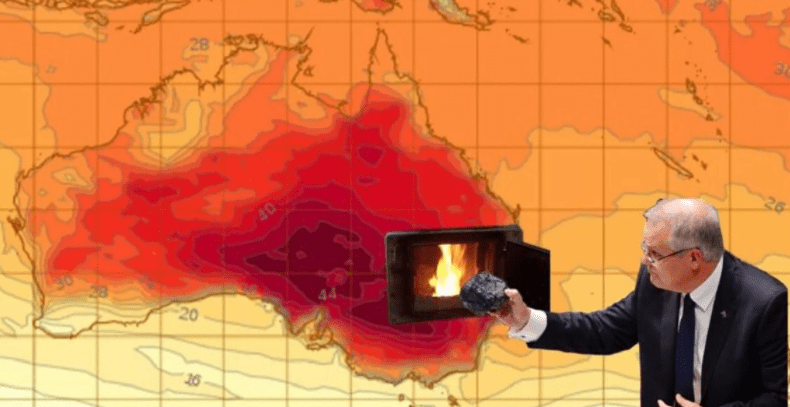
We have presented the undercover footage; we have taken to the streets and we have put our tick in the voting box.  Governments either act and change things, or like the coal digger, you get removed by the electorate.  They have a choice, listen and act on it, or maintain the status quo and face the consequences.  Anyone with anything between their ears will listen to the people and act.

Regards Mark

Labor confirms plan to end live sheep exports if Albanese becomes PM – ABC News

Australians taking a stand against live animal export this election | World Animal Protection

Australia Might Be About To Ban Live Sheep Exports For Good (plantbasednews.org)

Live sheep export is cruel, unpopular and unsustainable. | RSPCA Australia

Live export policy position of Labor not clear say WA livestock producers – ABC News

In memory of Mike Tucker and our beloved Jill:

The brilliant Mike Tucker – devoted anti export campaigner.

Jill – murdered attempting to save British calves being exported.

With Liza and Ellie at Dover; fighting the calf export business.

With Nanda and Monica on a well below freezing day in the Netherlands ! – cold, very cold.
Warmer ! – Summer tour against intensive animal farming in the Netherlands.
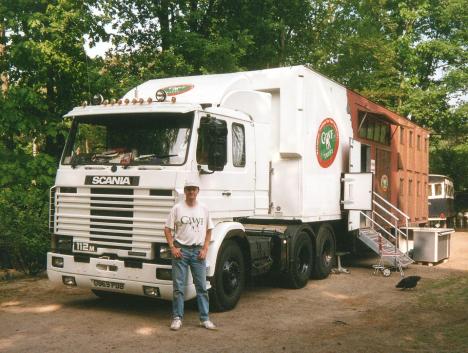
The tour truck parked up in central London.

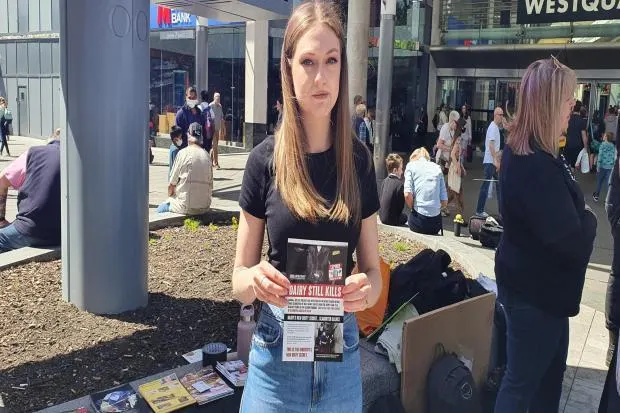
England – Why Animal Rights Activists are Protesting in (Southampton) City Centre.

14/5/22

ANIMAL right activists are protesting in Southampton city centre today.

Activists from pressure group Animal Justice Project are taking a stand against the dairy industry to mark National Day of Action.

They have set up stands in Above Bar Street to show a 2020 undercover video titled ‘Dairy Still Kills’ to expose the mistreatment of livestock.

The video showing the slaughter of calves is being shown in 20 cities across the UK.

Hope Weatherell, a volunteer campaigner and a vegan for nearly seven years, said that Southampton was chosen as a location for the campaign due to it being a central hub and having “lots of open minded people and young people”.

The activist group says that action was being taken in order to “educate” the public about thinking ethically and giving out free samples of dairy free options.

Why animal rights activists are protesting in the city centre (yahoo.com)

Regards Mark

Fortunately this is no more from Ramsgate: – finished 2021 due to Brexit.

h

Ban Live Exports: International Awareness Day on June 14th.

Celebrate the ban of live exports from Great Britain | Compassion in World Farming (ciwf.org.uk)      

Dear Mark,

Get your banners at the ready! Join us for Ban Live Exports: International Awareness Day on 14th June 2022.
The UK Government has promised to ban live exports from Britain for slaughter or fattening. But the Bill that would end this trade has stalled in Parliament. What are they waiting for?
So, on the seventh annual Ban Live Exports: International Awareness Day, we’ll be demanding the Government keeps its promise and ends this cruel trade.
Add Ban Live Exports: International Awareness Day on June 14th to your diary now.

Over the last two years we’ve been unable to meet in person due to restrictions on gatherings, so we’re excited to tell you we’re going to be organising a rally in Central London.

But don’t worry if you’re not able to get to London. We plan to live stream at the event as well as having other activities you can take part in online.

We hope you’ll be able to get involved in any way you can in June. I’ll be back in touch soon with more news on our Ban Live Exports: International Awareness Day.

I look forward to marking this important date with you this year. Best wishes,
Sarah Moyes
Senior Campaign Manager

PS: Don’t forget to head over to our Facebook event and let us know if you’re able to join us for this day of action.

Regards Mark

England: I Met the Met, and Had The Bruises To Prove It.

I said recently that I would try and write a little more about live animal exports from England.

‘I’ve met the Met, and got the bruises to prove it’.

The history of live animal exports from the UK has been a long and troublesome one; with most Brits supporting a ban on the export and consequent suffering of animals, whilst the exporters, hauliers and those involved in the business / trade sat strongly on the other side of the fence.

I (Mark) come from Kent county (SE England); and with Dover port being in Kent, it was for years a battleground for anti export campaigners and the pro export lobby.  At one point, due to relentless and very effective campaigning by good people, Dover harbour banned the export of live animals.  As a result, hauliers and exporters turned their attention to other facilities in Southern England to try and get the animals into Europe.  Live calves were even flown out of Coventry airport to be crated in Europe; what with the UK boasting a ban on the use of veal crates, was it somewhat hypocritical for UK farmers to then send their calves to Europe to suffer a fate that had been banned in the UK on cruelty grounds ???

Live calves being exported to mainland Europe – Mark (WAV).

and the crating that resulted …

Banned in the UK on cruelty grounds, UK calves were still exported to Europe for crating ! – hypocritical ??

It was during the anti export protests at Coventry that Jill was run down and killed by an export truck:

February 1995:

Exporter Christopher Barrett-Jolley

Exporter Christopher Barrett-Jolley was behind the calf flights from Coventry; he was later jailed for being a Cocaine dealer which resulted in him being given a 20 jail sentence – read about it here:

England: There Is More To The Jill Story When You Have the Facts. – World Animals Voice

I personally journeyed many times to Shoreham to take part in anti export protests whilst Dover (my patch) was closed down.  There was a massive opposition to the trade as you can see in the film; the Met police from London had to be transported down to the SE port (at huge costs) every time there was a shipment – and in the end, it was these massive costs that stopped the trade from Shoreham.  There is an old saying in animal rights protester circles that they met the Met (police) and have the bruises to prove it – please watch the video and decide for yourselves.

In the end after the High Court ruling which was undertaken by live animal exporter Peter Gilder; the trade returned to Dover.  But, Shoreham and the unity of locals and the anti export protesters has and will always go down as one of the great stands by the Brits to defend the animals that cannot defend themselves.

April 1995 – Fury as live exports ban is lifted

Wednesday 12 April 1995

Dover is facing the threat of major disruption by protesters against the livestock export trade after a decision yesterday by the High Court that the port authority had acted illegally by banning the live animal traders from the port.

The court also ruled that Coventry airport and Plymouth City Council must allow live animal exports.

The landmark judgment, which in effect ensured the future of the trade for the foreseeable future, was greeted with glee by exporters and horror by animal rights campaigners. Mark Glover, of Respect for Animals, who orchestrated the original mass protests which led to the recent ban, predicted civil disobedience would close Dover to all traffic.

“The judges were calling for the rule of law to be upheld but they’ve wholly ignored the consequences of their judgment. We’ll be calling on all our supporters to take part in all the demonstrations against the trade and that will include Dover,” he said.

Jonathan Sloggett, managing director ofDover Harbour Board, said that when the trade restarted – probably after Easter – he feared there would be disruption for 99 per cent of Dover’s customers for the sake of the 1 per cent of animal export traffic.

He added: “The board has been, and remains, very concerned that the admission to the port of Dover of the trade in live animals for export will cause considerable disruption to all the other users of the port.

“The board very much hopes that all those who sincerely object on moral grounds to the exportation of live animals for slaughter will accept that Dover has a legal duty to admit this trade and cannot lawfully refuse to do so.”

Kent police have previously warned Dover that, in the event of any serious disturbance, the A2 and A20 approach roads to the port would have to be closed, causing widespread disruption. They are now drawing up plans for dealing with fresh protests.

Lord Justice Simon Brown and Mr Justice Popplewell ruled that Dover, Coventry and Plymouth had no right to surrender to “mob-rule” and they must accept the trade regardless of the protests that will ensue.

The judges ruled that the port and airport authorities must accept all lawful trade despite their determined opposition to accepting livestock exports.

The judges severely criticised the authorities for acting out of “narrow self-interest”. Dover and Coventry had warned the court that their operations would be severely hampered or halted by animal welfare campaigners, who would take their protest wherever the trade was conducted.

The authorities argued that the interests of existing port and airport users must take precedence over newcomers. Dover warned specifically that a 250-strong demonstration could be capable of closing Britain’s busiest port.

The judges said the demonstrators should now recognise it was “impossible” for the ports to submit to unlawful protest and accept “the limitations upon their lawful right to protest”.

Lord Justice Simon Brown said: “If ever there were cases demanding the courts’ intervention in support of the rule of law, these are they.

“It may indeed be doubted whether there remains any logic in protesting at the ports: the only body properly able to ban this lawful trade is Parliament itself – unless indeed the Secretary of State is advised that even that would be unlawful under Community law, in which event the only solution lies across the Channel.”

The decision marked a victory for the livestock exporters Peter Gilder & Sons and Russanglia Ltd, who argued that Dover’s decision to ban the trade was unlawful because the port was duty bound to accept all lawful cargoes.

Their victory was shared by Phoenix Aviation, which argued that Coventry City Council acted unlawfully by trying to block the trade, and by Associated British Ports, owner of Plymouth’s Millbay docks, which argued that it had no power to unilaterally ban the trade despite the claims of the city council.

Liberty, formerly the National Council for Civil Liberties, also joined in the criticism of yesterday’s judgment.

Andrew Puddephatt, its general secretary,said: “A Private Member’s Bill to stop live animal exports was introduced into Parliament in February but ran out of time when one of William Waldegrave’s aides spent 24 minutes reading chunks from the Encyclopaedia Britannica to furious MPs.

“In the face of antics like that, it seems both ludicrous and insulting to claim that people should trust in the parliamentary process rather than engaging in protest that has been largely peaceful.

Fury as live exports ban is lifted | The Independent | The Independent

Shoreham – the film:

This film follows weeks of daily demonstrations by hundreds and, at times, thousands of people, who converged on a small harbour port in West Sussex, England, to protest about the export into Mainland Europe of thousands of cattle and sheep.

Thousands of young calves were also destined for veal crates, a system where calves are kept locked into tiny boxes, only able to lay or stand and are chained or tethered, forced to drink iron deficient milk so as to satisfy those who like their flesh (veal) light rose coloured and tender. This system was already banned in the UK and so farmers were exporting these baby animals to Europe where it was still legal.

The film demonstrates the power of ordinary people, when they get together and fight for the rights of those who do not have a voice. Within weeks, these advocates for animals managed to stop in their tracks, big business who were profiteering from what many people believe is a trade in suffering. Other harbour ports across the UK also saw these exports stopped, due to persistent and daily demonstrations. Ordinary folk, from all walks of life, young and not so young, put their own liberty and personal safety at risk to try and protect animals as well as to highlight this issue. Watch this film and be inspired.

View the film – Shoreham live export demonstrations 1995

 By watching directly.

Live animal exports have been a subject of tension between animal rights and welfare groups, the public and the farming community since the late nineteenth century. Alun Howkins (1947-2018), a founding editor of History Workshop Journal, and Linda Merricks explored changing attitudes towards live animal exports, drawing extensively on material from the Mass Observation Archive at the University of Sussex which aims to record the everyday lives and opinions of ordinary people. They found that campaigns against the transport of live animals had their origins in the late nineteenth century, corresponding with the growth of the antivivisection movement and environmental activism in Britain. Eight animal protection groups had been established in Britain by 1900 and another eight by 1944. While only one more group was formed before 1960, there were a further fourteen by the end of the 1980s. This suggests that interest in animal protection peaked in the late nineteenth century and then, again, after 1960 with the advent of modern animal rights. In the nineteenth century, concern about animal welfare in Britain was associated with religious-inspired moral reform which raised awareness of animal cruelty, whereas from the 1960s it reflected growing public consciousness of the relationship between humans and animals. Interest in animal welfare and animal rights has since become more central to public and political debate in Britain, but it is important to distinguish between the two. Animal welfare permits the use of animals by humans as long as they are provided with adequate food, shelter, veterinary treatment and other needs to prevent suffering, whereas animal rights advocates share the belief that it is morally wrong to exploit animals.

The past and future of live animal exports – History Workshop

Moving on to current times; live animal exports to be banned in England and Wales

Published 3 December 2020

Live animal exports to be banned in England and Wales – BBC News

STILL remembering Jill, and for the animals;

Regards Mark
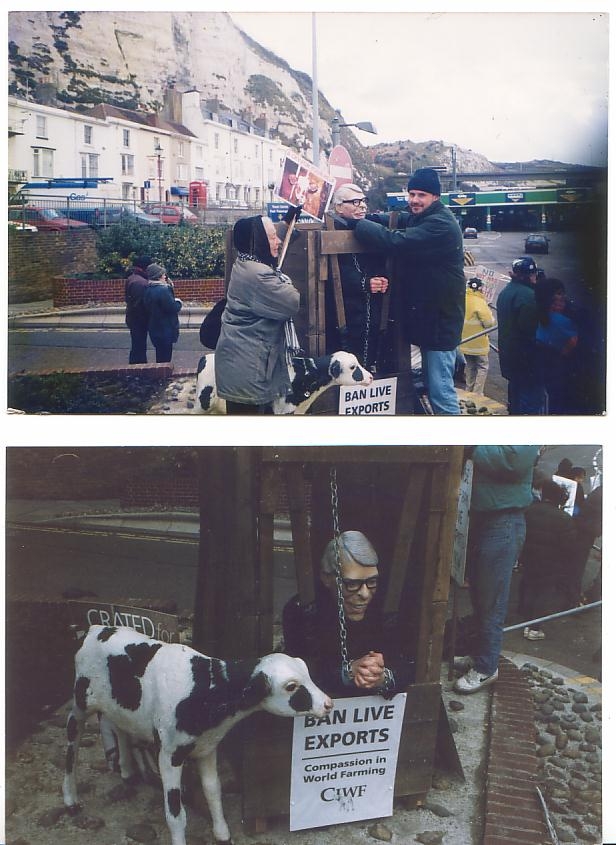
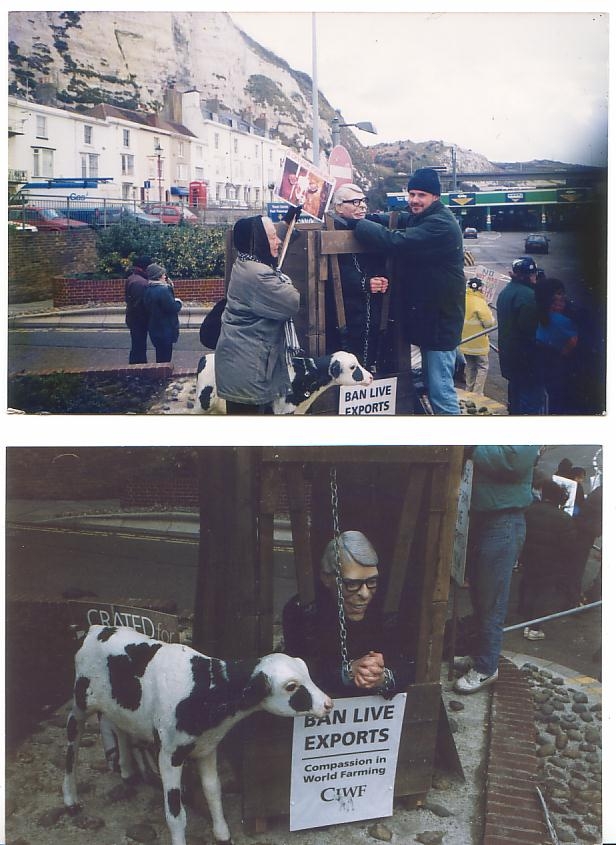
Shaking him warmly by the throat – Mark (WAV) and Barb protest at Dover against live calf exports – a liberated calf and the Prime Minister (then John Major) is shoved in the veal crate; for experience type of thing !!!

UK: Animal Advocate Oldies, and Still Getting Stronger.

LEAGUE AGAINST CRUEL SPORTS (LACS).

The League Against Cruel Sports (LACS), formerly known as the League for the Prohibition of Cruel Sports, is a UK-based animal welfare charity which campaigns to stop blood sports such as fox hunting, hare and deer stalking; game bird shooting; and animal fighting. The charity helped bring about the Hunting Act 2004 and Protection of Wild Mammals (Scotland) Act 2002, which banned hunting with hounds in England, Wales and Scotland.

Thanks to our friends at Wikipedia:

  • 1924 – The League was founded by Henry B. Amos to oppose rabbit coursing[7] – he was successful in achieving a ban. This resulted in the organisation expanding its remit to include other blood sports – such as fox, hare and deer hunting.
  • In 1935, Amos was jailed briefly for throwing a copy of Henry Stephens Salt‘s Creed of Kinship through a stained glass window at Exeter Cathedral during evensong
  • He first became interested in vegetarianism in about 1886.
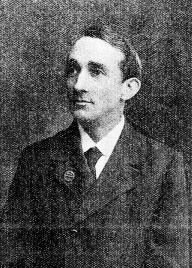
Henry Brown Amos (24 May 1869 – 22 October 1946) was a Scottish animal rights activist, humanitarian and vegetarian.
  • 1975 – A bill seeking to ban hare coursing, supported by the League, was passed through the House of Commons, but did not receive approval in the House of Lords.
  • 1978 – The League secured legal protection for otters, including a ban on hunting them. The aquatic mammal was up until that point hunted with packs of hounds, one of the reasons for their numbers declining.
  • 1992 – The League helped secure the Protection of Badgers Act, which expanded the protection of the mammals themselves to their setts. The homes of badgers are illegally targeted for several reasons, including being blocked by fox hunts to stop animals being pursued by hounds fleeing underground.
  • 2002 – Fox, hare and deer hunting and hare coursing was banned in Scotland under the Protection of Wild Mammals (Scotland) Act 2002, which was introduced by MSPs following campaigning by the League and other animal protection organisations.
  • 2004 – Fox, hare and deer hunting and hare coursing was banned in England and Wales under the Hunting Act 2004. The legislation was introduced by MPs following campaigning by the League and other animal protection organisations.
  • 2005 – The Hunting Act 2004 came into force – making fox, hare and deer hunting and coursing illegal across England and Wales.
  • 2005 – The Waterloo Cup hare coursing competition held its final meeting at Great Altcar in Lancashire, closing after 169 years following passage of the Hunting Act.
  • 2006 – A huntsman with the Exmoor Foxhounds was found guilty of illegally hunting foxes with dogs in a private prosecution brought by LACS, but the case was overturned on appeal.[8][9]
  • 2007 – Two members of the Quantock Staghounds were successfully prosecuted by the League following chasing a deer across Exmoor.[10]
  • 2008 – Two members of the Minehead Harriers pleaded guilty to chasing a fox with a pack of hounds in a private prosecution by LACS.[11]
  • 2009 – The League announced a new campaign against dog fighting, amidst news reports that there is an increase in dog fighting in London.
  • 2014 – The League celebrates 90 years of campaigning against cruelty to animals in the name of sport. Figures from the Ministry of Justice show that there have been 341 convictions under the Hunting Act 2004.
  • 2015 – Prime Minister David Cameron offered a free-vote on repealing the Hunting Act, backing down shortly afterwards following pressure form the League, MPs and other animal protection organisations.
  • 2015 – Cross-channel ferry companies stop shipping pheasants and partridges from French factory-farms to British shooting estates, following an investigation and lobbying by the League.
  • 2018 – Conservative Party drops its manifesto commitment to offer a free-vote on repealing the Hunting Act following pressure from the League, meaning no Westminster party any longer supports repealing the hunting ban.
  • 2018 – Scottish Government announces intention to strengthen the Protection of Wild Mammals (Scotland) Act 2002, which bans hunting with hounds in Scotland, following pressure from the League and other animal protection organisations.
  • 2018 – Welsh Government bans pheasant and partridge shooting on public land following campaigning and pressure from the League and Animal Aid.
  • 2018 – The Labour Party backs calls made by the League to strengthen the Hunting Act – including prison sentences for those who chase and kill wild mammals.
  • 2019 – University of Wales suspends pheasant shooting on its countryside campus at Gregynog Hall following campaigning by the League.
  • 2020 – In January 2020, an employment tribunal in Britain ruled that ethical veganism is a “philosophical belief” and therefore protected in law. This is the first time an employment tribunal in Britain ruled this. This case was in regards to vegan Jordi Casamitjana, who stated he was fired by the League due to his ethical veganism.[12

Web link: Home | League Against Cruel Sports

Photo – Mark (WAV) / East Kent Hunt Sabs.

ROYAL SOCIETY for the PROECTION of CRUELTY to ANIMALS (RSPCA)

The society was the first animal welfare charity to be founded in the world.

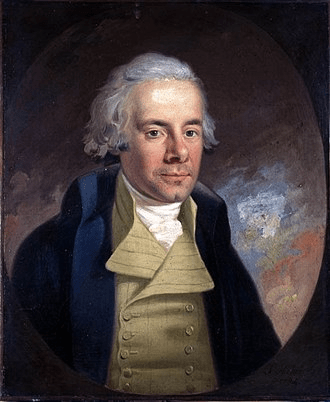
Founded on the 16th June 1824, by Richard Martin, William Wilberforce and the Reverend Arthur Broome, at the Old Slaughter’s Coffee House, near Trafalgar Square, London, who together agreed that the neglect, cruelty and abuse of animals was unacceptable.

William Wilberforce – One of the RSPCA founders and anti slavery staunch campaigner.

Now very close to its 200th anniversary; and going stronger than ever.

Wilberforce was an advocate and staunch campaigner for the abolition of the slave trade; which he achieved shortly before his death:

William Wilberforce – Wikipedia

This proves that animal welfare campaigners are also strong supporters of human welfare issues, as we show with our support for ‘Free Tibet’ who are based in London:


Search Results for “free tibet” – World Animals Voice

Read a lot more about the RSPCA history at:

Royal Society for the Prevention of Cruelty to Animals – Wikipedia

Web site link:  The Largest Animal Welfare Charity in the UK | RSPCA

Above are a few links to enable you to read and learn more about these wonderful animal advocate organisations;

Regards Mark.

Enjoy

Guns and Roses at London:

Italy: Three trucks carrying lambs sanctioned by traffic police in Italy following investigation.

Three trucks carrying lambs sanctioned by traffic police in Italy following investigation

22 April 2022

Essere Animali

During Essere Animali’s roadside checks with MEP Eleonora Evi, three trucks carrying lambs were sanctioned by the traffic police. The conditions were not adequate to guarantee that the animals could move naturally. In one case, a lamb traveled for hours with one leg stuck between the bars of the truck.

Organisation Essere Animali recently carried out checks of the trucks used to transport live animals that pass through the border with Slovenia to Italy. 

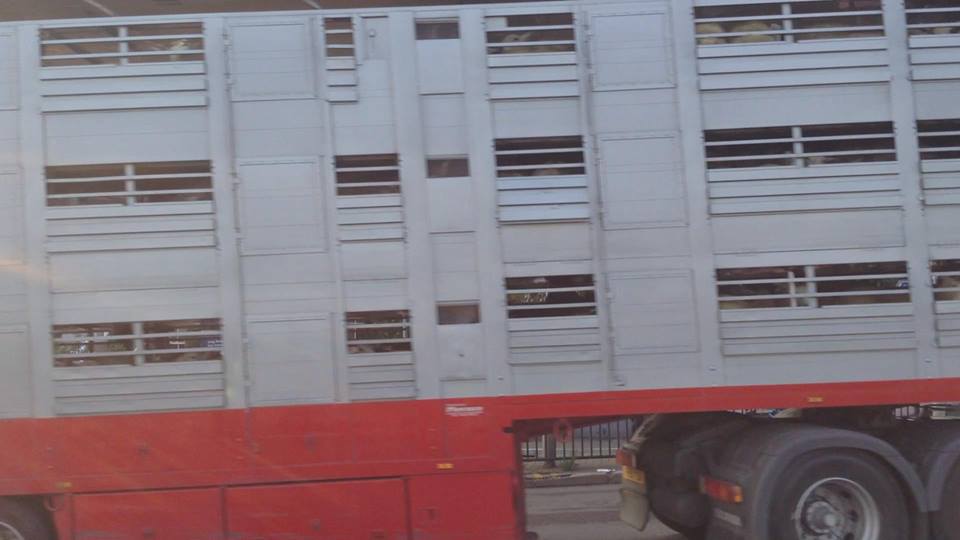
Two vehicles from Hungary and one from Romania, each carrying over 700 lambs across four floors, were identified at the border with Slovenia. They were reported to the authorities and followed at a distance for a total of over 2,500 km, until the traffic police intercepted them. The vehicles were sanctioned under Legislative Decree 25 July 2007, n. 151 which provides for the sanctions for the violation of the provisions stipulated in European Regulation 1/2005 on the protection of animals during transport and related operations.

In particular, the violations concerned the insufficient height of the compartments, which did not allow the animals to move naturally. The lambs’ heads touched the upper floor of the compartment, a condition that can cause bumps, bruises, and burns, as well as preventing adequate ventilation of the compartments. For violations of the provisions on animal welfare during transport, penalties can reach up to 6,000 euros.

Essere Animali’s activists also filmed a lamb that traveled for hours with one leg stuck between the truck bars, as well as issues related to the watering system installed in the vehicles, which several organisations have denounced as unsuitable for some time as it puts lambs at risk of suffering from thirst and potentially dehydration.

Last January, the European Parliament approved a series of recommendations drawn up by the ANIT Committee which do not place animal welfare at the centre of the revisions. In fact, the text approved by the majority of MEPs does not propose adequate solutions to numerous urgent problems, including the transport of animals over long distances (over 8 hours), and that of unweaned animals.

We thank MEP Eleonora Evi for her valuable collaboration, and police forces for their timely intervention. We will inform the European Commission and the Minister of Health of the outcome of the violations, providing images that document this alarming reality. The European Regulation, in addition to being frequently violated, is unable to concretely protect animals. Today it is legal to transport lambs less than two months old for journeys lasting up to 30 hours, subjecting them to conditions that cause them great stress and suffering. Together with other NGOs from all over Europe, we are calling for greater animal protection, such as a ban on the transport of live animals over long distances and unweaned animals. The European Union has the opportunity to really improve the conditions of animals; it shouldn’t betray the demands of its citizens.

Simone Montuschi, President, Essere Animali

Regards Mark

UK: 7/4/22 Your Victory – A Massive Day For UK Animals and Their Welfare; After Losing Their Protection Post Brexit, The Updated Animal Welfare (Sentience) Bill Has Been Voted Through In Parliament Today; Which Means That Animals are Legally Recognised as ‘Sentient Beings’ Once Again.

WAV Comment:  Often in animal welfare, there are not immediate solutions to concerning animal welfare problems.  Tenacity (the quality or fact of being very determined; determination.) has to be something; and is something, which all of us in the rights / welfare movement need to have and show.  To put it simply, if you give up, you lose.

Myself campaigning with CIWF in the Netherlands against animal factory farming.

UK animal people did not give up; in fact, their resolve strengthened.  Why:

Despite the huge success in getting animal sentience recognised in EU law, the recognition of animal sentience in the UK took a big step backwards following the Brexit referendum in 2016.

The following year, Compassion in World Farming discovered that the UK Government’s European Union (Withdrawal) Bill, which formally enacted Brexit, would not carry across provisions from EU Treaties – including Article 13 of the Treaty on the Functioning of the EU.

This meant that reference to animal sentience would disappear from UK law when the UK formally left the EU on 31st December 2020. Both the recognition of animals as having the capacity to have feelings, including pain and joy, and the requirement for governments to pay “full regard” to their welfare when formulating and implementing policy, would be lost from UK law. Read more about what Brexit meant for Animal Sentience in this news article.

Campaigning on animal sentience in the UK starts again
We (CIWF) had to start campaigning immediately to ensure that this cornerstone of animal welfare law was not lost when the UK left the EU. We mobilised supporters to lobby the Government, contacted Members of Parliament, and liaised with other NGOs to alert them to the threat to animal welfare. Unfortunately, it faced strong Government opposition and was narrowly defeated when it was put to the vote in Parliament.

And finally, on the 12th of December 2017, following the media furore over the vote in Parliament – and under pressure from a 155,000-strong Compassion petition, the UK Government announced a new Bill would be introduced. This was a momentous moment as the Bill would permanently incorporate the legal recognition of animal sentience into UK law post-Brexit.

2018: Campaign setback as Government delays sentience legislation
Despite the positive announcement from the Government at the end of 2017, the campaign to recognise that animals are sentient beings faced even more setbacks in the following years.

Firstly, Parliament’s Environment, Food and Rural Affairs Select Committee published a report which suggested the Bill should be redrafted. The Committee raised concerns that, as the Bill was worded, paying regard to animal sentience would lead to the slowing down or freezing of policymaking and result in widespread Judicial Reviews. Following that report, the UK Government announced in September 2018 that the legislation relating to animal sentience would be delayed.

2019: Over 100,000 calls for animal sentience recognition

In September 2019, our Senior Policy Manager, James West, handed in a 103,000-signature petition to Downing Street, alongside other members of the #BetterDealForAnimals coalition. The petition called on the UK Government to introduce legislation recognising animal sentience and require that full regard be given to animal welfare in UK Government policies.

2020: MPs debate animal sentience

As a result of the 2019 petition reaching over 100,000 signatures, MPs debated the issue in March 2020. Watch the highlights of the debate.

Then, following continued inaction from the Government, in September 2020 dedicated Compassion campaigners took action again.

Thousands of people urged their MPs to call on Ministers to introduce animal sentience legislation before 1st January 2021. This was the day after the UK would formally leave the EU, at which point EU laws recognising animal sentience at the time were due to run out.

2021: UK Government introduces Animal Welfare (Sentience) Bill
As the clock struck 11pm on 31st December 2020, despite persistent campaigning, animals in the UK were, for the first time in almost a quarter-century, no longer recognised as sentient beings under the law.
Then, on 13th May, the efforts of compassionate people around the country finally worked in British animals’ favour. The UK Government announced it would introduce the Animal Welfare (Sentience) Bill as part of its ‘Action Plan for Animal Welfare’.

During the summer and autumn of 2021, the Bill progressed through the House of Lords, completing all its stages by December 2021.

Today – 7/4/22.

On Thursday 7th April, we achieved a momentous victory for animals. 

The updated Animal Welfare (Sentience) Bill was voted through by the House of Lords which means that animals are legally recognised as sentient beings once again.

Thank you to everyone who emailed politicians or signed petitions, donated in response to this campaign, shared posts on social media, and asked friends and family to take action.

It’s official. UK law will now recognise that animals can feel joy, pain, and fear once again.. 

Read about the highs and lows of sentience over several decades:

Animal Sentience: the highs and lows | Compassion in World Farming (ciwf.org.uk)

In the end, positive results always come to those who have the tenacity to fight and continue fighting.  Never ever give up the fight(s) for your issues;

Regards Mark
Sentient Beings – Protected In the UK Once Again.