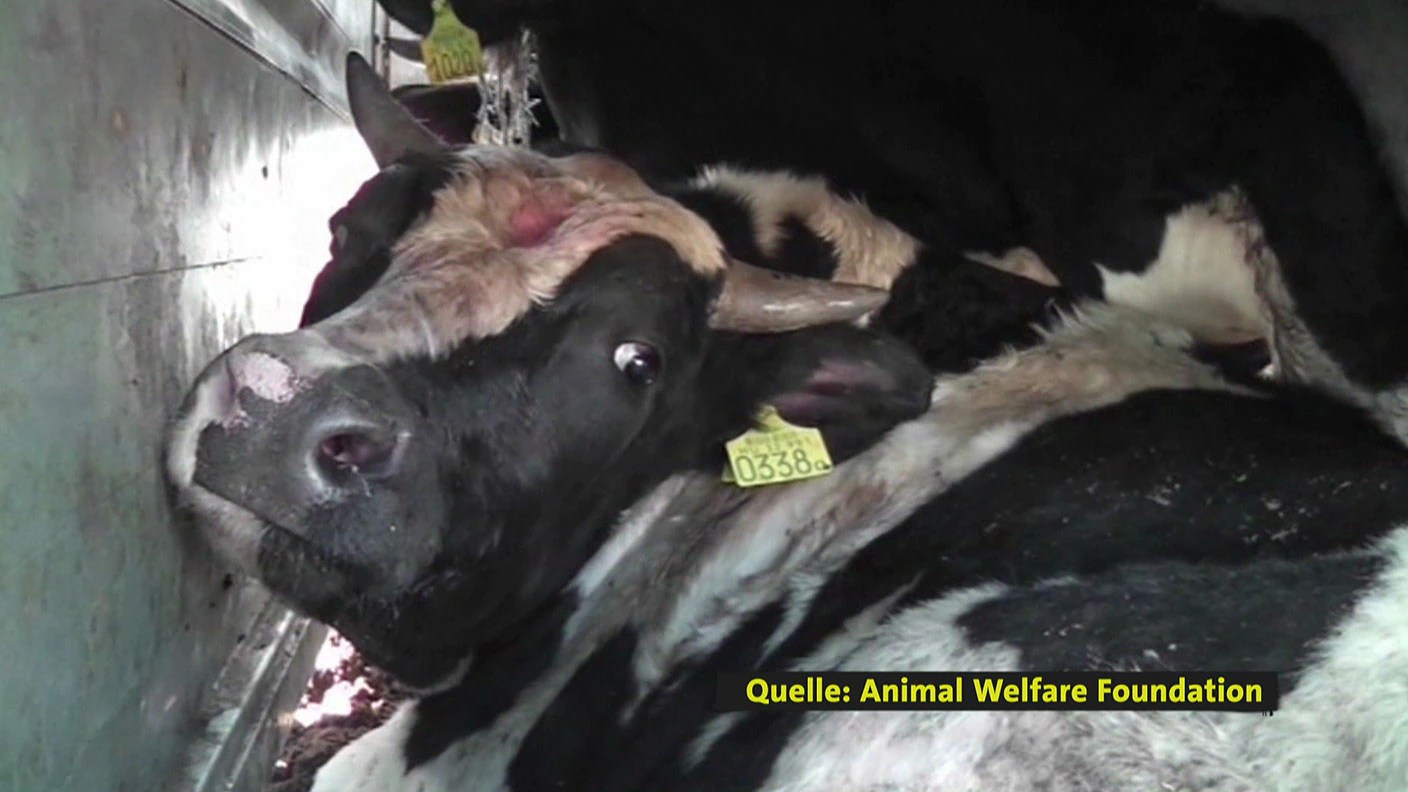
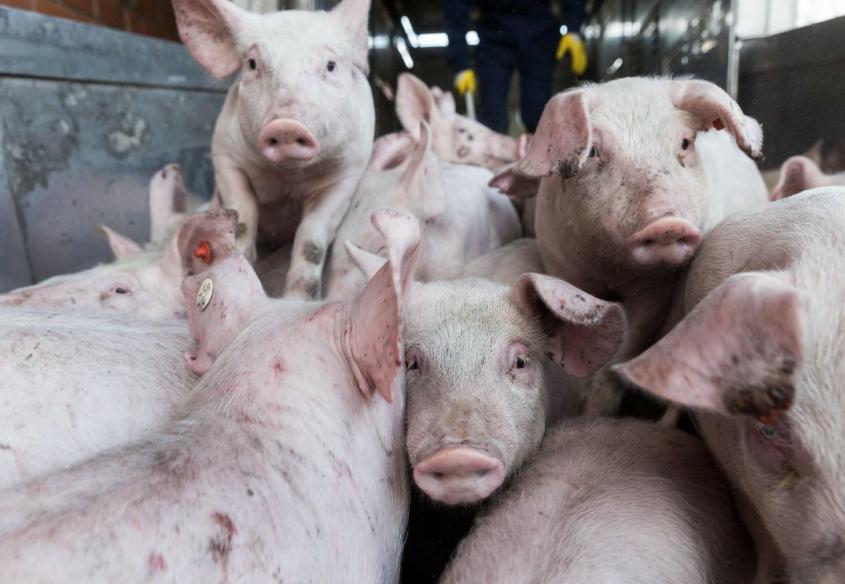
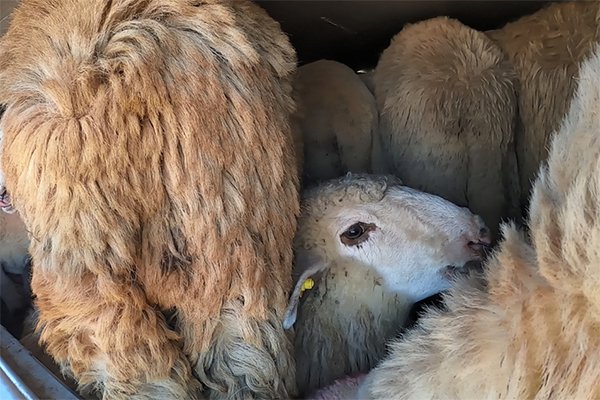
Category: Live Transport

MILKED – White Lies In Dairyland.

WAV Comment – with thanks to Stacey at ‘Our Compass’ as always for sending over the info. Great and very informative as always.

Regards Mark

https://our-compass.org/author/ourcompasses/

MILKED: White Lies in DairyLand by Stacey

Stopping animal exploitation doesn’t require human benefit, but that it DOES and humans still radically embrace animal cruelty as their “right/choice/blahblahblah” is disturbing. You literally drink the breastmilk of a different species, beyond infancy and with teeth, that requires the suffering, pain, misery, and violent death of the other species.

Animals don’t belong to you; what comes out of their bodies doesn’t belong to you. That you can be ethical but deliberately choose to not be is a perversion. Stop defining others’ suffering in manners that brings you comfort but does nothing to ease the suffering of your victims. I recently read about how adding cameras in slaughterhouses will help to decrease cruelty. In SLAUGHTERHOUSES. A slaughterhouse is INHERENTLY CRUEL, it’s where animals die in fear, blood, and often torturous manners in some grotesquely defined “humane” ethic slander. Slaughterhouses do not attract people who care about animals, and the evidence is in: animals experience abject fear; they smell and hear the death of their death-mates; and they die in often agonizing, torturous manners.

Euphemistic morals serve only those whose intentions are the absolute antithesis of morals but do nothing to help their animal victims: HUMANS.

SL

Photo – Mark WAV

Source MILKED

MILKED is a topical feature documentary that exposes the whitewash of New Zealand’s multi-billion-dollar dairy industry. 

Young activist Chris Huriwai travels around the country searching for the truth about how this source of national pride has become the nation’s biggest threat. It’s rapidly gone from a land with no cows to being the biggest exporter of dairy in the world, but the industry seems to be failing in every way possible. 

Featuring interviews with high-profile contributors such as Dr Jane Goodall, environmentalist and former actress Suzy Amis Cameron, and Cowspiracy co-director, Keegan Kuhn, MILKED reveals the behind-the-scenes reality of the kiwi dairy farming fairy-tale. It uncovers alarming information about the impacts of the industry on the environment and health, leading up to the discovery that we’re on the edge of the biggest global disruption of food and agriculture in history. 

An impactful global story told with a local eye, the film also points to what New Zealand and other countries can do to change their fate.

MILKED facts:

Photo – PMAF

See More About What You Can Do HERE

Download Your FREE Vegan PDF HERE

Order a FREE vegan kit HERE

Dairy-Free Info HERE

Take the Dairy-Free Challenge HERE

Click HERE for more Dairy-Free

Fish alternatives can be found HERE

Learn about eggs HERE

Find bacon alternatives HERE and HERE

Take PETA’s Cruelty-Free Shopping Guide along with you next time you head to the store! The handy guide will help you find humane products at a glance. Order a FREE copy HERE

Searching for Cruelty-Free Cosmetics, Personal-Care Products, Vegan Products, or more?
Click HERE to search.

Free PDF of Vegan & Cruelty-Free Products/Companies HERE

Click HERE to find out How to Wear Vegan!

Want to do more than go vegan? Help others to do so! Click below for nominal, or no, fees to vegan literature that you can use to convince others that veganism is the only compassionate route to being an animal friend:

PETA HERE

Vegan Outreach HERE

Get your FREE Activist Kit from PETA, including stickers, leaflets, and guide HERE

Have questions? Click HERE

Photo – PMAF
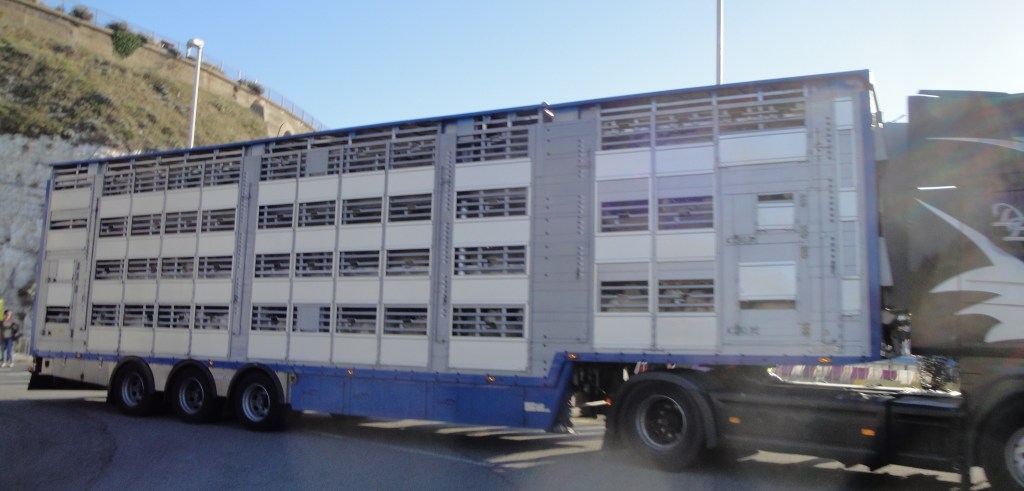
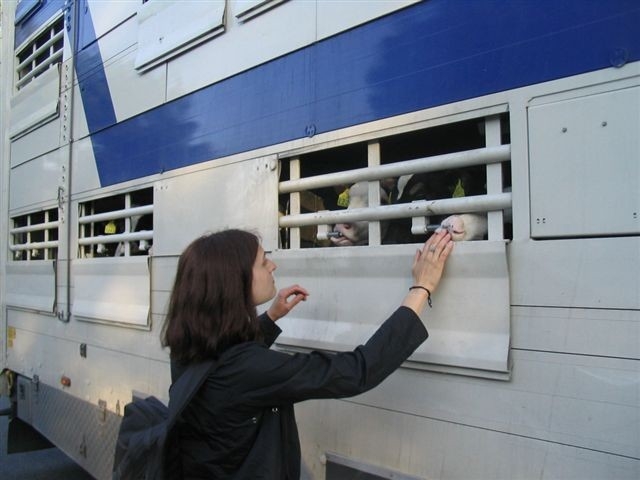
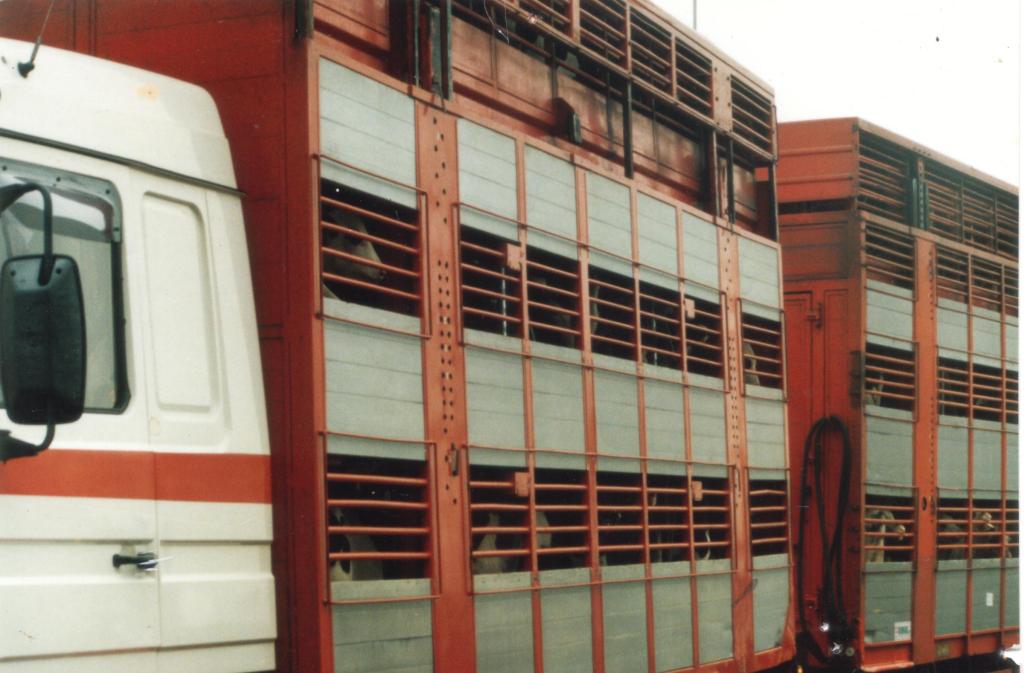
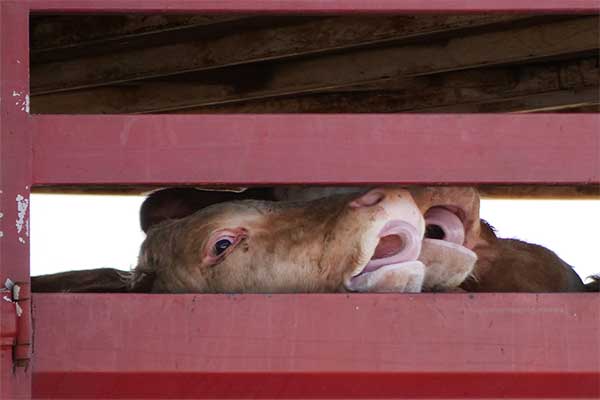
Photo – Mark WAV – If you look carefully on the rear trailer especially, you can see the baby calves, desperate for milk from their mums; which they will never experience again. They suckle the bars to try and get milk – milk for them, NOT us. The dairy industry really gets me – I say to them, come down and see this, hear their cries, smell the smells – Go Vegan Now.


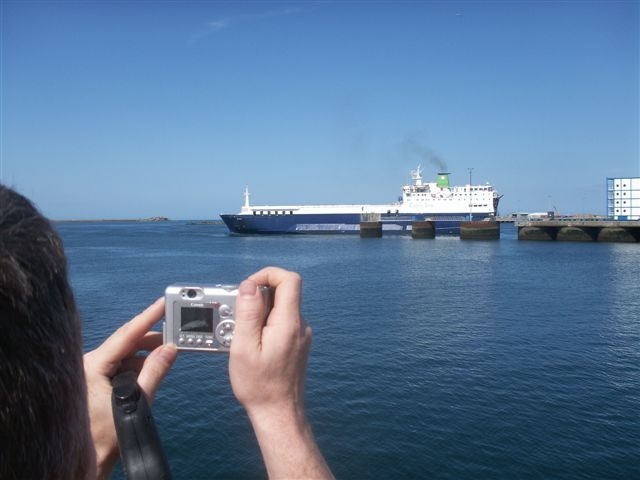
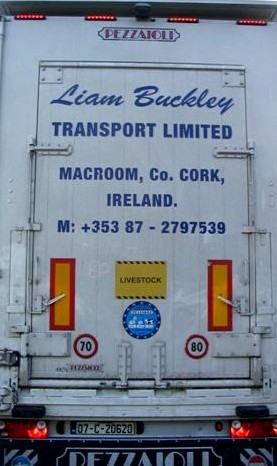
All the above photos were used for a report I presented to the EU – 5 undercover investigations with EU animal welfare organisations on the live calf transport trade between Ireland and France (EU member states).

I may upload the report for you to view soon. In the meantime here is just one of the investigation reports which I know will show you how absurd the EU live animal transport regulations are.

Read, rage and repent !

Regards Mark

Liza and Mark - Dover
With friends Ellie and Liza Protesting against the live calf trade at Dover, England.

Live Animal Transport – A New Petition has Been Launched in the Czech Republic by Animal Campaigner Friends – Please Support.

WAV Comment – As many of you know. The stopping of live animal transport is one of our main issues.  It is great to see our Czech Republic friends have now set up a petition to support the stopping.  Below we have given all the links to the petition; please add your voice by supporting it.  Note – a ‘translate’ message should automatically appear when you go to the petition.

Regards Mark

Open petition to end long-distance live animal transport in Czech Republic

18 November 2021

Společnost pro zvířata

A new petition has been launched in Czech Republic by Společnost pro zvířata to demand a ban on long-distance live animal transport. They already have collected 4.000 signatures and they need to reach 10.000.

Back in June, our Member Organisation Společnost pro zvířata lit candles for the animals, victims of cruel transport practices, in front of the Czech Republic Ministry of Agriculture sending a strong message to the representatives. 

MEP Jiří Pospíšil, member of the Intergroup on the Welfare and Conservation of animals, also sent his support and lit a candle for the animals. 

The ceremony was also an opportunity to launch a petition calling the Czech government to :

  • Ensure maximum journey times of 4 hours for chickens and 6 to 8 hours for cattle, pigs, sheep and other mammal (including waiting, loading and unloading hours),
  • Work on a strategy to shift from live transport to a trade of meat and carcasses as well as genetic material only,
  • Ensure the protection of animals at the time of slaughter or killing by enforcing mandatory stunning.

The petition is nearing its goal of achieving 10,000 signatures. 

Read more and support the petition here.

Wording:

Petition for an end to long-distance transports with animals and for the export
of meat, for the breeding and life of animals as close as possible to their place of birth

for the Government and Parliament of the Czech Republic

motto: Animals are living sentient creatures, just like we humans. They are not goods.

Therefore, we, the undersigned citizens of the Czech Republic, ask the Government and Parliament of the Czech Republic to adopt legislation and its implementation in practice, which will ensure:

  • that the animals (used for farming purposes) live and live in or near the place of birth;
  • a maximum limit of 4 h (poultry) and 6 to 8 h (bovine, pig, sheep and other mammals) for transport to slaughterhouses, fattening and rearing/rearing, without exception and including waiting, loading and unloading;
  • the replacement of long-lasting transport of animals by the transport of meat, half-carcases and other animal products;
  • the creation of economic incentive tools for the above requirements;
  • the slaughter and killing of animals at their place of birth, as quickly as possible and brought unconscious by prior stunning, without exceptions;
  • severely penalise natural and legal persons for infringements relating to the protection of animals during transport and during the slaughter/killing of animals.

Regards Mark

EU: A European Commissioner for Animal Welfare? 70% of Europeans want it.

WAV Comment: Lets see the EU now put its money where its mouth is; and act !

A European Commissioner for Animal Welfare? 70% of Europeans want it

15 November 2021

GAIA – Belgium

Press Release

The numbers are clear: 70% of EU Citizens want to appoint a European Commissioner for animal welfare, as shown in an international survey conducted in June 2021. Now, Members of the European Parliament have started the process to support the proposal with the signatures collection for an oral question.

Back in June 2021 IPSOS asked 3,500 European adults between 18 and 65 years old whether they think there should be a European Commissioner for Animal Welfare. The study was conducted in the ten largest EU countries, covering 81% of the EU population: France, Germany, Poland, Spain, Italy, Belgium, Netherlands, Romania, Hungary and Sweden. In all these countries 7 out of 10 citizens think there should be a European Commissioner for Animal Welfare. 

Currently there is no European Commissioner for Animal Welfare and the responsibility is attributed to the Commissioner for Health and Food Safety. However, some countries, like Belgium, appointed a minister explicitly in charge of this domain. 

This decision triggered important effects: a clear responsibility in the government for all legislation related to animal welfare, more transparency, and the allocation of adequate human and financial resources to provide concrete responses on this important topic.

In March 2021, Eurogroup for Animals member GAIA, based in Belgium, launched the campaign #EUforAnimals with the support of over forty other animal rights and welfare organisations across Europe, asking the European institutions to finally give animal welfare the attention it deserves, by integrating it explicitly in the job title of the relevant EU Commissioner. 

The #EUforAnimals campaign has already received the support of over 130,000 citizens and 133 Members of the European Parliament (MEPs).  

Twelve MEPs have also launched the signature collection to table a cross-party oral question supporting the demand. The process was initiated by the Niels Fuglsang MEP (S&D, Denmark) and is co-promoted by Sylwia Spurek (Greens/EFA, Poland), Petras Auštrevičius (Renew, Lithuania), Manuel Bompard (GUE/NGL, France), Michal Wiezik (EPP, Slovak Republic), Emmanouíl Fragkos (ECR, Greece), Anja Hazekamp (GUE/NGL, the Netherlands), Johan Van Overtveldt (ECR, Belgium), Emma Wiesner (Renew, Sweden), Sirpa Pietikäinen (EPP, Finland), Maria Noichl (S&D, Denmark) and Francisco Guerreiro (Greens/EFA, Portugal). 

Members of the European Parliament have often well represented the EU citizens’ will to improve the way animals are treated in Europe. It is my hope and the hope of the other MEPs who are co-promoting this oral question, that many colleagues will join us and that the European Commission will respond positively to our proposal, to see as soon as possible Ms Kyriakides’ title changed into EU Commissioner for “Health, Food Safety and Animal Welfare”
 

Niels Fuglsang MEP

The survey clearly shows that the campaign’s demand is supported by a great majority of EU citizens. The EU Commission should not delay giving a positive answer to a proposal that can bring great and lasting benefits to animal welfare both at the continental level and beyond. We hope that Commissioner Kyriakides will decide to support #EUforAnimals and become the first EU Commissioner for Animal Welfare.

Ann De Greef, Director, GAIA

Notes

The full survey results can be found here 

For more information on the initiative visit the #EUforAnimals campaign website

Regards Mark

Portugal: 14 animals die during sea transport from Portugal to Israel.

14 animals die during sea transport from Portugal to Israel

10 November 2021

AWF

Live animal transport from Portugal to Israel: livestock vessel stuck off the Italian coast for two days, 14 animals died during the trip.

NGOs call on the ANIT Committee to ask for a ban of live animal transport at sea.

The vessel Phoenix III, heading to Israel with a cargo of 1,200 young bulls and 5,644 sheep, was dangerously stuck for two days at sea near Mazara del Vallo, Italy. 

Portuguese authorities were informed by PATAV (a Portuguese civic movement) that the vessel had stopped for 48 hours. The ship, which left Sines (Portugal) on October 22nd and stopped on 27th near Italy, then left again after two days and reached its destination port in Israel on November 4th. 

A coalition of NGOs, which followed the ship and filmed the animals while they were unloaded in the port of Haifa, wrote to the ANIT Committee (Committee of Inquiry on the Protection of Animals during Transport) urging to support a ban of live export.

The images taken during the unloading process show stuck and exhausted animals in high overcrowded conditions, with animals on top of each other, and very dirty bulls with broken horns. Some of the animals also showed heat stress symptoms. The animals were quickly loaded again on trucks. They will spend eight days in quarantine in the region of Mehola (90 km from the port), and then they will be transported again to different feedlots in Israel for 4-8 months before slaughter.

This case, as in the well-known cases of Karim Allah and Elbeik at the beginning of 2021, shows again how dangerous sea journeys can be for the animals.

In this incident, 14 animals were reported dead, but if the vessel were stuck for more days, we could have witnessed another tragedy.

In the letter to the ANIT committee, the NGOs referred to the importance of contingency plans and the need, by competent authorities and organisers, to take into account the forecast weather conditions until final destination when authorising a transport. Lack of feasible contingency plans and lack of weather verification have the potential to negatively affect animal welfare when unexpected situations arise.

Phoenix III is a 43 years old livestock vessel (Ex-reefer converted in 2011 at the age of 33 when it should have been already scrapped). Most of the livestock vessels operating in the EU are under similar age and conversion situation, andsince 2017, they are the No. 1 category for the number of detentions worldwide, and considered as a high risk in Paris MoU risk profiling. 

Furthermore, according to a recent study published in 2021, 36%of EU-approved livestock vessels have suffered major incidents, failures, or loss.

Besides that, there are concerns regarding the Phoenix III authorisation: according to the Romanian central authority Phoenix III had been transporting live animals without authorisation from April to August 2021 when it made 8 journeys exporting animals from Croatia, Portugal and Romania to Israel. On August 18 the vessel was re-authorised to export animals by Croatia.

Aside from the reason for the stopping, this episode is again a good example of how the welfare of exported animals remains largely unknown during the sea part of the journey, and during transport in third countries to the final destination.

The many tragedies already happened in the past (the Queen Hind, Karim Allah, Elbeik vessels among others) show that the protection of animals during transport at sea is not possible for various reasons: bad weather and technical failures can cause delays, most ports are not able to shelter the animals, and conditions at sea can deteriorate suddenly with no possibility to escape putting both animals and crew at great risk.

Given the comprehensive work that the ANIT did on transport via sea, the NGOs are now asking for the Committee to recommend a phase out of extra-EU sea transport and to urge stricter and refined rules on intra-EU sea transport.

Regards Mark

England: Ex Environmental Minister (Defra) Paid Over £100,000 To Act As Lobbyist For Meat Processing Company.

WAV Comment:

Owen Paterson always did what he could to allow the continuation of live animal exports from the UK.  He was a big opponent character to us, the anti export protesters, when we campaigned for an end to live animal exports around the ports of Southern England.

Paterson was the government environment secretary between 2012 and 2014, a time when live animal exports were being fought hard against by animal welfare campaigners.

Although not relating to live exports, it does show the influence that major political people can have in the ‘lobbying’ corner, especially, as in just one case here, Paterson was being paid around £100,000 to act as a consultant for Randox, to seek contracts.

This was exposed by the brilliant ‘Guardian’ in the past:

https://www.theguardian.com/politics/2019/apr/07/mp-owen-paterson-lobbied-government-for-firm-he-worked-for

Now that all these issues have come to the front, including the issue of how much he was paid as a ‘lobbyist’; his contacts via government and Defra, for whom he was the top person, (Environment Minister between 2012 and 2014), we can now see why the common man protester at the docks was fighting such a battle.  If he (Paterson) was paid big sums of money in the past to lobby for the meat industry, then it has possibly been happening in the past relating to other organisations.

We hope there will be further investigations and revelations regarding exactly what Paterson did for the meat industry which resulted in him getting such big financial rewards.

Regards Mark

—————————————————————-

Ex-Tory minister ‘should be suspended’ for lobbying on behalf of two companies

26/10/21

A former Conservative minister should be suspended from the Commons for lobbying on behalf of two companies, a standards body has ruled.

Owen Paterson was found to have “repeatedly used his privileged position” to benefit Randox, a clinical diagnostics company, and Lynn’s Country Foods, a meat processor and distributor.

The MP, who was environment secretary from 2012 to 2014, was a paid consultant for Randox from 2015 and for Lynn’s Country Foods from 2016. The allegations relate to his conduct between October 2016 and February 2020.

Following a two-year investigation, the Parliamentary Commissioner for Standards said he had breached the rule prohibiting paid advocacy by making multiple approaches to government departments and ministers for the two companies.

She recommended he be suspended from the Commons for a month. This will have to be voted on by MPs and usually occurs within five days.

Advertisement

Mr Paterson was found to have breached the rules on lobbying on behalf of Randox by making three approaches to the Food Standards Agency (FSA) about the testing of antibiotics in milk in 2016 and 2017 and approaching ministers at the Department for International Development four times about its blood testing technology in those years.

On behalf of Lynn’s Country Foods, Mr Paterson breached the rules by making seven approaches to the FSA in 2017 and 2018 and failed to declare his interest as a paid consultant to the FSA in four emails between 2016 and 2018.

He was also found to have breached the rules on using parliamentary facilities by using his parliamentary office 16 times for business meetings with clients between 2016 and 2020, and sending two letters relating to his business interests on House of Commons headed notepaper.

The MP acknowledged he should not have used the headed notepaper and apologised but maintained he had not breached the code of conduct in any other respect.

https://news.sky.com/story/ex-tory-minister-should-be-suspended-for-lobbying-on-behalf-of-two-companies-12444841

… and from ‘The Guardian’, London:

MP Owen Paterson faces suspension for breaking lobbying rules

Ex-minister could be suspended from Commons for 30 days for working as a consultant with two firms

The Tory MP Owen Paterson faces a 30-day suspension from the House of Commons for an “egregious” breach of lobbying rules, raising the possibility he could lose his seat if enough constituents trigger a byelection.

The former cabinet minister was found to have breached paid advocacy rules, two years after the Guardian published documents revealing how the former environment secretary helped lobby for two firms he was paid to advise – Randox and Lynn’s Country Foods.

Paterson claimed the investigation by Kathryn Stone, the parliamentary standards commissioner, did “not comply with natural justice” and had played a “major role” in the death of his wife, Rose, who took her own life in June 2020.

Stone’s investigation, which was launched in October 2019, found Paterson had worked as a consultant to Randox, a clinical diagnostics company, since August 2015, and Lynn’s Country Foods, a processor and distributor of meat products, since December 2016.

She said he made three approaches to the Food Standards Agency relating to Randox and the testing of antibiotics in milk; seven approaches to the same agency relating to Lynn’s Country Foods; and four approaches to ministers at the Department for International Development relating to Randox and blood testing technology.

Following her investigation, the standards committee – which contains MPs from different political parties, including several Conservatives – launched its own investigation, and the results of both were published on Tuesday.

The committee revealed Paterson had failed to declare his interest and used his parliamentary office on at least 16 occasions for business meetings with his clients between October 2016 and February 2020, and sent two letters relating to his business interests on taxpayer-funded Commons-headed notepaper.

Paterson was also found to have committed “an egregious case of paid advocacy”, “repeatedly used his privileged position to benefit two companies for whom he was a paid consultant”, and brought the Commons into disrepute. It said: “No previous case of paid advocacy has seen so many breaches or such a clear pattern of behaviour in failing to separate private and public interests.”

The committee recommended Paterson be suspended from the Commons for 30 sitting days.

Under a law introduced in the wake of the MPs’ expenses scandal, any MP suspended for more than 10 days can face a trigger ballot where their constituents decide whether to force a byelection by supporting a recall petition. Ten per cent of the electors in Paterson’s seat would need to support the petition for a byelection to be called.

Paterson, who is also a former Northern Ireland secretary and prominent Brexit campaigner, claimed the investigation was biased and “offends against the basic standard of procedural fairness that no one should be found guilty until they have had a chance to be heard and to present their evidence including their witnesses”.

He said Stone did not speak to him to get his side of the story until after she had “made up her mind” and did not seek oral evidence from 17 witnesses who wanted to testify in his support. “I am not guilty and a fair process would exonerate me,” he added.

Last summer, Paterson’s wife of 40 years killed herself. “We will never know definitively what drove her to suicide, but the manner in which this investigation was conducted undoubtedly played a major role,” he said in a statement responding to the commissioner and committee’s ruling.

“Rose would ask me despairingly every weekend about the progress of the inquiry, convinced that the investigation would go to any lengths to somehow find me in the wrong. The longer the investigation went on and the more the questions went further and further from the original accusations, the more her anxiety increased.

“She felt beleaguered as I was bound by confidentiality and could not discuss this inquiry with anyone else. She became convinced that the investigation would destroy my reputation and force me to resign my North Shropshire seat that I have now served for 24 years.”

However, the standards committee said there was no evidence Stone had shown any evidence of bias and called it “completely unacceptable” for Paterson to have made “unsubstantiated, serious, and personal allegations” against the work of his scrutineers.

Questions were raised about Paterson’s business dealings in April 2019, when the Guardian revealed he was being paid nearly £100,000 by Randox to act as a consultant, while helping lobby the government to seek contracts for the same multinational firm.


UK: Chicken farms breaking law millions of times a day, say animal rights groups.

Chicken farms breaking law millions of times a day, say animal rights groups

Animal advocacy groups are urging the UK Government to enforce laws that prohibit chickens from being carried by the legs, which they say leads to pain and distress before slaughter.

Chicken farms breaking law millions of times a day, say animal rights groups (newfoodmagazine.com)

Today a joint letter signed by 14 animal protection charities has been sent to Zac Goldsmith, UK Minister for the Department for Environment, Food and Rural Affairs (Defra) calling on the Government to properly enforce regulations designed to protect chickens at the time of slaughter.

Handling chickens by the legs is illegal under The Welfare of Animals (Transport) (England) Order 2006, which transposes Council Regulation (EC) No 1/2005 from the EU. However, despite this it is referenced as a possible way of handling in the official Government Codes of Practice, which farmers use to guide their operations. Consequently, the signatories say catching chickens by their legs is standard industry practice in the UK.

“At an already distressing and often painful time for these chickens, they are grabbed by their legs and flung upside down, with producers often carrying six chickens per hand,” said Pru Elliott, Senior Campaigner at The Humane League UK.   

“Chickens don’t have a diaphragm like us, so being carried upside down causes their internal organs to crush their lungs, and on top of that intensively reared chickens have very fragile legs and joints. Carrying them like this is causing huge amounts of suffering and the Government isn’t doing anything to stop it.”

According to The Humane League, 3.1 million chickens are transported to slaughter every day in the UK. Animal protection groups claim all commercial-sized farms practice catching chickens by the legs, which they say means the law is being broken millions of times a day.

The legislation states that animals should not be lifted or dragged by the head, ears, horns, legs, tail or fleece, or handled in such a way as to cause them unnecessary pain or suffering. A recent case in The Netherlands ruled that the Dutch authorities must investigate companies handling chickens by the legs after accepting that it is prohibited under the same law that applies to the UK.

“This legislation was created to protect animals and minimise any stress caused during a very stressful activity. The fact that the law is being broken so widely is unacceptable. The Government guidance is currently encouraging unlawful activity,” said Edie Bowles, solicitor at Advocates for Animals.

Companies elsewhere in Europe have started to adopt a progressive catching method developed by Dutch animal charity Eyes On Animals known as the Upright Catching Method. Rather than being caught and carried by the legs, chickens are caught one-by-one with both hands placed around the body, holding the wings closed, and the chickens are carried to and placed in the transport crate while upright.

“The Upright Catching Method is common sense. It’s how the public would want and expect animals to be handled, and how anyone with a pet chicken would pick them up. It’s not complicated, but it is voluntary so it’s a question of how committed companies are to the wellbeing of the animals and it will stay that way unless the Government starts to enforce the law.” said Nicola Glen, UK Inspector for Eyes on Animals.

“For other animals the law is enforced, and if we do see cases of animals such as pigs and sheep carried by the legs people are outraged, but it’s not the same for chickens.”

Regards Mark

Animal transports – the EU`s shame

An Animals ‘Angels team accompanies a transport of bull calves to Turkey.
The animal children come from the Czech Republic. They are still transported across the Bulgarian-Turkish border in an EU-approved truck.
At the border, however, they are loaded onto a Turkish truck. This truck does not meet the requirements of the EU for animal transport by a long way.

There are neither drinking troughs on board nor sufficient ventilation or litter for the 60 calves.

They have to stand or lie on the bare, slippery metal floor for the next 17 hours.
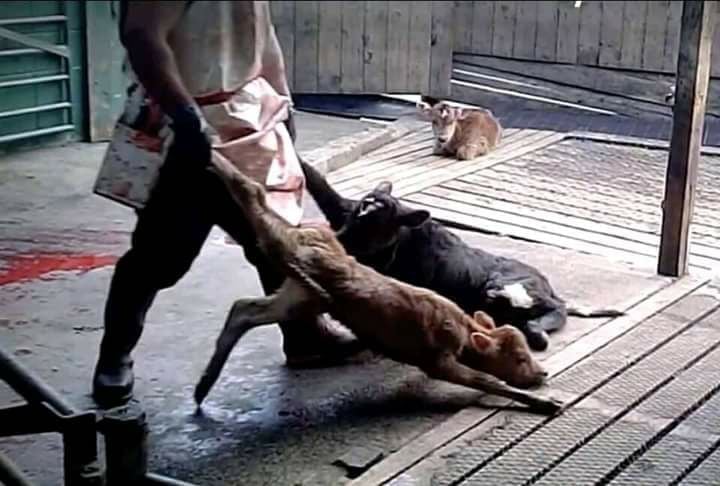
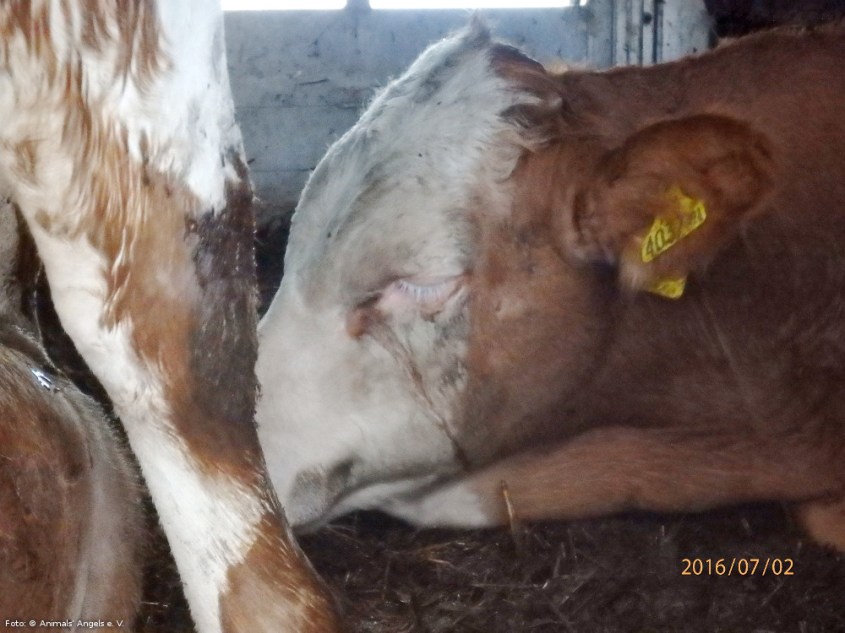
We accompany the young bulls from the Turkish border to their destination near Kirsehir in Central Anatolia.
During a longer stop, we watch them roll their tongues in despair – a typical sign of hunger.

Many thirstily lick the metal walls of the truck.
The last time they could have a drink at the Turkish border. The last time they ate was in Bulgaria.
That was more than a day ago.

Many of the calves have clearly sunken flanks.

Erwin, who previously blinked at us with one eye (his other eye is infected, maybe from a blow or kick in the eye while driving), is now curled up on the dirty floor, exhausted.
Overall, according to our observations and calculations, they are at least 19 hours without water and almost 30 hours without food before they arrive exhausted at their destination the next morning.

There they will be fattened for the next few months before they make their last trip to the slaughterhouse.

This madness has to stop!
Animals are sentient beings – and the EU recognizes them as such.
But only on paper, because Erwin and all the other ‘farm animals’ do not notice any of this on the transports.
This transport also shows once again that control outside the EU is not possible.

Who on site is interested in whether the animals are loaded onto unsuitable vehicles?
Who will check and punish it accordingly? (!!!)

For us it is clear: The long animal transports to countries outside the EU must finally be banned!

With a detailed report on our observations on this transport, we continue to campaign for this export ban in the EU and its member countries.
Everything about our projects and missions: http://www.animals-angels.de
Time to Act: For a better law to protect animals during transport

https://www.animals-angels.de/neuigkeiten/beitrag/kaelbertransport-aus-der-eu-in-die-tuerkei-tiere-19-stunden-ohne-wasser-30-stunden-kein-futter.html

And I mean…The transports to third countries make up only a small part of the animal transports in the EU.
Because the grievances are particularly large and the images of them are particularly cruel, they keep making headlines in the media.

And yet! The animals also suffer terribly when they are transported within the EU and even within Germany.
Four million cattle, pigs, sheep and goats are transported from the EU to third countries every year and slaughtered there. These include 70,000 cattle from Germany.

For the entire EU, the numbers increase to 360 million pigs, cattle, sheep and goats and four billion poultry – every year!
In Germany, only one percent of all animal transports are checked on the road.

Article 3 of the EU Animal Transport Regulation states:
“Nobody may carry out or arrange for an animal to be transported if the animals could be injured or unnecessarily suffered in the process.”
Everything fits on paper!
The EU legislation has no time limit for Animal transport. With certain breaks, animals are allowed to go endlessly
be transported.
For horses and pigs, for example: 24 Hours of travel – 24 hours break in a supply station – 24 hours of travel – etc

That might still be bearable if the animals had as much space as in a stable.
But a full-grown fattening pig has to get by on half a square meter in a truck; 1.6 square meters are provided for a cattle.

Animal welfare organizations have been calling for the requirements to be tightened and the transport time to be strictly limited to eight hours for years.
We still remember the 1.2 million votes of EU citizens for the 8hours campaign in 2014.
But the EU Commission has so far shown no willingness to realize it.

We have had anger about animal transport with Brussels for at least 10 years.
It is too naive to believe that it can be done with good words and showing them what is going on.
Those responsible know exactly what is going on during animal transport – they just don’t care.

It is an incredible crime, it is barbaric to treat animals like that in the 21st century and to preach an animal transport law that is not even worth the paper.
Worse still, we are allowing an incompetent, disinterested oligarchy to work in the service of the meat and dairy industry and constantly refuse to respect EU citizens’ desire for better animal welfare.

My best regards to all, Venus

Animal welfare transport regulation of the EU is not able to protect animals

The animal welfare organization Animals ‘Angels published its report “100 Reasons to Revise Council Regulation EC 1/2005 on the Protection of Animals during Transport” this week.

The report combines Animals ‘Angels’ more than 20 years of experience in animal transport controls in the EU and worldwide with the results of scientific studies.

In “100 Reasons” Animals ‘Angels specifically uncovered the weaknesses of the EU Regulation (EC) No. 1/2005 on the protection of animals during transport and made over 100 specific demands” on the revision of the regulation that is currently taking place.
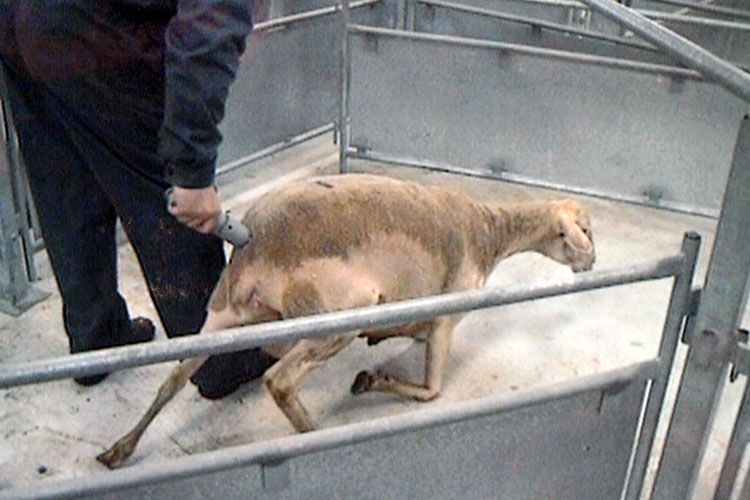
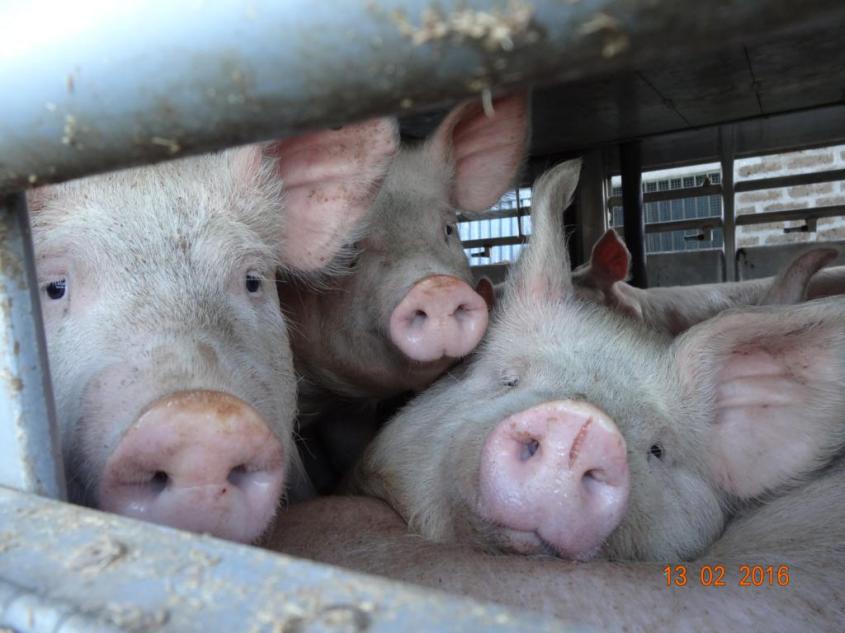
The existing EU laws are unable to adequately protect the animals being transported.

The main flaw of the regulation: it does not impose an absolute limit on the transport time.
Their implementation fails on many levels. Despite positive approaches, it cannot curb the suffering of the animals on the transports.

In 22 chapters, Animals’ Angels criticized parts of the ordinance on topics such as transport duration, loading density, transportability, temperature limit values, official controls, the sanction system and much more.
In addition to scientific findings, the report draws on countless empirical examples and first-hand information from actors such as veterinary and police officers, transporters, animal owners and drivers.

Animals’ Angels calls for a detailed revision of Regulation (EC) No. 1/2005 with the aim of ensuring the best possible protection for the animals being transported.

But above all, Animals’ Angels is calling for a rethink.
EU Treaties recognize animals as sentient beings.
It is high time to do justice to this recognition.
The revised Regulation on the protection of animals during transport has to reflect a morally acceptable treatment of animals that respectfully considers their life and their suffering as sentient beings.

Continue reading “Animal welfare transport regulation of the EU is not able to protect animals”

Behind The Scenes – Trailing Live Exports.

Other videos; older, but has anything really changed ?

Ask the EU.

We did UK horse export investigations during 2001 -2004; see more on it and our other live export work at:

Its Time To Decide – The World Wants Change; So Lets Have It !

Regards Mark

Enjoy – something good for a change – one of the best bands ever !:

Live at Ally Pally, London:

Indonesia: Dog meat traders to be prosecuted for the first time in Indonesian history after truck with 78 dogs intercepted by police.

WAV Comment – Hopefully that will start to send a message. A major turning point as the article says.

August 23, 2021

Dog meat traders to be prosecuted for the first time in Indonesian history after truck with 78 dogs intercepted by police

Humane Society International

KULON PROGO, Indonesia—Indonesia’s first ever prosecution of dog meat traders under animal health laws is set to go ahead, officials have confirmed, in what the country’s animal campaigners hope will be a major turning point in the demise of the brutal trade. Kulon Progo District Police intercepted the gang in May this year when they were illegally transporting 78 dogs bound and gagged in the back of a truck. The dogs were headed for slaughter for human consumption throughout Central Java. This was the first ever such interception in Indonesia, and followed discussions with the Dog Meat Free Indonesia coalition which campaigns for a nationwide ban on the brutal trade.

The Kulon Progo District Attorney’s Office confirmed in a statement its intention to prosecute the traders who are considered to have violated Article 89 of Law No. 18/ 2009 concerning Livestock and Animal Health, with a maximum penalty of five years imprisonment or a maximum fine of 1.5 billion IDR (over $100,000 USD); as well as Article 140 of Law No. 18/ 2021 on Food, with a maximum sentence of two years imprisonment or a maximum fine of 4 billion IDR (over $275,000 USD).

The dogs in this case had all been stolen from the streets where pet dogs freely roam. Many were still wearing collars whilst bound on the truck to be transported from West Java on a gruelling journey lasting more than 10 hours. The traders illegally crossed provincial borders with the dogs, with no record of the animals’ disease or vaccination status. For example, Solo is an epicentre for much of Java’s dog meat trade, with 85 street stalls selling dog meat, brutally slaughtering an estimated 13,700 dogs each month in filthy makeshift slaughterhouses with no way of ensuring the meat is safe for consumers.

The Dog Meat Free Indonesia coalition has conducted numerous investigations over the past several years, exposing the brutal reality of the trade in dogs destined for human consumption. Every month, tens of thousands of these dogs are taken from the streets and illegally transported in many parts of Indonesia. Many die during this horrific journey from heatstroke, dehydration or injuries inflicted during capture and transport. Those who survive are taken to slaughterhouses where they are beaten and strung upside down to bleed out while still conscious or beaten to death in public markets in some parts of the country, in full view of other terrified dogs who await their turn.

Lola Webber, Humane Society International’s dog meat campaign director, who is based in Indonesia, says: “There are thousands of dog trucks across Indonesia just like this one, illegally transporting terrified and disease-vulnerable dogs across provincial borders to slaughterhouses and markets. We have documented first-hand dogs being slaughtered in public alongside myriad wild and domestic species in markets in North Sulawesi. It is easy to see how this trade is not only utterly brutal, but also the perfect breeding ground for the next serious public health disaster. New pathogens could jump to humans in a number of ways – a dog trader wounded during the day’s slaughter, a local consumer eating cross-contaminated dog meat bought at a nearby stall, or a tourist breathing in microscopic blood droplets as they sight-see the markets. So in the face of such an obvious public health and animal welfare risk, it is good to see what we hope to be the first of many interceptions and prosecutions. We cannot allow the dog meat trade to thrive across Asia if we hope to protect the public from future pandemics.”

“We commend Kulon Progo District Police for setting such a good example for the rest of the country by taking direct action, and we congratulate Karanganyar and Sukoharjo Regencies and Salatiga City for explicitly prohibiting the trade in their jurisdictions on the grounds of public and animal health and welfare. We now need to see the same level of activity across Indonesia to stamp out this cruel, dangerous and unwelcome trade.”

Dog meat trade facts:

  • Opinion polls show that only a small minority of Indonesia’s population (4.5%) consume dog meat and only a very small number of those involved in the trade rely on dog meat as their main source of income.
  • Rabies is a grave concern in Indonesia, with just eight out of 34 provinces declared rabies-free. Provinces such as Central Java are jeopardising their rabies-free status by allowing dogs of unknown disease and vaccination status to be imported from surrounding provinces to supply dog meat, despite opinion polls showing just 3% of Central Javans consume it.
  • The illegal movement of large numbers of dogs of unknown disease status into densely populated areas contravenes rabies control recommendations by leading human and animal health experts including the World Health Organization, the Pan American Health Organization, and the Food and Agriculture Organization of the United Nations as well as national disease prevention legislation.
  • There are widely publicised reports directly linking the dog meat trade to rabies transmission in many parts of Asia where the dog meat trade operates, including Indonesia. Scientific reports have documented rabies-positive dogs being sold and slaughtered in markets in Indonesia, as well as in restaurants and slaughterhouses in China and Viet Nam.
  • Dog theft for the meat trade is a serious problem in Indonesia. Dog Meat Free Indonesia has interviewed many residents who have described their terrifying ordeal with armed traders stealing their pets at night. Despite the obvious law-breaking, thefts are rarely taken seriously by law enforcement, so the thieves go unpunished.
  • Across Asia, opposition to the dog and cat meat trades is increasing, with an ever-growing number of countries and territories (Taiwan, Hong Kong, the Philippines, Thailand and two major cities in mainland China) banning the trade in and slaughter, sale and consumption of dogs.
  • The Dog Meat Free Indonesia campaign has received support from global and Indonesian superstars including a letter to President Joko Widodo in 2018 calling for action to end the country’s dog and cat meat trades signed by Simon Cowell, Sophia Latjuba, Yeslin Wang, Nadia Mulya, Lawrence Enzela, Cameron Diaz, Chelsea Islan, Ellen DeGeneres and Pierce Brosnan.

Download Videos of Solo Investigations

Download Photos of Solo Investigations

ENDS

Regards Mark