WAV Comment – Hopefully that will start to send a message. A major turning point as the article says.
August 23, 2021
Dog meat traders to be prosecuted for the first time in Indonesian history after truck with 78 dogs intercepted by police
Humane Society International
KULON PROGO, Indonesia—Indonesia’s first ever prosecution of dog meat traders under animal health laws is set to go ahead, officials have confirmed, in what the country’s animal campaigners hope will be a major turning point in the demise of the brutal trade. Kulon Progo District Police intercepted the gang in May this year when they were illegally transporting 78 dogs bound and gagged in the back of a truck. The dogs were headed for slaughter for human consumption throughout Central Java. This was the first ever such interception in Indonesia, and followed discussions with the Dog Meat Free Indonesia coalition which campaigns for a nationwide ban on the brutal trade.
The Kulon Progo District Attorney’s Office confirmed in a statement its intention to prosecute the traders who are considered to have violated Article 89 of Law No. 18/ 2009 concerning Livestock and Animal Health, with a maximum penalty of five years imprisonment or a maximum fine of 1.5 billion IDR (over $100,000 USD); as well as Article 140 of Law No. 18/ 2021 on Food, with a maximum sentence of two years imprisonment or a maximum fine of 4 billion IDR (over $275,000 USD).
The dogs in this case had all been stolen from the streets where pet dogs freely roam. Many were still wearing collars whilst bound on the truck to be transported from West Java on a gruelling journey lasting more than 10 hours. The traders illegally crossed provincial borders with the dogs, with no record of the animals’ disease or vaccination status. For example, Solo is an epicentre for much of Java’s dog meat trade, with 85 street stalls selling dog meat, brutally slaughtering an estimated 13,700 dogs each month in filthy makeshift slaughterhouses with no way of ensuring the meat is safe for consumers.
The Dog Meat Free Indonesia coalition has conducted numerous investigations over the past several years, exposing the brutal reality of the trade in dogs destined for human consumption. Every month, tens of thousands of these dogs are taken from the streets and illegally transported in many parts of Indonesia. Many die during this horrific journey from heatstroke, dehydration or injuries inflicted during capture and transport. Those who survive are taken to slaughterhouses where they are beaten and strung upside down to bleed out while still conscious or beaten to death in public markets in some parts of the country, in full view of other terrified dogs who await their turn.
Lola Webber, Humane Society International’s dog meat campaign director, who is based in Indonesia, says: “There arethousands of dog trucks across Indonesia just like this one, illegally transporting terrified and disease-vulnerable dogs across provincial borders to slaughterhouses and markets. We have documented first-hand dogs being slaughtered in public alongside myriad wild and domestic species in markets in North Sulawesi. It is easy to see how this trade is not only utterly brutal, but also the perfect breeding ground for the next serious public health disaster. New pathogens could jump to humans in a number of ways – a dog trader wounded during the day’s slaughter, a local consumer eating cross-contaminated dog meat bought at a nearby stall, or a tourist breathing in microscopic blood droplets as they sight-see the markets. So in the face of such an obvious public health and animal welfare risk, it is good to see what we hope to be the first of many interceptions and prosecutions. We cannot allow the dog meat trade to thrive across Asia if we hope to protect the public from future pandemics.”
“We commend Kulon Progo District Police for setting such a good example for the rest of the country by taking direct action, and we congratulate Karanganyar and Sukoharjo Regencies and Salatiga City for explicitly prohibiting the trade in their jurisdictions on the grounds of public and animal health and welfare. We now need to see the same level of activity across Indonesia to stamp out this cruel, dangerous and unwelcome trade.”
Dog meat trade facts:
Opinion polls show that only a small minority of Indonesia’s population (4.5%) consume dog meat and only a very small number of those involved in the trade rely on dog meat as their main source of income.
Rabies is a grave concern in Indonesia, with just eight out of 34 provinces declared rabies-free. Provinces such as Central Java are jeopardising their rabies-free status by allowing dogs of unknown disease and vaccination status to be imported from surrounding provinces to supply dog meat, despite opinion polls showing just 3% of Central Javans consume it.
The illegal movement of large numbers of dogs of unknown disease status into densely populated areas contravenes rabies control recommendations by leading human and animal health experts including the World Health Organization, the Pan American Health Organization, and the Food and Agriculture Organization of the United Nations as well as national disease prevention legislation.
There are widely publicised reports directly linking the dog meat trade to rabies transmission in many parts of Asia where the dog meat trade operates, including Indonesia. Scientific reports have documented rabies-positive dogs being sold and slaughtered in markets in Indonesia, as well as in restaurants and slaughterhouses in China and Viet Nam.
Dog theft for the meat trade is a serious problem in Indonesia. Dog Meat Free Indonesia has interviewed many residents who have described their terrifying ordeal with armed traders stealing their pets at night. Despite the obvious law-breaking, thefts are rarely taken seriously by law enforcement, so the thieves go unpunished.
Across Asia, opposition to the dog and cat meat trades is increasing, with an ever-growing number of countries and territories (Taiwan, Hong Kong, the Philippines, Thailand and two major cities in mainland China) banning the trade in and slaughter, sale and consumption of dogs.
The Dog Meat Free Indonesia campaign has received support from global and Indonesian superstars including a letter to President Joko Widodo in 2018 calling for action to end the country’s dog and cat meat trades signed by Simon Cowell, Sophia Latjuba, Yeslin Wang, Nadia Mulya, Lawrence Enzela, Cameron Diaz, Chelsea Islan, Ellen DeGeneres and Pierce Brosnan.
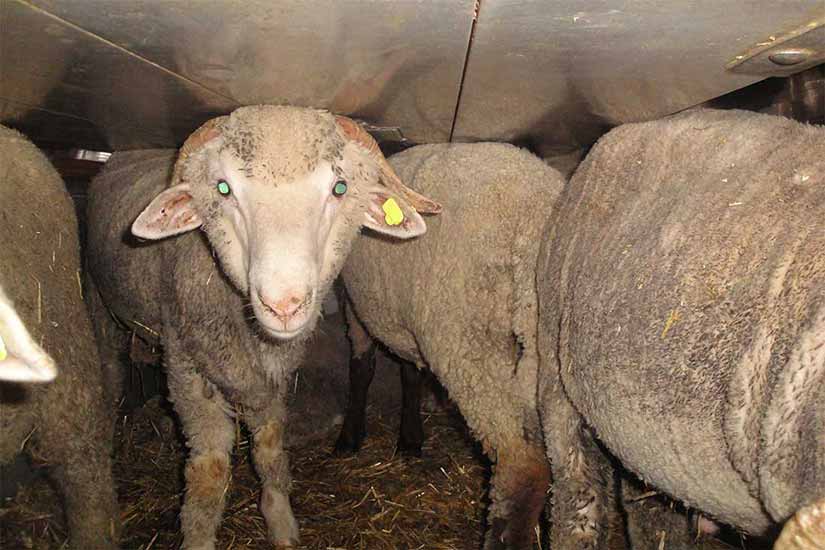
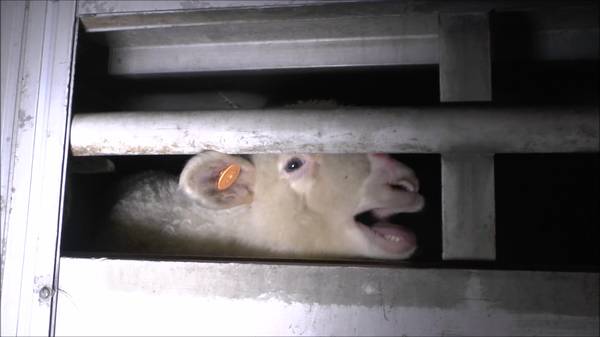
Animals ‘Angelsinspects animal transports during a heat wave in northern Greece. We meet an “old friend” – a transporter whom we have already observed repeatedly – and in whose transports we have repeatedly found the same violations: too many lambs cooped up on four loading areas, at far too high temperatures.
We are all the more astonished at the first moment when he drives over the Romanian border to Greeceearly in the morning.
The temperatures are still mild and the lambs are only loaded on three loading levels (as has been required by the veterinary offices in Romania since this year).
The lambs have more space above them, which should allow better air circulation. But appearances are deceptive.
Our faint hope is soon shattered when the truck pulls off the freeway and parks on a remote street. The drivers load additional animals in a stall.
The Romanian lambs are meanwhile being squeezed into four loading levels to make room for the new animals.
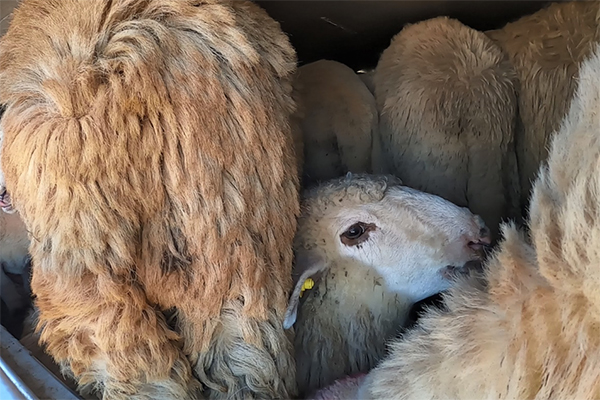
The Romanian arrangement is thus boldly bypassed, much to the suffering of the lambs: They are now standing close to each other on four loading levels, can neither lift their heads nor reach the drinking troughs, let alone regulate their body temperature. They suffer from enormous heat stress.
If this is not enough, the newly loaded sheep, lambs and goats are not even identified as required by law.
We immediately alert the authorities to have the transport checked.
After countless calls, he is stopped by the police at noon. Shortly afterwards, two vets arrive. We describe the incidents, the control by the authorities is quick.
Because at temperatures of 38 ° C, the confinement in the vehicle quickly becomes a death trap for the animals.
We accompany the animals to their destination and measure up to 40 ° C outside temperature.
The heat, combined with the narrowness, the accumulation of ammonia gases and the lack of access to water must have been unbearable for Raluca, Barbala and their fellows.
Our complaint is already written. We are committed to ensuring that this carrier is no longer allowed to transport animals.
And I mean…Always new tricks to cover up their criminal offenses; this only shows that no transport company is afraid of the law.
A fine is useless, it could be paid from the postage account.
Professional ban for the transport company, that could be useful
It’s been a while since you’ve heard from us, we know. There have been a few changes!
The current pandemic has made it challenging to hold the usual events we do, as we can’t accurately predict how many people will turn up, or if the event will be able to go ahead. We are still here though, monitoring situations at home and abroad, commenting on media and industry stories regarding yet more atrocities for Australian animals, this time in Indonesia, Jordan, and UAE.
Our other focus is on the up-and-coming federal election, now expected to be sometime from March to May 2022. We have also been busy developing new branding to maximise our effectiveness (it’s been over a decade since the last one.)
Some of you will be aware that I moved to Tasmania in May this year. I am still doing the job I have been doing for the past nine years, as much of the work is done remotely, and what can not be, is undertaken by our volunteers. The committee has some fresh blood, and a new president, Rebecca Tapp. They are dynamic, enthusiastic, and have some great ideas. Our committee continues to meet regularly, and I join in via Zoom. Here is a photo of some orphaned lambs I recently adopted – Buster and Lucille. Unlike the tens of millions of other Australian sheep, they will have a long, safe, and happy life.
Sadly, we will not be holding a quiz night this year, as the planning is quite demanding and time-consuming, and with the situation in other states thanks to the Covid-19 delta strain, we just feel everything is too unpredictable to hold that event this year.
However, the Human Chain will go ahead on Sunday 17 October, unless there are any restrictions on attendance numbers or social distancing, in which case we will also opt to defer for a year. We have had over 1200 people attend in the past, which is not ideal for an event that requires a Covid Plan. Please keep an eye on your emails and our Facebook page for any last-minute changes.
You might have read in the media over the past month, that there have been yet more ESCAS breaches reported in Indonesia (thanks PeTA), Jordan (the one Middle Eastern country we export to where a royal family edict requires animals slaughtered in government facilities to be stunned first), and UAE (thanks Animals Australia for both exposés). There is also another complaint lodged by Animals Australia regarding cattle being leaked from the supply chain in Indonesia, but this has not yet been reported on by the media.
In this, the tenth year of reporting and investigations of Exporter Supply Chain Assurance System (ESCAS) breaches, STILL we are seeing animals mistreated and being channelled out of supply chains and treated horrifically at slaughter. Surely, after a decade of ESCAS, a one-strike rule should apply to any country not strictly adhering to ESCAS regulations.
Fremantle has been quiet, with only four ships in total docking since the northern summer trade moratorium started on 1 June. Three ships loaded feed and continued to Portland, and one loaded cattle bound for Mauritius. Liberal MPs have recently called for a dramatic shortening of the 1 June to 17 Sept moratorium on live animal exports to the Middle East, stating that it can be done successfully. This is despite records from the last monitored shipment that left in that season, showing that sheep were subjected to days of wet-bulb temperatures of up to 34 degrees (sheep suffer from heat stress once wet-bulb temperatures exceed 28 degrees). So despite their claims that “only” 28 sheep died and the voyage was, therefore, a success, one can be assured that every single animal on board suffered to some degree with wet-bulb temperatures at that level.
In 2018, the Labor Party pledged to phase out live sheep exports in under five years. We urge you to contact your Labor MP and ask them to not go back on their word. With a federal election now expected in 2022, please remind them of what their constituents want – an end to all live export, but at the very least, a cessation of the live sheep trade; this would likely also see an end to any cattle being sent by sea to the Middle East, as it would no longer be cost-effective. Whilst the aim of our organisation is to end the trade in all live animals, we see the live sheep trade to the Middle East as the priority, both because of the length of the voyages, and the lack of stunning in all but one destination country. Animals Australia has made it easy for you – just click here.
We are so grateful for your unwavering support, which has been vital in helping us continue our important campaign to end the live export trade. Though we have experienced a drop-off in donations and memberships due to the global pandemic, we have a solid, strong community that stands steadfast and determined to stop this trade once and for all. Thank you for everything you do for the animals.
If you are unsure of whether your membership or monthly financial pledge is still current, or you wish to recommence membership or monthly donations or increase or decrease the amount, feel free to get in touch with me at info@stopliveexports.org and I can assist. If you know you are no longer a member or have never been a member, sign up here, and if you wish to start or recommence monthly donations, which greatly help us fund our ongoing campaign, sign up at GiveNow here. You can pay via credit card or direct deposit; weekly, monthly, quarterly, or annually, or make a one-off donation.
WAV Comment – 9/8/1 – from what we know, the Elbeik was on fire for around 24 hours. Very fortunately, there were no animals on board. Hopefully the vessel has now met its demise, considering it is around 54 years old. It should have been scrapped years ago, along with the animal transportation business it supports. Karma.
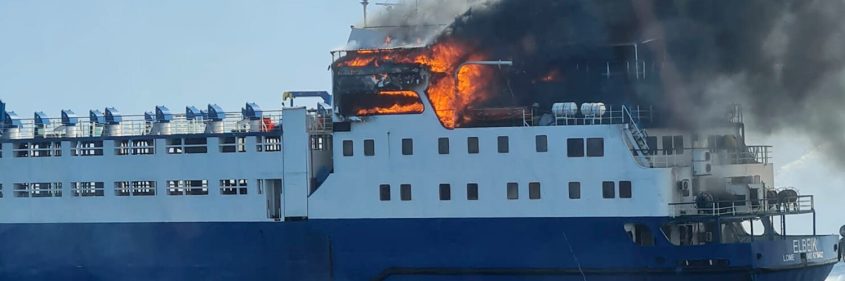
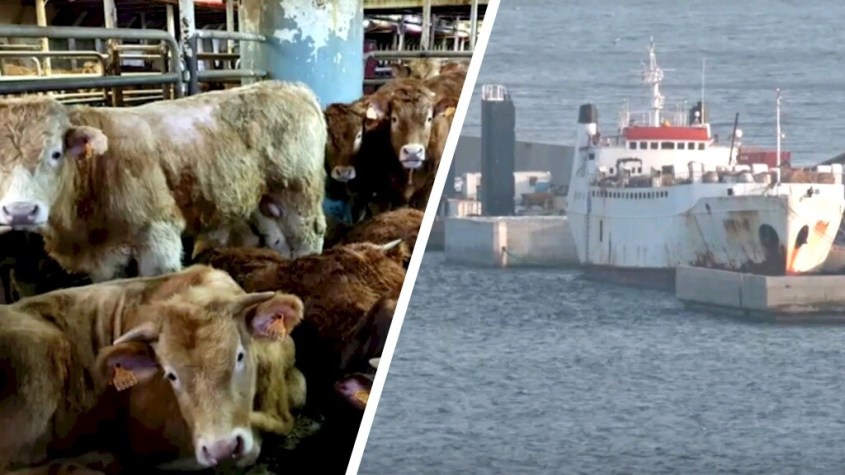
An infamous livestock carrier has met a fiery end off Spain. The Togo-flagged Elbeik caught fire off Tarragona port on Friday afternoon.
All crew were evacuated from the burning ship and many firefighters were deployed to help put the blaze out. After 24 hours the fire on the 54-year-old vessel was extinguished. It is thought the blaze started in a lifeboat and quickly spread with the vessel widely tipped to be a total loss. Fortunately, there were no animals onboard – the ship had been waiting to take on its next shipment of livestock.
The 1967-built ship made headlines last December when 1,800 cattle onboard had to be put down after a horrendously long journey.
The Animal Equality Foundation has requested today, Saturday, August 7, the Ministry of Agriculture, Fisheries and Food to withdraw the authorization to operate from Spain to the ship Elbeik.
Yesterday, August 6, a fire broke out on the Elbeik ship, in ballast, at the Tarragona anchorage, in which the crew members were evacuated by the Salvamar Fomalhaut. There were no animals because they hadn’t loaded yet.
In this new letter, Animal Equality attaches the report “78 EU-Approved Animal Transporters” by the Animal Welfare Foundation published in June 2021, which details the legal situation of ships operating from Europe.
Spanish ports receive and issue certificates for ships that are even on the black list of the Paris Memorandum and have been sold, such as Alfarouk, Anakin, Nabolsi I, Bruna, Spiridon II, Julia AK, Queensland and even the Elbeik ship.
The last, Elbeik, was expelled from the ports of the Paris Memorandum due to multiple functional defects and sanctions and due to poor condition, while in Spain, despite serious defects and despite the results of the inspection by the Guardia Civil on March 19, 2021, the ship was allowed to continue its operations.
Animal Equality has already denounced that in the case of maritime transport the infractions are mainly centered on the poor condition of the boats and the lack of care for the animals:
– The transport of animals is allowed to boats not considered suitable, of very low quality. 55% of approved livestock vessels in the EU are licensed in countries blacklisted by the Paris Memorandum of Understanding (MOU). They are considered high risk in relation to maritime safety.
– Transport of unfit animals, which are injured or sick. Animals are loaded even when inspections reveal deficiencies and violations of regulations are not penalized.
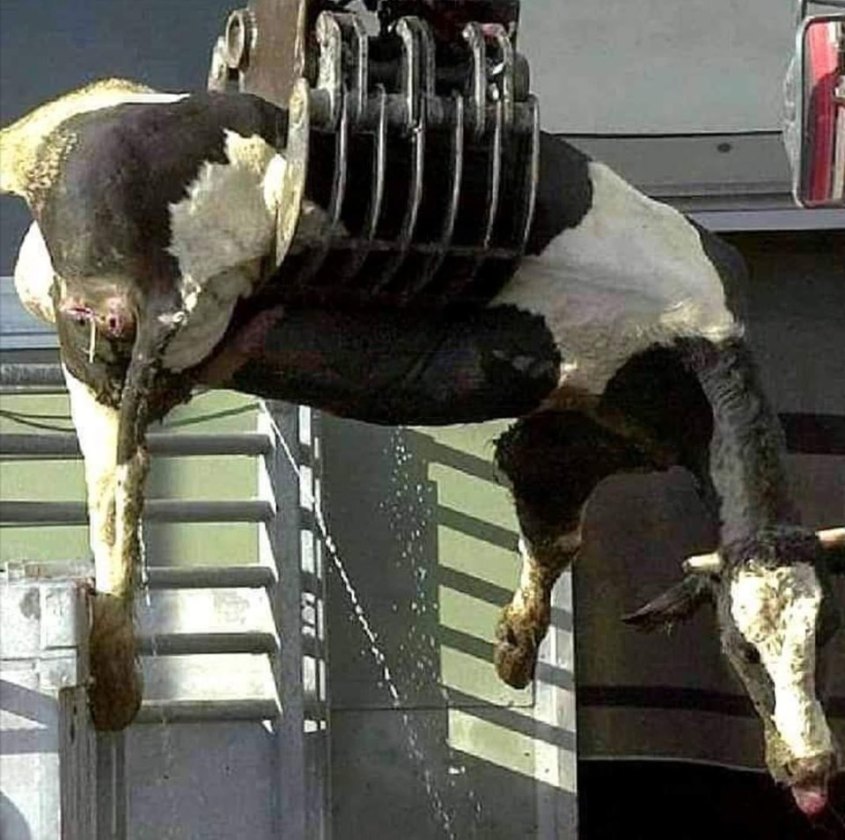
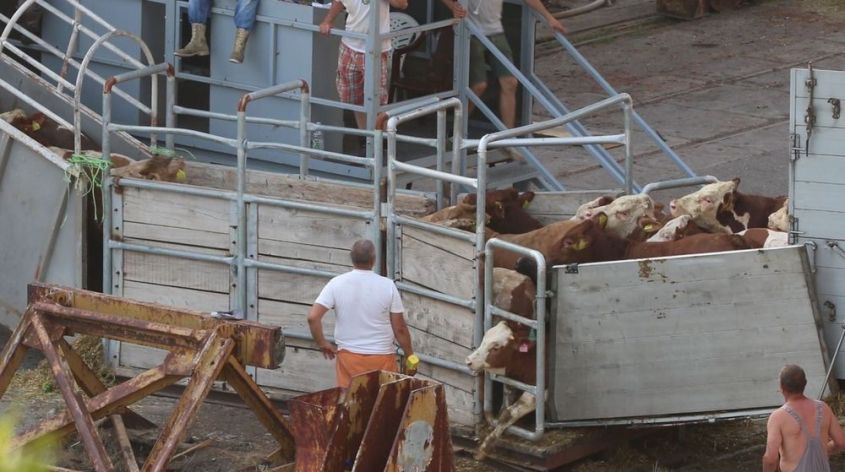
– The loading of the animals is carried out with violence. They are beaten, kicked and dragged even using electric batons. In cases where the animal cannot move, it is tied by one leg and lifted by a crane.
– Long waits before boarding under extreme temperatures and in the sun. European regulations and the Plan of the Ministry of Agriculture, Fisheries and Food state that a trip should not be authorized if the temperature inside the vehicle exceeds 30ºC and it must even be sanctioned if it exceeds 35ºC.
These infractions, on the part of transport companies, have been taking place for the last 30 years in Spain. While some Member States have improved their application, others, including Spain, continue to give little importance to enforcing Regulation 1/2005.
“t is very serious that after the latest scandal involving the Elbeik ship, the Government did not withdraw its permission to continue operating from Spain. The ship’s fire is a new example of the danger posed by these vessels and of the need to ban the export of animals” (Silvia Barquero, Director of Animal Equality)
Animal Equality has a petition underway to ban the export of live animals that has already been signed by more than 45,000 people.
And I mean…No! It is not only “very serious” that mobile scrap still gets permission and is used for animal transport.
It is a crime committed by
-corrupt, unscrupulous politicians
-from the animal transport mafia
-of the authorities and the judiciary who look the other way
and, in this case, very likely insurance fraud.
Report from the german organizationAnimals ’Angels e.V. August 5, 2021
Heat wave in Greece – temperatures up to 47 ° C – but animal transports continue!
An Animals ‘Angels team is on site on the motorway in the north of the country.
Many of the sheep and lambs are transported from Romania.
The government there recently instructed the veterinary authorities not to have these animals transported on four levels, but on a maximum of three levels.
This should give them more space and allow the air to circulate better. So much for the theory.
But the new decree is apparently ignored by the transporters, because it endangers their profits.
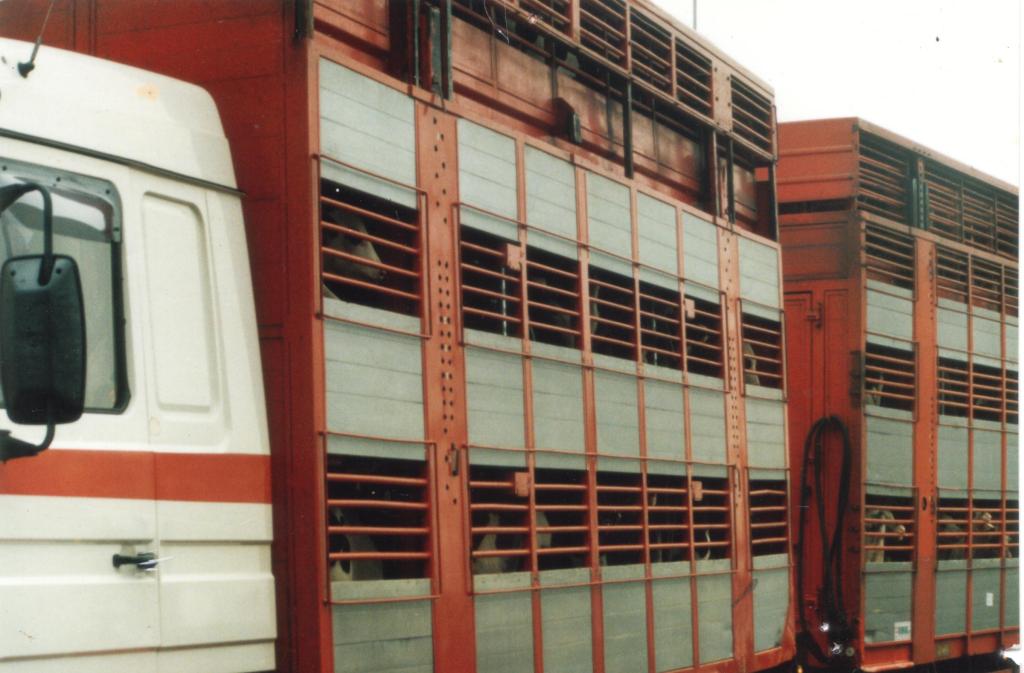
In the truck with three levels, we therefore see far too many animals – even more than usual – squeezed together.
They are so close that they can hardly move anymore. In addition, some of the vehicles are not built to transport the animals on less than four levels.
As a result, most of the water troughs are not at the level of the animals. Many cannot get to them and remain thirsty in the extreme heat.
Ok, we will take back our own control and stop live animal exports !
In 2019 over 1,600,000,000 (One thousand, six hundred MILLION) ovines (sheep), bovines (caattle), poultry and pigs were transported alive across the European Union and to non-European (EU) countries. Journeys can last several days or even weeks, exposing animals to exhaustion, dehydration, injury, disease and even death.
Routinely, investigations on live transport both via sea and road find serious breaches of the utter farce which is known as Council Regulation 1/2005 (Transport Regulation); supposedly for the ‘protection’ of animals in transport.
Official audits confirm NGOs’ investigations findings. In 2017, 2018, and 2019, DG SANTE audited 11 Member States and visited Turkey: shortcomings with different levels of severity were found in the majority of them concerning transport both via sea and by road. For instance, the audits carried out in France, one of the biggest EU exporters of live animals, concluded that “the measures in place do not provide satisfactory assurances that exports of live animals operate smoothly and that these journeys are correctly planned and carried out in line with animal welfare requirements to prevent causing unnecessary pain, suffering or injury to the animal”. Particularly problematic is when trucks and vessels load very young animals that are still on milk dietary (unweaned animals).
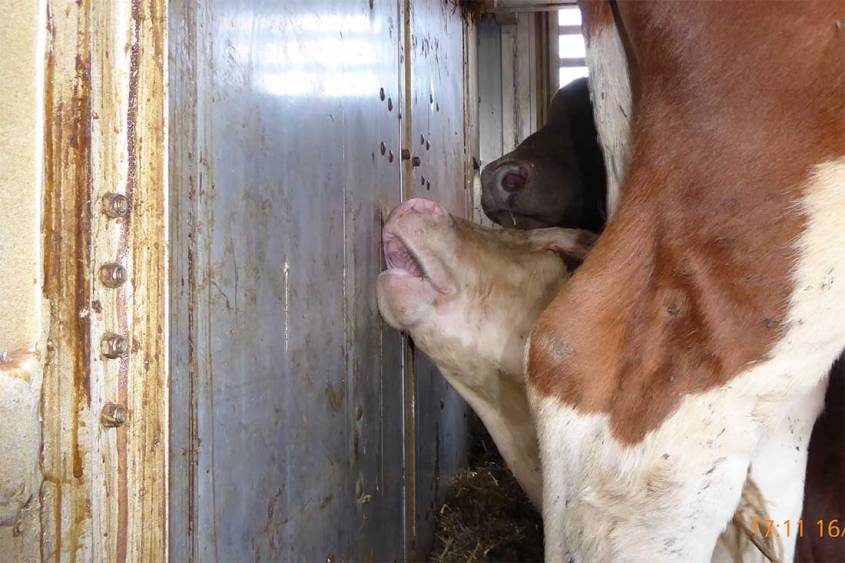
WELFARM and AWF followed a truck loaded with 155 young calves being transported from Poland to the Franco-German border. Investigators found that the animals were kept in the truck for 20 hours, with no breaks or unloading and no access to water and food, in clear breach of the Transport Regulation detailed above.
It’s even worse in the summer months, when temperatures as high as 30 degrees Celsius create hellish conditions, causing even more health and welfare problems to the animals being transported. Over this period the demand for live animals by third countries increases due to the ‘Festival of Sacrifice’. As a consequence, large numbers of live sheep and cattle are sent to the Middle East via European ports (Cartagena, Midia, Rasa, and Sete are the major exit points for live export) and the Bulgarian/Turkish border, which remains a hotspot with crisis happening every year.
In the past years we have seen the ineffective EU Commission sending letters to the ineffective EU competent authorities warning them about the risk for animal welfare related to the high temperatures. With some exceptions, its calls remained unheard over the years.
The case of Romania is emblematic: a DG SANTE audit revealed how poorly the country is implementing the EU Transport Regulation, moreover it exported 70,000 sheep in disregard of legally binding animal welfare standards and the call of the then EU Commissioner V. Andriukaitis to stop that operation.
In addition to these long journeys impacting the animals welfare, they’re also badly treated by operators with inadequate equipment. Recently we witnessed what happens if one of these ships perishes: the death by drowning of both animals and human beings. Also, organisations have shown that upon arrival in third countries, the majority of the animals are handled in a brutal manner and slaughtered without stunning.
A recent investigation revealed the cruelty with which French farm animals are treated when they reach slaughterhouses in Morocco and Lebanon.
The transport of live animals to non-EU countries is particularly problematic. Besides the problems at departure, the animals have to endure very long journeys in countries where they cannot benefit from the legal protection they receive in the EU. As confirmed by the cases of the animals on board the vessels Karim Allah and Elbeik, very often contingency plans do not exist, regardless they are mandatory by law.
Despite the verdict by the Court of Justice of the European Union (CJEU) establishing mandatory compliance with the EU Transport Regulation provisions until final destination regardless of this being outside the European Union, it is impossible to monitor such a compliance.
De facto this trade continues regardless of the lack of information by Member States and the EU Commission on whether these countries implement EU animal welfare transport standards
Photo – Mark (WAV)
SO, WHAT DOES THE PUBLIC THINK?
Live animal transport emerged as one of the top concerns for EU citizens “for the future of agriculture, fishery and food production in Europe”, in the latest Future of Europe survey.
This was also demonstrated by the success of Eurogroup for Animals’ StopTheTrucks campaign in 2016-2017, which exceeded its target of one million signatures.
POLICY – CURRENT STATE OF PLAY
To allegedly ‘protect the welfare of animals during transport’, the EU set a series of requirements in the Transport Regulation, which entered into force in January 2007 and applies to all the transport across and from the EU. As recently confirmed by the EU Parliament Implementation Report on this matter, the Transport Regulation is outdated and very unevenly implemented.
To shed light on this situation, in 2020 the EU Parliament set up a Committee of Inquiry on live transport to assess the responsibilities of the EU Commission and the EU Member States in implementing and enforcing the Transport Regulation.
Meanwhile, the EU Commission announced the revision of the Transport Regulation in the framework of the EU Farm to Fork Strategy. To make sure the revised text will enhance animal welfare and support the building up of a sustainable food production chain, Eurogroup for Animals wrote a White Paper ‘Live animal transport: time to change the rules’. The paper provides the EU Commission and the EU co-legislators with species- and category-specific provisions and ad-hoc definitions, to ensure the welfare of all the animals transported alive.
Photo – Mark (WAV)
What we (Eurogroup for Animals) want.
Eurogroup for Animals urges the EU to use the revision of the Transport Regulation to introduce both a ban on the transport of live animals outside its borders, and stricter species-specific requirements for transport across the EU (including species-specific maximum journey times).
Additionally, the EU should work on a strategy to shift from live transport to a trade of meat and carcasses as well as genetic material.
What we at World Animals Voice (WAV) want.
At the very least, a complete end to all animals being exported live outside of EU borders.
A priority to be made for trade in carcass meat ‘on the hook, not the hoof’ to take maximum priority over live animal transport to be initiated by the EU.
A one off maximum journey time throughout the EU of 8 hours or less to be applicable for ALL species destined for live transport.
Major emphasis to be placed on a shift throughout the EU for meat and carcass to replace the transport of live animals. Empahasis t be made on plant based foods.
A much needed major review of the paltry regulations defined in Reg 1/2005 on the so called ‘protection’ of animals in transport for animals undertaking an8 hour one off maximum journey.
Guarantees from the EU that all member states will comply with animal transport regulations. Words are not enough, we want actions – member states such as Romania, who are shown to be non compliant, must be banned from the transport of all live animals.
Now that the UK has left the EU (Brexit), and become an independent state once again able to make its own legislation free from the EU, it is currently progressing with an introduction of formal parliamentary legislation which will end the export of live animals for slaughter and further fattening.
Like all UK parliamentary actions, the draft legislation passes between the House of Commons and the Lords, and is scrutinised and amended, until both houses are happy with the draft, which then moves to become formal legislation (law).
Obviously, these actions take time, but they are currently in progress, and soon we hope to announce that the UK has formally stopped the live exports of animals.
But the work for campaigners does not stop with this, which will be seen as a massive victory for animals. Under the EU, live farm animals will continue to be exported. So major attention and actions have to be give to EU campaigner friends to get the ban across the EU.
Pipe dreams ? – maybe, but then a few years back if anyone had said that there was going to be an EU act to ban the caging of farm animals, they would have been laughed out of town. Now it has formally been decided n by the EU, so the hope for very serious actions re live animal transport in Europe is another major campaign. We are confident; like the cages, the EU has to listen and act to its citizens if it wants to retain any credibility.
Like the cage ban, for live exports, it’s time to evolve !
Overcrowded, sick and without water, what are the most common violations of the transport of animals in Spain?
Animal Equality has submitted allegations to the Royal Decree on the transport of animals prepared by the Government.
The main demand requested is the detention of the export of animals outside the European Union for not being able to guarantee their welfare.
The transport of injured or sick animals, in obsolete boats, long waits under extreme temperatures or lack of water or food, are some of the infringements of EU legislation that are observed regularly.
Animal Equality has just presented allegations to the Public Consultation Proposal prior to the modification of the Royal Decree on Animal Health and Protection Standards during Transport called by the Ministry of Agriculture, Fisheries and Food.
We reviewed with the executive director of the Animal Equality Foundation, Silvia Barquero, what is the current situation of animal transport and what are her allegations.
The main one of these requests is to stop the trade and export of live animals outside the EU.
Reports from the European Commission,Animal Welfare Foundation investigations and their own, certify that the application of European legislation on the protection of animals during transport has been completely deficient in Spain for 30 years.
“We cannot be in the queue on an issue like this,” says Barquero.