Austrian public broadcaster sheds light on live transport at prime time
18 January 2021
Four Paws
Cattle crammed into trucks, brutally loaded onto ships, slaughtered while fully conscious – disturbing images of animals being transported to the Middle East, including those of Austrian cattle in Lebanon, as well as interviews with Eurogroup for Animals’ members Four Paws and Animals International are featured in a new documentary which was broadcasted at prime time on Austrian television.
The documentary feature called “Animal transports – cheap meat at any price?” took a critical look at this much-discussed topic last Wednesday, 13 January 2021. The documentary looks at the crucial questions of how and why these animals from Austria are transported thousands of kilometres, also addressing the crux of why domestic calves are exported at all, while most of the veal for Austrian gastronomy is imported. In the past, these questions have triggered not only a public but also a political debate in Austria.
Every year about 45,000 calves are exported from Austria to countries such as Italy or Spain, while about 100,000 animals are imported to Austria to end up on the plates of local restaurants.
In Vienna, 60 per cent of the Wiener Schnitzel consists of imported veal. Most of it comes from the Netherlands and is produced under conditions that would not be permitted in Austria. This, however, is not comprehensible to the consumer as most menus are not transparent. A schnitzel from Austrian veal would cost 50 cents more, and 20 cents more for pork.
Last night, 17/1, I completed and submitted to the UK government our responses regarding the proposed ban on live animal exports from the UK. Almost immediately I was informed that our submission had been accepted by the Ministry and would join others for the final review.
Our response, once completed, comprised of 41 written pages of written text; without any photos but with video footage and also links to past media coverage on specific issues.
I am not going to show our responses here on this site; as some of the data relates to specific investigative operations undertaken in the past, which we do not want to make them public. In the information provided to the government we have requested that our information be kept private and confidential; only to be reviewed by the government; and not openly presented to wider audiences as it could have been. Again, we have had confirmation of this request.
As you probably know by now; live animal transport is my major ‘hate’ in this animal abuse world. It has taken me personally 32 years of activism to get to the situation we are now at – and with stories from 32 years stored away (in my still functioning head I think ?) there is a lot of info to look back at and select as important. Saying that, the aim of the response to the government is to get a ban on live animal transport this year; and I feel confident / hopeful that in the end we will succeed. I know that several other personal contacts in the ‘animal rights world’ are also making submissions at this time; so hopefully we can look for change in the near future.
As a member state of the EU; and despite the vast majority wishes of most UK citizens for a ban to be introduced for many years; the British government was banned (by the EU) from introducing a ban on live animal exports. As the UK broke away from the EU completely at the end of last year (2020); it can now take back its own control and have its own laws on issues – and the potential ban on live transport is one of them.
This does not mean that we now forget the tens of thousands of animals in transport across the EU; and the fact that many of them are evading EU regulations to end up being ritually slaughtered (against EU legislation) in places such as Lebanon and Libya. We will continue to work as always with our EU friends to ensure that combined, we get the very best we can for the animals.
I am now glad that task is completed and I can get onto to other things.
Regards Mark
Here are just a small selection of photos I have taken on this disgusting business over the years:
Below – exposing French calves being imported into the UK (a scam) to obtain compensation payouts by the UK government which should have only been made to British industry only ! – things turned real nasty after I took this photo; we caught them and they did not take kindly – but then few things in life are ever perfect !
Above – British calves being exported by the Dutch to the ‘crate’ systems.
Below – Mrs ‘Plod’ makes sure I behave !
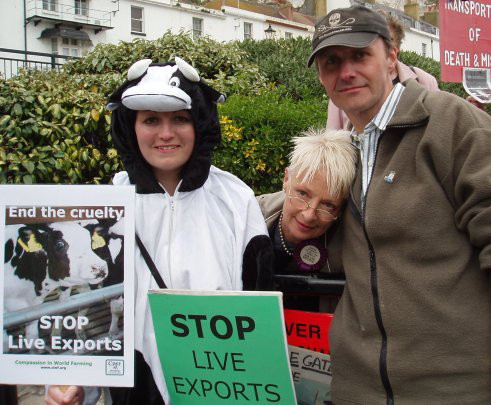
Above – Protesting against the calf trade with Ellie and Liza
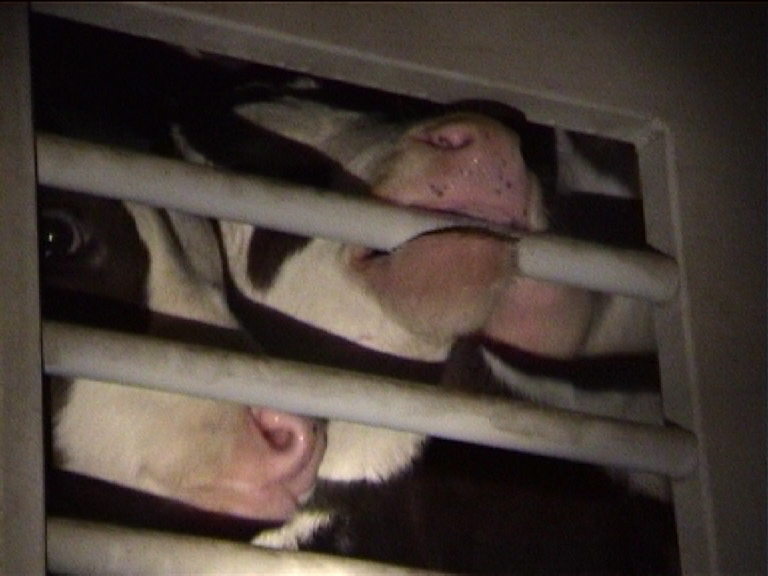
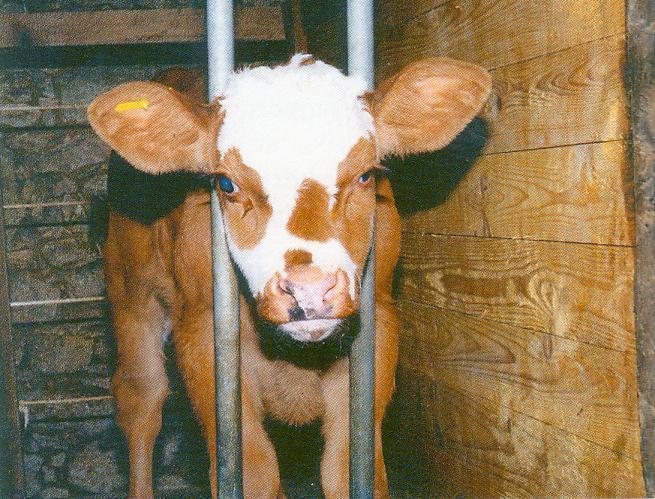
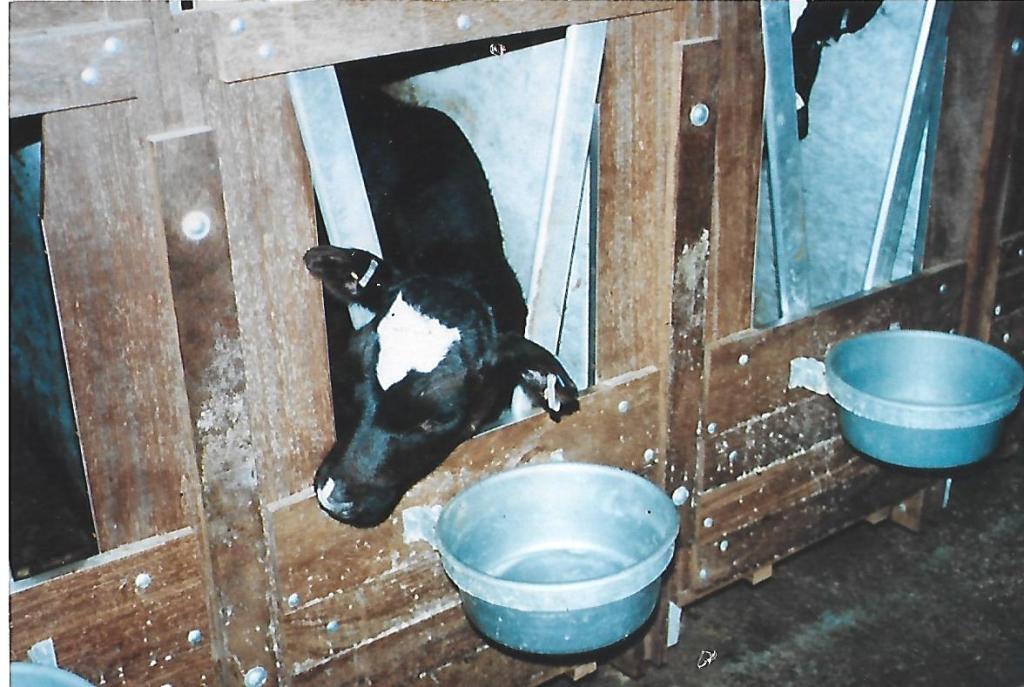
Above – and below – Crated calves in the EU
‘Eyes on Animals’ – NL.
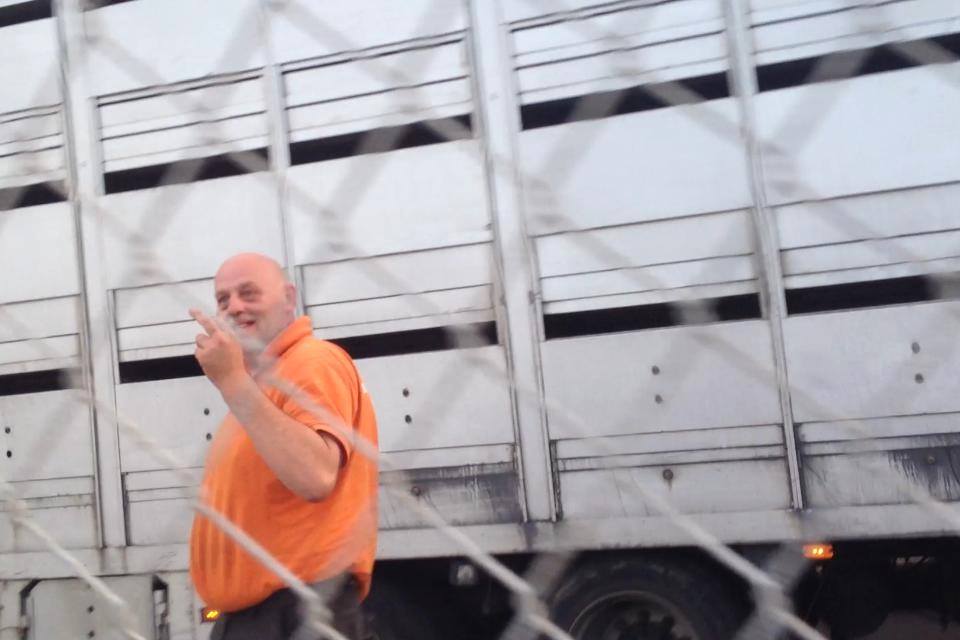
Above – A transporter driver sends us his best regards !
New Viva! Research: 9 in 10 Britons want intensive farming methods BANNED
Our new poll reveals that an astounding 85 percent of peoplewant to introduce an immediate ban on intensive factory farming.
We also found that some 31 percent of Britons are set to slash their meat consumption or go vegan in 2021 amid Covid-19 concerns. Londoners are set to make the biggest change to their diets – with around 44 percent vowing to avoid animal products.
As you know, 3 in 4 of the world’s new or emerging infectious diseases such as coronavirus come from animals – mainly from factory farming and the trade in wildlife. This means that 57 zoonotic diseases were responsible for an estimated 2.6 billion cases of human illness and 4.4 million deaths in 2020.
But the good news is, experts agree a vegan diet can help people lose weight, reverse diabetes, lower their blood pressure and cholesterol, reducing their risk of severe Covid-19
World Health Organisation epidemiologist Professor Mary-Louise McLaws has warned of the danger of live animal exports, saying the trade poses the risk of a “ghastly” disease outbreak.
The disease expert, who is a Professor of Epidemiology at the University of New South Wales and Health Emergencies IPC Preparedness, Readiness and Response to COVID-19 Advisor to the World Helath Organisation, was interviewed on Channel 10’s The Project and had some strong words to say about the continuation of live animal exports.
While people and animals across the world continue to suffer the impacts of the devastating COVID-19 pandemic, scientists and academics are increasingly drawing attention to humanity’s broken relationship with nature and animals as a major cause for alarm and risk of future pandemics.
A recent report from the United Nations warns that a stream of diseases can be expected to jump from animals to humans in coming years, while the global demand for meat — and the resultant deforestation and intensification of animal farming — continues.
The live animal export industry forces animals into close confinement in unnatural surroundings which can lead to extreme stress, injury, sickness and death. Live export ships are essentially factory farms on water — taking animals like cattle and sheep from open pastures and confining them to pens for weeks at a time, exposing them to cruel conditions including extreme heat and rough seas.
Even during this time when so many people’s movement is restricted to try to stop the virus from spreading, this industry has been allowed to continue to operate — to the detriment of both humans and animals.
As if there weren’t enough reasons to end the cruel trade… not only does live export condemn millions of animals to terrible suffering, but, according to this disease expert, it’s putting human lives at risk too.
Well here we are on the last day of 2020. It is a cold and frosty day here in Southern England; but loads of good, healthy food has been put out this morning for all our feathered friends; and it is a pleasure to see them, all popping down for something to eat before they fly off to who knows where.
News years eve is also a time for reflection on the past year. Both Venus and I are very strong supporters of direct action; you have to take to the streets and elsewhere to get your message across. Never rely on government actions as the only route to change, it wont happen; they have to be shamed into taking action for the better, which takes years !. This year (2020) especially has been a very testing time for millions of good people all over the world. You have been limited in the actions you can take in being a voice; for example; anti export friends I have here in England have been threatened (for breaking Covid regulations) with £10,000 fines if they take to the docks and try to do what they have always done; that is trying stop live animals from being exported to their deaths in Europe. In a lot of ways, Covid has worked very well for the authorities; we are all being confined and controlled in what we are allowed to do; the big brother is watching you (via your mobile phones ?) and we (WAV) are probably being monitored by ‘the better people’ from somewhere; so that in the future we can have god knows what thrown back at us should things ever get ‘legal’.
Change for the better has only ever happened because good people have got up off their butts and made it happen. Please remember that for 2021; when you take actions in defence of the animals.
I started to write here about our live export campaign in England; as a bit of an example; but have decided not to include here as it is too long and possibly irrelevant.
People take action for animals in many, many different ways. You do what you feel is right with you and what suits your personal situation best. This year especially, we have to remember Regan Russell Search Results for “regan russell” – World Animals Voice who paid the ultimate price for her dedication towards making a better life and less suffering for animals.
Just like our own dear Jill here in England who lost her life on 1st February 1995 Search Results for “jill phipps” – World Animals Voice whilst trying to be a voice for young, exported calves out of Coventry airport; by an arms dealer and convicted drug smuggler. 26 years on in 2021, Jill is quite rightly still remembered in ceremonies at the ports and elsewhere; a young, beautiful and compassionate girl taken out by those involved in a trade which involves so much suffering and abuse by those who do not deserve it.
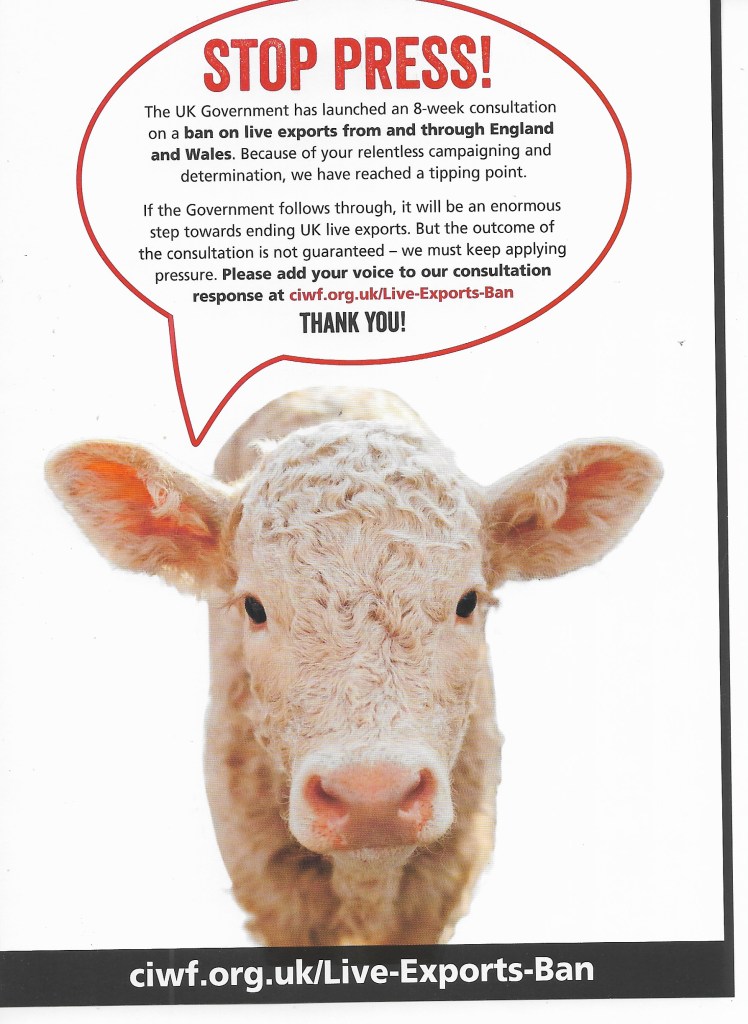
I still find it hard to watch these – but now finally at the end of 2020 / Jan 2021 we in the UK are contributing to a government consultation which will hopefully see and end to all live animal exports from the UK. Jill would have been so receptive of the fact that finally, after so many years of campaigning; we can now hold the UK government to account and make the demands of stopping this disgusting business.
There is a common theme which runs though all of this; Jill was taken from her mum Nancy all those years ago; the baby calves she was trying to protect had already been taken from their mums; the tiny hens in intensive systems are taken from their mums and immediately murdered; or put into the abusive cages for yet more egg production. Baby pigs are taken from their mothers at such an early age; baby dogs in puppy mills; baby lambs hauled off to the slaughterhouse ready for Easter; all issues that go back to youngsters being taken away from the only security they have, and need most at the time when they are separated.
I wish you all a great 2021 and hope that all your dreams and wishes come to fruition. The fight for giving animals a voice and stopping cruelty the world over is down to the majority now – and we are a majority; getting bigger and stronger every day in direct opposition to the abusers. They are going to be named and shamed; exposed for all the abuses they undertake. We at WAV are committed to that for sure.
The animal rights / welfare issue is growing massively; even in places which you never really expect it to. It is now so easy to become Vegan and throw all cruelty associated with old diets and the cruel methods associated with their production out of the window.
More than many things; I now think the good folk of the USA will see so many positives for animals and the environment after January 2021. The same with the Amazon; the lungs of our planet. Many excellent groups who fight tooth and nail for better things; the right things; have been shot down at every step by the problems that live in the White House and other government buildings the world over. Personally; I think 2021 will be a new year and much better year for you all. ‘Keep on keeping on’ as we say here ! – for animals and their environment.
Knowledge, publicity and the use of the internet is something that is with so many of us now each and every day – we can inform the world of abuses and negative issues the same day; and bring about necessary change – that is what 2021 brings for you. So use it; there is no need for abuse or bad name calling of the abusers; we all hold feelings that may resemble that in our own consciousness; but try to keep polite and respectful regardless; lets continue to get friends by exposing what the others do – and turn any acquaintances they may have away from them.
I just feel that 2021 is going to be a good year for us; 2020 was different but so many positives have happened that the only way now is up; a continuation from 2020.
This track has nothing to do with this post; but we need to go out of the year with a bang; I loved the original Quo (there is only the original); and I and many friends enjoyed following and watching them all over the UK. It starts off a bit slow, but as a guitar head, I can tell you it just gets better; so take time out and enjoy.
Well, I am making really positive progress with our contribution to the UK government to try and get live animal exports stopped from the UK in 2021. With 30 years experience on the issue there is a lot to detail about non compliances with (EU) regulation 1/2005 on which UK law is also based
Check it out yourself – pick your language and format links here:
So much has been written for submission; that today I have passed a copy of the current draft to a great campaigner friend for extra safekeeping, just if the situation ever arose where a recovery copy needed to be retrieved. Hopefully it will never be needed, but always better to be safe !
Also, I had contact today from Lesley who runs ‘Eyes on Animals’ in the Netherlands. https://www.eyesonanimals.com/ – they specialise in undercover work involving live animal transports specially; I gave Les some info, and she has promised to give a contribution to the UK government consultation be the new year, which is great news.
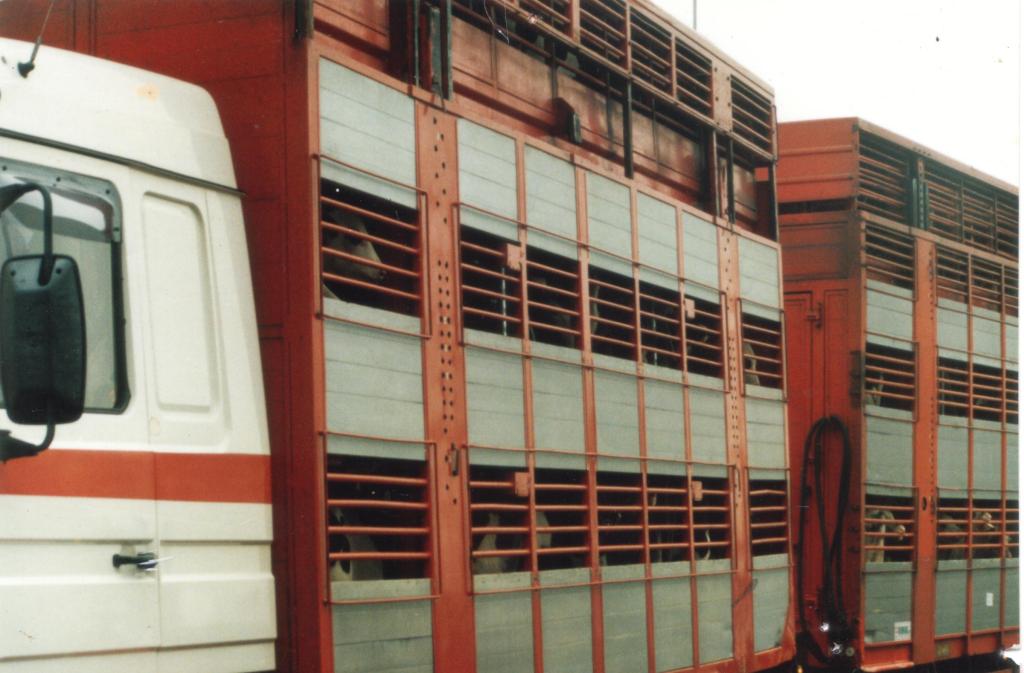
Between us, we are really concentrating on the importance of access to animals throughout their journey time on the road; and also the use of sealed box trailers which are just no good at all for livestock transporting; but which are used in the EU and by Dutch livestock hauliers coming to the UK to buy up British animals for slaughter within the EU.
We are covering all issues in the consultation, but are especially concentrating on driver access, or lack of, to sick and injured animals, and also the use sealed box trailers. Below is a photo by friend Val Cameron of one of these Dutch box trailers arriving at an English port. Would you believe that this is full of live sheep ? !!
Many would consider it a refrigerated trailer as usual; but it is not; it IS full of live sheep going for export to Europe !
Photo – Val Cameron
Another photo we took managed to get a very rare glimpse in through the rear of one of these trailers, showing all the sheep inside (as viewed from the rear). We are not currently publishing this.
These sealed box trailers are used quite a lot here in England by the Dutch – so we consider that these trailers are very bad for animal access and ventilation; plus they have no signage to say they are carrying live animals – which is illegal and against the EU regulation ! – and so hopefully we may get their usage stopped. Time will tell us in 2021.
Regards Mark
Lesley has produced the following reports on these issues in the past – check them out.
New investigation shows horrifying footage of Turkey slaughterhouse in France
17 December 2020
L214
Today, Eurogroup for Animals’ member L214 reveals the immense suffering endured by turkeys at a slaughterhouse in Blancafort, Cher in France. Every day, 15,000 turkeys are killed in this slaughterhouse, which flagrantly violates the regulations governing the killing of animals.
The investigation which was initiated thanks to a whistleblower working at the facility, shows that as soon as the turkeys arrive at the slaughterhouse, they are hung upside down with their legs stuck on hooks. This causes acute pain to these birds, which can weigh up to 15 kg. The turkeys are forced to hold their heads up in order to not to scrape the ground. The chain they are hung on goes on for more than 50 metres, making these animals being suspended conscious for more than 2 minutes. These are two flagrant violations of the regulations.
L214 reports that they asked the veterinary services and the Ministry of Agriculture to close this slaughterhouse. Yet, the prefecture only told the slaughterhouse to put in place “immediate corrective measures and a comprehensive structural action plan” within the next 48 hours. In a public petition, L214 calls for the immediate closure of the slaughterhouse as “no immediate corrective can correct such structural problems”.
“A life of suffering, from their first to their last day” – L214 makes a case against the poor rearing and transport conditions of the turkeys:
Before arriving to the slaughterhouse in Blancafort, the turkeys are raised in huge buildings, piled on top of each other and fertilized for 3 to 4 months. In these intensive farms, there are on average 8 turkeys per square metre, often plucked or injured. They will never walk on grass, but wade through the excrement that accumulates over the weeks.
During the transport, L214 reports that they are piled up in crates that are far too small. Their heads touch the ceiling, which does not allow for good ventilation and can cause heat stress for the turkeys as they struggle to breathe and lower their body temperature. Some turkeys get their heads stuck when they are unloaded from trucks, and the slaughterhouse bins are filled with the bodies of those that did not survive the transport.
In view of the flagrant violations of the regulations, L214 reported to have filed a complaint against the transporter and the Blancafort slaughterhouse for animal abuse.
WAV Comment: The UK has now left the EU and is currently undertaking a consultation with overwhelming support to ban all live exports. EU member states are not allowed to ban the trade despite the wishes of most EU citizens. Does then dog wag the tail or the tail wag the dog ? – does anyone learn that all the time they continue to be in the EU, this abuse will go on ?
How many years have we sat and watched all this ? – that the EU is not enforcing its own regulations. And how many more years are Europeans still going to be shown and told this ? – the UK left the EU a year ago – now it is taking action for a ban. Learn European nations – learn !! – if the EU allows you to that is !
Dutch cattle documented going for slaughter in Lebanon and Libya
11 December 2020
Animals International
New investigation conducted by Eyes on Animals – in collaboration with Eurogroup for Animals’ members Animals International, Animal Welfare Foundation and Welfarm – exposes the fate of Dutch cattle exported out of the country’s territories.
Footage shows Dutch males bovines – born on dairy farms in Dwengeloo and Friesland – in a slaughterhouse in Beirut: animals were tied up, forced to fall down, and then had their necks sliced open, back and forth, with a knife. Moreover, this summer, Dutch cattle have been seen while loaded onto a vessel at the port of Cartagena (Spain) heading to Libya for slaughter.
Despite the good will of the Netherlands in not approving extra-EU export of its animals for slaughter, the export towards other Member States often means that these Dutch animals end up in non-EU abattoirs.
Slaughter conditions in Lebanon and Libya are known to be brutal. After having been transported for many days, very often animals arriving in the non-EU port, are in such bad condition that they cannot walk anymore. They clearly become unfit to continue their journey. However, instead of being euthanized, they are hoisted alive via a chain tied to one leg to be unloaded by the vessel. Once in the abattoirs, animals are chased, jumped on, have their tendons slit and eyes poked in order to keep them to the ground, chain them, and then cut their throats while fully conscious and fully sensitive to pain.
Eurogroup for Animals is urging the European Commission to ban any export of live animals from the EU to non-EU countries and to favour the slaughtering of animals close to the place where they are born.
PLANS to ban the export of live animals from England and Wales for slaughter and fattening, which have been strongly supported by West Dorset MP Chris Loder, have been unveiled.
The plans were revealed by the UK’s environment secretary, George Eustice, in the start of a renewed push by the Government to strengthen the UK’s position as a world leader on animal welfare.
An estimated 6,400 animals were sent to Europe for slaughter in 2018, according to the Department for Environment, Food and Rural Affairs (DEFRA).
Mr Loder has worked closely with the RSPCA and the British Veterinary Association among others to (enable this to happen) and is urging as many people as possible to support his campaign by responding to the Government consultation.
In his speech in the House of Commons on October 23, during the second reading of the Animal Welfare (Sentencing) Bill, the MP demanded the house support and deliver the government’s pledge to end live animal exports – claiming that it was disgraceful that well cared for farm animals could be loaded on to a lorry and sent thousands of miles by land and sea to destinations as far as Libya and Lebanon.
Mr Loder said: “Today’s announcement is a victory for animal welfare. It is a direct benefit of Britain leaving the EU. It is the EU’s trading rules on the movement of animals, along with the lobby from the National Farmers’ union to continue live exports for slaughter and fattening, that has enabled this cruel practice for so long.
“Bringing an end to the unnecessary suffering of animals during transport is long overdue. Through my Animal Welfare Bill, which reaches the Committee Stage early next year, I hope not only to achieve tougher custodial sentences for those who inflict the worst kinds of cruelty on innocent animals; but also to deal with the cruelty that has been happening on a mass scale, such as with live animal exports.”
Live animals commonly have to endure excessively long journeys during exports, causing distress and injury.