
All photos – Mark (WAV)


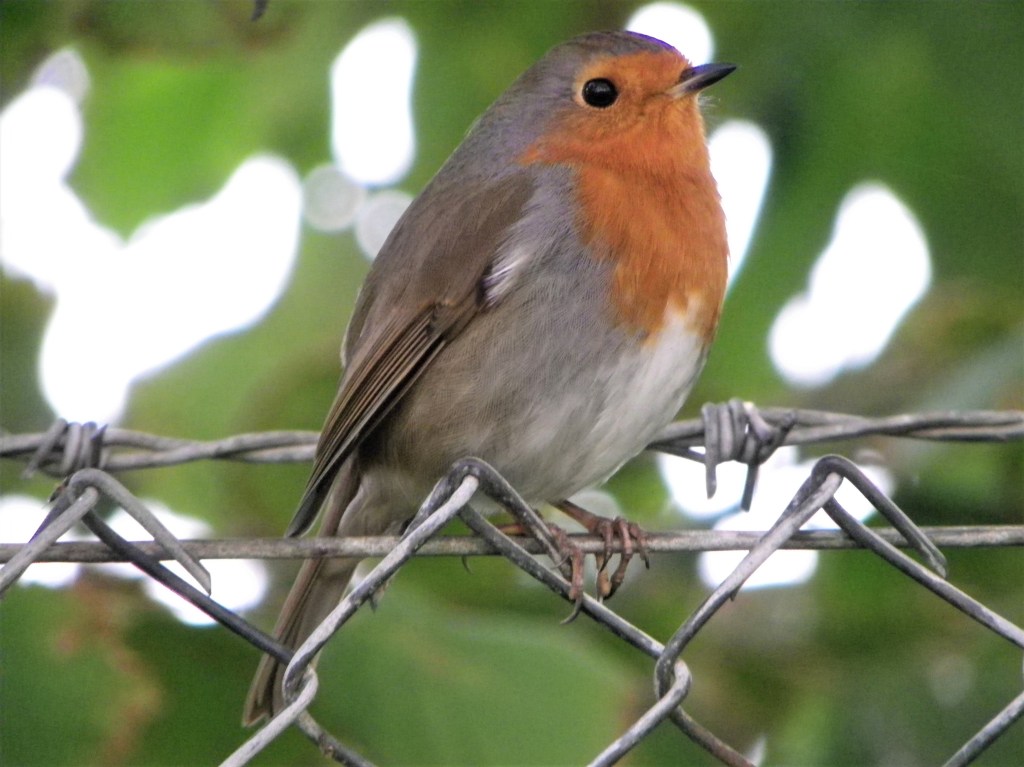
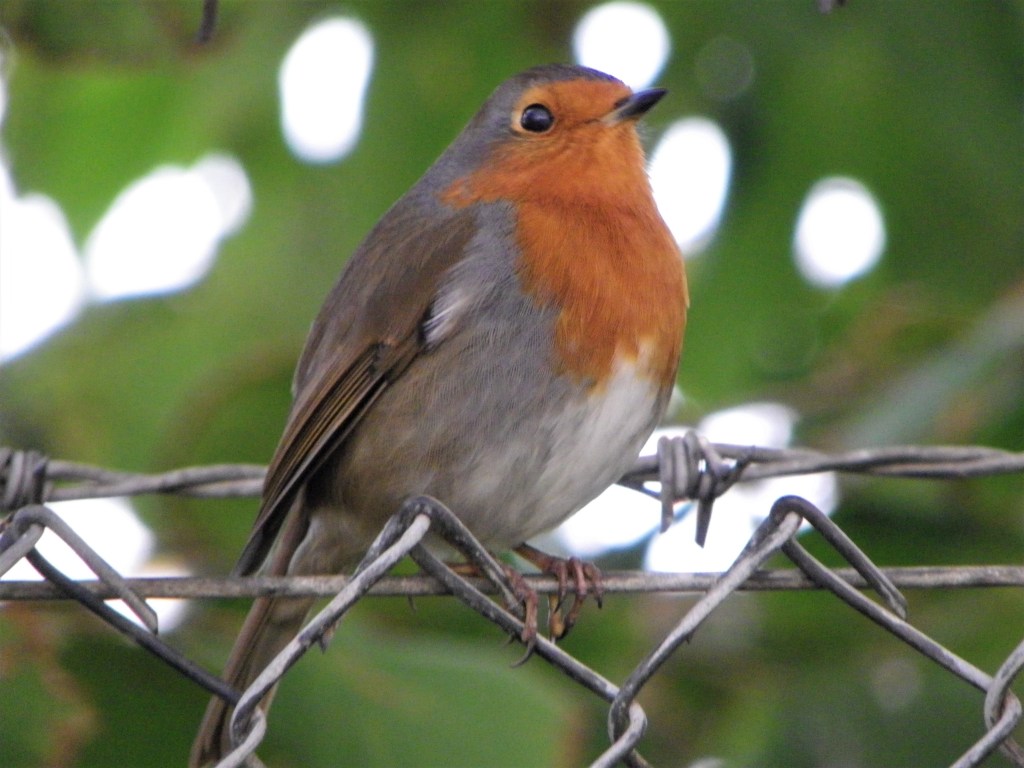

Regards Mark
All photos – Mark (WAV)
Regards Mark

An animal rights case could impact federalism and weaken the Constitution
A case before the U.S. Supreme Court could have surprising, and perhaps counterintuitive, implications for supporters of federalism and the long-protected ability of states and municipalities to regulate their own commerce and pass what is broadly known as “morals-based” legislation.
The nine justices on Oct. 11 heard arguments in National Pork Producers Council (NPPC) v. Ross, which centers around California’s Proposition 12, a law passed in 2018 with overwhelming support from voters of both political parties.
The law set minimum public safety and animal welfare standards for pork and eggs produced or sold within the state’s borders. Those requirements state that pigs used for breeding, egg-laying hens, and calves raised for veal must have enough space simply to turn around and extend their limbs. Proposition 12’s guidelines parallel those being implemented successfully by hundreds of restaurant, grocery and food companies, and by many farmers across the country.
Concern about welfare of animals that are destined for human consumption goes beyond that of the animals’ themselves. Many health experts have weighed in on the threat to human health posed by the extreme confinement of pigs. In a brief submitted to the court in the NPPC case, the American Public Health Association, Infectious Diseases Society of America, Center for Food Safety and others wrote that confining female pigs in crates causes them enormous stress, which in turn makes them more prone to disease that can be passed on to their piglets. The implications are quite real: Hundreds of thousands of Americans are sickened every year by contaminated pork.
Indeed, Proposition 12 specifically implemented those concerns, prohibiting sales — within the state — of specified farm animal products if the animals were raised under extreme conditions that are not merely “cruel,” but that state officials determine “threaten the health and safety of California consumers” by (for example) increasing the risk of “foodborne illness.” Some conservative-leaning states, it should be said, have banned gestation crates within their borders, including Ohio, Arizona and Florida.
However, some multinational pork companies are pushing back against the will of voters and have sued to overturn the law. Courts from Iowa to California have rejected those companies’ claims that states cannot set standards on products sold within their borders.
In the court of public opinion, the pork producers are hoping to capitalize on conservatives’ often reflexive antipathy to California’s progressive tendencies that often do infringe on free-market principles. But there is a vital element that some voices on the right appear not to have fully considered. If the court rules in the pork producers’ favor, it could wreak havoc on the Constitution’s federalist system of government and open the door for liberal activist judges to strike down dozens of state and local laws across the country that are based on values that many conservatives claim as their own.
The longstanding state power to advance public morals, including preventing animal cruelty, traditionally has included the power to keep immoral products out of the marketplace as well. The Supreme Court long has respected the “State’s broad powers to regulate commerce and protect the public environment” and the “right to maintain a decent society.” (Paris Adult Theatre I v. Slaton.) If the court were to curtail California’s exercise of its traditional morals-based lawmaking power in this case, that restriction would also strip other states of this authority.
Existing laws that could be jeopardized by NPPC v. Ross include those regulating the sale of liquor, blocking trafficking in stolen goods, banning the sale of fetal tissue, outlawing prostitution, and limiting gambling.
Conservatives can debate the merits of such laws, but we can agree that these issues should remain at least partially in the purview of state and local governments. Notably, Proposition 12 does not attempt to project California’s moral views out-of-state, and is consistent with the federalist principle of states and municipalities setting laws that are right for their own communities. Blocking this ability would open the door for politicians and bureaucrats in Washington to fill the void with one-size-fits-all mandates, effectively emboldening the federal government to impose its own value judgments.
The Founding Fathers intended for states to retain extensive power and to not cede all of it to the federal government, including the authority to regulate commerce within their own borders. If the Supreme Court sides with the pork producers in NPPC v. Ross, this constitutional principle would be dramatically weakened.
Regards Mark


WAV Comment – A brilliant day for US activists. And the same day that Ag Gag is kicked into the dust. Great that this means activists can enter facilities if they are getting evidence of animal abuse and cruelty. Congats to all !
Animal Rights Activists Found Not Guilty After Rescuing Pigs From Smithfield Factory Farm
Wayne Hsiung said his and and Paul Darwin Picklesimer’s animal rescue trial is “a matter of conscience”
Two animal rights activists who rescued pigs from a Smithfield meat factory farm have been acquitted after standing trial in the US.
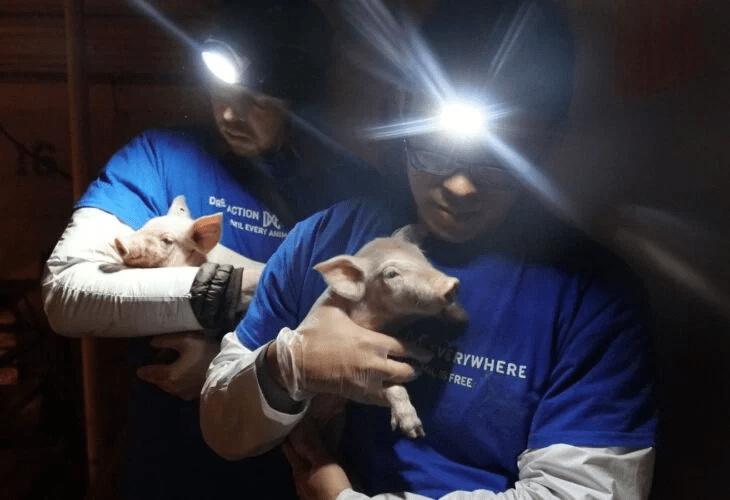
Wayne Hsiung and Paul Darwin Picklesimer, who filmed themselves taking two sick piglets from a Utah farm in 2017, were facing burglary and theft charges. If found guilty, they risked a prison sentence of five years each.
On Saturday night, the jury unanimously found them not guilty. Activists said the trial has set a “powerful precedent” for the right to rescue animals.
Hsiung, an attorney who represented himself, told the jury in his closing statement: “I don’t actually want you to acquit us on a legal technicality. I want you to acquit us as a matter of conscience. There’s a big difference between stealing and rescue.”
The rescue
In 2017, Hsiung and Picklesimer entered Circle Four Farms in Utah. The farm is one of the United States’ largest pork producers, processing one million pigs a year. They were investigating the use of gestation crates, which Smithfield promised to ban back in 2007.
When they entered the farm, they saw “row after row” of the cages. These two foot by seven foot metal stalls offered the pigs no room to turn around. The animals could spend up to five years of their life in them while pregnant.
The two pigs they rescued, later named Lizzie and Lily, are still alive today. Hsiung previously said in an interview that the pigs were ill and close to dying when they found them.
The trial
Hsiung and Picklesimer filmed the conditions on the farm, but the footage wasn’t allowed to be used in the trial due to the fact that it may have caused “horror” to the jury.
The activists claimed this was a violation of their constitutional rights and is part of a broader pattern of undue corporate influence.
Hsuing previously stated that the FBI, dozens of agents, and attorneys tried to prosecute the case “for years.” This is despite the fact that the commercial value of each piglet was around $42.20. The FBI were sent to raid sanctuaries in search of Lily and Lizzie after they were rescued.
“State and federal authorities have consistently shielded factory farms from transparency and accountability,” said Matthew Strugar, a constitutional lawyer involved in all successful efforts to overturn “ag-gag” statutes.
“In nearly two decades of legal work, this case is one of the most egregious I’ve seen, in terms of denying defendants’ constitutional right to a rigorous defense.”
Regards Mark
Previous posts:

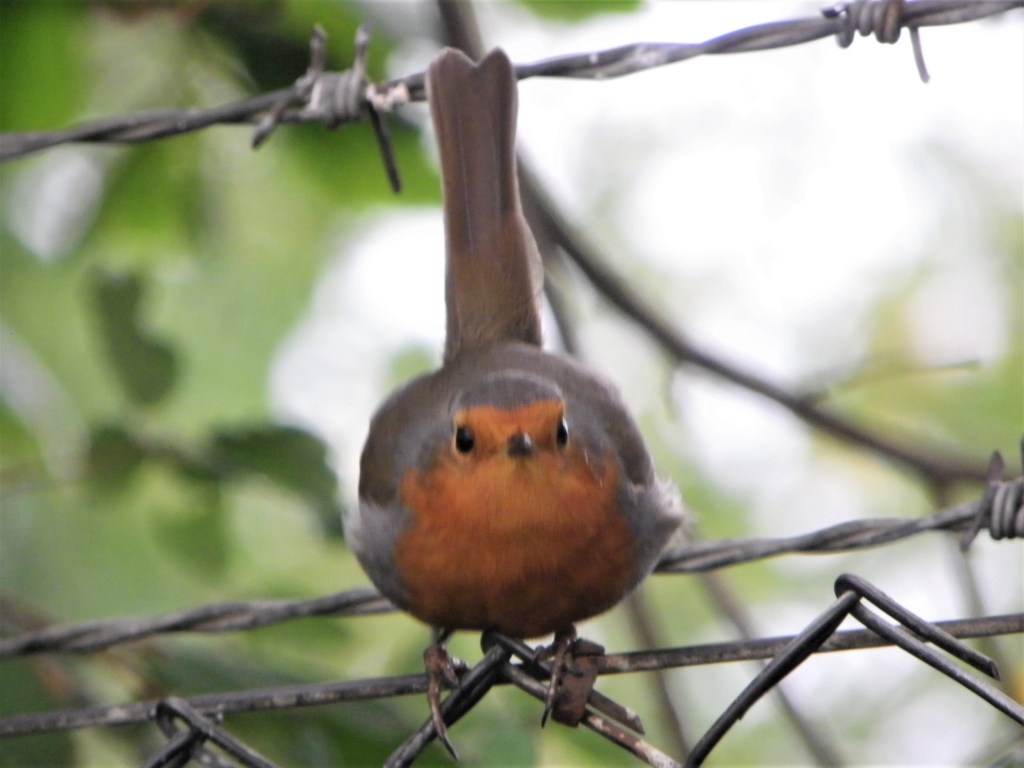
Recent post – my breakfast buddy:
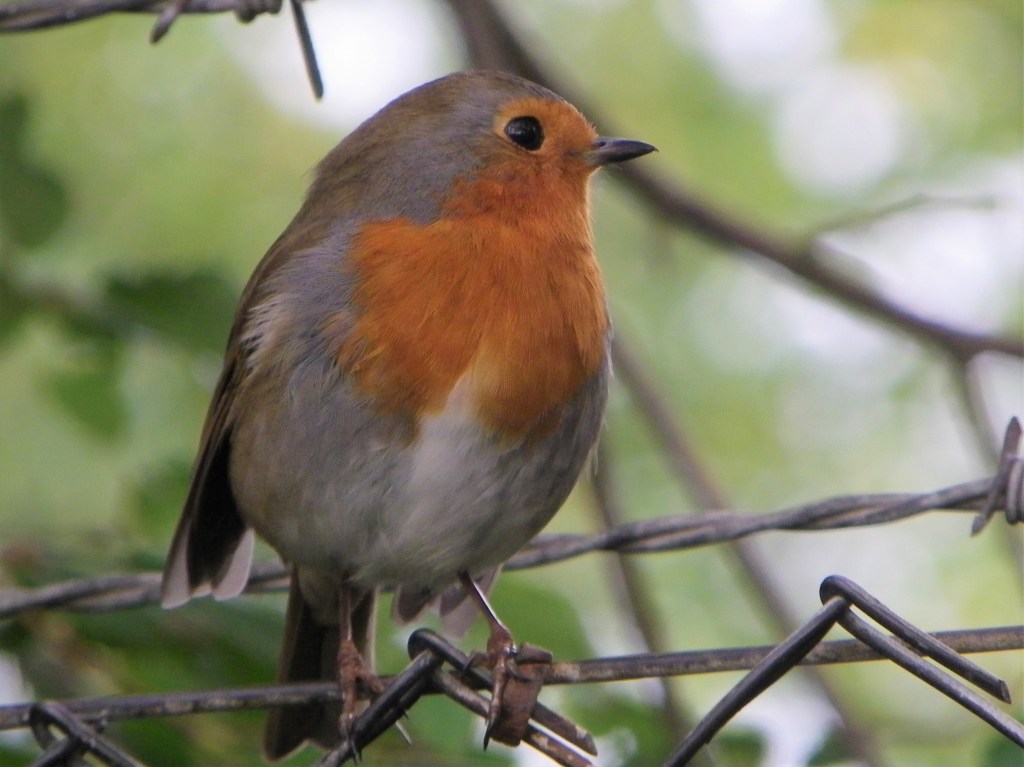
More pictures of Buddy waiting for breakfast this morning – 14/10/22. Photos – Mark (WAV).
Regards Mark

London Blasts:


Regards Mark

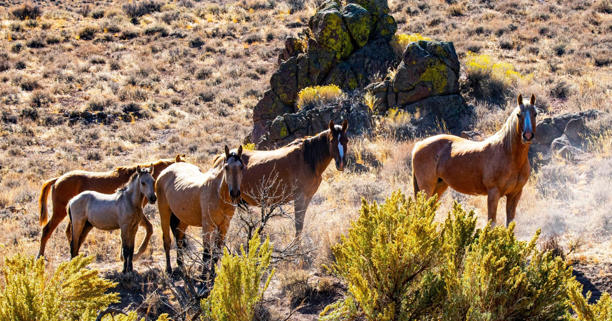
Twenty wild horses found killed and more than 30 missing as $25,000 reward offered (msn.com)
Wildlife advocates are offering a $25,000 reward for any information about the killings more than a dozen wild horses in the American southwest.
The US Forest Service is investigating an incident where 15 horses were shot and left for dead near the northern Arizona town of Alpine.
The horses in the Apache-Sitgreaves National Forest were found with bullet wounds in their faces, necks, abdomens, and between their eyes, according to wildlife activists.
‘This hateful massacre is incomprehensible and the killer or killers must be brought to full justice,’ said Simone Netherlands, President of the Salt River Wild Horse Management Group.
On Tuesday, the group posted another update, confirming that a total of 20 horses have now been found killed, and more than 30 were missing. ‘This is not a person or a vindictive act,’ Netherlands’ group wrote. ‘This is a professional operation. It was a planned mission to kill all of the Alpine wild horses.’
Netherlands and two other wild horse organizations, the American Wild Horse Campaign and Animal Wellness Action, have pooled resources to offer a $25,000 reward for information leading to the arrest of a suspect in the shootings.
‘Someone knows something,’ Amelia Perrin of the Wild Horse Campaign told the Arizona Republic. ‘There’s not just a mass killing of animals at this level without someone knowing something.’
A GoFundMe and a local tip line were set up to add more incentive for information about the horse deaths.
The Alpine and Springerville Ranger Districts of the US Forest Service announced they were investigating the horse killings on October 7, but local activists are still concerned about the future of the wild herd.
Wild horses are protected by the Wild Horses and Burro Act of 1971. However, the horses found in the Apache-Sitgreaves National Forest are legally considered feral horses, meaning they are not protected under federal and state law.
‘It’s sickening that someone can just come here and kill them,’ said Netherlands. Her group, which manages the wild horse herd in Salt River, has been trying to get federal recognition for the herd in Alpine.
A judge upheld the Alpine herd’s status as ‘unclaimed livestock,’ allowing the Forest Service to capture and sell the horses.
‘The Forest Service is currently in the highly controversial process of capturing and removing the Alpine wild horses from the Apache Forest and selling them at auction without limitation on slaughter,’ the group stated.
Regards Mark


7 October 2022
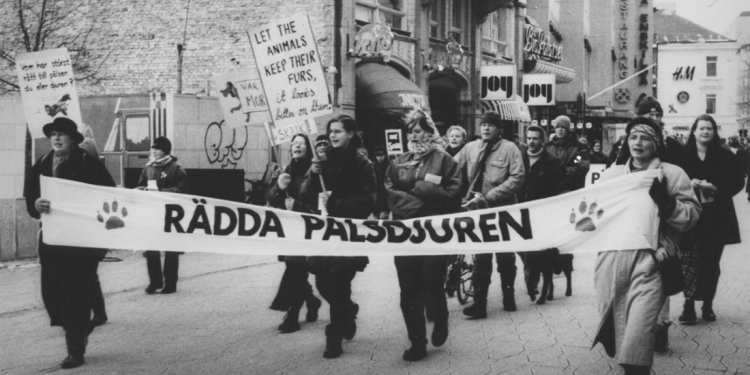
Djurens Rätt
Since October 7, 1882, Djurens Rätt has worked persistently for the animals that suffer the most. During these 140 years of hard fighting, they and their now 50,000 members have done a lot for the animals. Here are some of the successes they have achieved together over the years.
In 1882, Djurens Rätt was formed at Stockholm Palace under the name Nordic Society to combat cruelty against animals used in science.
In 1944, Sweden got its first animal welfare law, granting animals rights for the first time.
In 1979, a new law regarding animal experiments was introduced. Privately owned or homeless pets were no longer permitted be sold for animal testing.
In 1988, animals were given the right to their natural behaviours. The Animal Welfare Act was updated and cows were given the right to go out to graze during the summer.
In 1993, the import of wild-caught monkeys for animal experiments in Sweden was banned. As of 1998, all animal experiments must be approved by an animal experiment ethics committee.
In 2001, fox farming was phased out in Sweden. The next step is to put an end to mink farming through the Fur Free Europe initiative .
In 2013, the EU banned animal-tested cosmetics after 30 years of work by Djurens Rätt and other organisations.
In 2016, elephants are no longer permitted in Swedish circuses. Djurens Rätt submitted 155,000 signatures to the government for a ban.
In 2021, all food chains will be cage egg-free. The End the Cage Age campaign reached its goal and the EU decides to phase out all cages in the EU.
In 2022, crimes against animals will be taken more seriously. The crime of aggravated animal cruelty is introduced into the criminal code and camera surveillance at slaughterhouses is investigated.
Read more at source
Big congratulations to our animal campaigner friends !
Regards Mark


The badger Cull
Over 176,000 badgers have been killed since the current badger cull began in England in 2013. Badgers are killed in their thousands from Cornwall to Cumbria under misguided and fundamentally flawed attempts to control bovine Tuberculosis (bTB), an infectious respiratory disease which affects cattle.
Badgers are not the problem – Politicians Are !
Bovine TB is always present in the environment and can affect or be carried harmlessly by many species – livestock and wildlife alike. Yet the government has focused on badgers, even though 94% of cattle infections are from cow to cow. Many in the farming community wrongly believe that badgers are a significant vector in the spread of the disease. For many years, independent scientists, vets, researchers, as well as Badger Trust, have rightly challenged this claim.
Continue reading and watch several videos at the Badger Trust:
Some interesting information – The Badger Cull – Wikipedia:
Badger culling in the United Kingdom – Wikipedia
Setts, Drugs and Rock n Roll:
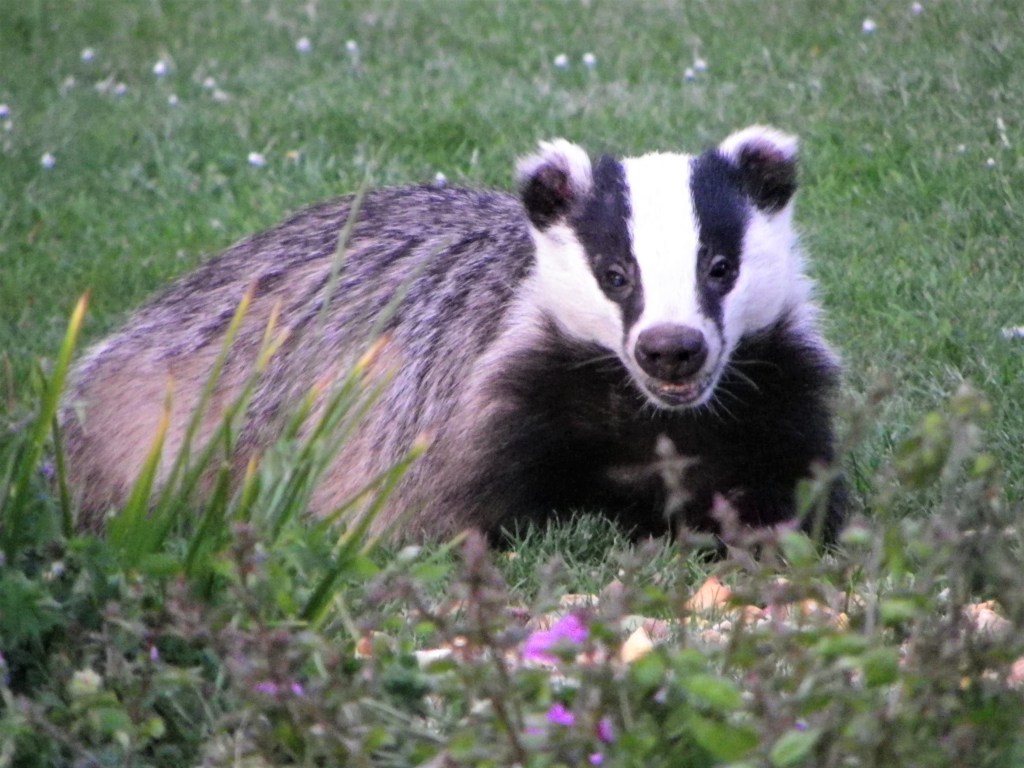
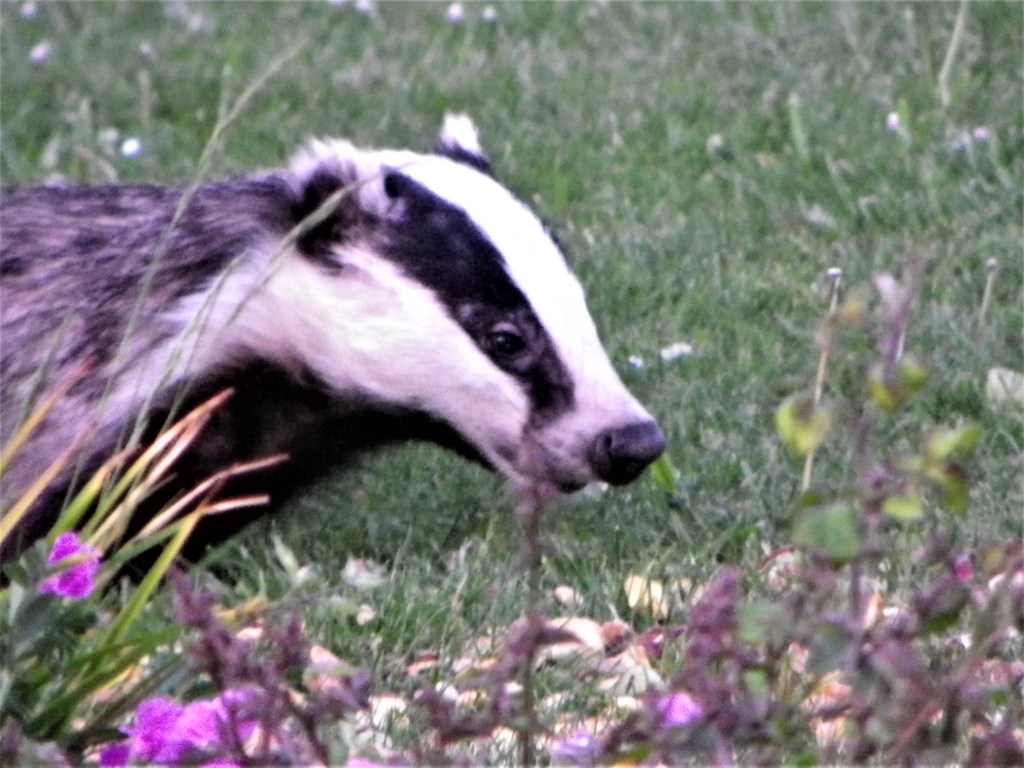
My wonderful badgers below who visit my own garden:




Polar bears lose up to 2kg per day as climate crisis bites (msn.com)
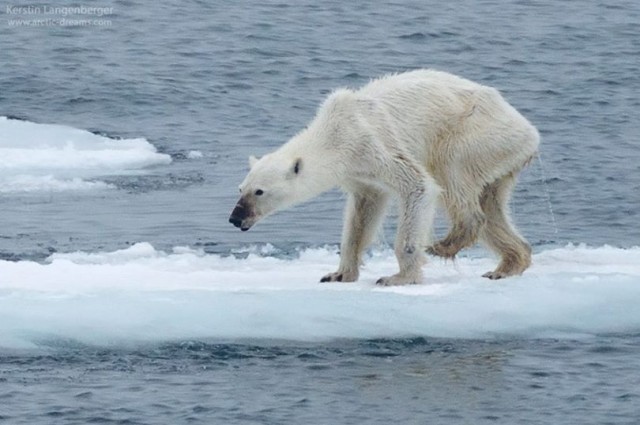
We’ve all seen the pictures of starving polar bears, struggling to survive climate change. But as global temperatures continue to rise, experts say bears today are spending up to a month longer than their parents waiting for the ice to return after summer.
Every year, starting in late June when the bay ice disappears, polar bears in the northern Canadian province of Manitoba move onto shore to begin a period of forced fasting.
Without the sea ice they are unable to hunt for seals, their main source of food.
“While these bears sit on shore, they’re losing a kilo or two every day. That can go on for about 180 days before they really start to have a problem,” says Geoff York, senior director of conservation at Polar Bears International (PBI).
Polar bears could starve to extinction due to global warming
Once on solid ground, the bears “typically have very few options for food,” explains York.
York spends several weeks each year in Churchill, a small town on the edge of the Arctic in Manitoba. There he follows the fortunes of the endangered polar bears.
Climate warming is affecting the Arctic three times as fast as other parts of the world – even four times, according to some recent studies. So sea ice, the habitat of the polar bear, is gradually disappearing.
End of the road for ice truckers? Safe ice roads could decline by 90% by end of century
“The fate of the polar bear should alarm everyone” because the Arctic is a good “barometer” of the planet’s health, says Flavio Lehner, a climate scientist at Cornell University who was part of the expedition.
Since the 1980s, the ice pack in Hudson bay has decreased by nearly 50 per cent in summer, according to the US National Snow and Ice Data Centre.
If a bear is lucky enough to find a beluga whale carcass or if a seal dares to swim too close to shore, the large carnivore may be able to eat during the summer. But for most of those months they are fasting, or eating very small snacks of any fish they’re able to catch.

A report published two years ago in the journal Nature Climate Change suggested that this trend could lead to the near-extinction of these majestic animals: 1,200 of them were counted on the western shores of Hudson Bay in the 1980s. Today the best estimate is 800.
Kenya is ‘praying for rain’ as worst drought in decades kills endangered wildlife
British Columbia at the epicentre of climate change-fuelled weather extremes
What happens when a polar bear is starving?
The polar bear, technically known as the Ursus maritimus, is a meticulous carnivore that feeds principally on the white fat that envelops and insulates a seal’s body.
But these days this superpredator of the Arctic sometimes has to feed on seaweed, as a mother and her baby were seen doing not far from the port of Churchill, the self-declared ‘Polar Bear Capital’.
If female bears go more than 117 days without adequate food, they struggle to nurse their young, says Steve Amstrup, PBI’s lead scientist.
As a result, births have declined, and it has become much rarer for a female to give birth to three cubs, once a common occurrence.
As a polar bear’s physical condition declines, York says, their tolerance for risk rises, and “that might bring them into interaction with people, which can lead to conflict instead of co-existence.”
Biodiversity loss is as big of a threat as climate change – but 90% of Brits don’t see it
Rising temperatures are reducing the number of male sea turtles born in the US
Hunger draws polar bears into dangerous proximity of towns
In desperation, bears began frequenting the local dump in Churchill, Manitoba – a source of easy, but potentially harmful, food for them. They could be seen ripping open rubbish bags, eating plastic or getting their snouts trapped in food tins amid piles of burning waste.
Since then, the town has taken precautions: The dump is now guarded by cameras, fences and patrols.
A conservation officer, Ian Van Nest, patrols the town’s limits to keep its 800 inhabitants safe. Every morning he checks the areas around schools to ensure the children will be safe upon arrival.
All across the town, people leave cars and houses unlocked in case someone needs to find urgent shelter during an unpleasant encounter with this large land-based carnivore.
Posted on walls around town are the emergency phone numbers to reach Van Nest or his colleagues.
When they get an urgent call, they hop in their pickup truck armed with a rifle and a spray can of repellent, wearing protective flak jackets. He emphasises that they do not shoot at the bears, but fire warning shots to scare them off.
Sometimes the animals have to be sedated, then winched up by a helicopter to be transported to the north, or kept in a cage until winter, when they can again feed on the bay.
Churchill’s only ‘prison’ is inhabited entirely by bears, a hangar whose 28 cells can fill up in the autumn as the creatures maraud in mass around town while waiting for the ice to re-form in November.
Regards Mark



WAV Comment:
Squirrels dont judge nationalities or borders; squirrels dont carry guns to harm and kill others; squirrels dont threaten with Nukes; suirrels dont torture and kill to gain land. Who is the headcase ?
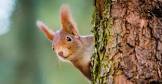
Ukraine – Friendly squirrel follows and plays with soldiers:

Regards Mark
 World Animals Voice