Category: Uncategorized

France: ‘Immoral and archaic’: Animal rights activists eye bill to ban bullfighting in France.


'Immoral and archaic': Animal rights activists eye bill to ban bullfighting in France

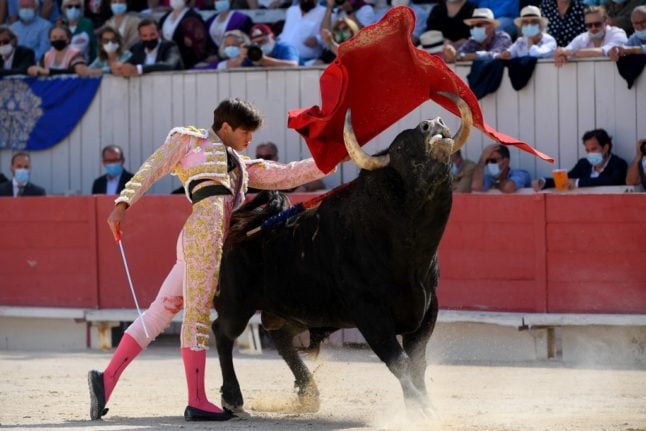
French matador El Rafi performs a muleta pass on a fighting bull in the arena of Arles, southern France, on June 6, 2021 (Photo by Nicolas TUCAT / AFP)

‘Immoral and archaic’: Animal rights activists eye bill to ban bullfighting in France

As thousands of bullfighting aficionados gather across southern France for traditional summer ferias, opponents of the practice are reviving their fight for an outright ban, confident that public opinion is finally on their side.

‘Immoral and archaic’: Animal rights activists eye bill to ban bullfighting in France (thelocal.fr)

“I think the majority of French people share the view that bullfights are immoral, a spectacle that no longer has its place in the 21st century,” said Aymeric Caron, a popular former TV journalist and animal rights activist who was recently elected to parliament as part of the hard-left France Unbowed party.

For years, critics have sought a final legal blow against what they call a cruel and archaic ritual, but none of the draft bills presented have ever been approved for debate by National Assembly lawmakers.

French courts have also routinely rejected lawsuits lodged by animal rights activists, most recently in July 2021 in Nimes, home to one of France’s most famous bullfighting events.

But Caron, based in Paris, told AFP that the time was ripe for a new proposal given growing concerns about animal welfare, with a draft bill to be submitted this week.

“I do indeed hope this bill will be debated in parliament in November… it would be a first,” he said.

The prospect seems all the more likely after France Unbowed won dozens of new seats in recent elections, helping to strip President Emmanuel Macron of his centrist majority in parliament.

The goal is to modify an animal welfare law that allows exceptions for bullfights — as well as cock fighting — when it can be shown that they are “uninterrupted local traditions.”

Such exceptions are granted to cities including Bayonne and the mediaeval jewel of Mont-de-Marsan in southwest France near Spain, where the practice has its origins, and along the Mediterranean coast including Arles, Beziers and Nimes.

‘Respecting the animal’

For Caron, “it’s not a French tradition, it’s a Spanish custom that was imported to France in the 19th century to please the wife of Napoleon III, who was from Andalusia,” the countess Eugenie de Montijo.

That argument is unlikely to convince the jostling crowds who packed the streets of Bayonne for the bullfighting feria that ended Sunday, a sea of fans clad all in white except for bright red bandanas or sashes.

“The people who want to ban it don’t understand it. Bullfighting is a drama that brings you closer to death… You’re afraid, but that’s a part of life,” said Jean-Luc Ambert, who came with friends from the central Auvergne region.

Like many other fans, his friend Francoise insisted that bullfighting is an art as much as a sport, where “a man puts his life on the line, while respecting the animal.”

“We’re not trying to convert anyone — I just want the people against it to leave us alone,” she told AFP.

The guest star of the Bayonne feria, Spanish matador Alejandro Talavante, did indeed find an appreciative audience, with the crowd demanding the award of the bull’s ear for his performance.

It’s a conflict that echoes the widening rift in France between rural dwellers steeped in deep agriculture traditions, and Parisians and other urban residents accused of trampling on the country’s cultural heritage — often derided as “the Taliban of Paristan.”

Widespread support?

Andre Viard, president of the national bullfighting association, shrugged off the threat of a ban.

“This comes up in every parliamentary session,” Viard told AFP of Caron’s efforts to find allies for the France Unbowed initiative.

“We tell the other parties: Why do you want to be associated with a bill that attacks a cultural freedom protected by the Constitution, and territorial identity?”

The debate echoes similar opposition in other countries with bullfighting histories, including Spain and Portugal as well as Mexico, Colombia and Venezuela.

In June, a judge in Mexico City ordered an indefinite suspension of bullfighting in the capital’s historic bullring, the largest in the world.

Caron is banking on support from across the political spectrum, including top members of Macron’s party such as the head of his parliamentary group Aurore Berge, who was among 36 lawmakers who called for a bullfighting ban last year.

An Ifop poll earlier this year found that 77 percent of respondents approved of a ban, up from 50 percent in 2007.

“More and more people are concerned about animal suffering, including in bullfights,” Claire Starozinski of the Anti-Bullfighting Alliance told AFP, adding that many people don’t realise that the bulls are actually killed.

“I know there are MPs from other parties who will support me, and have said so,” Caron said — though he admitted that more mainstream lawmakers such as Berge might be reluctant to join his leftish campaign.

“Is she going to remain true to her convictions, or make a political calculation that prevents her from supporting me? That’s what will be at stake in the talks over the coming weeks and months.”

Regards Mark

Pakistan: PETA, has offered to help Pakistan implement humane practices in veterinary and medical schools and end animal testing in Pakistan through a series of reforms.

ISLAMABAD: People for the Ethical Treatment of Animals (PETA), a US-based animal rights non-profit organisation, has offered to help Pakistan implement humane practices in veterinary and medical schools and end animal testing in Pakistan through a series of reforms.

The offer was made during a zoom meeting between the prime minister’s strategic reforms adviser, Salman Sufi, and PETA President Ingrid Newkirk, Chief of the Science Advancement and Outreach Division Dr Katherine Roe and Vice President of International Laboratory Methods Shalin Gala on July 22, 2022.

PETA had approached Mr Sufi, after a viral video footage revealed veterinary students in at least three institutions in Pakistan were involved in inhumane practices on animals, such as operating on animals without anaesthetics and denying them post-operative care despite excruciating pain.

On June 30, Salman Sufi announced an initial set of historic strategic reforms that included barring animals from being used for live testing in any veterinary college or industrial complex in Islamabad Capital Territory (ICT).

“This is a great start and we fully support this measure, and we agreed that more can and should be done since many of the veterinary schools are geographically outside of ICT and are not obligated to follow this new reform policy,” said PETA in a response.

It underscored Pakistan should issue a circular or a regulatory reform that explicitly embraced humane simulation training models for veterinary education and ban training methods that were not medically necessary and did not directly benefit animals involved at the federal level or through the Pakistan Veterinary Medical Council.

PETA cited numerous simulation models for both basic and advanced veterinary and zoology training, such as SynDaver Surgical Canine model, the Critical Care Jerry and Critical Care Fluffy models, the Virtual Animal Anatomy, and Biosphera softwares, to avoid harming animals during the training.

“As such, we are proposing a new collaboration with Prime Minister Shehbaz Sharif and Salman Sufi to help provide advanced simulation models so that universities in Pakistan can transition to harm-free and humane veterinary education. We are currently working with Salman Sufi to gather information and do an assessment of the universities’ needs with respect to acquiring simulation models so we can best plan how to assist them,” Ms Gala said.

In response to questions on areas of collaboration with Pakistan, PETA shared more topics that it was addressing with Mr Sufi, such as modernising medical training.

Shalin Gala said before the current Pakistan Medical Commission (PMC) came into being, PETA was in communication with the Pakistan Medical and Dental Council (PMDC) to advise them on various reforms for their undergraduate medical (or MBBS) curriculum to replace the use of animals nationwide with non-animal methods.

According to Ms Gala, PETA had advised them to adopt its proposed curriculum reform language stating, “no animals or animal parts shall be used for any aspect of the MBBS curriculum including but not limited to practical labs, learning objectives, contents, teaching/learning strategy, teaching aids and assessments. Only non-animal teaching, learning, demonstration and assessment methods shall be used such as didactic methods, interactive computer-aided learning (CAL), human patient simulators (HPS), human cadavers, supervised clinical practice or other non-animal models”.

This reform, if enacted, would mirror similar reforms adopted internationally as well, she added.

“We would like for Pakistan’s MBBS curriculum to have the same non-animal training standard and use modern simulation technology. We hope to work with Salman Sufi to move this strategic reform forward, which will put Pakistan’s medical education system in sync with the US, Canada, India and others that no longer use animals for undergraduate medical training,” Ms Gala said.

In 2014, following discussions with PETA India, the University Grants Commission in India issued a notification ending dissection and experimentation, for training purposes, in university and college zoology and life sciences undergraduate and postgraduate courses, sparing 19 million animals in that country alone from being killed and cut apart for dissection every year.

PETA asserted its scientists were eager to work with Mr Sufi on setting up a national database in Pakistan for approved non-animal biomedical research and training methods, and drafting regulatory language that the use of animals for such purposes must be replaced by approved non-animal methods that appear in the database.

It also intended to assist conduct scientific reviews of the efficacy of animal use to identify additional areas in which such use had failed to advance human health, or in which non-animal methods were now available, and could be ended quickly.

While technical skills were important, it was also of the utmost importance to instill a culture of care in veterinary training. Creating a dichotomy between the animals used for training and the animal companions seen in an examination room did not benefit the veterinary profession, according to PETA.

“We are currently exploring ways to create materials relevant to Pakistani society and potentially incorporating this compassion-building programme into current school curricula,” the animal rights organisation said.

In response to a question on trafficking of animals, PETA said Mr Sufi mentioned his proposed reform to seize wildlife held in unsuitable living conditions and repatriate them to relevant countries for rehabilitation.

Rights body ready to help end animal testing in medical schools – Pakistan – DAWN.COM

Regards Mark

Iran: Dog shelter worker cries over dead animal after Iranian regime ‘raids property and slaughters 1,700 canines taken in as strays’.

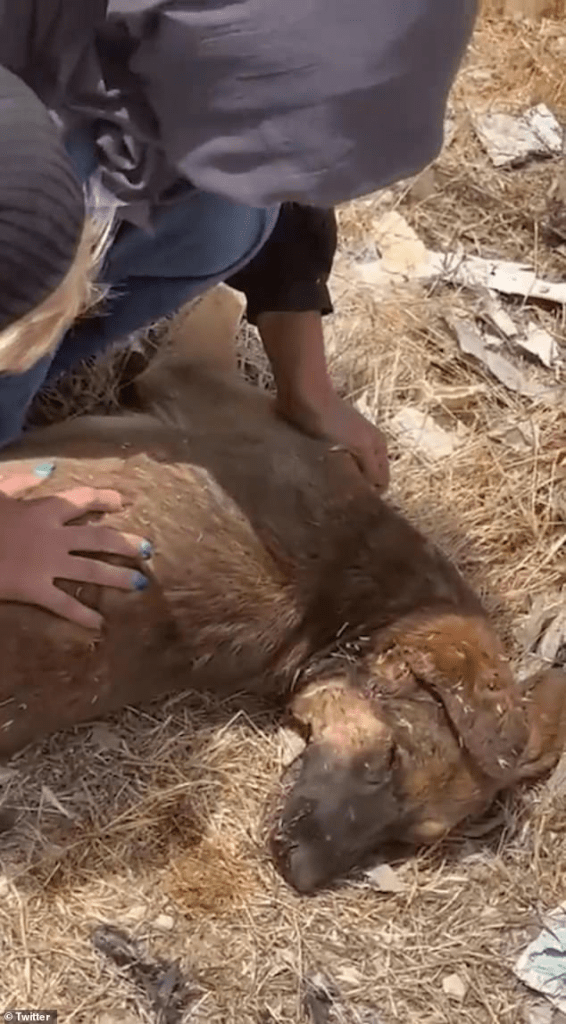
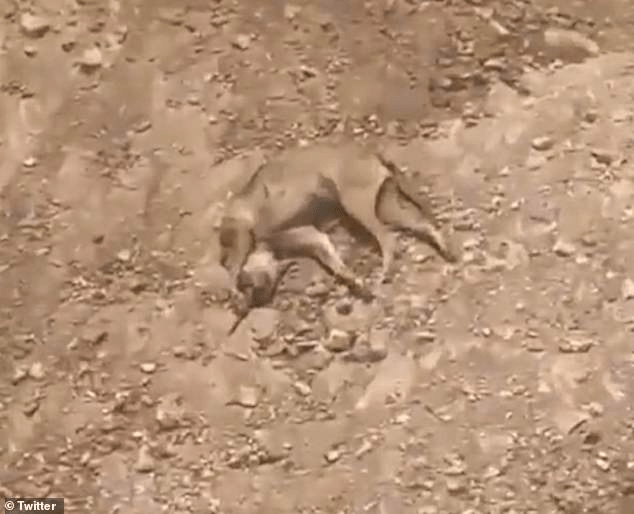
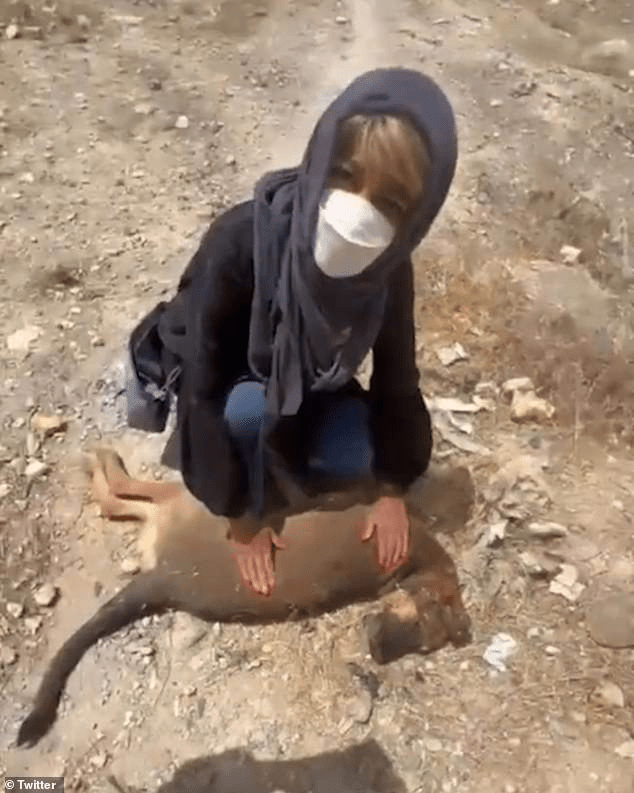
‘This was the most vulnerable & obedient one,’ the inconsolable volunteer cried, before the camera panned to show several canine corpses strewn across the roadside and a nearby valley.

Dog shelter worker cries over dead animal after Iranian regime ‘raids property and slaughters 1,700 canines taken in as strays’

  • Authorities allegedly massacred up to 1,700 dogs at a shelter this weekend
  • Heart-wrenching footage showed a volunteer crying as she held the dogs 
  • Ebrahim Raisi’s regime is looking at a law which would ban pet ownership
  • The bill initially proposed in December would also see fines dished out for the ‘import, purchase and sale, transportation and keeping’ of many common pets
  • Bill authors see the practice of keeping pets as a ‘destructive social problem’

Iranian regime ‘raids property and slaughters 1,700 canines taken in as strays’  | Daily Mail Online

Dog shelter workers are protesting President Ebrahim Raisi’s regime in Iran after authorities allegedly stormed their compound and slaughtered up to 1,700 dogs.

Heart-wrenching footage shared on social media showed one volunteer in floods of tears as she clasped one of the dead hounds in her arms.

‘This was the most vulnerable and obedient one,’ she cried, before the camera panned to show several canine corpses strewn across the roadside and a nearby valley.

Masih Alinejad, an Iranian journalist who shared the footage, said of the slaughter: ‘The ruthless rulers of the Islamic Republic of Iran spare no-one’

Masih Alinejad, an Iranian journalist who shared the footage, said of the slaughter: ‘The ruthless rulers of the Islamic Republic of Iran spare no-one. 

‘In addition to repressing women, ethnic and religious minorities, LGBTQs, they also annually kill countless stray dogs. Animal rights activists in Iran need your attention.’

The massacre comes with Iranian lawmakers set to pass a bill which would restrict pet ownership without possession of a special permit.

It would also see considerable fines dished out for the ‘import, purchase and sale, transportation and keeping’ of many common pets, which some parliamentarians believe is a symbol of decadence which could ‘replace’ healthy family relationships.

The bill, initially proposed in December, pits growing numbers of people with pets against those who consider the practice a symbol of decadence and hold that, under Islamic law, dogs and other animals are unclean.

Authors of the bill condemn the practice of humans living under one roof with domesticated animals as a ‘destructive social problem’.

Heart-wrenching footage circulating on social media showed one volunteer in floods of tears as she clasped one of the dead hounds in her arms.

Dogs are a common animal in Iran and have been kept in rural areas for centuries, but more urban dwellers began to develop an affinity for raising pets in the 20th century.

The middle eastern nation was once one of the most tolerant with respect to pets, passing animal welfare laws as early as 1948 and pushing for the development of animal rights. 

But the 1979 Islamic Revolution drastically altered daily life for millions of Iranians, and dogs are now held in contempt by ultraconservative lawmakers.

The bill proposed late last year aims to rid Iranian society of the practice of keeping pets.

Anti-pet lawmakers say the practice could ‘gradually change the Iranian and Islamic way of life’ by ‘replacing human and family relationships with feelings and emotional relationships towards animals’.

Their proposed law would prohibit ‘importing, raising, assisting in the breeding of, breeding, buying or selling, transporting, driving or walking, and keeping in the home wild, exotic, harmful and dangerous animals’.

It lists the animals to be banned as ‘crocodiles, turtles, snakes, lizards, cats, mice, rabbits, dogs and other unclean animals as well as monkeys’.

Offenders would risk a fine equivalent to 10 to 30 times the ‘minimum monthly working wage’ of about £80 and the ‘confiscation’ of the animal – though it is highly likely the animal would simply be killed.

However, there have already been reports in Iran of police officers making arrests on those walking their dogs or carrying pets in public.  

Tehran’s police chief General Hossein Rahimi announced on July 8 that entering the parks with dogs will be forbidden and police will consider and deal with it as illegal action.

Regards Mark

China: Hoopla Stall Where Sick Punters Throw Hoops at a Strapped-Down Live GOOSE.

Hoopla stall where punters throw hoops at a strapped-down GOOSE is condemned by PETA (msn.com)

A fairground game in which people aim to throw hoops around the neck of a goose tied down to a stool has been condemned by animal rights campaigners.

Bizarre footage from the funfair in Yantai in eastern China‘s Shandong province shows a white goose strapped down to a stool precariously balanced on plastic crates.

Punters are encouraged to throw plastic hoops at the helpless bird, with prizes on offer should they manage to get one of the hoops its neck.

The footage recorded at the funfair last month shows fairgoers launching ring after ring at the animal, which ducks and moves its head frantically to avoid being hit by the oncoming objects.  

Elisa Allen, a programme director at the animal welfare organisation People for the Ethical Treatment of Animals (PETA) strongly condemned the incident.

‘These videos of fairgoers throwing objects at helpless geese show that, regrettably, there are still people who see animals as commodities whose fears and feelings are of no consequence.’

She added: ‘Geese are intelligent, sensitive birds who deserve to be respected as individuals, not as the sum of their body parts or as amusement.

‘PETA Asia is pushing for stronger animal welfare legislation in China while working to change public attitudes towards our fellow animals.

‘We remind everyone that the best way to help animals is by never eating or wearing them and always speaking out whenever you see them being abused.’

Click here to see all the pictures:

Hoopla stall where punters throw hoops at a strapped-down GOOSE is condemned by PETA  | Daily Mail Online

Regards Mark

England: Introducing Viva ! – For Animals and Humans.

Viva! is the UK’s leading vegan campaigning charity, specialising in undercover investigations and high-profile animal campaigns. Founded in 1994 by Juliet Gellatley, we have spent almost 30 years creating a kinder, more sustainable world for humans and animals alike.

Diet is linked to the diseases that kill most people in the affluent West – ‘degenerative’ diseases. Researchers at Viva! Health keep up to date with the latest science to show you why a varied vegan diet cuts your disease risk, and can improve your health.

And let’s not forget our magnificent Vegan Recipe Club which has hundreds of healthy, delicious and colourful recipes, helping people go and stay vegan.

Please, consider joining Viva! today so we can continue educating the public about the benefits of living vegan.

Join or renew:

Donate or join us | Viva! The Vegan Charity

If you can, please give £5 or more a month and become a Viva! Friend. You’ll receive Viva!life magazine PLUS an exclusive I’m a Viva! Friend mug, keyring, sticker pen and bookmark.

You’ll also receive some handy guides, wallcharts, and a free Films For Change 60 day trial where you can enjoy any film on their site – including an expansive collection of vegan documentaries! 

Yours for the animals,

Juliet Gellatley
Founder and Director

Regards Mark

England: The Viva! Vegan Podcast, Talks To Ronnie Lee – Founder of the Animal Liberation Front, Hunt Saboteur and Vegan Activist.

Ronnie Lee | Viva! Vegan Podcast

The Viva! Vegan Podcast, August

Episode #70: Ronnie Lee – Founder of the Animal Liberation Front, hunt saboteur and vegan activist

Born in 1951, Ronnie stopped eating meat aged 19 when his sister’s vegetarian boyfriend convinced him that it is wrong to eat animals. Two years later, he became vegan and got active with the Hunt Saboteurs Association to disrupt hunting activities and save lives.

In his pursuit to carry out direct action against all forms of animal oppression, the Animal Liberation Front was born.

In this interview, Viva!’s head of investigations, Lex Rigby, gets to ask Ronnie what it was like being vegan in the 70s, what happened to the rescued guinea pigs he stuffed up his jumper and whether he really thought a gallon of petrol was going to burn down an animal research laboratory.

Following the interview, Lex is joined by Viva!’s head of comms, Faye Lewis, to discuss Ronnie’s uncompromising commitment to the animal rights cause.

Regards Mark

Ukraine: 640,000kg of pet food distributed in Ukraine by UPAW. Donation Link Included.

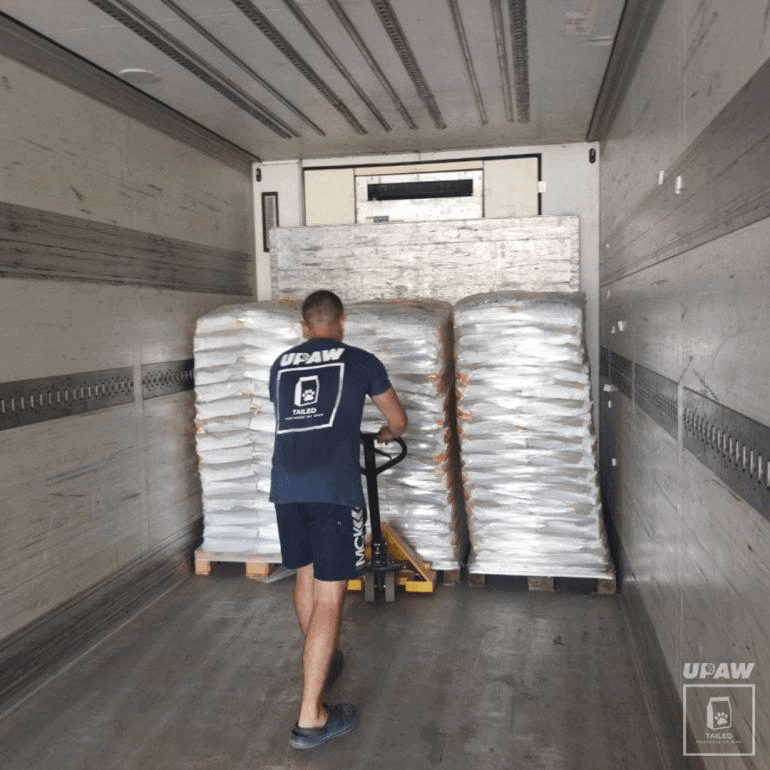
640,000kg of pet food distributed in Ukraine by UPAW

1 August 2022

Four Paws

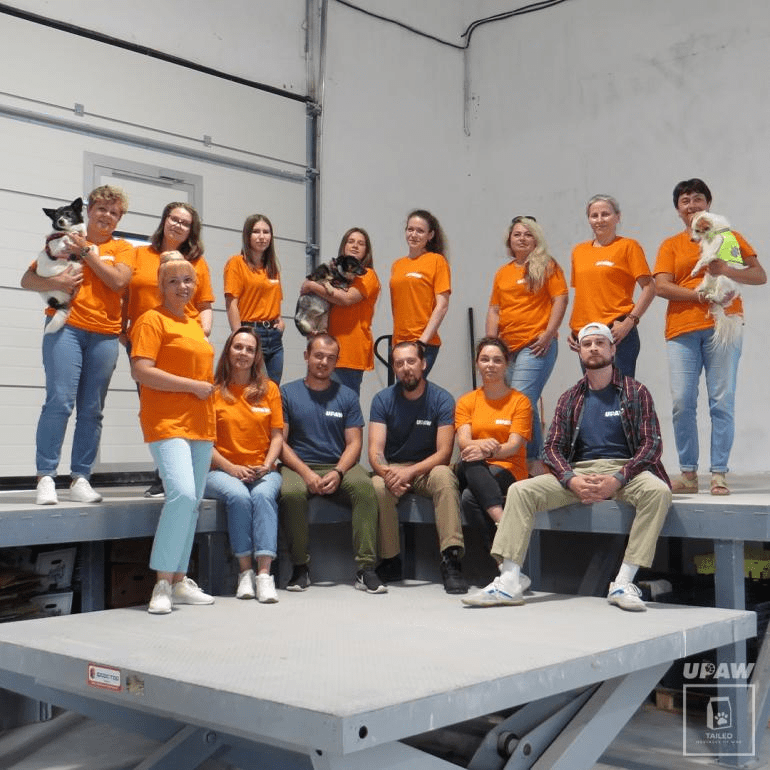
Image – UPAW.

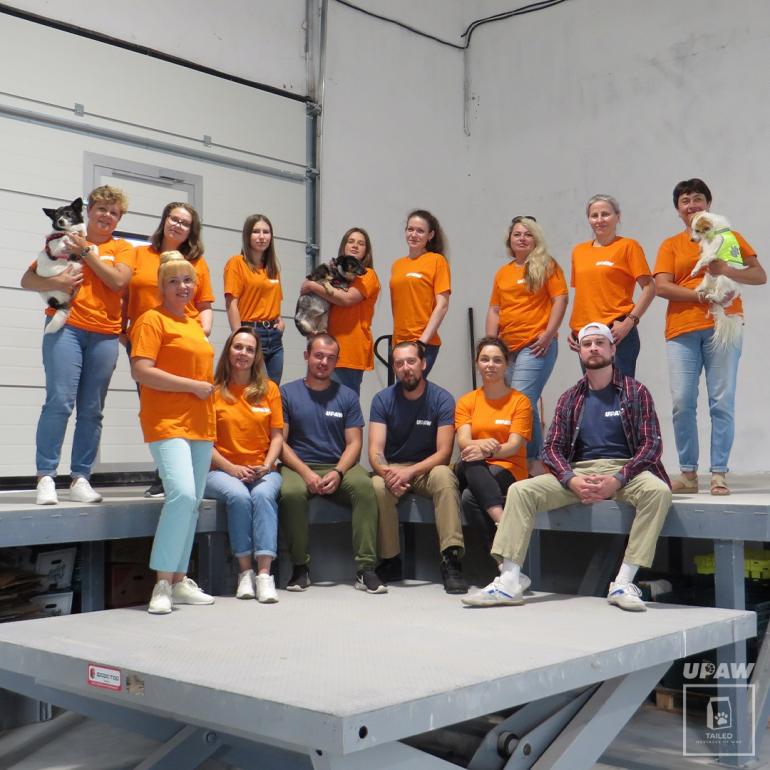
UPAW (Ukrainian Pet Association Worldwide) was created on the first day of the war in Ukraine, in partnership with Animals ID, Dogs Trust Worldwide and Four Paws. It is a logistical platform that unites and coordinates the efforts of 18 Ukrainian animal welfare organisations.

In the past four months the organisation has distributed 640,000kg of pet food, taking care of the challenging logistics in Ukraine.

This platform serves the purpose of redistribution of the pet’s food all over the country, addressing the needs of animals. To this end, the volunteers taking care of unowned animals, breeding kennels, individual pet owners and shelters can apply and receive help thanks to UPAW, whose recognise that “In this tragic situation all pets are equal and hungry in the same way”.

In the future, UPAW is hoping that its purpose will be threefold:

  1. Drive systemic changes in Ukraine, which will benefit animals, in cooperation with NGOs and veterinarians.
  2. Implement international best practices for the development of local animal welfare organisations.
  3. Help national authorities create a policy on animal welfare and good veterinary practice in Ukraine.

Meanwhile, the war is imposing different priorities and the whole team of UPAW is focused on reaching red zones of humanitarian catastrophe and front lines in order to feed as many animals as possible. The estimated amount of necessary pet food is 1,300 tons per month.

Image

Organizations that need help

Animals in Ukraine need help | UPAW

Regards Mark

All Photos – UPAW

EU: Pioneering conference on animal welfare in Invasive Alien Species management.

Pioneering conference on animal welfare in Invasive Alien Species management

22 July 2022

We are closing the bridge between animal welfare and conservation. The “Conference on the management of vertebrate Invasive Alien Species (IAS) of Union concern – incorporating animal welfare” was held on 12 July 2022 in Brussels and gathered 150 experts in wildlife management from across Europe to discuss how to improve animal welfare in IAS management.

The Conference is the final milestone of a project assessing the animal welfare implications of management methods for IAS on the Union list. The manual detailing the assessment will be published by the end of the year. Based on these outcomes, wildlife management practitioners will be able to select the most humane methods, while also taking into consideration the cost-benefit analysis to maximise efficiency. This Pilot Project is funded by the European Commission and implemented by a consortium of academics, conservation and animal welfare organisations, including Eurogroup for Animals. 

The participants to the Conference represented a wide range of wildlife management stakeholders including field practitioners, academia, civil society and competent authorities. They could discover the content of the manual presented by the consortium, learn from case studies across Europe on the management of various species and exchange on the gaps, best practices and ways forward for the management of mammals, birds, reptiles and fish species of the Union list.

During the Conference, Eurogroup for Animals and its members highlighted the necessity to raise awareness and find solutions to

  1. Better prevent the introduction of IAS in Europe,
  2. Develop innovative methods that minimise animal suffering when management is needed to protect biodiversity.

In this context, it is essential to explore the possibilities of fertility control and similar non-lethal management methods for the species of the Union list. Such solutions could enable a better implementation of the IAS regulation. The latter indeed provides the use of methods that do not cause avoidable pain, distress or suffering.

Based on the research conducted and the outcomes of this productive Conference, Eurogroup for Animals calls on the EU to build on this momentum, conducting further research needed to develop humane management methods for the IAS of the Union list. Additionally, following this important project, Eurogroup for Animals calls for the inclusion of welfare in management to be legally binding, as well as the publication of a list of prohibited management methods which fail to meet high welfare standards.

Regards Mark

Malta: Animal Organisations Put Spotlight On Deaths of 3 Dolphins in 1 Month at Maltese Dolphinarium.

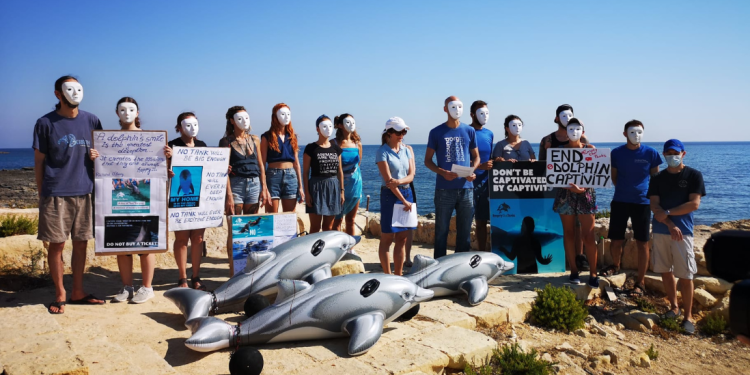
Animal organisations put spotlight on deaths of 3 dolphins in 1 month at Maltese dolphinarium

26 July 2022

Animal Liberation Malta (ALM) has revealed that that between August and September of 2021 three female dolphins died at the Mediterraneo Marine Park at Baħar iċ-Ċagħaq, Malta.

The news was never made public nor was it registered in the non-profit cetacean register Ceta-Base, as is common practice in other international wildlife parks.

Two of the female dolphins that died, named Onda and Mar, were believed to be around 20 and 25 years old respectively, had been caught in the wild in Cuba and kept at Mediterraneo since 2000, the group said.

The third dolphin, Melita, was just seven years old and was born in the park in 2014. She never swam in the open sea.

ALM also called upon authorities to investigate why Mediterraneo is allowed to operate under a zoo licence, when their dolphin shows acted as a “permanent aquatic circus”. The law, they said, defined circuses as places where animals are introduced for the purpose of performance and shows, which Mediterraneo’s dolphin shows offer as a form of entertainment.

Circuses with animal performers have been banned in Malta since 2014.

ALM called on the government as well as the park owners to shut down Mediterraneo and transform it into a rehabilitation center for aquatic animals.

“The location of the park is perfect as it is very close to the coastal shores and Malta would have the opportunity and be the pioneer of not only dolphin care but also of other marine creatures. The remaining dolphins should have the opportunity to be rehoused in sea pens, to live a natural life and end performing displays to the public.” 

The Animal Welfare Commissioner Alison Bezzina has opened an inquiry to understand how the investigation was conducted by the government veterinary department.

I was very concerned when first advised of the disappearance of the 3 dolphins from Mediterraneo. A member of the public was told by the park that the dolphins had been moved to a facility in Spain, and contacted us to investigate further on the export. Having contacted authorities in both Spain and Malta, we were advised that the dolphins had not gone to another park but had, in fact, died at Mediterraneo. We continue to work alongside Maltese authorities to discover why the park were not been forthcoming with this information and an investigation is now vital to learn how these animals died, and the true situation at the facility.

Margaux Dodds, Director of UK based NGO Marine Connection

Regards Mark

USA: ‘Yellowstone Bear World’ Investigation Reveals Traumatized Cubs Desperate for Their Mothers in Public Feeding “Encounters”, and Pain Medication Denied to a Cub With a Fractured Leg. Video and Action Link.

A bear named Bean (shown) fractured his leg, but a supervisor told workers to withhold his prescription pain medication.

From Peta;

A breaking PETA undercover investigation into Yellowstone Bear World, a bear-breeding operation in Rexburg, Idaho, found that workers used traumatized cubs desperate for their mothers in public feeding “encounters,” threatened to beat bears with a stick, denied pain medication to a cub with a fractured leg, and more.

Seeking comfort, this cub tried to suckle while being held in an unnatural position and forced to endure touching and handling by a crowd of visitors at an event at Yellowstone Bear World. (Photo taken by a member of the public in April 2022).

Frantic cubs—who, according to guidelines from the U.S. Department of Agriculture, are too big, too fast, and too strong to be handled by the public—routinely bit, scratched, and bruised workers. PETA’s investigator witnessed a supervisor lash out when a cub named Tootsie bit her, threatening to “throw” Tootsie across the room and rip out her teeth “one by one.”

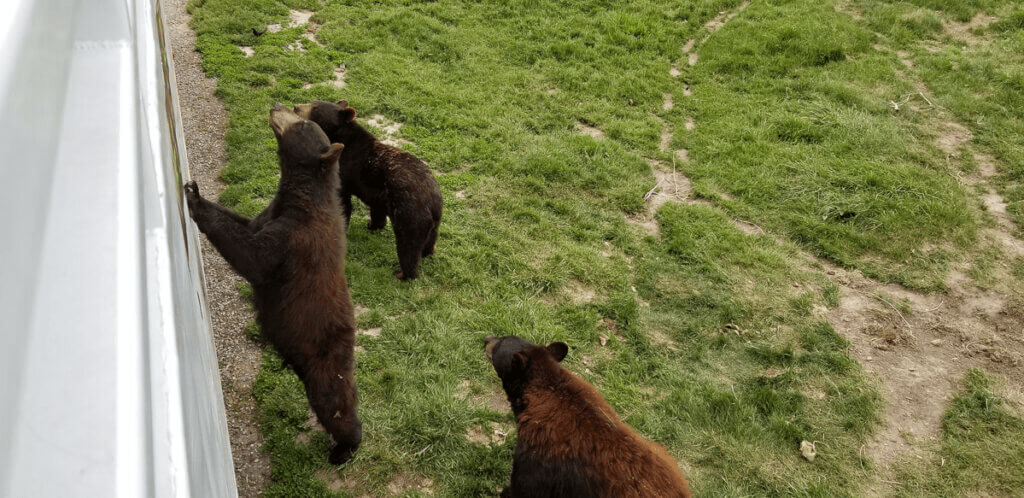
After they become too large to use in profit-driven public encounters, cubs are moved to a drive-through enclosure. There, visitors in tour trucks toss them bread, which is not good for them in excess. They often have nothing to do but beg for food and pace back and forth, a sign of psychological distress.

When the bears are no longer used for public “encounters,” they are confined to a drive-through enclosure where they have nothing to do but beg for scraps of unhealthy bread visitors toss to them from tour trucks.

Help end this exploitation now.

Please ask Yellowstone Bear World to stop tearing families apart and end its cruel breeding operation and stressful public “encounters” now.

Take action for the bears now:

Watch the video and take action link below.

Watch the video:

Yellowstone Bear World Exploits Cubs in Public Encounters | PETA

Thanks for everything that you do to help animals.

Sincerely,

Debbie Metzler, M.S.
Director of Captive Animal Welfare
PETA Foundation

Regards Mark