If you order products online from Amazon; did you know that Amazon can donate to charity every time you shop ?
Don’t buy direct from the Amazon site; instead, go to ‘Amazon Smile’,
Whenever I buy from Amazon, I make sure that I buy through ‘Amazon Smile’; it is no different to the usual site; only that a small donation is made to the charity of your choice each time you buy.
When I buy, Amazon Smile gives directly to my chosen ‘Brooke Hospital For Animals’ which is located in London; here is a bit about them:
The Brooke Hospital For Animals
Location: London
Mission:
To promote the welfare and relieve the suffering of working equines and other animals in africa, asia, the middle east and south and central america, and in any other areas outside the united kingdom that the trustees may think fit, for the public benefit, in particular, but not exclusively, by: the support, promotion and provision of veterinary and other animal healthcare services whether in the context of veterinary clinics, animal hospitals, other animal healthcare facilities or…
Programmes:Activities: Makes grants to organisations, provides services, provides advocacy/advice/information, sponsors or undertakes research, Beneficiaries: Other defined groups, Purposes: Education/training, animals
This morning through my purchases, I have been informed of my help to Brooke through Amazon Smile:
You have generated
£36.99 as of 29 December 2021
Your current charity The Brooke Hospital For Animals has received £10,417.66 as of December 2021
Over £10,000 this year (2021) just by people supporting the Brooke; slightly adjusting the way they shop.
When you shop at Amazon, just type ‘Amazon Smile’ in your web browser and then shop as usual – the only difference is a donation is made to the charity of your choice. It takes nothing of your time, but can make such a difference to charities.
WAV Comment – Talking of old fossils – there I was thinking the Conservative Party had only been around since 1834. Just shows you; you live and learn. Joking aside; an amazing discovery to learn more about the past.
Regards Mark
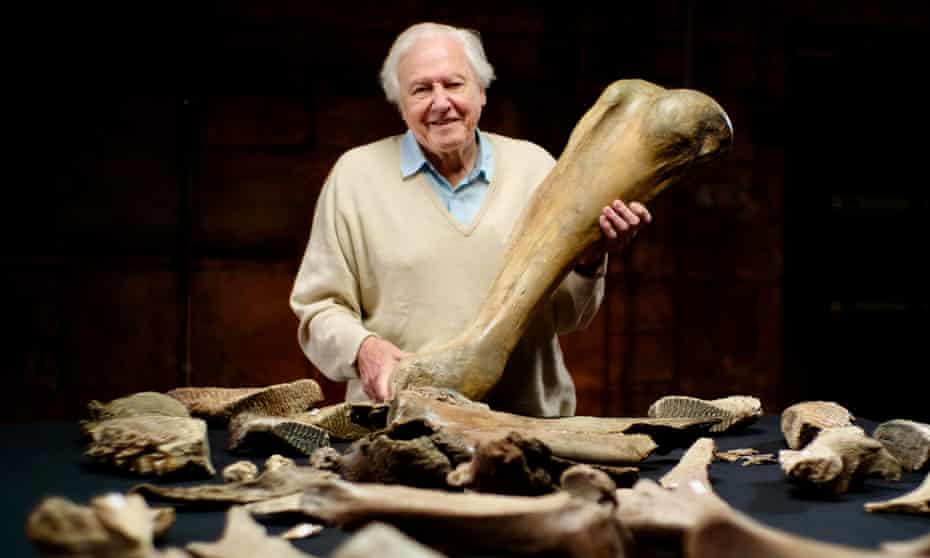
Sir David Attenborough with some of the mammoth bones found in the gravel quarry near Swindon. Photograph: Julian Schwanitz/BBC/Windfall Films
David Attenborough will tell of ‘pristine’ skeletons found with other extinct species
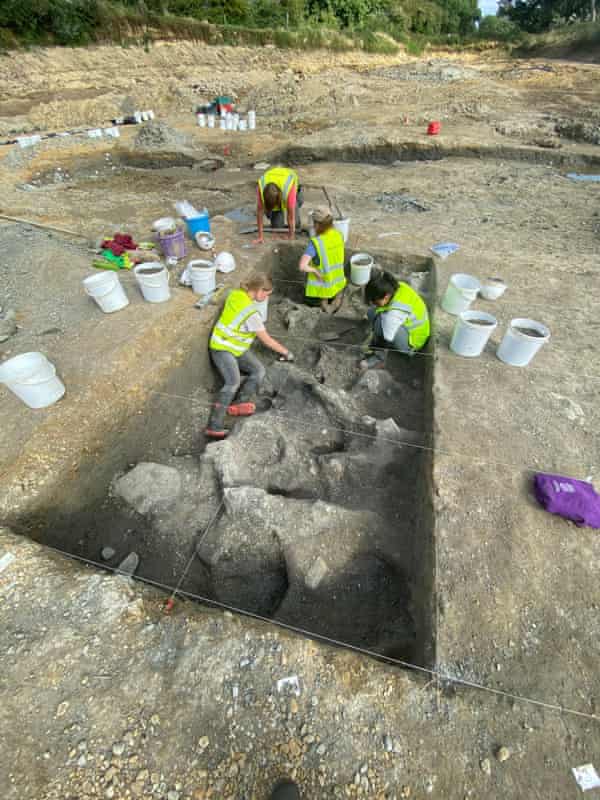
Five ice-age mammoths in an extraordinary state of preservation have been discovered in the Cotswolds, to the astonishment of archaeologists and palaeontologists.
The extensive remains of two adults, two juveniles and an infant that roamed 200,000 years ago have been unearthed near Swindon, along with tools used by Neanderthals, who are likely to have hunted these 10-tonne beasts. More are expected to be found because only a fraction of the vast site, a gravel quarry, has been excavated.
Judging by the quality of the finds, the site is a goldmine. They range from other ice-age giants, such as elks – twice the size of their descendants today, with antlers 10ft across – to tiny creatures, notably dung beetles, which co-evolved with megafauna, using their droppings for food and shelter, and freshwater snails, just like those found today. Even seeds, pollen and plant fossils, including extinct varieties, have been preserved at this site.
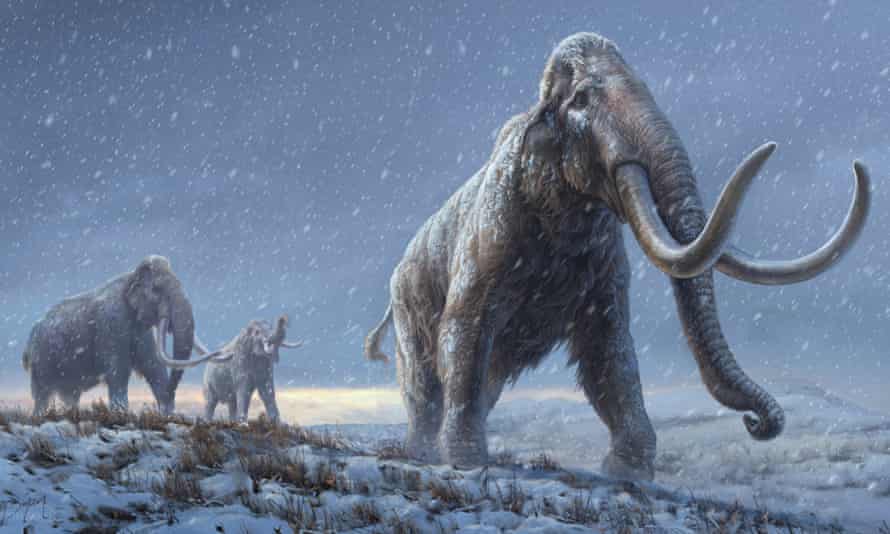
An artist’s impression of the Steppe mammoth. Photograph: Beth Zaiken/Reuters
All these will now offer new clues into how our Neanderthal ancestors lived in the harsh conditions of ice-age Britain, a period of prehistory about which little is known. The exceptional discoveries will be explored in a BBC One documentary, Attenborough and the Mammoth Graveyard, to be aired on 30 December, in which Sir David Attenborough and evolutionary biologist Professor Ben Garrod join archaeologists from DigVentures to film the excavation.
Garrod told the Observer: “This is one of the most important discoveries in British palaeontology.” While the odd mammoth bone often turns up, he said, finding such complete skeletons is “incredibly rare”. “Where these mammoths lie in the ground is exactly where they died a quarter of a million years ago – next to incredible things like stone tools and the snails they trampled underfoot.
“We have evidence of what the landscape was like. We know what plants were growing there. The little things are really revealing the context of these big, iconic giants. It’s a glimpse back in time. That’s incredibly important in terms of us understanding how climate change especially impacts environments, ecosystems and species.”
Lisa Westcott Wilkins of DigVentures, an archaeology social enterprise, said: “Exciting doesn’t cover it. Other mammoths have been found in the UK but not in this state of preservation. They’re in near-pristine condition. You can’t take it in.”
She added: “Archaeological sites from this period are rare, and critical for understanding Neanderthal behaviour across Britain and Europe. Why did so many mammoths die here? Could Neanderthals have killed them? What can they tell us about life in ice-age Britain? The range of evidence at this site gives us a unique chance to address these questions.”
The researchers believe that the mammoth remains and the artefacts date to around 220,000 years ago, when Britain was still occupied by Neanderthals during a warmer interglacial period known as MIS7. Falling temperatures had forced Neanderthals south, and this site was then a lush, fertile plain to which both animals and humans were drawn.
Archaeologists excavating the mammoth bones. Photograph: DigVentures
The earliest mammoths came from Africa about five million years ago. This particular species, the Steppe mammoth, was the largest of them, and lasted from about 1.8m years ago to about 200,000 years ago.
Garrod, professor of evolutionary biology at the University of East Anglia, said the species weighed up to 15 tonnes, twice or three times the weight of an African elephant: “This was the largest species of mammoth ever. By the time they were about to be gone, they had dropped down to 10 tonnes, which still sounds a lot. We think that was an adaptation to the change in environment, climate and resource availability. It was becoming colder at that time, resources were getting sparser, and it drove that shrinking of the species. On top of that, there would have been undoubtedly local pressure from hunting and competition from other species.”
Speculating on why so many animals died at this site, he added: “Was there a massive glacial flood that washed these poor animals down? By looking at the mud, it doesn’t look like there was. It’s very uniform all the way down. Were they hunted by people? Were Neanderthals crouching down in the rushes and chasing them into the water? Possibly. There is definitely an association between a wonderful hand-axe and other stone tools and these bones. Did they chance upon this bunch of dead mammoths and have a mammoth buffet?
“Or was it just really muddy? With elephants today, if a juvenile gets stuck, often the adults won’t leave the site. They’ll try and help them. This is very thick mud. I’ve grown up near the seaside, near estuaries; you don’t need to be very heavy to get stuck in mud very quickly.”
The excavations also revealed further evidence of Neanderthal activity on the site, including flint tools that would have been used for cleaning fresh hides. Some of the bones have possible butchery marks.
DigVentures is a team of archaeologists that specialises in public outreach. They were called in after a Neanderthal’s hand-axe was found with the initial discovery of mammoth remains by amateur fossil-hunters Sally and Neville Hollingworth.
DigVentures raised the funding from Historic England, dug the site and is coordinating the analysis and research. They hope to continue excavations once further funds have been raised. The site is now protected from fossil hunters by natural flooding.
Westcott Wilkins praised the Hills Group, the quarry owners, for allowing them as long as they need: “There are also early discussions about wanting to build a public outreach centre where we can display some of the finds.” Other finds are expected to go to the Bristol Museum.
She noted that the mammoths were barely five metres below ground level and close to a busy road: “People are whizzing by, not realising that feet underneath their car is this scene. It’s very surreal. We’re all still trying to get our heads around what we found.”
$66 Million in prize money would feed a few hungry children or animals for quite a while.
The world has gone crazy in some ways !
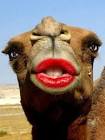
The image below is not real. A simulated graphic only of a pathetic event.
Camels enhanced with Botox barred from Saudi beauty contest
Dozens of animals disqualified after owners manipulate their looks with hormones, fillers and facelifts
Saudi authorities have carried out their biggest crackdown on camel beauty contestants, disqualifying more than 40 “enhanced” camels from the annual pageant, according to the state-run Saudi Press Agency.
The camels disqualified in the competition, at the King Abdulaziz camel festival, were judged to have received Botox injections and other artificial touch-ups.
The popular festival, which started this month, invites the breeders of the most beautiful camels to compete for about $66m in prize money.
Botox injections, facelifts and other cosmetic alterations to make the camels more attractive are strictly prohibited. Jurors decide the winner based on the shape of the animals’ heads, necks, humps, dress, and postures.
Judges at the month-long festival, held in the desert north-east of the Saudi capital, Riyadh, are escalating their clampdown on artificially enhanced camels, the official news agency reported, using “specialised and advanced” technology to detect tampering.
This year, the authorities discovered dozens of breeders had stretched out the lips and noses of camels, used hormones to boost the animals’ muscles, injected heads and lips with Botox to make them bigger, inflated body parts with rubber bands, and used fillers to relax their faces.
“The club is keen to halt all acts of tampering and deception in the beautification of camels,” the SPA report said, adding organisers would “impose strict penalties on manipulators”.
The camel beauty contest is at the heart of the massive carnival, which also features camel races, sales and other festivities typically showcasing thousands of dromedaries. The extravaganza seeks to preserve the camel’s role in the Bedouin tradition and heritage as the oil-rich country ploughs ahead with modernising mega projects.
Camel breeding is a multimillion-dollar industry and similar events take place across the region.
Its a sad, sad, bad, bad world when things like this happen !
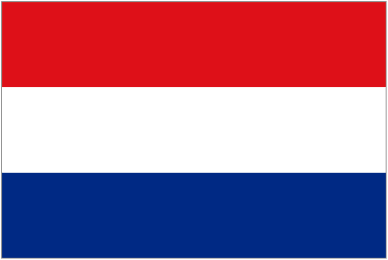
‘Dutch highly eurosceptic!’ Nexit calls erupt as only 10 percent of Dutch want more EU
Euroscepticism is growing in the Netherlands, despite a lack of debate in the media over the EU’s role in the country, according to EU expert Gabriel van de Bloemfontein. The Nexit Denktank researcher told Express.co.uk that only 10 percent of Dutch people now believe more EU integration is needed.
Mr van de Bloemfontein argued that anti-Brexit scaremongering reports might have lowered the number of people believing the Netherlands is better off outside the EU.
But he added that, according to recent polls, 40 percent of Dutch people still want out, which is “quite high” considering the lack of debate, he said.
He said: “In 2016, 2017, polls showed that there was a majority in the Netherlands for leaving.
“After that, it has declined a bit. I can’t really explain why maybe because of the project fear making people scared in the media.
“But right now, I saw a poll of a Dutch public broadcast company, and they showed that around 40 percent would like to leave the EU, which is not low at all without any campaign going on.
“And recently, the news are all about coronavirus. Even at the last elections, not one bit was discussed about the EU.
“So I think it’s actually quite hight. Despite the scary stories we constantly hear.
“What’s even more interesting is that it also shows that only 10 percent of the Dutch people want more EU integration, which is very low.
“But yet it still happens. But this is a promising statistic.
“It shows that the Netherlands is actually very eurosceptic.”
In 2005, the Netherlands, like France, voted in a consultative referendum on the Treaty establishing a constitution for Europe.
Official results say that 61.6 percent of voters rejected the Constitution, on a turnout of 63.3 percent.
Last month, Royal Dutch Shell said it would scrap its dual share structure and move its head office to Brexit Britain from the Netherlands, pushed away by Dutch taxes and facing climate pressure in court as the energy giant shifts from oil and gas.
The company, which long faced questions from investors about its dual structure and had recently been hit by a Dutch court order over its climate targets, aims to drop “Royal Dutch” from its name – part of its identity since 1907 – to become Shell Plc.
The Anglo-Dutch firm has been in a long-running tussle with the Dutch authorities over the country’s 15 percent dividend withholding tax, which Shell sought to avoid paying with its two share classes. Its new structure would resolve that issue.
In a further knock to its relations with the Netherlands, the biggest Dutch state pension fund ABP said last month it would drop Shell and all fossil fuels from its portfolio.
The move infuriated Nexit campaigners who were quick to blame the Dutch government’s submission to the EU for Shell’s decision.
Nexit Denktank representatives wrote: “Shell moves to the United Kingdom and becomes fully British on paper. Very unfortunate for the Netherlands, but were we not told in 2016 that all companies would leave the UK due to Brexit? Another lie.
“In 2002, when the euro was introduced, the British were also warned that all companies would leave if they did not adopt the euro as their national currency. That was also a lie. The EU and the euro are not necessary to attract companies.
“The real proof is in the relocations of Shell and Unilever, which are among the largest companies in the world. They wouldn’t leave the Netherlands for the UK if they didn’t take advantage of that. We don’t need the EU, we need a good trade agreement.
“So we are again losing a piece of Dutch pride and history because our Europhile cabinet was more concerned with undermining Brexit than with the interests of the Netherlands. Our government cares about the interests of the EU, not the interests of the Netherlands.
“According to Rutte, we can close the port of Rotterdam, we will lose all our jobs and our economy will collapse if we leave the EU. It’s all scaremongering and EU propaganda. Such things don’t happen in the UK. Shell is the reality NOW.
“We are losing prestige because of the EU. In the long run, it turns out that we can’t do anything ourselves. The unelected bureaucrats in Brussels determine everything for us. The British can have their own policy. Stop believing the scaremongering and EU propaganda. Nothing bad is going to happen after Nexit.”
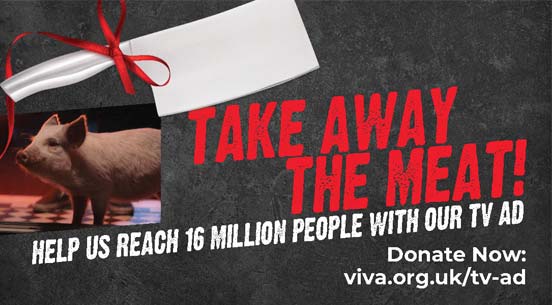
Takeaway the Meat is Viva!’s ground-breaking new vegan TV ad campaign and we are crowdfunding to reach 16 million people in the UK.
We want to show people the correlation between animal cruelty and what is on their plate.
Over 450 people have donated to the campaign so far helping us smash our first target of £10K – and the list is growing fast!
We need your help to reach our next target of £15K.
A very generous donor has offered to match all donations up to the total value of £40k, and we have also secured a grant from Channel 4 which will double the total again.
“If slaughterhouses had glass walls, everyone would be vegetarian.”
In 2010, Sir. Paul McCartney lent his face and this famous quote to a PETA film that took viewers behind the opaque walls of slaughterhouses and factory farms.
Although one of the most well-known quotes in the animal rights movement, it took the team behind Planted Foods—a Swiss food tech company dedicated to ending animal suffering through tasty plant-based alternatives to meat—to run with the idea.
Convinced the food industry needed to be more transparent about ingredients and processes, Planted made this literal by building an enormous glasshouse around their production in the heart of their Switzerland-based factory.
Slaughterhouses are often miles away from urban centers, guarded by impenetrable walls and perplexing laws. To date, the primary means of drawing attention to the non-transparency1 of the industry has been through activists sneaking out footage of terrible conditions and practices.
“We built our production under a greenhouse with glass walls and glass ceiling because we want to be transparent in the way we make meat today,” said Planted’s Co-Founder Pascal Bieri. “Unlike the animal meat industry, we have nothing to hide.”
Open, airy, and entirely transparent, the factory and ethos is a sharp contrast to the efforts of meat manufacturers to hide the horrors of their production processes from consumers.
As Planted goes from strength to strength, the team invites everyone to visit their glass-walled factory to take a closer look at what they do.
Beginnings and success
While working in the USA in 2017, Bieri became excited by the potential of plant-based meat replacement products coming to market and saw an opportunity to challenge the status quo of the animal meat industry.
Initially collaborating with his cousin Lukas Böni who was completing a doctorate in food process engineering, financial specialist Christoph Jenny and Lukas’ fellow Ph.D. student Eric Stirnemann later rounded off the founding team of Planted Foods.
United by a love of food, environment, and science, the co-founders spent 2018 deep in research and development at Lukas’ research university, the Swiss Federal Institute of Technology in Zurich.
Their goal was clear from the beginning: create plant-based options that could win over carnivores and vegans alike with clean, 100 percent natural ingredients and transparent processes.
In 2019, Planted received a Pioneer Fellowship, awarding access to infrastructure to fast-track small-scale production and create an early prototype of their first product, planted.chicken.
Fuelled by new technology and a drive to provide ecologically friendly alternatives that could satisfy the cultural desire for meat, the team was thrilled by how close their plant-based product came to replicating the taste and texture of chicken.
Off the back of their initial success, Bieri and the team founded Planted in July 2019. The same year, dozens of restaurants across Zurich, Lucerne, and Geneva put Planted’s chicken on their menus.
An injection of seven million Swiss francs powered construction of a production plant and offices in Kemptthal, Switzerland, and in 2020 Planted launched at one of Switzerland’s largest retail and wholesale companies.
Bieri believes the rise of Planted Foods is thanks to strict adherence to four core principles—natural ingredients, animal welfare, taste, and sustainability—nurtured by a team with complementary skill sets and a drive to change the world for the better.
Recently winning the top prize at the TOP 100 Swiss Startup annual awards2, Planted employs over 140 people and welcomes scores of consumers, schools, and groups to their production facility every month.
Planted is now available at restaurants and retailers across Germany, Austria, France, and Switzerland.
In the UK, products are available from the Planted webshop, and the company is rolling out its products at a range of venues, including the Elite family of pubs in Kent and Sussex.
In October, Planted received the Best Artificial Chicken Product award at the Plant-Based World Europe Expo in London.
“We’re super-excited about our launch into the UK market; consumer feedback has been fantastic,” Bieri enthused, “and winning the Award at the Expo makes our whole team proud too. We know that we’re on the right track and developing great-tasting products.”
NSW laws criminalising secret recordings of animal cruelty ‘too great a burden on speech’, high court hears
Animal rights group in legal fight against laws which provide no public-interest exemption for use of footage
Laws criminalising the use of secretly recorded vision of animal cruelty and abuse are posing “too great a burden on speech”, animal rights activists have told the high court.
The Farm Transparency Project, an Australian animal advocacy group, launched a case earlier this year arguing New South Wales laws restricting the use of covert footage were an unfair burden on freedom of political communication.
The state’s Surveillance Devices Act criminalises the use of footage or audio that was obtained using a listening device or hidden camera, but, unlike other states, gives no public-interest exemption.
The laws have been used to pursue activists on criminal charges and have prevented media outlets from using footage depicting cruelty or abuse in abattoirs and knackeries across the state.
Guardian Australia was recently prevented from showing secretly recorded footage of ex-racehorses being sent for slaughter at NSW pet food factories, a clear breach of industry rules.
In its written submissions to the high court, the Farm Transparency Project said the case was not about how activists were perceived by the general public.
“It is about the law that is challenged,” it said.
“Whether the plaintiffs are viewed as admirable activists, or vulgar vigilantes, or something in between, is irrelevant. If anything, the case is about the publishers whose freedom to publish is curtailed.”
The submissions point to similar laws in Victoria, the Northern Territory, South Australia and Western Australia, which contain carve-outs allowing the use of such footage that accommodates the implied right to freedom of political communication.
“That is essentially because the blanket prohibition is too great a burden on speech, having regard to the legitimate social interests in the publication of surveillance device material, especially to ‘blow the whistle’,” the transparency project argues.
“It is not to be overlooked that vigilantism cannot be condoned. But this is to highlight the importance of careful balancing – in each case – of where the public interest lies, which in turn, highlights the importance of a ‘public interest’ exemption.”
The submissions point to the greyhound live baiting scandal as an example of a public interest served by the publication of such footage. That video helped spark a public inquiry and a finding that the NSW industry had lost its social licence, prompting a proposed ban that was not implemented after a backlash.
The Farm Transparency Project executive director, Chris Delforce, has said previously the case has broader implications for so-called “ag-gag” laws across the country.
Delforce said challenging the validity of the law would help prevent other jurisdictions from enacting similar blanket bans.
“We’ve had enough – these industries need more transparency, not less,” he said. “The animals suffering in our nation’s farms, slaughterhouses and knackeries deserve to have their stories told, and the Australian public deserves the opportunity to hear them.”
Not all animal rights groups support the use of hidden cameras. The RSPCA is opposed to using unlawful means to fight for animal welfare.
The high court is expected to receive submissions from the NSW government this week, and Farm Transparency Project will be given a chance to reply next month.
The UK Government is currently collecting evidence on mandatory method of production labelling. As part of our response, we will be submitting the signatures of everyone who has signed our petition. Please stand up for farmed animals by adding your name now.
Time to change food labelling
Hi,
Meat and dairy labels are confusing and can be misleading. They can hide animal cruelty. Join me in calling for all products to be honestly labelled by farming system: